
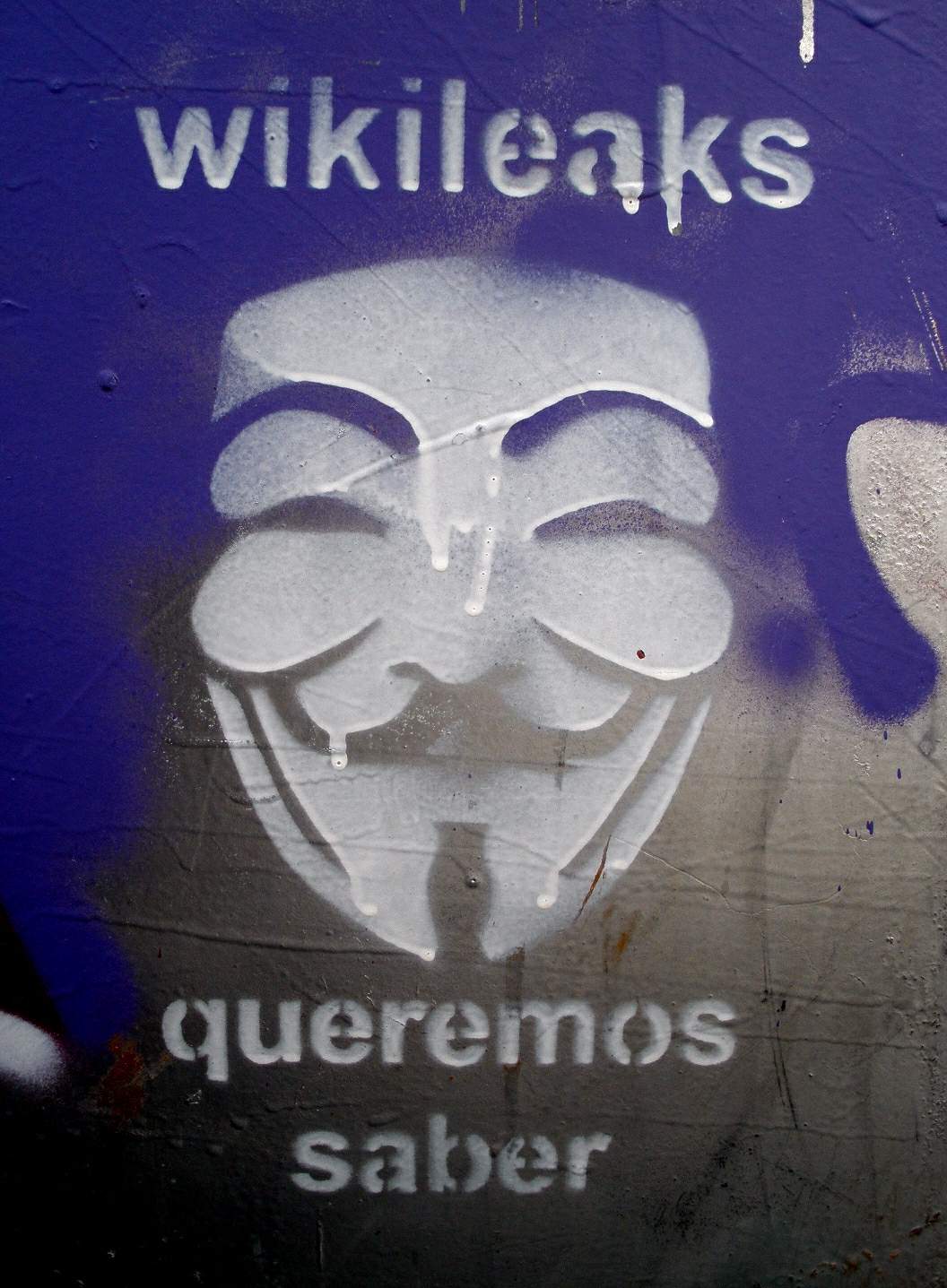
WikiLeaks () is a non-profit media organisation and publisher of leaked documents. It is funded by donations and media partnerships. It has published classified documents and other media provided by anonymous sources. It was founded in 2006 by Julian Assange. Kristinn Hrafnsson is its editor-in-chief. Its website states that it has released more than ten million documents and associated analyses. WikiLeaks' most recent publication of original documents was in 2019, and its most recent publication was in 2021. From November 2022, numerous documents on the organisation's website became inaccessible. In 2023, Assange said that WikiLeaks was no longer able to publish due to his imprisonment and the effect that US government surveillance and WikiLeaks' funding restrictions were having on potential whistleblowers.
WikiLeaks has released document caches and media that exposed serious violations of human rights and civil liberties by various governments. It released footage of the 12 July 2007 Baghdad airstrike, titling it Collateral Murder, in which Iraqi Reuters journalists and several other civilians were killed by a US helicopter crew. It published thousands of US military field logs from the war in Afghanistan and Iraq war, diplomatic cables from the United States and Saudi Arabia, and emails from the governments of Syria and Turkey. WikiLeaks has also published documents exposing corruption in Kenya and at Samherji, cyber warfare and surveillance tools created by the CIA, and surveillance of the French president by the US National Security Agency. During the 2016 US presidential election campaign, WikiLeaks released emails from the Democratic National Committee (DNC) and from Hillary Clinton's campaign manager, showing that the party's national committee had effectively acted as an arm of the Clinton campaign during the primaries, seeking to undercut the campaign of Bernie Sanders. These releases resulted in the resignation of the chairwoman of the DNC and caused significant harm to the Clinton campaign.
WikiLeaks has won numerous awards and been commended by media organisations, civil society organisations, and world leaders for exposing state and corporate secrets, increasing transparency, assisting freedom of the press, and enhancing democratic discourse while challenging powerful institutions. The organisation has been the target of campaigns to discredit it, including aborted ones by Palantir and HBGary. WikiLeaks has also had its donation systems interrupted by payment processors. In response, the Wau Holland Foundation helps process WikiLeaks' donations.

The organisation has been criticised for inadequately curating content and violating personal privacy. WikiLeaks has, for instance, revealed Social Security numbers, medical information, credit card numbers and details of suicide attempts. News organisations, activists, journalists and former members have criticised WikiLeaks over allegations of anti-Clinton and pro-Trump bias and a lack of internal transparency. Some journalists have alleged it had associations with the Russian government. Journalists have also criticised the organisation for promotion of conspiracy theories, and what they describe as exaggerated and misleading descriptions of the contents of leaks. The CIA and United States Congress characterised the organisation as a "non-state hostile intelligence service" after the release of CIA tools for hacking consumer electronics in Vault 7.
History
Founding
The inspiration for WikiLeaks was Daniel Ellsberg's release of the Pentagon Papers in 1971. Assange built WikiLeaks to shorten the time between a leak and its coverage by the media. WikiLeaks was established in Australia with the help of Daniel Mathews and its servers were soon moved to Sweden and other countries that provided greater legal protection for the media. Assange described WikiLeaks as an activist organisation and said that "The method is transparency, the goal is justice".
The wikileaks.org domain name was registered on 4 October 2006. The website was established and published its first document in December 2006. It described its founders as a mixture of Asian dissidents, journalists, mathematicians, and start-up company technologists from the United States, Taiwan, Europe, Australia, and South Africa. In January 2007 WikiLeaks organiser James Chen told TIME that "We are serious people working on a serious project... three advisors have been detained by Asian government, one of us for over six years." WikiLeaks said that its "primary interests are oppressive regimes in Asia, the former Soviet bloc, sub-Saharan Africa and the Middle East" but it "also expects to be of assistance to those in the West who wish to reveal unethical behaviour in their own governments and corporations". WikiLeaks was usually represented in public by Julian Assange, who has described himself as "the heart and soul of this organisation".

Advisory board
Assange formed an informal advisory board in the early days of WikiLeaks, with journalists, political activists and computer specialists as members. In 2007 WikiLeaks said the board was still forming but that it included representatives from expatriate Russian and Tibetan refugee communities, reporters, a former US intelligence analyst and cryptographers." Members of the advisory board included Phillip Adams, Julian Assange, Wang Dan, Suelette Dreyfus, CJ Hinke, Tashi Namgyal Khamsitsang, Ben Laurie, Xiao Qiang, Chico Whitaker, Wang Youcai, and John Young.
WikiLeaks' advisory board did not meet. According to Wired UK, most of the board members to whom they spoke said they had little involvement with WikiLeaks. Some said they did not know they were mentioned on the site, nor how they got there. Computer security expert Ben Laurie said he had been a member of the board "since before the beginning", but he was not "really sure what the advisory board means." Former board member Phillip Adams criticised the board, saying that Assange "has never asked for advice. The advisory board was pretty clearly window dressing, so he went for people identified with progressive policies around the place." Assange responded by calling the advisory board "pretty informal".
When asked to join their initial advisory board, the promininent critic of secrecy Steven Aftergood declined; he said to Time that "they have a very idealistic view of the nature of leaking and its impact. They seem to think that most leakers are crusading do-gooders who are single-handedly battling one evil empire or another."

Early years
In January 2007 John Young was dropped from the WikiLeaks network after questioning plans for a multimillion-dollar fundraising goal. He accused the organisation of being a CIA conduit and published 150 pages of WikiLeaks emails. According to Wired, the emails document the group's attempts to create a profile for themselves and arguments over how to do so. They also discuss political impact and positive reform and include calls for transparency around the world.
In January 2010 WikiLeaks shut down its website while management appealed for donations. Previously published material was no longer available, although some could still be accessed on unofficial mirror websites. WikiLeaks stated that it would resume full operation once the operational costs were paid. WikiLeaks said the work stoppage was "to ensure that everyone who is involved stops normal work and actually spends time raising revenue". The organisation planned for funds to be secured by 6 January 2010, and on 3 February that WikiLeaks announced that its fundraising goal had been achieved.
In February 2010 WikiLeaks helped propose the Icelandic Modern Media Initiative legislation to establish a "journalism safe haven" in Iceland. In June, the parliament voted unanimously for the resolution.
WikiLeaks originally used a wiki format website, and was changed when it relaunched in May 2010. The blogger Ryan Singel claimed that after the website relaunched, its cryptographic security had degraded.
In October 2010 the server WikiLeaks used to host its encrypted communications was compromised by hackers that a WikiLeaks spokesperson described as "very skilled". The spokesperson said that "the server got attacked, hacked, and the private keys got out"; they said it was the first breach in WikiLeaks' history. In November 2010, WikiLeaks said that its website was compromised hours before releasing US diplomatic cables. In December 2010 Spamhaus reported issued a malware warning for "WikiLeaks.info", a "very loosely" affiliated website that "WikiLeaks.org" redirected to. The website said they could "guarantee that there is no malware on it".
2010 internal dissent
A series of resignations of key members of WikiLeaks began in September 2010, started by Assange's decision to release the Iraq War logs the next month, internal conflicts with other members and his response to sexual assault allegations. According to Herbert Snorrason, "We found out that the level of redactions performed on the Afghanistan documents was not sufficient. I announced that if the next batch did not receive full attention, I would not be willing to cooperate." Some members of WikiLeaks called for Assange to step aside.
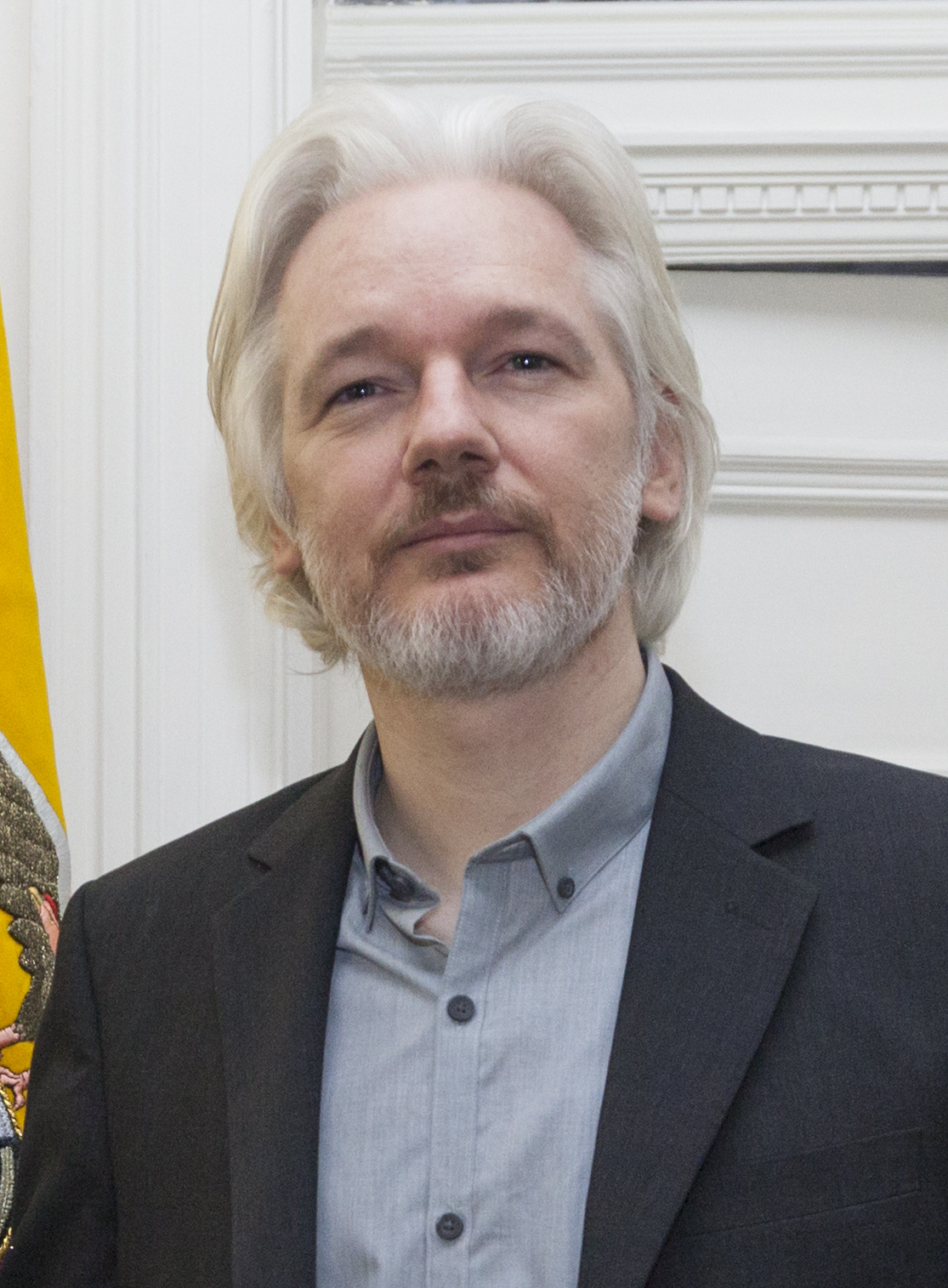
On 25 September 2010 after being suspended by Assange for "disloyalty, insubordination and destabilisation", Daniel Domscheit-Berg, the German spokesman for WikiLeaks, told Der Spiegel that he was resigning. He said "WikiLeaks has a structural problem. I no longer want to take responsibility for it, and that's why I am leaving the project." Assange accused Domscheit-Berg of leaking information to Newsweek, with Domscheit-Berg saying that the WikiLeaks team was unhappy with Assange's management and handling of the Afghan war document releases. Domscheit-Berg said he wanted greater transparency in WikiLeaks finances and the leaks released to the public.
According to various sources, Domscheit-Berg had copied and then deleted over 3,500 unpublished whistleblower communications. Some communications contained hundreds of documents, including the US government's No Fly List, Bank of America leaks, insider information from 20 neo-Nazi organisations, documents sent by Renata Avila about torture and government abuse of a Latin American country and US intercept information for "over a hundred Internet companies". Assange stated that Domscheit-Berg had deleted video files of the Granai massacre by a US Bomber. WikiLeaks had scheduled the video for publication before its deletion. According to Andy Müller-Maguhn, it was an eighteen-gigabyte collection.
Domscheit-Berg said he took the files from WikiLeaks because he did not trust its security. In Domscheit-Berg's book he wrote he was "waiting for Julian to restore security, so that we can return the material to him". The Architect and Domscheit-Berg encrypted the files and gave them to a third party who did not have the key. In August 2011 Domscheit-Berg said he permanently deleted the files "to ensure that the sources are not compromised." He said that WikiLeaks' claims about the Bank of America files were "false and misleading" and they were lost because of an IT problem.

The Architect left with Domscheit-Berg, taking the code behind the submission system with him. WikiLeaks submissions stayed offline until 2015. Herbert Snorrason resigned after he challenged Assange on his decision to suspend Domscheit-Berg and was bluntly rebuked. Iceland MP Birgitta Jónsdóttir also left WikiLeaks, citing lack of transparency, lack of structure, and poor communication flow. James Ball left WikiLeaks over disputes about Assange's handling of finances, and Assange's relationship to Israel Shamir, an individual who has promoted antisemitism and holocaust denial. According to the British newspaper, The Independent, at least a dozen key supporters of WikiLeaks left the website during 2010. Several staffers who broke with Assange joined with Domscheit-Berg to start OpenLeaks, a new leak organisation and website with a different management and distribution philosophy.
Sarah Harrison, who stayed with WikiLeaks, later told Andrew O'Hagan she did not agree with the way he did it, but Domscheit-Berg had a basic point. She added that "you can tell he was probably just trying to say something true and got hated for it. That's the way it is with Julian: he can't listen. He doesn't get it."
Actions against WikiLeaks
In early 2010 Assange said that he obtained documents showing that two State Department agents tailed him on a flight from Iceland to Norway. Icelandic journalists were unable to verify Assange's allegations, which were denied by the State Department. Assange did not release the alleged documents. Assange also said that a volunteer was arrested in March and questioned about WikiLeaks. According to Assange, police said that authorities had spied on and photographed a private WikiLeaks meeting. WikiLeaks later admitted that the interrogation did not happen as originally suggested. According to the deputy head of news for RUV, the arrest was unrelated to WikiLeaks but the volunteer mentioned WikiLeaks to the police and said the laptop he had with him was owned by WikiLeaks. Daniel Domscheit-Berg wrote thatThe rumors that he was being followed originated in part from his overactive imagination. But they also had the advantage of giving him the aura of someone in dire peril, increasing the collective anticipation of every new leak. Julian didn't need a marketing department. Marketing was something he himself knew best.After Julian Assange was granted asylum and entered the Ecuadorian embassy in London in 2012, new CCTV cameras were installed and security personnel working for UC Global and Promsecurity recorded his activities and interactions, including with his legal team. In a 2017 email, the surveillance was justified with suspicions that Assange was "working for the Russian intelligence services." New cameras and microphones were installed in December 2017, and Morales arranged for the United States to have immediate access to the recordings.
Campaigns to discredit WikiLeaks
Writing for The Guardian in 2010, Nick Davies said there was "some evidence of low-level attempts to smear Wikileaks", including false online accusations involving Assange and money. In 2010, Wikileaks published a 2008 US military report that said leaks to WikiLeaks "could result in increased threats to DoD personnel, equipment, facilities, or installations". The report suggested a plan to identify and expose WikiLeaks' sources to "deter others from using WikiLeaks" and "destroy the center of gravity" of Wikileaks by attacking its trustworthiness. According to Clint Hendler writing in the Columbia Journalism Review, many reactions to the document were "overwrought" and "the spin" by WikiLeaks was "a step too far".
In 2010 the Bank of America employed the services of a collection of information security firms, known as Team Themis, when the bank became concerned about information that WikiLeaks was planning to release about it. Team Themis included private intelligence and security firms HBGary Federal, Palantir Technologies and Berico Technologies. In 2011 hacktivist group Anonymous released emails from HBGary Federal showing that Team Themis proposed a plan which suggested "[spreading] disinformation" and "disrupting" Glenn Greenwald's support for WikiLeaks. Team Themis planned to expose the workings of WikiLeaks using disinformation and cyberattacks. The plans were not implemented and, after the emails were published, Palantir CEO Alex Karp issued a public apology to "progressive organizations ... and Greenwald" for his company's role.
Other
In December 2010 PayPal suspended the WikiLeaks account after they received a letter from the US State Department that characterised WikiLeaks' activities as illegal in the US. Mastercard and Visa Europe also stopped accepting payments to WikiLeaks after pressure from the US. Bank of America, Amazon and Swiss bank PostFinance had previously stopped dealing with WikiLeaks. Datacell, the IT company that enabled WikiLeaks to accept credit and debit card donations, said Visa's action was the result of political pressure. WikiLeaks referred to these actions as a banking blockade. In response to the companies' actions, the hacker group Anonymous launched a series of cyberattacks against the companies, and against the Swedish Prosecution Authority for its attempted extradition of Assange. WikiLeaks spokesman Kristinn Hrafnsson said: [Anonymous] is not affiliated with Wikileaks. There has been no contact between any Wikileaks staffer and anyone at Anonymous. Wikileaks has not received any prior notice of any of Anonymous' actions. We neither condemn nor applaud these attacks. We believe they are a reflection of public opinion on the actions of the targets.
Cyber-attacks and legal restrictions forced WikiLeaks to change server hosts several times by 2010.
2011–2015
In December 2011 WikiLeaks launched Friends of WikiLeaks, a social network for supporters and founders of the website. Friends of WikiLeaks was designed for users to never have more than 12 friends, half local and half international. The site was in beta status.
In July 2012 WikiLeaks took credit for a fake New York Times website and article falsely attributed to Bill Keller. The hoax prompted criticism from commenters and the public, who said it hurt WikiLeaks' credibility. Glenn Greenwald wrote in Salon that it might have been satire but it doesn't strike me as a good idea for a group that relies on its credibility when it comes to the authenticity of what they publish – and which thus far has had a stellar record in that regard – to be making boastful claims that they published forged documents. I understand and appreciate the satire, but in this case, it directly conflicts with, and undermines, the primary value of WikiLeaks. WikiLeaks said it wanted to bring attention to the banking blockade.
In January 2013, shortly after Aaron Swartz died, WikiLeaks said that Swartz had helped WikiLeaks and had talked to Julian Assange in 2010 and 2011. WikiLeaks also said it had "strong reasons to believe, but cannot prove", he may have been a source, breaking WikiLeaks' rules about source anonymity. Journalists suggested that Wikileaks may have made the statements to imply that Swartz was targeted by the US Attorney's Office and Secret Service in order to get at WikiLeaks.
In 2013 the organisation assisted Edward Snowden leave Hong Kong. Sarah Harrison, a WikiLeaks activist, accompanied Snowden on the flight. According to US investigators, WikiLeaks played an active role in assisting Snowden to disclose a cache of NSA documents. Scott Shane of The New York Times stated that the involvement "shows that despite its shoestring staff, limited fund-raising from a boycott by major financial firms, and defections prompted by Mr. Assange's personal troubles and abrasive style, it remains a force to be reckoned with on the global stage."
In September 2013 Julian Assange announced the creation of the WikiLeaks counterintelligence unit. The project surveilled 19 surveillance contractors to understand their business dealings. According to Assange, they were "tracking the trackers" to "counter threats against investigative journalism and the public's right to know."
The WikiLeaks Party was created in 2013 in part to support Julian Assange's failed bid for a Senate seat in Australia in the 2013 election, where it won 0.62% of the national vote. Assange said the party would advance WikiLeaks' objectives of promoting openness in government and politics and that it would combat intrusions on individual privacy. In December 2013, a delegation from the party, including its chairman John Shipton, visited Syria and met with President Bashar al-Assad. Shipton said the goal of the meeting was demonstrating "solidarity with the Syrian people and their nation", improving the party's understanding of the country's civil war and told a Syrian TV station that WikiLeaks would be opening an office in Damascus in 2014. The meeting with Assad was criticised by the Australian Prime Minister, Foreign Minister and many WikiLeaks supporters. Shipton stated that the meeting with al-Assad was "just a matter of good manners" and that the delegation had also met with members of the Syrian opposition. However, these meetings with the opposition have not been verified. The WikiLeaks Party was deregistered by the Australian Electoral Commission on 23 July 2015 for lack of members under the Electoral Act.
In 2015 WikiLeaks began issuing "bounties" of up to $100,000 for leaks. Assange had said in 2010 that WikiLeaks didn't but "would have no problem giving sources cash" and that there were systems in Belgium to let them. WikiLeaks has issued crowd-sourced rewards for the TTIP chapters, the TPP and information on the Kunduz massacre. WikiLeaks has issued other bounties for LabourLeaks, 2016 U.S. presidential election-related information, and information to get a reporter at The Intercept fired over the Reality Winner case. WikiLeaks has defended the practice with their vetting record, saying "police rewards produce results. So do journalistic rewards."
Its website stated in 2015 that it had released 10 million documents online.
2016 U.S. presidential election
Assange wrote on WikiLeaks in February 2016: "I have had years of experience in dealing with Hillary Clinton and have read thousands of her cables. Hillary lacks judgement and will push the United States into endless, stupid wars which spread terrorism. ... she certainly should not become president of the United States." In a 2017 interview by Amy Goodman, Julian Assange said that choosing between Hillary Clinton and Donald Trump is like choosing between cholera or gonorrhea. "Personally, I would prefer neither." WikiLeaks editor Sarah Harrison stated that the site was not choosing which damaging publications to release, rather releasing information available to them. In conversations that were leaked in February 2018, Assange expressed a preference for a Republican victory in the 2016 election, saying that "Dems+Media+liberals would then form a block to reign in their worst qualities. With Hillary in charge, GOP will be pushing for her worst qualities, dems+media+neoliberals will be mute. She's a bright, well connected, sadistic sociopath".
Having released information about a broad range of organisations and politicians, WikiLeaks started by 2016 to focus almost exclusively on Democratic presidential candidate Hillary Clinton. In the 2016 U.S. presidential election, WikiLeaks only exposed material damaging to the Democratic National Committee and Hillary Clinton. According to The New York Times, WikiLeaks timed one of its large leaks so that it would happen on the eve of the Democratic Convention. The Sunlight Foundation said that such actions meant that WikiLeaks was no longer striving to be transparent but rather sought to achieve political goals.
Thomas Joscelyn, a senior fellow at Just Security, wrote that Assange had a "hatred of Clinton", whom he said was a "sadistic sociopath". Joscelyn wrote that "WikiLeaks' collusion with Russian government hackers during the 2016 presidential campaign" was "arguably even more consequential" than the Iraq War documents leak, the Afghan War documents leak and the United States diplomatic cables leak. According to Joscelyn, "Assange made it his goal in 2016 to counter the 'American liberal press,' which he accused of supporting Clinton. He aimed to turn that same press against her. Ultimately, with Russia's help, Assange succeeded."
Secret correspondence between WikiLeaks and Donald Trump Jr.
In November 2017 it was revealed that the WikiLeaks Twitter account secretly corresponded with Donald Trump Jr. during the 2016 presidential election. The correspondence shows how WikiLeaks actively solicited the co-operation of Trump Jr., a campaign surrogate and advisor in the campaign of his father. WikiLeaks urged the Trump campaign to reject the results of the 2016 presidential election at a time when it looked as if the Trump campaign would lose. WikiLeaks asked Trump Jr. to share a WikiLeaks tweet with the made-up quote "Can't we just drone this guy?" which True Pundit said Hillary Clinton made about Assange. WikiLeaks also shared a link to a site that would help people to search through WikiLeaks documents. Trump Jr. shared both. After the election, WikiLeaks also requested that the president-elect push Australia to appoint Assange as ambassador to the US. Trump Jr. provided this correspondence to congressional investigators looking into Russian interference in the 2016 election. Assange repeated his offer of being ambassador to the US after the messages became public, publicly tweeting to Donald Trump Jr. that "I could open a hotel style embassy in DC with luxury immunity suites for whistleblowers. The public will get a turbo-charged flow of intel about the latest CIA plots to undermine democracy. DM me."
The secretive exchanges led to criticism of WikiLeaks by some former supporters. WikiLeaks tweeted that the Clinton campaign was "constantly slandering" it as "a 'pro-Trump' 'pro-Russia' source". Journalist Barrett Brown, a long-time defender of WikiLeaks, was exasperated that Assange was "complaining about 'slander' of being pro-Trump IN THE ACTUAL COURSE OF COLLABORATING WITH TRUMP". He wrote: "Was 'Wikileaks staff' lying on Nov 10, 2016, when they claimed, 'The allegations that we have colluded with Trump, or any other candidate for that matter, or with Russia, are just groundless and false', or did Assange lie to them?" Brown said Assange had acted "as a covert political operative", thus betraying WikiLeaks' focus on exposing "corporate and government wrongdoing".
Promotion of false conspiracy theories
In 2016 and 2017, WikiLeaks promoted several false conspiracy theories, most related to the 2016 United States presidential election.
Murder of Seth Rich
WikiLeaks promoted conspiracy theories about the murder of Seth Rich. Unfounded conspiracy theories, spread by some right-wing figures and media outlets, hold that Rich was the source of leaked emails and was killed for working with WikiLeaks. WikiLeaks fuelled such theories when it offered a $20,000 reward for information on Rich's killer and when Assange implied that Rich was the source of the DNC leaks, although no evidence supports that. Special Counsel Robert Mueller's report into Russian interference in the 2016 election said that Assange "implied falsely" that Rich was the source in order to obscure that Russia was the actual source.
Democratic Party and Hillary Clinton
WikiLeaks popularised conspiracy theories about the Democratic Party and Hillary Clinton, such as tweeting articles which suggested Clinton campaign chairman John Podesta engaged in satanic rituals, claiming that Hillary Clinton wanted to drone strike Assange, suggesting that Clinton wore earpieces to debates and interviews, promoting thinly sourced theories about Clinton's health and according to Bloomberg creating "anti-Clinton theories out of whole cloth".
Promotion of false flag theories
On the day the Vault 7 documents were first released, WikiLeaks described UMBRAGE as "a substantial library of attack techniques 'stolen' from malware produced in other states including the Russian Federation," and tweeted, "CIA steals other groups virus and malware facilitating false flag attacks." A conspiracy theory soon emerged alleging that the CIA framed the Russian government for interfering in the 2016 U.S. elections. Conservative commentators such as Sean Hannity and Ann Coulter speculated about this possibility on Twitter, and Rush Limbaugh discussed it on his radio show. Russian foreign minister Sergey Lavrov said that Vault 7 showed that "the CIA could get access to such 'fingerprints' and then use them."
In The Washington Post the cybersecurity researcher Ben Buchanan writes that he is sceptical of those theories and that he believes Russia to have initially obtained the DNC emails.
In April 2017 the WikiLeaks Twitter account suggested that the Khan Shaykhun chemical attack, which international human rights organisations attributed to the Syrian government, was a false flag attack. WikiLeaks stated that "while western establishment media beat the drum for more war in Syria the matter is far from clear", and shared a video by a Syrian activist who said that Islamist extremists were probably behind the attack, not the Syrian government.
Later years
In 2016 the WikiLeaks Twitter account was criticised for tweets that were seen as antisemitic.