
West Hollywood is a city in Los Angeles County, California, United States. Incorporated in 1984, it is home to the Sunset Strip, and located between the cities of Los Angeles and Beverly Hills. As of the 2020 U.S. census, its population was 35,757.
History
Most historical writings about West Hollywood began in the late-18th century with European colonization when the Portuguese explorer João Rodrigues Cabrilho traveled to and eventually laid claim on the region for Spain. Around 5,000 of the indigenous inhabitants from the Tongva Indian tribe canoed out to greet the ship. The Tongva tribe was a nation of hunter-gatherers known for their reverence for dance and courage. By 1771, these native people had been severely ravaged by the diseases brought in by the Europeans from across wide oceans. The Spanish mission system referred to the Tongva tribe as "Gabrielinos", in reference to the Mission de San Gabriel. Early in 1770, Gaspar de Portola's Mexican expeditionary force stopped just south of the Santa Monica Mountains near what would become West Hollywood. Here they collected pitch (brea in Spanish) from tar pits which they used to waterproof their belongings and to say Mass. The Gabrielinos are believed to have burned the pitch for fuel.
By 1780, what became the "Sunset Strip" was the major connecting road for El Pueblo de Los Angeles, and all ranches westward to the Pacific Ocean. This land passed through the hands of various owners during the next one hundred years, and it was called names such as "La Brea" and "Plummer" that are listed in historical records. Most of this area was part of the Rancho La Brea, and eventually it came to be owned by the Hancock family.

During the final years of the nineteenth century, the first large land reconstruction of the town of "Sherman" significantly accelerated the development of the region. In what would later become West Hollywood—the town of "Sherman"—was established by Moses Sherman and his partners of the Los Angeles Pacific Railroad, an interurban railroad line which later became part of the Pacific Electric Railway system. Sherman became the location of the railroad's main shops, railroad yards, and "car barns". Many working-class employees of the railroad settled in this town. It was during this time that the city began to earn its reputation as a loosely regulated, liquor-friendly (during Prohibition) place for eccentric people wary of government interference. Despite several annexation attempts, the town elected not to become part of the City of Los Angeles. In 1925 Sherman adopted "West Hollywood," a moniker pioneered earlier in the decade by the West Hollywood Realty Board as its informal name, though it remained under the governance of Los Angeles County.
For many decades, the area that is now the City of West Hollywood was an unincorporated area in the midst of Los Angeles. Because gambling was illegal in the city of Los Angeles, but still legal in Los Angeles County, the 1920s saw the proliferation of many casinos, night clubs, etc., along Sunset Boulevard (which starts near downtown Los Angeles and runs westward). These businesses were immune from the sometimes heavy-handed law enforcement of the L.A. Police Department.
Some people connected with movie-making were attracted to this less-restricted area of the County, and a number of architecturally distinctive apartment buildings and hotels were built. Many interior designers, decorators and "to the trade" furnishing showrooms located in West Hollywood date back to the middle of the century.

Eventually, the area and its extravagant nightclubs fell out of favor. The Sunset Strip and its restaurants, saloons, and nightclubs continued to be an attraction for out-of-town tourists. During the late 1960s, the Sunset Strip was transformed again during the hippie movement which brought a thriving music publishing industry coupled with the "hippie" culture. Young people from all over the country flocked to West Hollywood.
After the dissolution of the Soviet Union, thousands of Russian Jews immigrated to the city. A majority of the 5,000 to 6,000 Russian Jews settled in two major immigration waves, 1978–79 and 1988–92. Other than New York, West Hollywood's Russian-speaking community is the most concentrated single Russian-speaking region in the United States.
The Gauntlet was a body piercing business founded by Jim Ward in West Hollywood that is considered the first business of its type in the United States and was the beginning of the body piercing industry. The Gauntlet began in 1975, with its original location in Ward's West Hollywood home, but in 1978 opened its first commercial location at 8720 Santa Monica Boulevard.
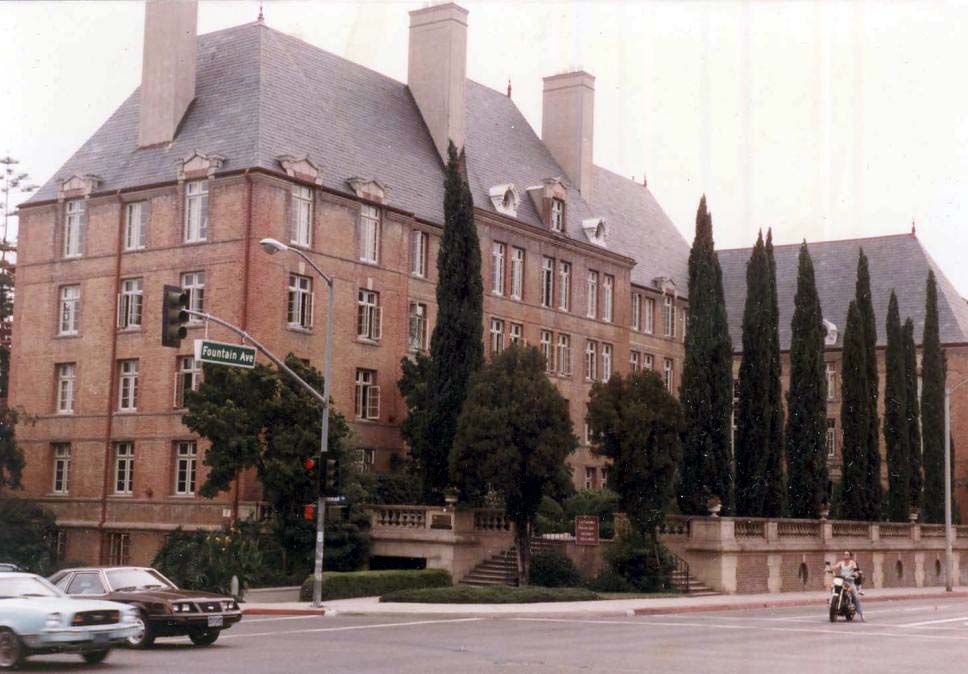
Due to the expiration of rent control protections in LA County, a coalition of gay men, Russian Jews, and the elderly successfully held a vote to officially incorporate the City of West Hollywood in 1984. Voters elected a city council with an openly gay majority and it immediately passed a series of rent control measures to protect its longtime citizens. West Hollywood then immediately adopted one of the strongest rent control laws in the nation.
The city of West Hollywood gave the keys to the city to Stormy Daniels on "Stormy Daniels Day", May 23, 2018.
Geography
West Hollywood is bounded by the city of Beverly Hills on the west, and by neighborhoods of the city of Los Angeles: Hollywood Hills on the north, Hollywood on the east, the Fairfax District on the southeast, and Beverly Grove on the southwest. The city's irregular boundary is featured in its logo; it was largely formed from the unincorporated Los Angeles County area which had not become part of the surrounding cities.

West Hollywood benefits from a very dense, compact urban form with small lots, mixed land use, and a walkable street grid. According to Walkscore, a website that ranks cities based on walkability, West Hollywood is the most walkable city in California with a Walkscore of 89. Commercial corridors include the nightlife and dining focused on the Sunset Strip, along Santa Monica Boulevard, and the Avenues of Art and Design along Robertson Boulevard, Melrose Avenue, and Beverly Boulevard.
Residential neighborhoods in West Hollywood include the Norma Triangle, West Hollywood North, West Hollywood West, West Hollywood East, and West Hollywood Heights, all of which are only a few blocks long or wide. Major intersecting streets typically provide amenities within walking distance of adjacent neighborhoods.
Climate
West Hollywood has a cool semi-arid climate (Köppen climate classification: BSk) with a pronounced Mediterranean influence in its yearly precipitation patterns.
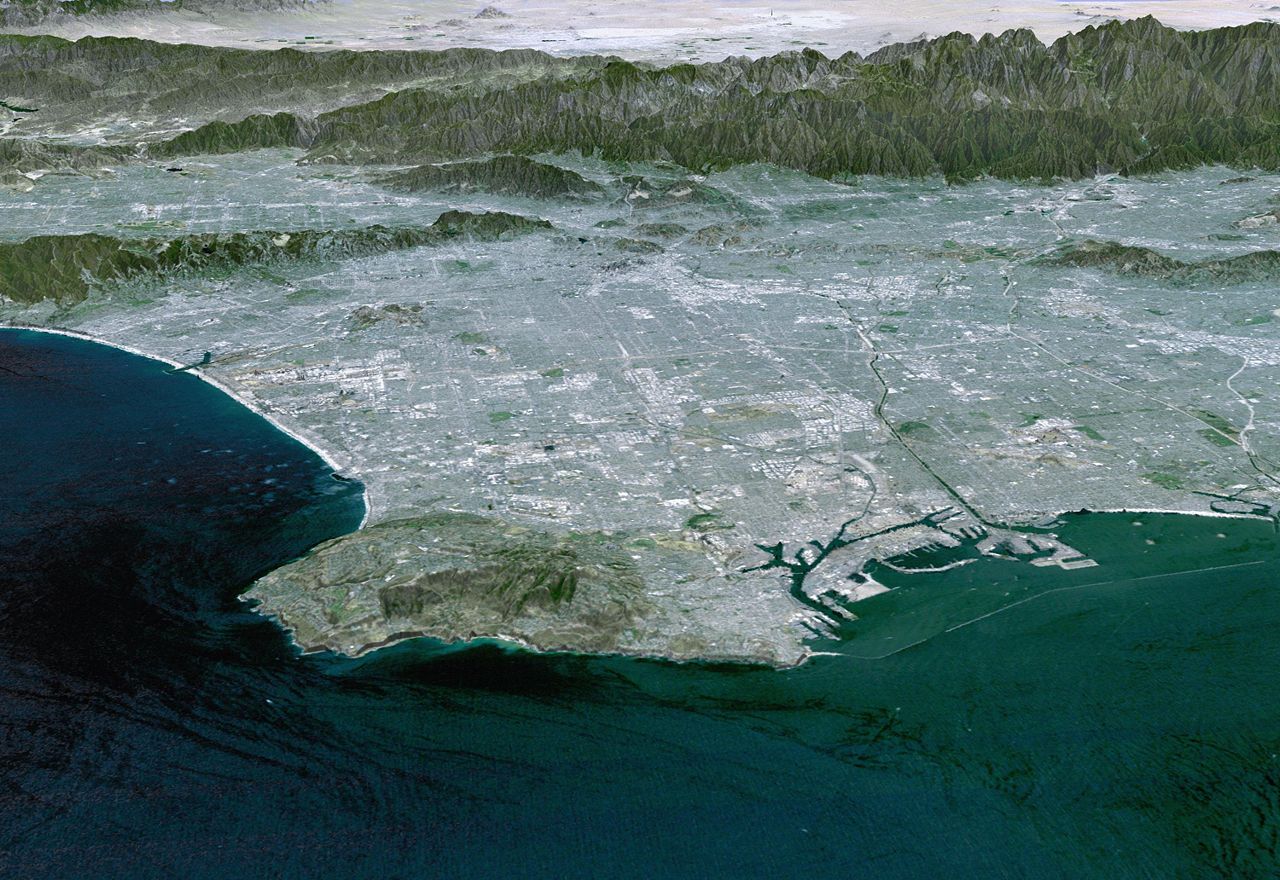
It possesses generally sunny, year-round mild to warm weather with generally moderate humidity moderated by the Pacific Ocean, and occasional spells of high heat and very low humidity from inland Santa Ana winds. The record high temperature of 111 °F was recorded on September 26, 1963, while the record low of 24 °F was recorded on January 4, 1949. Rainfall is sparse (only 13 inches annually) and falls almost entirely during the winter months, with no precipitation for months at a time during summer months being a common occurrence. Snow is extraordinarily rare in West Hollywood, with the last accumulation occurring in 1949.
Demographics
West Hollywood first appeared as an unincorporated place in the 1960 U.S. census as part of the Los Angeles census county division; and then as a census-designated place in the 1980 United States census and as a city in the 1990 U.S. census
Racial and ethnic composition
2020 census
As of the 2020 census, West Hollywood had a population of 35,757 and a population density of 18,939.1 inhabitants per square mile (7,312.4/km2).

The age distribution was 4.3% under the age of 18, 4.4% aged 18 to 24, 48.9% aged 25 to 44, 26.3% aged 45 to 64, and 16.2% aged 65 or older. The median age was 40.4 years. For every 100 females, there were 127.2 males, and for every 100 females age 18 and over there were 129.0 males age 18 and over.
The census reported that 99.6% of the population lived in households, 0.4% lived in non-institutionalized group quarters, and 0.1% were institutionalized. 100.0% of residents lived in urban areas, while 0.0% lived in rural areas.
There were 23,576 households, of which 5.1% had children under the age of 18 living in them. Of all households, 16.3% were married-couple households, 9.7% were cohabiting couple households, 39.8% were households with a male householder and no spouse or partner present, and 34.1% were households with a female householder and no spouse or partner present. About 59.6% of all households were made up of individuals, and 13.3% had someone living alone who was 65 years of age or older. The average household size was 1.51. There were 5,351 families (22.7% of all households).
There were 25,821 housing units at an average density of 13,676.4 units per square mile (5,280.5 units/km2). Of all housing units, 8.7% were vacant. Of occupied units, 20.0% were owner-occupied and 80.0% were occupied by renters. The homeowner vacancy rate was 2.0%, and the rental vacancy rate was 5.6%.
2023 ACS estimates
In 2023, the US Census Bureau estimated that the median household income was $94,844, and the per capita income was $88,026. About 9.2% of families and 13.1% of the population were below the poverty line.
2010 census
The 2010 United States census reported that West Hollywood had a population of 34,399. The population density was 18,225.6 inhabitants per square mile (7,036.9/km2). The racial makeup of West Hollywood was 28,979 (84.2%) White (77.9% Non-Hispanic White), 1,115 (3.2%) African American, 103 (0.3%) Native American, 1,874 (5.4%) Asian, 34 (0.1%) Pacific Islander, 1,049 (3.0%) from other races, and 1,245 (3.6%) from two or more races. There were 3,613 residents of Hispanic or Latino ancestry, of any race (10.5%).
The census reported that 34,290 people (99.7% of the population) lived in households, 109 (0.3%) lived in non-institutionalized group quarters, and 0 (0%) were institutionalized.
There were 22,511 households, out of which 1,141 (5.1%) had children under the age of 18 living in them, 3,060 (13.6%) were opposite-sex married couples living together, 852 (3.8%) had a female householder with no husband present, 431 (1.9%) had a male householder with no wife present. There were 1,094 (4.9%) unmarried opposite-sex partnerships, and 1,321 (5.9%) same-sex married couples or partnerships. 13,434 households (59.7%) were made up of individuals, and 2,606 (11.6%) had someone living alone who was 65 years of age or older. The average household size was 1.52. There were 4,343 families (19.3% of all households); the average family size was 2.42.
There were 1,578 residents (4.6%) under the age of 18, 2,407 people (7.0%) aged 18 to 24, 16,228 (47.2%) aged 25 to 44, 9,061 (26.3%) aged 45 to 64, and 5,125 (14.9%) who were 65 years of age or older. The median age was 40.4 years. For every 100 females, there were 128.4 males. For every 100 females aged 18 and over, there were 129.9 males.
There were 24,588 housing units at an average density of 13,027.4 units per square mile (5,029.9 units/km2), of which 4,976 (22.1%) were owner-occupied, and 17,535 (77.9%) were occupied by renters. The homeowner vacancy rate was 3.6%; the rental vacancy rate was 5.9%. 7,874 people (22.9% of the population) lived in owner-occupied housing units and 26,416 people (76.8%) lived in rental housing units.
2009–2013 estimates
During 2009–2013, West Hollywood had a median household income of $52,649, with 15.8% of the population living below the federal poverty line.
Community studies
As of 2019, gay men were 33% of the city's population; a 2013 survey had estimated the gay male population at 39%.
Economy
Top employers
According to the City's 2021 Comprehensive Annual Financial Report, the top employers in the city were:
Cannabis
Under the legalization of the sale and distribution of cannabis, the city plans to issue 40 licenses to either operate a dispensary, consumption lounge or delivery service. Eight licenses are planned in each of the following categories:
Adult-use retail business licenses
Consumption lounge (smoking, vaping, edibles) business licenses
Consumption lounge (edibles only) business licenses
Medical-use dispensary business licenses
Business licenses for cannabis delivery services located in West Hollywood
State law does not allow local governments to regulate adults in growing, using, or transporting marijuana for personal use but commercial activities, such as growing, testing, and selling cannabis within their jurisdiction may be regulated by each city by licensing none or only some of these activities. West Hollywood's first four dispensaries, Alternative Herbal Health Services, Los Angeles Patients and Caregivers Group, Zen Healing and MedMen WeHo, were granted temporary extensions in June 2019 to operate as retail businesses through the remainder of the year.
In July 2019, the West Hollywood Business License Commission approved a cannabis consumption license for Lowell Herb Co. In September 2019, Lowell Farms: A Cannabis Cafe opened with a menu of cannabis for consumption, THC-infused drinks and meals for cannabis-enhanced sense of taste and smell. It is the first cannabis cafe in the United States and will include the expertise of cannabis sommeliers, known as "budtenders" on site.
On August 20, 2020, the Original Cannabis Cafe (previously known as The Lowell Cafe in West Hollywood) became America's first restaurant allowed to serve legal marijuana to open in California. It became one of eight establishments granted a cannabis consumption license in West Hollywood. There were reportedly over 300 applicants, and the Original Cannabis Cafe states it was granted the first license.
Arts and culture
Christopher Street West is an LGBTQ pride parade and festival that was first held in June 1970 in Hollywood to commemorate the first anniversary of the Stonewall Riots in Manhattan. After incorporation, the event moved to West Hollywood for many years and was typically held the second weekend in June until it relocated back to the City of Los Angeles in 2022.
The West Hollywood Halloween Carnaval is an event that takes place annually on October 31. Once a larger event, participation has dwindled dramatically since the COVID-19 pandemic, further compounded by budgetary cuts from the city of West Hollywood, the event's sponsor.
The annual One City One Pride event was an LGBTQ Arts Festival held over a 40-day period from Harvey Milk Day, May 22 through the end of Pride Month, June 30. In 2023, the "One City One Pride LGBTQ Arts Festival" became the "WeHo Pride Arts Festival" to align with the new WeHo Pride brand. In 2024, the WeHo Pride Arts Festival downshifted from 40-days of programming to a unified weekend of programming from June 14 through June 16.
Since 1993, the City of West Hollywood and its LGBTQ+ Advisory Board have presented over 173 Rainbow Key Awards to those who have made outstanding contributions to West Hollywood’s LGBTQ+ community. These contributions, by an individual or a group, maybe in many forms, including the arts, community action, humanitarian action, sports, medicine, armed services, leadership potential, benefit to the global LGBTQ+ community, or other ways. Past honorees have included Bruce Vilanch, Abbe Land, Kenneth Hahn, Tom of Finland, Sheila Kuehl, David Cooley, Chaz Bono, West Hollywood Community Housing Corporation, Project Angel Food, Jazzmun, and Nahshon Dion.
The West Hollywood Book Fair has been held in the fall since 2001. Past participants have included Andrew McCarthy, Deepak Chopra, and Rocco DiSpirito.
Frontrunners LGBT Pride Run is a 5 km/10 km run/walk held on the Sunday morning of LGBT Pride.