
Uppsala University (UU) (Swedish: Uppsala universitet) is a public research university in Uppsala, Sweden. Founded in 1477, it is the oldest university in Sweden and the Nordic countries.
The university rose to significance during the rise of Sweden as a great power at the end of the 16th century and was then given relative financial stability with a large donation from King Gustavus Adolphus in the early 17th century. Uppsala also has an important historical place in Swedish national culture, and identity for the Swedish establishment: in historiography, religion, literature, politics, and music. Many aspects of Swedish academic culture in general, such as the white student cap, originated in Uppsala. It shares some peculiarities, such as the student nation system, with Lund University and the University of Helsinki.
Uppsala belongs to the Coimbra Group of European universities and to the Guild of European Research-Intensive Universities.

The university has nine faculties distributed over three disciplinary domains: Humanities and Social Sciences, Medicine and Pharmacy, and Science and Technology. As of 2020, it had approximately 52,000 registered students at the undergraduate and postgraduate levels and 2,200 PhD students.
Architecturally, Uppsala University has traditionally had a strong presence in Fjärdingen, the neighbourhood around the cathedral on the western side of the river Fyris. Despite some contemporary building developments further away from the centre, Uppsala's historic centre continues to be dominated by the presence of the university.
History
15th century: Origins
As with most medieval universities, Uppsala University initially grew out of an ecclesiastical centre. The archbishop of Uppsala had been one of the most important sees in Sweden proper since Christianity first spread to this region in the ninth century. Uppsala had also long been a hub for regional trade and had contained settlements dating back into the deep Middle Ages. As was also the case with most medieval universities, Uppsala had initially been chartered through a papal bull. Uppsala's bull, which granted the university its corporate rights, was issued by Pope Sixtus IV in 1477 and established several provisions. Among the most important of these was that the university was officially given the same freedoms and privileges as the University of Bologna. This included the right to establish the four traditional faculties of theology, law (Canon Law and Roman law), medicine, and philosophy, and to award the bachelor's, master's, licentiate, and doctoral degrees. The archbishop of Uppsala was also named as the university's chancellor and was charged with maintaining the rights and privileges of the university and its members. Lectures began on 7 October.
16th century: Turbulent times
The turbulent period of the reformation of King Gustavus Vasa resulted in a drop in the already relatively insignificant number of students in Uppsala, which was seen as a centre of Catholicism and potential disloyalty to the Crown. Swedish students generally travelled to one of the Protestant universities in Germany, especially Wittenberg. There is some evidence of academic studies in Uppsala during the 16th century; the Faculty of Theology is mentioned in a document from 1526, King Eric XIV appointed Laurentius Petri Gothus (later archbishop) rector of the university in 1566, and his successor and brother John III appointed several professors in the period 1569–1574. At the end of the century, the situation had changed, and Uppsala became a bastion of Lutheranism, which Duke Charles, the third of the sons of Gustavus Vasa to eventually become king (as Charles IX) used to consolidate his power and eventually oust his nephew Sigismund III Vasa from the throne. The Uppsala Synod in 1593 established Lutheran orthodoxy in Sweden, and Charles and the Council of state gave new privileges to the university on 1 August of the same year.
Theology still had precedence, but in the privileges of 1593, the importance of a university to educate secular servants of the state was also emphasized. Three of the seven professorial chairs which were established were in Theology; of the other four, three were in Astronomy, Physics (or general natural sciences) and Latin eloquence. A fourth chair was given to Ericus Jacobi Skinnerus, who was also appointed rector, but whose discipline was not mentioned in the charter. Of the professors, several were taken over from the Collegium regium Stockolmense in Stockholm, which had been functioning for a few years but closed in 1593. An eighth chair, in Medicine, was established in 1595 but received no appointee for several years. In 1599 the number of students was approximately 150. In 1600 the first post-reformation conferment of degrees took place. In the same year, the antiquarian and mystic Johannes Bureus designed and engraved the seal of the university, which is today used as part of the logotype.
17th century: Expansion
The medieval university had mainly been a theology school. The aspirations of the emergent new great power of Sweden demanded a different kind of learning. Sweden both grew through conquests and went through a complete overhaul of its administrative structure. It required a much larger class of civil servants and educators than before. Preparatory schools, gymnasiums, were also founded during this period in various cathedral towns, notably Västerås (the first one) in 1623. Besides Uppsala, new universities were founded in more distant parts of the Swedish Realm, the University of Dorpat (present-day Tartu) in Estonia (1632) and the Royal Academy of Turku in Finland (1640). After the Scanian provinces were taken from Denmark, Lund University was founded in 1666.

Instrumental in the reforms of the early 17th-century Swedish state was the long-dominant Chancellor Axel Oxenstierna, who had spent his own student days in German universities and who for the last years before his death was also chancellor of the university. King Gustavus Adolphus showed the university a keen interest and increased the professorial chairs from eight to thirteen in 1620, and again to seventeen in 1621. In 1624 the king donated "for all eternity" all his own inherited personal property in the provinces of Uppland and Västmanland, some 300 farms, mills and other sources of income. The king's former private tutor, Johan Skytte, who was made chancellor of the university in 1622, donated the Skyttean chair in Eloquence and Government which still exists. The university received a stable structure with its constitution of 1626. The head of the university was to be the chancellor, and his deputy was the "pro-chancellor" (always the archbishop ex officio). The immediate rule was the responsibility of the consistory, to which belonged all the professors of the university, and the rector magnificus, who was elected for a semester at the time; the latter position circulated among the professors, each of whom sometimes held it several times.
During the late 16th and early 17th centuries (and perhaps even earlier), the university was located in the old chapter house parallel to the south side of the cathedral, later renamed the Academia Carolina. In 1622–1625 a new university building was built east of the cathedral, the so-called Gustavianum, named after the reigning king. In the 1630s, the total number of students was about one thousand.
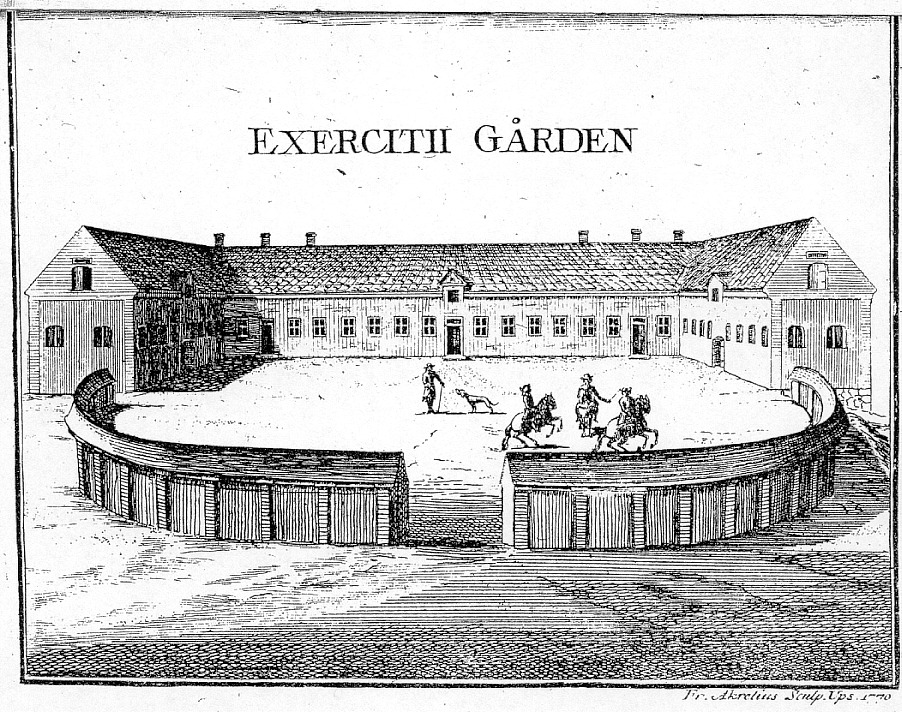
Queen Christina was generous to the university, gave scholarships to Swedish students to study abroad and recruited foreign scholars to Uppsala chairs, among them several from the University of Strasbourg, notably, the philologist Johannes Schefferus (professor Skytteanus), whose little library and museum building at St Eriks torg now belongs to the Royal Society of Sciences in Uppsala. The queen, who would eventually declare her abdication in the great hall of Uppsala Castle, visited the university on many occasions; in 1652 she was present at an anatomical demonstration arranged at the castle for the young physician Olaus Rudbeck. Rudbeck, one of several sons of Johannes Rudbeckius, a former Uppsala professor who became Bishop of Västerås, was sent for a year to the progressive Leiden University in the Netherlands. Returning in 1654, he received an assistantship in Medicine 1655 and had already gone to work on a program for improving aspects of the university. He planted the first botanical garden, the one which would eventually be tended by Carl Linnaeus and is kept today as a museum of 18th-century botany under the name Linnéträdgården ("the Linnaean Garden"). With the patronage of the university chancellor Magnus Gabriel De la Gardie, Rudbeck was made full professor in 1660, was elected rector for two terms, despite his youth, and started a revision of the work of the other professors and a building spree with himself as an architect. His most significant remaining architectural work is the anatomical theatre, which was added to Gustavianum in the 1660s and crowned with the characteristic cupola for which the building is today known.

A gifted scientist, architect and engineer, Rudbeck was the dominant personality of the university in the late 17th century who laid some of the groundwork for Linnaeus and others, but he is perhaps more known today for the pseudohistorical speculations of his Atlantica, which consumed much of his later life. When large parts of Uppsala burned down in 1702, Gustavianum, which contained the university library and its many valuable manuscripts, escaped the fire; local lore has it that the ageing Rudbeck stood on the roof directing the work of fighting the fire.
18th century: Enlightenment and mercantilism
The early part of the 18th century was still characterized by the combination of Lutheran orthodoxy and classical philology of the previous century, but eventually, a larger emphasis on sciences and practically useful knowledge developed. The innovative mathematician and physicist Samuel Klingenstierna (1698–1765) was made a professor in 1728, the physicist and astronomer Anders Celsius in 1729, and Carl Linnaeus was made professor of medicine with botany in 1741. The university was not immune to the parliamentary struggle between the parties known as the "Hats" and the "Caps," with the former having a preference for hard sciences and practical knowledge. The Hat government then in power established a chair in economics (Œconomia publica) in 1741 and called Anders Berch as its first incumbent. This was the first professorship in economics outside Germany, and possibly the third in Europe (the first chairs having been established in the Martin Luther University of Halle and European University Viadrina in 1727). In 1759, following a donation, another chair in the economy was established, the Borgströmian professorship in "practical economy," which meant the practical application of the natural sciences for economic purposes (it eventually developed into a chair for physiological botany).
There were very radical attempts at reforms which were never implemented, but important changes took place. University studies had until this time been very informal in their overall organization, with the all-purpose philosophiæ magister-degree being the only one frequently conferred and many never graduating, as there was no degree applicable to their intended area of work (and well-connected aristocratic students often not graduating as they did not need to). A few professional degrees for various purposes were introduced in 1749–1750, but the radical suggestion of binding students to a single program of study adapted to a particular profession was never implemented. The reforms of this era have been compared to those of the 1960s and 1970s (Sten Lindroth).

Although it took some time after the fire of 1702, Uppsala Cathedral and Uppsala Castle were both eventually restored, both by Carl Hårleman, perhaps the most important Swedish architect of the era. He also modified Gustavianum, designed a new conservatory for Linnaeus' botanical garden and built the new Consistory house, which was to be the administrative core of the university.
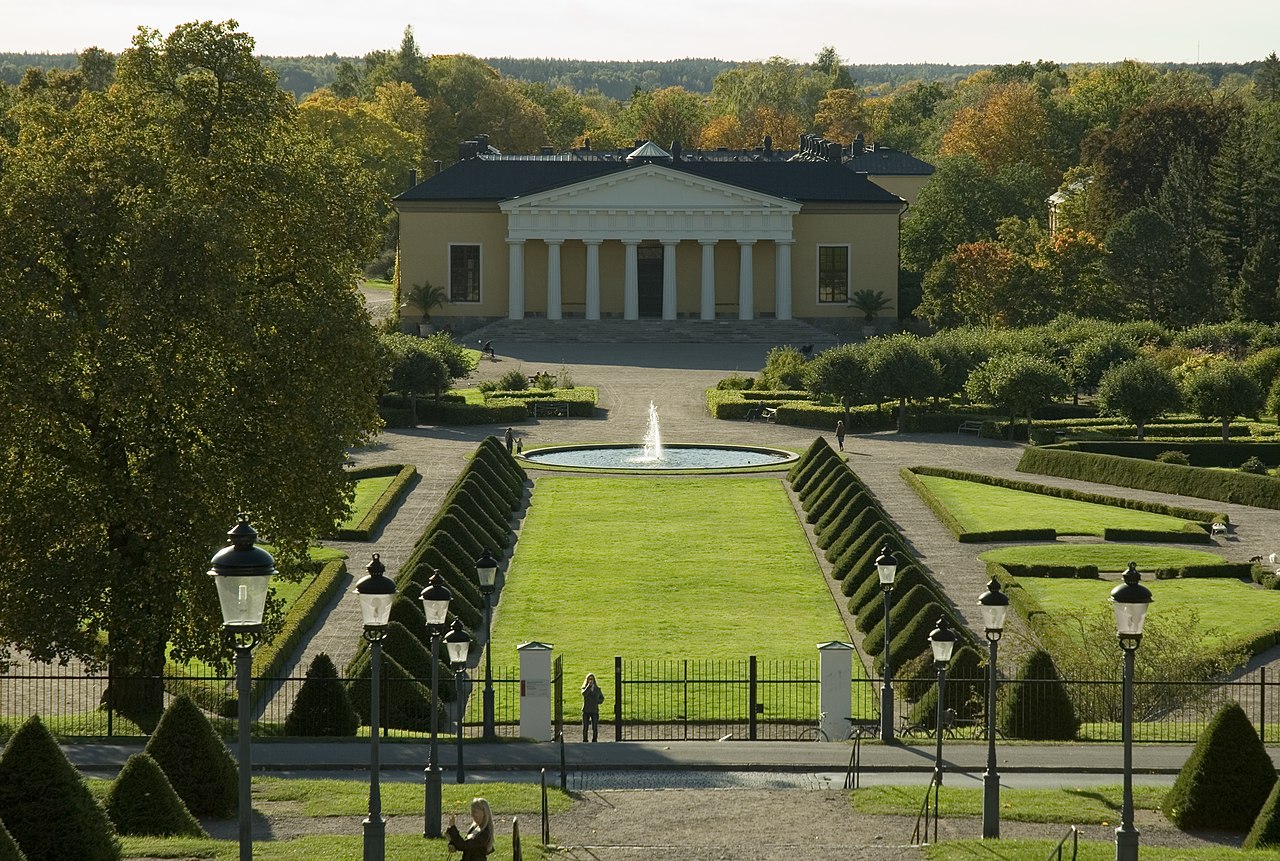
Another magnificent royal donation was that of the large baroque garden of the castle, given by Gustav III to the university when it was obvious that the old botanical garden was insufficient. A large new conservatory was built by the architect Louis Jean Desprez. Additional grounds adjacent to the baroque garden have since been added. The old garden of Rudbeck and Linnaeus was largely left to decay but was reconstructed in the years between 1918 and 1923 according to the specifications of Linnaeus in his work Hortus Upsaliensis from 1745.
Women at the university
The issue of women's right to study at universities was raised during the very last session of the estate parliament in 1865 in a motion from Carl Johan Svensén, a member of the farmers' estate. This was preceded by the foundation of the Royal Seminary for women and the progressive transformation of the education at private girls schools to become more and more similar to that of boys.
The reception was mixed, with the most negative views coming from the clergy. In the following years, the issue continued to be debated at the universities. The Flickskolekommittén 1866 (Girls' School Committee of 1866) recommended that women be given access to study, considering the fact that not all women could marry and even some educated women should have access to education to be able to support themselves professionally.
In 1870, it was decided to let women take the secondary school examination ("studentexamen") that gave the right to entry at universities and the right to study and complete degrees at the faculties of Medicine in Uppsala and Lund and at the Karolinska Institute in Stockholm. A common view was that female sensitivity and compassion would make women capable of working as physicians, but their right to work was still restricted to private practice. Women's rights to higher education were extended in 1873 when all degrees except those in the faculties of theology and the licentiate degree in Law were made accessible for women.
The first female student in Sweden was Betty Pettersson (1838–1885), who had already worked as a private tutor for several years when she took "studentexamen" in 1871. With a royal dispensation, she was allowed to enter university in Uppsala in 1872, the year before studies at the Philosophical faculty would actually be made generally available to women. She studied modern European languages and was the first woman in Sweden to complete an academic degree when she finished a film. kand. in 1875. She became the first woman to be employed as a teacher in a public school for boys. The first woman in Sweden to complete a doctoral degree was Ellen Fries (1855–1900), who entered Uppsala university in 1877 and became a PhD in history in 1883. Other female students of this period include Lydia Wahlström (1869–1954) who later became a noted educator, activist and writer on women's emancipation and suffrage. Defending a dissertation in history in 1900, she became the second woman to finish a doctorate at a Swedish university. In 1892, she founded the Uppsala Women's Student Association, which set up spex performances and other things enjoyed by male students but from which the women were excluded at the time. The members of the Association were the first woman to wear student caps in public, an important sign of their status. Elsa Eschelsson (1861–1911) was the first Swedish woman to finish a law degree and the first to become a "docent," but was not permitted to even hold the position of acting professor despite being formally qualified for this in everything but her sex. After years of conflicts with the professor of civil law A. O. Winroth, who wrote the paper on "Om tjenstehjonsförhållandet" and with the university board, she died in 1911 from an overdose of sleeping powder.
According to the constitution of 1809, only "native Swedish men" could be appointed to higher civil servant positions, including professorships. This was changed by the Behörighetslagen in 1925, and the first woman to hold a professorial chair at Uppsala University was Gerd Enequist, appointed professor of human geography in 1949.
Hildegard Björck who studied at the university became the first Swedish woman to receive an academic degree.
Administration and organisation
Central administration
The governing board of the university is the consistory, with representatives of the faculties as well as members representing the students and non-academic employees (three professors and three students), and ten university outsiders appointed by the Swedish government. All these members in the consistory have the right to vote.
The unions active at the university also have three representatives in the consistory; these members have the right to speak but not any right to vote.
Since the last reorganization in 1999, the university has had a separate body called the academic senate, which is a wider, but mostly advisory group representing teaching staff/researchers and students. The executive head of the university is the rector magnificus, whose deputy is the prorector. There are (also since 1999) three vice rectors, each heading one of the three "disciplinary domains" (Arts and Social Sciences, Medicine and Pharmacy, and Science and Technology) into which the nine faculties are divided. Each faculty has a faculty board and is headed by a dean (dekanus). The position of dean is held part-time by a professor of the faculty.
Faculties
Through the division of faculties and the addition of a previously independent school of Pharmacy as a new faculty, the traditional four-faculty organization of European universities has evolved into the present nine faculties. The disciplinary domains and their faculties are as depicted below.
Disciplinary Domain of Arts and Social Sciences
Faculty of Arts
Faculty of Social Sciences
Faculty of Languages
Faculty of Theology
Faculty of Law (Juridiska fakulteten) is the oldest law faculty in the Nordic countries and existed prior to the university's founding in 1477. The activities of the faculty include a wide range of research areas and specializations. This faculty has one department: the Department of Law.
Faculty of Educational Sciences (formerly the Department of Education, and was raised to the status of a faculty in its own right in 2002)
Disciplinary Domain of Medicine and Pharmacy
Faculty of Medicine
Faculty of Pharmacy, originally an independent "royal institute" in Stockholm, which was moved to Uppsala and incorporated with the university between 1968 and 1972.
Disciplinary Domain of Science and Technology
Faculty of Science and Technology: The engineering programs have since 1982 been marketed as the Uppsala School of Engineering (Uppsala Tekniska Högskola). This has however never been a separate institution. Still, only a unit within the Faculty of Science and Technology and the use of the term has been phased out after the Faculty of Mathematics and Natural Sciences was renamed the Faculty of Sciences and Technology in the 1990s.
Other
Uppsala University also hosts the Forum for South Asia Studies, a collaborative academic effort by its six faculties: Theology, Law, History and Philosophy, Social Sciences, Languages, and Educational Sciences. The Forum aims to facilitate and promote research and education related to the South Asian countries: India, Pakistan, Sri Lanka, Nepal, Bangladesh, Maldives and Afghanistan, on the national and international level, with Ferdinando Sardella, Faculty of Theology, serving as the Forum's director.
University Library
The university library holds about 5.25 million volumes of books and periodicals (131,293 shelf meters), 61,959 manuscripts, 7,133 music prints, and 345,734 maps and other graphic documents. The holdings of the collection of manuscripts and music include, among other things, the Gothic Bible manuscript Codex Argenteus.
The most widely recognized building of the university library is Carolina Rediviva, the "revived Carolina," thus named in reference to Academia Carolina (see illustration), which held the university library from the earliest times until 1691, when it was moved to the upper floor of Gustavianum, where it miraculously survived the great city fire of 1702. In the mid-18th century, there were plans to move it back to Academia Carolina or a new building in the same spot. The building was demolished in 1778 to make place for a new library, but this was never built and the area next to the cathedral where it stood is today a lawn. The present Carolina Rediviva was built in a different place and completed in 1841.
The present university library system comprises 19 branches, including the one in the Carolina building.
Uppsala University Hospital
The Uppsala Academic Hospital or Akademiska sjukhuset, which functions as a teaching hospital for the Faculty of Medicine and the Nursing School, is run by the Uppsala County Council in cooperation with the university. As of 2003, the hospital had 7,719 employees and as of 2004 1,079 places for patients.
The university hospital is actually older than the university, as it goes back to the earliest hospital, founded in Uppsala in 1302, and much later merged with the university clinic. This was used for 400 years until the great fire of 1702 which destroyed large parts of central Uppsala. A new hospital, which later became the Uppsala county hospital, was built in its place but was moved out of the town in 1811.
The first clinic with the specific intention to facilitate the practical education of medical students was the Nosocomium Academicum, founded in 1708 and located at the Oxenstierna Palace at Riddartorget beside the cathedral (see illustration above). The building (the former residence of the president of the Royal Chancellery Bengt Gabrielsson Oxenstierna) today houses the Faculty of Law.
The present Akademiska sjukhuset was founded in 1850 as an organizational merger of the county hospital and the university clinic, and a new building was inaugurated in 1867 on the hill below Uppsala Castle to the southeast. From this building, which is still in use, the present hospital complex has grown.
The Svedberg Laboratory
The Svedberg Laboratory (named after Theodor Svedberg) is a university facility that contains the Gustaf Werner cyclotron, which is used for research as well as for proton therapy for the treatment of cancer with close cooperation with the oncology clinic at Uppsala University Hospital. Such an accelerator and its gantries costs between $60 million and $100 million, and makes Uppsala University Hospital one of the approximately 40 centres in the world to provide such cancer treatment.