
The Ukrainian People's Republic (UPR) was a short-lived state in Eastern Europe. Prior to its proclamation, the Central Council of Ukraine was elected in March 1917 as a result of the February Revolution, and in June declared Ukrainian autonomy within Russia, which was later recognized by the Russian Provisional Government. Following the October Revolution, the Central Council of Ukraine denounced the Bolshevik seizure of power and proclaimed the establishment of the Ukrainian People's Republic in the approximate territory Russian governorates of Kiev, Volhynia, Kharkov, Kherson, Yekaterinoslav, Poltava, Chernigov and Podolia. The republic formally declared its independence from Russia on 22 January 1918.
After the October Revolution, an alternative government known as the Ukrainian People's Republic of Soviets was established in Kharkiv and engaged in a war against the Ukrainian People's Republic, receiving support from Soviet Russia. In addition, both parties were opposed by the White movement, Poland, Green armies, and anarchists, leading to a protracted conflict known as the Ukrainian War of Independence, part of the wider Russian Civil War, and resulting in numerous victims among Ukrainians fighting on different sides of the front. As a result of the fighting, Soviet Russia managed to extend its control over what would ultimately become the Ukrainian Soviet Socialist Republic, which became a founding member of the Soviet Union in 1922.
During its short existence, the republic went through several political transformations – from the socialist-leaning republic headed by the Central Council of Ukraine with its general secretariat, to the socialist republic led by the Directorate and by Symon Petliura. Between April and December 1918, the socialist authority of the Ukrainian People's Republic was suspended, having been overthrown by the pro-German Ukrainian State of Pavlo Skoropadskyi, who was elected as the Hetman of Ukraine by a congress of landowners. After the collapse of the Ukrainian State, the Ukrainian People's Republic declared its unification with the West Ukrainian People's Republic in January 1919. After the Polish–Ukrainian War, it signed an alliance with the Second Polish Republic.

In course of the Polish-Soviet War, the state lost the remainder of its territory to the Bolsheviks. Following the Peace of Riga, signed on 18 March 1921 between Poland, Soviet Russia (acting also on behalf of Soviet Belarus), and Soviet Ukraine, the republic's government continued its activities in exile. Following the Declaration of Independence of Ukraine, the leadership of the Ukrainian People's Republic officially recognized Ukraine as its legal successor and transferred its symbols of power to the Ukrainian president.
History
Revolutionary wave
The February Revolution in the Russian Empire, which took place on 8-12 March 1917, ended in victory of the democratic forces. In Ukraine, which had been a theatre of the First World War for the previous three years, as well as in Ukrainian communities in other parts of the empire, the revolutionary process took a different path than in the imperial centre, adopting a distinctively national character. Many of the revolutionary soldiers and workers who had overthrown the monarchy in Petrograd belonged to the Ukrainian ethnicity, and some of them were members of a secret Social Democratic organization coordinated by Volodymyr Vynnychenko, who at the time resided in Moscow. Following the revolution, on 13 April a Ukrainian national committee was created in Petrograd, headed by Oleksander Lototsky, and a Ukrainian fraction was formed in the Petrograd Soviet under the leadership of Oleksander Shulhyn.
On 17 March 1917 the Ukrainian Central Council (Central Rada) was established in Kyiv on the base of the local branch of the Society of Ukrainian Progressists. It became the centre of Ukrainian political life under the leadership of professor Mykhailo Hrushevsky, who arrived to Kyiv following his liberation from exile on 9 April. Hrushevsky's program articles in the Nova Rada daily newspaper, which started publishing soon thereafter turned him into an undisputed leader of the Ukrainian national movement. On 13 April a major demonstration took place in the Sofiyska Square, involving around 100,000 participants, many of whom waved blue-and-yellow flags and sang the Ukrainian national anthem. During the event, Hrushevsky delivered a speech, proclaiming the liberation of Ukraine from centuries-old subjugation and accepted a pledge of allegiance from the people to their country.

In parallel, the Ukrainian movement started organizing itself institutionally. Starting from early April, Prosvita was reestablished, the Ukrainian Cooperative Committee was founded, and the Temporary Military Council was created. During the same time, Andrey Sheptytsky was liberated from Russian imprisonment and allowed to return to Galicia. On 10 April the Ukrainian Central Council supported the convocation of the Ukrainian National Congress, and on 11 April the Ukrainian Military Society of Hetman Polubotok headed by Mykola Mikhnovsky was established and started works on organization of the 1st Ukrainian Volunteer Regiment of Bohdan Khmelnytsky.
On 19-21 April the Ukrainian National Congress took place in Kyiv, involving about 900 delegates. The Congress confirmed the election of the Ukrainian Central Council of 150 members headed by Mykhailo Hrushevsky. On 17 May the commander of the Southwestern Front General Brusilov permitted the organization of the Bohdan Khmelnytsky Regiment which drafted 3,574 volunteers. Starting from 18 May, the Ukrainian Military Congress took place in Kyiv, attended by over 700 delegates. The Congress elected the Ukrainian General Military Committee of 18 members headed by Symon Petliura.
Major political Ukrainian parties which established themselves after the creation of the Central Rada were the Ukrainian Party of Socialist Federalists (headed by Serhiy Yefremov), Ukrainian Social-Democratic Labour Party (Vynnychenko), Ukrainian Socialist-Revolutionary Party (supported by Hrushevsky) and Spilka. Among less influential forces were the Ukrainian Party of Socialist Independists and the Ukrainian Democratic Agriculturalist Party (established in Lubny), both of whom proclaimed the goal of immediate independence of Ukraine, as well as the Ukrainian Federal Democratic Party (Volodymyr Naumenko), whose leadership opposed the separation of Ukraine and pursued a moderate social program.

Declaration of autonomy
The attempts of Central Rada to establish itself as the main political force in Ukraine were opposed both by a significant part of local workers and revolutionary soldiers, who viewed Ukrainian autonomism as a "stab in the back" against the Revolution, and by the Provisional Government. In March the Russian revolutionary cabinet headed by Georgy Lvov allowed the establishment of the post of representative in Ukrainian affairs, appointed Dmytro Doroshenko, Oleksander Lototsky and Ivan Kraskovsky as governors in Galicia and Bukovina, restored Ukrainians' rights in the occupied territories of Austria-Hungary and permitted the introduction of Ukrainian language in schools and administration of Ukrainian lands. However in May the Provisional Government refused to allow Ukrainian representatives to attend planned international conferences, declined the plan for establishment of a special commissariat of Ukrainian affairs and took a negative attitude to Ukrainization of the armed forces and liberation of arrested Galician Ukrainians. A hostile position against Ukrainian autonomy demands was also taken by the Petrograd Council.
On 10–15 June 1917 the 1st All-Ukrainian Peasant Congress took place in Kyiv with participation of 2,200 delegates. On 11 June an extraordinary congress of the council of Doroshenko Ukrainian Military Society in Simferopol took a decision to create a separate Ukrainian regiment. Between 18 and 24 June, ignoring the prohibition of the Russian Provisional Government, the 2nd Ukrainian Military Congress took place in Kyiv. The congress accepted the declaration of a detailed plan of Ukrainization of Russian Army units, leaving Symon Petliura as the head of the Ukrainian General Military Committee, and acted to regulate the issue of Free Cossacks. The congress showed its support to the Ukrainian Central Council. The council of Kharkov Governorate recognized the Ukrainian Central Council as a government authority in Ukraine.
On 24 June 1917, the Central Council of Ukraine declared its autonomy as part of the Russian Republic by its First Universal at the All-Ukrainian Military Congress. The highest governing body of the Ukrainian People's Republic became the General Secretariat headed by Volodymyr Vynnychenko, which was elected on 28 June. The non-Ukrainian revolutionary forces perceived the composition of the new government as usurpation of power by the Central Rada. However, the organ's power couldn't be ignored, and eventually both the Provisional Government and the Petrograd Council favoured negotiations with the Ukrainian side.

Attempts of compromise with the Provisional Government
On 11 July a delegation of the Russian Provisional Government composed of Prime Minister Alexander Kerensky, foreign minister Mikhail Tereshchenko, transport minister Nikolai Nekrasov and minister of the post Irakli Tsereteli arrived to Kyiv. As a result of talks with Hrushevsky, Vynnychenko and Petliura, the Provisional Government recognized the Secretariat, appointing it as the representative governing body of the Russian Provisional Government and limiting its powers to five governorates: Volyn, Kiev, Podolia, Chernigov, and Poltava. On 14 July the Ukrainian Central Council created the Petty Council consisting of 40 representatives from Ukrainians and 18 from national minorities. On 16 July that organ adopted the Second Universal of the Ukrainian Central Council, and on 29 July – the Statute of the Supreme Government of Ukraine.
The Second Universal declared Ukraine's course for autonomy inside of Russia, which was to be officially approved by the future Russian Constituent Assembly. In addition, it ordered the inclusion of at least 30% of ethnic minority representatives into the Central Council, making it a full-fledged Ukrainian parliament. The General Secretariat was reformed as well, including four members from the Russian, Polish and Jewish minorities and turning into an institution of the Provisional Government, which removed its subordination to the Central Rada. At first Vynnychenko protested against that decision and left his post as the Secretariat's leader, but eventually returned to reassemble the organ after the Central Rada issued the Second Universal. According to the 17 August Instruktsiya (Temporary Instruction) of the Russian Provisional Government, it recognized the competency of the General Secretariat over five Governorates: Kiev, Volyn, Poltava, Chernihiv, and Podillia. Other territories could recognize the Secretariat's rule in their territories according to decisions of their local governments. At the same time, the Provisional Government was forced to formally recognize Ukraine as an administrative unit of its own.
Breakdown of relations with Petrograd
Despite the formal recognition of Ukrainian autonomy, in reality the Provisional Government failed to act upon its own Instruction, and systematically hindered the operations of Central Rada. This attitude was contributed to by the failure of Ukrainian parties in city duma elections during the summer. Ukrainization of army units was also hindered by authorities in Petrograd, and on 8 August a terrorist attack took place at the Post-Volynsky railroad station in Kyiv, where the newly formed Bohdan Khmelnytsky Regiment was attacked by the Moscow cuirassiers and Don Cossacks. The new General Secretariat headed by Vynnychenko was approved by the Provisional Government only on 14 September.
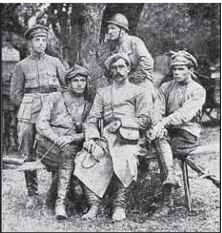
Between 21 and 28 September 1917, the Congress of the Enslaved Peoples of Russia was organized in Kyiv at the initiative of Central Rada. Its members adopted a program of immediate transformation of the Russian state into a federation of free peoples. Simultaneously, the administrative apparatus of the Provisional Government started failing, which caused organizational difficulties and lack of financial support for the General Secretariat. On 22 September the Petty Council adopted the declaration about the future convention of the Ukrainian Constituent Assembly; at the same time, representatives of national minorities in the council condemned the intentions of Ukraine to separate from Russia. On 13 October, after a petition by the Kyiv Court Chamber, the Russian Provisional Government initiated an investigation against the General Secretariat for its intention to convene the assembly.
Ukraine after the October Revolution
Following the news about the 7 November October Revolution in Petrograd, the Petty Council created the Regional Committee in Protection of Revolution in Ukraine. The committee announced the extension of its powers over nine Ukrainian governorates. General Kvetsinsky, head of the Kiev Military District subordinated to the Provisional Government, refused to recognize the Regional Committee, which soon dissolved, transferring all of its powers to the General Secretariat. On 8 November the Ukrainian Central Council adopted a resolution which condemned the revolution in Petrograd. In protest, the Bolsheviks left the Regional Committee and the council. On the same day, the Kyiv faction of the Bolshevik Party instigated an uprising in Kyiv in order to establish Soviet power in the city. Forces of Kiev Military District attempted to stop the revolt, but after the Rada threw its support behind the local Bolsheviks, the district's command was forced to leave the city, moving to the Don. Not feeling confident enough at the time, the Bolsheviks refused to turn their weapons against the Rada. On 11 November the Central Council adopted a bill on elections to the Ukrainian Constituent Assembly, handing it for final approval by the Petty Council. On 16 November the Rada and the General Secretary were declared to be supreme state authorities, and General Secretary of Military Affairs Symon Petliura subordinated the Kyiv militia (law enforcement) to the Ukrainian government.
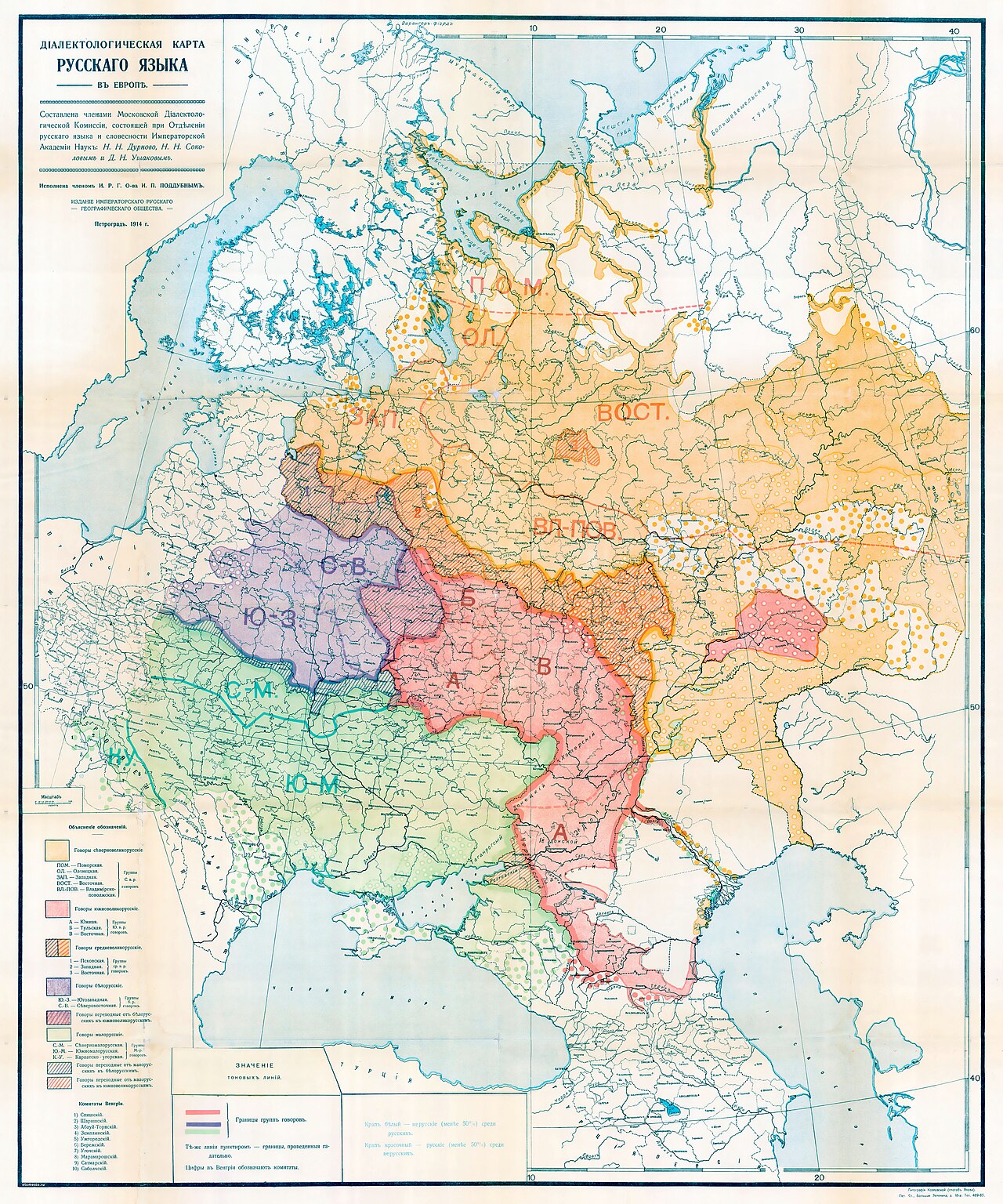
After expelling the Provisional Government's forces, Central Rada announced a wider autonomy for the Ukrainian Republic, while still maintaining ties to Russia. The territory of the republic was defined by the Third Universal adopted on 20 November 1917 (7 November by Old Style) and included the governorates of Volyn, Kiev, Podillia, Chernihiv, Poltava, Kharkiv, Katerynoslav, Kherson and Taurida (except of Crimea). It also stated that the people of Voronezh, Kholm, and Kursk governorates were welcome to join the republic through a referendum. Additionally, the Universal stated that in absence of a legitimate government in the Russian Republic after the October Revolution, Central Rada would function as the supreme governing body in Ukraine until order could be restored. The Rada condemned all revolutionary activities such as the October Revolution to be threatening with civil war and expressed its hopes for a peaceful resolution of the crisis. On the day of the Universal's publication, Russian Cadet deputy V. Krupkov and Polish representative W. Rudnicki surrendered their mandates at the Central Council. On 22 November the document was solemnly proclaimed at Kyiv's Sofiyska Square in the presence of French, Italian, and Romanian diplomatic missions.
In addition to its political content, the Third Universal proclaimed the freedom of speech and press, free practice of religion, permitted the organization of congresses, conventions and strikes, guaranteed inviolability of personality and private residence, right to use native languages, amnesty and just trial. Death penalty was abolished along with private ownership on land. Right of workers' control over industrial enterprises was recognized along with eight-hour working day. Ethnic minorities were provided the right of national personal autonomy, and a reform of local government was declared.
The 1917 Russian Constituent Assembly election in late November demonstrated mass popular support for the Central Rada in regions under its control, with Ukrainian parties winning around 75% of total votes, compared to only 10% supporting the Bolsheviks. On 21 November the General Secretary of Military Affairs Symon Petliura appointed General Pavlo Skoropadsky as commander of the armed forces in Right-bank Ukraine. On 27 November the Ukrainian Central Council adopted a resolution regarding the Kholm Governorate, protesting against its annexation by Poland.
On 30 November the Petty Council adopted the Law "On the Ukrainian Constituent Assembly" establishing its composition of 301 members from the following regions:
Kiev Governorate – 45
Volyn Governorate – 30
Podillia Governorate – 30
Katerynoslav Governorate – 36
Poltava Governorate – 30
Kherson Governorate – 34
Kharkiv Governorate – 35
Taurida Governorate – 9
Chernihiv Governorate – 27
Ostrohozk district – 15
Each deputy represented 100,000 inhabitants, and the right of vote was provided to citizens of 20 years and older; the Central Election Commission to observe the election was established. The election took place on 9 January 1918, but only 171 delegates could be elected.
Conflict with the Bolsheviks
On 30 November the General Secretariat refused to recognize Sovnarkom as a legal authority of Russia. After a brief truce, the Bolsheviks realized that the Rada had no intention of supporting their revolution. After breaking relations with the Central Rada, Bolshevik forces in Kyiv started preparing to organize a rebellion. However, on the night of 13 December, the day of the planned uprising in Kyiv, the conspirators and their armed supporters were detained by Ukrainian autorities and deported from the country. Simultaneously, the 1st Ukrainian Corps of general Skoropadsky joined the Free Cossacks and disarmed elements of the 2nd Guards Corps, which were moving on Kyiv under the leadership Yevgenia Bosch, and deported them to Russia across Belarus.
On 17 December the Sovnarkom issued an ultimatum to the Ukrainian government, which, while formally recognizing Ukraine's autonomy, demanded that its authorities ban the movement of Don Cossacks from the front and stop disarming Bolshevik troops in its territory. The ultimatum, seen as a pretext for occupation of Ukraine, was declined by Kyiv. At the same time, the All-Ukrainian Council of Soviets was organized in Kyiv. On 19 December the Congress expressed its complete trust in the Ukrainian Central Council and General Secretariat and condemned the ultimatum of Lenin-Trotsky. Having suffered a defeat, Bolshevik representatives at the congress moved to Kharkiv and joined with Soviet deputies from Donbas and Kryvbas districts, declaring themselves to be the "First All-Ukrainian Congress of Soviets". The congress declared the government of the Ukrainian People's Republic to be illegal and proclaimed the Ukrainian People's Republic of Soviets with its capital in Kyiv, establishing the People's Secretariat of Ukraine and the All-Ukrainian Central Executive Committee, which it declared to be the only legitimate organs of power in the country. Soon afterwards the Red Guard entered Left-bank Ukraine from the areas of Gomel and Bryansk in support of the newly proclaimed Soviet government.
In addition to the invading Russian troops, Bolsheviks controlled forces of Bolshevized soldiers and workers in various locations around Ukraine, especially on the anti-German front and in the areas of Donbas and Kharkiv. Those troops engaged in rebellion against Ukrainian authorities. Many ethnically Ukrainian units declared their neutrality, and those who wished to defend Kyiv had difficulties with breaking through Bolshevik-controlled territories around the front, meanwhile the majority of Free Cossacks concentrated on defending their own local territories. As a result, the only reliable military force available to the Central Rada were volunteer troops and Kyiv's Free Cossack worker troops headed by Mykhailo Kovenko.
On 25 December 1917 four groups of a 30-thousand strong Bolshevik army under command of Vladimir Antonov-Ovseenko entered Ukrainian territory, and on the next day occupied Kharkiv. From there Ovseenko's troops moved in the direction of Poltava and Lozova, occupying Katerynoslav on 9 January and Oleksandrivsk on 15 January. Poltava fell on 20 January. Meanwhile the Bryansk group commanded by Znamensky occupied Hlukhiv on 19 January and Konotop on the 26th. Moving from Poltava, troops under command of Mikhail Muravyov took Romodan and advanced on Bakhmach, taking the city on 27 January. In Bakhmach all three groups of Bolshevik forces united and advanced on Kyiv.
Among the conflict between Bolsheviks and the Central Rada, a series of regional Soviet republics on the territory of Ukraine proclaimed their independence and allegiance to the Petrograd Sovnarkom, including the Odesa Soviet Republic and Donetsk-Krivoi Rog Soviet Republic. The latter was created by a direct decree of Lenin as part of the Russian SFSR with its capital in Kharkiv, and was headed by Fyodor Sergeyev who became the chairman of the local government as well as member of the Soviet government of Ukraine. Unlike the latter, the Odesa Republic was not recognized by any other Bolshevik government and on its own initiative entered a military conflict with Romania for control over the Moldavian Democratic Republic, whose territory it was contesting.
Proclamation of independence
On 14–15 December the Petty Council adopted the Law on the General Court, the highest judicial institution of the Ukrainian People's Republic. International diplomatic missions transferred their offices from Mohyliv-Podilsky to Kyiv. The government of France on 18 December announced its intention to establish diplomatic relations with Ukraine. England declared a similar intention. On 22 December the Petty Council adopted the Law on taxes and duties, according to which all taxes and duties belonged to the State Treasury of Ukraine.
On 23 December the General Secretariat determined the composition of the Ukrainian delegation at the peace talks in Brest-Litovsk, and on 25 December Ukraine was officially invited through a telegram to join the negotiations. On 3 January 1918 General Georges Tabouis was appointed the Commissar of French Republic to the Government of Ukrainian People's Republic. At the start of peace negotiations in Brest on 6 January, the head of Ukrainian delegation Vsevolod Holubovych requested the recognition of Ukraine as a sovereign state, attachment of the Kholm Governorate to its territory and conduction of a plebiscite in territories of Austria-Hungary where Ukrainian population dominated. On 10–12 January the Central Powers recognized the Ukrainian delegation at the talks in Brest as separate and allowed it to conduct negotiations on behalf of the Ukrainian People's Republic.
Amid the ongoing war against the Bolsheviks, on 16 January the Petty Council adopted the law about creation of the Ukrainian National Army recruited on the base of militia principle. Due to the aggression from Soviet Russia, on 22 January 1918, the Central Rada issued its Fourth Universal, breaking ties with Bolsheviks and proclaiming a sovereign Ukrainian state. On the same day, the law on National-Individual Autonomy was adopted.
The Fourth Universal renamed the General Secretariat into Council of Ministers, replaced the regular army with militia, established state control over trade and banking, ordered elections of local councils and appointed the convention of Constituent Assembly. Central Rada approved an agrarian law, which included the nationalization of land, and introduced the 8-hour working day.
Brest treaty
On 29 January 1918 the Battle of Kruty contributed to a slowdown of the Bolshevik advance on Kyiv. Simultaneously, a pro-Bolshevik workers' uprising started in the capital, distracting a number of Ukrainian units from the front. Besieged by the Bolsheviks and having lost much of its territory, the Rada was forced to seek foreign aid, and signed the Treaty of Brest-Litovsk on 9 February 1918 to obtain military help from the German and Austro-Hungarian Empires, whose governments in their turn were interested in procuring Ukrainian grain to supply their own populations. The treaty was signed on the day of Kyiv's fall to the Red Army, and due to the advance of Bolshevik forces the government of Ukraine was evacuated to Zhytomyr. After taking Kyiv, Muravyov's troops engaged in a campaign of mass terror against the city's population. In Volhynia elements of the former 7th Army occupied Proskuriv, Zhmerynka, Koziatyn, Berdychiv, Rivne and Shepetivka, meanwhile Ukrainian forces were able to gain control over the railway line connecting Zhytomyr, Korosten and Sarny.
According to the Brest treaty, territories of the Ukrainian People's Republic expanded to include lands in Kholm region to the east of the line Tarnogród-Biłgoraj-Szczebrzeszyn-Krasnystaw-Puchaczów-Radyn-Międzyrzec-Sarniki, but the exact border was to be determined by a special commission with participation of the Polish side. Ukraine also issued claims on Galicia and Bukovyna, but those were declined by Austro-Hungarian foreign minister Ottokar von Czernin, who only agreed to unify both entities into a single Crown land. Both sides mutually refrained from demanding reparations. The treaty also regulated supplies of agricultural and industrial goods, established the principles of customs, judicial, consular and diplomatic relations, exchange of prisoners of war etc.
Occupation by Central Powers
Following the signing of Brest agreement, on 12 February the Ukrainian People's Republic issued an official appeal for Germany to provide help in forcing the Bolsheviks out of Ukraine. On 24 February German forces started advancing on the northern section of the front, with Austro-Hungarian troops, including the Ukrainian Sich Riflemen, joining them three days later in the south. Ukrainian troops took part in the advance of Central Powers and experienced an influx of volunteers. After several successful actions against the Bolsheviks, on 1 March 1918 the Ukrainian army under command of K. Prisovsky and S. Petliura entered Kyiv, followed by German forces who arrived several days later.
On 20 February 1918 the council of the Kuban People's Republic accepted the resolution for a federal union of Kuban with Ukraine as Bolshevik forces pushed towards Yekaterinodar. It was agreed to forward the resolution for ratification to the Ukrainian government. On 27 February the Ukrainian Central Council adopted the law about the introduction of a new style calendar, according to which all dates were moved 13 days ahead. The Petty Council adopted the law on the new monetary system, establishing hryvnia consisting of 8.712 units of pure gold, as currency. The law establishing the coat of arms of the Ukrainian People's Republic – the Trident (Tryzub) was adopted on the same day. On 2 March the Petty Council adopted the law on citizenship of Ukraine and the law on new administrative system. The Russian established gubernias were to be replaced by a new administrative unit – zemlia (land). After the expulsion of Bolshevik forces, on 18 March several students fallen at the Battle of Kruty were reburied in Kyiv. Convocation of the Ukrainian Constituent Assembly was planned for 11 April – 12 May 1918.
By the end of April, German troops and the Ukrainian Zaporozhian Division commanded by general Natiyev had finished the liberation of Left-bank Ukraine from the Bolsheviks. Meanwhile troops of otamans Bolbochan and Sikevych entered Crimea and reached the borders of Don. However, on demand of the Germans Ukrainians had to evacuate Crimea, as it was not recognized as part of Ukrainian territory. The campaign's success was contributed by the use of armoured trains in combination with cavalry. By April 1918 the German-Austrian offensive had completely removed the Bolsheviks from Ukraine. The Central Powers' victories in Ukraine were caused by the apathy of the locals and the inferior fighting skills of Bolshevik troops compared to their Austro-Hungarian and German counterparts. In April 1918 troops loyal to the Ukrainian People's Republic took control of several cities in the Donbas region. By the end of August 1918, over 30 divisions of German and Austro-Hungarian troops were stationed in Ukraine.
On 13 April the Central Council adopted a resolution condemning the annexation of Bessarabia by Romania. On 23 April an economic treaty was signed between Ukraine, Germany and Austria-Hungary, and on 25 April the law on the Central Economic Council of Ukraine was adopted. Concurrently with all these events and a few days prior to the change of power in the country, on 24 April 1918 the government of Belarus confirmed the establishment of Belarusian Chamber of Commerce in Kyiv headed by Mitrofan Dovnar-Zapolsky on the initiative of the Belarusian secretary of finance Pyotr Krechevsky.
After the treaty of Brest-Litovsk, Ukraine became a virtual protectorate of the German Empire which at that time seemed more favorable than being overrun by the Soviet forces that were spreading havoc in the country. Germany was anxious about losing the war and was trying to speed up the process of food extraction from Ukraine, so it decided to install its own administration in the person of Generalfeldmarschall von Eichhorn who replaced the Colonel General Alexander von Linsingen. On 6 April the commander of the Army group Kijew issued an order in which he explained his intentions to execute the conditions of the treaty. That, of course, conflicted with the laws of the Ukrainian government, which annulled his order.
Deposition of Central Rada
The arrival of German and Austrian troops to Ukraine resulted in a significant change in the country's politics. The left-wing Central Rada, which was dominated by the Socialist Revolutionary Party, was perceived by the occupying forces as unable to establish law and order, meanwhile the Central Powers' attempts to prevent stealing of grain and restore the export of goods were seen by the Ukrainian government as foreign intrusion in its internal affairs. The ruling regime was unpopular among large parts of the Ukrainian population, especially landowners and richer peasants.