
Thomas Jonathan "Stonewall" Jackson (January 21, 1824 – May 10, 1863) was a Confederate general and military officer who served during the American Civil War. He played a prominent role in nearly all military engagements in the eastern theater of the war until his death. Military historians regard him as one of the most gifted tactical commanders in U.S. history.
Born in what was then part of Virginia (now in West Virginia), Jackson received an appointment to the United States Military Academy, graduating in the class of 1846. He served in the United States Army during the Mexican–American War, distinguishing himself at the Battle of Chapultepec. From 1851 to 1861, he taught at the Virginia Military Institute.
When Virginia seceded from the United States in May 1861 after the Battle of Fort Sumter, Jackson joined the Confederate States Army. He distinguished himself commanding a brigade at the First Battle of Bull Run in July, providing crucial reinforcements and beating back a fierce Union assault. Thus Barnard E. Bee compared him to a "stone wall", which became his enduring nickname.

Jackson performed exceptionally well in various campaigns over the next two years. On May 2, 1863, he was accidentally shot by Confederate pickets. He lost his left arm to amputation. Weakened by his wounds, he died of pneumonia eight days later. Jackson's death was a severe setback for the Confederacy. After his death, his military exploits developed a legendary quality, becoming an important element of the pseudohistorical ideology of the "Lost Cause".
Ancestry
Thomas Jonathan Jackson was a great-grandson of John Jackson (1715/1719–1801) and Elizabeth Cummins (also known as Elizabeth Comings and Elizabeth Needles) (1723–1828). John Jackson was an Ulster-Scots Protestant from Coleraine, County Londonderry, in the north of Ireland. While living in London, England, he was convicted of the capital crime of larceny for stealing £170 (equivalent to £32,589 in 2025); the judge at the Old Bailey sentenced him to seven years penal transportation. Elizabeth, a strong, blonde woman almost 6 feet (180 cm) tall, born in London, was also convicted of felony larceny in an unrelated case for stealing 19 pieces of silver, jewelry, and fine lace, and received a similar sentence. They both were transported on the merchant ship Litchfield, which departed London in May 1749 with 150 convicts. John and Elizabeth met on board and were in love by the time the ship arrived at Annapolis, Maryland. Although they were sent to different locations in Maryland for their bond service, the couple married in July 1755.
The family migrated west across the Blue Ridge Mountains to settle near Moorefield, Virginia (in Hardy County now in West Virginia) in 1758. In 1770, they moved farther west to the Tygart Valley. They began to acquire large parcels of virgin farming land near the present-day town of Buckhannon (the Hardy County seat), including 3,000 acres (12 km2) in Elizabeth's name. John and his two teenage sons volunteered to serve their new county in the American Revolutionary War, traveling southeast to fight in the Battle of Kings Mountain on October 7, 1780; John finished the war as captain and served as a lieutenant of the Virginia militia after 1787. While the men were in the Army, Elizabeth converted their home to a haven, "Jackson's Fort", for refugees from Indian attacks.

John and Elizabeth had eight children. Their second son was Edward Jackson (1759–1828), and Edward's third son was Jonathan Jackson, Thomas's father. Jonathan's mother died on April 17, 1796. Three years later, on October 13, 1799, his father married Elizabeth Wetherholt, and they had nine more children.
Early life
Early childhood
Thomas Jackson was born on January 21, 1824 in the town of Clarksburg, the Harrison County seat named after the Revolutionary War hero George Rogers Clark, and on a historic road which in the 1830s became the Northwestern Turnpike. He was the third child of Julia Beckwith (née Neale) Jackson (1798–1831) and her attorney husband, Jonathan Jackson (1790–1826). Both of Jackson's parents had been born in Virginia; Julia's family came from nearby Parkersburg on the Ohio River. They married in 1817 and settled in Clarksburg, where Julia bore a daughter Elizabeth in 1819, and a son Warren in 1821. Thomas was named for his maternal grandfather. Some dispute the actual location of Jackson's birth. A historical marker on the floodwall in Parkersburg, claims that he was born in a cabin near that spot when his mother was visiting her parents. Some contend that in Jackson's early childhood, he was called "The Real Macaroni", though the origin of the nickname and whether it really existed are unclear.
Thomas's sister Elizabeth (age six) died of typhoid fever on March 6, 1826, with two-year-old Thomas at her bedside. His father also died of typhoid fever on March 26, 1827, after nursing his daughter. Jackson's mother gave birth to his sister (and later this man's confidante) Laura Ann the day after Jackson's father died. Julia Jackson thus was widowed at 28, with three young children (including the newborn), and her husband's debts (as Jonathan Jackson had been a compulsive gambler and poor business manager) She sold the family's possessions to pay the debts, and the local Masonic order offered her the use of a small (twelve foot square) one room house. Julia took in sewing and opened a private school to support herself and her three young children for about four years.
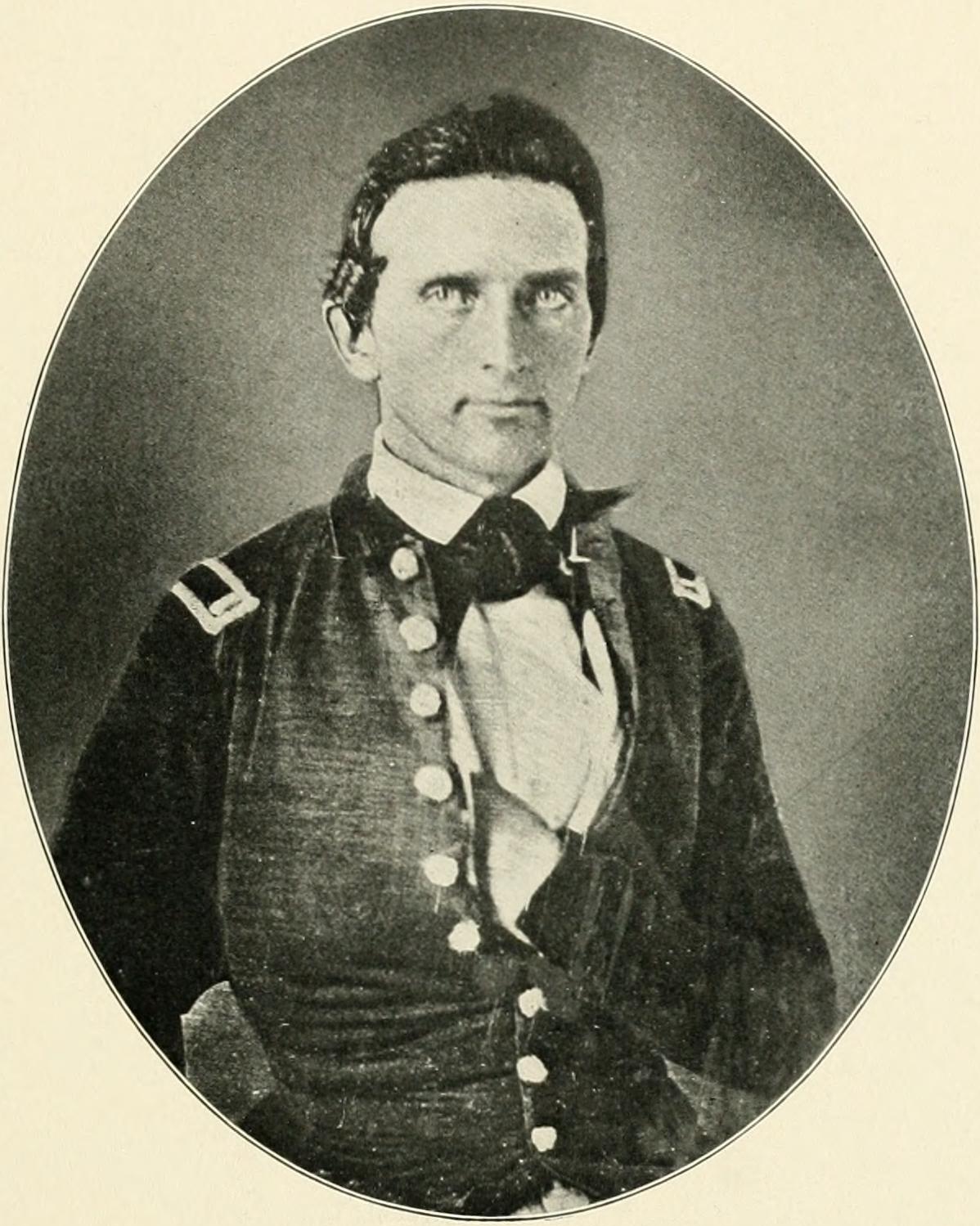
In 1830, Julia Neale Jackson remarried, to a widower fifteen years older than her, and with eight children scattered in various places, against her friends' advice. Her new husband, Captain Blake B. Woodson, was an attorney who descended from the First Families of Virginia and Revolutionary War patriot John Woodson. His father (Miller Woodson) had been the Cumberland County clerk of court, and Blake B. Woodson had served one term in the Virginia House of Delegates (1807-1808) representing Cumberland County before moving westward and becoming the Fayette County clerk. They lived near the county seat of Fayetteville in the New River Valley. Unfortunately for this boy and his siblings, Woodson was harsh and verbally abusive. By the fall of 1831, Julia decided to send her children to live with relatives. Warren, Julia's eldest son, moved to live with his uncle Alfred Neale near Parkersburg, and at the age of sixteen, he was hired to teach in Upshur County. Julia moved to Fayette County with her other two children, Thomas and Laura, but remained in poor health. Caring for the children proved such a strain, that she agreed to let their Grandmother Jackson take them to her home in Lewis County (formed from Harrison County), about four miles north of the county seat of Weston, where she lived with her unmarried daughters and sons. This boy's grandmother sent one of her sons (this boy's uncle) and a slave to Fayette County to retrieve the children. When he arrived and revealed the purpose of his visit, a commotion arose among the children, who did not want to leave their mother. Thomas, now six years old, slipped away to the nearby woods, where he hid, only returning to the house at nightfall. After a day or two of coaxing and numerous bribes, the uncle finally with the help of their mother persuaded the children to make the trip, which took several days. When they arrived at Jackson's Mill, they became the pets of an indulgent grandmother, two maiden aunts, and several bachelor uncles, all of whom were known for their great kindness of heart and strong family attachment. However, on December 4, 1831, after giving birth to Thomas's half-brother, William Wirt Woodson, Julia died of complications. Julia was buried in an unmarked grave in a homemade coffin in Westlake Cemetery along the James River and Kanawha Turnpike in Fayette County, within the corporate limits of present-day Ansted.
Then in August 1835, Thomas and Laura's grandmother died.
Working and teaching at Jackson's Mill
As their mother's health continued to fail, Jackson and his sister Laura Ann were sent to live with their half-uncle, Cummins Jackson, who owned a grist mill in Jackson's Mill (near present-day Weston in Lewis County in central West Virginia). Their older brother, Warren, went to live with other relatives on his mother's side of the family, but he later died of tuberculosis in 1841 at the age of twenty. Thomas and Laura Ann returned from Jackson's Mill in November 1831 to be at their dying mother's bedside. They spent four years together at the Mill before being separated—Laura Ann was sent to live with her mother's family, Thomas to live with his Aunt Polly (his father's sister) and her husband, Isaac Brake, on a farm four miles from Clarksburg. Thomas was treated by Brake as an outsider and, having suffered verbal abuse for over a year, ran away from the family. When his cousin in Clarksburg urged him to return to Aunt Polly's, he replied, "Maybe I ought to, ma'am, but I am not going to." He walked eighteen miles through mountain wilderness to Jackson's Mill, where he was welcomed by his uncles and he remained there for the following seven years.
Cummins Jackson was strict with Thomas, who looked up to Cummins as a schoolteacher. Jackson helped around the farm, tending sheep with the assistance of a sheepdog, driving teams of oxen and helping harvest wheat and corn. Formal education was not easily obtained, but he attended school when and where he could. Much of Jackson's education was self-taught. He once made a deal with one of his uncle's slaves to provide him with pine knots in exchange for reading lessons; Thomas would stay up at night reading borrowed books by the light of those burning pine knots. Virginia law forbade teaching a slave, free black or mulatto to read or write; nevertheless, Jackson secretly taught the slave, as he had promised. Once literate, the young slave fled to Canada via the Underground Railroad. In his later years at Jackson's Mill, Thomas served as a schoolteacher.
Brother against sister
The Civil War has sometimes been referred to as a war of "brother against brother", but in the case of the Jackson family, it was brother against sister. Laura Jackson Arnold was close to her brother Thomas until the Civil War period. As the war loomed, she became a staunch Unionist in a somewhat divided Harrison County. She was so strident in her beliefs that she expressed mixed feelings upon hearing of Thomas's death. One Union officer said that she seemed depressed at hearing the news, but her Unionism was stronger than her family bonds. In a letter, he wrote that Laura had said that she "would rather know that he was dead than to have him a leader in the rebel army". Her Union sentiment also estranged her later from her husband, Jonathan Arnold.
Early military career
West Point
In 1842, Jackson was accepted to the United States Military Academy at West Point, New York. Because of his inadequate schooling, he had difficulty with the entrance examinations and began his studies at the bottom of his class. Displaying a dogged determination that was to characterize his life, he became one of the hardest working cadets in the academy, and moved steadily up the academic rankings. Jackson graduated 17th out of 59 students in the Class of 1846. General Daniel Harvey Hill later remembered that Jackson's peers at West Point had said of Jackson, "If the course had been one year longer he would have graduated at the head of his class".

U.S. Army and the Mexican War
Jackson began his United States Army career as a second lieutenant in Company K of the 1st U.S. Artillery Regiment. His unit proceeded through Pennsylvania, down the Ohio and Mississippi Rivers to New Orleans, and from there the troops embarked for Point Isabel, Texas, from where they were sent to fight in the Mexican–American War. Jackson's unit was directed to report to General Taylor and proceed immediately via Matamoros and Camargo to Monterey and then to Saltillo. Prior to the Battle of Buena Vista, Lieutenant Jackson's unit was ordered to withdraw from General Taylor's army and march to the mouth of the Rio Grande, where they would be transferred to Veracruz. He served at the Siege of Veracruz and the battles of Contreras, Chapultepec, and Mexico City, eventually earning two brevet promotions, and the regular army rank of first lieutenant. It was in Mexico that Jackson first met Robert E. Lee.
During the Battle of Chapultepec on September 13, 1847, he refused what he felt was a "bad order" to withdraw his troops. Confronted by his superior, he explained his rationale, claiming withdrawal was more hazardous than continuing his overmatched artillery duel. His judgment proved correct, and a relieving brigade was able to exploit the advantage Jackson had broached. In contrast to this display of strength of character, he obeyed what he also felt was a "bad order" when he raked a civilian throng with artillery fire after the Mexican authorities failed to surrender Mexico City at the hour demanded by the U.S. forces. The former episode, and later aggressive action against the retreating Mexican army, earned him field promotion to the brevet rank of major.
After the war, Jackson was briefly assigned to units in New York, and later to Florida during the Second Interbellum of the Seminole Wars, during which the Americans were attempting to force the remaining Seminoles to move west. He was stationed briefly at Fort Casey before being named second-in-command at Fort Meade, a small fort about thirty miles south of Tampa. His commanding officer was Major William H. French. Jackson and French disagreed often, and filed numerous complaints against each other. Jackson stayed in Florida less than a year.

Lexington and the Virginia Military Institute
In the spring of 1851, Jackson accepted a newly created teaching position at the Virginia Military Institute (VMI). He became Professor of Natural and Experimental Philosophy, or Physics, and Instructor of Artillery.
Jackson was disliked as a teacher, with his students nicknaming him "Tom Fool", believing that Jackson "could never be anything more than a martinet colonel, half soldier and half preacher". He memorized his lectures and then recited them to the class. Students who came to ask for help were given the same explanation as before. If a student asked for help a second time, Jackson simply repeated the explanation slower and more deliberately. In 1856, a group of alumni attempted to have Jackson removed from his position.
The founder of VMI and one of its first two faculty members was John Thomas Lewis Preston. Preston's second wife, Margaret Junkin Preston, was the sister of Jackson's first wife, Elinor. In addition to working together on the VMI faculty, Preston taught Sunday School with Jackson and served on his staff during the Civil War.
Slavery
Jackson was not known to the white inhabitants of Lexington, instead mostly being known by many of the African Americans in town, both enslaved people and free blacks. In 1855, he organized Sunday School classes for blacks at the Presbyterian Church. Though at the time, some in society proposed a broader program of evangelizing pro-slavery theology to enslaved people following Nat Turner's 1831 rebellion, it is undisputed that Jackson violated state law in encouraging literacy among his students. His second wife, Mary Anna Jackson, taught with Jackson, as "he preferred that [her] labors should be given to the colored children, believing that it was more important and useful to put the strong hand of the Gospel under the ignorant African race, to lift them up". The pastor, Dr. William Spottswood White, described the relationship between Jackson and his Sunday afternoon students: "In their religious instruction he succeeded wonderfully. His discipline was systematic and firm, but very kind. ... His servants reverenced and loved him, as they would have done a brother or father. ... He was emphatically the black man's friend." He addressed his students by name and they referred to him as "Marse Major".
Jackson owned six enslaved people in the late 1850s. Three (Harriet, nicknamed "Hetty", and her teenage sons Cyrus and George) were received as part of the dowry at his marriage to Mary Anna Jackson. According to Jackson's widow, another enslaved person, Albert, requested that Jackson purchase him and allow him to work for his freedom; he was employed as a waiter in one of the Lexington hotels and Jackson rented him to VMI between 1858 and 1860. He likely bought his freedom by 1863. Jackson's widow also claimed that Amy requested Jackson purchase her from a public slave auction and served the family as a cook and housekeeper, before dying in the fall of 1861. Jackson's widow's claims about enslaved people asking to be purchased are dubious due to her attempt to distance him from slavery in the decades after the war. The sixth, Emma, was a four-year-old orphan with a learning disability, accepted by Jackson from an aged widow and presented to Anna. After Jackson was shot at Chancellorsville, an enslaved man "Jim Lewis, had stayed with Jackson in the small house as he lay dying". Jackson and Anna likely sold two of these enslaved people in 1857 to pay for a larger house after their wedding. In her 1895 memoir, Anna described Jackson as providing "firm guidance and restraint", who would "punish for first offenses" and "make such an impression that the offense would not be repeated". Jackson left few indications of his private views on slavery, but he largely accepted it as a divinely sanctioned institution, and his actions were typical for white slaveowners of his era.
After the outbreak of the Civil War, most white men in Lexington joined the Confederate army, leaving women to manage slave-holding households. This led to greatly increased resistance to enslavement in much of the South, and Anna found the household difficult to control; upon Stonewall's advice, she sold or hired out all of the slaves except Hetty before moving back to Lincoln County, North Carolina. Harriet, George, Cyrus, and Emma eventually settled nearby, with Harriet (later Harriet Graham Jackson) living until 1911 and George (later George Washington Jackson Sr.) dying in 1920. Their descendants continue to reside in Lincoln County.
In the Maryland campaign of 1862, Jackson's command captured over 1200 people who had escaped slavery (known as contrabands), in Harpers Ferry, forcibly enslaving them by return to slaveowners or impressment as laborers for the Army of Northern Virginia. Southern newspapers reported this as a common practice in Confederate military operations.
Marriages and family life
While an instructor at VMI in 1853, Thomas Jackson married Elinor "Ellie" Junkin, whose father, George Junkin, was president of Washington College (later named Washington and Lee University) in Lexington. An addition was built onto the president's residence for the Jacksons, and when Robert E. Lee became president of Washington College he lived in the same home, now known as the Lee–Jackson House. Ellie gave birth to a stillborn son on October 22, 1854, experiencing a hemorrhage an hour later that proved fatal.
After a tour of Europe, Jackson married again, in 1857. Mary Anna Morrison was from North Carolina, where her father was the first president of Davidson College. Her sister, Isabella Morrison, was married to Daniel Harvey Hill. Mary Anna had a daughter named Mary Graham on April 30, 1858, but the baby died less than a month later. Another daughter was born in 1862, shortly before her father's death. The Jacksons named her Julia Laura, after his mother and sister.
Jackson purchased the only house he ever owned while in Lexington. Built in 1801, the brick town house at 8 East Washington Street was purchased by Jackson in 1859. He lived in it for two years before being called to serve in the Confederacy. Jackson never returned to his home.
John Brown raid aftermath
In November 1859, at the request of the governor of Virginia, Major William Gilham led a contingent of the VMI Cadet Corps to Charles Town to provide an additional military presence at the hanging of the militant abolitionist John Brown on December 2, following his raid on the federal arsenal at Harpers Ferry on October 16. Major Jackson was placed in command of the artillery, consisting of two howitzers manned by twenty-one cadets.
Civil War
In April 1861, after Virginia seceded from the Union and as the American Civil War broke out, Jackson was ordered by the Governor of Virginia to report with the VMI cadet corps to Richmond and await further orders. Upon arrival, Jackson was appointed a Major of Engineers in the Provisional Army of Virginia, which was a short lived force commanded by Robert E. Lee, prior to Virginia fully augmenting into forces of the Confederacy. After Jackson protested such a low rank, the Virginia Governor appointed him a Colonel of Virginia Infantry which in May 1861 was augmented to a Colonel in the Confederate Army. Jackson then became a drill master for some of the many new recruits in the Confederate Army.
On April 27, 1861, Virginia Governor John Letcher ordered Colonel Jackson to take command at Harpers Ferry, where he would assemble and command the unit which later gained fame as the "Stonewall Brigade", consisting of the 2nd, 4th, 5th, 27th, and 33rd Virginia Infantry regiments. These units were from the Shenandoah Valley region of Virginia, where Jackson located his headquarters throughout the first two years of the war, as well as counties in western Virginia. Jackson became known for his relentless drilling of his troops; he believed discipline was vital to success on the battlefield. Following raids on the B&O Railroad on May 24, he was promoted to brigadier general on June 17, 1861. Jackson continued to wear a blue United States Army uniform up to this point, having only access to his old VMI major's jacket, and would not be issued with a gray Confederate uniform until 1862.
First Battle of Bull Run
Jackson rose to prominence and earned his most famous nickname at the First Battle of Bull Run (First Manassas) on July 21, 1861. As the Confederate lines began to crumble under heavy Union assault, Jackson's brigade provided crucial reinforcements on Henry House Hill, demonstrating the discipline he instilled in his men. While under heavy fire for several continuous hours, Jackson received a wound, breaking the middle finger of his left hand about midway between the hand and knuckle, the ball passing on the side next to the index finger. The troops of South Carolina, commanded by Gen. Barnard E. Bee had been overwhelmed, and he rode up to Jackson in despair, exclaiming, "They are beating us back!" "Then," said Jackson, "we will give them the bayonet!" As he rode back to his command, Bee exhorted his own troops to re-form by shouting, "There is Jackson standing like a stone wall. Let us determine to die here, and we will conquer. Rally behind the Virginians!" There is some controversy over Bee's statement and intent, which could not be clarified because he was mortally wounded almost immediately after speaking and none of his subordinate officers wrote reports of the battle. Major Burnett Rhett, chief of staff to General Joseph E. Johnston, claimed that Bee was angry at Jackson's failure to come immediately to the relief of Bee's and Francis S. Bartow's brigades while they were under heavy pressure. Those who subscribe to this opinion believe that Bee's statement was meant to be pejorative: "Look at Jackson standing there like a stone wall!"
Regardless of the controversy and the delay in relieving Bee, Jackson's brigade, which would thenceforth be known as the Stonewall Brigade, stopped the Union assault and suffered more casualties than any other Southern brigade that day; Jackson has since then been generally known as Stonewall Jackson. During the battle, Jackson displayed a gesture common to him and held his left arm skyward with the palm facing forward – interpreted by his soldiers variously as an eccentricity or an entreaty to God for success in combat. His hand was struck by a bullet or a piece of shrapnel and he suffered a small loss of bone in his middle finger. He refused medical advice to have the finger amputated. After the battle, Jackson was promoted to major general (October 7, 1861) and given command of the Valley District, with headquarters in Winchester.
Valley Campaign
In the spring of 1862, Union Maj. Gen. George B. McClellan's Army of the Potomac approached Richmond from the southeast in the Peninsula Campaign. Maj. Gen. Irvin McDowell's large corps was poised to hit Richmond from the north, and Maj. Gen. Nathaniel P. Banks's army threatened the Shenandoah Valley. Jackson was ordered by Richmond to operate in the Valley to defeat Banks's threat and prevent McDowell's troops from reinforcing McClellan.
Jackson possessed the attributes to succeed against his poorly coordinated and sometimes timid opponents: a combination of great audacity, excellent knowledge and shrewd use of the terrain, and an uncommon ability to inspire his troops to great feats of marching and fighting.
The campaign started with a tactical defeat at Kernstown on March 23, 1862, when faulty intelligence led him to believe he was attacking a small detachment. But it became a strategic victory for the Confederacy, because his aggressiveness suggested that he possessed a much larger force, convincing President Abraham Lincoln to keep Banks' troops in the Valley and McDowell's 30,000-man corps near Fredericksburg, subtracting about 50,000 soldiers from McClellan's invasion force. As it transpired, it was Jackson's only defeat in the Valley.
By adding Maj. Gen. Richard S. Ewell's large division and Maj. Gen. Edward "Allegheny" Johnson's small division, Jackson increased his army to 17,000 men. He was still significantly outnumbered, but attacked portions of his divided enemy individually at McDowell, defeating both Brig. Gens. Robert H. Milroy and Robert C. Schenck. He defeated Banks at Front Royal and Winchester, ejecting him from the Valley. Lincoln decided that the defeat of Jackson was an immediate priority (though Jackson's orders were solely to keep Union forces occupied and away from Richmond). He ordered Irvin McDowell to send 20,000 men to Front Royal and Maj. Gen. John C. Frémont to move to Harrisonburg. If both forces could converge at Strasburg, Jackson's only escape route up the Valley would be cut.
After a series of maneuvers, Jackson defeated Frémont's command at Cross Keys and Brig. Gen. James Shields at Port Republic on June 8–9. Union forces were withdrawn from the Valley.
It was a classic military campaign of surprise and maneuver. Jackson pressed his army to travel 646 miles (1,040 km) in 48 days of marching and won five significant victories with a force of about 17,000 against a combined force of 60,000. Stonewall Jackson's reputation for moving his troops so rapidly earned them the oxymoronic nickname "foot cavalry". He became the most celebrated soldier in the Confederacy (until he was eventually eclipsed by Lee) and lifted the morale of the Southern public.
Peninsula
McClellan's Peninsula Campaign toward Richmond stalled at the Battle of Seven Pines on May 31 and June 1. After the Valley Campaign ended in mid-June, Jackson and his troops were called to join Robert E. Lee's Army of Northern Virginia in defense of the capital. By using a railroad tunnel under the Blue Ridge Mountains and then transporting troops to Hanover County on the Virginia Central Railroad, Jackson and his forces made a surprise appearance in front of McClellan at Mechanicsville. Reports had last placed Jackson's forces in the Shenandoah Valley; their presence near Richmond added greatly to the Union commander's overestimation of the strength and numbers of the forces before him. This proved a crucial factor in McClellan's decision to re-establish his base at a point many miles downstream from Richmond on the James River at Harrison's Landing, essentially a retreat that ended the Peninsula Campaign and prolonged the war almost three more years.
Jackson's troops served well under Lee in the series of battles known as the Seven Days Battles, but Jackson's own performance in those battles is generally considered to be poor. He arrived late at Mechanicsville and inexplicably ordered his men to bivouac for the night within clear earshot of the battle. He was late at Savage's Station. At White Oak Swamp he failed to employ fording places to cross White Oak Swamp Creek, attempting for hours to rebuild a bridge, which limited his involvement to an ineffectual artillery duel and a missed opportunity to intervene decisively at the Battle of Glendale, which was raging nearby. At Malvern Hill Jackson participated in the futile, piecemeal frontal assaults against entrenched Union infantry and massed artillery, and suffered heavy casualties (but this was a problem for all of Lee's army in that ill-considered battle). The reasons for Jackson's sluggish and poorly coordinated actions during the Seven Days are disputed, although a severe lack of sleep after the grueling march and railroad trip from the Shenandoah Valley was probably a significant factor. Both Jackson and his troops were completely exhausted. An explanation for this and other lapses by Jackson was tersely offered by his colleague and brother in-law General Daniel Harvey Hill: "Jackson's genius never shone when he was under the command of another."
Second Bull Run to Fredericksburg
The military reputations of Lee's corps commanders are often characterized as Stonewall Jackson representing the audacious, offensive component of Lee's army, whereas his counterpart, James Longstreet, more typically advocated and executed defensive strategies and tactics. Jackson has been described as the army's hammer, Longstreet its anvil. In the Northern Virginia Campaign of August 1862 this stereotype did not hold true. Longstreet commanded the Right Wing (later to become known as the First Corps) and Jackson commanded the Left Wing. Jackson started the campaign under Lee's orders with a sweeping flanking maneuver that placed his corps into the rear of Union Maj. Gen. John Pope's Army of Virginia. The Hotchkiss journal shows that Jackson, most likely, originally conceived the movement. In the journal entries for March 4 and 6, 1863, General Stuart tells Hotchkiss that "Jackson was entitled to all the credit" for the movement and that Lee thought the proposed movement "very hazardous" and "reluctantly consented" to the movement. At Manassas Junction, Jackson was able to capture all of the supplies of the Union Army depot. Then he had his troops destroy all of it, for it was the main depot for the Union Army. Jackson then retreated and then took up a defensive position and effectively invited Pope to assault him. On August 28–29, the start of the Second Battle of Bull Run (Second Manassas), Pope launched repeated assaults against Jackson as Longstreet and the remainder of the army marched north to reach the battlefield.
On August 30, Pope came to believe that Jackson was starting to retreat, and Longstreet took advantage of this by launching a massive assault on the Union army's left with over 25,000 men. Although the Union troops put up a furious defense, Pope's army was forced to retreat in a manner similar to the embarrassing Union defeat at First Bull Run, fought on roughly the same battleground.