
The Spanish Armada (often known as Invincible Armada, or the Enterprise of England, Spanish: Grande y Felicísima Armada, lit. 'Great and Most Fortunate Navy') was a Spanish fleet that sailed from Lisbon in late May 1588, and was the largest engagement of the undeclared Anglo-Spanish War. The Armada was commanded by Alonso de Guzmán, Duke of Medina Sidonia, an aristocrat appointed by Philip II of Spain. His orders were to sail up the English Channel, join with the army of Alexander Farnese, Duke of Parma in Flanders, and escort an invasion force that would land in England and overthrow Elizabeth I. Its purpose was to reinstate Catholicism in England, end English support for the Dutch Republic in the north and prevent attacks by English and Dutch privateers against Spanish interests in the Americas.
The Spanish were opposed by an English fleet based in Plymouth. Faster and more manoeuvrable than the larger Spanish galleons, its ships were able to attack the armada as it sailed up the Channel. Several subordinates advised Medina Sidonia first to enter Plymouth Sound and attack the English fleet before it could leave harbour and then to anchor in the Solent and occupy the Isle of Wight, but he refused to deviate from his instructions to join with Parma. Although the armada reached Calais largely intact, while awaiting communication from Parma, it was attacked at night by English fire ships and forced to scatter. The armada suffered further losses in the ensuing Battle of Gravelines and was in danger of running aground on the Dutch coast when the wind changed, allowing it to escape into the North Sea. Pursued by the English, the Spanish ships returned home via Scotland and Ireland. Up to 24 ships were wrecked along the way before the rest managed to get home. Among the factors contributing to the defeat and withdrawal of the armada were bad weather conditions and the better employment of naval guns and battle tactics by the English.
The following year, England organized a similar large-scale campaign against Spain, known as the "English Armada", and sometimes called the "counter-armada of 1589", which failed. The Spanish Armada was the largest engagement of the undeclared Anglo-Spanish War. Three further Spanish armadas were sent against England and Ireland in 1596, 1597, and 1601, but these likewise ended in failure.
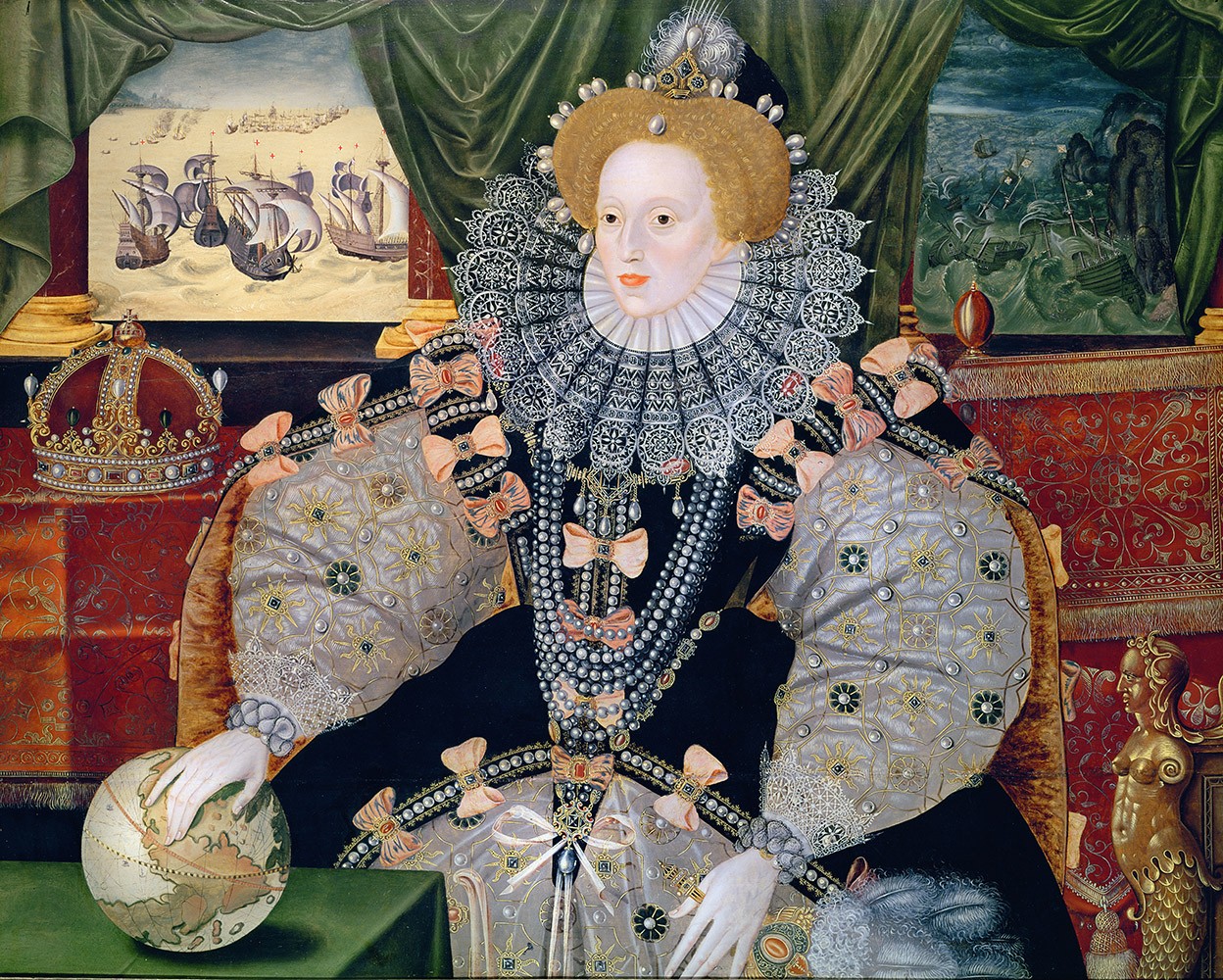
Etymology
The word armada is from Spanish: armada, which is cognate with English army. It is originally derived from Latin: armātae, the past participle of armāre, 'to arm', used in Romance languages as a noun for armed force, army, navy, fleet. Armada Española is still the Spanish term for the modern Spanish Navy.
Background
England had been strategically in alliance with Spain for many decades prior to England and Spain entering into war. In the mid to late 15th century, France under Louis XI was the strongest power in western Europe. England still had possessions in what today is called Northern France, and Spain was under constant threat. Henry VII of England therefore formed a strategic relationship with Ferdinand II, of Spain. Whilst the threat from France remained, England and Spain enjoyed many decades of peace which included a number of strategic marriages to retain the alliance. There were many causes of jealousy between the two royal houses over the years, but the French Wars of Religion were the ultimate cause of the alliance breaking between Philip II of Spain and Elizabeth I, and this led to war between the two countries.
By the mid sixteenth century Habsburg Spain under Philip II was a dominant political and military power in Europe, with a global empire which became the source of her wealth. It championed the Catholic cause and its global possessions stretched from Europe, the Americas and to the Philippines. This was expanded further in 1580 when Philip gained control of Portugal thus forming the Iberian Union. Philip became the first monarch who ruled over an empire upon which the sun did not set, and he did so from his chambers in the Escorial Palace by means of written communication.

In comparison, England was only a minor European power with no empire and had little influence overseas. During Henry VIII's reign, England had gone to war three times against France in alliance with Spain. The last of these conflicts was the Sieges of Boulogne (1544–1546).
Henry VIII began the English Reformation as a political exercise over his desire to divorce his first wife, Catherine of Aragon. Over time, England became increasingly aligned with the Protestant reformation taking place in Europe, especially during the reign of Henry's son, Edward VI but Edward died childless, and his Catholic half-sister Mary ascended the throne in 1553. Three years later Mary married Philip II, becoming queen consort of Spain. Mary returned England to the Catholic Church; during her reign more than 260 English Protestants were burned at the stake, earning her the nickname "Bloody Mary".
In 1557, Philip persuaded Mary to enter into a disastrous war against France. England landed forces in the Low Countries and with the failing support of Spain, won the Battle of St. Quentin. Though this brought victory for Spain, England had neglected her defences in France, and France took Calais in 1558. Thus England lost her last possession in France, which she had held for over 200 years. This was undoubtedly a huge blow to Mary's prestige, who is reported as stating "When I am dead and opened, you shall find 'Calais' lying in my heart." England's wealth further suffered, not just from the cost of the war, but also from the reduced revenues from alum and the Antwerp cloth trade, caused by the loss of the port. The Kingdom of Spain had strengthened its hold on the Low Countries, weakening France with no cost to itself, but at great cost to England. Just before Mary's death, Philip and Mary's half-sister Elizabeth looked to come to an alliance and settlement between England and Spain, and there is evidence even marriage between Philip and Elizabeth was explored, but the question of faith, and the unequal relationship between the two Kingdoms made this extremely unlikely. Spain and England had remained in an alliance that had lasted for over 70 years.

Mary died in 1558, succeeded by her half-sister as Elizabeth I, a Protestant. Elizabeth re-implemented Edward's reforms. Also, in the eyes of the Catholic Church, Henry had never officially divorced Catherine, making Elizabeth illegitimate. Philip therefore deemed Elizabeth a heretic and usurper.
Philip supported plots to have Elizabeth overthrown in favour of her Catholic cousin and heir presumptive, Mary, Queen of Scots. These plans were thwarted in 1566–1567, when Mary was forced to abdicate the crown of Scotland in favour of her son James VI, and then was imprisoned by Elizabeth.
Friction between England and Spain continued. English smugglers traded in Spanish colonies and English privateers seized Spanish ships. Elizabeth even established an alliance with Morocco.

The first documented proposal for the Enterprise of England was made in August 1583. The Marquis of Santa Cruz, flushed with pride of his victory in the Azores, suggested to Philip II that Spain take advantage of the victory to attack England.
In 1585, the Anglo-Spanish War began. English privateers attacked Spanish fishing boats on the Grand Banks and raided Spanish colonies, and England sent troops to support the Dutch revolt against Spain.
Also, Elizabeth finally had Mary executed in February 1587, due to constant plots in Mary's name.

In retaliation, Philip planned an expedition to invade England to overthrow Elizabeth, or if the armada was not entirely successful, at least obtain freedom of worship for English Catholics and indemnity for English attacks.
The Marquis of Santa Cruz had originally drawn up plans in 1586 to invade England with an army from Spain. The requirements proved to be astronomical: 94,222 men, and 556 ships of all sizes to carry them and victuals for eight months. The cost would be more than 1.5 billion maravedis, clearly beyond even Spain's resources. Philip then formed a more realistic plan: a fleet sailing from Spain would transport Parma's army from the Low Countries to England.
If the Armada is not as successful as we hoped but yet not entirely defeated, then you may offer England peace on the following terms. The first is that in England the free use and exercise of our Holy Catholic faith shall be permitted to all Catholics, native and foreign, and that those that are in exile shall be permitted to return. The second is that all the places in my Netherlands which the English hold shall be restored to me and the third that they shall recompense me for the injury they have done me, my dominions and my subjects, which will amount to an exceeding great sum. With regard the free exercise of Catholicism, you may point out to them that since freedom of worship is permitted to the huguenots of France, there will be no sacrifice of dignity in allowing the same privilege to Catholics in England.

If the expedition succeeded, it would end English support for the Dutch and English attacks on Spanish ships and colonies. Philip was supported by Pope Sixtus V, who treated the invasion as a crusade, with the promise of a subsidy should the Armada make land. Substantial support for the invasion was also expected from English Catholics, including wealthy and influential aristocrats and traders.
A raid on Cádiz, led by privateer Francis Drake in April 1587, captured or destroyed about 30 ships and great quantities of supplies, setting preparations back by a year. Elizabeth's security chief and spymaster, Sir Francis Walsingham, urged her ambassador to the Ottoman Empire, William Harborne, to get the Ottomans to distract the Spaniards with fleet manoeuvres, but there is no evidence for the success of that plan.
Parma was initially consulted by Philip II in 1583. Parma stressed that three conditions would need to be met to achieve success; absolute secrecy, secure possession and defense of the Dutch provinces, and keep the French from interfering either with a peace agreement or by sowing division between the Catholic League and the Huguenots. Secrecy could not be maintained which made the enterprise vastly more complicated. Philip ultimately combined Parma's plan with that of Santa Cruz, initially entertaining a triple attack, starting with a diversionary raid on Scotland, while the main armada would capture either the Isle of Wight or Southampton to establish a safe anchorage in The Solent. Parma would then follow with a large army from the Low Countries crossing the English Channel.
The highly experienced Santa Cruz was appointed commander of the naval force, while Parma would command the invasion force. Unfortunately, Santa Cruz died in February 1588. He was replaced by the Duke of Medina Sidonia. While a competent soldier and distinguished administrator, Medina Sidonia had no naval experience. He wrote to Philip expressing grave doubts about the planned campaign, but his message was prevented from reaching the King by courtiers on the grounds that God would ensure the armada's success.
Battle
Fleet descriptions
Prior to the undertaking, Pope Sixtus V allowed Philip to collect crusade taxes and granted his men indulgences. The blessing of the armada's banner on 25 April 1588, was similar to the ceremony used prior to the Battle of Lepanto in 1571. On 21 July 1588 (N.S), the armada set sail from Lisbon and headed for the English Channel. When it left Lisbon, the fleet was composed of 141 ships, with 10,138 sailors and 19,315 soldiers. There were also 1,545 non-combatants (volunteers, officers' servants, friars, artillerists etc.) The fleet carried 1,500 brass guns and 1,000 iron guns. The full body of the fleet took two days to leave port.
The armada was delayed by bad weather. Storms in the Bay of Biscay along the Galician coast forced four galleys commanded by Captain Diego de Medrano and one galleon to turn back, and other ships had to put in to A Coruña for repairs, leaving 137 ships that sailed for the English Channel. Nearly half of the ships were not built as warships and were used for duties such as scouting and dispatch work, or for carrying supplies, animals and troops. The armada included 24 purpose-built warships, 44 armed merchantmen, 38 auxiliary vessels and 34 supply ships.
In the Spanish Netherlands, Parma had mustered a polyglot army of 60,583 soldiers; Spanish, Italians, Burgundians, Irish, Scottish, Walloon and German, with 3650 cavalry. He ordered hundreds of flyboats to be built to carry them across the channel while awaiting the arrival of the armada. Since the element of surprise was long gone, the new plan was to use the cover of the warships to convey the army on barges to a place near London. In all, 55,000 men were to have been mustered, a huge army for that time. On the day the armada set sail, Elizabeth's ambassador in the Netherlands, Valentine Dale, met Parma's representatives in peace negotiations. The English made a vain effort to intercept the armada in the Bay of Biscay. On 6 July, negotiations were abandoned, and the English fleet stood prepared, if ill-supplied, at Plymouth, awaiting news of Spanish movements.
Only 122 ships from the Spanish fleet entered the Channel; the four galleys, one nao, five pataches and the 10 Portuguese caravels had left the fleet before the first encounter with the English fleet. An additional 5 pataches, dispatched to deliver messages to Parma, should be deducted which brings the number to 117 Spanish ships facing the roughly 226-strong English fleet. The Spanish fleet outgunned that of the English with 50% more available firepower than the English. The English fleet consisted of the 34 ships of the Royal Fleet, 21 of which were galleons of 200 to 400 tons, and 163 other ships, 30 of which were of 200 to 400 tons and carried up to 42 guns each. Twelve of the ships were privateers owned by Lord Howard of Effingham, John Hawkins and Sir Francis Drake.
In the beginning of June, Parma had sent Captain Moresin with some pilots to Admiral Sedonia. Upon Moresin's return on 22 June, the report he made to Parma caused him distress. Medina Sedonia was under the impression that Parma could simply sail out into the channel with his barges filled with troops. Parma had continually informed the king that his passage to the channel was blocked by English and Dutch ships, and the only way he could bring his boats out was if the armada cleared the blockade.
The fleet was sighted in England on 29 July (N.S), when it appeared off the Lizard in Cornwall. The news was conveyed to London by a system of beacons that had been constructed along the south coast. The same day the English fleet was trapped in Plymouth Harbour by the incoming tide. The Spanish convened a council of war, where it was proposed to ride into the harbour on the tide and incapacitate the defending ships at anchor. From Plymouth Harbour the Spanish would attack England, but Philip explicitly forbade Medina Sidonia from engaging, leaving the armada to sail on to the east and towards the Isle of Wight. As the tide turned, 55 English ships set out to confront the armada from Plymouth under the command of Lord Howard of Effingham, with Sir Francis Drake as vice admiral. The rear admiral was John Hawkins.
Action off Plymouth
On 30 July, the English fleet was off Eddystone Rocks with the armada upwind to the west. To execute its attack, the English tacked upwind of the armada, thus gaining the weather gage, a significant advantage. At daybreak on 31 July, the English fleet engaged the armada off Plymouth near the Eddystone Rocks. The armada was in a crescent-shaped defensive formation, convex towards the east. The galleons and great ships were concentrated in the centre and at the tips of the crescent's horns, giving cover to the transports and supply ships in between. Opposing them, the English were in two sections, with Drake to the north in Revenge with 11 ships, and Howard to the south in Ark Royal with the bulk of the fleet.
Given the Spanish advantage in close-quarter fighting, the English kept beyond grappling range and bombarded the Spanish ships from a distance with cannon fire. The distance was too great for the manoeuvre to be effective and, at the end of the first day's fighting neither fleet had lost a ship in action. The English caught up with the Spanish fleet after a day of sailing.
Actions off Portland Bill and Isle of Wight
The English fleet and the armada engaged once more on 1 August, off Portland. A change of wind gave the Spanish the weather gage, and they sought to close with the English, but were foiled by the smaller ships' greater manoeuvrability. While the Spanish centre manoeuvred to support the Santa Ana, the Nuestra Señora del Rosario collided with a number of ships, losing her bowsprit and setting in motion a series of mishaps. She began to drift, and was taken off by the current in the opposite direction to the fleet and closer to the English. Drake in the Revenge sailed to the Rosario during the night and she was taken in action; Admiral Pedro de Valdés (commander of the Squadron of Andalusia) surrendered along with his entire crew. On board, the English seized supplies of much-needed gunpowder and 50,000 gold ducats. Drake had been guiding the English fleet by means of a lantern, which he snuffed out to slip away from the Spanish ships, causing the rest of his fleet to become scattered and disarrayed by dawn. At one point, Howard formed his ships into a line of battle to attack at close range, bringing all his guns to bear, but he did not follow through with the manoeuvre and little was achieved. During a lull in battle, San Salvador's gunpowder magazine exploded, perhaps as a result of sabotage by a disgruntled gunner, setting a portion of the ship on fire. The Spanish attempted to scuttle the ship, but this failed when the Golden Hind came up. The Spanish evacuated the vessel and the Golden Hind promptly captured her.
If the armada could create a temporary base in the protected waters of the Solent, the strait separating the Isle of Wight from the English mainland, it could wait there for word from Parma's army; Parma did not get news of this until 6 August. However, in a full-scale attack, the English fleet broke into four groups with Martin Frobisher of the ship Aid given command over a squadron, and Drake coming with a large force from the south. Medina Sidonia sent reinforcements south and ordered the Armada back to open sea to avoid the Owers shoals. There were no other secure harbours further east along England's south coast, so the Armada was compelled to make for Calais, without being able to wait for word of Parma's army.
Starting on 1 August, Sidonia began sending Parma messages detailing his position and movements. However, couriers landed on the French shore or despatched in small vessels could make their way to Parma little faster than the armada itself. It was not until 5 August that Parma received the first report from the Admiral.
Fireships at Calais
On 7 August, the armada anchored off Calais in a tightly packed defensive crescent formation, not far from Dunkirk (Parma only learned of this on that same afternoon) where Parma's army, reduced by disease to 16,000, was expected to be waiting, ready to join the fleet in barges sent from ports along the Flemish coast. An essential element of the plan of invasion, as it was eventually implemented, was the transportation of a large part of Parma's Army of Flanders as the main invasion force in unarmed barges across the English Channel. These barges would be protected by the large ships of the armada. However, to get to the armada, they would have to cross the zone dominated by the Dutch navy, where the armada could not go due to the ongoing Eighty Years' War with the Dutch Republic. This problem seems to have been overlooked by the armada's commanders, but it was insurmountable. Communication was more difficult than anticipated, and word came too late that Parma's army had yet to be equipped with sufficient transport or to be assembled in the port, a process that would take at least six days. As Medina Sidonia waited at anchor, Dunkirk was blockaded by a Dutch fleet of 30 flyboats under Lieutenant-Admiral Justinus van Nassau. The Dutch flyboats mainly operated in the shallow waters off Zeeland and Flanders where larger warships with a deeper draught, like the Spanish and English galleons, could not safely enter. Parma expected the armada to send its light pataches to drive away the Dutch, but Medina Sidonia would not send them because he feared he would need these ships for his own protection. There was no deep-water port where the fleet might shelter, which had been acknowledged as a major difficulty for the expedition, and the Spanish found themselves vulnerable as night drew on.
The Dutch enjoyed an unchallenged naval advantage in these waters, even though their navy was inferior in naval armament. Because Medina Sidonia did not attempt to break the Dutch blockade and Parma would not risk attempting the passage unescorted, the Army of Flanders escaped the trap that Van Nassau had in mind for them.
Late on 7 August, Howard was reinforced by a squadron under Lord Edward Seymour and William Wynter, which had been stationed in the Downs as a reinforcement for the Dutch should Parma make any independent move. Their arrival gave Howard a total of 140 ships. He also received a small amount of powder and shot, which the Earl of Sussex had collected from fortresses and garrisons on the South Coast, and some victuals.
The wind and currents were favourable for an attempt to break the armada's formation by sending fireships against it. Walsingham had already sent orders to Dover that fishing smacks and faggots and pitch were to be collected for this purpose. However, the English commanders felt that they could not wait for proper fireships and therefore sacrificed eight of their own warships. Drake, who was a substantial shipowner, offered one of his own ships, the 200-ton "Thomas". Hawkins also offered one of his ships, the 150-ton "Bark Bond". Six other ships, of between 90 and 200 tons, were volunteered. These ships were filled with whatever pitch, brimstone and tar was immediately available. Because of the haste, the loaded guns and stores were left aboard.
In the middle of the night of 7–8 August, the English set these fireships alight and cast them downwind among the closely anchored vessels of the armada. The Spanish feared that these uncommonly large fireships were "hellburners", specialised fireships filled with large gunpowder charges that had been used to deadly effect at the Siege of Antwerp. Three were intercepted by pataches and towed away, but the remainder bore down on the fleet. Medina Sidonia's flagship and the principal warships held their positions, but the rest of the fleet cut their anchor cables and scattered in confusion. No Spanish ships were burnt, but the crescent formation had been broken, and the fleet found itself too far leeward of Calais in the rising southwesterly wind to recover its position. Another loss, the effect of which would not be felt until later, was almost every anchor the Armada's ships possessed. The English closed in for battle. Parma learned of this the following day.
Battle of Gravelines
The small port of Gravelines was part of Flanders in the Spanish Netherlands close to the border with France, and was the closest Spanish territory to England.
Before dawn on 8 August, Medina Sidonia struggled to regather his fleet after the fireships scattered it, and was reluctant to sail further east than Gravelines, knowing the danger of running aground on the shoals off Flanders, from which his Dutch enemies had removed the sea marks. The English learned of the armada's weaknesses during the skirmishes in the English Channel, and concluded it was possible to close in to within 100 yards (90 m) to be able to penetrate the oak hulls of the Spanish warships. They had spent most of their gunpowder in the first engagements and had, after the Isle of Wight, been forced to conserve their heavy shot and powder for an anticipated attack near Gravelines. During all the engagements, the Spanish heavy guns could not easily be reloaded because of their close spacing and the quantities of supplies stowed between decks, as Drake had discovered on capturing the Nuestra Señora del Rosario in the Channel. Instead, the Spanish gunners fired once and then transferred to their main task, which was to board enemy ships, as had been the practice in naval warfare at the time. Evidence from Armada wrecks in Ireland shows that much of the fleet's ammunition was unused. Their determination to fight by boarding, rather than employing cannon fire at a distance, proved a disadvantage for the Spanish. The manoeuvre had been effective in the battles of Lepanto and Ponta Delgada earlier in the decade, but the English were aware of it and sought to avoid it by keeping their distance.
While Medina Sidonia was gathering the armada ships together into their traditional crescent formation the English fleet moved in, and at dawn the flagship with four other ships found themselves facing the entire English fleet. The English provoked Spanish fire while staying out of range. The English then closed, firing damaging broadsides into the enemy ships, all the while maintaining a windward position, so the heeling armada hulls were exposed to damage below the water line when they changed course later. Many of the Spanish gunners were killed or wounded by the English broadsides, and the task of manning the cannon often fell to foot soldiers who did not know how to operate them. The ships were close enough for sailors on the upper decks of the English and Spanish ships to exchange musket fire. A couple of hours into the battle, a few more armada warships closed in to form wings on either side of the five ships already under attack. After eight hours, the English ships began to run out of ammunition, and some gunners began loading objects such as chains into their cannons. Around 4 pm, the English fired their last shots and pulled back.
Five Spanish and Portuguese ships were lost: the 605 ton Maria Juan, a carrack which had been part of Don Diego Flores de Valdes' Castile Squadron which had attempted to surrender to Captain Robert Crosse of the Hope, sank off Blankenberge with the loss of 275 men – the Spanish only managing to rescue a single boatload of survivors. The galleass San Lorenzo, the flagship of Don Hugo de Moncada which had been holed below the waterline, was forced to run aground at Calais to avoid sinking. On sight of this, Admiral Howard ordered a flotilla of ship's boats to carry her by boarding. Moncada was killed during an exchange of small arms fire, a shot to his head from an arquebus. The ship was then taken after murderous fighting between the crew, galley slaves and the English. The French meanwhile could do little except to watch as the ship was plundered, but they opened fire to ward off the English who quickly left to join the rest of the fight. The next day, the severely crippled galleon San Mateo ran aground in between Sluis and Ostend; it was taken by a combination of Dutch ships and English troops led by Francis Vere. The captain, Don Diego Pimmental, surrendered along with the survivors of his crew. Later that day, the equally crippled San Felipe, commanded by Maestre de Campo Don Fransico de Toledo, drifted away as she was sinking and ran aground on the island of Walcheren. The English troops sortied from Flushing to the wreck, attacked the stricken vessel, and took the crew prisoners. A Dutch force of flyboats led by Justinus van Nassau then took possession of the ship. A pinnace was also run aground by her crew to prevent her from sinking.
Many other Spanish ships were severely damaged, especially the Portuguese and some Spanish Atlantic-class galleons, including some Neapolitan galleys, which bore the brunt of the fighting during the early hours of the battle: the Spanish Nuestra Señora del Rosario, San Salvador, and La María Juan; the Neapolitan San Lorenzo; and the Portuguese São Mateus and São Filipe. The Spanish plan to join with Parma's army had been frustrated.
Elizabeth's Tilbury speech
Because of the potential invasion from the Netherlands, Robert Dudley, Earl of Leicester assembled a force of 4,500 militia at West Tilbury, Essex, to defend the Thames Estuary against any incursion up-river towards London. The result of the English fireship attack and the sea battle of Gravelines had not yet reached England, so Elizabeth went to Tilbury on 18 August to review her forces, arriving on horseback in ceremonial armour to imply to the militia that she was prepared to lead them in the ensuing battle. She gave them her royal address, which survives in at least six slightly different versions. One version is as follows:
My loving people, we have been persuaded by some that are careful of our safety, to take heed how we commit ourselves to armed multitudes for fear of treachery; but, I do assure you, I do not desire to live to distrust my faithful and loving people. Let tyrants fear, I have always so behaved myself, that under God I have placed my chiefest strength and safeguard in the loyal hearts and goodwill of my subjects; and, therefore, I am come amongst you as you see at this time, not for my recreation and disport, but being resolved, in the midst and heat of battle, to live or die amongst you all – to lay down for my God, and for my kingdoms, and for my people, my honour and my blood even in the dust. I know I have the body of a weak and feeble woman; but I have the heart and stomach of a king – and of a King of England too, and think foul scorn that Parma or Spain, or any prince of Europe, should dare to invade the borders of my realm; to which, rather than any dishonour should grow by me, I myself will take up arms – I myself will be your general, judge, and rewarder of every one of your virtues in the field. I know already, for your forwardness, you have deserved rewards and crowns, and, we do assure you, on the word of a prince, they shall be duly paid you. In the mean time, my lieutenant general shall be in my stead, than whom never prince commanded a more noble or worthy subject; not doubting but by your obedience to my general, by your concord in the camp, and your valour in the field, we shall shortly have a famous victory over those enemies of my God, of my kingdom, and of my people.
A stylised depiction of key elements of the armada story: the alarm beacons, Queen Elizabeth at Tilbury, and the sea battle at Gravelines.
Armada in Scotland and Ireland
On the day after the battle at Gravelines, the disorganised and unmanoeuvrable Spanish fleet was at risk of running onto the sands of Zeeland because of the prevailing wind. The wind then changed to the south, enabling the fleet to sail north. The English ships under Howard pursued to prevent any landing on English soil, although by this time his ships were almost out of shot. On 12 August, Howard called a halt to the pursuit at about the latitude of the Firth of Forth off Scotland. The only option left to the Spanish ships was to return to Spain by sailing round the north of Scotland and home via the Atlantic or the Irish Sea. As the Spanish fleet rounded Scotland on 20 August, it consisted of 110 vessels and most made it around. The San Juan de Sicilia, heavily damaged during the Gravelines engagement, had struggled North and limped into Tobermory bay on the Isle of Mull on 23 September, but was later destroyed by an English agent sent by Francis Walsingham with most of the crew on board.
The Spanish ships were beginning to show wear from the long voyage, and some were kept together by strengthening their damaged hulls with cables. Supplies of food and water ran short. The intention would have been to keep to the west of the coasts of Scotland and Ireland, seeking the relative safety of the open sea. There being no way of accurately measuring longitude, the Spanish were not aware that the Gulf Stream was carrying them north and east as they tried to move west, and they eventually turned south much closer to the coast than they thought. Off Scotland and Ireland, the fleet ran into a series of powerful westerly winds which drove many of the damaged ships further towards the lee shore. Because so many anchors had been abandoned during the escape from the English fireships off Calais, many of the ships were incapable of securing shelter as the fleet reached the coast of Ireland and were driven onto the rocks; local inhabitants looted the ships. The late sixteenth century and especially 1588 was marked by unusually strong North Atlantic storms, perhaps associated with a high accumulation of polar ice off the coast of Greenland, a feature of the "Little Ice Age". More ships and sailors were lost to cold and stormy weather than in direct combat.
Most of the 28 ships lost in the storms were along the jagged steep rocks of the western coast of Ireland. About 5,000 men died by drowning, starvation and slaughter by local inhabitants after their ships were driven ashore on the west coasts of Scotland and Ireland. The English Lord Deputy William FitzWilliam ordered the English soldiers in Ireland to kill any Spanish prisoners, which was done on several occasions instead of asking for ransom as was common during that period. Reports of the passage of the remnants of the Spanish Armada around Ireland abound with onerous accounts of hardships and survival. One of the costliest wrecks was that of the galleass La Girona, which was driven on to Lacada Point in County Antrim on the night of 26 October. Of the estimated 1,300 people on board, there were nine survivors. 260 bodies washed ashore, including Alonso Martínez de Leiva, knight and member of the Council of Thirteen (trece) of the Order of Santiago. Captain Francisco de Cuéllar was wrecked on the coast of Ireland and gave a remarkable account of his experiences in the fleet, on the run in Ireland, defeat of an English army besieging Rosclogher castle, flight through Scotland, surviving a second shipwreck and ultimate return to Spain.
Return to Spain
Continental Europe had been anxiously awaiting news of the armada all summer. The Spanish postmaster and Spanish agents in Rome promoted reports of Spanish victory in hopes of convincing Pope Sixtus V to release his promise of one million ducats upon landing of troops. In France, the Spanish and English ambassadors promoted contradictory narratives in the press, and a Spanish victory was incorrectly celebrated in Paris, Prague, and Venice. It was not until late August that reliable reports of the Spanish defeat arrived in major cities and were widely believed.