
Simone Adolphine Weil (; French: [simɔn adɔlfin vɛj]; 3 February 1909 – 24 August 1943) was a French philosopher, mystic, political activist and labourer. Despite her short life, her ideas concerning religion, spirituality and politics have remained widely influential in contemporary philosophy.
She was born in Paris to an Alsatian Jewish family. Her elder brother, André, would later become a renowned mathematician. After her graduation from formal education, Weil became a teacher. She taught intermittently throughout the 1930s, taking several breaks because of poor health and in order to devote herself to political activism. She assisted in the trade union movement, taking the side of the anarchists known as the Durruti Column in the Spanish Civil War. During a twelve-month period she worked as a labourer, mostly in car factories, so that she could better understand the working class.
Weil was very attracted to the ascetic egalitarian elements of Christianity, and became increasingly religious and inclined towards mysticism as her life progressed. She died of heart failure in 1943, while working for the Free French government in exile in Britain. Her uncompromising personal ethics may have contributed to her death—she had restricted her food intake in solidarity with the inhabitants of Nazi-occupied France.

Weil wrote throughout her life, although most of her writings did not attract much attention until after her death. In the 1950s and '60s, her work became famous in continental Europe and throughout the English-speaking world. Her philosophy and theological thought has continued to be the subject of extensive scholarship across a wide range of fields, covering politics, society, feminism, science, education and classics.
Early life
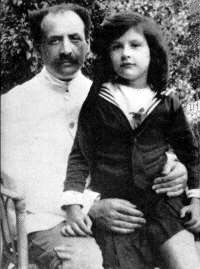
Weil was born in her parents' apartment in Paris on 3 February 1909, the daughter of Bernard Weil (1872–1955), a medical doctor from an agnostic Alsatian Jewish background who moved to Paris after the German annexation of Alsace–Lorraine, and Salomea "Selma" Reinherz (1879–1965), who was born into a Jewish family in Rostov-on-Don and raised in Belgium. According to Osmo Pekonen, "the family name Weil came to be when many Levis in the Napoleonic era changed their names this way, by anagram." Weil was a healthy baby for her first six months, but then suffered a severe attack of appendicitis; thereafter, she struggled with poor health throughout her life. Weil's parents were fairly affluent and raised their children in an attentive and supportive atmosphere. She was the younger of her parents' two children. Her brother was the mathematician André Weil (1906–1998), with whom she would always enjoy a close relationship.
Weil was distressed by her father having to leave home for several years after being drafted to serve in the First World War. Eva Fogelman, Robert Coles and several other scholars believe that this experience may have contributed to the exceptionally strong altruism which Weil displayed throughout her life. For example, a young Weil sent her share of sugar and chocolate to soldiers fighting at the front. When Weil was 10 she joined striking workers chanting L'Internationale marching on the street below her apartment. When visiting a resort with her family and learning of the wages of the workers she encouraged the workers to unionize.

From her childhood home, Weil acquired an obsession with cleanliness; in her later life she would sometimes speak of her "disgustingness" and think that others would see her this way, even though in her youth she had been considered highly attractive. Weil was generally highly affectionate, but she almost always avoided any form of physical contact, even with female friends.
Weil's mother stated that her daughter much preferred boys to girls and that she always did her best to teach her daughter what she believed were masculine virtues. According to her friend and biographer, the philosopher Simone Pétrement, Weil decided early in life that she would need to adopt masculine qualities and sacrifice opportunities for love affairs in order to fully pursue her vocation to improve social conditions for the disadvantaged. From her late teenage years, Weil would generally disguise her "fragile beauty" by adopting a masculine appearance, hardly ever using makeup and often wearing men's clothes. Both Weil's parents referred to her as "our son number two", at the request of Weil and in letters to her parents while a student, she used the masculine form of French participles and signed her name the masculine "Simon".
Academic studies
Weil was a precocious student and was proficient in Ancient Greek by age 12, as she and her brother André had taught themselves Ancient Greek and used it to speak to each other when they did not want their parents to understand what they were saying. She later learned Sanskrit so that she could read the Bhagavad Gita in the original.

As a teenager, Weil studied at the Lycée Henri IV under the tutelage of her admired teacher Émile Chartier, more commonly known as "Alain".
Weil attracted much attention at the Lycée Henri IV with her radical opinions and actions such as organising against the military draft. For these reasons she was called the "Red Virgin", and even "The Martian" by her mentor. Weil gained a reputation for her strict devotion to ethics, with classmates referring to her as the "categorical imperative in skirts". Officials at the school were outraged by her indifference to clothing, her refusal to participate in their traditions, and her ignoring a rule banning women from smoking with male students, for which she was suspended.
At ENS, Weil briefly met Simone de Beauvoir, and their meeting led to disagreement. To Weil's statement that "one thing alone mattered in the world today: the revolution that would feed all people on earth", the young Beauvoir replied that the point of life was to find meaning, not happiness. Weil cut her off, saying, "it's easy to see you've never gone hungry".

Weil finished first in the exam for the certificate of "General Philosophy and Logic" with Simone de Beauvoir finishing second, ahead of the 28 other students, all male. In 1931, Weil earned her DES (diplôme d'études supérieures, roughly equivalent to an M.A.), with a thesis titled, "Science et perception dans Descartes" ("Science and Perception in Descartes") under the supervision of Léon Brunschvicg. She received her agrégation that same year.
Work and political activism
She often became involved in political action out of sympathy with the working class. In 1915, when she was only six years old, she refused sugar and chocolate in solidarity with the troops entrenched along the Western Front. In 1919, at 10 years of age, she declared herself a Bolshevik. In her late teens, she became involved in the workers' movement. She wrote political tracts, marched in demonstrations and advocated workers' rights. At this time, she was a Marxist, pacifist and trade unionist.
Teaching in Le Puy
While teaching in Le Puy, she became involved in local political activity, supporting local striking workers underpaid by the City Council. Weil joined protest marches with them and even shared wine with them, facing criticism from local elites and an antisemitic attack in a local paper. When the school director called Weil in for questioning, students and coworkers rallied behind her and ultimately the city council raised the pay of the workers. Weil often held classes outdoors, often refused to share grades with school leadership, and is said to have created a "family atmosphere". She also traveled weekly to Saint-Étienne to teach workers French literature, believing literature could be a tool for revolution and give workers ownership over their heritage and revolution.
Factory work and travels
Weil began to feel her work was too narrow and elite, telling her students it was an error to "reason in place of finding out" and that philosophy was a matter of action based in truth and that truth must be based in something (something lived or experienced). This led Weil to leave Le Puy to work in factories and perform the repetitive, machine-like work that underlay her definition of le malheur (affliction), saying that workers were reduced to a machine-like existence, where they could not consider rebellion.
Weil never formally joined the French Communist Party, and in her twenties she became increasingly critical of Marxism. According to Pétrement, she was one of the first to identify a new form of oppression not anticipated by Marx, where élite bureaucrats could make life just as miserable for ordinary people as did the most exploitative capitalists. Weil critiqued Marxist theorists, stating "they themselves have never been cogs in the machinery of factory". Weil also doubted aspects of revolution, stating revolution is a word for "which you kill, for which you die, for which you send the laboring masses to their death, but which does not possess any content". Weil felt oppression was not limited to any particular division of labor, but flows from la puissance or power, which affects all people.
In 1932, Weil visited Germany to help Marxist activists, who were at the time considered to be the strongest and best organised communists in Western Europe, but Weil considered them no match for the up-and-coming fascists. When she returned to France, her political friends there dismissed her fears, thinking Germany would continue to be controlled by the centrists or by those to the left. After Hitler rose to power in the beginning of 1933, Weil spent much of her time trying to help German communists fleeing his regime. Weil would sometimes publish articles about social and economic issues, including "Oppression and Liberty," as well as numerous short articles for trade union journals. This work criticised popular Marxist thought and gave a pessimistic account of the limits of both capitalism and socialism. The work however uses a Marxist method of analysis: paying attention to oppression, critiquing Weil's own position as an intellectual, and advances both manual labor and theory and practice. Leon Trotsky personally responded to several of her articles, attacking both her ideas and her as a person. However, according to Pétrement, he was influenced by some of Weil's thought.
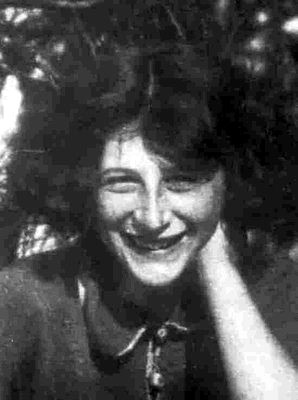
In 1933, Weil was dismissed from a teaching job in Auxerre and transferred to Roanne. Weil participated in the French general strike of 1933, called to protest against unemployment and wage cuts. The following year, she took a 12-month leave of absence from her teaching position to work incognito as a labourer in two factories, one owned by Alstom and one by Renault, believing that this experience would allow her to connect with the working class.
In 1935, she began teaching in Bourges and started Entre Nous, a journal that was produced and written by factory workers. Weil donated most of her income to political causes and charitable endeavours.
Participation in Spanish Civil War
Weil participated in the 1936 Paris factory occupations and planned on returning to factory work, but became focused on the Spanish Civil War. Despite her professed pacifism, she travelled to Spain to join the Republican faction. She identified as an anarchist and sought out the anti-fascist commander Julián Gorkin, asking to be sent on a mission as a covert agent to rescue the prisoner Joaquín Maurín. Gorkin refused, saying Weil would be sacrificing herself for nothing, since it was highly unlikely that she could pass as a Spaniard. Weil replied that she had "every right" to sacrifice herself if she chose, but after arguing for more than an hour, she was unable to convince Gorkin to give her the assignment. Instead she joined the French-speaking Sébastien Faure Century of the anarchist Durruti Column, which specialised in high-risk "commando"-style engagements.
As she was extremely nearsighted, Weil was a very poor shot. Her comrades tried to avoid taking her on missions, though she did sometimes insist. Her only direct participation in combat was to shoot with her rifle at a bomber during an air raid; in a second raid, she tried to operate the group's heavy machine gun, but her comrades prevented her, as they thought it would be best for someone less clumsy and near-sighted to use the weapon. After being with the group for a few weeks, she burnt herself over a cooking fire.
She was forced to leave the unit and was met by her parents, who had followed her to Spain. They helped her leave the country, to recuperate in Assisi. About a month after Weil departed, her former unit was nearly wiped out at an engagement in Perdiguera in October 1936, with every woman in the group being killed. During her stay in the Aragon front, Weil sent some chronicles to the French publication Le Libertaire. On returning to Paris, she continued to write essays on labour, on management, war and peace.
Weil was distressed by the Republican killings in eastern Spain, particularly when a fifteen-year-old Falangist was executed after he had been taken prisoner. Durruti had spent an hour trying to persuade him to change his political position before giving him until the next day to decide. Weil was deeply concerned by the intoxication of war, where humans learn they can kill without punishment, stating "I was horrified, but not surprised by the war crimes. I felt the possibility of doing the same - and it's precisely because I felt I had that potential that I was horrified."
Marseille
After the rise of Nazi Germany, Weil renounced pacifism. She said that, "non-violence is good only if it's effective," and she became committed to fighting the Nazi regime, even if it required force. After German attacks on France, Weil left Paris with her family and fled to Marseille. Weil began the risky work of delivering the Cahiers du témoignage, a resistance paper. The resistance group of which Weil was part was infiltrated by informants, and Weil was questioned by the police. When the police threatened to jail her "with the whores" if she did not give them information, Weil stated she would welcome the invitation to be jailed. Weil was ultimately never arrested. Marseille is also where Weil would soon develop significant religious relationships, receiving spiritual direction from Fr. Joseph-Marie Perrin, a Dominican Friar. Weil met the French Catholic author Gustave Thibon, who owned a farm in the Ardèche region where Weil would later work the grape harvest. Thibon later edited some of her work, helping to draw attention to her spiritually related thought in the English-speaking world. Weil encouraged her parents to buy a farm in the Ardèche where they could sustain themselves and work, but Weil's family thought it safer to plan to move to the United States.
Encounters with mysticism
Weil was born into a secular household and raised in "complete agnosticism". As a teenager, she considered the existence of God for herself and decided nothing could be known either way. In her Spiritual Autobiography, however, Weil records that she always had a Christian outlook, taking to heart from her earliest childhood the idea of loving one's neighbour.
Weil was attracted to the Christian faith beginning in 1935, when she had the first of three pivotal religious experiences: being moved by the beauty of villagers singing hymns in a procession she stumbled across while on holiday to Portugal (in Póvoa de Varzim). Weil later wrote "the conviction was suddenly borne in upon her that Christianity is pre-eminently the religion of slaves, that slaves cannot help belonging to it, and she among others."
While in Assisi during the spring of 1937, Weil experienced a religious ecstasy in the Basilica of Santa Maria degli Angeli—the same church in which Saint Francis of Assisi had prayed. She was led to pray for the first time in her life, as Lawrence S. Cunningham describes her visit, stating that during that visit to Assisi in 1937, she had a profound spiritual experience that marked a turning point in her religious life. Cunningham recounts that while exploring the area, Weil visited the grand baroque basilica of Saint Mary of the Angels in the valley below the town. Though architecturally unremarkable to some, the basilica houses a small Romanesque chapel known as the "Little Portion," dating back to the time of Saint Francis. It was in this modest and ancient space, where Saint Francis once gathered his followers, that Weil felt an irresistible impulse to kneel and pray, something she had never done before.
Weil had a third, more powerful, revelation a year later while reciting George Herbert's poem Love III, after which "Christ himself came down and took possession of me", and, from 1938 on, her writings became more mystical and spiritual, while retaining their focus on social and political issues. In 1938 Weil visited the Benedictine Solesmes Abbey and, though suffering from headaches, she found such pure joy in Gregorian chant that she felt the "possibility of living divine love in the midst of affliction".
She was attracted to Catholicism, but declined to be baptized at that time, preferring to remain outside due to "the love of those things that are outside Christianity". While deeply religious, Weil was skeptical of the Church as an institution, and its dogma, writing, "I have not the slightest love for the Church in the strict sense of the word". She was appalled by the concept of Anathema Sit, as she refused to separate herself from unbelievers. Weil felt that humility is incompatible with belonging to a social group "chosen by God", whether that group is a nation or a Church. Weil also condemns the state of contemporary Christianity, arguing that it had become a social convention entangled with the interests of those who exploit others. While Roman civilization replaced love with pride, earlier traditions upheld perfect obedience, which the Greeks honored through their reverence for science. Weil wrote that obedience is the "supreme virtue", and that the universe's blind material forces are not sovereign, but obey limits set by God out of love. For Weil, this idea was present in pre-Roman Christianity and echoed in the wisdom of the Pythagoreans, Lao Tzu, Hinduism, and fragments of Egyptian thought.
Weil describes a spiritual impurity, a lack of the "spirit of truth" in the modern church and in modern science. In response, she calls for a total and unconditional giving of oneself to God. Weil emphasizes the importance of attention as a means of opening the mind to eternal wisdom. She rejects a pragmatic approach to faith, likening it to a pharmaceutical advertisement, only valuable for what it promises to deliver. True faith, she insists, must be total and it must matter so much that losing it would equate to losing the will to live. Early Christianity might have nourished this approach, but its transformation under Roman influence led to the rejection of divine providence, except in highly personal forms. According to Weil, only mystics preserved this deeper understanding, though they were often condemned.
Weil did not limit her curiosity to Christianity. She was interested in other religious traditions—especially the Greek and Egyptian mysteries; Hinduism (especially the Upanishads and the Bhagavad Gita); and Mahayana Buddhism. She believed that all these and other traditions contained elements of genuine revelation, writing:
Greece, Egypt, ancient India, the beauty of the world, the pure and authentic reflection of this beauty in art and science...these things have done as much as the visibly Christian ones to deliver me into Christ's hands as his captive. I think I might even say more.
Nevertheless, Weil was opposed to religious syncretism, claiming that it effaced the particularity of the individual traditions:Each religion is alone true, that is to say, that at the moment we are thinking of it we must bring as much attention to bear on it as if there were nothing else ... A "synthesis" of religion implies a lower quality of attention.Weil accepts the truth of Christ's miracles but asserts that the miracles of Tibetan and Hindu traditions are also real. She sees authentic Christian inspiration as preserved in mysticism, and she criticizes a conception of God as a master to be worshipped in the manner of slaves or pagans honoring an emperor, calling this idolatrous. Instead, she defines divine providence as the organizing principle of the cosmos.
London period
In 1942, Weil travelled to the United States with her family. She had been reluctant to leave France, but agreed to do so as she wanted to see her parents to safety and knew they would not leave without her. She was also encouraged by the fact that it would be relatively easy for her to reach Britain from the United States, where she could join the French Resistance. She had hopes of being sent back to France as a covert agent. Weil was introduced to André Philip, Minister of the Interior under De Gaulle, by Maurice Schumann, a fellow student of Alain. Phillip wrote to Weil, saying he read her work before the war and respected her. Weil attended his lecture while he was in New York, and Phillip called for a moral and spiritual revolution for a Free France, with morals superior to that of Vichy France. Phillip interviewed Weil for a position in the Commissariat for the Interior in London. In 1943 Weil was hired to work there under Phillip and Francis Louis Coston. She was limited to desk work in London analyzing reports from resistance movements, although this did give her time to write one of her largest and best known works: The Need for Roots.
During this time Weil also rapidly wrote many other texts, including Draft for a Statement of Human Obligations and Note on the General Suppression of Political Parties, translations of sections of the Upanishads, What is Sacred in Every Human Being?, Are We Fighting for Justice?, and Essential Ideas for a New Constitution, and Concerning the Colonial Problem in its Relation to the Destiny of the French People. These ideas influenced the Need for Roots, and Weil began to envision a world where the Allies obtained victory and a new France could be built. Weil was worried that France would rebuild with the same mistakes as the French Revolution of 1789, and Weil was concerned about Phillip's vision for a new country based on universal rights which Weil felt was insufficient, advocating instead for a new country built on a framework of obligations and needs. Weil also argues for a patriotism not rooted in borders, but instead rooted in compassion. These arguments reflect the concern Weil and other thinkers at the time have concerning the rebuilding of a free France.
Weil wrote furiously during this period, sending a plethora of proposals, though she was frustrated by the feeling that she was too safe and was not doing enough to address the suffering of France. De Gaulle rejected her plans, and French forces were not willing to send her back to France to join the resistance more directly. There is now evidence that Weil was recruited by the Special Operations Executive, with a view to sending her back to France as a clandestine wireless operator. In May 1943, preparations were underway to send her to Thame Park in Oxfordshire for training, but the plan was cancelled soon after, as her failing health became known.
The rigorous work routine she assumed soon took a heavy toll. Weil was found slumped on the floor of her apartment, emaciated and exhausted. In 1943, Weil was diagnosed with tuberculosis and instructed to rest and eat well. However, she refused special treatment because of her long-standing political idealism and her detachment from material things. Instead, she limited her intake to what she believed residents of German-occupied France ate. She most likely ate even less, as she refused on most occasions. It is possible that she was baptized during this period. Her condition quickly deteriorated and she was moved to a sanatorium at Grosvenor Hall in Ashford, Kent.
Death
After a lifetime of battling illness and frailty, Weil died in August 1943 from cardiac failure at the age of 34. The coroner's report said that "the deceased did kill and slay herself by refusing to eat whilst the balance of her mind was disturbed".
The exact cause of her death remains a subject of debate. Some claim that her refusal to eat came from her desire to express some form of solidarity toward the victims of the war. Others think that Weil's self-starvation occurred after her study of Arthur Schopenhauer. In his chapters on Christian saintly asceticism and salvation, Schopenhauer had described self-starvation as a preferred method of self-denial. However, Simone Pétrement, one of Weil's first and most significant biographers, regards the coroner's report as simply mistaken. Basing her opinion on letters written by the personnel of the sanatorium at which Simone Weil was treated, Pétrement affirms that Weil asked for food on different occasions while she was hospitalized and even ate a little bit a few days before her death; according to her, it was, in fact, Weil's poor health condition that eventually made her unable to eat.
Weil's first English biographer, Richard Rees, offers several possible explanations for her death, citing her compassion for the suffering of her countrymen in occupied France and her love for and close imitation of Christ. Rees sums up by saying: "As for her death, whatever explanation one may give of it will amount in the end to saying that she died of love."
Philosophy
Absence
Absence is the key image for her metaphysics, cosmology, cosmogony, and theodicy. She believed that God is created by an act of self-delimitation—in other words, she argued that because God is conceived as utter fullness, a perfect being, no creature can exist except where God is not. Thus, creation occurred only when God withdrew in part. This idea mirrors tzimtzum, a central notion in the Jewish Kabbalah creation narrative.
This is, for Weil, an original kenosis ("emptiness") preceding the corrective kenosis of Christ's incarnation. Thus, according to her, humans are born in a damned position, not because of original sin, but because to be created at all they must be what God is not; in other words, they must be inherently "unholy" in some sense. This idea fits more broadly into apophatic theology.
This notion of creation is a cornerstone of her theodicy, for if creation is conceived this way—as necessarily entailing evil—then there is no problem of the entrance of evil into a perfect world. Nor does the presence of evil constitute a limitation of God's omnipotence under Weil's notion; according to her, evil is present not because God could not create a perfect world, but because the act of "creation" in its very essence implies the impossibility of perfection.
However, this explanation of the essentiality of evil does not imply that humans are simply, originally, and continually doomed; on the contrary, Weil claims that "evil is the form which God's mercy takes in this world". Weil believed that evil, and its consequent affliction, serve the role of driving humans towards God, writing, "The extreme affliction which overtakes human beings does not create human misery, it merely reveals it."
Affliction
Weil developed the concept of "affliction" (French: malheur) while working in factories with workers reduced to a machine-like existence where they could not consider real thought or rebellion with Weil stating "thought flies from affliction as promptly and irresistibly as an animal flees from death". Weil found this force too inhumane stating "affliction constrains a man to ask continually 'why' - the question to which there is essentially no reply" and nothing in the world can rob us of the power to say 'I' except for extreme affliction".
Simone Weil's concept of affliction is an exploration of human suffering that extends beyond mere physical or emotional pain. She characterizes affliction as a multifaceted experience encompassing physical torment, psychological distress, and social degradation, which collectively uproot an individual's life and identity. Weil distinguishes affliction from general suffering by emphasizing its capacity to isolate individuals from others and from themselves. Affliction imposes a sense of guilt and self-loathing on the innocent, effectively branding the soul with a mark akin to slavery. This branding leads to a loss of personal significance and a feeling of worthlessness, as the afflicted person internalizes scorn and revulsion that logically should be directed at the perpetrator of injustice. Weil sees affliction as a potential site of grace, not because suffering is inherently good, but because it can strip away illusions and allow openness to the divine.