
Sierra Leone, officially the Republic of Sierra Leone, is a country on the west coast of West Africa. It is bordered to the southeast by Liberia and by Guinea to the north. Sierra Leone's land area is 73,252 km2 (28,283 sq mi). It has a tropical climate and environments ranging from savannahs to rainforests. As of the 2023 census, Sierra Leone had a population of 8,460,512. Freetown is its capital and largest city.
Sierra Leone is a presidential republic, with a unicameral parliament and a directly elected president. It is a secular state. Its constitution provides for the separation of state and religion and freedom of conscience. Muslims constitute three-quarters of the population, and there is a significant Christian minority. Religious tolerance is very high.
Sierra Leone's current territorial configuration was established in two phases: in 1808, the coastal Sierra Leone Colony was founded as part of the British Empire, to be a place to resettle returning Africans after the abolition of the slave trade; then in 1896, the inland Protectorate was created as a result of the Berlin Conference of 1884–1885. This led to the formal recognition of the territory as the Sierra Leone Colony and Protectorate. Sierra Leone attained independence from the United Kingdom in 1961 under the leadership of Prime Minister Sir Milton Margai of the Sierra Leone People's Party (SLPP). In 1971, under Prime Minister Siaka Stevens of the All People's Congress (APC), the country adopted a new constitution, transforming Sierra Leone into a presidential republic, with Stevens as the inaugural president.
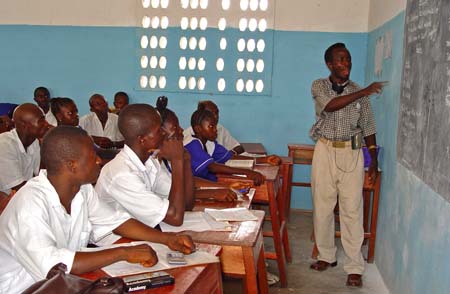
In 1978, Stevens declared the APC to be the sole legally recognised party. In 1985, he was succeeded by Joseph Saidu Momoh. Momoh's enactment of a new constitution in 1991 reintroduced a multi-party system. That same year, a protracted civil war broke out between the government and the Revolutionary United Front (RUF) rebel group. The conflict, characterised by multiple coups d'état, persisted for 11 years. Intervention by ECOMOG forces and later by the United Kingdom resulted in the defeat of the RUF in 2002, ushering in a period of relative stability.
Sierra Leone is a culturally diverse country, home to approximately 18 ethnic groups, with the Temne and Mende peoples being predominant. The Creole people, descendants of freed African-American, Afro-Caribbean slaves and liberated Africans, constitute about 1.2% of the population. English is the official language, while Krio is the lingua franca, spoken by 97% of the population. The country is rich with natural resources, notably diamonds, gold, bauxite and aluminium. As of the most recent survey in 2019, 59.2% of the population is affected by multidimensional poverty and an additional 21.3% vulnerable to it. Sierra Leone maintains membership in several international organisations, including the United Nations, African Union, Economic Community of West African States (ECOWAS), and the Commonwealth of Nations, among others.
Etymology
Sierra Leone derives its name from the Lion Mountains near its capital, Freetown. Originally named Serra Leoa (Portuguese for 'lioness mountains') by Portuguese explorer Pedro de Sintra in 1462, the modern name is based on the Venetian spelling, which was introduced by Venetian explorer Alvise Cadamosto and subsequently adopted by other European mapmakers.

History
Early history
Sierra Leone's history is marked by continuous human habitation for at least 2,500 years, influenced by migrations from across Africa. Iron technology had been adopted by the 9th century and agriculture established by 1000 AD along the coast. Climate shifts over centuries altered the ecological zones, influencing migration and conquest dynamics.
The region's dense tropical rainforest and swamps, coupled with the presence of the tsetse fly which carried a disease fatal to horses and the zebu cattle used by the Mandé people, provided natural defences against invasions by the Mandinka Empire and other African empires, and limited influence by the Mali Empire. The introduction of Islam by Susu traders, merchants and migrants in the 18th century further enriched the culture, eventually establishing a strong foothold in the north. The conquest by Samory Touré in the northeast solidified Islam among the Yalunka, Kuranko and Limba people.
European trading
The 15th century marked the beginning of European interaction with Sierra Leone, highlighted by Portuguese explorer Pedro de Sintra mapping the region in 1462 and naming it after the lioness mountains. This naming has been subject to historical reinterpretation, suggesting earlier European knowledge of the region. Following Sintra, European traders established fortified posts, engaging primarily in the slave trade, which shaped the socio-economic landscape significantly.
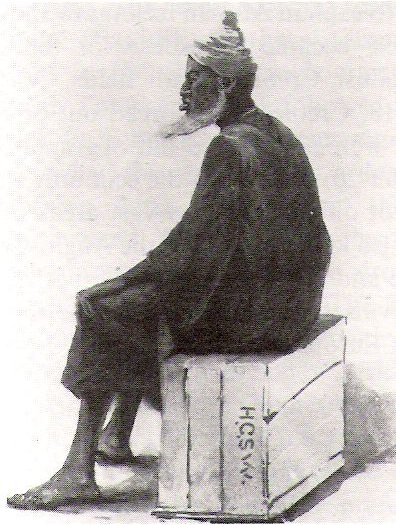
Traders from European countries such as the Dutch Republic, England and France, started to establish trading stations. These stations quickly began to primarily deal in slaves, who were brought to the coast by indigenous traders from interior areas. The Europeans made payments, called Cole, for rent, tribute, and trading rights, to the king of an area. Local Afro-European merchants often acted as middlemen, the Europeans advancing them goods to trade to indigenous merchants, most often for slaves and ivory.
Early Portuguese interactions
Portuguese traders were particularly drawn to the local craftsmanship in ivory, leading to a notable trade in ivory artefacts such as horns, Sapi Saltceller, and spoons. The Sapi people belonged to a cluster of people who spoke West Atlantic languages, living in the region of modern day Sierra Leone. There had already been a carving culture established in the area prior to Portuguese contact, and many travellers to Sierra Leone were initially impressed with the Sapis' carving skills, taking local ivory horns back to Europe.
Black Poor of London
In the late 18th century, some African Americans who had fought for the British Crown during the American Revolutionary War were resettled in Sierra Leone, forming a community named Black Loyalists. This resettlement scheme was partly motivated by social issues in London, with the Sierra Leone Resettlement Scheme offering a new beginning for the Black Poor. Many had been slaves who had escaped to join the British, lured by promises of freedom (emancipation). Official documentation known as the Book of Negroes lists thousands of freed slaves whom the British evacuated from the nascent United States and resettled in colonies elsewhere in British North America.
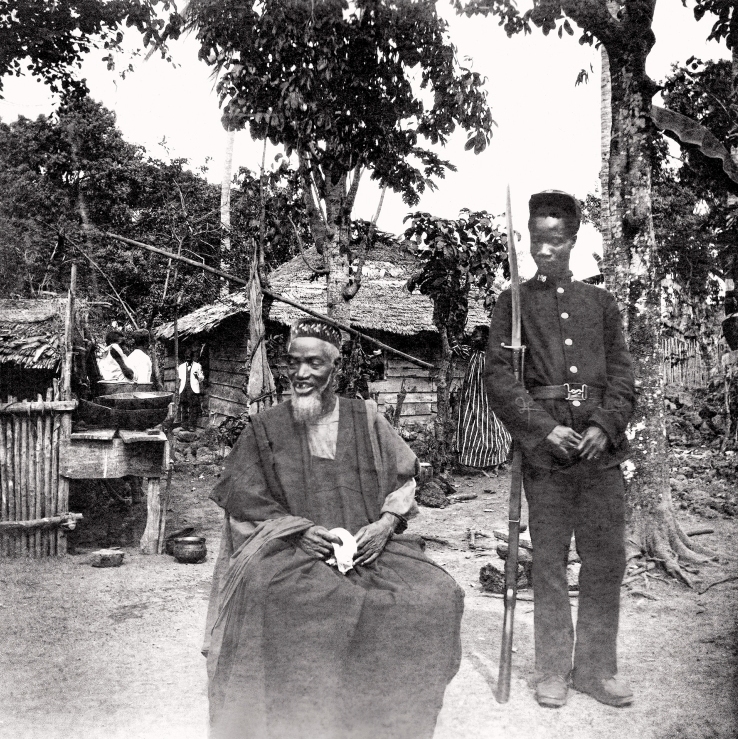
Pro-slavery advocates accused the Black Poor of being responsible for a large proportion of crime in 18th-century London. While the broader community included some women, the Black Poor seems to have exclusively consisted of men, some of whom developed relationships with local women and often married them. On the voyage between Plymouth, England and Sierra Leone, 29 European girlfriends and wives accompanied the Black Poor settlers. Many in London thought moving them to Sierra Leone would lift them out of poverty. The Sierra Leone Resettlement Scheme was proposed by entomologist Henry Smeathman and drew interest from humanitarians like Granville Sharp, who saw it as a means of showing the pro-slavery lobby that black people could contribute towards the running of the new colony. Government officials soon became involved in the scheme as well, although their interest was spurred by the possibility of resettling a large group of poor citizens elsewhere. William Pitt the Younger, prime minister and leader of the Tory party, had an active interest in the scheme because he saw it as a means to repatriate the Black Poor to Africa.
In January 1787, the Atlantic and the Belisarius set sail for Sierra Leone, but bad weather forced them to divert to Plymouth, during which time about 50 passengers died. Another 24 were discharged, and 23 ran away. Eventually, 411 passengers sailed to Sierra Leone in April 1787. On the voyage between Plymouth and Sierra Leone, 96 passengers died. In 1787 the British Crown founded a settlement in Sierra Leone in what was called the "Province of Freedom". About 400 black and 60 white colonists reached Sierra Leone on 15 May 1787. After they established Granville Town, most of the first group of colonists died, owing to disease and warfare with the indigenous African peoples (Temne), who resisted their encroachment. When the ships left them in September, they had been reduced to "276 persons, namely 212 black men, 30 black women, 5 white men and 29 white women".
The settlers that remained forcibly captured land from a local African chieftain, but he retaliated, attacking the settlement, which was reduced to a mere 64 settlers comprising 39 black men, 19 black women, and six white women. Black settlers were captured by unscrupulous traders and sold as slaves, and the remaining colonists were forced to arm themselves for their own protection. The 64 remaining colonists established a second Granville Town.

Nova Scotians
Following the American Revolution, some Black Loyalists from Nova Scotia, Canada, were relocated to Sierra Leone, founding Freetown and contributing significantly to the Krio people and Krio language that came to define the region.
Following the American Revolution, more than 3,000 Black Loyalists had also been settled in Nova Scotia, but faced harsh winters and racial discrimination. Thomas Peters pressed British authorities for relief and more aid; together with British abolitionist John Clarkson, the Sierra Leone Company was established to relocate Black Loyalists who wanted to take their chances in West Africa. In 1792 nearly 1,200 people from Nova Scotia crossed the Atlantic to build the second (and only permanent) Colony of Sierra Leone and the settlement of Freetown on 11 March 1792. In Sierra Leone they were called the Nova Scotian Settlers, the Nova Scotians, or the Settlers. Clarkson initially banned the survivors of Granville Town from joining the new settlement, blaming them for the demise of Granville Town. The Settlers built Freetown in the styles they knew from their lives in the American South; they also continued American fashion and American manners. In addition, many continued to practise Methodism.
In the 1790s, the Settlers, including adult women, voted for the first time in elections. In 1792, in a move that foreshadowed the women's suffrage movements in Britain, the heads of all households, of which a third were women, were given the right to vote. Black settlers in Sierra Leone enjoyed much more autonomy than their white equivalent in European countries. Black migrants elected different levels of political representatives, 'tithingmen', who represented each dozen settlers and 'hundreders' who represented larger amounts. This sort of representation was not available in Nova Scotia. The initial process of society-building in Freetown was a harsh struggle. The Crown did not supply enough basic supplies and provisions and the Settlers were continually threatened by illegal slave trading and the risk of re-enslavement.

Jamaican Maroons and Liberated Africans
The Sierra Leone Company, controlled by London investors, refused to allow the settlers to take freehold of the land. In 1799 some of the settlers revolted. The Crown subdued the revolt by bringing in forces of more than 500 Jamaican Maroons, whom they transported from Cudjoe's Town (Trelawny Town) via Nova Scotia in 1800. Led by Colonel Montague James, the Maroons helped the colonial forces to put down the revolt, and in the process the Jamaican Maroons in Sierra Leone secured the best houses and farms.
On 1 January 1808, Thomas Ludlam, the Governor of the Sierra Leone Company and a leading abolitionist, surrendered the company's charter. This ended its 16 years of running the colony. The British Crown reorganised the Sierra Leone Company as the African Institution; it was directed to improve the local economy. Its members represented both British who hoped to inspire local entrepreneurs and those with interest in the Macauley & Babington Company, which held the (British) monopoly on Sierra Leone trade.
At about the same time (following the Slave Trade Act 1807 which abolished the slave trade), Royal Navy crews delivered thousands of formerly enslaved Africans to Freetown, after liberating them from illegal slave ships. These Liberated Africans or recaptives were sold for $20 a head as apprentices to the white settlers, Nova Scotian Settlers, and the Jamaican Maroons. Many Liberated Africans were treated poorly and even abused because some of the original settlers considered them their property. Cut off from their various homelands and traditions, the Liberated Africans were forced to assimilate to the Western styles of Settlers and Maroons. The Liberated Africans eventually modified their customs to adopt those of the Nova Scotians, Maroons and Europeans, yet kept some of their ethnic traditions. As the Liberated Africans became successful traders and spread Christianity throughout West Africa, they intermarried with the Nova Scotians and Maroons.
These Liberated Africans were from many areas of Africa, but principally the west coast. Between the 18th and 19th century, freed African Americans, some Americo Liberian "refugees", and particularly Afro-Caribbeans, mainly Jamaican Maroons, also immigrated and settled in Freetown. Together these peoples formed the Creole/Krio ethnicity and an English-based creole language (Krio), which is the lingua franca.
Colonial era (1808–1961)
The colonial era saw Sierra Leone evolving under British rule. Sierra Leone developed as an educational centre in West Africa, with the establishment of Fourah Bay College in 1827, attracting English-speaking Africans from across the region.
The settlement of Sierra Leone in the 1800s was unique in that the population was composed of displaced Africans, brought to the colony after the British abolition of the slave trade in 1807. Upon arrival in Sierra Leone, each recaptive was given a registration number, and information on their physical qualities was entered into the Register of Liberated Africans. Documentation was often subjective, resulting in inaccurate entries, making them difficult to track.
The first missionaries, Peter Hartwig and Melchior Renner from the Church Missionary Society (CMS), arrived in Sierra Leone in 1804. The CMS missionaries were to introduce Western ideals, including Western education and healthcare. One of their most significant contributions was the establishment of schools for West African children. European missionaries established these schools with an agenda to convert the native people to their religion, but the educational efforts did not relate to local needs.
In the early 19th century, Freetown served as the residence of the British colonial governor of the region, who also administered the Gold Coast (now Ghana) and the Gambia settlements. Sierra Leone developed as the educational centre of British West Africa. The British established Fourah Bay College in 1827, which became a magnet for English-speaking Africans on the West Coast. For more than a century, it was the only European-style university in west Sub-Saharan Africa. Samuel Ajayi Crowther was the first student to be enrolled. Fourah Bay College soon drew Creoles/Krio people and other Africans seeking higher education in British West Africa. These included Nigerians, Ghanaians, Ivorians, and others, especially in the fields of theology and education. Freetown was known as the "Athens of Africa" due to the number of excellent schools there and in surrounding areas.
In Freetown, the British interacted mostly with the Krio people, who did most of the trading with the indigenous peoples of the interior. Educated Krio people held many positions in the colonial government, giving them status and good pay. After the Berlin Conference of 1884–85, the British decided to establish more dominion over the inland areas, to satisfy what the European powers called "effective occupation". In 1896 it annexed these areas, declaring them the Sierra Leone Protectorate. With this change, the British began to expand their administration in the region, recruiting British citizens to posts and pushing Krio people out of governmental positions and even Freetown's desirable residential areas.
Madam Yoko persuaded the British to give her control of the Kpaa Mende chiefdom. She used diplomacy to communicate with local chiefs who did not trust her friendship with the British. Because Yoko supported the British, some sub-chiefs rebelled, causing Yoko to take refuge in the police barracks. She ruled as a paramount chief in the new British Protectorate until 1906.
The British annexation of the Protectorate interfered with indigenous chiefs' sovereignty. They designated chiefs as units of local government, rather than dealing with them individually, as had been the previous practice. They did not maintain relationships even with longstanding allies, such as Bai Bureh, who was later portrayed as a prime instigator of the Hut Tax War.
In 1898, Colonel Frederic Cardew, military governor of the Protectorate, imposed a new tax on dwellings and demanded that chiefs use their people to maintain roads. The taxes were often higher than the value of the dwellings, and 24 chiefs signed a petition to Cardew stating how destructive this was; their people could not afford to take time off from their subsistence agriculture. They resisted payment of taxes, and tension over the new colonial requirements and the administration's suspicion of the chiefs led to the Hut Tax War. The British fired first; the northern front of mainly Temne people was led by Bai Bureh. The southern front, consisting mostly of Mende people, entered the conflict somewhat later, for other reasons.
For several months, Bureh's fighters had the advantage over the vastly more powerful British forces but both sides suffered hundreds of fatalities. Bureh surrendered on 11 November 1898 to end the destruction of his people's territory and dwellings. The British government recommended leniency, but Cardew insisted on sending the chief and two allies into exile in the Gold Coast; his government hanged 96 of the chief's warriors. Bureh was allowed to return in 1905, when he resumed his chieftaincy of Kasseh. The defeat of the Temne and Mende in the Hut Tax War ended mass resistance to the Protectorate and colonial government, but intermittent rioting and labour unrest continued throughout the colonial period. Riots in 1955 and 1956 involved tens of thousands of Sierra Leoneans in the Protectorate.
Domestic slavery, which continued to be practised by local African elites, was abolished in 1928. In 1935, a monopoly on mineral mining was granted to the Sierra Leone Selection Trust, run by De Beers. The monopoly was scheduled to last 98 years. Mining of diamonds in the east and other minerals expanded, drawing labourers there from other parts of the country.
In 1924, the UK government divided the administration of Sierra Leone into Colony and Protectorate, with different political systems for each. The Colony was Freetown and its coastal area; the Protectorate was defined as the hinterland areas dominated by local chiefs. Antagonism between the two entities escalated to a heated debate in 1947, when proposals were introduced to provide for a single political system for both the Colony and the Protectorate. Most proposals came from leaders of the Protectorate, whose population far outnumbered the Colony's. The Krios, led by Isaac Wallace-Johnson, opposed the proposals, as they would have reduced the Krios' political power in the Colony.
In 1951, Lamina Sankoh collaborated with educated Protectorate leaders to form the Sierra Leone People's Party (SLPP) as the party of the Protectorate. The SLPP leadership, led by Sir Milton Margai, negotiated with the British and the educated Krio-dominated colony based in Freetown to achieve independence. Under Margai, educated Protectorate elites were able to join forces with the paramount chiefs in the face of Krio intransigence. Later, Margai used the same skills to win over opposition leaders and moderate Krio elements to achieve independence from the UK.
In November 1951, Margai oversaw the drafting of a new constitution, which united the separate Colonial and Protectorate legislatures and provided a framework for decolonisation. In 1953, Sierra Leone was granted local ministerial powers and Margai was elected Chief Minister of Sierra Leone. The new constitution ensured Sierra Leone had a parliamentary system within the Commonwealth of Nations. In May 1957, Sierra Leone held its first parliamentary election. The SLPP won the most seats in Parliament and Margai was re-elected as Chief Minister by a landslide.
Independence and post-independence era
On 27 April 1961, Margai led Sierra Leone to independence from Great Britain and became the country's first prime minister. Sierra Leone had its own parliament, its own prime minister, and the ability to make its own laws, but like countries such as Canada and Australia, Sierra Leone remained a "Dominion" and Queen Elizabeth was Queen of the independent Dominion of Sierra Leone. The Dominion of Sierra Leone retained a parliamentary system of government and was a member of the Commonwealth of Nations. The leader of the main opposition All People's Congress (APC), Siaka Stevens, along with Isaac Wallace-Johnson, another outspoken critic of the SLPP government, were arrested and placed under house arrest in Freetown.
In May 1962, Sierra Leone held its first general election as an independent state. The SLPP won a plurality of seats in parliament, and Margai was reelected as prime minister. Margai was popular among Sierra Leoneans during his time in power. He was not corrupt, nor did he make lavish displays of his power or status. He based the government on the rule of law and the separation of powers, with multiparty political institutions and fairly viable representative structures. Margai employed a brokerage style of politics, sharing power among political parties and interest groups, especially the powerful paramount chiefs in the provinces, most of whom were key allies of his government.
Albert Margai's tenure (1964–1967)
Upon Margai's unexpected death in 1964, his younger half-brother, Sir Albert Margai, was appointed as prime minister by parliament. Sir Albert's leadership was briefly challenged by Foreign Minister John Karefa-Smart, who questioned his succession to the SLPP leadership position. But Karefa-Smart lacked broad support within the SLPP in his attempt to oust Albert as both the leader of the SLPP and prime minister. Soon after Albert Margai was sworn in as prime minister, he fired several senior government officials who had served in his brother's government, viewing them as a threat to his administration, including Karefa-Smart.
Sir Albert resorted to increasingly authoritarian actions in response to protests and enacted several laws against the opposition All People's Congress while attempting to establish a one-party state. He opposed to the colonial legacy of allowing executive powers to the Paramount Chiefs, many of whom had been his brother's allies. Accordingly, they began to consider Sir Albert a threat to the ruling houses across the country. Margai appointed many non-Creoles to the country's civil service in Freetown, in an overall diversification of the civil service, which had been dominated by Creoles. As a result, he became unpopular among Creoles, many of whom had supported Sir Milton. Margai sought to make the army homogeneously Mende, his own ethnic group, and was accused of favouring members of the Mende for prominent positions.
In 1967, riots broke out in Freetown against Margai's policies. In response, he declared a state of emergency across the country. He was accused of corruption and of a policy of affirmative action in favour of the Mende ethnic group. He also endeavoured to change Sierra Leone from a democracy to a one-party state.
1967 General Election and military coups (1967–1968)
The APC, with its leader Siaka Stevens, narrowly won a small majority of seats in Parliament over the SLPP in a closely contested 1967 general election. Stevens was sworn in as prime minister on 21 March 1967.
Within hours of taking office, Stevens was ousted in a bloodless military coup led by Brigadier General David Lansana, the commander of the Sierra Leone Armed Forces. He was a close ally of Albert Margai, who had appointed him to the position in 1964. Lansana placed Stevens under house arrest in Freetown and insisted that the determination of the Prime Minister should await the election of the tribal representatives to the House. Stevens was later freed and fled the country, going into exile in neighbouring Guinea. On 23 March 1967, a group of military officers in the Sierra Leone Army led by Brigadier General Andrew Juxon-Smith staged a counter-coup against Lansana. They seized control of the government, arrested Lansana, and suspended the constitution. The group set up the National Reformation Council (NRC), with Juxon-Smith as its chairman and Head of State of the country.
On 18 April 1968 a group of low-ranking soldiers in the Sierra Leone Army who called themselves the Anti-Corruption Revolutionary Movement (ACRM), led by Brigadier General John Amadu Bangura, overthrew the NRC junta. The ACRM arrested many senior NRC members. They reinstated the constitution and returned power to Stevens, who at last assumed the office of prime minister.
Stevens had Bangura arrested in 1970 and charged with conspiracy and treason. He was found guilty and sentenced to death, even though his actions had led to Stevens's return to power. Lansana and Hinga Norman, the main army officers involved in the first coup (1967), were unceremoniously dismissed from the armed forces and made to serve time in prison. Norman was a guard to Governor-general Sir Henry Lightfoot-Boston. Lansana was tried, found guilty of treason, and sentenced to death in 1975.
One-party state and dawn of the 'Republic' (1968–1991)
Stevens assumed power as prime minister again in 1968, following a series of coups. He had campaigned on a platform of socialist principles, but abandoned them and employed an authoritarian government. During his first decade or so in power, Stevens renegotiated some of what he called "useless prefinanced schemes" contracted by his predecessors Albert Margai of the SLPP and Juxon-Smith of the NRC. Some of these policies were said to have left the country economically deprived.
Stevens reorganised the country's oil refinery, the government-owned Cape Sierra Hotel, and a cement factory. He began efforts that later improved transportation and movement between the provinces and Freetown. Roads and hospitals were constructed in the provinces, and Paramount Chiefs and provincial peoples became a prominent force in Freetown. Under the pressure of several coup attempts, real or perceived, Stevens's rule grew increasingly authoritarian, and his relationship with some of his supporters deteriorated. He removed the SLPP from competitive politics in general elections, some believed, through violence and intimidation. To maintain the support of the military, Stevens retained the popular John Amadu Bangura as head of the Sierra Leone Armed Forces.
After the return to civilian rule, by-elections were held (beginning in autumn 1968) and an all-APC cabinet was appointed. In November 1968, unrest in the provinces led Stevens to declare a state of emergency across the country. Many senior officers in the Sierra Leone Army were greatly disappointed with Stevens's policies and his handling of the Sierra Leone Military, but none could confront him. Brigadier General Bangura, who had reinstated Stevens as prime minister, was widely considered the only person who could control Stevens. The army was devoted to Bangura. In January 1970, Bangura was arrested and charged with conspiracy and plotting to commit a coup against the Stevens government. After a trial that lasted a few months, Bangura was convicted; on 29 March 1970, he was executed by hanging in Freetown.