
Scottish Gaelic ( GAL-ik; endonym: Gàidhlig [ˈkaːlɪkʲ] ), also known as Scots Gaelic or simply Gaelic, is a Celtic language native to the Gaels of Scotland. As a member of the Goidelic branch of Celtic, Scottish Gaelic, alongside both Irish and Manx, developed out of Old Irish. It became a distinct spoken language sometime in the 13th century in the Middle Irish period, although a common literary language was shared by the Gaels of both Ireland and Scotland until well into the 17th century. Most of modern Scotland was once Gaelic-speaking, as evidenced especially by Gaelic-language place names.
In the 2011 census of Scotland, 57,375 people (1.1% of the Scottish population, three years and older) reported being able to speak Gaelic, 1,275 fewer than in 2001. The highest percentages of Gaelic speakers were in the Outer Hebrides. Nevertheless, there is a language revival, and the number of speakers of the language under age 20 increased by 0.1% between the 2001 and 2011 censuses. In the 2022 census of Scotland, it was found that 2.5% of the Scottish population had some skills in Gaelic, or 130,161 persons. Of these, 69,701 people reported speaking the language, with a further 46,404 people reporting that they understood the language, but did not speak, read, or write in it.
Outside of Scotland, a dialect known as Canadian Gaelic has been spoken in Canada since the 18th century. In the 2021 census, 2,170 Canadian residents claimed knowledge of Scottish Gaelic, a decline from 3,980 speakers in the 2016 census. There exists a particular concentration of speakers in Nova Scotia, with historic communities in other parts of North America, including North Carolina and Glengarry County, Ontario, having largely disappeared.
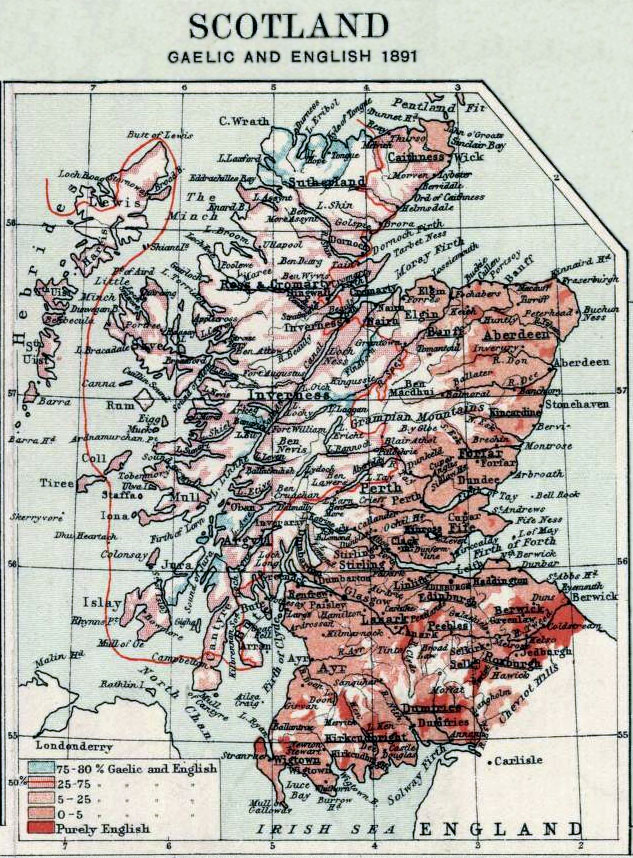
Scottish Gaelic is classed as an indigenous language under the European Charter for Regional or Minority Languages, which the UK Government has ratified, and the Gaelic Language (Scotland) Act 2005 established a language-development body, Bòrd na Gàidhlig. With the passing of the Scottish Languages Act 2025, Gaelic, alongside Scots, has become an official language of Scotland.
Name
Aside from "Scottish Gaelic", the language may also be referred to simply as "Gaelic", pronounced GA-lik in English. However, "Gaelic" GAY-lik also refers to the Irish language (Gaeilge) and the Manx language (Gaelg).
Scottish Gaelic is distinct from Scots, the Middle English-derived language which had come to be spoken in most of the Lowlands of Scotland by the early modern era. Prior to the 15th century, this language was known as Inglis ("English") by its own speakers, with Gaelic being called Scottis ("Scottish"). Beginning in the late 15th century, it became increasingly common for such speakers to refer to Scottish Gaelic as Erse ("Irish") and the Lowland vernacular as Scottis. Today, Scottish Gaelic is recognised as a separate language from Irish, so the word Erse in reference to Scottish Gaelic is no longer used.

History
Origins
Based on medieval traditional accounts and the apparent evidence from linguistic geography, Gaelic has been commonly believed to have been brought to Scotland in the 4th and 5th centuries CE by settlers from Ireland who founded the Gaelic kingdom of Dál Riata on Scotland's west coast, in what is present-day Argyll. An alternative view has been voiced by archaeologist Ewan Campbell, who has argued that the putative migration or takeover is not reflected in archaeological or placename data (as pointed out earlier by Leslie Alcock). Campbell has also questioned the age and reliability of the medieval historical sources speaking of a conquest. Instead, he has inferred that Argyll formed part of a common Q-Celtic-speaking area with Ireland, connected rather than divided by the sea, since the Iron Age. These arguments have been opposed by some scholars defending the early dating of the traditional accounts and arguing for other interpretations of the archaeological evidence.
Regardless of how it came to be spoken in the region, Gaelic in Scotland was mostly confined to Dál Riata until the eighth century, when it began expanding into Pictish areas north of the Firth of Forth and the Firth of Clyde. During the reign of Caustantín mac Áeda (Constantine II, 900–943), outsiders began to refer to the region as the kingdom of Alba rather than as the kingdom of the Picts. However, though the Pictish language did not disappear suddenly, a process of Gaelicisation (which may have begun generations earlier) was clearly under way during the reigns of Caustantín and his successors. By a certain point, probably during the 11th century, all the inhabitants of Alba had become fully Gaelicised Scots, and Pictish identity was forgotten. Bilingualism in Pictish and Gaelic, prior to the former's extinction, led to the presence of Pictish loanwords in Scottish Gaelic and syntactic influence which could be considered to constitute a Pictish substrate.
In 1018, after the conquest of Lothian (theretofore part of England and inhabited predominantly by speakers of Northumbrian Old English) by the Kingdom of Scotland, Gaelic reached its social, cultural, political, and geographic zenith. Colloquial speech in Scotland had been developing independently of that in Ireland since the eighth century. For the first time, the entire region of modern-day Scotland was called Scotia in Latin, and Gaelic was the lingua Scotica.

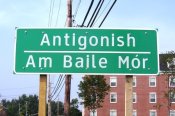
In southern Scotland, Gaelic was strong in Galloway, adjoining areas to the north and west, West Lothian, and parts of western Midlothian. It was spoken to a lesser degree in north Ayrshire, Renfrewshire, the Clyde Valley and eastern Dumfriesshire. In south-eastern Scotland, there is no evidence that Gaelic was ever widely spoken.
Decline
Many historians mark the reign of King Malcolm Canmore (Malcolm III) between 1058 and 1093 as the beginning of Gaelic's eclipse in Scotland. His wife Margaret of Wessex spoke no Gaelic, gave her children Anglo-Saxon rather than Gaelic names, and brought many English bishops, priests, and monastics to Scotland. During the reigns of Malcolm Canmore's sons, Edgar, Alexander I and David I (their successive reigns lasting 1097–1153), Anglo-Norman names and practices spread throughout Scotland south of the Forth–Clyde line and along the northeastern coastal plain as far north as Moray. Norman French completely displaced Gaelic at court. The establishment of royal burghs throughout the same area, particularly under David I, attracted large numbers of foreigners speaking Old English. This was the beginning of Gaelic's status as a predominantly rural language in Scotland.
Clan chiefs in the northern and western parts of Scotland continued to support Gaelic bards who remained a central feature of court life there. The semi-independent Lordship of the Isles in the Hebrides and western coastal mainland remained thoroughly Gaelic since the language's recovery there in the 12th century, providing a political foundation for cultural prestige down to the end of the 15th century.
By the mid-14th century what eventually came to be called Scots (at that time termed Inglis) emerged as the official language of government and law. Scotland's emergent nationalism in the era following the conclusion of the Wars of Scottish Independence was organized using Scots as well. For example, the nation's great patriotic literature including John Barbour's The Brus (1375) and Blind Harry's The Wallace (before 1488) was written in Scots, not Gaelic. By the end of the 15th century, English/Scots speakers referred to Gaelic instead as 'Yrisch' or 'Erse', i.e. Irish and their own language as 'Scottis'.
Modern era
A steady shift away from Scottish Gaelic continued into and through the modern era. Some of this was driven by policy decisions by government or other organisations, while some originated from social changes. In the last quarter of the 20th century, efforts began to encourage use of the language.
The Statutes of Iona, enacted by James VI in 1609, was one piece of legislation that addressed, among other things, the Gaelic language. It required the heirs of clan chiefs to be educated in lowland, Protestant, English-speaking schools. James VI took several such measures to impose his rule on the Highland and Island region. In 1616, the Privy Council proclaimed that schools teaching in English should be established. Gaelic was seen, at this time, as one of the causes of the instability of the region. It was also associated with Catholicism.
The Society in Scotland for the Propagation of Christian Knowledge (SSPCK) was founded in 1709. They met in 1716, immediately after the failed Jacobite rising of 1715, to consider the reform and civilisation of the Highlands, which they sought to achieve by teaching English and the Protestant religion. Initially, their teaching was entirely in English, but soon the impracticality of educating Gaelic-speaking children in this way gave rise to a modest concession: in 1723, teachers were allowed to translate English words in the Bible into Gaelic to aid comprehension, but there was no further permitted use. Other less prominent schools worked in the Highlands at the same time, also teaching in English. This process of anglicisation paused when evangelical preachers arrived in the Highlands, convinced that people should be able to read religious texts in their own language. The first well known translation of the Bible into Scottish Gaelic was made in 1767, when James Stuart of Killin and Dugald Buchanan of Rannoch produced a translation of the New Testament. In 1798, four tracts in Gaelic were published by the Society for Propagating the Gospel at Home, with 5,000 copies of each printed. Other publications followed, with a full Gaelic Bible in 1801. The influential and effective Gaelic Schools Society was founded in 1811. Their purpose was to teach Gaels to read the Bible in their own language. In the first quarter of the 19th century, the SSPCK (despite their anti-Gaelic attitude in prior years) and the British and Foreign Bible Society distributed 60,000 Gaelic Bibles and 80,000 New Testaments. It is estimated that this overall schooling and publishing effort gave about 300,000 people in the Highlands some basic literacy. Very few European languages have made the transition to a modern literary language without an early modern translation of the Bible; the lack of a well known translation may have contributed to the decline of Scottish Gaelic.
Counterintuitively, access to schooling in Gaelic increased knowledge of English. In 1829, the Gaelic Schools Society reported that parents were unconcerned about their children learning Gaelic, but were anxious to have them taught English. The SSPCK also found Highlanders to have significant prejudice against Gaelic. T. M. Devine attributes this to an association between English and the prosperity of employment: the Highland economy relied greatly on seasonal migrant workers travelling outside the Gàidhealtachd. In 1863, an observer sympathetic to Gaelic stated that "knowledge of English is indispensable to any poor islander who wishes to learn a trade or to earn his bread beyond the limits of his native Isle". Generally, rather than Gaelic speakers, it was Celtic societies in the cities and professors of Celtic from universities who sought to preserve the language.
The Education (Scotland) Act 1872 provided universal education in Scotland, but completely ignored Gaelic in its plans. The mechanism for supporting Gaelic through the Education Codes issued by the Scottish Education Department were steadily used to overcome this omission, with many concessions in place by 1918. However, the members of Highland school boards tended to have anti-Gaelic attitudes and served as an obstacle to Gaelic education in the late 19th and early 20th century.

Loss of life due to World War I and the 1919 sinking of the HMY Iolaire, combined with emigration, resulted in the 1910s seeing unprecedented damage to the use of Scottish Gaelic, with a 46% fall in monolingual speakers and a 19% fall in bilingual speakers between the 1911 and 1921 Censuses. Michelle MacLeod of Aberdeen University has said that there was no other period with such a high fall in the number of monolingual Gaelic speakers: "Gaelic speakers became increasingly the exception from that point forward with bilingualism replacing monolingualism as the norm for Gaelic speakers."
The Linguistic Survey of Scotland (1949–1997) surveyed both the dialect of the Scottish Gaelic language, and also mixed use of English and Gaelic across the Highlands and Islands.
Defunct dialects
Dialects of Lowland Gaelic have been defunct since the 18th century. Gaelic in the Eastern and Southern Scottish Highlands, although alive until the mid-20th century, is now largely defunct. Although modern Scottish Gaelic is dominated by the dialects of the Outer Hebrides and Isle of Skye, there remain some speakers of the Inner Hebridean dialects of Tiree and Islay, and even a few native speakers from Western Highland areas including Wester Ross, northwest Sutherland, Lochaber and Argyll. Dialects on both sides of the Straits of Moyle (the North Channel) linking Scottish Gaelic with Irish are now extinct, though native speakers were still to be found on the Mull of Kintyre, on Rathlin and in North East Ireland as late as the mid-20th century. Records of their speech show that Irish and Scottish Gaelic existed in a dialect chain with no clear language boundary. Some features of moribund dialects have been preserved in Nova Scotia, including the pronunciation of the broad or velarised l (l̪ˠ) as [w], as in the Lochaber dialect.
Status
The European Charter for Regional or Minority Languages, (ECRML), was ratified by the Council of Europe in 1998, with the Government of the United Kingdom ratifying the ECRML in 2001. The ECRML aimed to protect and promote historical regional and minority languages, with Scottish Gaelic being included in Part III of the Charter; Part III
providing for a higher level of protection and specific actions for its use in public life. Following the Gaelic Language (Scotland) Act 2005, the Scottish Government signed a Memorandum of Understanding with the European Union in 2009 which made provision for Scottish Gaelic speakers to communicate with EU institutions in their native language.(The United Kingdom withdrew from the European Union on 31 January 2020).
The Endangered Languages Project lists Gaelic's status as "threatened", with "20,000 to 30,000 active users". UNESCO classifies Gaelic as "definitely endangered".
On 30 November 2025, (Saint Andrew's Day), the Scottish Parliament's Scottish Languages Act 2025 came into effect, establishing Scottish Gaelic and Scots as official languages of Scotland, in addition to English.
Number of speakers
The 1755–2001 figures are census data quoted by MacAulay. The 2011 Gaelic speakers figures come from table KS206SC of the 2011 Census. The 2011 total population figure comes from table KS101SC. The numbers of Gaelic speakers relate to the numbers aged 3 and over, and the percentages are calculated using those and the number of the total population aged 3 and over.
Across the whole of Scotland, the 2011 census showed that 25,000 people (0.49% of the population) used Gaelic at home. Of these, 63.3% said that they had a full range of language skills: speaking, understanding, reading and writing Gaelic. 40.2% of Scotland's Gaelic speakers said that they used Gaelic at home. To put this in context, the most common language spoken at home in Scotland after English and Scots is Polish, with about 1.1% of the population, or 54,000 people. In 2022, the census showed that 3,551 people recorded Gaelic as their 'main language'. In Stornoway, 195 people out of 6,796 residents aged 3 and over listed Gaelic as their main language, 2.9% of the population. In Na h-Eileanan Siar (the Outer Hebrides) in general, 1,761 out of 25,563 residents indicated it as their main language, or 6.9% of the population. Most (1,011) of these were 65 years and older.
Distribution in Scotland
The 2011 UK Census showed a total of 57,375 Gaelic speakers in Scotland (1.1% of population over three years old), of whom only 32,400 could also read and write the language. Compared with the 2001 Census, there has been a diminution of about 1300 people. This is the smallest drop between censuses since the Gaelic-language question was first asked in 1881. The Scottish government's language minister and Bòrd na Gàidhlig took this as evidence that Gaelic's long decline has slowed.
The main stronghold of the language continues to be the Outer Hebrides (Na h-Eileanan Siar), where the overall proportion of speakers is 52.2%. Important pockets of the language also exist in the Highlands (5.4%) and in Argyll and Bute (4.0%) and Inverness (4.9%). The locality with the largest absolute number is Glasgow with 5,878 such persons, who make up over 10% of all of Scotland's Gaelic speakers.
Gaelic continues to decline in its traditional heartland. Between 2001 and 2011, the absolute number of Gaelic speakers fell sharply in the Western Isles (−1,745), Argyll & Bute (−694), and Highland (−634). The drop in Stornoway, the largest parish in the Western Isles by population, was especially acute, from 57.5% of the population in 1991 to 43.4% in 2011. The only parish outside the Western Isles over 40% Gaelic-speaking is Kilmuir in Northern Skye at 46%. The islands in the Inner Hebrides with significant percentages of Gaelic speakers are Tiree (38.3%), Raasay (30.4%), Skye (29.4%), Lismore (26.9%), Colonsay (20.2%), and Islay (19.0%).
Today, no civil parish in Scotland has a proportion of Gaelic speakers greater than 65% (the highest value is in Barvas, Lewis, with 64.1%). In addition, no civil parish on mainland Scotland has a proportion of Gaelic speakers greater than 20% (the highest is in Ardnamurchan, Highland, with 19.3%). Out of a total of 871 civil parishes in Scotland, the proportion of Gaelic speakers exceeds 50% in seven parishes, 25% in 14 parishes, and 10% in 35 parishes.
Decline in traditional areas has recently been balanced by growth in the Scottish Lowlands. Between the 2001 and 2011 censuses, the number of Gaelic speakers rose in nineteen of the country's 32 council areas. The largest absolute gains were in Aberdeenshire (+526), North Lanarkshire (+305), the Aberdeen City council area (+216), and East Ayrshire (+208). The largest relative gains were in Aberdeenshire (+0.19%), East Ayrshire (+0.18%), Moray (+0.16%), and Orkney (+0.13%).
In 2018, the census of pupils in Scotland showed 520 students in publicly funded schools had Gaelic as the main language at home, an increase of 5% from 497 in 2014. During the same period, Gaelic medium education in Scotland has grown, with 4,343 pupils (6.3 per 1000) being educated in a Gaelic-immersion environment in 2018, up from 3,583 pupils (5.3 per 1000) in 2014. Data collected in 2007–2008 indicated that even among pupils enrolled in Gaelic medium schools, 81% of primary students and 74% of secondary students report using English more often than Gaelic when speaking with their mothers at home. The effect on this of the significant increase in pupils in Gaelic-medium education since that time is unknown.
Preservation and revitalization
Gaelic-medium education is one of the primary ways that the Scottish Government is addressing Gaelic language shift. Along with the Bòrd na Gàidhlig policies, preschool and daycare environments are also being used to create more opportunities for intergenerational language transmission in the Outer Hebrides. However, revitalization efforts are not unified within Scotland or Nova Scotia, Canada. One can attend Sabhal Mòr Ostaig, a national centre for Gaelic Language and Culture, based in Sleat, on the Isle of Skye. This institution is the only source for higher education which is conducted entirely in Scottish Gaelic. They offer courses for Gaelic learners from beginners into fluency. They also offer regular bachelors and graduate programmes delivered entirely in Gaelic. Concerns have been raised around the fluency achieved by learners within these language programmes because they are disconnected from vernacular speech communities. In regard to language revitalization planning efforts, many feel that the initiatives must come from within Gaelic speaking communities, be led by Gaelic speakers, and be designed to serve and increase fluency within the vernacular communities as the first and most viable resistance to total language shift from Gaelic to English. Currently, language policies are focused on creating new language speakers through education, instead of focused on how to strengthen intergenerational transmission within existing Gaelic speaking communities.
Challenges to preservation and revitalization
In the Outer Hebrides, accommodation ethics exist amongst native or local Gaelic speakers when engaging with new learners or non-locals. Accommodation ethics, or ethics of accommodation, is a social practice where local or native speakers of Gaelic shift to speaking English when in the presence of non-Gaelic speakers out of a sense of courtesy or politeness. This accommodation ethic persists even in situations where new learners attempt to speak Gaelic with native speakers. This creates a situation where new learners struggle to find opportunities to speak Gaelic with fluent speakers. Affect is the way people feel about something, or the emotional response to a particular situation or experience. For Gaelic speakers, there is a conditioned and socialized negative affect through a long history of negative Scottish media portrayal and public disrespect, state mandated restrictions on Gaelic usage, and Highland Clearances. This negative affect towards speaking openly with non-native Gaelic speakers has led to a language ideology at odds with revitalization efforts on behalf of new speakers, state policies (such as the Gaelic Language Act), and family members reclaiming their lost mother tongue. New learners of Gaelic often have a positive affective stance to their language learning, and connect this learning journey towards Gaelic language revitalization. The mismatch of these language ideologies, and differences in affective stance, has led to fewer speaking opportunities for adult language learners and therefore a challenge to revitalization efforts which occur outside the home. Positive engagements between language learners and native speakers of Gaelic through mentorship has proven to be productive in socializing new learners into fluency.
Usage
Official
Scotland
In the 2022 census, 3,551 people claimed Gaelic as their 'main language'. Of these, 1,761 (49.6%) were in Na h-Eileanan Siar, 682 (19.2%) were in Highland, 369 were in Glasgow City and 120 were in City of Edinburgh; no other council area had as many as 80 such respondents.
Scottish Parliament
The UK government ratified the European Charter for Regional or Minority Languages in respect of Gaelic. Gaelic, along with Irish and Welsh, was designated under Part III of the Charter, which required the UK Government to take a range of concrete measures in the fields of education, justice, public administration, broadcasting and culture. However Gaelic did not received the same degree of official recognition from the UK Government as Welsh, despite its having long suffered from a lack of use in educational and administrative contexts and having been long suppressed.
With the advent of devolution, which saw a devolved Scottish Parliament created, Scottish matters have begun to receive greater attention, and it achieved a degree of official recognition when the Gaelic Language (Scotland) Act was enacted on 21 April 2005. The key provisions of the Act are:
Establishing the Gaelic development body, Bòrd na Gàidhlig (BnG), on a statutory basis with a view to securing the status of the Gaelic language as an official language of Scotland commanding equal respect to the English language and to promote the use and understanding of Gaelic.
Requiring BnG to prepare a National Gaelic Language Plan every five years for approval by Scottish Ministers.
Requiring BnG to produce guidance on Gaelic medium education and Gaelic as a subject for education authorities.
Requiring public bodies in Scotland, both Scottish public bodies and cross-border public bodies insofar as they carry out devolved functions, to develop Gaelic language plans in relation to the services they offer, if requested to do so by BnG.
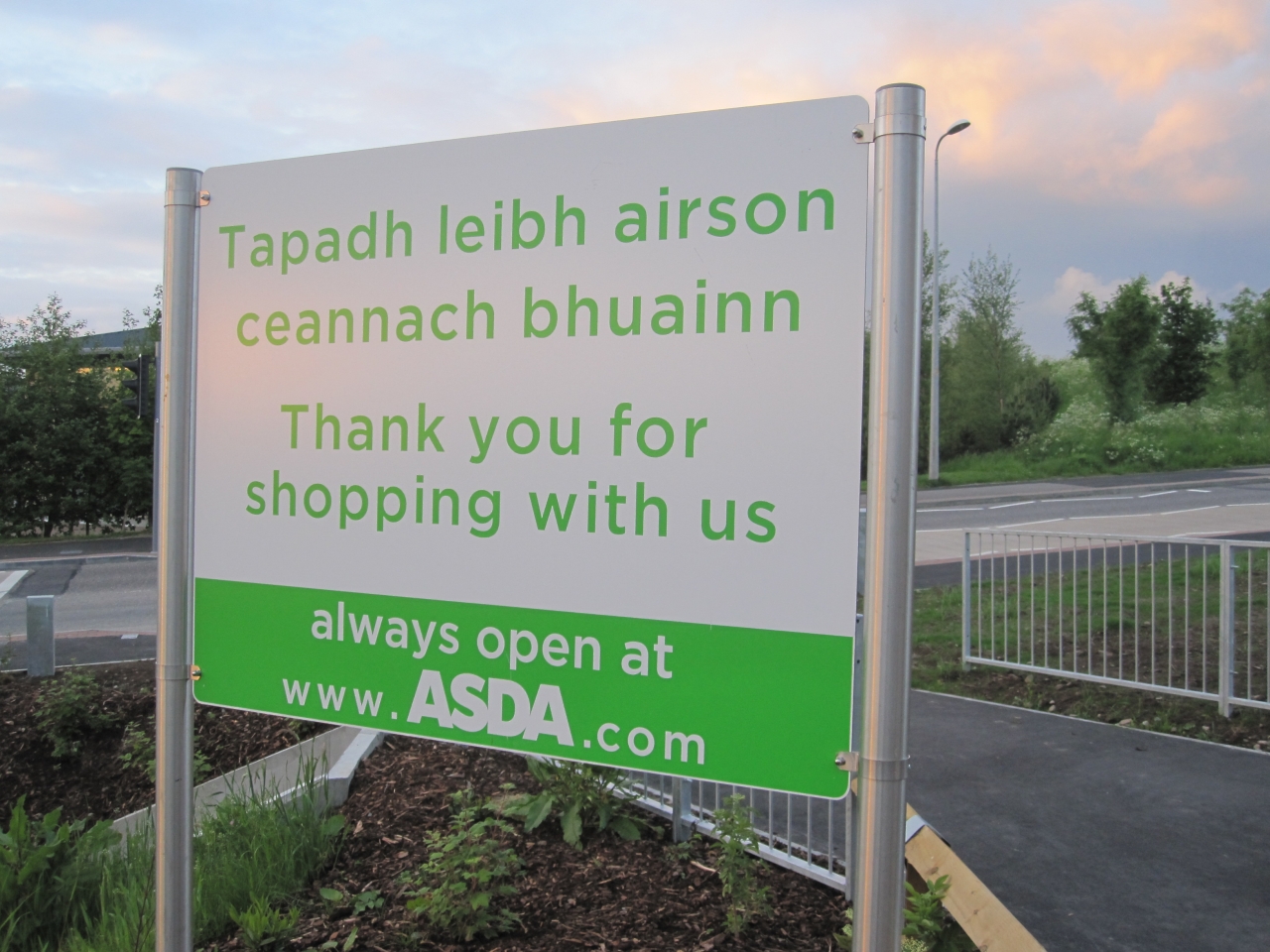
After its creation, Bòrd na Gàidhlig required a Gaelic Language Plan from the Scottish Government. This plan was accepted in 2008, and some of its main commitments were: identity (signs, corporate identity); communications (reception, telephone, mailings, public meetings, complaint procedures); publications (PR and media, websites); staffing (language learning, training, recruitment).
Following a consultation period, in which the government received many submissions, the majority of which asked that the bill be strengthened, a revised bill was published; the main alteration was that the guidance of the Bòrd is now statutory (rather than advisory). In the committee stages in the Scottish Parliament, there was much debate over whether Gaelic should be given 'equal validity' with English. Due to executive concerns about resourcing implications if this wording was used, the Education Committee settled on the concept of 'equal respect'. It is not clear what the legal force of this wording is.
The Act was passed by the Scottish Parliament unanimously, with support from all sectors of the Scottish political spectrum, on 21 April 2005. Under the provisions of the Act, it will ultimately fall to BnG to secure the status of the Gaelic language as an official language of Scotland.