
Rwanda, officially the Republic of Rwanda, is a landlocked country in East Africa. Its geography is dominated by mountains in the west and savanna in the southeast. The largest and most notable lakes are mainly in the western and northern regions of the country, and several volcanoes that form part of the Virunga volcanic chain are primarily in the northwest. The climate is considered tropical highland, with two rainy seasons and two dry seasons each year. Its capital and largest city is Kigali, located at the centre of the country, at 1,567 metres above sea level. Rwanda lies a few degrees south of the Equator in the Great Rift Valley of East Africa. Rwanda is bordered by Uganda to the north, Tanzania to the east, Burundi to the south, and the Democratic Republic of the Congo to the west. With a population of about 14 million people living within a total area of 26,338 square kilometres (10,169 sq mi), of which land accounts for about 93.7%, Rwanda is the 21st most densely populated country in the world, with an average of about 578 people per square kilometre (1,500 per square mile).
Hunter-gatherers settled the territory in the Stone and Iron Ages, followed later by Bantu peoples. The population coalesced first into clans, and then into kingdoms. In the 15th century, one kingdom, under King Gihanga, managed to incorporate several of its close neighbour territories establishing the Kingdom of Rwanda. The Kingdom of Rwanda dominated from the mid-eighteenth century, with its Tutsi kings conquering others militarily, centralising power, and enacting unifying policies. In 1897, Germany colonized Rwanda as part of German East Africa, followed by Belgium, which took control in 1916 during World War I. Both European nations ruled through the Rwandan king and perpetuated a pro-Tutsi policy. The Hutu population revolted in 1959. They massacred numerous Tutsi and ultimately established an independent, Hutu-dominated republic in 1962 led by President Grégoire Kayibanda. A 1973 military coup overthrew Kayibanda and brought Juvénal Habyarimana to power, who retained the pro-Hutu policy. The Tutsi-led Rwandan Patriotic Front (RPF) launched a civil war in 1990. Habyarimana was assassinated in April 1994 by unknown parties. Social tensions erupted in the Rwandan genocide carried out by Hutu Power extremists against the Tutsis. The RPF ended the genocide with a military victory in July 1994.
Rwanda has been governed by the RPF as a de facto one-party state since 1994 with former commander Paul Kagame serving as president since 2000. The country has been governed by a series of centralized authoritarian governments since precolonial times. Although Rwanda has low levels of corruption compared with neighbouring countries, it ranks among the lowest in international measurements of government transparency and civil liberties, despite recent gains that have elevated it to the medium category on the Human Development Index. The population is young and predominantly rural; Rwanda has one of the youngest populations in the world. Rwandans are drawn from just one cultural and linguistic group, the Banyarwanda. However, within this group there are three subgroups: the Hutu, Tutsi, and Twa. The Twa are forest-dwelling Central African foragers and are often considered descendants of Rwanda's earliest inhabitants. Christianity is the largest religion in the country; the principal and national language is Kinyarwanda, spoken by native Rwandans, with English, French, and Swahili serving as additional official languages.
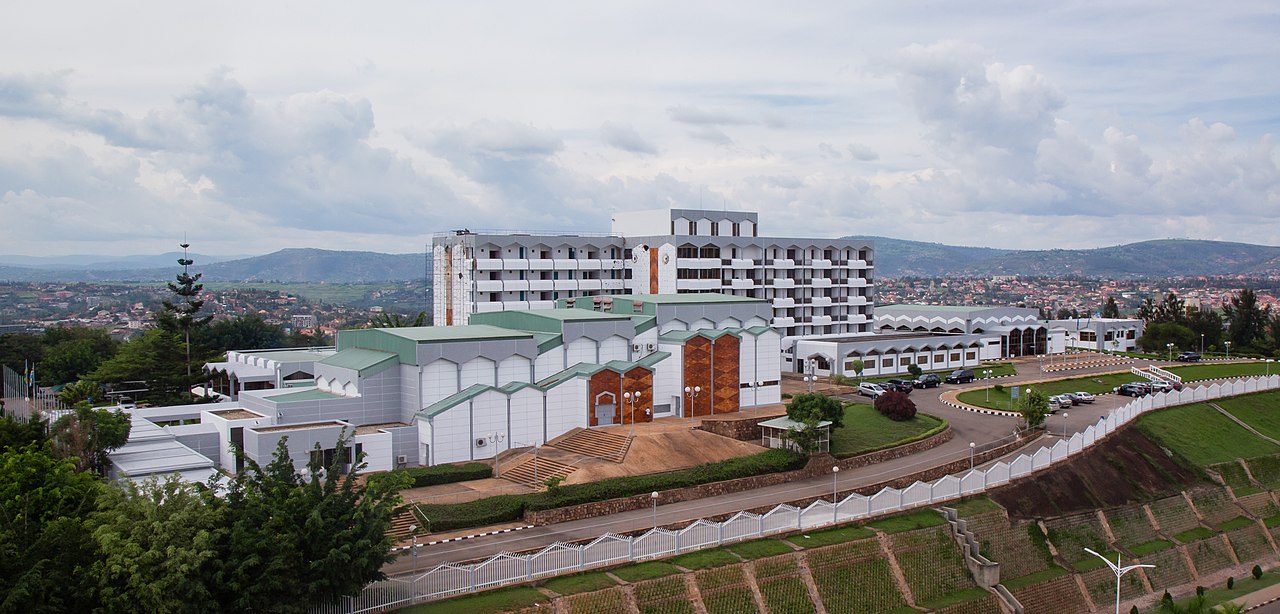
Rwanda's economy is based on services, agricultural exports, and manufacturing. Coffee and tea are the major cash crops that it exports, although it is surpassed in banana production. Tourism is a fast-growing sector and is now the country's leading foreign exchange earner. As of the most recent survey in 2024, 30.5% of the population is affected by multidimensional poverty with 27.4% under the national poverty line. The country is a member of the African Union, the United Nations, the Commonwealth of Nations (one of the few members without a historical link to the British Empire), COMESA, the OIF, and the East African Community.
Etymology
The name Rwanda derives from the word Ku-aanda, meaning "expansion" or "spreading out from the centre", reflecting the historical growth of the Kingdom of Rwanda.
History
Modern human settlement of what is now Rwanda dates from, at the latest, the last glacial period, either in the Neolithic period around 8,000 BC, or in the long humid period which followed, up to around 3,000 BC. Archaeological excavations have revealed evidence of sparse settlement by hunter-gatherers in the late Stone Age, followed by a larger population of early Iron Age settlers, who produced dimpled pottery and iron tools. These early inhabitants were the ancestors of the Twa, aboriginal pygmy hunter-gatherers who remain in Rwanda today. Then by 3,000 BC, Central Sudanic and Kuliak farmers and herders began settling into Rwanda, followed by South Cushitic–speaking herders in 2,000 BC. The forest-dwelling Twa lost much of their habitat and moved to the mountain slopes. Between 800 BC and 1500 AD, a number of Bantu groups migrated into Rwanda, clearing forest land for agriculture. Historians have several theories regarding the nature of the Bantu migrations; one theory is that the first settlers were Hutu, while the Tutsi migrated later to form a distinct racial group, possibly of Nilo-hamitic origin. An alternative theory is that the migration was slow and steady, with incoming groups integrating into rather than conquering the existing society. Under this theory, the Hutu and Tutsi distinction arose later and was a class distinction rather than a racial one.
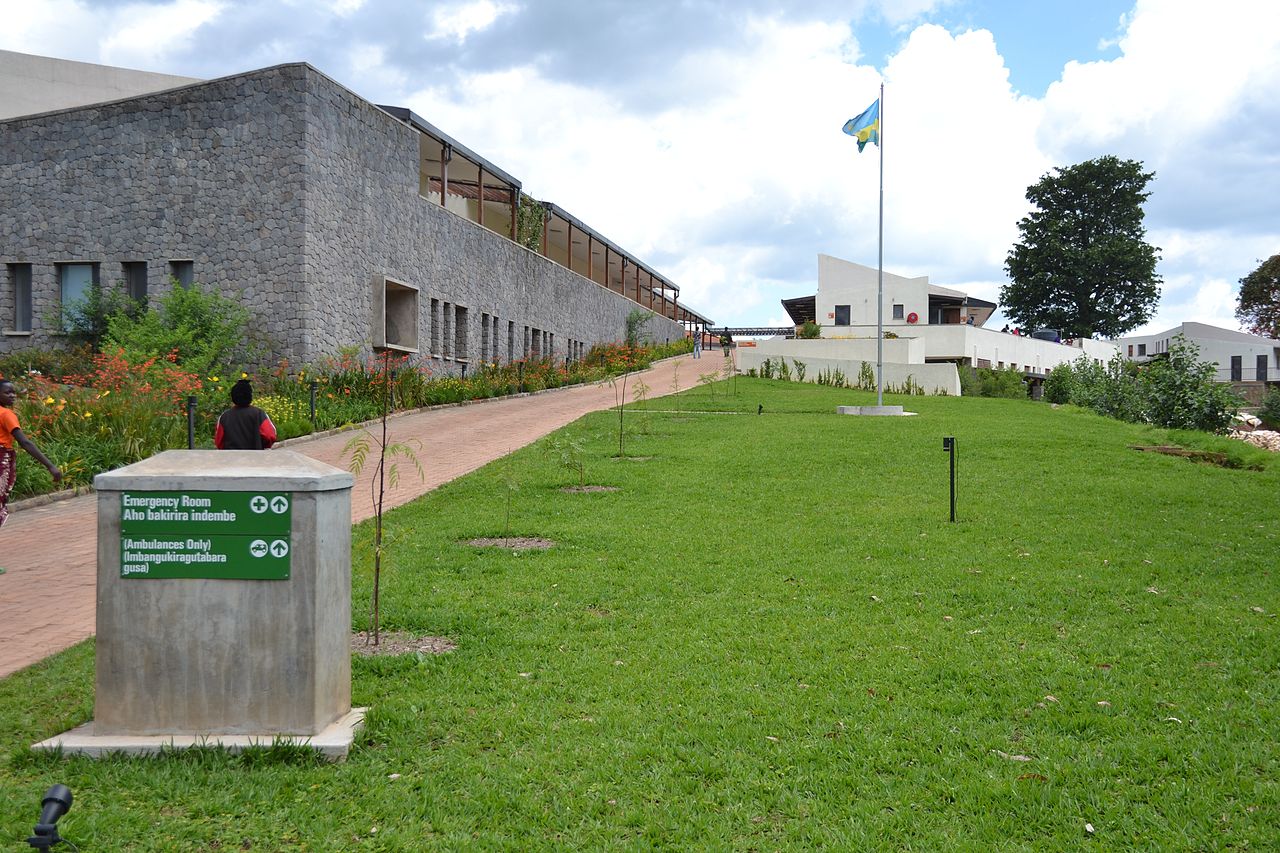
The earliest form of social organisation in the area was the clan (ubwoko). The clans were not limited to genealogical lineages or geographical area, and most included Hutu, Tutsi, and Twa. From the 15th century, the clans began to merge into kingdoms. One kingdom, under King Gihanga, managed to incorporate several of its close neighbour territories establishing the Kingdom of Rwanda. By 1700, around eight kingdoms had existed in the present-day Rwanda. One of these, the Kingdom of Rwanda ruled by the Tutsi Nyiginya clan, became increasingly dominant from the mid-18th century. The kingdom reached its greatest extent during the 19th century under the reign of King Kigeli Rwabugiri. Rwabugiri conquered several smaller states, expanded the kingdom west and north, and initiated administrative reforms; these included ubuhake, in which Tutsi patrons ceded cattle, and therefore privileged status, to Hutu or Tutsi clients in exchange for economic and personal service, and uburetwa, a corvée system in which Hutu were forced to work for Tutsi chiefs. Rwabugiri's changes caused a rift to grow between the Hutu and Tutsi populations. The Twa were better off than in pre-Kingdom days, with some becoming dancers in the royal court, but their numbers continued to decline.
The Berlin Conference of 1884 assigned the territory to the German Empire, who declared it to be part of German East Africa. In 1894, explorer Gustav Adolf von Götzen was the first European to cross the entire territory of Rwanda; he crossed from the south-east to Lake Kivu and met the king. In 1897, Germany established a presence in Rwanda with the formation of an alliance with the king, beginning the colonial era. The Germans did not significantly alter the social structure of the country, but exerted influence by supporting the king and the existing hierarchy, and delegating power to local chiefs.
Belgian forces invaded Rwanda and Burundi in 1916, during World War I, and later, in 1922, they started to rule both Rwanda and Burundi as a League of Nations mandate called Ruanda-Urundi and started a period of more direct colonial rule. The Belgians simplified and centralised the power structure, introduced large-scale projects in education, health, public works, and agricultural supervision, including new crops and improved agricultural techniques to try to reduce the incidence of famine. Both the Germans and the Belgians, in the wake of New Imperialism, promoted Tutsi supremacy, considering the Hutu and Tutsi different races. In 1935, Belgium introduced an identity card system, which labelled each individual as either Tutsi, Hutu, Twa or Naturalised. While it had been previously possible for particularly wealthy Hutu to become honorary Tutsi, the identity cards prevented any further movement between the classes.

Belgium continued to rule Ruanda-Urundi (of which Rwanda formed the northern part) as a UN trust territory after the Second World War, with a mandate to oversee eventual independence. Tensions escalated between the Tutsi, who favoured early independence, and the Hutu emancipation movement, culminating in the 1959 Rwandan Revolution: Hutu activists began killing Tutsi and destroying their houses, forcing more than 100,000 people to seek refuge in neighbouring countries. In 1961, the suddenly pro-Hutu Belgians held a referendum in which the country voted to abolish the monarchy. Rwanda was separated from Burundi and gained independence on 1 July 1962, which is commemorated as Independence Day, a national holiday. Cycles of violence followed, with mainly Tutsi exile rebels attacking from neighbouring countries and the Hutu-led government retaliating with large-scale slaughter and repression of the Tutsi civilians inside Rwanda. In 1973, Juvénal Habyarimana took power in a military coup. Pro-Hutu discrimination continued, but there was greater economic prosperity and a reduced amount of violence against the Tutsi. The Twa remained marginalised, and by 1990 were almost entirely forced out of the forests by the government; many became beggars. Rwanda's population had increased from 1.6 million people in 1934 to 7.1 million in 1989, leading to competition for land.
In 1990, the Rwandan Patriotic Front (RPF), a rebel group composed of Tutsi refugees, invaded northern Rwanda from their base in Uganda, initiating the Rwandan Civil War. The group condemned the Hutu-dominated government for failing to democratize and confront the problems facing these refugees. Neither side was able to gain a decisive advantage in the war, but by 1992 it had weakened Habyarimana's authority; mass demonstrations forced him into a coalition with the domestic opposition and eventually to sign the 1993 Arusha Accords with the RPF.
Rwandan genocide
The cease-fire ended on 6 April 1994 when Habyarimana's plane was shot down near Kigali Airport, killing him. The shooting down of the plane served as the catalyst for the Rwandan genocide, which began within a few hours. Over the course of approximately 100 days, between 500,000 and 1,000,000 Tutsi and politically moderate Hutu were killed in well-planned attacks on the orders of the interim government. Many Twa were also killed, despite not being directly targeted.

The Tutsi RPF restarted their offensive, and took control of the country methodically, gaining control of the whole country by mid-July. The international response to the genocide was limited, with major powers reluctant to strengthen the already overstretched UN peacekeeping force. When the RPF took over, approximately two million Hutu fled to neighbouring countries, in particular Zaïre, fearing reprisals; additionally, the RPF-led army was a key belligerent in the First and Second Congo Wars. Within Rwanda, a period of reconciliation and justice began, with the establishment of the International Criminal Tribunal for Rwanda (ICTR) and the reintroduction of Gacaca, a traditional village court system. Since 2000 Rwanda's economy, tourist numbers, and Human Development Index have grown rapidly; between 2006 and 2011 the poverty rate reduced from 57% to 45%, while life expectancy rose from 46.6 years in 2000 to 65.4 years in 2021.
Since 1994
In a bid to promote national unity and reconciliation, Rwanda's new flag and national anthem were unveiled at the end of 2001, removing overt ethnic distinctions in official state identity.
Politics and government
Rwanda is a de facto one-party state ruled by the Rwandan Patriotic Front (RPF) and its leader Paul Kagame continuously since the end of the civil war in 1994. Although Rwanda is nominally democratic, elections are manipulated in various ways, which include banning opposition parties, arresting or assassinating critics, and electoral fraud. The RPF is a Tutsi-dominated party but receives support from other communities as well.

The constitution was adopted following a national referendum in 2003, replacing the transitional constitution which had been in place since 1994. The constitution mandates a multi-party system of government, with politics based on democracy and elections. However, the constitution places conditions on how political parties may operate. Article 54 states that "political organizations are prohibited from basing themselves on race, ethnic group, tribe, clan, region, sex, religion or any other division which may give rise to discrimination". The president of Rwanda is the head of state, and has broad powers including creating policy in conjunction with the Cabinet of Rwanda, commanding the Rwandan Defence Force, negotiating and ratifying treaties, signing presidential orders, and declaring war or a state of emergency. The president is elected every five years, and appoints the prime minister and all other members of the Cabinet. The Parliament consists of two chambers. It makes legislation and is empowered by the constitution to oversee the activities of the president and the Cabinet. The lower chamber is the Chamber of Deputies, which has 80 members serving five-year terms. Twenty-four of these seats are reserved for women, elected through a joint assembly of local government officials; another three seats are reserved for youth and disabled members; the remaining 53 are elected by universal suffrage under a proportional representation system.
Rwanda's legal system is largely based on German and Belgian civil law systems and customary law. The judiciary is independent of the executive branch, although the president and the Senate are involved in the appointment of Supreme Court judges. Human Rights Watch has praised the Rwandan government for progress made in the delivery of justice including the abolition of the death penalty, but also alleges interference in the judicial system by members of the government, such as the politically motivated appointment of judges, misuse of prosecutorial power, and pressure on judges to make particular decisions. The constitution provides for two types of courts: ordinary and specialised. Ordinary courts are the Supreme Court, the High Court, and regional courts, while specialised courts are military courts and a system of commercial courts created in 2011 to expedite commercial litigations. Between 2004 and 2012, a system of Gacaca courts was in operation. Gacaca, a Rwandan traditional court operated by villages and communities, was revived to expedite the trials of genocide suspects. The court succeeded in clearing the backlog of genocide cases, but was criticised by human rights groups as not meeting legal fair standard.
Rwanda has low corruption levels relative to most other African countries; in 2014, Transparency International ranked Rwanda as the fifth-cleanest out of 47 countries in Sub-Saharan Africa and 55th-cleanest out of 175 in the world. The constitution provides for an ombudsman, whose duties include prevention and fighting of corruption. Public officials (including the president) are required by the constitution to declare their wealth to the ombudsman and to the public; those who do not comply are suspended from office. Despite this, Human Rights Watch notes extensive political repression throughout the country, including illegal and arbitrary detention, threats or other forms of intimidation, disappearances, politically motivated trials, and the massacre of peacefully protesting civilians.

Rwanda is a member of the United Nations, African Union, Francophonie, East African Community, and the Commonwealth of Nations. For many years during the Habyarimana regime, the country maintained close ties with France, as well as Belgium, the former colonial power. Under the RPF government, however, Rwanda has sought closer ties with neighbouring countries in the East African Community and with the English-speaking world. Diplomatic relations with France were suspended in 2006 following the indictment of Rwandan officials by a French judge, and despite their restoration in 2010, as of 2015 relations between the countries remain strained. Relations with the Democratic Republic of the Congo were tense following Rwanda's involvement in the First and Second Congo Wars; the Congolese army alleged Rwandan attacks on their troops, while Rwanda blamed the Congolese government for failing to suppress Hutu rebels in North and South Kivu provinces. In 2010, the United Nations released a report accusing the Rwandan army of committing wide scale human rights violations and crimes against humanity in the Democratic Republic of the Congo during the First and Second Congo Wars, charges denied by the Rwandan government. Relations soured further in 2012, as Kinshasa accused Rwanda of supporting the M23 rebellion, an insurgency in the eastern Congo. In 2015 peace had been restored and relations were improving, but by January 2025 renewed Rwandan support for the M23 rebellion caused DR Congo to sever diplomatic relations in the wake of the 2025 Goma offensive.
Rwanda's relationship with Uganda was also tense for much of the 2000s following a 1999 clash between the two countries' armies as they backed opposing rebel groups in the Second Congo War, but improved significantly in the early 2010s. In 2019, relations between the two countries deteriorated, with Rwanda closing its borders with Uganda.
On 25 January 2025, the Democratic Republic of the Congo broke off diplomatic ties with Rwanda over its alleged support for the M23 rebel group operating in the country.
Military
The national military is the Rwandan Defence Force (RDF), which consists of the Rwanda Land Forces, the Rwandan Air Force, and specialized service branches. The RDF was established following the 1994 civil war from the ranks of the Rwandan Patriotic Front (RPF) rebel army, replacing the former government's Forces Armées Rwandaises (FAR). Enlistment in the RDF is entirely voluntary, and the minimum age for recruitment is 18 years. Military expenditure constitutes a notable portion of the national budget, reflecting the country's proactive regional security doctrine.
Despite its relatively small geographic size, Rwanda maintains one of the most operationally active militaries in East Africa. The country has evolved into one of the largest contributors of personnel to United Nations peacekeeping operations globally, consistently ranking among the top three troop-contributing countries alongside Nepal and Bangladesh. RDF battalions and formed police units are heavily deployed in stabilization missions across the continent, most notably under the United Nations Multidimensional Integrated Stabilization Mission in the Central African Republic (MINUSCA) and previously under the African Union-United Nations Hybrid Operation in Darfur (UNAMID).
In addition to multilateral UN mandates, Rwanda frequently utilizes independent bilateral military interventions to address regional crises. Since July 2021, the RDF has maintained a substantial deployment in northern Mozambique's Cabo Delgado province to combat Islamist insurgencies. Following the withdrawal of the Southern African Development Community Mission in Mozambique (SAMIM) in 2024, the footprint expanded dramatically. As of 2026, official statements from the deployment command indicated that more than 6,300 Rwandan soldiers and security personnel were active in the province to degrade insurgent capabilities and secure infrastructure. Domestically, the RDF is highly institutionalized in civilian development projects, deploying military engineers, medical staff, and logistics units to build public infrastructure and schools during an annual outreach campaign known as the "RDF Citizen Production Army".
Administrative divisions
Before western colonization, the Rwandan government system had a quasi-system of political pluralism and power sharing. Despite there being a strict hierarchy, the pre-colonial system achieved an established, combined system of "centralized power and decentralized autonomous units." Under the monarch, the elected Chief governed a province that was divided into multiple districts. Two other officials appointed by head Chief governed the districts; one official was allocated power over the land while the other oversaw cattle. The king (mwami) exercised control through a system of provinces, districts, hills, and neighbourhoods.
As of 2003, the constitution divided Rwanda into provinces (intara), districts (uturere), cities, municipalities, towns, sectors (imirenge), cells (utugari), and villages (imidugudu); the larger divisions, and their borders, are established by Parliament. In January 2006, Rwanda was reorganized such that twelve provinces were merged to create five, and 106 districts were merged into thirty. The present borders drawn in 2006 aimed at decentralising power and removing associations with the old system and the genocide. The previous structure of twelve provinces associated with the largest cities was replaced with five provinces based primarily on geography. These are Northern Province, Southern Province, Eastern Province, Western Province, and the Municipality of Kigali in the centre.
The five provinces act as intermediaries between the national government and their constituent districts to ensure that national policies are implemented at the district level. The Rwanda Decentralisation Strategic Framework developed by the Ministry of Local Government assigns to provinces the responsibility for "coordinating governance issues in the Province, as well as monitoring and evaluation". Each province is headed by a governor, appointed by the president and approved by the Senate. The districts are responsible for coordinating public service delivery and economic development. They are divided into sectors, which are responsible for the delivery of public services as mandated by the districts. Districts and sectors have directly elected councils, and are run by an executive committee selected by that council. The cells and villages are the smallest political units, providing a link between the people and the sectors. All adult resident citizens are members of their local cell council, from which an executive committee is elected. The city of Kigali is a provincial-level authority, which coordinates urban planning within the city.
Geography
Rwanda is located in East Africa, in the eastern-central part of the African continent, between 1° and 3° S latitude and between 29° and 31° E longitude. Its geography is characterized by rolling highlands, mountains, and numerous lakes. At 26,338 square kilometres (10,169 sq mi), Rwanda is the world's 144th-largest country, and the fourth smallest on the African mainland after Gambia, Eswatini, and Djibouti. It is comparable in size to Burundi, Haiti and Albania. The entire country is at a high altitude: the lowest point is the Rusizi River at 950 metres (3,117 ft) above sea level.
The watershed between the major Congo and Nile drainage basins runs from north to south through Rwanda, with around 80% of the country's area draining into the Nile and 20% into the Congo via the Rusizi River and Lake Tanganyika. The country's longest river is the Nyabarongo, which rises in the south-west, flows north, east, and southeast before merging with the Ruvubu to form the Kagera; the Kagera then flows due north along the eastern border with Tanzania. The Nyabarongo-Kagera eventually drains into Lake Victoria, and its source in Nyungwe Forest is a contender for the as-yet undetermined overall source of the Nile. Rwanda has many lakes, the largest being Lake Kivu. This lake occupies the floor of the Albertine Rift along most of the length of Rwanda's western border, and with a maximum depth of 480 metres (1,575 ft), it is one of the twenty deepest lakes in the world. Other sizeable lakes include Burera, Ruhondo, Muhazi, Rweru, and Ihema, the last being the largest of a string of lakes in the eastern plains of Akagera National Park.
Mountains dominate central and western Rwanda and the country is sometimes called "Pays des mille collines" in French ("Land of a thousand hills"). They are part of the Albertine Rift Mountains that flank the Albertine branch of the East African Rift, which runs from north to south along Rwanda's western border. The highest peaks are found in the Virunga volcano chain in the northwest; this includes Mount Karisimbi, Rwanda's highest point, at 4,507 metres (14,787 ft). This western section of the country lies within the Albertine Rift montane forests ecoregion. It has an elevation of 1,500 to 2,500 metres (4,921 to 8,202 ft). The centre of the country is predominantly rolling hills, while the eastern border region consists of savanna, plains and swamps.
Climate
Rwanda has a tropical highland climate, with lower temperatures than are typical for equatorial countries because of its high elevation. Precipitation usually ranges from 1,000 to 1,400 millimetres per year, depending on the area. Kigali, in the centre of the country, has a typical daily temperature range between 15 and 28 °C (59 and 82 °F), with little variation through the year. There are some temperature variations across the country; the mountainous west and north are generally cooler than the lower-lying east. There are two rainy seasons in the year; the first runs from February to June and the second from September to December. These are separated by two dry seasons: the major one from June to September, during which there is often no rain at all, and a shorter and less severe one from December to February. Rainfall varies geographically, with the west and northwest of the country receiving more precipitation annually than the east and southeast. Global warming has caused a change in the pattern of the rainy seasons. According to a report by the Strategic Foresight Group, change in climate has reduced the number of rainy days experienced during a year, but has also caused an increase in frequency of torrential rains. Both changes have caused difficulty for farmers, decreasing their productivity. Strategic Foresight also characterise Rwanda as a fast warming country, with an increase in average temperature of between 0.7 °C to 0.9 °C over fifty years.
Biodiversity
In prehistoric times, montane forest occupied one-third of the territory of present-day Rwanda. Naturally occurring vegetation is now mostly restricted to the three national parks, with terraced agriculture dominating the rest of the country. Nyungwe, the largest remaining tract of forest, contains 200 species of tree as well as orchids and begonias. Vegetation in the Volcanoes National Park is mostly bamboo and moorland, with small areas of forest. By contrast, Akagera has a savanna ecosystem in which acacia dominates the flora. There are several rare or endangered plant species in Akagera, including Markhamia lutea and Eulophia guineensis.
The greatest diversity of large mammals is found in the three national parks, which are designated conservation areas. Akagera contains typical savanna animals such as giraffes and elephants, while Volcanoes is home to an estimated one-third of the worldwide mountain gorilla population. Nyungwe Forest boasts thirteen primate species including common chimpanzees and Ruwenzori colobus arboreal monkeys; the Ruwenzori colobus move in groups of up to 400 individuals, the largest troop size of any primate in Africa.
Rwanda's population of lions was destroyed in the aftermath of the genocide of 1994, as national parks were turned into camps for displaced people and the remaining animals were poisoned by cattle herders. In June 2015, two South African parks donated seven lions to Akagera National Park, reestablishing a lion population in Rwanda. The lions were held initially in a fenced-off area of the park, and then collared and released into the wild a month later.
Eighteen endangered black rhinos were brought to Rwanda in 2017 from South Africa. After positive results, five more black rhinos were delivered to Akagera National Park from zoos all over Europe in 2019.
Similarly, the white rhino population is growing in Rwanda. In 2021, Rwanda received 30 white rhinos from South Africa with the goal of Akagera being a safe breeding ground for the near-threatened species.
There are 670 bird species in Rwanda, with variation between the east and the west. Nyungwe Forest, in the west, has 280 recorded species, of which 26 are endemic to the Albertine Rift; endemic species include the Rwenzori turaco and handsome spurfowl. Eastern Rwanda, by contrast, features savanna birds such as the black-headed gonolek and those associated with swamps and lakes, including storks and cranes.
Recent entomological work in the country has revealed a rich diversity of praying mantises, including a new species Dystacta tigrifrutex, dubbed the "bush tiger mantis".
Rwanda contains three terrestrial ecoregions: Albertine Rift montane forests, Victoria Basin forest-savanna mosaic, and Ruwenzori-Virunga montane moorlands. The country had a 2019 Forest Landscape Integrity Index mean score of 3.85/10, ranking it 139th globally out of 172 countries.
Economy
Rwanda's economy suffered heavily during the 1994 genocide, with widespread loss of life, failure to maintain infrastructure, looting, and neglect of important cash crops. This caused a large drop in GDP and heavily damaged the country's ability to attract private and external investment. However, in the 2000s Rwanda witnessed an economic boom which improved the standard of living for many Rwandans. The economy of Rwanda has expanded consistently since the 1994 genocide, with real GDP growth of 8.2% in 2023, 8.9% in 2024, and 9.4% in 2025; as reported by the National Institute of Statistics of Rwanda. Growth is projected to be 7.5% in 2026, and the government is actively pursuing policies to encourage industrial growth, such as the "Made In Rwanda".
As of the most recent survey in 2024, 30.5% of the population are affected by multidimensional poverty with 27.4% of the population under the national poverty line, a significant drop from the monetary poverty of 60.3% in 2000. The UN classification for extreme poverty, or living below US$3 per day, estimates 38.5% of individuals fall in this category. In 2024, the country was classified by the UN as one of forty-four least developed countries (LDC), despite recent progress in growth. Rwanda's GNI per capita is US$3,620, and represents an 11.04% growth from 2023.
Rwanda's economy is mainly driven by the service sector, which has seen frequent growth. Service sector production constitutes 52% of total GDP, followed by industry (22%) and agriculture (20%). Agriculture, including for subsistence and cash crops, have a much higher share of employment than the other sectors (64.5%). More than two thirds of households in the country engage in agriculture, primarily undertaking crop farming and livestock rearing.
Trade
In 2024 top export markets include United Arab Emirates, Democratic Republic of the Congo, China, South Sudan and the United Kingdom. Total merchandise exports, which exclude services, increased nearly 30% from 2023 to 2024. Primary exports are agriculture products, including horticulture products, coffee, tea and processed agriculture goods. Other major exports include precious stones and metal and ores, oil and manufactured goods (agro-processing, cement, furniture, textiles and plastic pipes). Rwanda imports from its main partners, including China, India, South Korea and Germany. Local importers within Africa make up nearly 20% of total imports and include Uganda, Tanzania, Kenya, and Egypt. Key imports include oil and petroleum products, sugar, telephones and electronics, and packaged healthcare supplies.
Agriculture
Agriculture is prominent in Rwanda and approximately 59% of the land is used for agricultural processes.
Crops grown in the country include matoke (green bananas), which occupy more than a third of the country's farmland, potatoes, beans, sweet potatoes, cassava, wheat and maize. Coffee and tea are the major cash crops for export, with the high altitudes, steep slopes and volcanic soils providing favourable conditions. Reports have established that more than 400,000 Rwandans make their living from coffee plantation. Reliance on agricultural exports makes Rwanda vulnerable to shifts in their prices. Animals raised in Rwanda include cows, goats, sheep, pigs, chicken, and rabbits, with geographical variation in the numbers of each. Production systems are mostly traditional, although there are a few intensive dairy farms around Kigali. Shortages of land and water, insufficient and poor-quality feed, and regular disease epidemics with insufficient veterinary services are major constraints that restrict output. Fishing takes place on the country's lakes, but stocks are very depleted, and live fish are being imported in an attempt to revive the industry.
To promote sustainable practices, the government of Rwanda partnered with the Howard G. Buffett Foundation to establish the Rwanda Institute for Conservation Agriculture (RICA) in 2019. Located in Bugesera District, the institution provides hands-on training in conservation agriculture and "One Health" principles.
Industry and manufacturing
The industrial sector is currently experiencing growth, contributing 21.5% of GDP in 2014. Products manufactured include cement, agricultural products, small-scale beverages, soap, furniture, shoes, plastic goods, textiles and cigarettes. Rwanda's mining industry is an important contributor, generating US$93 million in 2008. Minerals mined include cassiterite, wolframite, gold, and coltan, which is used in the manufacture of electronic and communication devices such as mobile phones.