Rostov-on-Don, or simply Rostov, is a port city and the administrative centre of Rostov Oblast and the Southern Federal District of Russia. It lies in the southeastern part of the East European Plain on the Don River, 32 kilometers (20 mi) from the Sea of Azov, directly north of the North Caucasus. The southwestern suburbs of the city lie above the Don river delta. Rostov-on-Don has a population of over one million people and is an important cultural, educational, economic and logistical centre of Southern Russia.
History
Early history
From ancient times, the area around the mouth of the Don River has held cultural and commercial importance. Ancient indigenous inhabitants included the Scythian and Sarmatian tribes. It was the site of Tanais, an ancient Greek colony, Fort Tana under the Genoese, and Fort Azak in the time of the Ottoman Empire.
In 1749, a custom house was established on the Temernik River, a tributary of the Don, by edict of the Empress Elizabeth, the daughter of Peter the Great, in order to control trade with Turkey. It was co-located with a fortress named for Dimitry of Rostov, a metropolitan bishop of the old northern town of Rostov the Great. Azov, a town closer to the Sea of Azov on the Don, gradually lost its commercial importance in the region to the new fortress, but it remains an important historical center.
In 1756, the "Russian commercial and trading company of Constantinople" was founded at the "merchants' settlement" (Kupecheskaya Sloboda) on the high bank of the Don. Towards the end of the eighteenth century, with the incorporation of previously Ottoman Black Sea territories into the Russian Empire, the settlement lost much of its militarily strategic importance as a frontier post.
In 1796, the settlement was chartered and in 1797, it became the seat of Rostovsky Uyezd within Novorossiysk Governorate. In 1806, it was officially renamed Rostov-on-Don. During the 19th century, due to its river connections with Russia's interior, Rostov developed into a major trade centre and communications hub. A railway connection with Kharkiv was completed in 1870, with further links following in 1871 to Voronezh and in 1875 to Vladikavkaz.
Reading level
Audio Summary
Played with your browser's voice. Studio-quality audio can be added with a text-to-speech service.
Ask about this article
📝 Quick Quiz1 / 3
What is "Rostov-on-Don" primarily known for?
Vocix Daily — In Your Inbox
Top stories, deep-dive articles, and "On This Day" history — one crisp digest delivered every morning.
Sources & references
Reference material for this entry is drawn from the open encyclopedic record, including Wikipedia , available under the CC BY-SA 4.0 license. Images are credited individually beside each photo.
Concurrent with improvements in communications, heavy industry developed. Coal from the Donets Basin and iron ore from Krivoy Rog supported the establishment of an iron foundry in 1846. In 1859, the production of pumps and steam boilers began. Industrial growth was accompanied by a rapid increase in population, with 119,500 residents registered in Rostov by the end of the nineteenth century along with approximately 140 industrial businesses. The harbour was one of the largest trade hubs in southern Russia, especially for the export of wheat, timber, and iron ore.
In 1779, Rostov-on-Don became associated with a settlement of Armenian refugees from Crimea at Nakhichevan-on-Don. The two settlements were separated by a field of wheat. In 1928, the two towns were merged. The former town border lies beneath the Teatralnaya Square of central Rostov-on-Don. By 1928, following the incorporation of the hitherto neighbouring city of Nakhichevan-on-Don, Rostov had become the third-largest city in Russia.
In the early 20th century, epidemics of cholera during the summer months were not uncommon.
20th century
During World War I, Rostov-on-Don was briefly occupied by the German Empire in 1918.
During the Russian Civil War, the Whites and the Reds contested Rostov-on-Don, then the most heavily industrialized city of South Russia. By 1928, the regional government had moved from the old Cossack capital of Novocherkassk to Rostov-on-Don.
In the Soviet years, the Bolsheviks demolished two of Rostov-on-Don's principal landmarks: St. Alexander Nevsky Cathedral (1908) and St. George Cathedral (1783–1807).
During World War II, Nazi German forces occupied Rostov-on-Don, at first from 19/20 November to 2 December 1941, after attacks by the German First Panzer Army in the Battle of Rostov, and then for seven months from 24 July 1942 to 14 February 1943. The town was of strategic importance as a railway junction and a river port accessing the Caucasus, a region rich in oil and minerals. It took ten years to restore the city from the damage during World War II.
In 1942, up to 30,000 Russian Jews were massacred by the German military in Rostov-on-Don at a site called Zmievskaya Balka.
21st century
On 19 March 2016, Flydubai Flight 981, a Boeing 737-800 operating from Dubai to Rostov-on-Don in Russia, crashed during a go-around in inclement weather at Rostov-on-Don Airport, killing all 62 people (55 passengers and 7 crew) on board.
Rostov-on-Don hosted several matches of the 2018 FIFA World Cup.
Rostov-on-Don is the location of the Russian Southern Military District, which includes the 58th Combined Arms Army. As such, it was a key logistical hub during the 2022 Russian invasion of Ukraine and the 2023 Ukrainian counteroffensive.
On 23 June 2023, amid the war, the Wagner Group, a private military company fighting on behalf of the Russian Federation, declared a rebellion against the Russian Ministry of Defence and took control of Rostov-on-Don. On June 24, after reaching a negotiated settlement with the Russian government and military, the Wagner Group withdrew from the city.
Government
Within the framework of administrative divisions, it is incorporated as Rostov-na-Donu Urban Okrug—an administrative unit with the status equal to that of the districts. As a municipal division, this administrative unit also has urban okrug status.
Rostov-on-Don is divided into eight city districts:
Demographics
The 2021 census recorded the population of Rostov-on-Don at 1,142,162 making it the 11th most populous city in Russia.At the time of the official 2010 Census, the ethnic makeup of the city's population whose ethnicity was known (1,066,523) was:
Geography
Climate
Albert Parry, born in 1901 in Rostov-on-Don, wrote of the summers of his childhood:
There were sultry days of brassy sun, but also cool evenings on the balconies facing the Don River, with the soft glow of charcoal in the samovar, with the ripe cherries crushed by your spoon against the bottom and sides of your glass of scalding tea.
Rostov-on-Don lies in a humid continental climate (Köppen: Dfa). The winter is moderately cold, with an average January temperature of −3.0 °C (26.6 °F). The lowest recorded temperature of −31.9 °C (−25.4 °F) occurred in January 1940.
Summers are warm and humid; July temperatures average +23.4 °C (74.1 °F). The city's highest recorded temperature of +40.2 °C (104.4 °F) was reported on 7 July 2020. The mean annual precipitation is 643 millimeters (25.3 in), the average wind speed is 2.7 m/s, and the average air humidity is 72%.
Symbols
In December 1996, Rostov-on-Don adopted a coat of arms, a flag and a mayoral decoration as the symbols of the town. The first coat of arms of Rostov-on-Don was designed in 1811 and approved by the Tsar. In 1904, some changes were made. One lasting oil painting of the coat-of-arms is kept in the regional local history museum but its accuracy and authenticity are uncertain. In June 1996, the Rostov-on-Don City Duma adopted a variant of the coat-of-arms in which a tower represents the St. Dimitry Rostovsky Fortress. The ancient Russian arms reference the role Rostov played in the defense of Russia's borders. The coat-of-arms adorns the mayor's decoration but all other cases of its use are first considered for approval by the City Duma.
Flag
The flag of Rostov-on-Don was approved by the Duma on September 20, 1864. At the end of the 19th and beginning of the 20th centuries the home guard regiments, which defended the Southern borders of Russia, were raised under this flag. The "Flag of Rostov" is kept in the town's municipal building under glass. Its length is 1,370 millimeters (54 in) and width, 850 millimeters (33 in). The flag is taken out of the building only on Victory Day and Rostov-on-Don Day by a guard of honour.
In 1870, an oval-shaped mayoral decoration wrought from precious or semi-precious white metal was introduced. On the front is written "Rostov-on-Don" at the top, the Rostov-on-Don coat-of-arms is in the center and the inscription, "Mayor of the City" is written at the bottom. On its reverse side, the day of its adoption, April 9, 1996, is recorded. The decoration is worn over the suit on a large chain. The mayor returns the decoration to the Duma on his or her retirement from office.
The Emblem of the Don Host Oblast was introduced in July 5 (18), 1878. The flag of the All Great Don Army was introduced in May 1918 on the "Circle of the Don Saving".
Awards
December 1970: Order of Lenin
1982: Order of the Great Patriotic War 1st class
2008: City of Military Glory status
Economy
Overview
Rostov's favourable geographical position at trading crossroads promotes economic development. The Don River is a major shipping lane connecting southwestern Russia with the north. Rostov-on-Don is a trading port for Russian, Italian, Greek and Turkish merchants selling, for example, wool, wheat and oil. It is also an important river port for passengers. The Rostov-on-Don agricultural region produces one-third of Russia's vegetable oil from sunflowers.
Volga–Don Canal
With the construction of the Volga-Don Shipping Canal in 1952, Rostov-on-Don has become known as a "port of five seas" (reachable from the Black Sea, the Sea of Azov, the Caspian Sea, the White Sea, and the Baltic Sea).
Modern industry
In modern times, Rostov-on-Don has experienced economic growth. Numerous start-up companies have established headquarters in the city, the median income is increasing, and the city is being transformed into a modern, industrial and technology-rich hub. For instance, Rostov-on-Don is a center for helicopter and farm machinery manufacturing. The "Tebodin" engineering company opened its fourth office in Rostov-on-Don in June 2010.
Transportation
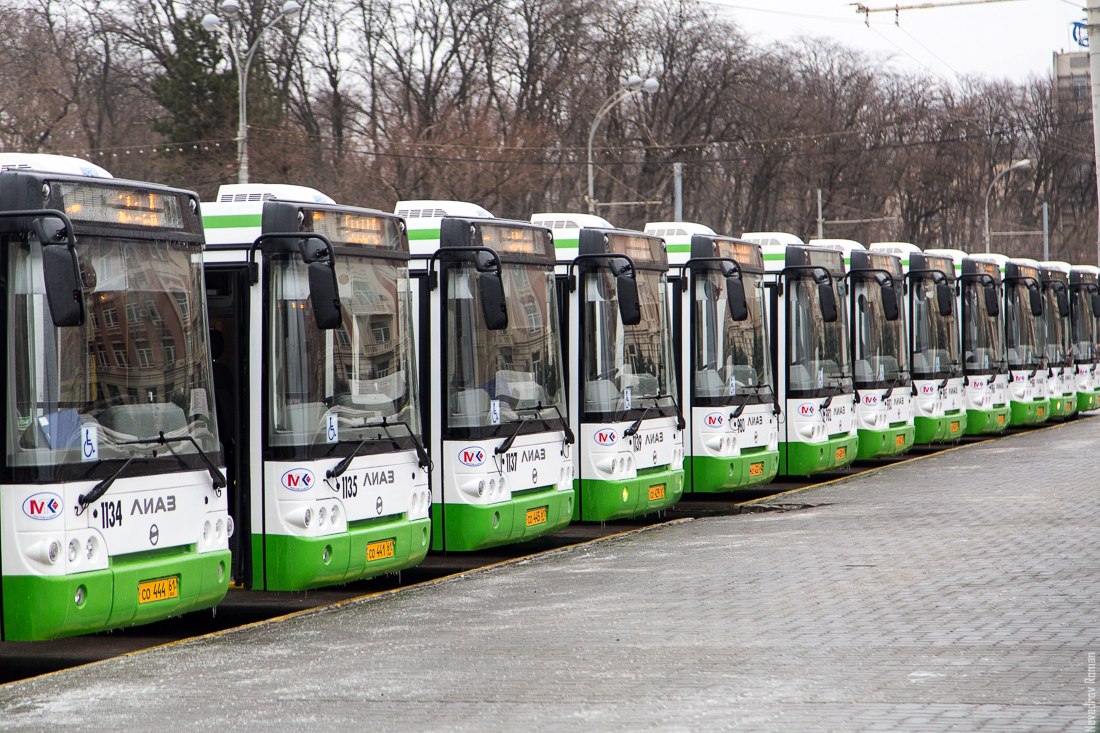
Public transport in Rostov-on-Don includes buses, trolleybuses, trams, and marshrutkas (routed minibus, usually a 17-passenger Mercedes Sprinter). The Rostov Metro was planned in the early 1990s and later in the 2000s and 2010s. At the end of 2021, the Government of the Rostov Region and the Sinara company signed an agreement on the creation of a high-speed tramway in Rostov-on-Don on a concession basis. This happened at the international forum Transport Week 2021 in Moscow. By signing this agreement, the regional government put an end to the idea of developing the metro in the city in favour of the tram.
Platov International Airport (IATA code ROV) caters for domestic travel, as well as flights to and from the former C.I.S., Europe, Africa and Asia. It was opened in late 2017 as part of preparations for the 2018 FIFA World Cup, replacing Rostov-on-Don Airport. The Bataysk military aerodrome (which is located 5.0 miles (8.0 km) northwest of the city center) may be developed into a new airport hub for Southern Russia.
The international river port specializes in the packaging and freighting of minerals and timber. Shipping information is published online.
The main railway stations in Rostov-on-Don are "Rostov-Glavny" and "Rostov-Prigorodny". The "St. Petersburg-Rostov-Caucasus" railway crosses the territory of Rostov-on-Don. The North Caucasus Railway Administration Building is in Rostov-on-Don.
Several highways of federal and regional significance cross Rostov. The M-4 "Don" route passes Rostov to the east and crosses the Don River in the Aksay city area. The "Rostov-Novoshakhtinsk" starts from the Northern housing block area of the city running north to connect with the M-4 "Don" route between Shakhty and Novoshakhtinsk.
The Greater Rostov supercity
The Ministry of Regional Development of Russia has prepared a program to create eight multimillion conglomerate population centers or 'super cities'. The Rostov Oblast will be one of these. "The Greater Rostov" metropolitan area will include the cities of Rostov-on-Don, Novocherkassk, Taganrog, Aksay, Bataysk, and Azov.
Communications
In 1929, the first automatic telephone exchange in Russia with a capacity of 6,000 numbers commenced in Rostov-on-Don. Since 2004, standard telephone numbers in Rostov-on-Don have been seven digits in length. Since 2009, city numbers have begun with "2". The city dialing code is "863".