
Red Dwarf is a British science fiction comedy programme created by Rob Grant and Doug Naylor that originally aired on BBC Two from 1988 to 1999, and was revived by Dave airing from 2009 to 2020. The programme follows low-ranking technician Dave Lister, who awakens after being in suspended animation for three million years to find that he is the last living human, and that he is alone on the mining spacecraft Red Dwarf—except for a hologram of his deceased bunkmate Arnold Rimmer and "Cat", a life form which evolved from Lister's pregnant cat.
The cast included Chris Barrie as Rimmer, Craig Charles as Lister, Danny John-Jules as Cat, Robert Llewellyn as the sanitation droid Kryten, and Norman Lovett & Hattie Hayridge as the ship's computer, Holly. Twelve series of the show have aired (including one miniseries), in addition to a feature-length special The Promised Land. Four novels were published from 1989 to 1996. Two pilot episodes of an American version of the show were produced but never aired. The magazine The Red Dwarf Smegazine was published from 1992 to 1994.
In 1994 an episode from the sixth series, "Gunmen of the Apocalypse", won an International Emmy Award in the Popular Arts category. In the same year, the series was also awarded Best BBC Comedy Series at the British Comedy Awards. The series attracted its highest ratings, of more than eight million viewers, during the eighth series, in 1999.

The revived series on Dave had some of the highest ratings for non–Public Service Broadcasting commissions in the UK. Series XI was voted Best Returning TV Sitcom and Comedy of the Year for 2016 by readers for the British Comedy Guide. In a 2019 ranking by Empire, Red Dwarf came 80th on a list of the 100 best TV shows of all time.
Setting
The main setting of the series is the eponymous mining spaceship Red Dwarf. In the first episode an on-board radiation leak kills everyone except lowest-ranking technician Dave Lister, who is in suspended animation at the time, as punishment for smuggling a cat aboard the ship. The cat, Frankenstein, who is revealed to be pregnant, is safe in the cargo hold. Following the accident, the ship's computer Holly keeps Lister in stasis until the radiation levels return to normal—a process that takes three million years. Lister therefore emerges as the last human being in the universe—but not alone on board the ship. His former bunkmate and immediate superior Arnold Judas Rimmer (a character plagued by failure) is resurrected by Holly as a hologram to keep Lister sane. They are joined by a creature known only as Cat, apparently the last member of a race of humanoid felines that evolved in the ship's hold from Lister's pregnant cat during the three million years that Lister was in stasis.
The series revolves around Lister being the last human alive, after three million years of travel from Earth, with his companions. The crew encounter phenomena such as time distortions, faster-than-light travel, mutant diseases and strange lifeforms (all evolved from Earth, because the series has no aliens) that had developed in the intervening millions of years.

Despite the pastiche of science fiction used as a backdrop, Red Dwarf is primarily a character-driven comedy, with science fiction elements used as complementary plot devices. Especially in the early episodes, a recurring source of comedy was the Odd Couple-style relationship between the two central characters of the show, who have an intense dislike for each other yet are trapped together deep in space.
Later series
In Series III, Holly is recast with Hattie Hayridge replacing Norman Lovett, and the mechanoid Kryten (who had appeared in one episode in Series II) joins the crew and becomes a regular character, played by Robert Llewellyn.
Holly is not present in Series VI or the majority of Series VII as the show is set the smaller Starbug craft, with Red Dwarf itself having been lost. Early in series VII, Rimmer departs, and is replaced by Kristine Kochanski, Lister's long-term love interest, from an alternate universe. Kochanski becomes a regular character for Series VII and VIII.
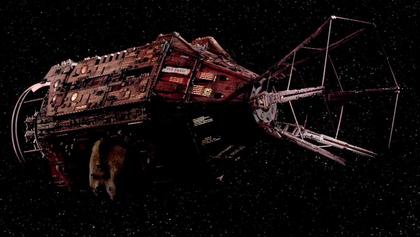
At the end of Series VII and start of Series VIII, the crew are reunited with a reconstructed version of the original Red Dwarf, complete with the original crew, who have been resurrected, and Norman Lovett's Holly. The series ends with a metal-eating virus loose on Red Dwarf. The entire crew evacuate save the main cast (Lister, Rimmer, Cat, Kryten, and Kochanski), whose fates are unresolved in a cliffhanger ending.
Series IX onwards revert to the same four main characters of Series 3–6 (Lister, Rimmer, Cat and Kryten), on Red Dwarf and without Kochanski or Holly; Rimmer reappears as a hologram once again. The exact identity of Rimmer is left vague; but series-creator Doug Naylor confirmed in 2020 that the Rimmer from Back To Earth onwards is the original Rimmer.
Characters and actors
Craig Charles as David "Dave" Lister:A technician on the Red Dwarf, who was the lowest-ranking of the original crew. A Scouser and self-described "bum" who has a good heart but is also very lazy. He is the only surviving member of the crew and the last known surviving human being.

Chris Barrie as Arnold Judas Rimmer:Lister's bunkmate and direct superior. Holly, considering him to be the person most likely to keep Lister sane, selects him to be the ship's one available hologram, recreating Rimmer's appearance and personality as he was before his death. Now the de facto leader of the Red Dwarf, he is despised by the rest of the crew due to his fussy, bureaucratic, neurotic, insecure, and cowardly personality, and has a particularly abrasive relationship with Lister.
Danny John-Jules as the Cat:A humanoid creature with cat-like teeth who evolved from the offspring of Lister's smuggled pet cat Frankenstein. The Cat or simply "Cat" (who is never given an actual name) is self-centred and concerned with little other than sleeping, eating, and fawning over his appearance, and tends not to socialise with other members of the crew in early episodes. Over time, he grows closer to his crewmates and becomes a useful part of the crew.
Norman Lovett (regular series I–II, VIII, The Promised Land; guest series VII, XII) and Hattie Hayridge (guest series II; regular series III–V) as Holly:The ship's computer, who has developed, in the future, "computer senility". Following an unexplained absence in Series VI, male Holly returns in the Series VII finale.
David Ross (guest series II) and Robert Llewellyn (regular series III–The Promised Land) as Kryten 2X4B-523P:A sanitation android rescued from the crashed spaceship Nova 5 in the first episode of series 2; bound by his "behavioural protocols", he is taught independent thinking by Lister and leaves the Red Dwarf to enjoy his newfound freedom. He is reintroduced in series III, as part of the Red Dwarf crew. Categorised as a "series 4000 service mechanoid", He demonstrates proficiency with technology and encyclopedic knowledge of the universe; he maintains a strong friendship with Lister throughout the series.
Clare Grogan (recurring series I; guest series II, VI) and Chloë Annett (regular series VII–VIII; guest series IX) as Kristine Kochanski:A navigation officer in the original Red Dwarf crew whom Lister had a crush on (later retconned to be his ex-girlfriend). An alternate version of Kochanski from a universe in which she, not Lister, is the last living human, joins the cast in the series VII episode "Ouroboros". She has a conflictual relationship with Kryten, who is jealous of the interest Lister has for her. She does not appear after Back to Earth, where her departure was a plot point.
Casting
Alan Rickman and Alfred Molina auditioned for roles in the series, with Molina being cast as Rimmer. However, after Molina had difficulties with the concept of the series, and of his role in particular, the role was recast and filled by Chris Barrie, a professional voice actor and impressionist who had previously worked with both the writers on Spitting Image and with the producers on Happy Families and Jasper Carrott productions. Craig Charles, a Liverpudlian "punk poet", was given the role of Dave Lister. He was approached by the production team for his opinion about the "Cat" character, as they were concerned it may be considered by people as racist. Charles described "Cat" as "pretty cool" and after reading the script he decided he wanted to audition for the part of Dave Lister. Laconic stand-up comedian Norman Lovett, who had originally tried out for the role of Rimmer, was kept in the show as Holly, the senile computer of the titular ship. A professional dancer and singer, Danny John-Jules, arriving half an hour late for his appointment, stood out as the Cat immediately. This was partly due to his "cool" exterior, dedicated research (reading Desmond Morris's book Catwatching), and his showing up in character, wearing his father's 1950s-style zoot suit.
Production
The first series aired on BBC2 in 1988, followed by an additional eleven series, one miniseries, and a feature-length special being produced since then.
Concept and commission
The concept for the show was originally developed from the sketch series Dave Hollins: Space Cadet on the BBC Radio 4 show Son of Cliché in the mid-1980s, written by Rob Grant and Doug Naylor. Their influences came from films and television programmes including Star Trek (1966), Silent Running (1972), Dark Star (1974), Alien (1979) and The Hitchhiker's Guide to the Galaxy (1981), but also had a large element of British-style comedy and satire thrown into the mix, ultimately moulded into the form of a sitcom. Having written the pilot script in 1984, the writers pitched their unique concept to the BBC, but it was rejected on fears that a science fiction sitcom would not be popular.
It was finally accepted by BBC North West in 1986, a result of a spare budget being assigned for a second series of Happy Families that would never arise, and producer Paul Jackson's insistence that Red Dwarf should be filmed instead. The show was fortunate to be remounted after an electricians' strike partway through rehearsals in early 1987 shut the entire production down (the title sequence was filmed in January 1987). The filming was rescheduled for September, and the pilot episode finally made it onto television screens on 15 February 1988.
Despite the commission of further series, the cast felt like "outsiders" at the BBC. Co-creator Doug Naylor attributed this to the show being commissioned by BBC Manchester, but its being filmed at Shepperton Studios near where the cast lived in London. When the show won an International Emmy Award in 1994, Naylor's attempts to have the cast invited to a party thrown by the BBC proved futile when they objected to Craig Charles' and Danny John-Jules' inclusion, claiming they were "fire risks".
Writing, producing and directing
Grant and Naylor wrote the first six series together. Grant left in 1995, to pursue other projects, leaving Naylor to write series VII and VIII with a group of new writers, including Paul Alexander and actor Robert Llewellyn (who portrayed the character Kryten).
For the most part, Ed Bye produced and directed the series. He left before Series V due to a scheduling clash so Juliet May took over as director. May parted ways with the show halfway through the series and Grant and Naylor took over direction of the series, in addition to writing and producing. Series VI was directed by Andy De Emmony, and Ed Bye returned to direct series VII and VIII. Series I, II and III were made by Paul Jackson Productions, with subsequent series produced by the writers' own company Grant Naylor Productions for BBC North. All eight series were broadcast on BBC Two. For series IV, production moved from BBC North's New Broadcasting House in Manchester to Shepperton.
Theme song and music
The opening theme tune, closing theme tune, and incidental music were written and performed by Howard Goodall, with the vocals on the closing theme tune by Jenna Russell. The first two series used a relatively sombre instrumental version of the closing theme for the opening titles; from Series III onwards this switched to a more upbeat version, with Goodall singing on vocoder, the line "Red Dwarf" four times in the second half of the song. Goodall also wrote music for the show's various songs, including "Tongue Tied", with lyrics written by Grant and Naylor. Danny John-Jules (credited as "The Cat") re-orchestrated and released "Tongue Tied" on 11 October 1993; it reached number 17 on the UK charts. Goodall himself sang "The Rimmer Song" heard during the Series VII episode "Blue", to which Chris Barrie mimed.
Remastered
In 1998, on the tenth anniversary of the show's first airing (and between the broadcast of Series VII and VIII), the first three series of Red Dwarf were remastered and released on VHS. The remastering included replacing model shots with computer graphics, cutting certain dialogue and scenes, re-filming Norman Lovett's Holly footage, creating a consistent set of opening titles, replacing music and creating ambient sound effects with a digital master. The remastered series were released in a four-disc DVD box set "The Bodysnatcher Collection" in 2007.
Hiatus
Four years elapsed between Series VI and VII, partly due to the dissolving of the Grant and Naylor partnership, but also due to cast and crew working on other projects. When the series eventually returned, it was filmised and no longer shot in front of a live audience, allowing for greater use of four-walled sets, location shooting and single-camera techniques. When the show returned for its eighth series two years later, however, it had dropped use of the filmising process and returned to using a live audience.
The show received a setback when the BBC rejected proposals for a Series IX. Doug Naylor confirmed in 2007 that the BBC decided not to renew the series, as they preferred to work on other projects. A short animated Christmas special was, however, made available to mobile phone subscribers the same year. Ultimately, however, fans had to wait a decade before the series finally returned to television.
Red Dwarf: The Movie
Since the beginning of the seventh series in 1997, Doug Naylor had been attempting to make a feature-length version of the show. A final draft of the script was written by Naylor, and flyers began circulating around certain websites. The flyer had been created by Winchester Films in order to market the film overseas. Plot details were included as part of a teaser.
The movie was set in the distant future in which Homo sapienoids— a race of cyborgs— had taken over the Solar System and were wiping out the human race. Spaceships that tried to escape Earth were hunted down "until only one remained... Red Dwarf".
Naylor scouted Australia to get an idea of locations and finance costs. Pre-production began in 2004 and filming was planned for 2005. Costumes were made, including Kryten's, and A-list celebrity cameos, including Madonna, were rumoured. However, the team struggled to find sufficient funding. Naylor explained at a Red Dwarf Dimension Jump convention that the film had been rejected by the BBC and the British Film Council.
In 2012, material from early drafts of the film was incorporated into the Series X finale "The Beginning".
In 2018, Naylor suggested production of the movie was still under consideration, explaining: "The order will probably be another TV series, a stage show and possibly a movie, and I think the guys agree on that. The film is a long shot at this point just because it can take so long to get funding."
Revival
In 2008, a three-episode production was commissioned by the digital channel Dave. Red Dwarf: Back to Earth was broadcast over the Easter weekend of 2009. The story was set nine years after the events of "Only the Good..." and involves the characters arriving back on Earth, circa 2009, only to find that they are characters in a TV show called "Red Dwarf".
The specials were televised over three nights, starting on Friday 10 April 2009. The broadcasts received record ratings for Dave; the first of the three episodes represented the UK's highest-ever viewing figures for a commissioned programme on a digital network.
Back to Earth was followed by three full series for Dave, Red Dwarf X, Red Dwarf XI, and Red Dwarf XII in 2012, 2016 and 2017 respectively; and a feature-length special Red Dwarf: The Promised Land in 2020.
Future
More feature-length specials were to be produced following The Promised Land's release in April 2020, however, immediate plans to make them were delayed due to the COVID-19 pandemic. In 2021, a legal battle between Red Dwarf creators Doug Naylor and Rob Grant over the rights to the franchise further delayed production of the series. The conflict was resolved by March 2023 where they agreed they could each "launch separate iterations of Red Dwarf across various media."
Naylor started work on the script for another feature-length special in 2024, which would have involved Lister and Rimmer traveling through time and meeting earlier versions of themselves. Later in the year UKTV decided to stop commissioning scripted comedy and to not go ahead with this commission. Naylor expressed his hope that the show would be picked up by another network, and that his intent that in the "worst case scenario", he would finish the story as a novel.
Rob Grant announced a pitch for a prequel project titled Red Dwarf: Titan in November 2023, with a new cast portraying younger versions of the main characters, to be written with collaborator Andrew Marshall. In 2026 this was announced as a novel, to be released in July 2026, with Gollancz. Grant died suddenly shortly after the announcement. In a tribute, his editor confirmed that the book was ready and still scheduled for the summer.
Themes
Red Dwarf was founded on the standard sitcom focus of a disparate and frequently dysfunctional group of individuals living together in a restricted setting. With the main characters routinely displaying their cowardice, incompetence and laziness, while exchanging insulting and sarcastic dialogue, the series provided a humorous antidote to the fearless and morally upright space explorers typically found in science-fiction series, with its main characters acting bravely only when there was no other possible alternative. The increasing science-fiction elements of the series were treated seriously by creators Rob Grant and Doug Naylor. Satire, parody and drama were alternately woven into the episodes, referencing other television series, films and books. These have included references to the likes of 2001: A Space Odyssey (1968), Top Gun (1986), RoboCop (1987), Star Wars (1977), Citizen Kane (1942), The Wild One (1953), High Noon (1952), Rebel Without a Cause (1955), Casablanca (1942), Easy Rider (1969), The Terminator (1984), Pride and Prejudice (1813), Isaac Asimov's Robot series (1939–85) and the Four Horsemen of the Apocalypse.
The writers based the whole theme of some episodes on the plots of feature films. The series III episode "Polymorph" references and parodies key moments from Alien (1979); from series IV, "Camille" echoes key scenes from Casablanca (1942), while "Meltdown" borrows the main plot from Westworld (1973). For series IX, "Back to Earth" was partially inspired by Blade Runner (1982). The series' themes are not limited to films or television, having also incorporated historical events and figures. Religion also plays a part in the series, as a significant factor in the ultimate fate of the Cat race, and the perception of Lister as their 'God', both in the episode "Waiting for God" (whose title makes a literary reference to the Samuel Beckett play Waiting for Godot), as well as the crew meeting a man whom they believe to be Jesus Christ in series X episode "Lemons". The series VII episode "Ouroboros" derives its name and theme from the ancient mythological snake of the same name. The third episode of series VI, "Gunmen of the Apocalypse", was based on the Four Horsemen of the Apocalypse.
The series explores many science-fiction staples such as time-travel paradoxes (including the grandfather paradox), the question of determinism and free will (in several episodes), the pursuit of happiness in virtual reality and, crucially to the show's premise of Lister being the last human, the near-certainty of the human species' extinction sometime in the far future.
Grant and Naylor decided very early in the process that they did not want aliens to feature in the series. This is usually addressed with Rimmer's belief in extraterrestrial life being shot down, as with a vessel he believes to be an alien ship (which turns out to be a garbage pod). However, there are non-human life forms such as evolutions of Earth species (e.g. the cat race), robotic or holo-life forms created by humans, and a "genetically engineered life form" (GELF), an artificially created creature. Simulants and GELFs frequently serve as antagonists during the later series of the show.
Hallmarks
The series developed its own distinct vocabulary. Words and phrases such as hologrammatic [sic], dollarpound ($£), bazookoids, Felis sapiens, Simulants, GELF, space weevil, and Zero Gee Football appear throughout the series, highlighting a development in language, political climate, technology, evolution and culture in the future. The creators also employed a vocabulary of fictional expletives to avoid using potentially offensive words in the show and to give nuance to futuristic colloquial language; in particular, "smeg" (and variants such as "smegging", "smegger", and "smeg-head") features prominently, alongside the terms "gimboid", "goit" and "Gwenlan".
Episodes
Reception and achievements
Critical reception
The changes made to the series' cast, setting, creative teams and even production values from series to series have meant that opinions differ greatly between fans and critics as to the quality of each series. In the "Great Red Dwarf Debate," published in Volume 2, Issue 3 of the Red Dwarf Smegazine, science fiction writers Steve Lyons and Joe Nazarro argue about the pros and cons of the early series versus the later series. Lyons states what the show "once had was a unique balance of sci-fi comedy, which worked magnificently." Nazarro agrees that "the first two series are very original and very funny," but goes on to say that "it wasn't until series III that the show hit its stride." Discussions revolve around the quality of Series VI, seen by one reviewer as just as good as the earlier series', but criticised by another reviewer as a descent into formulaic comedy with an unwelcome change of setting.