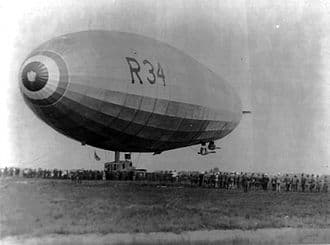
The R.33 class of British rigid airships were built for the Royal Naval Air Service during the First World War, but were not completed until after the end of hostilities, by which time the RNAS had become part of the Royal Air Force. The lead ship, R.33, served successfully for ten years and survived one of the most alarming and heroic incidents in airship history when she was torn from her mooring mast in a gale. She was called a "Pulham Pig" by the locals, as the blimps based there had been, and is immortalised in the village sign for Pulham St Mary. The only other airship in the class, R.34, became the first aircraft to make an east to west transatlantic flight in July 1919 and, with the return flight, made the first two-way crossing. It was decommissioned two years later, after being damaged during a storm. The crew nicknamed her "Tiny".
Key Facts
| Subject | R33-class airship |
| Category | Class of British rigid airships within the Royal Naval Air Service during WWI |
| Reading time | 1 min · Intermediate |
| Key date | 1919 |
Reading level
Audio Summary
Played with your browser's voice. Studio-quality audio can be added with a text-to-speech service.
Ask about this article
📝 Quick Quiz1 / 4
What is "R33-class airship" primarily known for?
Vocix Daily — In Your Inbox
Top stories, deep-dive articles, and "On This Day" history — one crisp digest delivered every morning.
Sources & references
Reference material for this entry is drawn from the open encyclopedic record, including Wikipedia , available under the CC BY-SA 4.0 license. Images are credited individually beside each photo.