Al-Qassam Brigades, also known as the Izz al-Din al-Qassam Brigades (EQB; Arabic: كتائب الشهيد عز الدين القسام, romanized: Katāʾib ash-Shahīd ʿIzz ad-Dīn al-Qassām, lit. 'The Battalions of the Martyr Izz ad-Din al-Qassam'), are the military wing of the Sunni Islamist Palestinian nationalist organization, Hamas. Led by Mohammed Deif until his death on 13 July 2024, Al-Qassam Brigades are the largest and best-equipped militant organization operating within the Gaza Strip in recent years.
Created in mid-1991, they were at the time concerned with blocking the Oslo Accords negotiations. From 1994 to 2000, Al-Qassam Brigades have claimed responsibility for carrying out a number of attacks against Israelis.
At the beginning of the Second Intifada, the group became a central target of Israel. Al-Qassam Brigades operated several cells in the West Bank. Hamas retained a forceful presence in the Gaza Strip, generally considered its stronghold. Yahya Sinwar, Hamas political leader in the Gaza Strip from February 2017 to October 2024, was the main military leader in the Brigades in Gaza during the Gaza war. After his killing, Sinwar was succeeded by his brother Mohammed. Mohammed was assassinated in May 2025 and was succeeded by Izz al-Din al-Haddad, who was assassinated in May 2026.
Al-Qassam Brigades are explicitly listed as a terrorist organization by the European Union, Australia, New Zealand, Egypt, and the United Kingdom. Though not explicitly mentioning EQB, the United States and Canada have designated its parent entity, Hamas, as a terrorist organization; former Brigade leader Mohammed Deif was classified as a Specially Designated Global Terrorist by the US under Executive Order 13224.
Overview
The Izz ad-Din al-Qassam Brigades are the military wing of the Palestinian organization Hamas, operating in the Gaza Strip. They were led by Mohammed Deif and, before his death on 10 March 2024, his deputy, Marwan Issa.
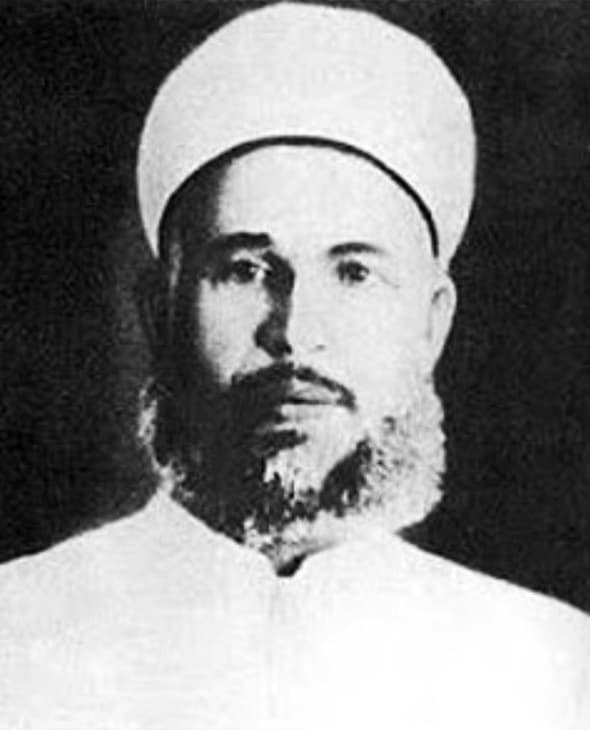
Al-Qassam Brigades were named after Izz ad-Din al-Qassam, a Muslim preacher and mujahid who fought in Syria, Libya, and Palestine. In 1930, al-Qassam organised and established the Black Hand, a militant organisation that was opposed to Zionism and British and French rule in the Levant. Before dying in a shootout with the Palestine Police Force in 1935, al-Qassam exhorted his followers to embrace martyrdom and fight until the last bullet, which turned him into a role model for Palestinian nationalists.
Reading level
Audio Summary
Played with your browser's voice. Studio-quality audio can be added with a text-to-speech service.
Ask about this article
📝 Quick Quiz1 / 3
What is "Al-Qassam Brigades" primarily known for?
Vocix Daily — In Your Inbox
Top stories, deep-dive articles, and "On This Day" history — one crisp digest delivered every morning.
Sources & references
Reference material for this entry is drawn from the open encyclopedic record, including Wikipedia , available under the CC BY-SA 4.0 license. Images are credited individually beside each photo.
To contribute in the effort of liberating Palestine and restoring the rights of the Palestinian people under the sacred Islamic teachings of the Holy Quran, the Sunnah (traditions) of Prophet Muhammad (peace and blessings of Allah be upon him) and the traditions of Muslims rulers and scholars noted for their piety and dedication.
Relation to political wing; commanders
The Izz al-Din al-Qassam Brigades are an integral part of Hamas. While they are subordinate to Hamas's broad political goals and its ideological objectives, they have a significant level of independence in decision making.
In 1997, political scientists Ilana Kass and Bard O'Neill described Hamas' relationship with the Brigades as reminiscent of Sinn Féin's relationship to the Provisional Irish Republican Army (IRA) and quoted a senior Hamas official: "The Izz al-Din al-Qassam Brigade is a separate armed military wing, which has its own leaders who do not take their orders [from Hamas] and do not tell us of their plans in advance."
Carrying the IRA analogy further, Kass and O'Neill argued that the separation of the political and military wings shielded Hamas' political leaders from responsibility for terrorism with the plausible deniability provided made Hamas an eligible representative for peace negotiations as had happened with Sinn Féin politician Gerry Adams.
The fighters' identities and positions in the group often remain secret until their death. Even when they fight against Israeli incursions, all the militiamen wear a characteristic black hood on which the group's green headband is attached. The Brigades operate on a model of independent cells. Even high-ranking members are often unaware of the activities of other cells. This allows the group to constantly regenerate after member deaths.
During the Second Intifada, the leaders of the group were targeted by numerous airstrikes that killed many members, including Salah Shehade and Adnan al-Ghoul. The former leader of the Brigades, Mohammed Deif, survived at least seven assassination attempts.
Commanders and leaders
Notable members
History
Background
In 1984, Sheikh Ahmed Yassin, Ibrahim al-Makhadmeh, Sheikh Salah Shehada, and others began preparing for the establishment of an armed organization to resist Israeli control, with a focus on acquiring weapons for future resistance activities. Members of the group were, however, arrested and the weapons were confiscated.
In 1986, Shehada formed a network of resistance cells, called al-Mujahidun al-Filastiniun ('Palestinian fighters'), who targeted Israeli troops and "traitors." This network operated until 1989, with their most famous operation being the 1989 kidnapping and killing of two Israeli soldiers: Avi Sasportas and Ilan Saadon.
Hamas was officially established on 14 December 1987, forming other similar networks as al-Mujahidun al-Filastiniun, such as the Abdullah Azzam Brigades. In the summer of 1991, during the First Palestinian Intifada (1987–1994), the Izz ad-Din al-Qassam Brigades were established, with their first act being the assassination of the rabbi of Kfar Darom.
Contemporary operations and activities
The EQB's transition to a recognised militant organisation began during the establishment of the Oslo Accords to assist Hamas efforts in blocking them.
The year 2004 was pivotal in the development of Al-Qassam Brigades from a loosely-formed militia, into a structured organization with a defined chain of command. The Israel Defense Forces (IDF)'s assassinations of local leaders Ahmed Yassin and Abdel Aziz al-Rantisi resulted in decision-making power being transferred to leaders exiled in Damascus, which ultimately led to greater influence and funding from Syria, Iran, and Hezbollah.
The Gaza strip was divided into six or seven regional divisions, headed by a division commander with responsibility over defined sectors of territory. Each division commander oversaw regiment commanders and company commanders, who were responsible for small areas such as neighborhoods. A focus on tunnel warfare was selected as a primary means of combating the IDF.
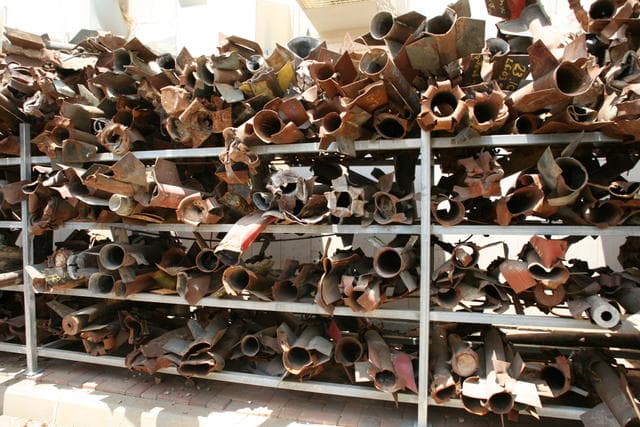
On 3 August 2004, the first Yasin missile–a homebrew anti-tank rocket-propelled grenade–was launched. The group developed other homemade weapons, such as rocket launchers (al-Bana, Batar) and the Qassam rocket.
In 2003 and 2004, the Brigades in Gaza resisted incursions by the Israel Defense Forces (IDF), including the siege of Jabalya in October 2004.
In 2005, as President Mahmoud Abbas had taken direct control of the PA security forces, which were loyal to the president's Fatah movement, the Hamas government in the Gaza Strip formed a separate 3,000-strong paramilitary police force, called the Executive Force, consisting of Al-Qassam Brigades members.
In June 2006, Al-Qassam Brigades were involved in the operation which led to the capture of Israeli soldier Gilad Shalit. Al-Qassam Brigades engaged in heavy fighting in the Gaza Strip during Operation Summer Rains, launched by the IDF. It was the first time in over 18 months that the brigades were actively involved in fighting against Israeli soldiers. In May 2007, the brigades acknowledged they lost 192 fighters during the operation.
In January 2007, Abbas outlawed the Executive Force and ordered that its then-6,000 members be incorporated into the PA security forces under his command. The order was resisted by the Hamas government, which instead announced plans to double the size of the force to 12,000 men. Al-Qassam Brigades and the Executive Force took part in the Hamas takeover of Gaza in June 2007.
In June 2008, Egypt brokered a ceasefire, which lasted until 4 November when Israeli forces crossed into Gaza and killed six Hamas fighters. This resulted in an increase in rocket attacks on Israel, going from two in September and October to 190 in November 2008. Both sides said the other had broken the truce.
Organization
Al-Qassam Brigades are organized into formal military structures with established command hierarchies. They organize themselves from the squad, all the way to the brigade level, similar to conventional militaries. Strategies centered on targeted killings to remove key Hamas leaders are often ineffective, as Hamas is capable of promoting low-ranking members to replace those killed.
The forces are mainly divided into five brigades, divided geographically. Each brigade is divided into multiple battalions, with 30 total battalions. Each battalion is associated with a major settlement. They may be relocated and change their areas of responsibility during conflicts.
The current brigades and battalions identified by the Institute for the Study of War are,
North Brigade—North Gaza Governorate
Beit Lahia Battalion
Beit Hanoun Battalion
al Khalifa al Rashidun Battalion
Martyr Suhail Ziadeh Battalion
Jabalia al Balad (Abdul Raouf Nabhan) Battalion
Imad Aql (Western) Battalion
Elite Battalion
Gaza Brigade—Gaza Governorate
Sabra-Tal al Islam Battalion
Daraj wal Tuffah Battalion
Radwan (al Furkan) Battalion
Shujaiya Battalion
Zaytoun Battalion
Shati Battalion
Possible Elite Battalion per reports by Arab media, unconfirmed by Hamas or IDF.