
A prime minister, also known as a chief of cabinet, chief minister, first minister, minister-president or premier, is the head of the cabinet and the leader of the ministers in the executive branch of government, often in a parliamentary or semi-presidential system. A prime minister is not the head of state, but rather the head of government, serving as the chief of the executive under either a monarch or a president in a republican form of government.
In parliamentary systems of government (be they constitutional monarchies or parliamentary republics), the Prime Minister (or occasionally a similar post with a different title, such as the Chancellor of Germany) is the most powerful politician and the functional leader of the state, by virtue of commanding the confidence of the legislature. The head of state is typically a ceremonial officer, though they may exercise reserve powers to check the Prime Minister in unusual situations.
Under some presidential systems, such as South Korea and Peru, the prime minister is the leader or the most senior member of the cabinet, but not the head of government. As such, in South Korea, the prime minister is equivalent to that of a vice president which is the second in-command and assumes the presidency in the absence of the president.
In many systems, the prime minister selects and may dismiss other members of the cabinet, and allocates posts to members within the government. In most systems, the prime minister is the presiding member and chairman of the cabinet. In a minority of systems, notably in semi-presidential systems, a prime minister is the official appointed to manage the civil service and execute the directives of the head of state.
Today, the prime minister is often, but not always, a member of the legislature or its lower house, and is expected with other ministers to ensure the passage of bills through the legislature. In some monarchies the monarch may also exercise executive powers (known as the royal prerogative) without the approval of parliament.
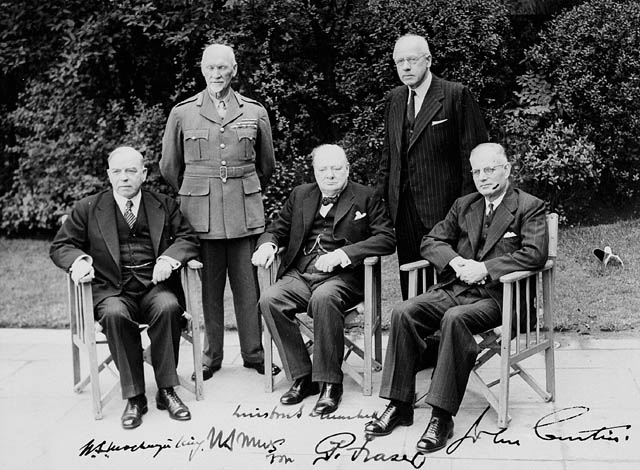
As well as being head of government, being prime minister may require holding other roles or posts—the prime minister of the United Kingdom, for example, is also First Lord of the Treasury and Minister for the Civil Service. In some cases, prime ministers may choose to hold additional ministerial posts (e.g. when the portfolio is critical to that government's mandate): during the Second World War Winston Churchill was also Minister of Defence (although there was then no Ministry of Defence). Another example is the Thirty-fourth government of Israel (2015–2019), when Benjamin Netanyahu at one point served as the prime minister and minister of Communications, Foreign Affairs, Regional Cooperation, Economy, Defense and Interior.
Etymology
The term "prime minister" is attested in 17th century sources referring to Cardinal Richelieu, after he was named premier ministre to head the French royal council in 1624. The title was used alongside the principal ministre d'État ("chief minister of the state") more as a job description. After 1661, Louis XIV and his descendants refused to allow one of their Ministers to be more important than the others, so the term was no longer in use.
In the 18th century in the United Kingdom, members of parliament disparagingly used the title in reference to Sir Robert Walpole (whose official title was First Lord of the Treasury). During the whole of the 18th century, Britain was involved in a prolonged conflict with France, periodically bursting into all-out war, and Britons took outspoken pride in their "Liberty" as contrasted to the "Tyranny" of French Absolute Monarchy; therefore, being implicitly compared with Richelieu was no compliment to Walpole. Over time, however, the title became honorific and remains so in the 21st century.
History
Origins
The position of a head of government separate from the head of state, or as the most important government administrator or minister after the monarch in rank developed in multiple countries separate from each other. The names given could be "prime minister", although other terms were also used such as "chief minister", "grand chancellor", "chancellor", "grand vizier", "counselor", and others.

The literal title itself can be traced back to the Abbasid caliphate and the Ottoman Empire. They both had an official title of Grand Vizier simply the Head of the Government which is called Prime Minister nowadays. The Grand Vizier was the most powerful person after sultan but sometimes the Grand Vizier of Ottoman Empire was more powerful than sultan himself. The position of Chancellor is the same or comparable in some countries as a prime minister, even if the label is different. The term goes back to ancient Roman times as head of the chancellery. This title as head of government or the administration existed in ancient China as Grand Chancellor (Chinese: 宰相; pinyin: Zǎixiàng), sometimes translated as "prime minister", existed since 685 BCE and ancient Japan Chancellor of the Realm (太政大臣 Daijō-daijin) since the 7th century CE. In the Holy Roman Empire the position of Archchancellor was the highest dignitary and traces to 860 CE, out of which later derived the positions of head of government such as the modern Chancellor of Germany, who is head of the federal government and an executive prime minister.
The power of these ministers depended entirely on the personal favour of the monarch. Although managing the parliament was among the necessary skills of holding high office, they did not depend on a parliamentary majority for their power. Although there was a cabinet, it was appointed entirely by the monarch, and the monarch usually presided over its meetings.
The monarch could dismiss the minister at any time, or worse: Cromwell was executed and Clarendon driven into exile when they lost favour. Kings sometimes divided power equally between two or more ministers to prevent one minister from becoming too powerful. Late in Anne's reign, for example, the Tory ministers Harley and Viscount Bolingbroke shared power.

Development
In the mid 17th century, after the English Civil War (1642–1651), Parliament strengthened its position relative to the monarch then gained more power through the Glorious Revolution of 1688 and passage of the Bill of Rights in 1689. The monarch could no longer establish any law or impose any tax without its permission and thus the House of Commons became a part of the government. It is at this point that a modern style of prime minister begins to emerge.
A tipping point in the evolution of the prime ministership came with the death of Anne in 1714 and the accession of George I to the throne. George spoke no English, spent much of his time at his home in Hanover, and had neither knowledge of, nor interest in, the details of British government. In these circumstances it was inevitable that the king's first minister would become the de facto head of the government.
From 1721, this was the Whig politician Robert Walpole, who held office for twenty-one years. Walpole chaired cabinet meetings, appointed all the other ministers, dispensed the royal patronage and packed the House of Commons with his supporters. Under Walpole, the doctrine of cabinet solidarity developed. Walpole required that no minister other than himself have private dealings with the king, and also that when the cabinet had agreed on a policy, all ministers must defend it in public, or resign. As a later prime minister, Lord Melbourne, said, "It matters not what we say, gentlemen, so long as we all say the same thing."

Walpole always denied that he was "prime minister", and throughout the 18th century parliamentarians and legal scholars continued to deny that any such position was known to the Constitution. George II and George III made strenuous efforts to reclaim the personal power of the monarch, but the increasing complexity and expense of government meant that a minister who could command the loyalty of the Commons was increasingly necessary. The long tenure of the wartime prime minister William Pitt the Younger (1783–1801), combined with the mental illness of George III, consolidated the power of the post. The title "prime minister" was first referred to on government documents during the administration of Benjamin Disraeli but did not appear in the formal British Order of precedence until 1905.
The prestige of British institutions in the 19th century and the growth of the British Empire saw the British model of cabinet government, headed by a prime minister, widely copied, both in other European countries and in British colonial territories as they developed self-government. In some places alternative titles such as "premier", "chief minister", "first minister of state", "president of the council" or "chancellor" were adopted, but the essentials of the office were the same.
Modern usage
In the late 20th century, many of the world's countries had prime ministers or equivalent ministers, holding office under either constitutional monarchies or ceremonial presidents. The main exceptions to this system include Switzerland and the United States, as well as the presidential republics in Latin America, such as Chile and Mexico, modelled on the U.S. system in which the president directly exercises executive authority.

Bahrain's former prime minister, Sheikh Khalifah bin Sulman Al Khalifah, occupied the post for about 50 years, from 1970 to November 2020, making him the longest serving non-elected prime minister.
Overview of the office
In monarchies and in republics
The post of prime minister may be encountered both in constitutional monarchies (such as Belgium, Denmark, Japan, Luxembourg, the Netherlands, Norway, Malaysia, Morocco, Spain, Sweden, Thailand, Canada, Australia, New Zealand, and the United Kingdom) and in parliamentary republics, in which the head of state is an elected official (such as Bangladesh, Finland, the Czech Republic, France, Greece, Hungary, India, Indonesia (1945–66), Ireland, Nigeria (1960–66), Pakistan, Montenegro, Croatia, Bulgaria, Romania, Serbia, Turkey (1923–2018) and Italy). See also "First Minister", "Premier", "Chief Minister", "Chancellor", "Taoiseach", "Minister of State (Statsminister)", "President of the Government", "President of the Council of Ministers" and "Secretary of State": alternative titles usually equivalent in meaning to, or translated as, "prime minister". Both Indonesia and Nigeria lost their positions as prime ministers in 1966. Brazil, Iran, the Philippines and Turkey also lost their positions as prime ministers. Chile, Mexico, Switzerland and the United States never had positions as prime ministers.
This contrasts with the presidential system, in which the president (or equivalent) is both the head of state and the head of the government. In some presidential and all semi-presidential systems, such as those of Algeria, Argentina, China, France, Poland, Russia, South Korea or Ukraine, the prime minister is an official generally appointed by the president but usually approved by the legislature and responsible for carrying out the directives of the president and managing the civil service. The premier of the Republic of China (Taiwan) is also appointed by the president but does not require any approval by the legislature.
Appointment of the prime minister of France does not require any approval by the parliament either, but the parliament may force the resignation of the government. In these systems, it is possible for the president and the prime minister to be from different political parties if the legislature is controlled by a party different from that of the president. When it arises, such a state of affairs is usually referred to as (political) cohabitation.
Entry into office
In parliamentary systems a prime minister may enter into office by several means.
The head of state appoints a prime minister, of their personal choice: Example: France, where the president has the power to appoint the prime minister of their choice, though the National Assembly can force a government to resign, they cannot nominate or appoint a new candidate.
While in practice most prime ministers under the Westminster system (including Australia, Canada, New Zealand, Malaysia, India and the United Kingdom) are the leaders of the largest party or coalition in parliament, technically the appointment of the prime minister is de jure exercised by the head of state.
The head of state appoints a prime minister who has a set timescale within which they must gain a vote of confidence: Example: Italy, Romania
The head of state appoints a formateur from among the members of Parliament, who then has a set timescale within which they must form a cabinet, and receive the confidence of Parliament after presenting the Cabinet Composition and Legislative Program to Parliament, and the formateur becomes prime minister once approved by parliament: Example: Israel
The head of state appoints the leader of the political party with the majority of the seats in the parliament as prime minister. If no party has a majority, then the leader of the party with a plurality of seats is given an exploratory mandate to receive the confidence of the parliament within three days. If this is not possible, then the leader of the party with the second highest seat number is given the exploratory mandate. If this fails, then the leader of the third largest party is given it and so on: Example: Greece, see Prime Minister of Greece
The head of state nominates a candidate for prime minister who is then submitted to parliament for approval before appointment as prime minister: Example: Spain, where the King sends a nomination to parliament for approval. Also Germany where under the German Basic Law (constitution) the Bundestag votes on a candidate nominated by the federal president. In the Philippines under the 1973 Constitution as amended after martial law, the prime minister was elected by the Batasang Pambansâ (Legislature) upon nomination by the president. In these cases, parliament can choose another candidate who then would be appointed by the head of state (or, in the case of the Philippines, outright elect that candidate).
Parliament nominates a candidate who the head of state is then constitutionally obliged to appoint as prime minister: Example: Ireland, where the president appoints the Taoiseach on the nomination of Dáil Éireann. Also Japan, Thailand.
Election by the legislature: Example: Solomon Islands and Vanuatu. Also the Philippines under the unamended 1973 Constitution, where the prime minister was supposed to be elected by the Batasang Pambansâ; these provisions were never used because the Philippines was under martial law at the time.
Direct election by popular vote: Example: Israel, 1996–2001, where the prime minister was elected in a general election, with no regard to political affiliation.
Nomination by a state office holder other than the head of state or their representative: Example: Under the modern Swedish Instrument of Government, the power to appoint someone to form a government has been moved from the monarch to the speaker of the parliament and the parliament itself. The speaker nominates a candidate, who is then elected to prime minister (statsminister) by the parliament if an absolute majority of the members of parliament does not vote no (i.e. the candidate can be elected to the post even if more MP:s vote no than yes).
Exit from office
In older, convention-based parliamentary systems, prime ministers are not appointed for a specific term in office and in effect may remain in power through a number of elections and parliaments. For example, Margaret Thatcher was only ever appointed prime minister on one occasion, in 1979. She remained continuously in power until 1990, though she used the assembly of each House of Commons after a general election to reshuffle her cabinet.
Newer parliamentary systems that operate based on a codified constitution, however, do have a term of office of the prime minister linked to the period in office of the parliament. Hence, for example, Latvian prime minister Krišjānis Kariņš, who was first appointed in 2018, had to be reappointed as head of a new government following the 2022 Latvian parliamentary election.
The position of prime minister is usually chosen from the political party that commands – whether by itself or as the largest member of a coalition – the majority of seats in the lower house of parliament, though this is not a requirement either; for example, following the 2018 Latvian parliamentary election, after two failed attempts by larger parties to form a coalition headed by them, the leader of the smallest party in parliament – Krišjānis Kariņš – was eventually appointed as a compromise candidate. Italy has seen several emergency technocratic governments, such as Carlo Azeglio Ciampi's and Mario Draghi's governments, where the prime minister was a non-partisan expert backed by the confidence and supply of a broad cross-section of the parliament.
In parliamentary systems, governments are generally required to have the confidence of the lower house of parliament (though a small minority of parliaments, by giving a right to block supply to upper houses, in effect make the cabinet responsible to both houses, though in reality upper houses, even when they have the power, rarely exercise it). Where they lose a vote of confidence, have a motion of no confidence passed against them, or where they lose supply, most constitutional systems require either:
The latter in effect allows the government to appeal the opposition of parliament to the electorate. However, in many jurisdictions a head of state may refuse a parliamentary dissolution, requiring the resignation of the prime minister and their government. In most modern parliamentary systems, the prime minister is the person who decides when to request a parliamentary dissolution.
Older constitutions often vest this power in the cabinet. In the United Kingdom, for example, the tradition whereby it is the prime minister who requests a dissolution of parliament dates back to 1918. Prior to then, it was the entire government that made the request. Similarly, though the modern 1937 Irish constitution grants to the Taoiseach the right to make the request, the earlier 1922 Irish Free State Constitution vested the power in the Executive Council (the then name for the Irish cabinet).
Some systems, such as Germany and Spain, require motions of no confidence to be constructive: i.e., they must include the name of an alternative prime minister; if the motion of no confidence is successful, the alternative prime minister automatically takes office in place of the incumbent government, which cannot appeal this replacement to the electorate.
In Australia, the prime minister is expected to step down if they lose the majority support of their party under a spill motion as have many such as Tony Abbott, Julia Gillard, Kevin Rudd and Malcolm Turnbull.
Organisational structure
The prime minister's executive office is usually called the Office of the Prime Minister or Cabinet Office. The U.K.'s Cabinet Office includes the Prime Minister's Office. Conversely, some Prime Minister's Offices incorporate the role of Cabinet, while Australia's Department of the Prime Minister and Cabinet joins them at par. In Israel, the prime minister's executive office is officially titled the "Prime Minister's Office" in English, but the original Hebrew term can also be translated as the Prime Minister's Ministry. The Prime Minister's Department is also used, as is Cabinet Department.
Description of the role
Wilfried Martens, who served as Prime Minister of Belgium, described his role as follows:
First of all the Prime Minister must listen a lot, and when deep disagreements occur, he must suggest a solution to the matter. This can be done in different ways. Sometimes during the discussion, I note the elements of the problem and think of a proposal I can formulate to the Council (cabinet), the Secretary taking notes. The Ministers then insist on changing game ages. The Prime Minister can also make a proposal which leaves enough room for amendments in order to keep the current discussion on the right tracks. When a solution must be found in order to reach a consensus, he can force one or two Ministers to join or resign.
Simbols
Each country that adopts this system of government has symbols, such as institutional insignia, for the office of Prime Minister. For example, the flag of the Prime Minister of Jamaica.
Cross-country comparative details
Titles
In many cases, though commonly used, "prime minister" is not the official title of the office-holder. In the Russian constitution, the prime minister is titled Chairman of the government. The Irish prime minister is called the Taoiseach (which is rendered into English as prime minister), in Israel the prime minister is Rosh HaMemshalah, meaning "head of the government", and the Spanish prime minister is the President of the Government (Presidente del Gobierno). The head of government of the People's Republic of China is referred to as the Premier of the State Council.