
PricewaterhouseCoopers, also known as PwC, is a British multinational professional services network based in London, England.
It is the second-largest professional services network in the world and is one of the Big Four accounting firms, along with Deloitte, EY, and KPMG. The PwC network is overseen by PricewaterhouseCoopers International Limited, an English private company limited by guarantee.
PwC operates in 149 countries, with a global workforce of more than 370,000 people (as of FY 2024). As of 2019, 26% of the workforce was based in the Americas, 26% in Asia, 32% in Western Europe, and 5% in Middle East and Africa. The company's global revenues were US$55.4 billion in FY 2024, of which $19.5 billion was generated by its Assurance practice, $12.6 billion by its Tax and Legal practice and $23.3 billion by its Advisory practice.

The firm in its recent actual form was created in 1998 by a merger between two accounting firms: Coopers & Lybrand, and Price Waterhouse. Both firms had histories dating back to the 19th century. The trading name was shortened to PwC in September 2010 as part of a rebranding effort. In April 2025, PwC shut down its operations in nine African countries.
The firm has been embroiled in a number of corruption controversies and crime scandals. The firm has on multiple occasions been implicated in tax evasion and tax avoidance practices. It has frequently been fined by regulators for performing audits that fail to meet auditing standards. Amid Russia's war in Ukraine, PwC assisted Russian oligarchs to hide their wealth and contributed to bypassing global sanctions placed on Russia over its invasion of Ukraine.
History
Coopers & Lybrand
In 1854, William Cooper founded an accountancy practice at No. 13 George Street in London. It became Cooper Brothers seven years later when his three brothers joined.

In 1898, Robert H. Montgomery, William M. Lybrand, Adam A. Ross Jr. and his brother T. Edward Ross formed Lybrand, Ross Brothers and Montgomery in the United States.
In 1957, Cooper Brothers, along with Lybrand, Ross Bros & Montgomery and a Canadian firm (McDonald, Currie and Co.), agreed to adopt the name Coopers & Lybrand in international practice.
In 1973, the three member firms in the UK, US and Canada changed their names to Coopers & Lybrand. Then in 1980, Coopers & Lybrand expanded its expertise in insolvency substantially by acquiring Cork Gully, a leading firm in that field in the UK. In 1990, in certain countries, including the UK, Coopers & Lybrand merged with Deloitte, Haskins & Sells to become Coopers & Lybrand Deloitte; in 1992 it reverted to Coopers & Lybrand.
The firm relocated from George Street to modern offices designed by Dennis Lennon & Partners at Plumtree Court in 1985, and then moved to new offices designed by Terry Farrell at Embankment Place in 1994.
Price Waterhouse
In 1849, Samuel Lowell Price, an accountant, founded an accountancy practice at No. 5 Gresham Street in London. In 1865, Price went into partnership with William Hopkins Holyland and Edwin Waterhouse at No. 13 Gresham Street. Holyland left shortly afterwards to work alone in accountancy and the firm was known from 1874 as Price, Waterhouse & Co. The firm was based at No. 3, Frederick's Place in Old Jewry in London from 1899.
By the late 19th century, Price Waterhouse had gained recognition as an accounting firm. It opened an office in New York City in 1890, and the American firm expanded. The original British firm opened an office in Liverpool in 1904, and then elsewhere in the United Kingdom and worldwide, each time establishing a separate partnership in each country: the worldwide practice of Price Waterhouse was, therefore, a federation of collaborating firms that had grown organically, rather than the result of an international merger.
The firm relocated from Frederick's Place to modern offices at Southwark Towers in London Bridge Street in 1975. The original partnership agreement, signed by Price, Holyland, and Waterhouse could be found in the new offices there.
In a further effort to take advantage of economies of scale, PW and Arthur Andersen discussed a merger in 1989 but the negotiations failed, mainly because of conflicts of interest such as Andersen's strong commercial links with IBM and PW's audit of IBM, as well as the two firms' radically different cultures. It was said by those involved with the failed merger that at the end of the discussion, the partners at the table realized they had different views of business, and the potential merger was scrapped.
1998 to present
In 1998, Price Waterhouse and Coopers & Lybrand merged to form PricewaterhouseCoopers (written with a lowercase "w" and a camel case "C"). At that time, MCS was the largest and fastest growing division.
The fallout from the Enron, Worldcom and other financial auditing scandals led to the demise of Arthur Andersen, reducing the count of the Big Five accounting firms down to the Big Four and spurring passage of the 2002 Sarbanes–Oxley Act (SOX). Among other restrictions, SOX severely limited the overlap between management consulting and auditing services.
Around July 2000, PwC began to prepare for either an acquisition or IPO by developing separate financial records that would be required for due diligence. PwC leadership began to seek buyers, with an initial interest by Hewlett-Packard for a reported $17 billion, but negotiations broke down in 2000. Almost a year after the collapse of Arthur Andersen in 2001, Arthur Andersen, LLP affiliates in Hong Kong and mainland China completed talks to join PricewaterhouseCoopers, China.
In 2000, PwC acquired Canada's largest SAP consulting partner, Omnilogic Systems, to expand its developing consulting presence in Canada. PwC announced in May 2002 that PwC Consulting would be spun off as an independent entity and filed with the SEC for an initial $1B IPO to trade in August. Because PwC accounting partners owned 60% of PwC Consulting, an IPO or acquisition was seen as the only way to split the two firms without decimating the consulting arm's working capital.
PwC Consulting leadership continued to fluff financials by expanding across-the-board pay cuts, terminating its variable compensation program, and furthering deep layoffs, all rare actions in the industry. In June 2002, PwC Consulting hired Continental Airlines' Greg Brennerman as CEO to run the global division.
A week later, it was announced that an outside consultancy, Wolff Olins, had created new branding for the consulting group, called "Monday". The firm's CEO, Greg Brenneman described the unusual name as "a real word, concise, recognizable, global and the right fit for a company that works hard to deliver results."
In July 2002, it was rumored that PwC was in talks with an unknown public company, as no PR space or announcement for the impending IPO had been set. Those rumors were confirmed in August 2002, when PwC announced it sold Monday to IBM for approximately $3.5 billion in cash and stock. Monday was consolidated into IBM Global Business Services while partners became employees for the first time. The acquisition had a modest increase in the size and capabilities of IBM's growing consulting practice, as IBM had 150,000 employees at the time. At the same time, Monday carried just 30,000 at the time. However, it was seen as a win by IBM since PwC Consulting/Monday's valuation had suffered after the post-9/11 recession.
PwC began rebuilding its consulting practice with acquisitions such as Paragon Consulting Group and the commercial services business of BearingPoint in 2009. The firm continued this process by acquiring Diamond Management & Technology Consultants in November 2010, and PRTM in August 2011. In 2012, the firm acquired Logan Tod & Co, a digital analytics and optimisation consultancy, and Ant's Eye View, a social media strategy development and consulting firm to build upon PwC's growing Management Consulting customer impact and customer engagement capabilities.
In April 2014, Booz & Company combined with PwC to form Strategy&. In 2013, PwC acquired BGT Partners. In 2016, PwC acquired technology/consulting firm NSI DMCC. In January 2017, PwC announced a five-year agreement with GE to provide managed tax services to GE on a global basis, transferring more than 600 of GE's in-house global tax team to PwC.
In November 2017, PwC accepted bitcoin as payment for advisory services, the first time the company, or any of the Big Four accounting firms, accepted virtual currency as payment. Veritas Capital acquired PwC's US public sector business in 2018, and branded the new company as Guidehouse. The Academy of Motion Picture Arts and Sciences (AMPAS) has utilized the services of PwC to tally the votes for the Academy Awards since 1935.
In addition, the company oversees AMPAS elections, prepares its financial documents, and is responsible for the group's tax filings. In 2023, PwC acquired Surfaceink, a hardware designer.
In May 2024, PwC became ChatGPT Enterprise's biggest customer and will also start reselling OpenAI's service for other large businesses.
Operations
PwC refers to the PwC network and/or one or more of its member firms, each of which is a separate legal entity due to local legislative requirements. Much like other professional services firms, each member firm is financially and legally independent. PwC is co-ordinated by a private company limited by guarantee under English law, called PricewaterhouseCoopers International Limited. In addition, PwC is registered as a multidisciplinary entity which also provides legal services.
PwC is organized into three service lines:
Assurance – Assurance services are those typically associated with financial audits.
Advisory – Advisory services offered by PwC include two actuarial consultancy departments; Actuarial and Insurance Management Solutions (AIMS) and a sub branch of "Human Resource Services" (HRS). Actuarial covers mainly 5 areas: pensions, life insurance, non-life insurance, health, and investments. AIMS deals with life and non-life insurance and investments, while HRS deals mainly with pensions and group health. PwC has also expanded into digital media and advertising.
Tax – International tax planning
PwC firms are in 140 countries, with 370,000 people.
Logo history
In September 2010, a new logo, designed by Wolff Olins, was introduced to reflect the new PwC trading name.
PwC's current logo was introduced in April 2025, featuring the new orange 'momentum mark'. This smaller and simpler design is said to be more fit for digital and online uses.
Litigation
The firm has been embroiled in a number of corruption controversies and crime scandals. The firm has on multiple occasions been implicated in tax evasion and tax avoidance practices. The company has aided war criminals in evading sanctions. The company has frequently performed insufficient audits, whereby it performs auditing services that vouch for the finances of companies without following basic auditing standards.
Gender employment discrimination
In 1989, the United States Supreme Court held that Price Waterhouse must prove by a preponderance of the evidence that the decision regarding Ann Hopkins's employment would have been the same if sex discrimination had not occurred. The accounting firm failed to prove that the same decision to postpone Hopkins's promotion to the partnership would have still been made in the absence of sex discrimination, and therefore, the employment decision constituted sex discrimination under Title VII of the Civil Rights Act of 1964. The significance of the Supreme Court's ruling was twofold. First, it established that gender stereotyping is actionable as sex discrimination. Second, it established the mixed-motive framework as an evidentiary framework for proving discrimination under a disparate treatment theory even when lawful reasons for the adverse employment action are also present. Hopkins's candidacy for partnership had been put on indefinite hold. She eventually resigned and sued the company for occupational sexism, arguing that her lack of promotion came after pressure to walk, talk, dress, and act more "femininely."
In 1990, a Federal district judge in Washington ordered the firm to make Hopkins a partner. It was the first time in which a court awarded partnership in a professional company as a remedy for sexual or race-based discrimination.
Following the suit, the firm received media attention due to its discriminatory labor practices towards males as well.
Tax issues
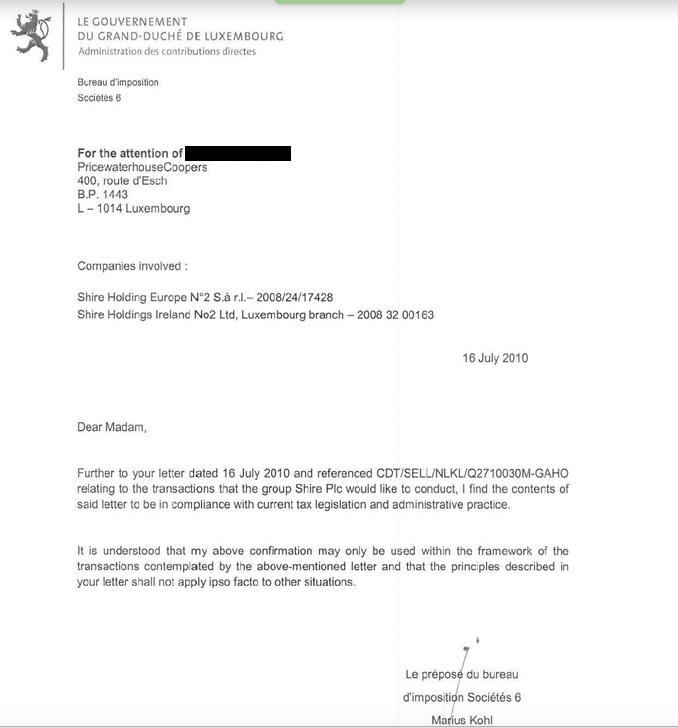
In 2014, it came to light that PwC had received $55 million from Caterpillar Inc. to develop a tax avoidance scheme. According to a US Senate investigation, PwC had helped Caterpillar Inc. drastically reduce its taxes for more than a decade.
Profits worth $8 billion were shifted from the United States to Switzerland, allegedly enabling savings of more than $2.4 billion in US taxes over that period. In Switzerland, the profits were taxed at just 4%.
A PricewaterhouseCoopers managing director involved in designing the tax savings plan wrote at the time to a PwC partner: “We’ll all be retired when this … comes up on audit.”
American International Group Inc.
In 2005, BusinessWeek reported that PwC was American International Group Inc.'s auditor through AIG's years of "questionable dealings" and accounting improprieties. AIG on 30 March 2005, said that deals with a Barbados-based insurance company, for instance, may have been incorrectly accounted for over the past 14 years, because an AIG-affiliated company may have been secretly covering that insurer's losses.
BusinessWeek said that PwC also appeared to have "dropped the ball" on the deals between AIG and Berkshire Hathaway Inc.'s General Re Corp. General Re transferred $500 million in anticipated claims and premiums to AIG. BusinessWeek asked: "Did the auditor do its job by verifying that AIG was assuming risk on claims beyond the $500 million, thus allowing AIG to account for the deal as insurance? That's Accounting 101 in any reinsurance transaction."
According to a memo published by Business Insider, witnesses wondered how PwC was signing off on the accounts for both AIG and Goldman Sachs when they were using different valuation methods for the swaps contracts (and therefore booked different values for them in their accounts).
ChuoAoyama suspension
ChuoAoyama Audit Corporation (中央青山監査法人, Chūō-Aoyama Kansa Hōjin) was the Japanese affiliate of assurance service of PwC from April 2000 to 2006. In May 2006, the Financial Services Agency of Japan suspended ChuoAoyama from provision of some statutory auditing services for two months following the collapse of cosmetics company Kanebo, of which three of the partners were found assisting with accounting fraud for hiding deficits of about $1.9 billion over the course of five years.
The accountants got suspended prison terms up to 18 months from the Tokyo District Court after the judge deemed them to have played a "passive role" in the crime. The suspension was the first-ever imposed on a major accounting firm in the country. Many of the firm's largest clients were forced to find replacement auditors before the suspension began that July.
Shortly after the suspension of ChuoAoyama, PwC acted quickly to stem any possible client attrition as a result of the scandal. It set up the PricewaterhouseCoopers Aarata, and some of ChuoAoyama's accountants and most of ChuoAoyama's clients moved to the new firm. ChuoAoyama resumed operations on 1 September 2006, under the Misuzu name. However, by this point the two firms combined had 30% fewer clients than did ChuoAoyama prior to its suspension. Misuzu was dissolved in July 2007.
Tyco settlement
In July 2007, PwC agreed to pay US$229 million to settle a class-action lawsuit brought by shareholders of Tyco International Ltd. over a multibillion-dollar accounting fraud. The chief executive and chief financial officer of Tyco were found guilty of looting $600 million from the company.