
The police are a constituted body of people empowered by a state with the aim of enforcing the law and protecting the public order as well as the public itself. This commonly includes ensuring the safety, health, and possessions of citizens, and to prevent crime and civil disorder. Their lawful powers encompass arrest and the use of force legitimized by the state's monopoly on violence. The term is most commonly associated with the police forces of a sovereign state that are authorized to exercise the police power of that state within a defined legal or territorial area of responsibility. Police forces are often defined as being separate from the military and other organizations involved in the defense of the state against foreign aggressors; however, gendarmerie are military units charged with civil policing. Police forces are usually public sector services, funded through taxes.
Law enforcement is only part of policing activity. Policing has included an array of activities in different situations, but the predominant ones are concerned with the preservation of order. In some societies, in the late 18th and early 19th centuries, these developed within the context of maintaining the class system and the protection of private property. Police forces have become ubiquitous in complex modern societies. However, their role can sometimes be controversial, as they may be involved to varying degrees in corruption, brutality, and the enforcement of authoritarian rule.
A police force may also be referred to as a police department, police service, constabulary, gendarmerie, crime prevention, protective services, law enforcement agency, civil guard, or civic guard. Members may be referred to as police officers, troopers, sheriffs, constables, rangers, peace officers or civic/civil guards. Ireland differs from other English-speaking countries by using the Irish language terms Garda (singular) and Gardaí (plural), for both the national police force and its members. The word police is the most universal and similar terms can be seen in many non-English speaking countries.
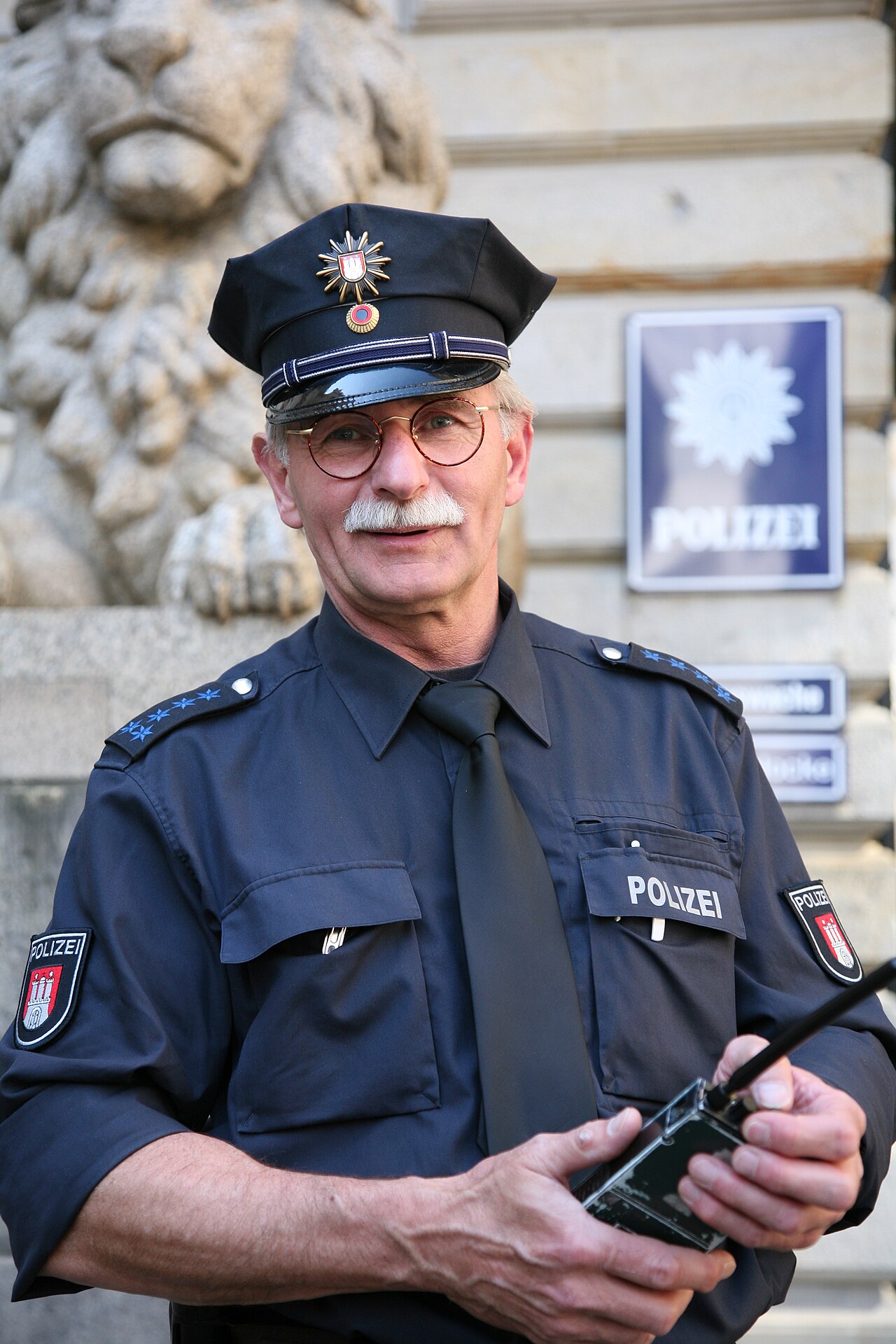
Numerous slang terms exist for the police. Many slang terms for police officers are decades or centuries old with lost etymologies. One of the oldest, cop, has largely lost its slang connotations and become a common colloquial term used both by the public and police officers to refer to their profession.
Etymology
First attested in English in the early 15th century, originally in a range of senses encompassing '(public) policy; state; public order', the word police comes from Middle French police ('public order, administration, government'), in turn from Latin politia, which is the romanization of the Ancient Greek πολιτεία (politeia) 'citizenship, administration, civil polity'. This is derived from πόλις (polis) 'city'.
Development of theory
Michel Foucault wrote that the contemporary concept of police as a paid and funded functionary of the state was developed by German and French legal scholars and practitioners in public administration and statistics in the 17th and early 18th centuries, most notably with Nicolas Delamare's Traité de la Police ("Treatise on the Police"), first published in 1705. The German Polizeiwissenschaft (Science of Police) first theorized by Philipp von Hörnigk, a 17th-century Austrian political economist and civil servant, and much more famously by Johann Heinrich Gottlob Justi, who produced an important theoretical work known as Cameral science on the formulation of police. Foucault cites Magdalene Humpert author of Bibliographie der Kameralwissenschaften (1937) in which the author makes note of a substantial bibliography was produced of over 4,000 pieces of the practice of Polizeiwissenschaft. However, this may be a mistranslation of Foucault's own work since the actual source of Magdalene Humpert states over 14,000 items were produced from the 16th century dates ranging from 1520 to 1850.

As conceptualized by the Polizeiwissenschaft, according to Foucault the police had an administrative, economic and social duty ("procuring abundance"). It was in charge of demographic concerns and needed to be incorporated within the western political philosophy system of raison d'état and therefore giving the superficial appearance of empowering the population (and unwittingly supervising the population), which, according to mercantilist theory, was to be the main strength of the state. Thus, its functions largely overreached simple law enforcement activities and included public health concerns, urban planning (which was important because of the miasma theory of disease; thus, cemeteries were moved out of town, etc.), and surveillance of prices.
The concept of preventive policing, or policing to deter crime from taking place, gained influence in the late 18th century. Police Magistrate John Fielding, head of the Bow Street Runners, argued that "...it is much better to prevent even one man from being a rogue than apprehending and bringing forty to justice."
The Utilitarian philosopher, Jeremy Bentham, promoted the views of Italian Marquis Cesare Beccaria, and disseminated a translated version of "Essay on Crime in Punishment". Bentham espoused the guiding principle of "the greatest good for the greatest number":

It is better to prevent crimes than to punish them. This is the chief aim of every good system of legislation, which is the art of leading men to the greatest possible happiness or to the least possible misery, according to calculation of all the goods and evils of life.
Patrick Colquhoun's influential work, A Treatise on the Police of the Metropolis (1797) was heavily influenced by Benthamite thought. Colquhoun's Thames River Police was founded on these principles, and in contrast to the Bow Street Runners, acted as a deterrent by their continual presence on the riverfront, in addition to being able to intervene if they spotted a crime in progress.
Edwin Chadwick's 1829 article, "Preventive police" in the London Review, argued that prevention ought to be the primary concern of a police body, which was not the case in practice. The reason, argued Chadwick, was that "A preventive police would act more immediately by placing difficulties in obtaining the objects of temptation." In contrast to a deterrent of punishment, a preventive police force would deter criminality by making crime cost-ineffective – "crime doesn't pay". In the second draft of his 1829 Police Act, the "object" of the new Metropolitan Police, was changed by Robert Peel to the "principal object," which was the "prevention of crime." Later historians would attribute the perception of England's "appearance of orderliness and love of public order" to the preventive principle entrenched in Peel's police system.

Development of modern police forces around the world was contemporary to the formation of the state, later defined by sociologist Max Weber as achieving a "monopoly on the legitimate use of physical force" and which was primarily exercised by the police and the military. Marxist theory situates the development of the modern state as part of the rise of capitalism, in which the police are one component of the bourgeoisie's repressive apparatus for subjugating the working class. By contrast, the Peelian principles argue that "the power of the police ... is dependent on public approval of their existence, actions and behavior", a philosophy known as policing by consent.
Personnel and organization
Police forces include both preventive (uniformed) police and detectives. Terminology varies from country to country. Police functions include protecting life and property, enforcing criminal law, criminal investigations, regulating traffic, crowd control, public safety duties, civil defense, emergency management, searching for missing persons, lost property and other duties concerned with public order. Regardless of size, police forces are generally organized as a hierarchy with multiple ranks. The exact structures and the names of rank vary considerably by country.
Uniformed
The police who wear uniforms make up the majority of a police service's personnel. Their main duty is to respond to calls for service. When not responding to these calls, they do work aimed at preventing crime, such as patrols. The uniformed police are known by varying names such as preventive police, the uniform branch/division, administrative police, order police, the patrol bureau/division, or patrol. In Australia and the United Kingdom, patrol personnel are also known as "general duties" officers. Atypically, Brazil's preventive police are known as Military Police.

As stated by the name, uniformed police wear uniforms. They perform functions that require an immediate recognition of an officer's legal authority and a potential need for force. Most commonly this means intervening to stop a crime in progress and securing the scene of a crime that has already happened. Besides dealing with crime, these officers may also manage and monitor traffic, carry out community policing duties, maintain order at public events or carry out searches for missing people (in 2012, the latter accounted for 14% of police time in the United Kingdom). As most of these duties must be available as a 24/7 service, uniformed police are required to do shift work.
Detectives
Police detectives are responsible for investigations and detective work. Detectives may be called Investigations Police, Judiciary/Judicial Police, or Criminal Police. In the United Kingdom, they are often referred to by the name of their department, the Criminal Investigation Department. Detectives typically make up roughly 15–25% of a police service's personnel.
Detectives, in contrast to uniformed police, typically wear business-styled attire in bureaucratic and investigative functions, where a uniformed presence would be either a distraction or intimidating but a need to establish police authority still exists. "Plainclothes" officers dress in attire consistent with that worn by the general public for purposes of blending in.
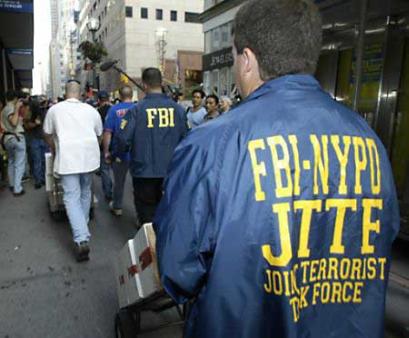
In some cases, police are assigned to work "undercover", where they conceal their police identity to investigate crimes, such as organized crime or narcotics crime, that are unsolvable by other means. In some cases, this type of policing shares aspects with espionage.
The relationship between detective and uniformed branches varies by country. In the United States, there is high variation within the country itself. Many American police departments require detectives to spend some time on temporary assignments in the patrol division. The argument is that rotating officers helps the detectives to better understand the uniformed officers' work, to promote cross-training in a wider variety of skills, and prevent "cliques" that can contribute to corruption or other unethical behavior. Conversely, some countries regard detective work as being an entirely separate profession, with detectives working in separate agencies and recruited without having to serve in uniform. A common compromise in English-speaking countries is that most detectives are recruited from the uniformed branch, but once qualified they tend to spend the rest of their careers in the detective branch.
Another point of variation is whether detectives have extra status. In some forces, such as the New York Police Department and Philadelphia Police Department, a regular detective holds a higher rank than a regular police officer. In others, such as British police and Canadian police, a regular detective has equal status with regular uniformed officers. Officers still have to take exams to move to the detective branch, but the move is regarded as being a specialization, rather than a promotion.
Volunteers and auxiliary
Police services often include part-time or volunteer officers, some of whom have other jobs outside policing. These may be paid positions or entirely volunteer. These are known by a variety of names, such as reserves, auxiliary police or special constables.
Other volunteer organizations work with the police and perform some of their duties. Groups in the U.S. including the Retired and Senior Volunteer Program, Community Emergency Response Team, and the Boy Scouts Police Explorers provide training, traffic and crowd control, disaster response, and other policing duties. In the U.S., the Volunteers in Police Service program assists over 200,000 volunteers in almost 2,000 programs. Volunteers may also work on the support staff. Examples of these schemes are Volunteers in Police Service in the US, Police Support Volunteers in the UK and Volunteers in Policing in New South Wales.
Specialized
Specialized preventive and detective groups, or Specialist Investigation Departments, exist within many law enforcement organizations either for dealing with particular types of crime, such as traffic law enforcement, K9/use of police dogs, crash investigation, homicide, or fraud; or for situations requiring specialized skills, such as underwater search, aviation, explosive disposal ("bomb squad"), and computer crime.
Most larger jurisdictions employ police tactical units, specially selected and trained paramilitary units with specialized equipment, weapons, and training, for the purposes of dealing with particularly violent situations beyond the capability of a patrol officer response, including standoffs, counterterrorism, and rescue operations.
In counterinsurgency-type campaigns, select and specially trained units of police armed and equipped as light infantry have been designated as police field forces who perform paramilitary-type patrols and ambushes whilst retaining their police powers in areas that were highly dangerous.
Because their situational mandate typically focuses on removing innocent bystanders from dangerous people and dangerous situations, not violent resolution, they are often equipped with non-lethal tactical tools like chemical agents, stun grenades, and rubber bullets. The Specialist Firearms Command (MO19) of the Metropolitan Police in London is a group of armed police used in dangerous situations including hostage taking, armed robbery/assault and terrorism.
Administrative duties
Police may have administrative duties that are not directly related to enforcing the law, such as issuing firearms licenses. The extent that police have these functions varies among countries, with police in France, Germany, and other continental European countries handling such tasks to a greater extent than British counterparts.
Military
Military police may refer to:
a section of the military solely responsible for policing the armed forces, referred to as provosts (e.g., United States Air Force Security Forces)
a section of the military responsible for policing in both the armed forces and in the civilian population (e.g., most gendarmeries, such as the French Gendarmerie, the Italian Carabinieri, the Spanish Guardia Civil, and the Portuguese National Republican Guard)
a section of the military solely responsible for policing the civilian population (e.g., Romanian Gendarmerie)
the civilian preventive police of a Brazilian state (e.g., Policia Militar)
a special military law enforcement service (e.g., Russian Military Police)
Religious
Some jurisdictions with religious laws may have dedicated religious police to enforce said laws. These religious police forces, which may operate either as a unit of a wider police force or as an independent agency, may only have jurisdiction over members of said religion, or they may have the ability to enforce religious customs nationwide regardless of individual religious beliefs.
Religious police may enforce social norms, gender roles, dress codes, and dietary laws per religious doctrine and laws, and may also prohibit practices that run contrary to said doctrine, such as atheism, proselytism, homosexuality, socialization between different genders, business operations during religious periods or events such as salah or the Sabbath, or the sale and possession of "offending material" ranging from pornography to foreign media.
Forms of religious law enforcement were relatively common in historical religious civilizations, but eventually declined in favor of religious tolerance and pluralism. One of the most common forms of religious police in the modern world are Islamic religious police, which enforce the application of Sharia (Islamic religious law). As of 2018, there are eight Islamic countries that maintain Islamic religious police: Afghanistan, Iran, Iraq, Mauritania, Pakistan, Saudi Arabia, Sudan, and Yemen.
Some forms of religious police may not enforce religious law, but rather suppress religion or religious extremism. This is often done for ideological reasons; for example, communist states such as China and Vietnam have historically suppressed and tightly controlled religions such as Christianity.
Secret
Secret police organizations are typically used to suppress dissidents for engaging in non-politically correct communications and activities, which are deemed counter-productive to what the state and related establishment promote. Secret police interventions to stop such activities are often illegal, and are designed to debilitate, in various ways, the people targeted in order to limit or stop outright their ability to act in a non-politically correct manner. The methods employed may involve spying, various acts of deception, intimidation, framing, false imprisonment, false incarceration under mental health legislation, and physical violence. Countries widely reported to use secret police organizations include China (The Ministry of State Security) and North Korea (The Ministry of State Security).
By country
Police forces are usually organized and funded by some level of government. The level of government responsible for policing varies from place to place, and may be at the national, regional or local level. Some countries have police forces that serve the same territory, with their jurisdiction depending on the type of crime or other circumstances. Other countries, such as Austria, Chile, Israel, New Zealand, the Philippines, South Africa and Sweden, have a single national police force.
In some places with multiple national police forces, one common arrangement is to have a civilian police force and a paramilitary gendarmerie, such as the Police Nationale and National Gendarmerie in France. The French policing system spread to other countries through the Napoleonic Wars and the French colonial empire. Another example is the Policía Nacional and Guardia Civil in Spain. In both France and Spain, the civilian force polices urban areas and the paramilitary force polices rural areas. Italy has a similar arrangement with the Polizia di Stato and Carabinieri, though their jurisdictions overlap more. Some countries have separate agencies for uniformed police and detectives, such as the Military Police and Civil Police in Brazil and the Carabineros and Investigations Police in Chile.
Other countries have sub-national police forces, but for the most part their jurisdictions do not overlap. In many countries, especially federations, there may be two or more tiers of police force, each serving different levels of government and enforcing different subsets of the law. In Australia and Germany, the majority of policing is carried out by state (i.e. provincial) police forces, which are supplemented by a federal police force. Though not a federation, the United Kingdom has a similar arrangement, where policing is primarily the responsibility of a regional police force and specialist units exist at the national level. In Canada, the Royal Canadian Mounted Police (RCMP) are the federal police, while municipalities can decide whether to run a local police service or to contract local policing duties to a larger one. Most urban areas have a local police service, while most rural areas contract it to the RCMP, or to the provincial police in Ontario and Quebec.
The United States has a highly decentralized and fragmented system of law enforcement, with over 17,000 state and local law enforcement agencies. These agencies include local police, county law enforcement (often in the form of a sheriff's office, or county police), state police and federal law enforcement agencies. Federal agencies, such as the FBI, only have jurisdiction over federal crimes or those that involve more than one state. Other federal agencies have jurisdiction over a specific type of crime. Examples include the Federal Protective Service, which patrols and protects government buildings; the Postal Inspection Service, which protect United States Postal Service facilities, vehicles and items; the Park Police, which protect national parks; and Amtrak Police, which patrol Amtrak stations and trains. There are also some government agencies and uniformed services that perform police functions in addition to other duties, such as the Coast Guard.
International
Most countries are members of the International Criminal Police Organization (Interpol), established to detect and fight transnational crime and provide for international co-operation and co-ordination of other police activities, such as notifying relatives of the death of foreign nationals. Interpol does not conduct investigations or arrests by itself, but only serves as a central point for information on crime, suspects and criminals. Political crimes are excluded from its competencies.
The terms international policing, transnational policing, and/or global policing began to be used from the early 1990s onwards to describe forms of policing that transcended the boundaries of the sovereign nation-state. These terms refer in variable ways to practices and forms for policing that, in some sense, transcend national borders. This includes a variety of practices, but international police cooperation, criminal intelligence exchange between police agencies working in different nation-states, and police development-aid to weak, failed or failing states are the three types that have received the most scholarly attention.
Historical studies reveal that policing agents have undertaken a variety of cross-border police missions for many years. For example, in the 19th century a number of European policing agencies undertook cross-border surveillance because of concerns about anarchist agitators and other political radicals. A notable example of this was the occasional surveillance by Prussian police of Karl Marx during the years he remained resident in London. The interests of public police agencies in cross-border co-operation in the control of political radicalism and ordinary law crime were primarily initiated in Europe, which eventually led to the establishment of Interpol before World War II. There are also many interesting examples of cross-border policing under private auspices and by municipal police forces that date back to the 19th century. It has been established that modern policing has transgressed national boundaries from time to time almost from its inception. It is also generally agreed that in the post–Cold War era this type of practice became more significant and frequent.
Few empirical works on the practices of inter/transnational information and intelligence sharing have been undertaken. A notable exception is James Sheptycki's study of police cooperation in the English Channel region, which provides a systematic content analysis of information exchange files and a description of how these transnational information and intelligence exchanges are transformed into police casework. The study showed that transnational police information sharing was routinized in the cross-Channel region from 1968 on the basis of agreements directly between the police agencies and without any formal agreement between the countries concerned. By 1992, with the signing of the Schengen Treaty, which formalized aspects of police information exchange across the territory of the European Union, there were worries that much, if not all, of this intelligence sharing was opaque, raising questions about the efficacy of the accountability mechanisms governing police information sharing in Europe.