Physical science is a branch of natural science that studies non-living systems, in contrast to life science. It in turn has many branches, collectively referred to as the physical sciences.
Definition
Physical science can be described as all of the following:
A branch of science (a systematic enterprise that builds and organizes knowledge in the form of testable explanations and predictions about the universe).

A branch of natural science – natural science is a major branch of science that tries to explain and predict nature's phenomena, based on empirical evidence. In natural science, hypotheses must be verified scientifically to be regarded as scientific theory. Validity, accuracy, and social mechanisms ensuring quality control, such as peer review and repeatability of findings, are amongst the criteria and methods used for this purpose. Natural science can be broken into two main branches: life science (for example biology) and physical science. Each of these branches, and all of their sub-branches, are referred to as natural sciences.
A branch of applied science – the application of the scientific method and scientific knowledge to attain practical goals. It includes a broad range of disciplines, such as engineering and medicine, although medicine would not normally be considered a physical science. Applied science is often contrasted with basic science, which is focused on advancing scientific theories and laws that explain and predict natural or other phenomena.
Branches
Main branches
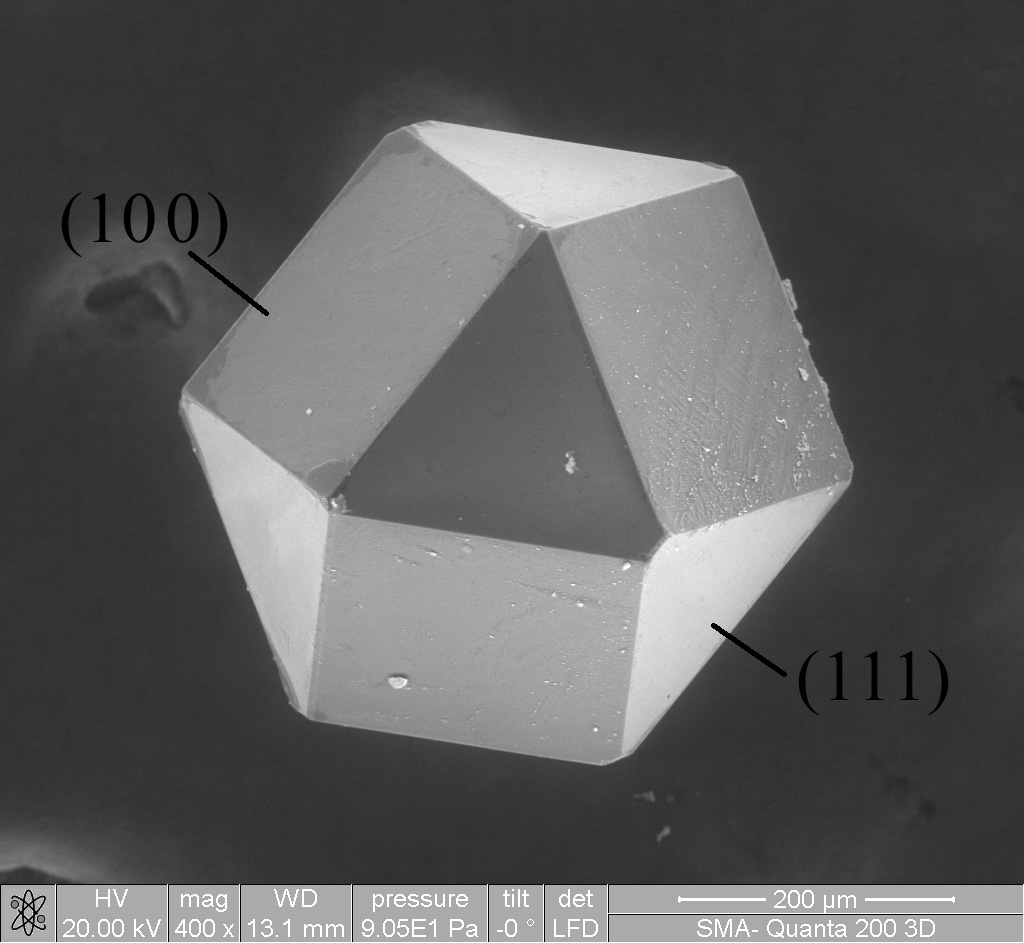
Physics – natural and physical science could involve the study of matter and its motion through space and time, along with related concepts such as energy and force. More broadly, it is the general analysis of nature, conducted in order to understand how the universe behaves.
Branches of physics
Astronomy – study of celestial objects (such as stars, galaxies, planets, moons, asteroids, comets and nebulae), the physics, chemistry, and evolution of such objects, and phenomena that originate outside the atmosphere of Earth, including supernovae explosions, gamma-ray bursts, and cosmic microwave background radiation.
Branches of astronomy

Chemistry – studies the composition, structure, properties and change of matter. In this realm, chemistry deals with such topics as the properties of individual atoms, the manner in which atoms form chemical bonds in the formation of compounds, the interactions of substances through intermolecular forces to give matter its general properties, and the interactions between substances through chemical reactions to form different substances.
Branches of chemistry
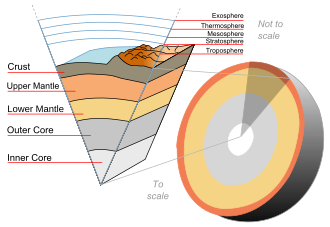
Earth science – all-embracing term referring to the fields of science dealing with planet Earth. Earth science is the study of how the natural environment (ecosphere or Earth system) works and how it evolved to its current state. It includes the study of the atmosphere, hydrosphere, lithosphere, and biosphere.
Branches of earth science
Sometimes included
Materials science – an interdisciplinary field of researching and discovering materials. Materials scientists emphasize understanding how the history of a material (processing) influences its structure, and also the material's properties and performance. The understanding of processing structure properties relationships is called the materials paradigm. This paradigm is used for advanced understanding in a variety of research areas, including nanotechnology, biomaterials, and metallurgy.
Computer science – the study of computation, information, and automation. Computer science spans theoretical disciplines (such as algorithms, theory of computation, and information theory) to applied disciplines (including the design and implementation of hardware and software).
History
History of physical science – history of the branch of natural science that studies non-living systems, in contrast to the life sciences. It in turn has many branches, each referred to as a "physical science", together called the "physical sciences". However, the term "physical" creates an unintended, somewhat arbitrary distinction, since many branches of physical science also study biological phenomena (organic chemistry, for example). The four main branches of physical science are astronomy, physics, chemistry, and the Earth sciences, which include meteorology and geology. There are also a number of others which have become important in the 21st century such as materials science and computer science.
History of physics – history of the physical science that studies matter and its motion through space-time, and related concepts such as energy and force
History of acoustics – history of the study of mechanical waves in solids, liquids, and gases (such as vibration and sound)
History of agrophysics – history of the study of physics applied to agroecosystems
History of soil physics – history of the study of soil physical properties and processes.
History of astrophysics – history of the study of the physical aspects of celestial objects
History of astronomy – history of the study of the universe beyond Earth, including its formation and development, and the evolution, physics, chemistry, meteorology, and motion of celestial objects (such as galaxies, planets, etc.) and phenomena that originate outside the atmosphere of Earth (such as the cosmic background radiation).
History of astrodynamics – history of the application of ballistics and celestial mechanics to the practical problems concerning the motion of rockets and other spacecraft.
History of astrometry – history of the branch of astronomy that involves precise measurements of the positions and movements of stars and other celestial bodies.
History of cosmology – history of the discipline that deals with the nature of the Universe as a whole.
History of extragalactic astronomy – history of the branch of astronomy concerned with objects outside our own Milky Way Galaxy
History of galactic astronomy – history of the study of our own Milky Way galaxy and all its contents.
History of physical cosmology – history of the study of the largest-scale structures and dynamics of the universe and is concerned with fundamental questions about its formation and evolution.
History of planetary science – history of the scientific study of planets (including Earth), moons, and planetary systems, in particular those of the Solar System and the processes that form them.
History of stellar astronomy – history of the natural science that deals with the study of celestial objects (such as stars, planets, comets, nebulae, star clusters, and galaxies) and phenomena that originate outside the atmosphere of Earth (such as cosmic background radiation)
History of atmospheric physics – history of the study of the application of physics to the atmosphere
History of atomic, molecular, and optical physics – history of the study of how matter and light interact
History of biophysics – history of the study of physical processes relating to biology
History of medical physics – history of the application of physics concepts, theories and methods to medicine.
History of neurophysics – history of the branch of biophysics dealing with the nervous system.
History of chemical physics – history of the branch of physics that studies chemical processes from the point of view of physics.
History of computational physics – history of the study and implementation of numerical algorithms to solve problems in physics for which a quantitative theory already exists.
History of condensed matter physics – history of the study of the physical properties of condensed phases of matter.
History of cryogenics – history of cryogenics is the study of the production of very low temperature (below −150 °C, −238 °F or 123K) and the behavior of materials at those temperatures.
History of Dynamics – history of the study of the causes of motion and changes in motion
History of econophysics – history of the interdisciplinary research field, applying theories and methods originally developed by physicists in order to solve problems in economics
History of electromagnetism – history of the branch of science concerned with the forces that occur between electrically charged particles.
History of geophysics – history of the physics of the Earth and its environment in space; also the study of the Earth using quantitative physical methods
History of materials physics – history of the use of physics to describe materials in many different ways such as force, heat, light and mechanics.
History of mathematical physics – history of the application of mathematics to problems in physics and the development of mathematical methods for such applications and for the formulation of physical theories.
History of mechanics – history of the branch of physics concerned with the behavior of physical bodies when subjected to forces or displacements, and the subsequent effects of the bodies on their environment.
History of biomechanics – history of the study of the structure and function of biological systems such as humans, animals, plants, organs, and cells by means of the methods of mechanics.
History of classical mechanics – history of one of the two major sub-fields of mechanics, which is concerned with the set of physical laws describing the motion of bodies under the action of a system of forces.
History of continuum mechanics – history of the branch of mechanics that deals with the analysis of the kinematics and the mechanical behavior of materials modeled as a continuous mass rather than as discrete particles.
History of fluid mechanics – history of the study of fluids and the forces on them.
History of quantum mechanics – history of the branch of physics dealing with physical phenomena where the action is on the order of the Planck constant.
History of thermodynamics – history of the branch of physical science concerned with heat and its relation to other forms of energy and work.
History of nuclear physics – history of the field of physics that studies the building blocks and interactions of atomic nuclei.
History of optics – history of the branch of physics which involves the behavior and properties of light, including its interactions with matter and the construction of instruments that use or detect it.
History of particle physics – history of the branch of physics that studies the existence and interactions of particles that are the constituents of what is usually referred to as matter or radiation.