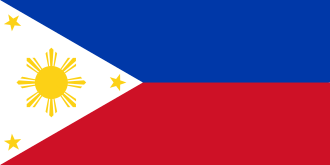
The Philippines, officially the Republic of the Philippines, is an archipelagic country in Southeast Asia. Located in the western Pacific Ocean, it consists of about 7,641 islands, with a total area of about 300,000 square kilometers, which are broadly categorized in three main geographical divisions from north to south: Luzon, Visayas, and Mindanao. With a population of over 114 million, it is the world's twelfth-most-populous country.
The Philippines is bounded by the South China Sea to the west, the Philippine Sea to the east, and the Celebes Sea to the south. It shares maritime borders with Taiwan to the north, Japan to the northeast, Palau to the east and southeast, Indonesia to the south, Malaysia to the southwest, Vietnam to the west, and China to the northwest. It has diverse ethnicities and a rich culture. Manila is the country's capital, and its most populated city is Quezon City. Both are within Metro Manila.
Negritos, the archipelago's earliest inhabitants, were followed by waves of Austronesian peoples. The adoption of animism, Hinduism with Buddhist influence, and Islam established island-kingdoms. Extensive overseas trade with neighbors such as the late Tang or Song empire brought Chinese people to the archipelago as well, who would also gradually settle in and intermix over the centuries. The arrival of the explorer Ferdinand Magellan marked the beginning of Spanish colonization. In 1543, Spanish explorer Ruy López de Villalobos named the archipelago las Islas Filipinas in honor of King Philip II. Catholicism became the dominant religion, and Manila became the western hub of trans-Pacific trade. Hispanic immigrants from Latin America and Iberia would also selectively colonize. The Philippine Revolution began in 1896, and became entwined with the 1898 Spanish–American War. Spain ceded the territory to the United States, and Filipino revolutionaries declared the First Philippine Republic. The ensuing Philippine–American War ended with the United States controlling the territory until the Japanese invasion of the islands during World War II. After the United States retook the Philippines from the Japanese, the Philippines became independent in 1946. Since then, the country notably experienced a period of martial law from 1972 to 1981 under the dictatorship of Ferdinand Marcos and his subsequent overthrow by the People Power Revolution in 1986, returning to democracy.
The Philippines is an emerging market and a developing and newly industrialized country, whose economy is transitioning from being agricultural to service- and manufacturing-centered. It has a variety of natural resources and a globally-significant level of biodiversity. The country is also part of multiple international organizations and forums, mainly in ASEAN. Despite its fast economic growth, it continues to struggle with inequality, widespread corruption, and vulnerability to natural disasters due to its location within the Pacific Ring of Fire, and to the equator, making it prone to earthquakes, monsoon rains, and typhoons, to which the Philippines has built a resilience.
Etymology
During his 1542 expedition, Spanish explorer Ruy López de Villalobos named the islands of Leyte and Samar "Felipinas" after the Prince of Asturias, later Philip II of Castile. Eventually, the name "Las Islas Filipinas" would be used for the archipelago's Spanish possessions. Other names, such as "Islas del Poniente" (Western Islands), "Islas del Oriente" (Eastern Islands), Ferdinand Magellan's name, and "San Lázaro" (Islands of St. Lazarus), were used by the Spanish to refer to islands in the region before Spanish rule was established.
During the Philippine Revolution, the Malolos Congress proclaimed it the República Filipina (Philippine Republic). American colonial authorities referred to the country as the Philippine Islands (a translation of the Spanish name). The United States began changing its nomenclature from "the Philippine Islands" to "the Philippines" in the Philippine Autonomy Act and the Jones Law. The official title "Republic of the Philippines" was included in the 1935 constitution as the name of the future independent state, and in all succeeding constitutional revisions.

History
Prehistory (pre–900)
There is evidence of early hominins living in what is now the Philippines as early as 709,000 years ago. Bones from Callao Cave potentially represent an otherwise unknown species, Homo luzonensis, who lived 50,000 to 67,000 years ago. The oldest modern human remains on the islands are from the Tabon Caves of Palawan, U/Th-dated to 47,000 ± 11–10,000 years ago. Tabon Man is presumably a Negrito, among the archipelago's earliest inhabitants descended from the first human migrations out of Africa via the coastal route along southern Asia to the now-sunken landmasses of Sundaland and Sahul.
The first Austronesians reached the Philippines from Taiwan around 2200 BC, settling the Batanes Islands (where they built stone fortresses known as ijangs) and northern Luzon. Jade artifacts have been dated to 2000 BC, with lingling-o jade items made in Luzon with raw materials from Taiwan. By 1000 BC, the inhabitants of the archipelago had developed into four societies: hunter-gatherer tribes, warrior societies, highland plutocracies, and port principalities. The Philippines prior to foreign colonization was believed to be egalitarian.
Early states (900–1565)
The earliest known surviving written record in the Philippines is the 900 AD Laguna Copperplate Inscription, which was written in Old Malay using the early Kawi script. By the 14th century, several large coastal settlements emerged as trading centers and became the focus of societal changes. Some polities had exchanges with other states throughout Asia. Trade with China began during the late Tang dynasty, and expanded during the Song dynasty. Throughout the second millennium AD, some polities were part of the tributary system of China. With extensive trade and diplomacy, this brought Southern Chinese merchants and migrants from Southern Fujian, who would gradually settle and intermix in the Philippines. Indian cultural traits such as linguistic terms and religious practices began to spread in the Philippines during the 14th century, via the Indianized Hindu Majapahit Empire. By the 15th century, Islam was established in the Sulu Archipelago and spread from there.

Polities founded in the Philippines between the 10th and 16th centuries include Maynila, Tondo, Namayan, Pangasinan, Caboloan, Cebu, Butuan, Maguindanao, Lanao, Sulu, and Ma-i. The early polities typically had a three-tier social structure: nobility, freemen, and dependent debtor-bondsmen. Among the nobility were leaders known as datus, who were responsible for ruling autonomous groups (barangays or dulohan). When the barangays banded together to form a larger settlement or a geographically looser alliance, their more-esteemed members would be recognized as a "paramount datu", rajah or sultan, and would rule the community. Population density is thought to have been low during the 14th to 16th centuries due to the frequency of typhoons and the Philippines' location on the Pacific Ring of Fire. Portuguese explorer Ferdinand Magellan arrived in 1521, claimed the islands for Spain, and was killed by Lapulapu's men in the Battle of Mactan.
Spanish and American colonial rule (1565–1934)
Unification and colonization by the Crown of Castile began when Spanish explorer Miguel López de Legazpi arrived from New Spain in 1565. Many Filipinos were brought to New Spain as slaves and forced crew, whereas many Latin Americans were brought to the Philippines as soldiers and colonists. The Philippines hosts the only Latin American established districts in Asia. Spanish Manila became the capital of the Captaincy General of the Philippines and the Spanish East Indies in 1571, Spanish territories in Asia and the Pacific. The Spanish invaded local states using the principle of divide and conquer, bringing most of what is the present-day Philippines under one unified administration.
Disparate barangays were deliberately consolidated into towns, where Catholic missionaries could more easily convert their inhabitants to Christianity, which was initially Syncretist. Christianization by the Spanish friars occurred mostly across the settled lowlands over the course of time. From 1565 to 1821, the Philippines was governed as a territory of the Mexico City-based Viceroyalty of New Spain; it was then administered from Madrid after the Mexican War of Independence. Manila became the western hub of trans-Pacific trade by Manila galleons built in Bicol and Cavite.
During its rule, Spain spent a significant sum of its treasury quelling indigenous revolts and defending against external military attacks, including Moro piracy, a 17th-century war against the Dutch, 18th-century British occupation of Manila, and conflict with Muslims in the south.
Administration of the Philippines was considered a drain on the economy of New Spain, and abandoning it or trading it for other territory was debated. This course of action was opposed because of the islands' economic potential, security, and the desire to continue religious conversion in the region. The colony survived on an annual subsidy from the Spanish crown averaging 250,000 pesos, usually paid as 75 tons of silver bullion from the Americas. British forces occupied Manila from 1762 to 1764 during the Seven Years' War. Spanish rule was restored with the 1763 Treaty of Paris. The Spanish considered their war with the Muslims in Southeast Asia an extension of the Reconquista. The Spanish–Moro conflict lasted for several hundred years. Spain conquered portions of Mindanao and Jolo during the last quarter of the 19th century, and the Muslim Moro in the Sultanate of Sulu acknowledged Spanish sovereignty.
Philippine ports opened to world trade during the 19th century, and Filipino society began to change. Social identity changed, with the term Filipino encompassing all residents of the archipelago instead of solely referring to Spaniards born in the Philippines.
Revolutionary sentiment grew in 1872 after 200 locally recruited colonial troops and laborers alongside three activist Catholic priests were executed on questionable grounds. This inspired the Propaganda Movement, organized by Marcelo H. del Pilar, José Rizal, Graciano López Jaena, and Mariano Ponce, which advocated political reform in the Philippines. Rizal was executed on December 30, 1896, for rebellion, and his death radicalized many who had been loyal to Spain. Attempts at reform met with resistance; Andrés Bonifacio founded the Katipunan secret society, which sought independence from Spain through armed revolt, in 1892.
The Katipunan Cry of Pugad Lawin began the Philippine Revolution in 1896. Internal disputes led to the Tejeros Convention, at which Bonifacio lost his position and Emilio Aguinaldo was elected the new leader of the revolution. The 1897 Pact of Biak-na-Bato resulted in the Hong Kong Junta government in exile. The Spanish–American War began the following year, and reached the Philippines; Aguinaldo returned, resumed the revolution, and declared independence from Spain on June 12, 1898. In December 1898, the islands were ceded by Spain to the United States with Puerto Rico and Guam after the Spanish–American War. Spain had ruled the Philippines for 333 years.
The First Philippine Republic was promulgated on January 21, 1899. Lack of recognition by the United States led to an outbreak of hostilities that, after refusal by the U.S. on-scene military commander of a cease-fire proposal and a declaration of war by the nascent Republic, escalated into the Philippine–American War.

The war resulted in the deaths of 250,000 to 1 million civilians, primarily due to famine and disease. Many Filipinos were transported by the Americans to concentration camps, where thousands died. After the fall of the First Philippine Republic in 1902, an American civilian government was established with the Philippine Organic Act. American forces continued to secure and extend their control of the islands, suppressing an attempted extension of the Philippine Republic, securing the Sultanate of Sulu, establishing control of interior mountainous areas which had resisted Spanish conquest, and encouraging large-scale resettlement of Christians in once-predominantly-Muslim Mindanao.
Commonwealth and World War II (1935–1946)
Cultural developments in the Philippines strengthened a national identity, and Tagalog began to take precedence over other local languages. Governmental functions were gradually given to Filipinos by the Taft Commission; the 1934 Tydings–McDuffie Act granted a ten-year transition to independence through the creation of the Commonwealth of the Philippines the following year, with Manuel Quezon president and Sergio Osmeña vice president. Quezon's priorities were defence, social justice, inequality, economic diversification, and national character. Filipino (a standardized variety of Tagalog) became the national language, women's suffrage was introduced, and land reform was considered. The introduction of women's suffrage during the Commonwealth period (1935–1946) signifies a progressive step towards gender equality in the Philippines. This gave women the right to vote and participate in the country's political processes.
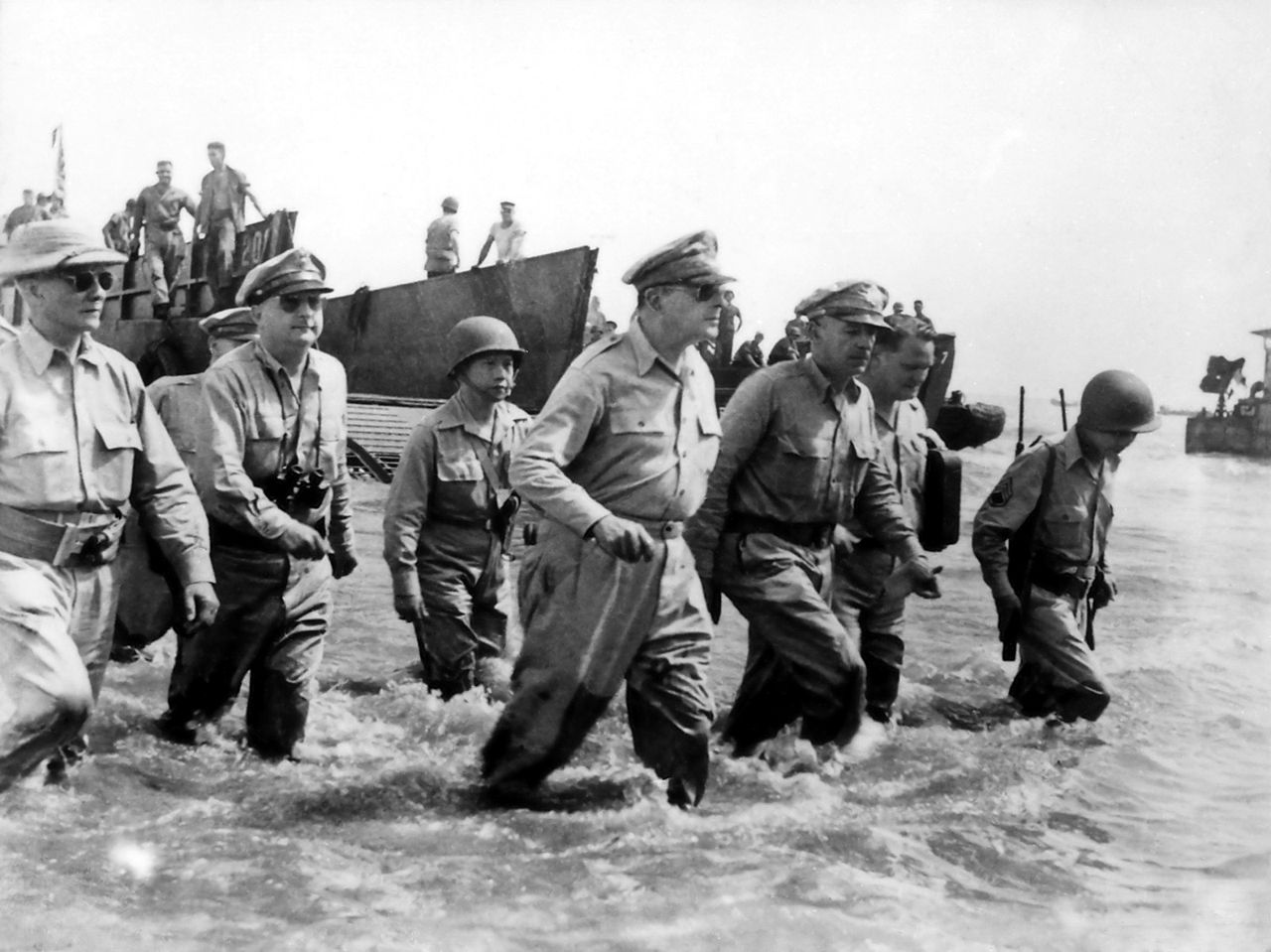
The Empire of Japan invaded the Philippines in December 1941 during World War II, and the Second Philippine Republic was established as a puppet state governed by Jose P. Laurel. Beginning in 1942, the Japanese occupation of the Philippines was opposed by large-scale underground guerrilla activity. Atrocities and war crimes were committed during the war, including the Bataan Death March and the Manila massacre. The Philippine resistance and Allied troops defeated the Japanese in 1944 and 1945. Over one million Filipinos were estimated to have died by the end of the war. On October 11, 1945, the Philippines became a founding member of the United Nations. On July 4, 1946, during the presidency of Manuel Roxas, the country's independence was recognized by the United States with the Treaty of Manila.
Independence (1946–present)
Efforts at post-war reconstruction and ending the Hukbalahap Rebellion succeeded during Ramon Magsaysay's presidency, but sporadic communist insurgency continued to flare up long afterward. Under Magsaysay's successor, Carlos P. Garcia, the government initiated a Filipino First policy which promoted Filipino-owned businesses. Succeeding Garcia, Diosdado Macapagal moved Independence Day from July 4 to June 12—the date of Emilio Aguinaldo's declaration— and pursued a claim on eastern North Borneo.
In 1965, Macapagal lost the presidential election to Ferdinand Marcos. Early in his presidency, Marcos began infrastructure projects funded mostly by foreign loans; this improved the economy, and contributed to his reelection in 1969. Near the end of his last constitutionally-permitted term, Marcos declared martial law on September 21, 1972 using the specter of communism and began to rule by decree; the period was characterized by political repression, censorship, and human rights violations. Monopolies controlled by Marcos's cronies were established in key industries, including logging and broadcasting; a sugar monopoly led to a famine on the island of Negros. With his wife, Imelda, Marcos was accused of corruption and embezzling billions of dollars of public funds. Marcos's heavy borrowing early in his presidency resulted in economic crashes, exacerbated by an early 1980s recession where the economy contracted by 7.3 percent annually in 1984 and 1985.
On August 21, 1983, opposition leader Benigno Aquino Jr. (Marcos's chief rival) was assassinated on the tarmac at Manila International Airport. Marcos called a snap presidential election in 1986 which proclaimed him the winner, but the results were widely regarded as fraudulent. The resulting protests led to the People Power Revolution, which forced Marcos and his allies to flee to Hawaii. Aquino's widow, Corazon, was installed as president and a new constitution was promulgated.
The return of democracy and government reforms which began in 1986 were hampered by national debt, government corruption, and coup attempts. A communist insurgency and military conflict with Moro separatists persisted; the administration also faced a series of disasters, including the eruption of Mount Pinatubo in June 1991. Aquino was succeeded by Fidel V. Ramos, who liberalized the national economy with privatization and deregulation. Ramos's economic gains were overshadowed by the onset of the 1997 Asian financial crisis. His successor, Joseph Estrada, prioritized public housing but faced corruption allegations which led to his overthrow by the 2001 EDSA Revolution and the succession of Vice President Gloria Macapagal Arroyo on January 20, 2001.
Arroyo's nine-year administration was marked by economic growth, but was tainted by corruption and political scandals, including electoral fraud allegations during the 2004 presidential election. Economic growth continued during Benigno Aquino III's administration, which advocated good governance and transparency. Aquino III signed a peace agreement with the Moro Islamic Liberation Front (MILF) resulting in the Bangsamoro Organic Law establishing an autonomous Bangsamoro region, but a shootout with MILF rebels in Mamasapano delayed passage of the law.
Growing public frustration with post-EDSA governance led to the 2016 election of populist Rodrigo Duterte, whose presidency saw the decline of liberalism in the country albeit largely retaining liberal economic policies. Among Duterte's priorities was aggressively increasing infrastructure spending to spur economic growth; the enactment of the Bangsamoro Organic Law; an intensified crackdown on crime and communist insurgencies; and an anti-drug campaign that reduced drug proliferation but that has also led to extrajudicial killings. In early 2020, the COVID-19 pandemic reached the Philippines, necessitating nationwide lockdowns that caused a brief but severe economic recession. Under a promise of continuing Duterte's policies, Marcos's son, Bongbong Marcos, ran with Duterte's daughter, Sara, and won the 2022 election. Marcos's renewal of a pro-US foreign policy, however, has been viewed as a reversal of Duterte's cordiality with China, and territorial disputes in the South China Sea have since escalated. The Marcos administration also arrested his predecessor Duterte, who was sent to the International Criminal Court in The Netherlands for trial of crimes against humanity, which led to the collapse of the Marcos-Duterte alliance. Later on, a series of corruption, mismanagement and irregularities in government-funded flood management projects occurred under his administration, resulting in numerous protests nationwide. The country suffered an energy crisis as a result of the conflict in Middle East.
Geography
The Philippines is an archipelago of approximately 7,641 islands, covering a total area (including inland bodies of water) of about 300,000 square kilometers (115,831 sq mi). Stretching 1,850 kilometers (1,150 mi) north to south, from the South China Sea to the Celebes Sea, the Philippines is bordered by the Philippine Sea to the east, and the Sulu Sea to the southwest. The Luzon Strait is the most economical (quickest) traffic node for shipping between the Americas and Asia.
It is also a critical junction of Asia-Pacific-Americas undersea communication cables. The country's 11 largest islands are Luzon, Mindanao, Samar, Negros, Palawan, Panay, Mindoro, Leyte, Cebu, Bohol and Masbate, about 95 percent of its total land area. The Philippines' coastline measures 36,289 kilometers (22,549 mi), the world's fifth-longest, and the country's exclusive economic zone covers 2,263,816 km2 (874,064 sq mi).
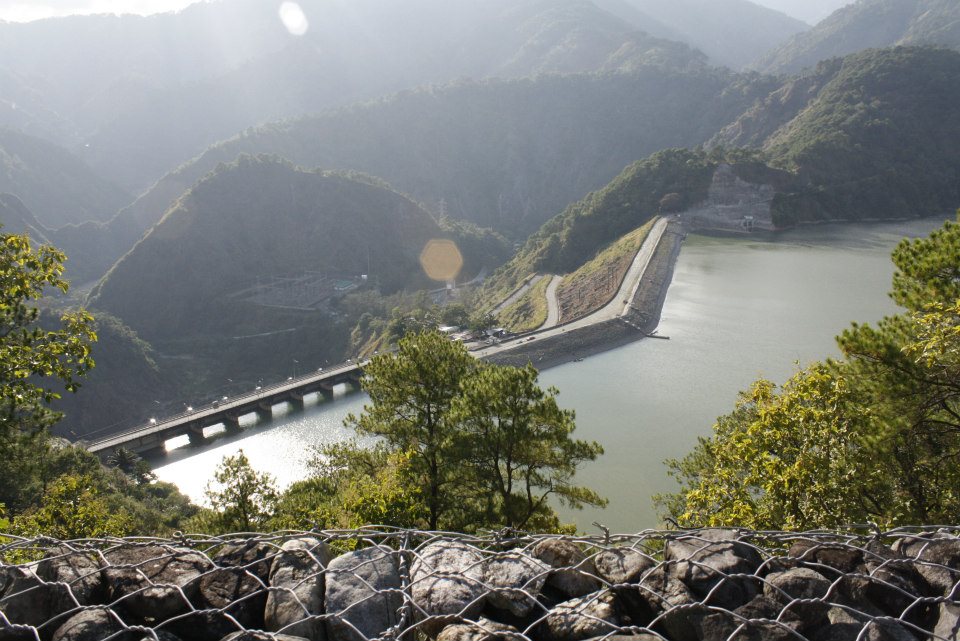
Its highest mountain is Mount Apo on Mindanao, with an altitude of 2,954 meters (9,692 ft) above sea level. The Philippines' longest river is the Cagayan River in northern Luzon, which flows for about 520 kilometers (320 mi). Manila Bay, on which is the capital city of Manila, is connected to Laguna de Bay (the country's largest lake) by the Pasig River.
On the western fringes of the Pacific Ring of Fire, the Philippines has frequent seismic and volcanic activity. The region is seismically active, and has been constructed by plates converging towards each other from multiple directions. About five earthquakes are recorded daily, although most are too weak to be felt. The last major earthquakes were in 1976 in the Moro Gulf and in 1990 on Luzon. The Philippines has 23 active volcanoes; of them, Mayon, Taal, Canlaon, and Bulusan have the largest number of recorded eruptions.
The country has valuable mineral deposits as a result of its complex geologic structure and high level of seismic activity. It is thought to have the world's second-largest gold deposits (after South Africa), large copper deposits, and the world's largest deposits of palladium. The country's gold production in 2015 is 21 metric tonnes. Other minerals include chromium, nickel, molybdenum, platinum, and zinc. However, poor management and law enforcement, opposition from indigenous communities, and past environmental damage have left these resources largely untapped.
Biodiversity
The Philippines is a megadiverse country, with some of the world's highest rates of discovery and endemism (67 percent). With an estimated 13,500 plant species in the country (3,500 of which are endemic), Philippine rain forests have an array of flora: about 3,500 species of trees, 8,000 flowering plant species, 1,100 ferns, and 998 orchid species have been identified. The Philippines has 167 terrestrial mammals (102 endemic species), 235 reptiles (160 endemic species), 99 amphibians (74 endemic species), 686 birds (224 endemic species), and over 20,000 insect species.
As an important part of the Coral Triangle ecoregion, Philippine waters have unique, diverse marine life and the world's greatest diversity of shore-fish species. The country has over 3,200 fish species, 121 endemic. Philippine waters sustain the cultivation of fish, crustaceans, oysters, and seaweeds.
Eight major types of forests are distributed throughout the Philippines: dipterocarp, beach forest, pine forest, molave forest, lower montane forest, upper montane (or mossy forest), mangroves, and ultrabasic forest. According to official estimates, the Philippines had 7,000,000 hectares (27,000 sq mi) of forest cover in 2023. Logging had been systemized during the American colonial period and deforestation continued after independence, accelerating during the Marcos presidency due to unregulated logging concessions. Forest cover declined from 70 percent of the Philippines' total land area in 1900 to about 18.3 percent in 1999. Rehabilitation efforts have had marginal success.
The Philippines is a priority hotspot for biodiversity conservation; it has more than 200 protected areas, which was expanded to 7,790,000 hectares (30,100 sq mi) as of 2023. Three sites in the Philippines have been included on the UNESCO World Heritage List: the Tubbataha Reef in the Sulu Sea, the Puerto Princesa Subterranean River, and the Mount Hamiguitan Wildlife Sanctuary.
Climate
The Philippines has a tropical maritime climate which is usually hot and humid. There are three seasons: a hot dry season from March to May, a rainy season from June to November, and a cool dry season from December to February. The southwest monsoon (known as the habagat) lasts from May to October. The northeast monsoon (amihan) lasts from November to April.
The coolest month is January, and the warmest is May. Temperatures at sea level across the Philippines tend to be in the same range, regardless of latitude. The average annual temperature is around 26.6 °C (79.9 °F). It is 18.3 °C (64.9 °F) in Baguio, 1,500 meters (4,900 ft) above sea level. The country's average humidity is 82 percent. Annual rainfall is as high as 5,000 millimeters (200 in) on the mountainous east coast, but less than 1,000 millimeters (39 in) in some sheltered valleys.
The Philippine Area of Responsibility has 19 typhoons in a typical year, usually from July to October. Eight or nine of them make landfall. The wettest recorded typhoon to hit the Philippines dropped 2,210 millimeters (87 in) in Baguio from July 14 to 18, 1911. The country is among the world's ten most vulnerable to climate change.
Government and politics
The Philippines has a democratic government, a constitutional republic with a presidential system. The president is head of state and head of government, and is the commander-in-chief of the armed forces. The president is elected through direct election by the citizens of the Philippines for a six-year term. The vice president, limited to two consecutive six-year terms, is elected separately from the president. This means the president and vice president may be from different political parties. The president appoints and presides over the cabinet and officials of various national government agencies and institutions. The bicameral Congress is composed of the Senate (the upper house, with members elected to a six-year term) and the House of Representatives (the lower house, with members elected to a three-year term).
Senators are elected at-large, and representatives are elected from legislative districts and party lists. Judicial authority is vested in the Supreme Court, composed of a chief justice and fourteen associate justices, who are appointed by the president from nominations submitted by the Judicial and Bar Council.
Attempts to change the government to a federal, unicameral, or parliamentary government have been made since the Ramos administration. Philippine politics tends to be dominated by well-known families, such as political dynasties or celebrities, and party switching is widely practiced. Corruption is significant, attributed by some historians to the Spanish colonial period's padrino system. The Roman Catholic church exerts considerable but waning influence in political affairs, although a constitutional provision for the separation of Church and State exists.
As with many other governments, it is also engaged in for profit activities through various State-owned Enterprises it terms as Government-owned and controlled corporation (GOCC). Except for the Bangko Sentral ng Pilipinas, these entities (the newest of which is the controversial Maharlika Investment Corporation) are supervised by the Governance Commission for GOCCs (GCG).
Foreign relations
A founding and active member of the United Nations, the Philippines has been a non-permanent member of the Security Council. The country participates in peacekeeping missions, particularly in East Timor. The Philippines is a founding and active member of ASEAN (Association of Southeast Asian Nations) and a member of the East Asia Summit, the Group of 24, and the Non-Aligned Movement. The country has sought to obtain observer status in the Organisation of Islamic Cooperation since 2003, and was a member of SEATO. Over 10 million Filipinos live and work in 200 countries, giving the Philippines soft power.
During the 1990s, the Philippines began to seek economic liberalization and free trade to help spur foreign direct investment. It is a member of the World Trade Organization and the Asia-Pacific Economic Cooperation. The Philippines entered into the ASEAN Trade in Goods Agreement in 2010 and the Regional Comprehensive Economic Partnership free trade agreement (FTA) in 2023. Through ASEAN, the Philippines has signed FTAs with China, India, Japan, South Korea, Australia and New Zealand. The country has bilateral FTAs with Japan, South Korea, and four European states: Iceland, Liechtenstein, Norway and Switzerland.
The Philippines has a long relationship with the United States, involving economics, security, and interpersonal relations. The Philippines' location serves an important role in the United States' island chain strategy in the West Pacific; a Mutual Defense Treaty between the two countries was signed in 1951, and was supplemented with the 1999 Visiting Forces Agreement and the 2016 Enhanced Defense Cooperation Agreement. The country supported American policies during the Cold War and participated in the Korean and Vietnam wars. In 2003, the Philippines was designated a major non-NATO ally. Under President Duterte, ties with the United States weakened in favor of improved relations with China and Russia. The Philippines relies heavily on the United States for its external defense; the U.S. has made regular assurances to defend the Philippines, including the South China Sea.
Since 1975, the Philippines has valued its relations with China—its top trading partner, and cooperates significantly with the country. Japan is the biggest bilateral contributor of official development assistance to the Philippines; although some tension exists because of World War II, much animosity has faded. Historical and cultural ties continue to affect relations with Spain. Relations with Middle Eastern countries are shaped by the high number of Filipinos working in those countries, and by issues related to the Muslim minority in the Philippines; concerns have been raised about domestic abuse and war affecting the approximately 2.5 million overseas Filipino workers in the region.
The Philippines has claims in the Spratly Islands which overlap with claims by China, Malaysia, Taiwan, and Vietnam. The largest of its controlled islands is Thitu Island, which contains the Philippines' smallest town. The 2012 Scarborough Shoal standoff, after China seized the shoal from the Philippines, led to an international arbitration case which the Philippines eventually won; China rejected the result, and other new Philippine maritime laws, and made the shoal a prominent symbol of the broader dispute.