
Paul Andrews (17 May 1958 – 21 October 2024), better known by his stage name Paul Di'Anno, was an English heavy metal singer. He was the lead vocalist for Iron Maiden from 1978 to 1981. In his post-Maiden career, Di'Anno issued numerous albums over the years, as both a solo artist and as a member of bands such as Gogmagog, Di'Anno's Battlezone, Killers, Rockfellas, and Warhorse. Together with fellow Iron Maiden member Dennis Stratton, he joined Praying Mantis for the recording of their 1990 live album Live at Last.
Career
Early years
Di'Anno was born on 17 May 1958 in Chingford, Essex, where he also grew up. Because of his Brazilian father, Di'Anno held dual British and Brazilian citizenship. He spent his teenage years singing in various rock and heavy metal bands and working as a butcher in Station Road and as a chef in hotels and restaurants.
Iron Maiden (1978–1981)
According to Iron Maiden's The History of Iron Maiden – Part 1: The Early Days DVD, Di'Anno was introduced to the band by drummer Doug Sampson, an old friend of Steve Harris (Iron Maiden's founder and bass player) from his days in the band Smiler. It was around this time that he first adopted the stage name Di'Anno, which he would later use to claim Italian descent. Their first audition with Rod Smallwood reputedly failed when Di'Anno was arrested for showing off his pocket-knife in public.

The band's 1980 self-titled release quickly became acknowledged as a classic of its genre, as the band merged punk's energy with metal's riffs and progressive rock complexity, serving as the blueprint for such future genres as thrash metal and speed metal and influencing later progressive metal bands. 1981 saw the release of their second album, Killers, as well as a stopgap live EP, Maiden Japan.
By 1981, Di'Anno was demonstrating increasingly erratic behaviour, particularly due to his drug usage, about which Di'Anno comments, "It wasn't just that I was snorting a bit of coke, though; I was just going for it non-stop, 24 hours a day, every day ... the band had commitments piling up that went on for months, years, and I just couldn't see my way to the end of it. I knew I'd never last the whole tour. It was too much".
Iron Maiden decided that to progress they would have to find a singer able to complete those tour plans. They found a replacement in former Samson frontman Bruce Dickinson. Di'Anno's last show with the band was on 10 September 1981 at the Odd Fellow's Mansion in Copenhagen, Denmark. In 1981, he left Iron Maiden after a meeting with the band and their manager Rod Smallwood. Di'Anno jokingly stated: "It's like having Mussolini and Adolf Hitler run your band. Because it is Rod Smallwood and Steve Harris and that's it. There can't be anyone else and my character is too strong for that so me an' Steve was always fighting". Di'Anno was paid out by Smallwood at the time of his departure and did receive royalties for songwriting credits.
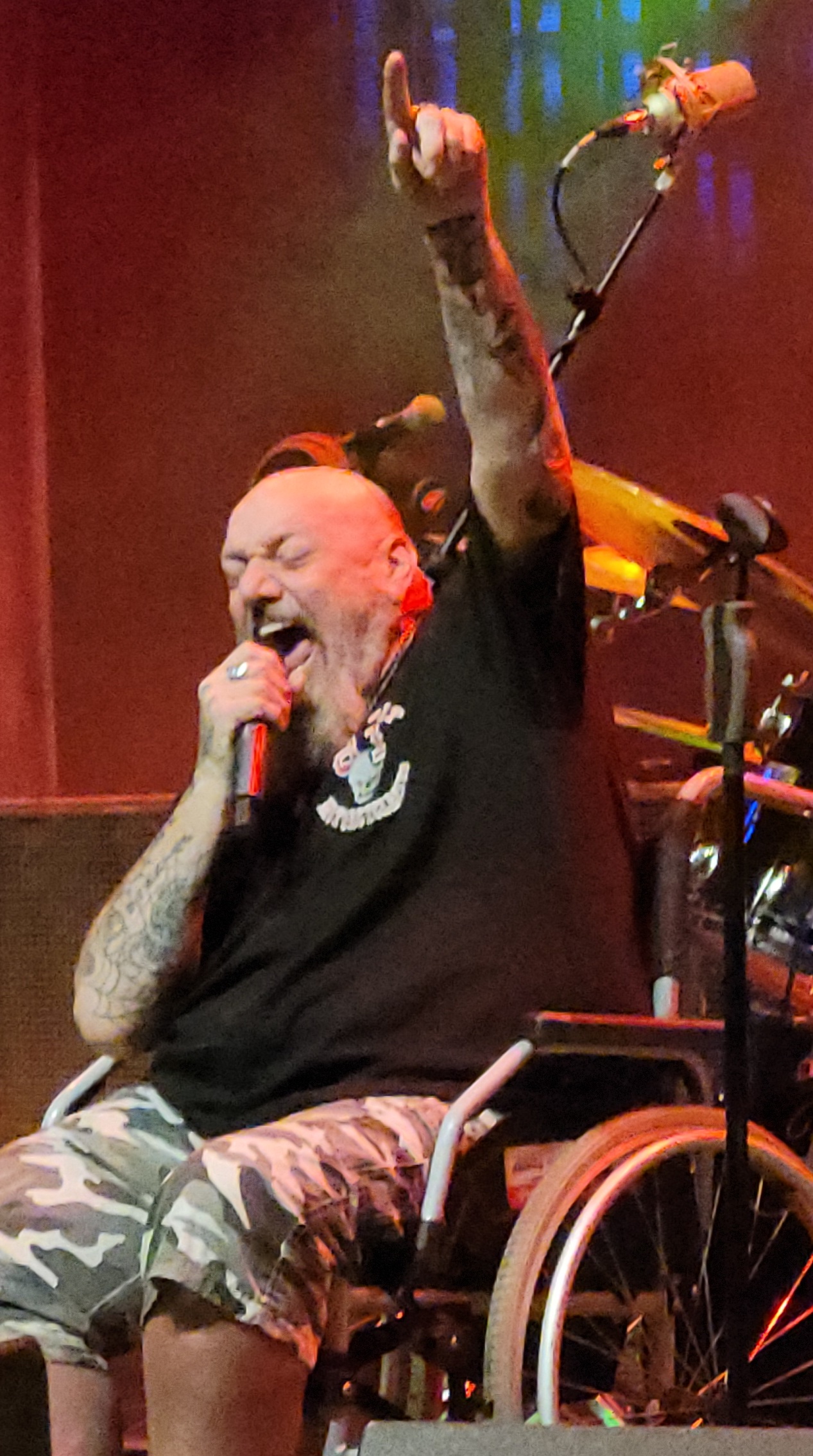
Di'Anno (1983–1985)
Di'Anno was the first project by Paul Di'Anno after he was fired from Iron Maiden. This group was originally called Lonewolf but after disagreement with a group already called Lone Wolf, they changed their name and ended up recording only one album under the simple moniker of Di'Anno. Musically the band shifted away from the NWOBHM sound of Iron Maiden to a more Americanized sound similar to bands like Journey and Foreigner. On the tour, Di'Anno played "Remember Tomorrow" from his catalogue of Iron Maiden songs, along with their own songs and a few other covers (most notably The Kinks' "You Really Got Me", and "Don't Let Me Be Misunderstood"). Having limited success, the six-piece band disbanded shortly after they were done touring. The only other recordings available from this band are a single of "Heartuser", a Japanese single of "Flaming Heart" and a Sweden-only VHS release called Live at the Palace (also available on DVD as Di'Anno Live from London). During the latter performance, the band played an unreleased song entitled "Spiritual Guidance", which Paul told the audience would be on the band's forthcoming album. This album was never recorded.
Last known line-up:
Paul Di'Anno – lead vocals

Lee Slater – guitars, vocals
P. J. Ward – guitars, vocals
Kevin Browne – bass, vocals
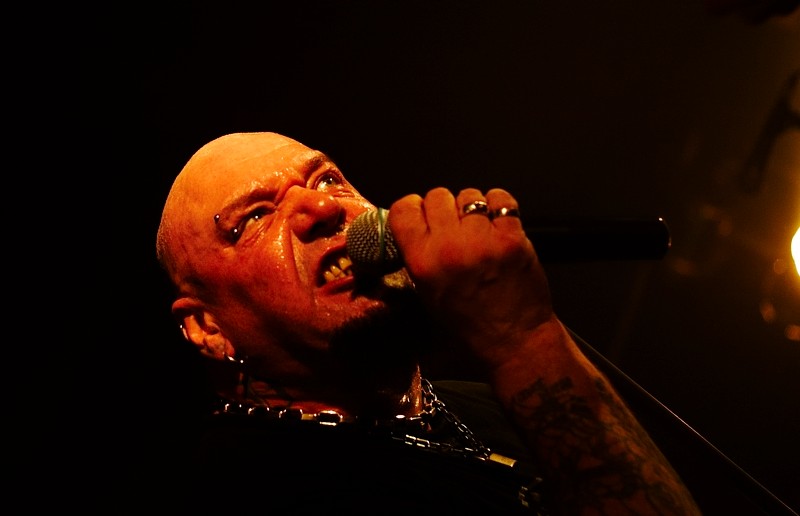
Mark Venables – keyboards, vocals
Frank Noon – drums (replacing Dave Irving from the album line-up who in turn replaced Mark Stewart)
Gogmagog (1985)
In 1985, Di'Anno joined a project that was intended to be a supergroup. The group, called "Gogmagog" (see the Biblical book Ezekiel 38:1–2), was put together by DJ and record producer Jonathan King, best known for discovering the group Genesis in the late 1960s. King assembled a star-studded line-up featuring Di'Anno, drummer Clive Burr, guitarists Janick Gers and Pete Willis and bassist Neil Murray, but the members became increasingly frustrated by a policy that forbade them from writing any original material. Gogmagog released a three-song E.P. on the independent Food For Thought label in 1985 entitled I Will Be There, with Russ Ballard writing the title song and producer King writing the other two songs. Although reviews were generally positive, the EP did not chart and the group disbanded after King began to lose interest in the project. Di'Anno has been completely dismissive of the short-lived project, referring to it as "nothing" and claiming he only got involved for the money.

Battlezone (1985–1989, 1998)
After the break-up of his self-titled band, Di'Anno formed Strike with DeeRal (guitar) who recruited drummer Bob Falck (who had used the name Sid Falck while playing drums in Overkill) and the Hurley brothers John (second guitar) and Chaz (bass). The project was eventually named Battlezone, after a name straight from a comic book, upon the vocalist's return to Britain in 1985. 1986 saw the enrolment of former Lonewolf and Tokyo Blade guitarist John Wiggins.
The band's initial line-up comprised Di'Anno, guitarists John Wiggins and John Hurley, bassist Laurence Kessler and Adam Parsons on drums. Di'Anno had previously known guitarists John Wiggins and John Hurley from bands such as Deep Machine and Iron Cross. Parsons had gone under the stage name A.D. Dynamite while in Aunt May. However, Parsons left shortly after to replace Vince Hoare in the London-based glam band Belladonna (formed by former Hell's Belles vocalist Paul Quigley, with Paul Lewis, Jeff Fox and Neil Criss) and Falck reappeared on the scene in time together with Danish bassist Pete West (Peter Vester) to record the band's first album Fighting Back, written entirely by John Hurley, except the title track which was credited to Bob Falck.
Battlezone performed a club tour of America in 1987 to promote the début Fighting Back, but musical differences, arguments and physical fights within the band led to the departure of John Hurley and Bob Falck after the first tour. According to Di'Anno's book The Beast, Hurley had become an "egomaniac" and the drummer Falck a "liability", so they were thrown out the band. Their places were taken by ex-Persian Risk members Graham Bath and Steve Hopgood respectively, following the tour's completion.

The second album to be released was entitled Children of Madness, and it featured a track entitled "Metal Tears", which is about a man who was unable to have a steady relationship and built a female robot, who he subsequently fell in love with. The original idea came from a book titled Clone. However, the track received criticism from the media for being very similar to a track (entitled "London") on Queensrÿche's Rage for Order album.
"Guitarist Graham Bath, who had been recruited to play second guitar, wasn't enthusiastic about touring, so he was fired from the band. Pete West, recommended a replacement Alf Batz, who joined just in time to go to New York for the video shoot." The video for "I Don't Wanna Know" was played in rotation on MTV in the US.
Drugs and infighting again put a strain on the band. Towards the end of the final tour, most members had quit leaving Di'Anno to complete the tour with a backing band in order to fulfil his contract.
Subsequently, American guitarist Randy Scott, along with Dave Harman on guitar and Eddie Davidson on bass, signed up with Battlezone. However, the band were without proper management and disbanded shortly after. Battlezone played their last concert on 10 December 1989, at Dynamo Open Air in Eindhoven, Netherlands .
Following the break-up of Battlezone, Di'Anno and Hopgood formed the power metal band Killers, releasing four albums. Hurley would later form glam rock band L.O. Girls and release the "Twelve Bore Honeymoon" single in 1990 and "Just Can't Say I Love You" in 1993. During 1990, Di'Anno fronted Praying Mantis for a tour of Japan, which was recorded for the subsequent Live at Last album release with ex-Iron Maiden guitarist Dennis Stratton. Wiggins joined a reformed Tokyo Blade in 1995.
By 1998, Di'Anno had resurrected the name Battlezone. Joining him were Wiggins and fellow ex-Tokyo Blade members bassist Colin Riggs and drummer Marc Angel. Second guitars were supplied by the Brazilian Paulo Turin. This line-up cut the album Feel My Pain, released by the fledgling "Zoom Club" label. Working titles for the album included "Spoon Face" and "Smack", both containing references to heroin use. The album had a heavier edge compared to the first two Battlezone albums. The band undertook a sold-out Brazilian tour in January 1998, with erstwhile Killers colleagues bassist Gavin Cooper and guitarist Nick Burr joining on this South American tour.
The band toured Brazil in the same year playing a three-week tour to sold-out audiences up to 6000 fans a night. Being brought back down to earth, Battlezone upon their return home put on a gig at the Walthamstow Royal Standard with an audience of only a hundred or so and a gig at JB's Dudley in the West Midlands attracting fewer than a dozen fans. A live track from the Walthamstow gig later appeared on a compilation of all three Battlezone albums, entitled Cessation of Hostilities. Ex-Battlezone bassist Gavin Cooper joined Lionsheart in December 2004, then moved onto Statetrooper in May 2005. The bassist subsequently joined the ranks of Magnum singer Bob Catley's solo band for UK dates in April 2006.
In mid-2008, a Battlezone compilation entitled The Fight Goes On was released as on the Phantom Sound & Vision label as a 3-CD box set featuring all three Battlezone studio albums.
Last known line-up:
Paul Di'Anno – Vocals
Johnny "Bravo" Wiggins – Guitars (1985–89, 1998–99)
Paulo Turin – Guitars (1998–99)
Colin Riggs – Bass (1998–99)
Marc Angel – Drums (1998–99)
Former/past member(s):
DeeRal – Guitars (1985)
John Hurley – Guitars (1985–87)
Graham Bath – Guitars (1987)
Alf Batz – Guitars (1987–89)
Randy Scott – Guitars (1989)
Dave Harman – Guitars (1989)
Nick Burr – Guitars (1998)
Chaz Hurley – Bass (1985–86)
Peter Vester – Bass (1986–88) listed as "Pete West" on the back covers of Fighting Back and Children of Madness)
Eddie Davidson – Bass (1989)
Gavin Cooper – Bass (1998)
Bob "Sid" Falck – Drums (1986–87)
J. Michael D.- Drums
Steve Hopgood – Drums (1987–89)
Praying Mantis (1990)
After being dropped by BMG, Praying Mantis disbanded. Then, in a Spinal Tap–ish twist of fate, Paul Di'Anno called Dennis Stratton in 1989, about the Japanese wanting to have a ten-year anniversary of the new wave of British heavy metal. The band found themselves enjoying a renaissance in Tokyo, prompting a reformation and tour in April 1990, which yielded the Live at Last LP.
Killers (1990–1997, 2001–2003)
Killers formed in the summer of 1991. Cliff Evans was living in New York with Arnie Goodman, the manager of Fastway. Steve Hopgood, who had played in Battlezone with Di'Anno, called Evans and outlined plans for a new group. Di'Anno and Hopgood flew to New York and formed a band.
Within a few days, Killers had hired John Gallagher (from Raven) to play bass on a short-term basis. Former member of Drive She Said and New York session player Ray Detone was brought in on second guitar.
Shortly afterward, a live album called Assault on South America was recorded, featuring a number of Iron Maiden and Battlezone tracks and covers of "We Will Rock You" and "Smoke on the Water". This was funded by Rock in Rio promoter Carlos Genesio, primarily for the South American market. "Recorded in Brazil, Argentina and Venezuela in Summer of 1993" is splashed on the back cover. However, according to John Gallagher, the South American tour fell through so the entire album was recorded on a mobile recording truck in New York. Later, a Canada-based record company called Magnetic Air Productions issued a pirate (bootleg) release worldwide, under a different cover, with no royalties being paid to the band.
Killers then played two days of showcases at Arnie Goodman's New York City studio for several major record companies including Virgin, EMI, Sony and BMG. Representatives attended from all over the world. The band played only Iron Maiden songs because they had not written any material. These included "Phantom of the Opera" and "Wrathchild". BMG gave the band a $250,000 contract.