
Opus Dei (Latin for 'Work of God') is a personal prelature of the Catholic Church founded in Spain on 2 October 1928 by Saint Josemaría Escrivá. The prelature states that it helps lay and clerical members pursue holiness through everyday occupations and social responsibilities. The Holy See granted final approval in 1950 under Pope Pius XII. In 1982 Pope John Paul II affirmed its status as a personal prelature through the apostolic constitution Ut sit. Catholic Church leaders have voiced firm support while the organization remains controversial.
Laypeople constitute most members of Opus Dei, and the rest are secular priests governed by a prelate elected by specific members and appointed by the Pope. Because Opus Dei is Latin for "Work of God", members and supporters often refer to the prelature as "the Work". Beyond personal charity and social services, the prelature organizes training in Catholic spirituality applied to daily life. Opus Dei members are located in more than 90 countries. About 70% of members live in their own homes and maintain secular careers while taking part in prelature activities, while the remaining are celibate, of whom the majority live in Opus Dei centers.
History
Foundational period
Opus Dei was founded by Josemaría Escrivá on 2 October 1928 in Madrid, Spain. According to Escrivá, on that day he experienced a vision in which he "saw Opus Dei". He gave the organization the name "Opus Dei", which in Latin means "Work of God", in order to underscore the belief that the organization was not his (Escrivá's) work, but was rather God's work. Throughout his life, Escrivá held that the founding of Opus Dei had a supernatural character. Escrivá summarized Opus Dei's mission as a way of helping ordinary Christians "to understand that their life ... is a way of holiness and evangelization ... And to those who grasp this ideal of holiness, the Work offers the spiritual assistance and training they need to put it into practice."

Initially, Opus Dei was open only to men, but in 1930, Escrivá started to admit women, based on what he believed to be a communication from God. Persecuted during the Spanish Civil War and narrowly escaping death several times, in 1939 Escrivá was able to return to Madrid after three years of hiding. In 1939, Escrivá published The Way, a collection of 999 maxims concerning spirituality for people involved in secular affairs.
Opus Dei rapidly grew during the years of the Francoist dictatorship, spreading first throughout Spain, and after 1945, expanding internationally. Escrivá had to overcome many obstacles. He later recounted that it was in Spain where Opus Dei found "the greatest difficulties" because of "enemies of personal freedom", and traditionalists who he felt misunderstood Opus Dei's ideas.
In 1947, a year after Escrivá moved the organization's headquarters to Rome, Opus Dei received a decree of praise and approval from Pope Pius XII, making it an institute of "pontifical right", i.e. under the direct governance of the Pope. In 1950, Pius XII granted definitive approval to Opus Dei, thereby allowing married people to join the organization, and secular clergy to be admitted to the Priestly Society of the Holy Cross. Several Opus Dei members such as Alberto Ullastres were ministers under the dictator Francisco Franco in Spain (see Opus Dei and politics).
Post-foundational years
Designation as personal prelature
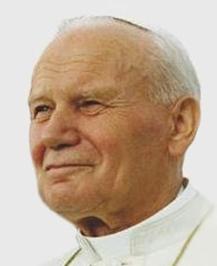
In 1975, Escrivá died and was succeeded by Álvaro del Portillo. In 1982, Opus Dei was made into a personal prelature. This means that Opus Dei is part of the Catholic Church, and the spirituality of the members falls under the direct jurisdiction of the prelate of Opus Dei wherever they are. As to "what the law lays down for all the ordinary faithful", the lay members of Opus Dei, being no different from other Catholics, "continue to be ... under the jurisdiction of the diocesan bishop", in the words of John Paul II's Apostolic Constitution, Ut Sit.
Canonization of Escrivá
One-third of the world's bishops sent letters petitioning for the canonization of Escrivá. Escrivá was beatified in 1992 in the midst of controversy prompted by questions about his suitability for sainthood. In 2002, approximately 300,000 people gathered in St. Peter's Square on the day Pope John Paul II canonized him. There are other members whose process of beatification has been opened: Ernesto Cofiño, a father of five children and a pioneer in pediatric research in Guatemala; Montserrat Grases, a teenage Catalan student who died of cancer; Toni Zweifel, a Swiss engineer; Tomás Alvira and wife, Paquita Domínguez, a Spanish married couple; Isidoro Zorzano Ledesma, an Argentinian engineer; Dora del Hoyo, a domestic worker; Fr. José María Hernández Garnica; and Father José Luis Múzquiz de Miguel, a Spanish priest who began Opus Dei in the United States.
Beatifications and controversies in 2000s-2010s
During the pontificate of John Paul II, two members of Opus Dei, Juan Luis Cipriani Thorne and Julián Herranz Casado, were made cardinals. In September 2005, Pope Benedict XVI blessed a newly installed statue of Josemaría Escrivá placed in an outside wall niche of St Peter's Basilica, a place for founders of Catholic organizations. During that same year, Opus Dei received attention due to the success of the novel The Da Vinci Code, in which both Opus Dei and the Catholic Church itself work against the protagonists. The film version was released globally in May 2006, further polarizing views on the organization.

In 2014, Pope Francis through a delegate beatified Álvaro del Portillo and said that "he teaches us that in the simplicity and ordinariness of our life we can find a sure path to holiness". At the end of 2014, the prelature has spread to 69 countries, while its members are present in 90 countries. Javier Echevarría Rodríguez, the second prelate of Opus Dei, died on 12 December 2016, and was succeeded by Fernando Ocáriz. He was elected the new prelate of Opus Dei on 23 January 2017, and on the same day was appointed by Pope Francis as such.
In 2019, Guadalupe Ortiz de Landázuri, one of the first women who joined Opus Dei, was beatified in Madrid, Spain. She is the first woman of the group to be beatified. Earlier in 2005, the first publicly-known sexual abuse case of Opus Dei in the US, against C. John McCloskey, was settled for $977,000. Opus Dei publicly acknowledged a sexual abuse case within the organisation for the first time in its history in July 2020, this one involving priest Manuel Cociña in Spain.
Pope Francis: "Safeguard the charism"
On 22 July 2022, Pope Francis issued the apostolic letter in the form of a motu proprio Ad charisma tuendum, which seeks to "safeguard the charism", or original foundational spirit; it is "intended to confirm the Prelature of Opus Dei in the authentically charismatic sphere of the Church, specifying its organization in keeping with the witness of the Founder." Among other things, the new disposition decrees that the head of the Opus Dei can no longer become a bishop, but "is granted, by reason of his office, the use of the title of Supernumerary Apostolic Protonotary with the title of Reverend Monsignor and therefore may use the insignia [including heraldic devices] corresponding to this title". It also transfers responsibility for the personal prelature Opus Dei from the Dicastery for Bishops to the Dicastery for the Clergy, conforming to the apostolic constitution Praedicate evangelium, and mandates revision of the statutes of the personal prelature to bring them into conformity with these reforms. This reform became effective on 4 August 2022, and Pope Francis explained that this action was carried out in consultation with canon lawyers of Opus Dei and had no negative connotation for he has very positive sentiments for Opus Dei. On 8 August 2023, Pope Francis issued a new motu proprio which stated that personal prelatures such as Opus Dei, are "similar to public clerical associations of pontifical law", such as the Community of Saint Martin and the Family of Mary, while not being identified with them.

Spirituality
Doctrine
Opus Dei places emphasis on certain aspects of Catholic doctrine. A central point of focus in Opus Dei's theology is the lives of the Catholic laypeople. Opus Dei emphasizes the "universal call to holiness": the belief that everyone should aspire to be a saint, as per Jesus' commandment to "Love God with all your heart" (Matthew 22:37) and "Be perfect as your heavenly Father is perfect." (Matthew 5:48) Opus Dei also teaches that sanctity is within the reach of everyone, given Jesus' teaching that his demands are "easy" and "light," as his divine assistance is assured.
Opus Dei does not have monks or nuns; only a minority of its members are priests. Opus Dei emphasizes uniting spiritual life with professional, social, and family life. Members of Opus Dei lead ordinary lives, with traditional families and secular careers, and strive to "sanctify ordinary life". Pope John Paul II called Escrivá "the saint of ordinary life". Similarly, Opus Dei stresses the importance of work and professional competence. Opus Dei exhorts its members and all lay Catholics to "find God in daily life" and to perform their work as a service to society and as an offering to God. Opus Dei teaches that work not only contributes to social progress but is a "path to holiness".
The biblical roots of this Catholic doctrine, according to the founder, are in the phrase "God created man to work" (Genesis 2:15) and Jesus' time as a carpenter in a small town. Escrivá also points to the gospel account that Jesus "has done everything well" (Mark 7:37). The foundation of the Christian life, as stressed by Escrivá, is divine filiation: Christians are children of God, identified with Christ's life and mission. Other main ideals of Opus Dei, according to its official literature, are freedom, respecting choice, taking personal responsibility, charity, and love of God above all and love of others.

At the bottom of Escrivá's understanding of the "universal call to holiness" are two dimensions, subjective and objective, according to Fernando Ocariz, a Catholic theologian and prelate of Opus Dei since 2017. The subjective is the call given to each person to become a saint, regardless of their place in society. The objective refers to what Escrivá calls Christian materialism: all of creation, even the most material situation, is a meeting place with God, and leads to union with him.
Prayers
All members – whether married or unmarried, priests or laypeople – are trained to follow a 'plan of life', or 'the norms of piety', which are traditional Catholic devotions. This is in order to follow the teaching of the Catholic Catechism: "pray at specific times...to nourish continual prayer".
Mortification
Public attention has focused on Opus Dei's practice of mortification of the flesh. Examples include fasting and remaining silent for certain hours during the day when this is compatible with family and professional duties. Opus Dei faithful also use the cilice and the discipline for mortification of the flesh.
Mortification has a long history in many world religions, including the Catholic Church. Popes have endorsed it as a way of 'following Christ', who died of crucifixion and who, speaking of anybody that sought to be his disciple, said: "let him deny himself, take up his cross daily and follow me" (Luke 9:23).
Organization and activities
Governance
In Pope John Paul II's 1982 decree known as the Apostolic constitution Ut Sit, Opus Dei was established as a personal prelature, an official structure of the Catholic Church, similar to a diocese in that it contains lay people and secular priests led by a bishop. However, whereas a bishop normally has a territory or diocese, the prelate of Opus Dei is pastor to the members and priests of Opus Dei worldwide, no matter what diocese they are in. Opus Dei is the only personal prelature in existence. In addition to being governed by Ut Sit and by the Catholic Church's general law, Opus Dei is governed by the church's Particular Law concerning Opus Dei, otherwise known as Opus Dei's statutes. This specifies the objectives and workings of the prelature. The prelature is under the Dicastery for the Clergy.
Opus Dei's highest assembled bodies are the General Congresses, which are convened once every eight years. There are separate congresses for the men's and women's branches of Opus Dei. The General Congresses are made up of members appointed by the prelate and are responsible for advising him about the prelature's future. The men's General Congress also elects the prelate from a list of candidates chosen by their female counterparts. After the death of a prelate, a special elective General Congress is convened. The women nominate their preferred candidates for the prelate and is voted upon by the men to become the next prelate—an appointment that must be confirmed by the Pope.
The head of the Opus Dei prelature is known as the prelate. The prelate is the primary governing authority and is assisted by two councils—the General Council (made up of men) and the Central Advisory (made up of women). The prelate holds his position for life. The current prelate of Opus Dei is Fernando Ocáriz Braña, who became the third prelate of Opus Dei on 23 January 2017. The first prelate of Opus Dei was Álvaro del Portillo, who held the position from 1982 until his death in 1994.
Membership
As of 2018, the faithful of the Opus Dei Prelature numbered 95,318 members, of which 93,203 are lay persons, men and women, and 2,115 priests. These figures do not include the priest members of Opus Dei's Priestly Society of the Holy Cross, estimated to number 2,000 in the year 2005. About 60 percent of Opus Dei faithful reside in Europe, and 35 percent reside in the Americas. Women comprise 57% of the total membership. According to Vittorio Messori in 1997, for the most part, Opus Dei faithful belong to the middle to low levels in society in terms of education, income, and social status. Peter L. Berger and Samuel Huntington described Opus Dei in 2002 as "militantly conservative in its theology and morality but very positive in its attitude to modern global capitalism", influential in Latin America and the Philippines.
Opus Dei is made up of several different types of faithful. According to the Statutes of Opus Dei, the distinction derives from the degree to which they make themselves available for the official activities of the Prelature and for giving formation according to the spirit of Opus Dei.
Supernumeraries
Supernumeraries, the largest type, currently account for about 70% of the total membership. Typically, supernumeraries are married men and women with careers. Supernumeraries devote a portion of their day to prayer, in addition to attending regular meetings and taking part in activities such as retreats. Due to their career and family obligations, supernumeraries are not as available to the organization as the other types of faithful, but typically contribute financially and lend other types of assistance as their circumstances permit.
Numeraries
Numeraries, the second largest type of the faithful of Opus Dei, comprise about 20% of the total membership. "Numerary" is a general term for persons who form part of the permanent staff of an organization. In Opus Dei, numeraries are celibate members who give themselves in "full availability" (plena disponibilitas) for the official undertakings of the Prelature. A study comparing Scientology and Opus Dei found some similarities as well as strong differences. This includes full availability for giving doctrinal and ascetical formation to other members, for staffing the internal government of Opus Dei if asked by the regional directors, and for moving to other countries to start or help with apostolic activities if asked by the prelate. Numeraries are expected to live in gender-specific centers run by Opus Dei, and the question of which particular center a numerary will live in depends upon the regional needs. It is considered very important for numeraries to participate in daily meals and "get-togethers" in which the sharing of news and conversation takes place. Numeraries generally have jobs outside of Opus Dei, although some are asked to work internally full-time, and thus change their professional goals in order to be available for the Prelature. The majority of numerary income is contributed to the organization.
Numerary assistants
Numerary assistants are a type of numerary that exists in the Women's Branch of Opus Dei. They are responsible for the "domestic tasks in the Centres of Opus Dei, which they willingly undertake as their professional work."
Associates are celibate faithful who take on one or more apostolic assignment(s) from the Prelature in giving doctrinal and ascetical formation and/or coordinating activities. They differ from numeraries in not making themselves "fully" available to staff the official undertakings of the Prelature, instead giving themselves in additional social realities, such as through their profession or to their own families. Because of this difference in availability for the official activities of Opus Dei, unlike numeraries the associates do not live in Opus Dei centers but maintain their own abodes. The Clergy of the Opus Dei Prelature are priests who are under the jurisdiction of the prelate of Opus Dei. They are a minority in Opus Dei that makes up about 2% of Opus Dei members.
Priests
The Priestly Society of the Holy Cross consists of priests associated with Opus Dei. Part of the society is made up of the clergy of the Opus Dei prelature—priests who fall under the jurisdiction of the Opus Dei prelature are automatically members of the Priestly Society. Other members in the society are diocesan priests—clergymen who remain under the jurisdiction of a geographically defined diocese. These priests are considered full members of Opus Dei who are given its spiritual training. They do not, however, report to the Opus Dei prelate but to their own diocesan bishop. As of 2005, there were roughly two thousand of these priests.
Cooperators
The Cooperators of Opus Dei are non-members who collaborate in some way with Opus Dei—usually through praying, charitable contributions, or by providing some other assistance. Cooperators are not required to be celibate or to adhere to any other special requirements, and are not even required to be Christian. There were 164,000 cooperators in the year 2005. In accordance with Catholic theology, membership is granted when a vocation or divine calling is presumed to have occurred.
Activities
Leaders of Opus Dei describe the organization as a teaching entity whose main activity is to train Catholics to assume personal responsibility in sanctifying the secular world from within. This teaching is done by means of theory and practice.
Its lay people and priests organize seminars, workshops, retreats, and classes to help people put the Christian faith into practice in their daily lives. Spiritual direction, one-on-one coaching with a more experienced lay person or priest, is considered the "paramount means" of training. Through these activities, they provide religious instruction (doctrinal formation), coaching in spirituality for lay people (spiritual formation), character and moral education (human formation), lessons in sanctifying one's work (professional formation), and know-how in evangelizing one's family, workplace, society and public life (apostolic formation).
The official Catholic document, which established the prelature, states that Opus Dei strives "to put into practice the teaching of the universal call to sanctity, and to promote at all levels of society the sanctification of ordinary work, and by means of ordinary work." Thus, the founder and his followers describe members of Opus Dei as resembling the members of the early Christian Church—ordinary workers who seriously sought holiness with nothing exterior to distinguish them from other citizens.
Opus Dei runs residential centers throughout the world. These centers provide residential housing for celibate members and provide doctrinal and theological education.
Corporate works
Opus Dei is responsible for a variety of non-profit institutions called corporate works of Opus Dei. The total assets of non-profits connected to Opus Dei are worth at least $2.8 billion.
A study of the year 2005 showed that members have cooperated with other people in setting up a total of 608 social initiatives: schools and university residences (68%), technical or agricultural training centers (26%), universities, business schools, and hospitals (6%). The University of Navarra in Pamplona, Spain, and the Austral University in Buenos Aires, Argentina, are both examples of the corporate work of Opus Dei. These universities usually perform very high in international rankings. IESE, the University of Navarra's Business School, was adjudged one of the best in the world by the Financial Times and the Economist Intelligence Unit.
Other universities affiliated with Opus Dei include the Pontifical University of the Holy Cross and Università Campus Bio-Medico di Roma in Rome, Strathmore University in Kenya, University of Montevideo in Uruguay, Universidad Monteávila in Venezuela, Panamerican University in Mexico, University of Piura in Peru, and Villanueva University in Spain.
Schools associated with Opus Dei include:
Aspaen Gimnasio Iragua in Colombia