Italian (italiano, pronounced [itaˈljaːno] , or lingua italiana, pronounced [ˈliŋɡwa itaˈljaːna]) is a Romance language of the Indo-European language family. It is a standardised form of literary Florentine Tuscan and, together with Sardinian, is the least differentiated language from Latin. Current estimates indicate that between 68 and 85 million people speak Italian, including approximately 64 million native speakers as of 2024.
Italian is an official language in Italy, San Marino, Switzerland (Ticino and part of the Grisons), and Vatican City, and it has official minority status in Croatia, Slovenia (Istria), Romania, Bosnia and Herzegovina, and in 6 municipalities of Brazil. It is also spoken in other European and non-EU countries, most notably in Malta (by 66% of the population), Albania (upwards of 70%), and Monaco, as well as by large immigrant and expatriate communities in the Americas, Australia, and on other continents.
Italian is a major language in Europe, being one of the official languages of the Organization for Security and Co-operation in Europe and one of the working languages of the Council of Europe. It is the third-most-widely spoken native language in the European Union (13% of the EU population) and it is spoken as a second language by 13 million EU citizens (3%). Italian is the main working language of the Holy See, serving as the lingua franca in the Roman Catholic hierarchy and the official language of the Sovereign Military Order of Malta. Italian influence led to the development of derivated languages and dialects worldwide. It is also widespread in various sectors and markets, with its loanwords used in arts, luxury goods, fashion, sports and cuisine; it has a significant use in musical terminology and opera, with numerous Italian words referring to music that have become international terms taken into various languages worldwide, including in English.
Italian is considered a conservative Romance language in phonology, lexicon, and morphology. Almost all native Italian words end with vowels, and the language has a 7-vowel sound system ("e" and "o" have mid-low and mid-high sounds). Italian has contrast between short and long consonants and gemination (doubling) of consonants.
History
Origins
The Italian language has developed through a long and slow process, which began after the Western 's fall and the onset of the in the 5th century.
Reading level
Audio Summary
Played with your browser's voice. Studio-quality audio can be added with a text-to-speech service.
Ask about this article
📝 Quick Quiz1 / 4
What is "Italian language" primarily known for?
Vocix Daily — In Your Inbox
Top stories, deep-dive articles, and "On This Day" history — one crisp digest delivered every morning.
Sources & references
Reference material for this entry is drawn from the open encyclopedic record, including Wikipedia , available under the CC BY-SA 4.0 license. Images are credited individually beside each photo.
Latin, the predominant language of the western Roman Empire, remained the established written language in Europe during the Middle Ages, although most people were illiterate. Over centuries, the Vulgar Latin popularly spoken in various areas of Europe—including the Italian peninsula—evolved into local varieties, or dialects, unaffected by formal standards and teachings. These varieties are not in any sense "dialects" of standard Italian, which itself started off as one of these local tongues, but sister languages of Italian. The Latin-speaking class referred to the collective Romance vernaculars of Europe as Romanz, Romance, or, in Italy, Romanzo or Volgare.
The linguistic and historical demarcations between late Vulgar Latin and early Romance varieties in Italy are imprecise. The earliest surviving texts that can definitely be called vernacular (as distinct from its predecessor Vulgar Latin) are legal formulae known as the Placiti Cassinesi from the province of Benevento that date from 960 to 963, although the Veronese Riddle, probably from the 8th or early 9th century, contains a late form of Vulgar Latin that can be seen as a very early sample of a vernacular dialect of Italy. The Commodilla catacomb inscription likewise probably dates to the early 9th century and appears to reflect a language somewhere between late Vulgar Latin and early vernacular.
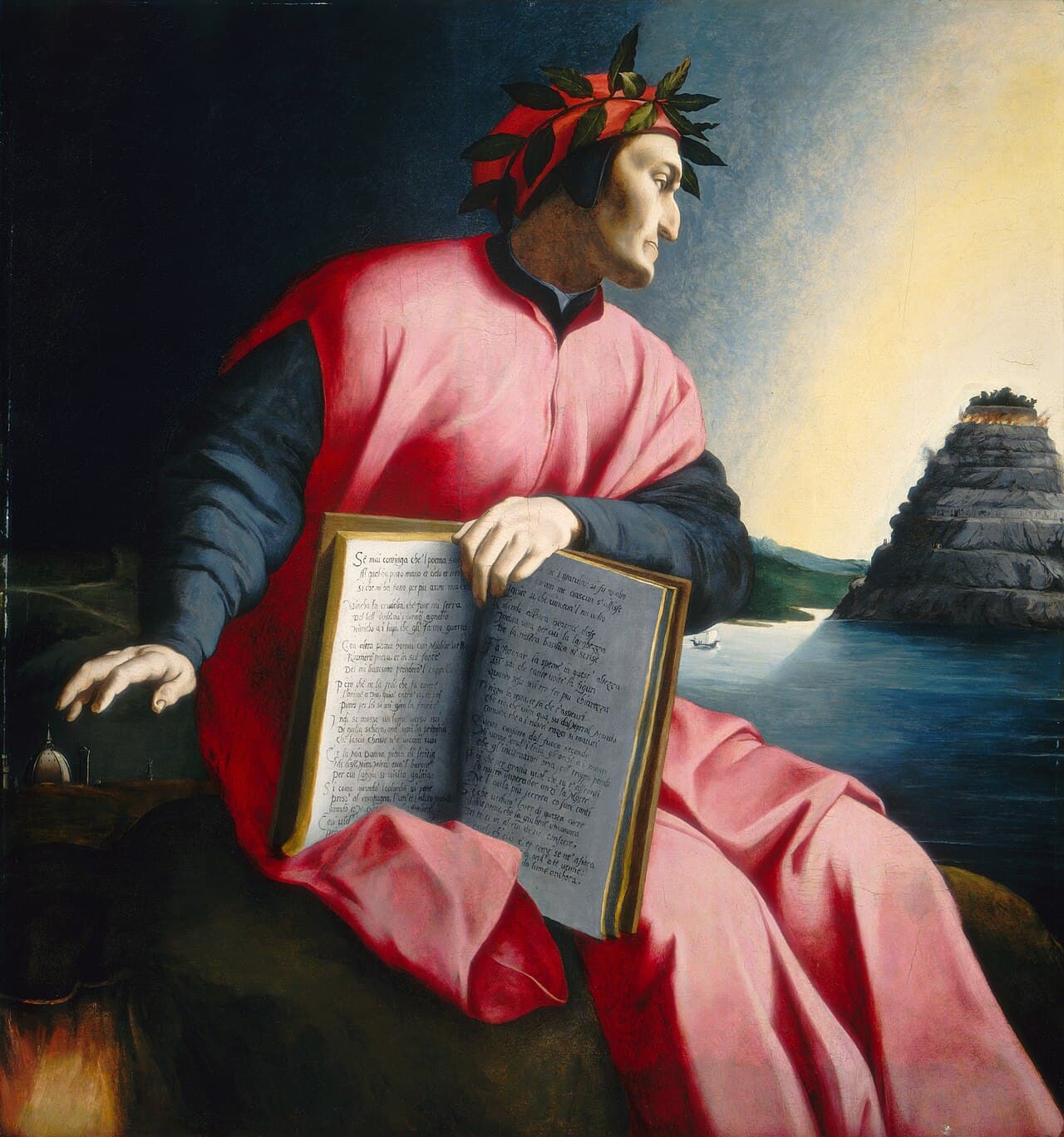
The language that came to be thought of as Italian developed in central Tuscany and was first formalized in the early 14th century through the works of Tuscan writer Dante Alighieri, written in his native Florentine. Dante's epic poems, known collectively as the Commedia, to which another Tuscan poet Giovanni Boccaccio later affixed the title Divina, were read throughout the Italian peninsula. His written vernacular became the touchstone for elaborating a "canonical standard" that all educated Italians could understand. The poetry of Petrarch was also widely admired and influential in the development of the literary language, and would be identified as a model for vernacular writing by Pietro Bembo in the 16th century.
In addition to the widespread exposure gained through literature, Florentine also gained prestige due to the political and cultural significance of Florence at the time and the fact that it was linguistically a middle way between the northern and the southern Italian dialects.
Italian was progressively made an official language of most of the Italian states predating unification, slowly replacing Latin, even when ruled by foreign powers (such as Spain in the Kingdom of Naples, or Austria in the Kingdom of Lombardy–Venetia), although the masses kept speaking primarily their local vernaculars. Italian was also one of the many recognised languages in the Austro-Hungarian Empire.
Italy has always had a distinctive vernacular for each city because the cities, until recently, were thought of as city-states. Those local languages have considerable variety, and as Tuscan-derived Italian came to be used throughout Italy, features of local speech were naturally adopted, producing various versions of Regional Italian. The most characteristic differences, for instance, between Roman Italian and Milanese Italian are syntactic gemination of initial consonants in some contexts and the pronunciation of stressed "e", and of "s" between vowels in many words: e.g. va bene 'all right' is pronounced [vabˈbɛːne] by a Roman (and by any standard Italian speaker), [vaˈbeːne] by a Milanese (and by any speaker whose native dialect lies to the north of the La Spezia–Rimini Line); a casa 'at home' is [akˈkaːsa] for Roman, [akˈkaːsa] or [akˈkaːza] for standard, [aˈkaːza] for Milanese and generally northern.
In contrast to the Gallo-Italic linguistic panorama of northern Italy, the Italo-Dalmatian, Neapolitan and its related dialects were largely unaffected by the Franco-Occitan influences introduced to Italy mainly by bards from France during the Middle Ages, but after the Norman conquest of southern Italy, Sicily became the first Italian land to adopt Occitan lyric moods (and words) in poetry. Even in the case of northern Italian languages, however, scholars are careful not to overstate the effects of outsiders on the natural indigenous developments of the languages.
The economic might and relatively advanced development of Tuscany at the time (Late Middle Ages) gave its language weight, although Venetian remained widespread in medieval Italian commercial life, and Ligurian (or Genoese) remained in use in maritime trade alongside the Mediterranean. The increasing political and cultural relevance of Florence during the periods of the rise of the Medici Bank, humanism, and the Renaissance made its dialect, or rather a refined version of it, a standard in the arts.
Renaissance
The Renaissance era, known as il Rinascimento in Italian, was seen as a time of rebirth, which is the literal meaning of both renaissance (from French) and rinascimento (Italian). Among its many manifestations, the Renaissance saw a reinvigorated interest in both classical antiquity and vernacular literature.
Advancements in technology played a crucial role in the diffusion of the Italian language. The printing press was invented in the 15th century, and spread rapidly. By the year 1500, there were 56 printing presses in Italy, more than anywhere else in Europe. The printing press enabled the production of literature and documents in higher volumes and at lower cost, further accelerating the spread of Italian.
Italian became the language used in the courts of every state in the Italian peninsula, and the prestige variety used on the island of Corsica (but not in the neighbouring Sardinia, which on the contrary underwent Italianization well into the late 18th century, under Savoyard sway: the island's linguistic composition, roofed by the prestige of Spanish among the Sardinians, would therein make for a rather slow process of assimilation to the Italian cultural sphere). The rediscovery of Dante's De vulgari eloquentia, and a renewed interest in linguistics in the 16th century, sparked a debate that raged throughout Italy concerning the criteria that should govern the establishment of a modern Italian literary and spoken language. This discussion, known as questione della lingua (i.e., the problem of the language), ran through the Italian culture until the end of the 19th century, often linked to the political debate on achieving a united Italian state. Renaissance scholars divided into three main factions:
The purists, headed by Venetian Pietro Bembo (who, in his Gli Asolani, claimed the language might be based only on the great literary classics, such as Petrarch and some part of Boccaccio). The purists thought the Divine Comedy was not dignified enough because it used elements from non-lyric registers of the language.
Niccolò Machiavelli and other Florentines preferred the version spoken by ordinary people in their own times.
The courtiers, such as Baldassare Castiglione and Gian Giorgio Trissino, insisted that each local vernacular contribute to the new standard.
A fourth faction claimed that the best Italian was the one that the papal court adopted, which was a mixture of the Tuscan and Roman dialects. Eventually, Bembo's ideas prevailed, and the foundation of the Accademia della Crusca in Florence (1582–1583), the official legislative body of the Italian language, led to the publication of Agnolo Monosini's Latin tome Floris italicae linguae libri novem in 1604 followed by the first Italian dictionary in 1612.
Modern era
An important event that helped the diffusion of Italian was the conquest and occupation of Italy by Napoleon (himself of Italian-Corsican descent) in the early 19th century. This conquest propelled the unification of Italy some decades after and pushed the Italian language into the status of a lingua franca, used not only among clerks, nobility, and functionaries in the Italian courts, but also by the bourgeoisie.
Today Italy has reached linguistic unity and an overwhelming majority of its 56 million citizens speak Italian. Many dialects are still alive, especially by the older generations. Today, Italian is one of the most studied foreign languages in the world.
Contemporary times
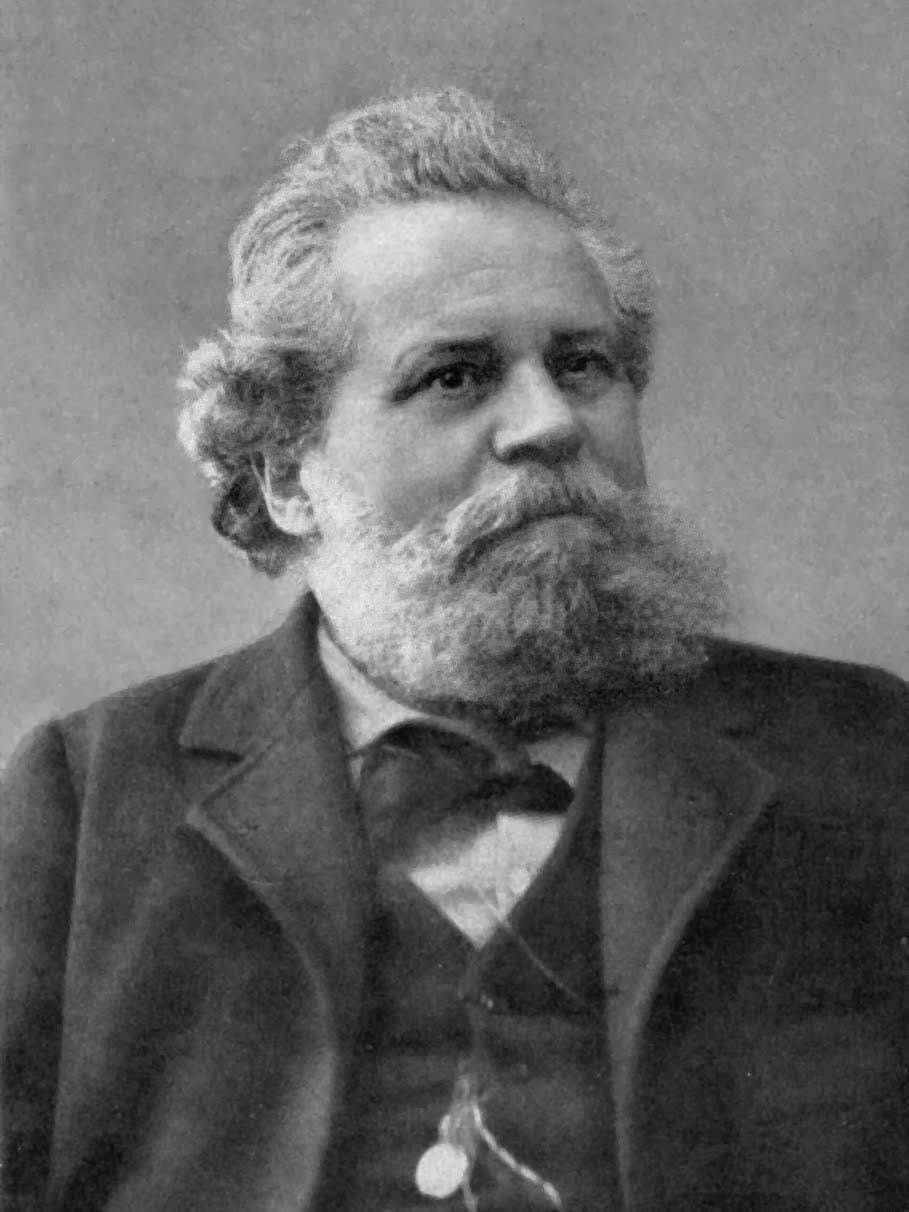
The publication of Italian literature's first modern novel, I promessi sposi (The Betrothed) by Alessandro Manzoni, both reflected and furthered the growing trend towards Italian as a national standard language. Manzoni, a Milanesian, chose to write the book in the Florentine dialect, describing this choice, in the preface to his 1840 edition, as "rinsing" his Milanese "in the waters of the Arno" (Florence's river). The novel is commonly described as "the most widely read work in the Italian language". It became a model for subsequent Italian literary fiction, helping to galvanize national linguistic unity around the Florentine dialect.
This growth was initially relative; linguistic diversity continued during the unification of Italy (1848–1871). The Italian linguist Tullio De Mauro estimated that only 2.5% of Italy's population could speak the Italian standardized language properly in 1861, while Arrigo Castellani estimated the same value as 10%.
Classification
Italian is a Romance language, a descendant of Vulgar Latin (colloquial spoken Latin). Standard Italian is based on Tuscan, especially its Florentine dialect, and is, therefore, an Italo-Dalmatian language, a classification that includes most other central and southern Italian languages and the extinct Dalmatian. As in most Romance languages, stress is distinctive in Italian.
According to Ethnologue, lexical similarity is 89% with French, 87% with Catalan, 85% with Sardinian, 82% with Spanish, 82% with Portuguese, 78% with Ladin, 77% with Romanian. Estimates may differ according to sources.
A 1949 study by the linguist Mario Pei concluded that out of seven Romance languages, Italian's stressed vowel phonology was the second-closest to that of Classical Latin (after Logudorese Sardinian). The study emphasized, however, that it represented only "a very elementary, incomplete and tentative demonstration" of how statistical methods could measure linguistic change, assigned "frankly arbitrary" point values to various types of change, and did not compare languages in the sample with respect to any characteristics or forms of divergence other than stressed vowels, among other caveats.
Geographic distribution
Italian is the official language of Italy and San Marino and is spoken fluently by the majority of the countries' populations. Italian is the third most spoken language in Switzerland (after German and French; see Swiss Italian). It is official both on the national level and on regional level in two cantons: Ticino and Grisons. Ticino, which includes Lugano, the largest Italian-speaking city outside Italy, is the only canton where Italian is predominant. Italian is also used in administration and official documents in Vatican City.
Italian is also spoken by a minority in Monaco and France, especially in the southeastern part of the country. Italian was the official language in Savoy and in Nice until 1860, when they were both annexed by France under the Treaty of Turin, a development that triggered the "Niçard exodus", or the emigration of a quarter of the Niçard Italians to Italy, and the Niçard Vespers. Giuseppe Garibaldi complained about the referendum that allowed France to annex Savoy and Nice, and a group of his followers (among the Italian Savoyards) took refuge in Italy in the following years. Corsica passed from the Republic of Genoa to France in 1769 after the Treaty of Versailles. Italian was the official language of Corsica until 1859. Giuseppe Garibaldi called for the inclusion of the "Corsican Italians" within Italy when Rome was annexed to the Kingdom of Italy, but King Victor Emmanuel II did not agree to it. Italian is generally understood in Corsica by the population resident therein who speak Corsican, which is an Italo-Romance language similar to Tuscan. Francization occurred in Nice case, and caused a near-disappearance of the Italian language as many of the Italian speakers in these areas migrated to Italy. In Corsica, on the other hand, almost everyone still speaks the Corsican language, which, due to its linguistic proximity to the Italian standard language, appears both linguistically as an Italian dialect and therefore as a carrier of Italian culture, despite the French government's decades-long efforts to cut Corsica off from the Italian motherland. Italian was the official language in Monaco until 1860, when it was replaced by the French. This was due to the annexation of the surrounding County of Nice to France following the Treaty of Turin (1860).
It formerly had official status in Montenegro (because of the Venetian Albania), parts of Slovenia and Croatia (because of the Venetian Istria and Venetian Dalmatia), parts of Greece (because of the Venetian rule in the Ionian Islands and by the Kingdom of Italy in the Dodecanese). Italian is widely spoken in Malta, where nearly two-thirds of the population can speak it fluently (see Maltese Italian). Italian served as Malta's official language until 1934, when it was abolished by the British colonial administration amid strong local opposition. Italian language in Slovenia is an officially recognised minority language in the country. The official census, carried out in 2002, reported 2,258 ethnic Italians (Istrian Italians) in Slovenia (0.11% of the total population). Italian language in Croatia is an official minority language in the country, with many schools and public announcements published in both languages. The 2001 census in Croatia reported 19,636 ethnic Italians (Istrian Italians and Dalmatian Italians) in the country (some 0.42% of the total population). Their numbers dropped dramatically after World War II following the Istrian–Dalmatian exodus, which caused the emigration of between 230,000 and 350,000 Istrian Italians and Dalmatian Italians. Italian was the official language of the Republic of Ragusa from 1492 to 1807.
It formerly had official status in Albania due to the annexation of the country to the Kingdom of Italy (1939–1943). Albania has a large population of non-native speakers, with over half of the population having some knowledge of the Italian language. The Albanian government has pushed to make Italian a compulsory second language in schools. The Italian language is well-known and studied in Albania, due to its historical ties and geographical proximity to Italy and to the diffusion of Italian television in the country.
Due to heavy Italian influence during the Italian colonial period, Italian is still understood by some in former colonies such as Libya. Although it was the primary language in Libya since colonial rule, Italian greatly declined under the rule of Muammar Gaddafi, who expelled the Italian Libyan population and made Arabic the sole official language of the country. A few hundred Italian settlers returned to Libya in the 2000s.
Italian was the official language of Eritrea during Italian colonisation. Italian is today used in commerce, and it is still spoken especially among elders; besides that, Italian words are incorporated as loan words in the main language spoken in the country (Tigrinya). The capital city of Eritrea, Asmara, still has several Italian schools, established during the colonial period. In the early 19th century, Eritrea was the country with the highest number of Italians abroad, and the Italian Eritreans grew from 4,000 during World War I to nearly 100,000 at the beginning of World War II. In Asmara there are two Italian schools, the Istituto Italiano Statale Omnicomprensivo di Asmara (Italian primary school with a Montessori department) and the Liceo Sperimentale "G. Marconi" (Italian international senior high school).
Italian was also introduced to Somalia through colonialism and was the sole official language of administration and education during the colonial period but fell out of use after government, educational and economic infrastructure were destroyed in the Somali Civil War.
Italian is also spoken by large immigrant and expatriate communities in the Americas and Australia. Although over 17 million Americans are of Italian descent, only a little over one million people in the United States speak Italian at home. Nevertheless, an Italian language media market does exist in the country. In Canada, Italian is the second most spoken non-official language when varieties of Chinese are not grouped together, with 375,645 claiming Italian as their mother tongue in 2016.
Italian immigrants to South America have also brought a presence of the language to that continent. According to some sources, Italian is the second most spoken language in Argentina after the official language of Spanish, although its number of speakers, mainly of the older generation, is decreasing. Italian bilingual speakers can be found scattered across the southeast of Brazil and in the south. In Venezuela, Italian is the most spoken language after Spanish and Portuguese, with around 200,000 speakers. In Uruguay, people who speak Italian as their home language are 1.1% of the total population of the country. In Australia, Italian is the second most spoken foreign language after Chinese, with 1.4% of the population speaking it as their home language.
The main Italian-language newspapers published outside Italy are the L'Osservatore Romano (Vatican City), the L'Informazione di San Marino (San Marino), the Corriere del Ticino and the laRegione Ticino (Switzerland), the La Voce del Popolo (Croatia), the Corriere d'Italia (Germany), the L'italoeuropeo (United Kingdom), the Passaparola (Luxembourg), the America Oggi (United States), the Corriere Canadese and the Corriere Italiano (Canada), the Il punto d'incontro (Mexico), the L'Italia del Popolo (Argentina), the Fanfulla (Brazil), the Gente d'Italia (Uruguay), the La Voce d'Italia (Venezuela), the Il Globo (Australia) and the La gazzetta del Sud Africa (South Africa).
Education
Italian is widely taught in many schools around the world. In the 21st century, technology also allows for the continual spread of the Italian language, as people have new ways to learn how to speak, read, and write languages at their own pace and at any given time. For example, the free website and application Duolingo has 4.94 million English speakers learning the Italian language.
According to the Italian Ministry of Foreign Affairs, every year there are more than 200,000 foreign students who study the Italian language; they are distributed among the 90 Institutes of Italian Culture that are located around the world, in the 179 Italian schools located abroad, or in the 111 Italian lecturer sections belonging to foreign schools where Italian is taught as a language of culture.
As of 2022, Australia had the highest number of students learning Italian in the world. This occurred because of support by the Italian community in Australia and the Italian Government and also because of successful educational reform efforts led by local governments in Australia.
Influence and derived languages
From the late 19th to the mid-20th century, millions of Italians settled in Argentina, Uruguay, southern Brazil, and Venezuela, and in Canada and the United States, where they formed a physical and cultural presence.
In some cases, colonies were established where variants of regional languages of Italy were used, and some continue to use this regional language. Examples are Rio Grande do Sul, Brazil, where Talian is used, and the town of Chipilo near Puebla, Mexico; each continues to use a derived form of Venetian dating back to the 19th century. Other examples are Cocoliche, an Italian–Spanish pidgin once spoken in Argentina and especially in Buenos Aires, and Lunfardo. The Rioplatense Spanish dialect of Argentina and Uruguay today has thus been heavily influenced by both standard Italian and Italian regional languages as a result.
Lingua franca
Starting in late medieval times in much of Europe and the Mediterranean, Latin was replaced as the primary commercial language by languages of Italy, especially Tuscan and Venetian. These varieties were consolidated during the Renaissance with the strength of Italy and the rise of humanism and the arts.
Italy came to enjoy increasing artistic prestige within Europe. A mark of the educated gentlemen was to make the Grand Tour, visiting Italy to see its great historical monuments and works of art. It was expected that the visitor would learn at least some Italian, understood as language based on Florentine. In England, while the classical languages Latin and Greek were the first to be learned, Italian became the second most common modern language after French, a position it held until the late 18th century when it tended to be replaced by German. John Milton, for instance, wrote some of his early poetry in Italian.
Within the Catholic Church, Italian is known by a large part of the ecclesiastical hierarchy and is used in substitution for Latin in some official documents.
Italian loanwords continue to be used in most languages in matters of art and music (especially classical music including opera), in the design and fashion industries, in some sports such as football and especially in culinary terms.
Languages and dialects
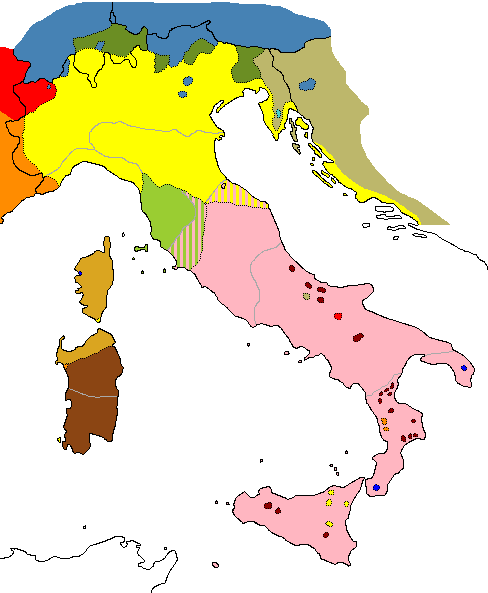
In Italy, almost all the other languages spoken as the vernacular—other than standard Italian and some languages spoken among immigrant communities—are often called "Italian dialects", a label that can be very misleading if it is understood to mean "dialects of Italian". The Romance dialects of Italy are local evolutions of spoken Latin that pre-date the establishment of Italian, and as such are sister languages to the Tuscan that was the historical source of Italian. They can be quite different from Italian and from each other, with some belonging to different linguistic branches of Romance. The only exceptions to this are twelve groups considered "historical language minorities", which are officially recognised as distinct minority languages by the law. On the other hand, Corsican (a language spoken on the French island of Corsica) is closely related to medieval Tuscan, from which standard Italian derives and evolved.
The differences in the evolution of Latin in the different regions of Italy can be attributed to the natural changes that all languages in regular use are subject to, and to some extent to the presence of three other types of languages: substrata, superstrata, and adstrata. The most prevalent were substrata (the language of the original inhabitants), as the Italian dialects were most probably simply Latin as spoken by native cultural groups. Superstrata and adstrata were both less important. Foreign conquerors of Italy that dominated different regions at different times left behind little to no influence on the dialects. Foreign cultures with which Italy engaged in peaceful relations with, such as trade, had no significant influence either.
Throughout Italy, regional varieties of standard Italian, called Regional Italian, are spoken. Regional differences can be recognised by various factors: the openness of vowels, the length of the consonants, and influence of the local language (for example, in informal situations andà, annà and nare replace the standard Italian andare in the area of Tuscany, Rome and Venice respectively for the infinitive 'to go').