
A normal school or normal college trains teachers in the norms of pedagogy and curriculum. Other names include teacher training colleges or teachers' colleges. In Argentina and Mexico, they continue to be called normal schools with student-teachers in the latter country being known as normalistas, where schools require a high school diploma for entry, and may be part of a comprehensive university. Normal schools in the United States, Canada, and Argentina trained primary teachers, while in Europe equivalent colleges trained teachers for primary and secondary schools.
In 1685, Jean-Baptiste de La Salle established the Institute of the Brothers of the Christian Schools, and founded what is generally considered the first normal school, the École normale, in Reims, Champagne, France. The term "normal" in this context refers to the goal of these institutions to instil and reinforce particular norms within students. "Norms" included historical behavioral norms of the time, as well as norms that reinforced targeted societal values, ideologies and dominant narratives in the form of curriculum.
The first public normal school in the United States was founded in Concord, Vermont, by Samuel Read Hall in 1823 to train teachers. In 1839, the first state-supported normal school utilized the former Lexington Academy building, having been established by the Commonwealth of Massachusetts; it evolved into Framingham State University. The first modern teacher training school in China was established by educator Sheng Xuanhuai in 1895 as the normal school of the Nanyang Public School (now Shanghai Jiao Tong University) in Shanghai during the Qing dynasty.

Several comprehensive public or state-supported universities—such as UCLA in the United States and Beijing Normal University in China—began as normal schools and later expanded their faculties and programs to become research universities.
Etymology
The term normal school originated in the early 17th century from the French école normale. The French concept of an école normale was to provide a model school with model classrooms to teach model teaching practices to its student teachers, and thereby to set the norm for the profession of teaching.
Europe
Educating teachers was of great importance in the newly industrialized European economies which needed a reliable, reproducible and uniform work force. The process of instilling such norms within students depended upon the creation of the first uniform, formalized national educational curriculum. Thus, normal schools, as the teacher training schools, were tasked with both developing this new curriculum and developing the techniques through which teachers would instill these ideas, behaviors and values in the minds of their students.

Germany
In Germany, schools of education only exist in the state of Baden-Württemberg. These schools prepare teachers for Grundschule (primary school) and secondary schools like Hauptschule and Realschule. Teachers for the Gymnasium are educated at universities. In the past there were Teachers' seminars, Studienseminar, and normal schools (de:Normalschule:Normalschule).
Finland
In Finland, normal schools are under national university administration, whereas most schools are administered by the local municipality. Aspirant teachers do most of their compulsory trainee period in normal schools and teach while being supervised by a senior teacher.
France
In France, a two-tier system developed after the Revolution: primary school teachers were educated at départemental écoles normales and high school teachers and university professors at the écoles normales supérieures. Nowadays all teachers are educated in an Institut national supérieur du professorat et de l'éducation (Graduate School of Teaching and Education).

Italy
In Italy, normal schools are now termed Liceo delle Scienze Umane. The Scuola Normale Superiore di Pisa now focuses mainly on training researchers.
Lithuania
In Lithuania, Lithuanian University of Educational Sciences (LEU), former Vilnius Pedagogical University (VPU) is the main teachers' training institution, established in 1935.
Serbia
In Serbia, the first public normal school was founded in Sombor, Vojvodina, by Avram Mrazović in 1778 to train teachers.

In 2018, the Faculty of Education in Sombor celebrated 240 years since the founding of the first school for the education of Serbian teachers called Norma. It was a teacher training college at the beginning called Norma college before it was closed in 1811, and another school was opened in its place in 1812 in Szentendre under the Declaratory Rescript of the Illyrian Nation. The new institution was named Regium Pedagogium Nationis Illiricae or Royal Pedagogium Of The Illyrian-Serbian Nation (also referred to in Latin as Preparandium or Preparadija in Serbian) which eventually was relocated back to Sombor in 1816. The Normal school – Teachers College is generally considered the first normal school or École normale in Sombor. The term "normal" in this case refers to "the goal of the institution to instill and reinforce particular norms within students". Also, these "norms included historical behavioral norms of the time, as well as norms that reinforced targeted societal values, ideologies and dominant narratives in the form of curriculum". For the longest time, this was the only academy for teachers' training in Serbian. The first woman academician of the Serbian Academy of Sciences and Arts Isidora Sekulić, the poet Jovan Dučić, the composers Petar Konjović and Josif Marinković are just some of the alumni of Norma.
Spain
In Spain, the first public normal school was the Escuela Normal de Madrid, founded in Madrid in 1839. It was gradually integrated into the Complutense University of Madrid's Faculty of Education between 1991 and 1995. Later normal schools were founded in Zamora (1841), Segovia (1857), Salamanca and Valladolid.
United Kingdom
In the United Kingdom, teacher training colleges were once named as such, and were independent institutions.
Following the recommendation of the 1963 Robbins Report into higher education, teacher training colleges were renamed "Colleges of Education". Later in the 20th century some became a "College of Higher Education" or an "Institute of Higher Education". For information about academic divisions devoted to this field outside of the United States and Canada, see Postgraduate Training in Education (disambiguation).
The long-term restructuring of higher education in the UK, beginning in the 1990s, has resulted in establishments either taking the status of "university" or merging. The University of Chester, founded by the Anglican church, traces its roots back to 1839 as the earliest teacher training college in the United Kingdom. Others were also established by religious institutions, and most were single-sex until World War II. Since then, they have either become multi-discipline universities in their own right (e.g. Bishop Grosseteste University; University of Chester; Edge Hill University; St Mary's University, Twickenham; Newman University, Birmingham; Plymouth Marjon University; University of Winchester; University of Worcester; York St John University) or merged with another university to become its faculty of education (e.g. Moray House).
In Wales there were at least three institutions which included the word "Normal" in their name: Normal School, Brecon, subsequently relocated to become Normal College Swansea (where the academic and mathematician John Viriamu Jones was educated); and Normal College, Bangor (founded 1858), which survived until 1996, when it became part of University of Wales Bangor. The latter was one of the last institutions in the UK to retain the word "Normal" in its name.

Asia
China
In Mainland China, the "normal school" terminology is still preserved in the official English names of former normal schools established in the late 19th and early 20th century. The Chinese term normal university (Chinese: 师范大学; pinyin: shīfàn dàxué, abbreviated 师大; shīdà) refers to a modern comprehensive university established as a normal school in the early twentieth century. These "normal universities" are usually controlled by the national or provincial government.
In 1895, Qing banking tycoon and educator Sheng Xuanhuai gained approval from the Guangxu Emperor to establish the Nanyang Public School in Shanghai, China. This comprehensive institution included the first normal school on the Chinese mainland.
In 1923, the Supreme Education School of Peking (Chinese: 京师优级师范学堂) was renamed as National Beijing Normal University (Chinese: 国立北京师范大学校), the first Normal University in China.
Since 1949, many former normal schools in China developed into comprehensive research universities. As of 2025, Beijing Normal University and East China Normal University, both members of the national government's Project 985 program, were ranked the top two among the mainland Chinese universities that originated as normal schools.
India
Sarah Tucker, with her brother John Tucker, opened the oldest women's normal school in Tamil Nadu in 1843. While the original site closed after a few years, a new site was opened in 1857 in Palayamkottai. Sarah Tucker College is now a constituent college of Manonmaniam Sundaranar University.
Indonesia
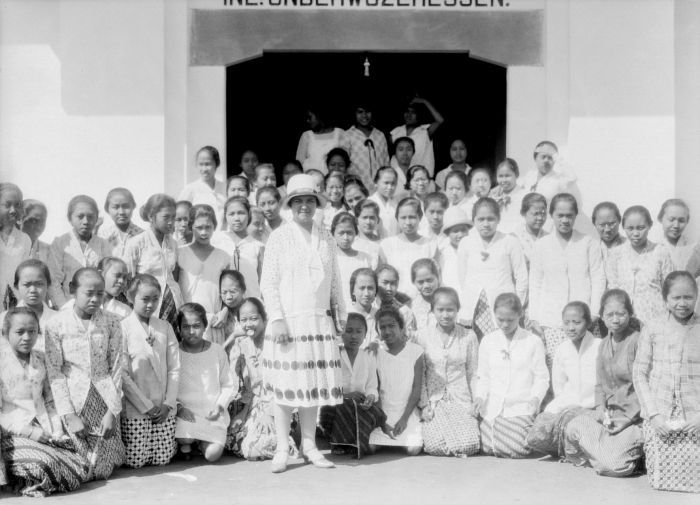
In Indonesia there were specialised higher institutions to educate teachers in the norms of pedagogy and curriculum. The Indonesian government created a crash program around 1950 as B-I/B-II/PGSLP course. In 1954, the government opened the Teacher Education Higher Education Institutions (Perguruan Tinggi Pendidikan Guru, PTPG) in Batusangkar, Manado, Bandung, and Malang by Education and Culture Ministerial Decision No. 382/Kab Year 1954. Both courses were integrated to Teaching and Pedagogy Faculty at nearby university. Government Decision No. 51 Year 1958 integrate Pedagogy Faculty into Teaching and Pedagogy Faculty. In year 1962, Ministry of Basic Education established Teacher Education Institute (Institut Pendidikan Guru, IPG) for middle school teacher. In year 1963, B-I and B-II courses and IPG were merged into Teaching and Pedagogy Faculty under Ministry of Higher Education. In year 1963–1964, Teaching and Pedagogy Faculties were established as separate higher education institutions which were known as Teaching and Education Institutes (Institut Keguruan dan Ilmu Pendidikan, IKIP). Presidential Decision No. 93 Year 1999 allowed IKIP to develop non-educational sciences and marked the end of specialised teacher education higher institutions in general.
Japan
In Japan, the first normal school (師範学校) was established at Yushima Seido, Tokyo in 1872. Eventually, prefectural normal schools for primary teachers were established in all prefectures. Japanese-style normal schools were also established in the colonies of Taiwan, Korea, and Manchukuo under Japanese rule.
In 1886, the Normal School Order (師範学校令) was promulgated and the Higher Normal School (高等師範学校) was established in Tokyo to train secondary teachers.
In 1929, Tokyo Arts and Sciences University (Tsukuba University) and Hiroshima Arts and Sciences University (Hiroshima University) were established for Normal School graduates.
During the postwar educational reform, normal schools were reorganized into universities' education faculties, arts and sciences faculty, or universities of education.
Malaysia
In Malaysia the Ministry of Education runs a total of 27 Institutes of Teacher Education (ITEs), which were formerly known as Teacher Training Colleges. These ITEs function primarily to educated both undergraduate and postgraduate teacher trainees. The ministry bureau responsible for overseeing them is the Teacher Education Division. The ITEs also run in-service teacher training and continuous professional development among qualified teachers.
Philippines
In Naga City, one can find the oldest normal school for girls in the Far East, the Universidad de Santa Isabel. It is a sectarian school run by the Daughters of Charity. The first secular normal school was founded in 1901 by the Thomasites, the Philippine Normal School. It was converted into a college in 1949 and was elevated to its present university status in 1992 as the Philippine Normal University. In 2009, it was designated as the country's National Center for Teacher Education by virtue of Republic Act 9647. In Iloilo City, the West Visayas State University was originally established as a normal school in 1902; in 1994, it was recognized by the government of the Philippines as a Center for Teaching Excellence.
In March 2026, the Department of Education and the Department of Budget and Management signed a Joint Memorandum Circular for the establishment of Teacher Education Excellence Centers in the Philippines which includes the Philippine Normal University, University of the Philippines Los Baños, University of San Carlos, Mindanao State University–Iligan Institute of Technology, Caraga State University, and Cotabato State University. The program is aligned with Republic Act No. 11713 or the Excellence in Teacher Education Act.
Taiwan
In Taiwan, three universities served as national normal universities historically. Located in Taipei (National Taiwan Normal University), Changhua (National Changhua University of Education), and Kaohsiung (National Kaohsiung Normal University), the schools primarily cultivates secondary school teachers and also trains teachers for preschool, elementary school, special education and other fields. These schools' missions have expanded since to make them de facto comprehensive research or liberal arts universities.
NCUE did not adopt the term "normal university" because its predecessor was named Taiwan Provincial College of Education, and it was unrelated to the subsequent trend of renaming education universities.
Ten Taiwanese normal schools (Chinese: 師範學院; pinyin: shīfàn xuéyuàn, abbreviated 師院; shīyuàn, "normal colleges") were established under Japanese rule and at the end of World War 2, serving for primary school teacher's education. These were promoted as teachers' colleges and later granted university status in 2000s. It is distinguished under the name "Education University" from the "Normal University". Some of these were merged with comprehensive university, such as National Hualien University of Education, which were merged with National Dong Hwa University in 2007. Some of them were merged with professional university, such as Taipei Physical Education College was merged with Taipei Municipal University of Education to form the University of Taipei in 2013.
Oceania
New Zealand
In New Zealand, the term normal school can refer to a primary or intermediate school used for teacher training, such as the Epsom Normal Primary School (in Auckland), Kelburn Normal School, Palmerston North Intermediate Normal School, Papakura Normal School, Central Normal School in Palmerston North, and Tahuna Normal Intermediate School and George Street Normal School in Dunedin. They were associated with a teachers' training college, such as the Auckland College of Education and the Dunedin College of Education, which became colleges of education that trained secondary as well as primary and intermediate school teachers.
North and South America
Canada
Alberta
The Calgary Normal School was founded shortly after Alberta became a province in 1905. In 1945 all normal schools in Alberta were merged into the University of Alberta's Faculty of Education. The former Normal School became part of the new University of Calgary in 1966. Another Normal school was founded at Camrose (also called Rosehaven Normal school) in 1912. Edmonton Normal School was opened in 1920 in Edmonton, Alberta.
British Columbia
In 1901, the first Provincial Normal School in British Columbia was opened in Vancouver. Classes commenced on 9 January 1901. In January 1909, the Provincial Normal school moved into a new facility and its own building located at 11th and Cambie (now part of City Square Mall). In 1915 a second Provincial Normal School opened in Victoria. Trainee teachers from greater Vancouver and the lower Mainland attended the Normal School in Vancouver. Students from Vancouver Island and students outside the Lower Mainland, that is, from the Upper Fraser Valley and communities in the interior of the province – enrolled in the Normal School in Victoria. That school was originally located in Victoria High School and later in its own building which is now part of Camosun College. In 1956 the responsibility for provincial teacher training was transferred to The University of British Columbia.