The Neolithic (from Greek νέος néos 'new' and λίθος líthos 'stone'), or New Stone Age, is an archaeological period, the final division of the Stone Age in Asia, Europe and Africa (c. 10,000 BC to c. 2,000 BC). It saw the Neolithic Revolution, a wide-ranging set of developments that appear to have arisen independently in several parts of the world. This "Neolithic package" included the introduction of farming, domestication of animals, and change from a hunter-gatherer lifestyle to one of settlement. The term 'Neolithic' was coined by John Lubbock in 1865 as a refinement of the three-age system.
The Neolithic began about 12,000 years ago, when farming appeared in the Epipalaeolithic West Asia and Mesopotamia, and later in other parts of the world. It lasted in West Asia]] until the transitional period of the Chalcolithic (Copper Age) from about 6,500 years ago (4500 BC), marked by the development of metallurgy, leading up to the Bronze Age and Iron Age.
In other places, the Neolithic followed the Mesolithic (Middle Stone Age) and then lasted until later. In Ancient Egypt, the Neolithic lasted until the Protodynastic period, c. 3150 BC. In China, it lasted until circa 2000 BC with the rise of the pre-Shang Erlitou culture, as it did in Scandinavia.
Following the ASPRO chronology, the Neolithic started in around 10,200 BC in the Levant, arising from the Natufian culture, when pioneering use of wild cereals evolved into early farming. The Natufian period or "proto-Neolithic" lasted from 12,500 to 9,500 BC, and is taken to overlap with the Pre-Pottery Neolithic A (PPNA) of 10,200–8800 BC. As the Natufians had become dependent on wild cereals in their diet, and a sedentary way of life had begun among them, the climatic changes associated with the Younger Dryas (about 10,000 BC) are thought to have forced people to develop farming.
Reading level
Audio Summary
Played with your browser's voice. Studio-quality audio can be added with a text-to-speech service.
Ask about this article
📝 Quick Quiz1 / 4
What is "Neolithic" primarily known for?
Vocix Daily — In Your Inbox
Top stories, deep-dive articles, and "On This Day" history — one crisp digest delivered every morning.
Sources & references
Reference material for this entry is drawn from the open encyclopedic record, including Wikipedia , available under the CC BY-SA 4.0 license. Images are credited individually beside each photo.
The founder crops of the Fertile Crescent were wheat, lentil, pea, chickpea, bitter vetch, and flax. Among the other major crops to be domesticated were rice and millet. Crops were usually domesticated in a single location and ancestral wild species are still found.
Early Neolithic age farming was limited to a narrow range of plants, both wild and domesticated, which included einkorn wheat, millet and spelt, and the keeping of dogs. By about 8000 BC, it included domesticated sheep and goats, cattle and pigs.
Not all of these cultural elements characteristic of the Neolithic appeared everywhere in the same order: the earliest farming societies in the West Asia did not use pottery. In other parts of the world, such as Africa, South Asia and Southeast Asia, independent domestication events led to their own regionally distinctive Neolithic cultures, which arose completely independently of those in Europe and Southwest Asia. Early Japanese societies and other East Asian cultures used pottery before developing agriculture.
Periods by region
Near East (Western Asia)
In the Middle East, cultures identified as Neolithic began appearing in the 10th millennium BC. Early development occurred in the Levant (e.g. Pre-Pottery Neolithic A and Pre-Pottery Neolithic B) and from there spread eastwards and westwards. Neolithic cultures are also attested in southeastern Anatolia, northern Mesopotamia, and the Sinai Peninsula by around 8000 BC, reflecting the southward expansion of Pre-Pottery Neolithic traditions across the Levantine corridor.
Anatolian Neolithic farmers derived a significant portion of their ancestry from the Anatolian hunter-gatherers (AHG), suggesting that agriculture was adopted in site by these hunter-gatherers and not spread by demic diffusion into the region.
The Neolithic 1 (PPNA) period began around 10,000 BC in the Levant. A temple area in southeastern Turkey at Göbekli Tepe, dated to around 9500 BC, may be regarded as the beginning of the period. This site was developed by nomadic hunter-gatherer tribes, as shown by the absence of permanent housing nearby, and may be the oldest known human-made place of worship. At least seven stone circles, covering 25 acres (10 ha), contain limestone pillars carved with animals, insects, and birds. Stone tools were used by perhaps as many as hundreds of people to create the pillars, which might have supported roofs. Other early PPNA sites dating to around 9500–9000 BC have been found in Palestine, notably in Tell es-Sultan (ancient Jericho) and Gilgal in the Jordan Valley; Israel (notably Ain Mallaha, Nahal Oren, and Kfar HaHoresh); in Byblos, Lebanon; and in Sinai, including sites such as Abu Madi.
The major advance of Neolithic 1 was true farming. In the proto-Neolithic Natufian cultures, wild cereals were harvested, and perhaps early seed selection and re-seeding occurred. The grain was ground into flour. Emmer wheat was domesticated, and animals were herded and domesticated (animal husbandry and selective breeding).
In 2006, remains of figs were discovered in a house in Jericho dated to 9400 BC. The figs are of a mutant variety that cannot be pollinated by insects, and therefore the trees can only reproduce from cuttings. This evidence suggests that figs were the first cultivated crop and mark the invention of the technology of farming. This occurred centuries before the first cultivation of grains.
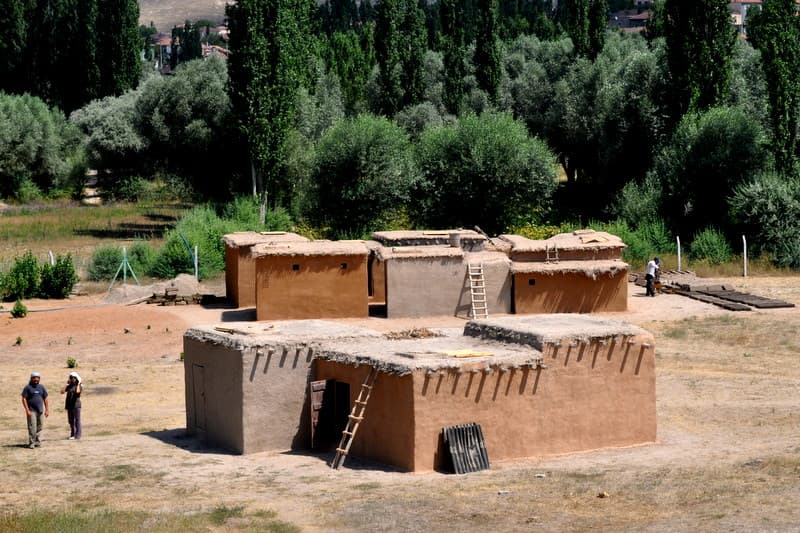
Settlements became more permanent, with circular houses, much like those of the Natufians, with single rooms. However, these houses were for the first time made of mudbrick. The settlement had a surrounding stone wall and perhaps a stone tower (as in Jericho). The wall served as protection from nearby groups, as protection from floods, or to keep animals penned. Some of the enclosures also suggest grain and meat storage.
Pre-Pottery Neolithic B
The Neolithic 2 (PPNB) began around 8800 BC according to the ASPRO chronology in the Levant (Jericho, West Bank). As with the PPNA dates, there are two versions from the same laboratories noted above. This system of terminology, however, is not convenient for southeast Anatolia and settlements of the middle Anatolia basin. Studies of the Pre-Pottery Neolithic B cultural complex indicate that its long-lived and widely distributed tradition extended across the Levant from the Taurus Mountains in the north to the Sinai in the south, reflecting its broad geographic scope during this phase. A settlement of 3,000 inhabitants called 'Ain Ghazal was found in the outskirts of Amman, Jordan. Considered to be one of the largest prehistoric settlements in the Near East, it was continuously inhabited from approximately 7250 BC to approximately 5000 BC.
Settlements have rectangular mud-brick houses where the family lived together in single or multiple rooms. Burial findings suggest an ancestor cult where people preserved skulls of the dead, which were plastered with mud to make facial features. The rest of the corpse could have been left outside the settlement to decay until only the bones were left, then the bones were buried inside the settlement underneath the floor or between houses.
Work at the site of 'Ain Ghazal in Jordan has indicated a later Pre-Pottery Neolithic C period. Juris Zarins has proposed that a Circum Arabian Nomadic Pastoral Complex developed in the period from the climatic crisis of 6200 BC, partly as a result of an increasing emphasis in PPNB cultures upon domesticated animals, and a fusion with Harifian hunter gatherers in the Southern Levant, with affiliate connections with the cultures of Fayyum and the Eastern Desert of Egypt. Cultures practicing this lifestyle spread down the Red Sea shoreline and moved east from Syria into southern Iraq.
Late Neolithic
The Late Neolithic began around 6,400 BC in the Fertile Crescent. By then distinctive cultures emerged, with pottery like the Halafian (Turkey, Syria, Northern Mesopotamia) and Ubaid (Southern Mesopotamia). This period has been further divided into PNA (Pottery Neolithic A) and PNB (Pottery Neolithic B) at some sites. In the southern Negev and Sinai deserts, the Late Neolithic is characterised by the pastoralist Timnian culture, which persisted into the Bronze Age.
The Chalcolithic (Stone-Bronze) period began about 4500 BC, then the Bronze Age began about 3500 BC, replacing the Neolithic cultures.
Around 10,000 BC the first fully developed Neolithic cultures belonging to the phase Pre-Pottery Neolithic A (PPNA) appeared in the Fertile Crescent. Around 10,700–9400 BC a settlement was established in Tell Qaramel, 10 miles (16 km) north of Aleppo. The settlement included two temples dating to 9650 BC. Around 9000 BC during the PPNA, one of the world's first towns, Jericho, appeared in the Levant. It was surrounded by a stone wall, may have contained a population of up to 2,000–3,000 people, and contained a massive stone tower. Around 6400 BC the Halaf culture appeared in Syria and Northern Mesopotamia.
In 1981, a team of researchers from the Maison de l'Orient et de la Méditerranée, including Jacques Cauvin and Oliver Aurenche, divided Near East Neolithic chronology into ten periods (0 to 9) based on social, economic and cultural characteristics. In 2002, Danielle Stordeur and Frédéric Abbès advanced this system with a division into five periods.
Natufian between 12,000 and 10,200 BC,
Khiamian between 10,200 and 8800 BC, PPNA: Sultanian (Jericho), Mureybetian,
Early PPNB (PPNB ancien) between 8800 and 7600 BC, middle PPNB (PPNB moyen) between 7600 and 6900 BC,
Late PPNB (PPNB récent) between 7500 and 7000 BC,
A PPNB (sometimes called PPNC) transitional stage (PPNB final) in which Halaf and dark faced burnished ware begin to emerge between 6900 and 6400 BC.
They also advanced the idea of a transitional stage between the PPNA and PPNB between 8800 and 8600 BC at sites like Jerf el Ahmar and Tell Aswad.
Southern Mesopotamia
Alluvial plains (Sumer/Elam). Low rainfall makes irrigation systems necessary. Ubaid culture originated from 6200 BC.
Northeastern Africa
The earliest evidence of Neolithic culture in northeast Africa was found in the archaeological sites of Bir Kiseiba and Nabta Playa in what is now southwest Egypt. Domestication of sheep and goats reached Egypt from the Near East possibly as early as 6000 BC. Graeme Barker states "The first indisputable evidence for domestic plants and animals in the Nile valley is not until the early fifth millennium BC in northern Egypt and a thousand years later further south, in both cases as part of strategies that still relied heavily on fishing, hunting, and the gathering of wild plants" and suggests that these subsistence changes were not due to farmers migrating from the Near East but was an indigenous development, with cereals either indigenous or obtained through exchange. Other scholars argue that the primary stimulus for agriculture and domesticated animals (as well as mud-brick architecture and other Neolithic cultural features) in Egypt was from the Middle East.
Northwestern Africa
The neolithization of Northwestern Africa was initiated by Iberian, Levantine (and perhaps Sicilian) migrants around 5500–5300 BC. During the Early Neolithic period, farming was introduced by Europeans and was subsequently adopted by the locals. During the Middle Neolithic period, an influx of ancestry from the Levant appeared in Northwestern Africa, coinciding with the arrival of pastoralism in the region. The earliest evidence for pottery, domestic cereals and animal husbandry is found in Morocco, specifically at Kaf el-Ghar.
Sub-Saharan Africa
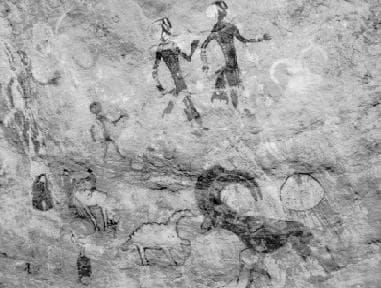
The Pastoral Neolithic was a period in Africa's prehistory marking the beginning of food production on the continent following the Later Stone Age. In contrast to the Neolithic in other parts of the world, which saw the development of farming societies, the first form of African food production was mobile pastoralism, or ways of life centered on the herding and management of livestock. The term "Pastoral Neolithic" is used most often by archaeologists to describe early pastoralist periods in the Sahara, as well as in eastern Africa.
The Savanna Pastoral Neolithic or SPN (formerly known as the Stone Bowl Culture) is a collection of ancient societies that appeared in the Rift Valley of East Africa and surrounding areas during a time period known as the Pastoral Neolithic. They were South Cushitic speaking pastoralists, who tended to bury their dead in cairns whilst their toolkit was characterized by stone bowls, pestles, grindstones and earthenware pots. Through archaeology, historical linguistics and archaeogenetics, they conventionally have been identified with the area's first Afroasiatic-speaking settlers. Archaeological dating of livestock bones and burial cairns has also established the cultural complex as the earliest center of pastoralism and stone construction in the region.
Europe
In southeast Europe agrarian societies first appeared in the 7th millennium BC, attested by one of the earliest farming sites of Europe, discovered in Vashtëmi, southeastern Albania and dating back to 6500 BC. Most of Western Europe followed over the next two thousand years, but in some parts of Northwest Europe the neolithic era began much later and lasted just under 3,000 years from c. 4500 BC–1700 BC. Recent advances in archaeogenetics have confirmed that the spread of agriculture from the Middle East to Europe was strongly correlated with the migration of early farmers from Anatolia about 9,000 years ago, and was not just a cultural exchange.
Anthropomorphic figurines have been found in the Balkans from 6000 BC, and in Central Europe by around 5800 BC (La Hoguette). Among the earliest cultural complexes of this area are the Sesklo culture in Thessaly, which later expanded in the Balkans giving rise to Starčevo-Körös (Cris), Linearbandkeramik, and Vinča. Through a combination of cultural diffusion and migration of peoples, the Neolithic traditions spread west and northwards to reach northwestern Europe by around 4500 BC. The Vinča culture may have created the earliest system of writing, the Vinča signs, though archaeologist Shan Winn believes they most likely represented pictograms and ideograms rather than a truly developed form of writing.
The Cucuteni-Trypillian culture built enormous settlements in Romania, Moldova and Ukraine from 5300 to 2300 BC. The megalithic temple complexes of Ġgantija on the Mediterranean island of Gozo (in the Maltese archipelago) and of Mnajdra (Malta) are notable for their gigantic Neolithic structures, the oldest of which date back to around 3600 BC. The Hypogeum of Ħal-Saflieni, Paola, Malta, is a subterranean structure excavated around 2500 BC; originally a sanctuary, it became a necropolis, the only prehistoric underground temple in the world, and shows a degree of artistry in stone sculpture unique in prehistory to the Maltese islands. After 2500 BC, these islands were depopulated for several decades until the arrival of a new influx of Bronze Age immigrants, a culture that cremated its dead and introduced smaller megalithic structures called dolmens to Malta. In most cases there are small chambers here, with the cover made of a large slab placed on upright stones. They are claimed to belong to a population different from that which built the previous megalithic temples. It is presumed the population arrived from Sicily because of the similarity of Maltese dolmens to some small constructions found there.
With some exceptions, population levels rose rapidly at the beginning of the Neolithic until they reached the carrying capacity. This was followed by a population crash of "enormous magnitude" after 5000 BC, with levels remaining low during the next 1,500 years. Populations began to rise after 3500 BC, with further dips and rises occurring between 3000 and 2500 BC but varying in date between regions. Around this time is the Neolithic decline, when populations collapsed across most of Europe, possibly caused by climatic conditions, plague, or mass migration.
South and East Asia
Settled life, encompassing the transition from foraging to farming and pastoralism, began in South Asia in the region of Balochistan, Pakistan, around 7,000 BC. At the site of Mehrgarh, Balochistan, presence can be documented of the domestication of wheat and barley, rapidly followed by that of goats, sheep, and cattle. In April 2006, it was announced in the scientific journal Nature that the oldest (and first Early Neolithic) evidence for the drilling of teeth in vivo (using bow drills and flint tips) was found in Mehrgarh.
In South India, the Neolithic began by 3000 BC and lasted until around 1400 BC when the Megalithic transition period began. South Indian Neolithic is characterized by Ash mounds (created from ritual burning of wood, dung and animal matter) from 2500 BC in Karnataka region, expanded later to Tamil Nadu.
In East Asia, the earliest sites include the Nanzhuangtou culture around 9500–9000 BC, Pengtoushan culture around 7500–6100 BC, and Peiligang culture around 7000–5000 BC. The prehistoric Beifudi site near Yixian in Hebei Province, China, contains relics of a culture contemporaneous with the Cishan and Xinglongwa cultures of about 6000–5000 BC, Neolithic cultures east of the Taihang Mountains, filling in an archaeological gap between the two Northern Chinese cultures. The total excavated area is more than 1,200 square yards (1,000 m2; 0.10 ha), and the collection of Neolithic findings at the site encompasses two phases. Between 3000 and 1900 BC, the Longshan culture existed in the middle and lower Yellow River valley areas of northern China. Towards the end of the 3rd millennium BC, the population decreased sharply in most of the region and many of the larger centres were abandoned, possibly due to environmental change linked to the end of the Holocene Climatic Optimum.
The 'Neolithic' (defined in this paragraph as using polished stone implements) remains a living tradition in small and extremely remote and inaccessible pockets of West Papua. Polished stone adze and axes are used in the present day (as of 2008) in areas where the availability of metal implements is limited. This is likely to cease altogether in the next few years as the older generation die off and steel blades and chainsaws prevail.
In 2012, news was released about a new farming site discovered in Munam-ri, Goseong, Gangwon Province, South Korea, which may be the earliest farmland known to date in east Asia. "No remains of an agricultural field from the Neolithic period have been found in any East Asian country before, the institute said, adding that the discovery reveals that the history of agricultural cultivation at least began during the period on the Korean Peninsula". The farm was dated between 3600 and 3000 BC. Pottery, stone projectile points, and possible houses were also found. "In 2002, researchers discovered prehistoric earthenware, jade earrings, among other items in the area". The research team will perform accelerator mass spectrometry (AMS) dating to retrieve a more precise date for the site.
The Americas
In Mesoamerica, a similar set of events (i.e., crop domestication and sedentary lifestyles) occurred by around 4500 BC in South America, but possibly as early as 11,000–10,000 BC. These cultures are usually not referred to as belonging to the Neolithic; in North America, different terms are used such as Formative stage instead of mid-late Neolithic, Archaic Era instead of Early Neolithic, and Paleo-Indian for the preceding period.
The Formative stage is equivalent to the Neolithic Revolution period in Europe, Asia, and Africa. In the southwestern United States it occurred from 500 to 1200 AD when there was a dramatic increase in population and development of large villages supported by agriculture based on dryland farming of corn (maize), and later, beans, squash, and domesticated turkeys. During this period the bow and arrow and ceramic pottery were also introduced. In later periods cities of considerable size developed, and some metallurgy by 700 BC.
Australia
Australia, in contrast to New Guinea, has generally been held not to have had a Neolithic period, with a hunter-gatherer lifestyle continuing until the arrival of Europeans. This view can be challenged in terms of the definition of agriculture, but "Neolithic" remains a rarely used and not very useful concept in discussing Australian prehistory.
Cultural characteristics
Social organization
During most of the Neolithic age of Eurasia, people lived in small tribes composed of multiple bands or lineages. There is little scientific evidence of developed social stratification in most Neolithic societies; social stratification is more associated with the later Bronze Age. Although some late Eurasian Neolithic societies formed complex stratified chiefdoms or even states, generally states evolved in Eurasia only with the rise of metallurgy, and most Neolithic societies on the whole were relatively simple and egalitarian. Beyond Eurasia, however, states were formed during the local Neolithic in three areas, namely in the Preceramic Andes with the Caral-Supe Civilization, Formative Mesoamerica and Ancient Hawaiʻi. However, most Neolithic societies were noticeably more hierarchical than the Upper Paleolithic cultures that preceded them and hunter-gatherer cultures in general.