The NASCAR Cup Series is the top racing series of the National Association for Stock Car Auto Racing (NASCAR), the most prestigious stock car racing series in the United States.
The series began in 1949 as the Strictly Stock Division, and from 1950 to 1970 it was known as the Grand National Division. In 1971, when the series began leasing its naming rights to the R. J. Reynolds Tobacco Company, it was referred to as the NASCAR Winston Cup Series (1971–2003). A similar deal was made with Nextel in 2003, and it became the NASCAR Nextel Cup Series (2004–2007). Sprint acquired Nextel in 2005, and in 2008 the series was renamed the NASCAR Sprint Cup Series (2008–2016). In December 2016, it was announced that Monster Energy would become the new title sponsor, and the series was renamed the Monster Energy NASCAR Cup Series (2017–2019). In 2019, NASCAR rejected Monster's offer to extend the naming rights deal beyond the end of the season. NASCAR subsequently announced its move to a new tiered sponsorship model beginning with the 2020 season similar to other U.S. based professional sports leagues, where it was simply known as the NASCAR Cup Series, with the sponsors of the series being called Premier Partners. The four Premier Partners are Busch Beer, Coca-Cola, Xfinity, and Freeway Insurance.
The championship is determined by a points system, with points being awarded according to finish placement in the race and its stages. The season is divided into two segments. After the first 26 races (the regular season), 16 drivers are seeded based on their position in the points standings. They compete in the last ten races, where the difference in points is greatly minimized. This is called the NASCAR Chase.
The series holds strong roots in the Southeastern United States, with about half of the races in the 36-race season being held in that region. As of 2020, the schedule includes tracks from around the United States. There have been races held outside the United States with exhibition races previously held in Japan and Australia, and races held in Montreal and Mexico City. The Daytona 500, the most prestigious race, had a television audience of about 9.17 million U.S. viewers in 2019.
Reading level
Audio Summary
Played with your browser's voice. Studio-quality audio can be added with a text-to-speech service.
Ask about this article
📝 Quick Quiz1 / 4
What is "NASCAR Cup Series" primarily known for?
Vocix Daily — In Your Inbox
Top stories, deep-dive articles, and "On This Day" history — one crisp digest delivered every morning.
Sources & references
Reference material for this entry is drawn from the open encyclopedic record, including Wikipedia , available under the CC BY-SA 4.0 license. Images are credited individually beside each photo.
History
Strictly Stock and Grand National
In 1949, NASCAR introduced the Strictly Stock division, after sanctioning Modified and Roadster division races in 1948. Eight races were run on seven dirt ovals and on the Daytona Beach beach/street course.
The first NASCAR "Strictly Stock" race was held at Charlotte Speedway on June 19, 1949. Jim Roper was declared the winner of that race after Glenn Dunaway was disqualified for having altered the rear springs on his car; the first series champion was Red Byron. The division was renamed "Grand National" for the 1950 season, reflecting NASCAR's intent to make the sport more professional and prestigious. It retained this name until 1971. The 1949 Strictly Stock season is regarded in NASCAR's record books as the first season of GN/Cup history. Martinsville Speedway is the only track on the 1949 schedule that remains on the current schedule.
Rather than having a fixed schedule of one race per weekend with most entrants appearing at every event, the Grand National schedule has included over sixty events in some years. Often there were two or three races on the same weekend and occasionally two races on the same day in different states.
In the early years, most Grand National races were held on dirt-surfaced short oval tracks that ranged in lap length from under a quarter mile to over a half mile, or on dirt fairgrounds ovals usually ranging from a half mile to a mile in lap length. Of the first 221 Grand National races, 198 were run on dirt tracks. Darlington Raceway, opened in 1950, was the first completely paved track on the circuit over one mile (1.6 km) long. In 1959, when Daytona International Speedway was opened, the schedule still had more races on dirt racetracks than on paved ones. In the 1960s as superspeedways were built and old dirt tracks were paved, the number of races run on dirt tracks was reduced.
The last NASCAR Grand National race on a dirt track (until 2021) was held on September 30, 1970, at the half mile State Fairgrounds Speedway in Raleigh, North Carolina. Richard Petty won that race in a Plymouth that had been sold by Petty Enterprises to Don Robertson and rented back by Petty Enterprises for the race.
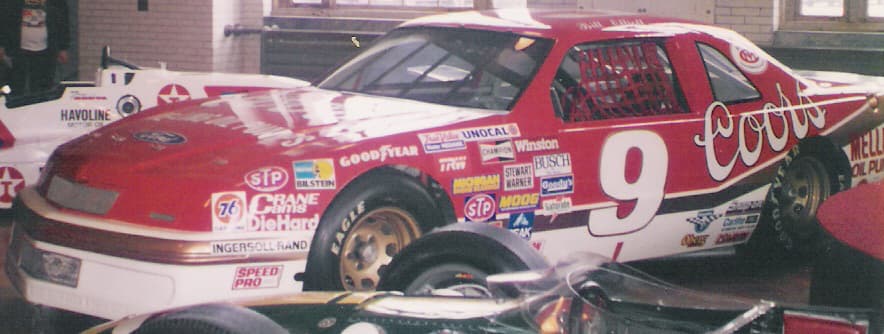
Between 1971 and 2003, NASCAR's premier series was sponsored by R. J. Reynolds Tobacco Company cigarette brand Winston, dubbing it the Winston Cup Series. The series was originally called the Winston Cup Grand National Series before "Grand National" was dropped in 1986. In 1971, the Public Health Cigarette Smoking Act banned television advertising of cigarettes. As a result, tobacco companies began to sponsor sporting events as a way to spend their excess advertising dollars and to circumvent the ban. RJR's sponsorship became more controversial in the wake of the 1998 Tobacco Industry Settlement that sharply restricted avenues for tobacco advertising, including sports sponsorships.
The changes that resulted from RJR's involvement in the series as well as from the reduction in schedule from 48 to 31 races per year established 1972 as the beginning of NASCAR's "modern era". The season was made shorter, and the points system was modified several times during the next four years. Races on dirt tracks and on oval tracks shorter than 250 miles (400 kilometres) were removed from the schedule and transferred to the short-lived NASCAR Grand National East Series, and the remaining races had a minimum prize money of $30,000. NASCAR's founder, Bill France Sr., turned over control of NASCAR to his oldest son, Bill France Jr. In August 1974, France Jr. asked series publicist Bob Latford to design a points system with equal points being awarded for all races regardless of length or prize money. This system ensured that the top drivers would have to compete in all the races in order to become the series champion. This system remained unchanged from 1975 until the Chase for the Championship was instituted in 2004.
Since 1982, the Daytona 500 has been the first non-exhibition race of the year.
ABC Sports aired partial or full live telecasts of Grand National races from Talladega, North Wilkesboro, Darlington, Charlotte, and Nashville in 1970. Because these events were perceived as less exciting than many Grand National races, ABC abandoned its live coverage. Races were instead broadcast, delayed and edited, on the ABC sports variety show Wide World of Sports.
In 1979, the Daytona 500 became the first stock car race that was nationally televised live from flag to flag on CBS. The leaders going into the last lap, Cale Yarborough and Donnie Allison, wrecked on the backstretch while dicing for the lead, allowing Petty to pass them both for the win. Immediately, Yarborough, Allison, and Allison's brother Bobby were engaged in a fistfight on national television. This underlined the drama and emotion of the sport and increased its broadcast marketability. The race coincided with a major snowstorm along the United States' eastern seaboard, successfully introducing the sport to a captive audience.
In 1981, an awards banquet began to be held in New York City on the first Friday evening in December. The first banquets were held in the Waldorf-Astoria's Starlight Room and in 1985 were moved to the much larger Grand Ballroom. For 2001, the banquet portion was dropped in favor of a simpler awards ceremony, which was also moved to the Hammerstein Ballroom at the Manhattan Center the following year. However, in 2003, the festivities returned to the Waldorf's Grand Ballroom, and the banquet format was reinstated.
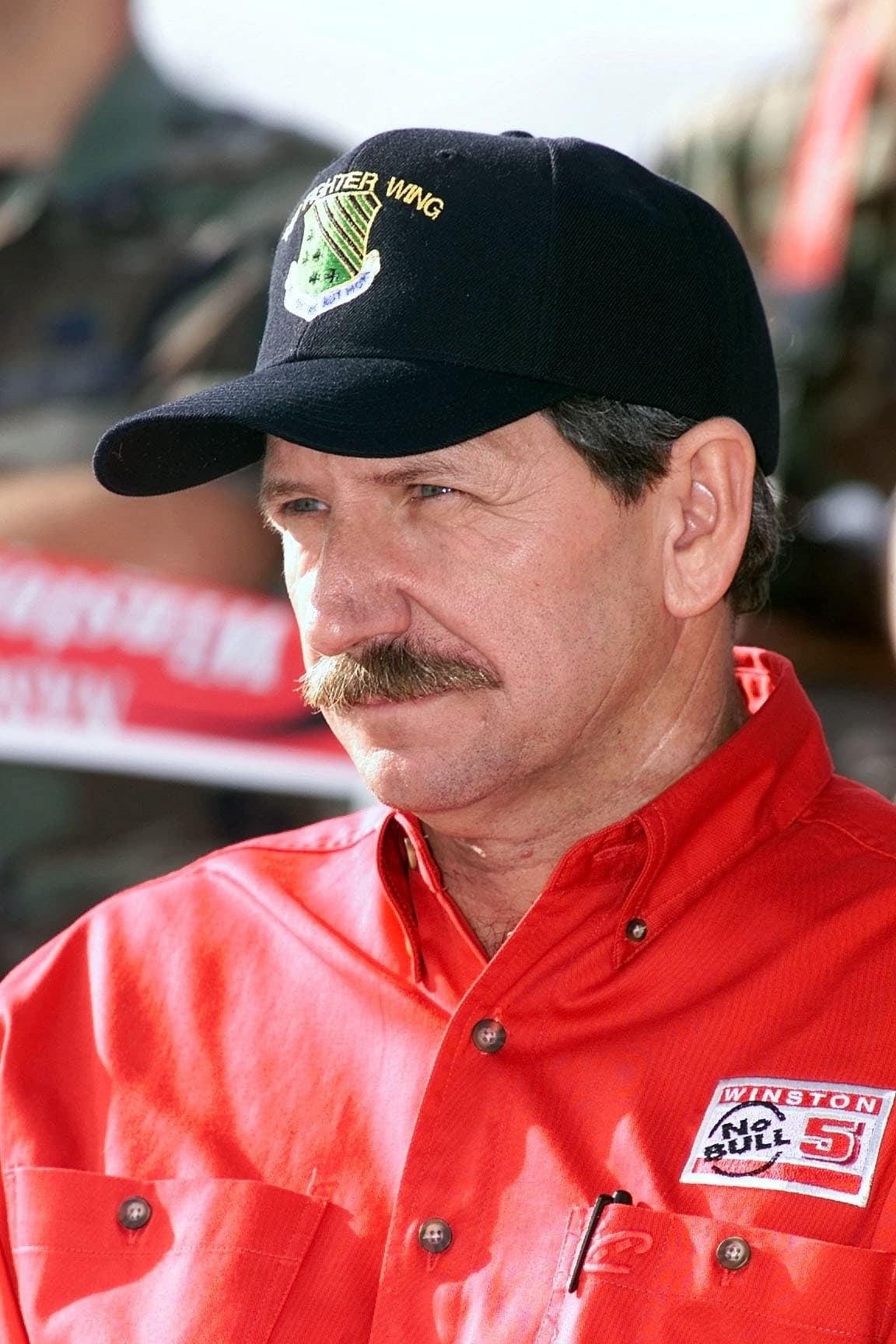
In 1985, Winston introduced a new awards program called the Winston Million. From 1985 to 1997, any driver who won three of the four most prestigious races in the series was given one million dollars. The prize was only won twice; Bill Elliott won in 1985, Darrell Waltrip nearly won in 1989, Davey Allison nearly won in 1992, Dale Jarrett nearly won in 1996, and Jeff Gordon won in 1997. The Winston Million was replaced with a similar program, the Winston No Bull Five, in 1998. This program awarded one million dollars to any driver who won a prestigious race after finishing in the top five of the most previous prestigious races.
The series underwent a large boom in popularity in the 1990s. In 1994, NASCAR held the first Brickyard 400 at Indianapolis Motor Speedway. Between 1997 and 1998, the winner's prize money for the Daytona 500 tripled. This coincided with a decline of popularity in American Championship Car Racing.
In 1999, NASCAR made a new agreement with Fox Broadcasting, Turner Broadcasting, and NBC. The contract, signed for eight years for Fox and six years for NBC and Turner, was valued at $2.4 billion.
In 2001, Pixar visited NASCAR tracks as research for the 2006 animated film Cars, which included the voices of Petty and Dale Earnhardt Jr. To avoid advertising tobacco in a Disney film, "Piston Cup" served as Pixar's allusion to the Winston Cup (however, by the time the film came out, Nextel had replaced Winston as the series title sponsor).
Nextel and Sprint
During the 2002 season, R.J. Reynolds notified NASCAR leadership that they would terminate their title sponsorship prematurely at the conclusion of the 2003 season. NASCAR negotiated a contract with Nextel, a telecommunications company to replace Winston, and in 2004 the series became known as the Nextel Cup Series.
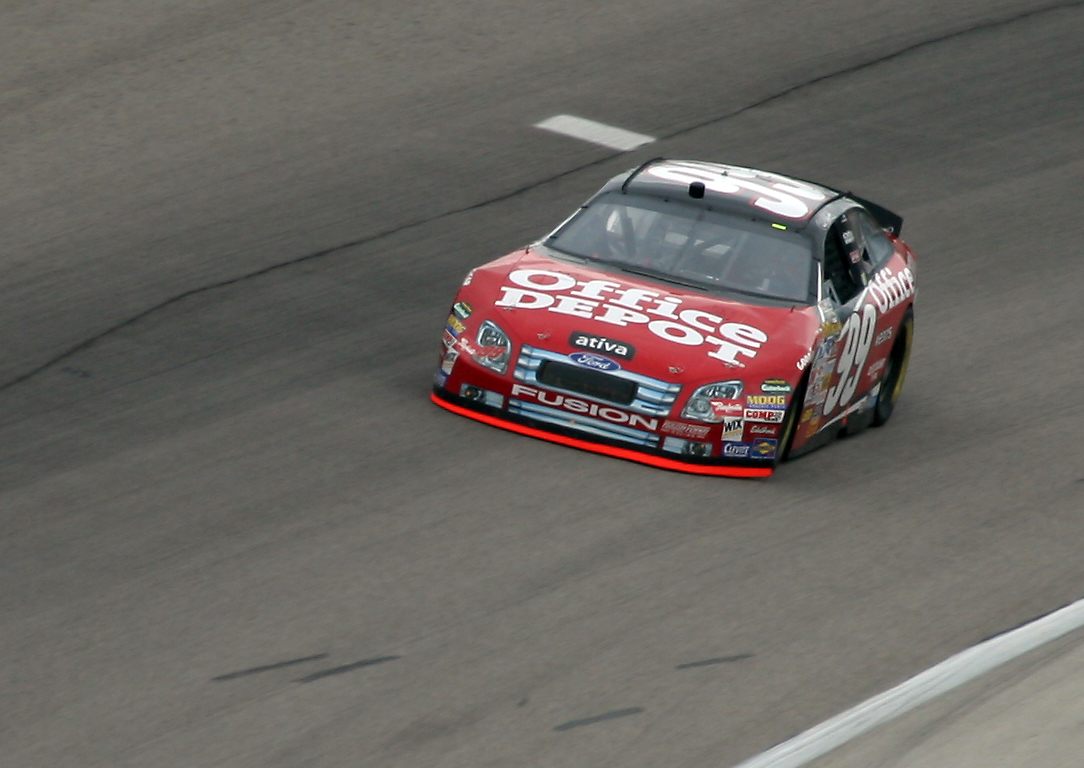
The 2006 merger between Sprint and Nextel resulted in the Cup Series being renamed the Sprint Cup, beginning with the 2008 season.
The Sprint Cup trophy was designed by Tiffany & Co. and is silver, with a pair of checkered flags in flight.
By 2009, the popularity boom of the 1990s had ended, and television ratings over the previous ten years had become more or less stagnant. Some long-time fans have criticized the series for losing its traditional appeal because of abandoning venues in the southeastern United States in favor of newer markets. They have also voiced discontent over Toyota's presence in the series. Japanese telecommunications corporation SoftBank acquired Sprint in July 2013. While NASCAR was suspicious of diversity promotion and aware of the negative implications of the redneck image, it also recognized the opportunities to expand the sport. NASCAR's CEO Brian France has become a prime target for criticism among fans during his tenure from 2003 to 2018.
In 2016, NASCAR announced the creation of a charter system (in association with the Race Team Alliance, formed in 2014), which would guarantee 36 teams' entry to all 36 races. Eligibility for a charter would depend on a team's attempts to qualify for every race within the previous three seasons. In conjunction with this rule, NASCAR also reduced the size of the Cup field to 40 cars.
Chase for the Cup
Along with the change in title sponsorship for the series, the 2004 season also introduced a new system for determining the series champion, influenced by the system used in the USAR Hooters Pro Cup Series.
Originally known as the Chase for the Nextel Cup (or simply "The Chase", and later changed to Sprint branding), the ten highest-scoring drivers and teams (plus ties) in the first 26 races of the season became eligible to win the championship by competing in a playoff held within the final ten races. This number was increased to 12 teams in 2007. The Chase participants had their points increased to a level mathematically unattainable by anyone outside this field (roughly 1,800 points ahead of the first driver outside the Chase). From the inaugural Chase in 2004 to the 2006 Chase, the drivers were seeded based on points position at the end of the regular season, with first place starting with 5,050 points and tenth place starting with 5,005. From 2007 to 2010, the points totals of each driver who made the Chase were reset to 5,000 points, plus ten additional points for each race victory during the first 26 races. Points would still be awarded as usual during the affected races. The driver leading in points after the 36th race would be declared the champion.
As part of a major change in the points system that took effect in 2011, the qualifying criteria and the points reset were changed as well. From 2011 to 2013, the ten drivers with the most points automatically qualified for the Chase. They were joined by two "wild card" qualifiers, specifically, the two drivers with the most race wins who were ranked between 11th and 20th in drivers' points. Their base point totals were then reset to 2,000 points, a level more than 1,000 points higher than that of the first driver outside the Chase. (Under the new point system, a race winner can earn a maximum of 48 points, as opposed to 195 in the pre-2011 system.) The ten automatic qualifiers received a bonus of three points for each win during the regular season, while the two wild card qualifiers received no such bonus. As in the past, the race layouts for the remaining ten races were the same, with no changes to the scoring system. On November 20, 2011, Tony Stewart and Carl Edwards ended the season in a first-ever points tie. Stewart's five season wins (all in the Chase) over Edwards' one win (in the third race of the season) gave Stewart the tiebreaker. Hence, he was named the winner of the 2011 NASCAR Cup Series Championship.
For 2014, NASCAR announced wide-ranging changes to the Chase format:
The group of drivers in the Chase officially became the NASCAR Sprint Cup Chase Grid.
The number of drivers qualifying for the Chase Grid ranges from 12 to 16.
15 of the 16 spots in the Chase Grid are reserved for the drivers with the most race wins over the first 26 races. The remaining spot is reserved for the points leader after 26 races, but only if that driver does not have a victory. If fewer than 16 drivers have wins in the first 26 races, the remaining Chase Grid spots are filled by winless drivers in order of points earned due that season. All drivers on the Chase Grid continue to have their driver points reset to 2,000 before the Chase, with a three-point bonus for each win in the first 26 races.
The Chase is now divided into four rounds. After each of the first three rounds, the four Chase Grid drivers with the fewest points for the season are eliminated from the Grid and from Championship contention. Any driver on the Grid who wins a race in the first three rounds automatically advances to the next round. All drivers eliminated from the Chase have their points readjusted back to the points they started with at the beginning of the Round of 16, (race 27) plus any points earned after, using the regular season points scheme only (no Round of 12, or Round of Eight reset points). In 2016, the Chase for the Championship, formerly known as the Challenger, Contender, and Eliminator round, were changed to a Round of 16, Round of 12, and Round of 8.
Round of 16 (Races 27–29)
Begins with 16 drivers, each with 2,000 points, plus a 3-point bonus for each win in the first 26 races
Round of 12 (Races 30–32)
Begins with 12 drivers, each with 3,000 points
Round of 8 (Races 33–35)
Begins with eight drivers, each with 4,000 points
Championship 4 (final race)
The last four drivers in contention for the season title start the race with 5,000 points, with the highest finisher in the race winning the Cup Series title. No bonus points are awarded for laps led or most laps led for these four drivers. If one of the Championship Four drivers wins the race, the maximum points they can get is 40.
To encourage continued competition among all drivers, a number of awards are given to drivers finishing outside the Chase. The highest finishing non-Chase driver (13th place at the end of the season from 2007 to 2013 and potentially anywhere from fifth to 17th place starting in 2014) is awarded a bonus of approximately one million dollars and was originally given a position on stage at the post-season awards banquet. The awards banquet now focuses solely on the Chase, with all of the series' sponsored and contingency awards moved to a luncheon at Cipriani the day before the banquet.
This playoff system was implemented primarily to make the points race more competitive late in the season, and indirectly, to increase television ratings during the NFL season, which starts around the same time as the Chase begins. The Chase also forces teams to perform at their best during all three stages of the season, the first half of the regular season, the second half of the regular season, and the Chase.
Previously, the champion could have been determined before the last race, or even several races before the end of the season, because it was mathematically impossible for any other driver to gain enough points to overtake the leader.
Monster Energy
The title sponsorship with Sprint ended after the 2016 season. On December 1, 2016, NASCAR announced it had reached an agreement with Monster Energy to become the new sponsor of NASCAR's premier series. On December 19, 2016, NASCAR announced the new name for the series, Monster Energy NASCAR Cup Series as well as the new series logo and new NASCAR logo. On April 11, 2018, Monster Energy announced an extension of their sponsorship of the series through the end of the 2019 season.
In 2017, stage racing was introduced. Races were broken up into three stages, four in the case of the NASCAR Cup Series' longest race, the Coca-Cola 600. A stage consists of normal green flag racing followed by a stoppage on a designated lap signified by the waving of a green and white checkered flag, then a yellow flag. The top-10 finishers in each of the first two stages are awarded bonus championship points, 10 points to the winner, 9 points for the 2nd place car, down to 1 point for the 10th place car. The points earned are added to a driver/owner's regular season points total, while the winner of the stage receives an additional point that is added to their point total, after the reset, if they get into the NASCAR playoffs. Stage lengths vary by track, but the first two stages usually combine to equal about half of the race. The final stage (which still pays out championship points to all drivers) usually equals the other half. The regular season points championship is awarded to the driver who scored the most points in the first 26 races (regular season). This championship does not award any bonus points to the winning driver. Otherwise, the points system and playoff format remained the same.
The MENCS trophy was in the form of a chalice that stood at three feet tall and weighed 68 lbs. Made of machined aluminum and taking over 300 hours of craftsmanship, the trophy's exterior was decorated with the outlines of all 23 NASCAR Cup Series tracks. The cup portion was said to hold approximately 600 ounces of liquids, or 37 cans of Monster Energy.
NASCAR Cup Series
Beginning with the 2020 season NASCAR's top level of competition became known as the NASCAR Cup Series. As part of a tiered sponsorship model, Busch Beer, Coca-Cola, GEICO, and Xfinity became the Premier Partners of the series, with Coca-Cola also assuming naming rights of the regular season trophy. In 2024, GEICO left as a premier partner, leaving NASCAR with 3 premier partners in 2025. Freeway Insurance joined as a premier partner in 2026.
The MENCS trophy design was retained under the new series name, though it was renamed the Bill France Cup.
Drivers' Championship
The NASCAR Cup Series Drivers' Championship is awarded by the Chairman of NASCAR to the most successful Cup Series driver over a season, as determined by a points system based on race results and victories. First awarded in 1949 to Red Byron, 32 different drivers have won the Championship. The first driver to win multiple Championships was Herb Thomas in 1951 and 1953, while the record for the most Championships, seven, is shared by Richard Petty, Dale Earnhardt and Jimmie Johnson. Johnson has the record for most consecutive Championships; he won five Championships from 2006 to 2010. So far every Champion has originated from the United States.
Owners' Championship
The Cup Series Owner's Championship operates in the same manner as the Driver's Championship, except that points are awarded to each individual car. If an owner enters more than one car, each car is viewed and scored as a separate entity. The points in the Owners Championship is identical to the Drivers' list, with one minor exception: Drivers who are not eligible to earn points toward the Drivers' title can still earn points toward the Owners' Championship. An example of this occurred in the first race under the current points system, the 2011 Daytona 500. Under another rule newly implemented for the 2011 season, drivers are only allowed to earn drivers' points in one of NASCAR's three national series. Trevor Bayne, who won the race, did not earn any drivers' points because he chose to run for the Nationwide Series championship. However, he earned 47 owner's points for Wood Brothers Racing (43 base points, three bonus points for the win, and one bonus point for leading a lap).
Before a major change to the points system was implemented in 2011, there was a slightly different addition to the system of allocating owner's points. If more than 43 cars attempted to qualify for a race, owner's points were awarded to each car in the following manner: the fastest non-qualifier (in essence, 44th position) received 31 points, three points fewer than the car in the 43rd position. If more than one car did not qualify, owners' points continued to be assigned in the manner described, decreasing by three for each position. Under the post-2010 point system, only cars that actually start in a given race earn owner's points.