
The People of the State of California v. Orenthal James Simpson was a criminal trial in Los Angeles County Superior Court, in which former NFL player and actor O. J. Simpson was tried and acquitted for the murders of his ex-wife Nicole Brown Simpson and her friend Ron Goldman, who were stabbed to death outside Brown's home in Los Angeles on June 12, 1994. The trial spanned eight months, from January 24 to October 3, 1995.
Though prosecutors argued that Simpson was implicated by a significant amount of forensic evidence, he was acquitted of both murders on October 3. Commentators agree that to convince the jury to acquit Simpson, the defense capitalized on anger among the city's African-American community toward the Los Angeles Police Department (LAPD), which had a history of racial bias and had inflamed racial tensions in the beating of Rodney King and subsequent riots two years prior. The trial was often characterized by the media as "the trial of the century" because of its international publicity and has been described as the "most publicized" criminal trial in history. Simpson was formally charged with the murders on June 17; when he did not turn himself in at the agreed time, he became the subject of a police pursuit. TV stations interrupted coverage of game 5 of the 1994 NBA Finals to broadcast live coverage of the pursuit, which was watched by around 95 million people. The pursuit and Simpson's arrest were very widely publicized events in the United States.
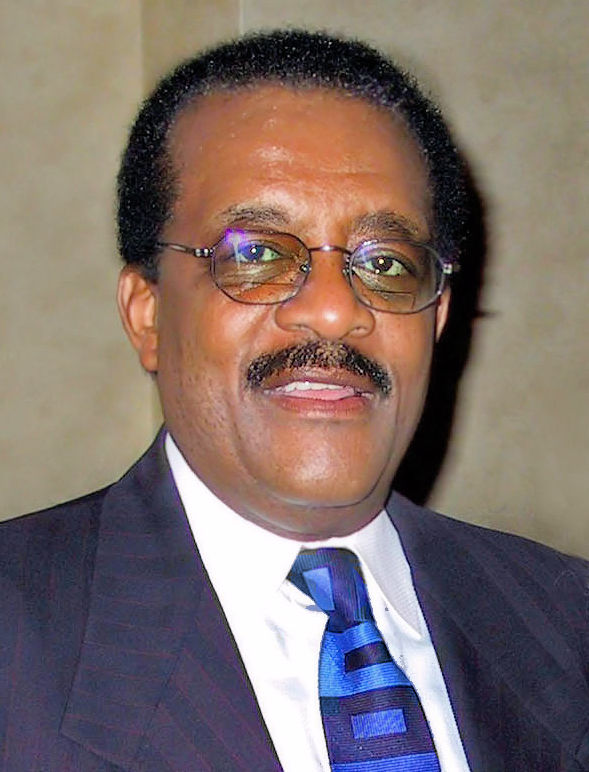
Simpson was represented by a high-profile defense team, referred to as the "Dream Team", initially led by Robert Shapiro and subsequently directed by Johnnie Cochran. The team included F. Lee Bailey, Alan Dershowitz, Robert Kardashian, Shawn Holley, Carl E. Douglas, Barry Scheck, and Gerald Uelmen. Simpson was also instrumental in his own defense. While Deputy District Attorneys Marcia Clark, William Hodgman, and Christopher Darden believed they had a strong case, the defense team persuaded the jury there was reasonable doubt concerning the DNA evidence. They contended the blood sample had been mishandled by lab scientists and that the case had been tainted by LAPD misconduct related to racism and incompetence. The use of DNA evidence in trials was relatively new, and many laypersons did not understand how to evaluate it.

The trial was considered significant for the wide division in reaction to the verdict. Observers' opinions of the verdict were largely related to their ethnicity; the media dubbed this the "racial gap". A poll of Los Angeles County residents showed most African Americans thought the "not guilty" verdict was justified while most White respondents thought it was a racially motivated jury nullification by the mostly African-American jury. Polling in later years showed the gap had narrowed since the trial; more than half of polled Black respondents expressed the belief that Simpson was guilty. In 2017, three jurors who acquitted Simpson said they would still vote to acquit, while one said he would convict.
After the trial, Goldman's father filed a civil suit against Simpson. In 1997, the jury unanimously found Simpson responsible for the deaths of Goldman and Brown. The Goldman family was awarded damages totaling $34 million ($67 million adjusted for inflation), but as of 2024 have received a small portion of that.
Murders and Simpson's arrest
Brown met Simpson in 1977 when she was 18 and working as a waitress. Simpson and Brown married on February 2, 1985 and had two children together. Their marriage was described as involving domestic violence, with Brown writing that Simpson had beaten her on multiple occasions.

On June 12, 1994, Brown and Goldman were murdered outside Brown's condominium, 875 South Bundy Drive. Simpson was charged with the murders and after failing to turn himself in to the police on June 17, he became a fugitive. A low-speed chase was broadcast live on television as Simpson fled in his white Ford Bronco SUV with friend Al Cowlings before surrendering to authorities at his Brentwood estate.
Preliminary hearing
On June 20, Simpson was arraigned and pleaded not guilty to both murders and was held without bail. The following day, a grand jury was called to determine whether to indict him for the two murders but was dismissed on June 23, as a result of excessive media coverage that could have influenced its neutrality. Instead, authorities held a probable cause hearing to determine whether to bring Simpson to trial. California Superior Court Judge Kathleen Kennedy-Powell ruled on July 7 that there was sufficient evidence to bring Simpson to trial for the murders. At his second arraignment on July 22, when asked how he pleaded to the murders, Simpson firmly stated: "Absolutely, one hundred percent, not guilty."
Jill Shively testified to the grand jury that soon after the time of the murders she saw a white Ford Bronco speeding away from Bundy Drive in such a hurry that it almost collided with a Nissan at the intersection of Bundy and San Vicente Boulevard, and that she recognized Simpson's voice. She talked to the television show Hard Copy for $5,000, after which prosecutors declined to use her testimony at trial. In 1995, Shively had falsely claimed actor Brian Patrick Clarke had assaulted and stalked her.

Jose Camacho of Ross Cutlery provided store receipts showing Simpson had purchased a 12-inch (305 mm) stiletto knife six weeks before the murders. The knife was recovered and determined to be similar to the one the coroner said caused the stab wounds. The prosecution did not present this evidence at trial, after Camacho sold his story to the National Enquirer for $12,500. Tests on the knife determined that an oil used on new cutlery was still present on the knife, indicating it had never been used.
Former NFL player and pastor Rosey Grier visited Simpson on November 13 at the Los Angeles County Jail. A jailhouse guard, Jeff Stuart, testified to Judge Ito that at one point Simpson yelled to Grier that he "didn't mean to do it", after which Grier had urged Simpson to come clean. Ito ruled that the evidence was inadmissible as being protected because of clergy-penitent privilege.
At first, Simpson's defense sought to show that one or more hitmen hired by drug dealers had murdered Brown and Goldman – giving Brown a "Colombian necktie" – because they were looking for Brown's friend, Faye Resnick, a known cocaine user who had failed to pay for her drugs. She had stayed for several days at Brown's condo until entering rehab four days before the killings. Ito ruled that the drug killer theory was "highly speculative" with no evidence to support it. Consequently, Ito barred the jury from hearing it and prohibited Christian Reichardt from testifying about his former girlfriend Resnick's drug problems.
Rose Lopez, a neighbor's Spanish-speaking housekeeper, stated on August 18 that she saw Simpson's Bronco parked outside his house at the time of the murders, supporting his claim he was home that night. During cross-examination by Clark, Lopez admitted she was not sure what time she saw Simpson's Bronco but the defense still intended to call her. However, a taped July 29 statement by Lopez did not mention seeing the Bronco but did mention another housekeeper was also there that night, Sylvia Guerra. Prosecutors then spoke with Guerra, who said Lopez was lying and claimed the defense offered both housekeepers $5,000 to say they saw the Bronco that night. When Ito warned the defense that Guerra's claim as well as the earlier statement not mentioning the Bronco and the tape where Clark claims "that [Lopez] is clearly being coached on what to say" would be shown to the jury if Lopez testified, they dropped her from the witness list.
Media coverage
When the trial began, all of the networks were getting these hate-mail letters because people's soap operas were being interrupted for the Simpson trial. But then what happened was the people who liked soap operas got addicted to the Simpson trial. And they got really upset when the Simpson trial was over, and people would come up to me on the street and say, 'God, I loved your show.'
The murders and trial – "the biggest story I have ever seen", said a producer of NBC's Today – received extensive media coverage from the very beginning; at least one instant book was proposed two hours after the bodies were found, and scheduled to publish only a few weeks later. The case was a seminal event in the history of reality television, helping to revive the genre of court shows like Judge Judy. The Los Angeles Times covered the case on its front page for more than 300 days after the murders. The nightly news broadcasts from the Big Three television networks gave more airtime to the case than to the Bosnian War and the Oklahoma City bombing combined. They served an enthusiastic audience; one company put the loss of national productivity from employees following the case instead of working at $40 billion. The Tonight Show with Jay Leno aired many skits on the trial, and the Dancing Itos – a troupe of dancers dressed as the judge – was a popular recurring segment. According to Howard Kurtz of The Washington Post, the acquittal was "the most dramatic courtroom verdict in the history of Western civilization".
Participants in the case received much media coverage. Limo driver Park said the media offered him $100,000 but refused, as he would be removed as a witness. Fans approached Clark in public, and when she got a new hairstyle during the trial, the prosecutor received a standing ovation on the courthouse steps; People approved of the change, but advised her to wear "more fitted suits and tailored skirts". While Cochran, Bailey, and Dershowitz were already well-known, others like Kaelin became celebrities, and Paula Barbieri appeared in Playboy. Those involved in the trial followed their own media coverage. Interest in the case was worldwide; Russian president Boris Yeltsin's first question to President Clinton when they met in 1995 was, "Do you think O.J. did it?"
The issue of whether to allow any video cameras into the courtroom was among the first issues Judge Ito had to decide, ultimately ruling that live camera coverage was warranted. Ito was later criticized for this decision by other legal professionals. Dershowitz said that he believed that Ito, along with others related to the case such as Clark, Fuhrman and Kaelin, was influenced to some degree by the media presence and related publicity. The trial was covered in 2,237 news segments from 1994 through 1997. Ito was also criticized for allowing the trial to become a media circus and not doing enough to regulate the court proceedings.
Among the reporters who covered the trial daily from the courtroom, and a media-area that was dubbed "Camp O. J.", were Steve Futterman of CBS News, Linda Deutsch and Michael Fleeman of the Associated Press, Dan Whitcomb of Reuters, Janet Gilmore of the Los Angeles Daily News, Andrea Ford of the Los Angeles Times, Michelle Caruso of the New York Daily News, Dan Abrams of Court TV, Harvey Levin of KCBS, and David Margolick of The New York Times. Writers Dominick Dunne, Joe McGinniss, and Joseph Bosco also had full-time seats in the courtroom.

On June 27, 1994, Time published a cover story, "An American Tragedy", with a photo of Simpson on the cover. Time's cover image was darker than a typical magazine cover and darker than the original photo, as shown on a Newsweek cover released at the same time. Time consequently became the subject of a media scandal. Commentators found that its staff had used photo manipulation to darken the photo, and they speculated it was to make Simpson appear more menacing. After the publication of the photo drew widespread criticism of racist editorializing and yellow journalism, Time publicly apologized.
Charles Ogletree, a criminal defense attorney and law professor, said in a 2005 interview that the best investigative reporting regarding the murder and trial was by the National Enquirer.
Trial
Simpson wanted a speedy trial, and the defense and prosecuting attorneys worked around the clock for several months to prepare their cases. The trial began on January 24, 1995, seven months after the murders, and was televised using a single remotely-operated camera by Court TV, and in part by other cable and network news outlets, for 134 days. Judge Lance Ito presided over the trial in the C.S. Foltz Criminal Courts Building (at the time known simply as the Criminal Courts Building).
Jury
District Attorney Gil Garcetti elected to file charges in downtown Los Angeles, as opposed to Santa Monica, in which jurisdiction the crimes took place. The Los Angeles Superior Court then decided to hold the trial in Downtown Los Angeles instead of Santa Monica due to safety issues at the Santa Monica Court house owing to the 1994 Northridge earthquake. The decision may have impacted the trial's outcome as it resulted in a jury pool that mainly consisted of African Americans. Richard Gabriel, a jury consultant, noted that African Americans at the time were far more likely than other minorities to be receptive to claims of racially motivated fraud by the police and were less likely to be familiar with and thus accept DNA evidence.
In October 1994, Judge Lance Ito started interviewing 304 prospective jurors, each of whom had to fill out a 75-page questionnaire. On November 3, twelve jurors were seated with twelve alternates. Over the course of the trial, ten were dismissed for a wide variety of reasons. Only five of the original jurors remained on the final panel.
According to media reports, Clark believed women, regardless of race, would sympathize with the domestic violence aspect of the case and connect with Brown personally. On the other hand, the defense's research suggested that black women would not be sympathetic to Brown, who was white, because of tensions about interracial marriages. Both sides accepted a disproportionate number of female jurors. From an original jury pool of 40 percent white, 28 percent black, 17 percent Hispanic, and 15 percent Asian, the final jury for the trial had ten women and two men, of whom nine were black, two white, and one Hispanic.
On April 5, 1995, juror Jeanette Harris was dismissed when Judge Ito learned she had failed to disclose an incident of domestic abuse. Afterwards, Harris gave an interview and accused the deputies of racism and claimed the jurors were dividing themselves along racial lines. Ito then met with the jurors, who all denied Harris's allegations of racial tension among themselves. The following day, Ito dismissed the three deputies anyway, which upset the jurors that did not complain because the dismissal appeared to lend credence to Harris's allegations, which they all denied. On April 21, thirteen of the eighteen jurors refused to come to court until they spoke with Ito about it. Ito then ordered them to court and the 13 protesters responded by wearing all black and refusing to come out to the jury box upon arrival. The media described this incident as a "Jury Revolt" and the protesters wearing all black as resembling a "funeral procession".
Prosecution case
The two lead prosecutors were Deputy District Attorneys Marcia Clark and William Hodgman, who was replaced as lead prosecutor by Christopher Darden. Clark was designated as the lead prosecutor and Darden became Clark's co-counsel. Prosecutors Hank Goldberg and Hodgman, who had successfully prosecuted high-profile cases in the past, assisted Clark and Darden. Two prosecutors who were DNA experts, Rockne Harmon and George "Woody" Clarke, were brought in to present the DNA evidence in the case and were assisted by Prosecutor Lisa Kahn.
Theory
The prosecution argued that the domestic violence within the Simpson-Brown marriage culminated in her murder. Simpson's history of abusing Brown resulted in their divorce and his pleading guilty to one count of domestic violence in 1989. On the night of the murders, Simpson attended a dance recital for his daughter and was reportedly angry with Brown because of a black dress that she wore, which he said was "tight". Simpson's then girlfriend, Paula Barbieri, wanted to attend the recital with Simpson but he did not invite her. After the recital, Simpson returned home to a voicemail from Barbieri ending their relationship.
According to the prosecution, Simpson then drove over to Brown's home in his Ford Bronco to reconcile their relationship as a result and when Brown refused, Simpson snapped and killed her in a "final act of control". Goldman then came upon the scene and was murdered in order to silence him and remove any witnesses. Afterwards, Simpson drove home in his Bronco, and he went into his house. There, he took off his bloodstained clothes, put them in the knapsack (except his socks and the glove), put clean ones on, and left towards the limousine. At the airport, Simpson opened the knapsack, removed the clothes, Bruno Magli shoes, and the murder weapon, and threw them in the trash, before putting the knapsack in one of his suitcases and heading towards his flight. After landing in Chicago, Simpson threw away the knapsack.
Domestic violence
The prosecution opened its case by calling LAPD 911 dispatcher Sharon Gilbert and playing a 9-1-1 call from Brown on January 1, 1989, in which she expressed fear that Simpson would physically harm her; Simpson himself is even heard in the background yelling at her and possibly hitting her as well. The officer who responded to that call, Detective John Edwards, testified next that when he arrived, a severely beaten Brown ran from the bushes where she was hiding and to the detective screaming "He's going to kill me, he's going to kill me", referring to Simpson. Pictures of Brown's face from that night were then shown to the jury to confirm his testimony. That incident led to Simpson's arrest and eventual pleading of no contest to one count of domestic violence for which he received probation for one year.
LAPD officer and long time friend of both Simpson and Brown, Ron Shipp, testified on February 1, 1995, that Simpson told him the day after the murders that he did not want to take a polygraph test offered to him by the police, because "I've had a lot of dreams about killing her. I really don't know about taking that thing". The jury dismissed Shipp's claims after defense attorney Carl E. Douglas accused him of being an alcoholic, and testifying against Simpson to promote his acting career.
The prosecution then called Brown's sister, Denise Brown, to the witness stand. She testified to many episodes of domestic violence in the 1980s, when she saw Simpson physically abuse Brown and throw her out of their house during an argument. She said that Simpson was agitated with Brown on June 12. Although a home videotape taken immediately after the dance recital showed a cheerful Simpson being given a kiss by Denise Brown, Kato Kaelin corroborated the claim that Simpson was "upset" with Brown because of the black dress she wore, which he said was "tight".
The prosecution planned to present 62 separate incidents of domestic violence, including three previously unknown incidents Brown had documented in several letters she had written and placed in a bank safety deposit box. Judge Ito denied the defense's motion to suppress the incidents of domestic violence, but only allowed witnessed accounts to be presented to the jury because of Simpson's Sixth Amendment rights. Brown's statements to friends and family were ruled inadmissible as hearsay because Brown was dead and unable to be cross-examined. Despite this, the prosecution had witnesses for 44 separate incidents they planned to present to the jury.
However, the prosecution dropped the domestic violence portion of their case on June 20, 1995. Marcia Clark stated it was because they believed the DNA evidence against Simpson was insurmountable, but the media speculated it was because of the comments made by dismissed juror Jeanette Harris. Christopher Darden later confirmed that to be true. Harris was dismissed on April 6 because she failed to disclose that she was a victim of domestic violence from her ex-husband. Afterwards, she gave an interview in which she said the evidence of Simpson's abuse of Brown "doesn't mean he is guilty of murder". This dismissal of Simpson's abusive behavior from a female juror, who was also a victim of such abuse by her own husband, convinced the prosecution that the jury was not receptive to the domestic violence argument. After the verdict, the jurors called the domestic violence portion of the case a "waste of time". Shapiro, Dershowitz, and Uelmen later admitted they believe that race played a factor in the jurors' dismissal of Brown's abuse by Simpson.
The defense retained renowned advocate for victims of domestic abuse Lenore E. Walker. Cochran said that she would testify that Simpson does not fit the profile of an abuser that would murder his spouse. Walker's colleagues were appalled by her decision to defend Simpson and accused her of betraying her advocacy for a $250,000 retainer. Walker was dropped from the witness list for "tactical reasons" after she submitted her report on the case. In it, she opines that the statistic from Dershowitz that of the two million incidents of abuse per year, only 2,000 victims are actually murdered by their spouses as being misleading because Brown was already dead. The relevant statistic was "of the murdered spouses who were also victims of abuse, what percentage of them were murdered by their current or ex-husband?" When she reported that number was 80.3 percent, they dropped her from the witness list.
The revelation of Simpson's abuse of Brown is credited with turning public opinion against him. The public shock at the reason why Walker was dropped from the defense witness list is credited with transforming public opinion on spousal abuse from a private familial matter to a serious public health issue.
Timeline
Los Angeles County Chief Medical Examiner Lakshmanan Sathyavagiswaran testified on June 14, 1995, that Brown's time of death was estimated as between 10:00 pm and 10:30 pm. Kato Kaelin testified on March 22, 1995, that he last saw Simpson at 9:36 pm that evening. A phone call was made from Simpson's Bronco to Paula Barbieri at 10:02 pm. Simpson was not seen again until 10:54 pm when he answered the intercom at the front door for the limousine driver, Allan Park. Simpson had no alibi for approximately one hour and 18 minutes during which time the murders took place. Allan Park testified on March 28 that he arrived at Simpson's home at 10:25 pm and stopped at the Rockingham entrance; Simpson's Bronco was not there. He then drove over to the Ashford entrance and rang the intercom three times, getting no answer, starting at 10:40 pm. Then he saw someone arrive at Simpson's home through the front door, the lights then turned on and Simpson answered the intercom.
Park's testimony was significant because it explained the location of the glove found at Simpson's home. The blood trail from the Bronco to the front door was easily understood but the glove was found on the other side of the house. Park said the "shadowy figure" initially approached the front door before heading down the southern walkway which leads to where the glove was found by Fuhrman. The prosecution believed that Simpson had driven his Bronco to and from Brown's home to commit the murders, saw that Park was there and aborted his attempt to enter through the front door, entering through the back instead. He panicked and made the sounds that Kaelin heard when he realized that the security system would not let him enter through the rear entrance. He then discarded the glove, came back and went through the front door. During cross examination, Park conceded that he could not identify the figure but said he saw that person enter the front door and afterwards Simpson answered and said he was home alone. Park conceded that he did not notice any cuts on Simpson's left hand but added "I shook his right hand, not his left".
DNA evidence and blood trail
The prosecution presented a total of 108 exhibits, including 61 drops of blood, of DNA evidence to link Simpson to the murders. With no witnesses to the crime, the prosecution was dependent on DNA as the only physical evidence linking Simpson to the crime. The volume of DNA evidence in this case was unique and the prosecution believed they could reconstruct how the crime was committed with enough accuracy to resemble an eyewitness account. Marcia Clark stated in her opening statements that there was a "trail of blood from the Bundy Crime scene through Simpson's Ford Bronco to his bedroom at Rockingham".
Simpson's DNA found on blood drops next to the bloody footprints near the victims at the Bundy crime scene. The prosecution stated that the probability of error was 1-in-9.7 billion.
Simpson's DNA found on a trail of blood drops leading away from the victims, towards and on the back gate at Bundy. The prosecution stated that the probability of error was 1-in-200.
Simpson, Goldman, and Brown's DNA found on blood on the outside of the door and inside Simpson's Bronco. The prosecution stated that the probability of error was 1-in-21 billion.
Simpson's DNA found on blood drops leading from the area where his Bronco was parked at Simpson's Rockingham home to the front door entrance.
Simpson, Brown, and Goldman's DNA on a bloody glove found behind his home.
Simpson and Brown's DNA found on blood on a pair of socks in Simpson's bedroom. The prosecution stated that the probability of error was 1-in-6.8 billion.
Hair and fiber evidence
LAPD criminalist and hair fiber expert Susan Brockbank testified on June 27, 1995, and FBI Special Agent and fiber expert Doug Deedrick testified on June 29, 1995, to the following findings:
The fibers from the glove found at Simpson's home were microscopically similar to the one found at the crime scene.
Both of the victims, the two gloves, and the blue knit cap worn by the killer had hair consistent with Simpson. The hair in the blue knit cap worn by the killer was embedded in the seams, indicating it was there from being worn repeatedly.
Dark blue cotton clothing fibers were found on both victims. The video from the dance recital that Simpson attended earlier that night shows him wearing a similarly colored shirt. Kato Kaelin testified that Simpson was still wearing that shirt when they got home from McDonald's but not anymore when he answered the door for the limousine driver. The police searched his home but the shirt was never found.
Hair consistent with Goldman was found on Brown and clothing fibers consistent with Brown was found on Goldman. This supported the prosecution's theory that the assailant killed Brown first, then Goldman, and afterwards returned to Brown to cut her throat. The hair consistent with Brown that was found on the Rockingham glove was torn which also supports the prosecution claim that the killer grabbed Brown by her hair to cut her throat.