
Martin Heidegger (26 September 1889 – 26 May 1976) was a German philosopher whose work was central to the development of phenomenology, hermeneutics, and existentialism. He has had significant impact within subsequent philosophy, social sciences and humanities, and theology.
Heidegger's magnum opus, Being and Time (1927), is widely considered one of the most significant works of modern philosophy. In it, he introduced the concept of Dasein ("being-there") to describe the distinctive character of human existence, arguing that humans possess a "pre-ontological" understanding of being that shapes how they live and act, which he analyzed in terms of the unitary structure of "being-in-the-world". Through his analysis of Dasein, Heidegger sought to reawaken what he called "the question of being": the fundamental inquiry into what makes entities intelligible as the entities they are. In other words, Heidegger's governing "question of being" is concerned with what makes beings intelligible as beings. This question, he believed, had been neglected or obscured throughout the history of Western philosophy since the ancient Greeks.
His later work turned increasingly to questions of technology, language, art, and poetry, developing themes of human "dwelling" in the world and critiquing what he saw as the nihilistic trajectory of modern technological civilisation. Thinkers as varied as Jean-Paul Sartre, Hans-Georg Gadamer, Hannah Arendt, Jacques Derrida, Emmanuel Levinas, and Richard Rorty were substantially shaped by engagement with his thought, whether in agreement or opposition.

Heidegger's legacy has been complicated and shadowed by his involvement with Nazism. In April 1933, he was elected rector of the University of Freiburg and joined the Nazi Party, a membership he retained until 1945. The nature and extent of his commitment to Nazism, and the question of whether his philosophy is inherently connected to his political choices, remain subjects of significant scholarly controversy. After the war, he was banned from teaching following denazification proceedings, a ban later lifted in 1949, after which he returned to lecturing at the University of Freiburg. During this period of enforced withdrawal, he nevertheless continued to exert influence through private seminars and audiences at his home. His refusal to publicly repudiate his Nazi involvements or express remorse in unambiguous terms has continued to trouble interpreters of his work.
Early life
Heidegger was born on 26 September 1889 in rural Meßkirch, Baden, the son of Johanna (née Kempf) and Friedrich Heidegger. His father was the sexton of the village church, and the young Martin was raised Catholic.
In 1903, Heidegger began to train for the priesthood. He entered a Jesuit seminary in 1909, but was discharged within weeks because of heart trouble. It was during this time that he first encountered the work of Franz Brentano, the work of whom is credited as first sparking Heidegger's interest in the question of Being, specifically in regard to Brentano's thesis On the Manifold Sense of Being according to Aristotle. From here he went on to study theology and scholastic philosophy at the University of Freiburg.
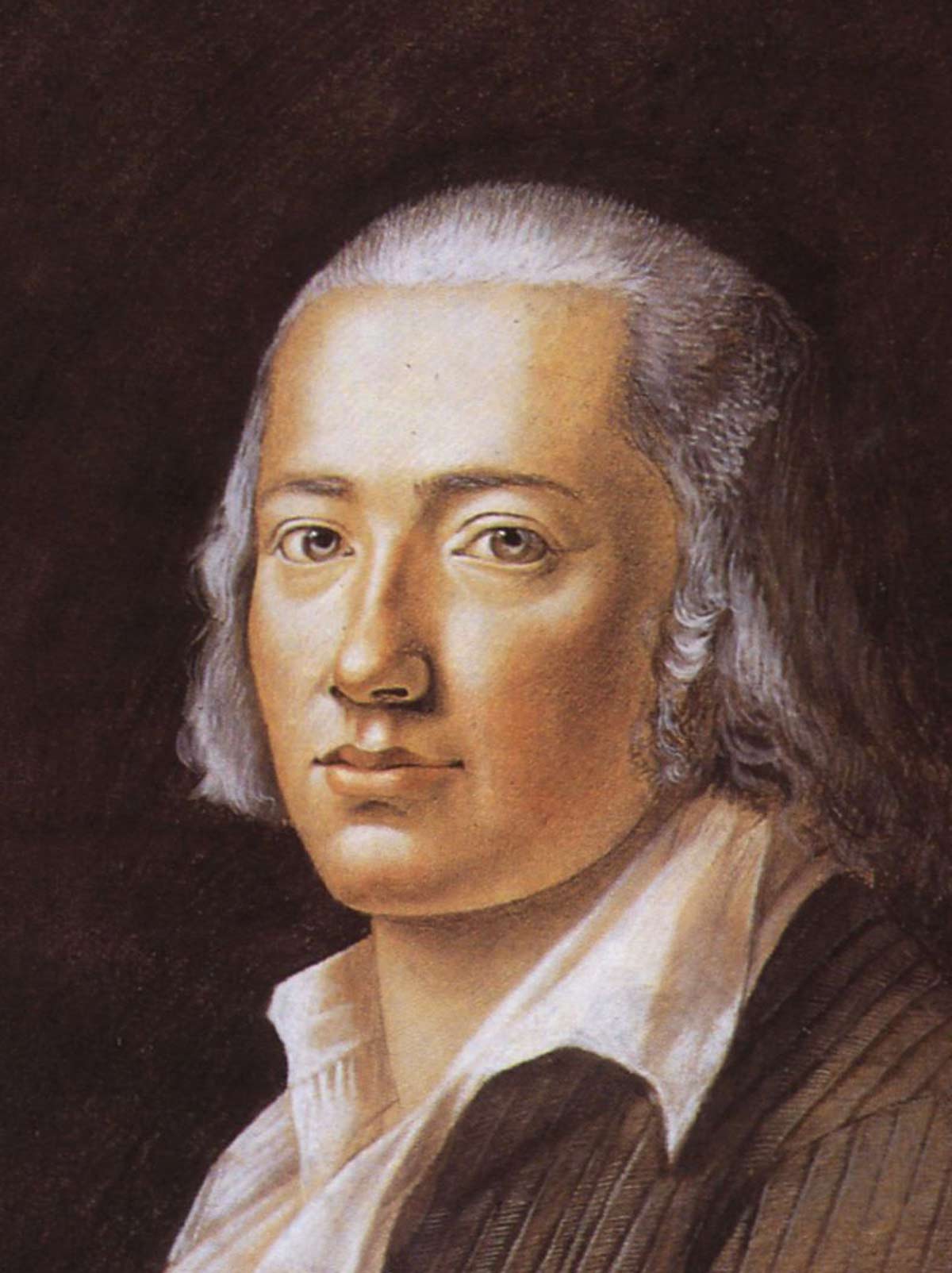
In 1911, he broke off training for the priesthood and turned his attention to recent philosophy, in particular, Edmund Husserl's Logical Investigations. He graduated with a thesis on psychologism, The Doctrine of Judgment in Psychologism: A Critical-theoretical Contribution to Logic, in 1914. The following year, he completed his habilitation thesis on Duns Scotus, which was directed by Heinrich Rickert, a neo-Kantian, and influenced by Husserl's phenomenology. The title has been published in several languages and in English is Duns Scotus's Doctrine of Categories and Meaning.
He attempted to get the (Catholic) philosophy post at the University of Freiburg on 23 June 1916 but failed despite the support of Heinrich Finke. Instead, he worked first as an unsalaried Privatdozent then served as a soldier during the final year of World War I. His service was in the last ten months of the war, most of which he spent in meteorological unit on the western front upon being deemed unfit for combat.
From 1919 to 1923, Heidegger taught courses at the University of Freiburg. At this time he also became an assistant to Edmund Husserl, who had been a professor there since 1916.

Marburg
In 1923, Heidegger was elected to an extraordinary professorship in philosophy at the University of Marburg. His colleagues there included Rudolf Bultmann, Nicolai Hartmann, Paul Tillich, and Paul Natorp. Heidegger's students at Marburg included Hans-Georg Gadamer, Helene Weiss, Karl Löwith, Hannah Arendt, Gerhard Krüger, Leo Strauss, Jacob Klein, Günther Anders, and Hans Jonas. Following Aristotle, he began to develop in his lectures the main theme of his philosophy: the question of the sense of being. He extended the concept of subject to the dimension of history and concrete existence, which he found prefigured in such Christian thinkers as Paul of Tarsus, Augustine of Hippo, Martin Luther, and Søren Kierkegaard. He also read the works of Wilhelm Dilthey, Husserl, Max Scheler, and Friedrich Nietzsche.
In 1927, Heidegger published his main work, Sein und Zeit (Being and Time). He was primarily concerned in qualifying to be a full professor. The book, however, did more than this: it raised him to "a position of international intellectual visibility."
Freiburg
When Husserl retired as professor of philosophy in 1928, Heidegger accepted Freiburg's election to be his successor, in spite of a counteroffer by Marburg. The title of his 1929 inaugural lecture was "What is Metaphysics?" In this year he also published Kant and the Problem of Metaphysics.

Heidegger remained at Freiburg im Breisgau for the rest of his life, declining later offers, including one from Humboldt University of Berlin. His students at Freiburg included Hannah Arendt, Günther Anders, Hans Jonas, Karl Löwith, Charles Malik, Herbert Marcuse, and Ernst Nolte. Emmanuel Levinas attended his lecture courses during his stay in Freiburg in 1928, as did Jan Patočka in 1933; Patočka, in particular, was deeply influenced by him.
Heidegger was elected rector of the university on 21 April 1933; he joined the Nazi Party on 1 May, just three months after Adolf Hitler was appointed chancellor. During his time as rector he was a member and an enthusiastic supporter of the party. There is continuing controversy as to the relationship between his philosophy and his political allegiance to Nazism. He wanted to position himself as the philosopher of the party, but the highly abstract nature of his work and the opposition of Alfred Rosenberg, who himself aspired to act in that position, limited Heidegger's role. His withdrawal from his position as rector owed more to his frustration as an administrator than to any principled opposition to the Nazis, according to historians. In his inaugural address as rector on 27 May he expressed his support of a German revolution, and in an article and a speech to the students from the same year he also vocalized support for Adolf Hitler. In November 1933, Heidegger signed the Vow of allegiance of the Professors of the German Universities and High-Schools to Adolf Hitler and the National Socialistic State. Heidegger resigned from the rectorate in April 1934 and pursued a teaching agenda aligned with Nazi cultural politics until 1945.
In 1935, he gave the talk "The Origin of the Work of Art". The next year, while in Rome, Heidegger gave his first lecture on Friedrich Hölderlin. In the years 1936–1937, Heidegger wrote what some commentators consider his second greatest work, Contributions to Philosophy; it would not be published, however, until 1989, 13 years after his death.

From 1936 to 1940, Heidegger also delivered a series of lectures on Friedrich Nietzsche at Freiburg that presented much of the raw material incorporated in his more established work and thought from this time. These would appear in published form in 1961. This period also marks the beginning of his interest in the "essence of technology".
In the autumn of 1944, Heidegger was drafted into the Volkssturm and assigned to dig anti-tank ditches along the Rhine.
Post-war
In late 1946, as France engaged in épuration légale in its occupation zone, the French military authorities determined that Heidegger should be blocked from teaching or participating in any university activities because of his association with the Nazi Party. Nevertheless, he presented the talk "What are Poets for?" in memory of Rilke. He also published "On Humanism" in 1947 to clarify his differences with Jean-Paul Sartre and French existentialism. The denazification procedures against Heidegger continued until March 1949 when he was finally pronounced a Mitläufer (the second lowest of five categories of "incrimination" by association with the Nazi regime). No punitive measures against him were proposed. This opened the way for his readmission to teaching at Freiburg University in the winter semester of 1950–51. He was granted emeritus status and then taught regularly from 1951 until 1958, and by invitation until 1967.
In 1966, he gave an interview to Der Spiegel attempting to justify his support of the Nazi Party. Per their agreement, it was not published until five days after his death in 1976, under the title "Only a God Can Save Us" after a reference to Hölderlin that Heidegger makes during the interview.
Heidegger's publications during this time were mostly reworked versions of his lectures. In his final days, he also arranged for a complete edition of his works, Heidegger Gesamtausgabe, to be compiled and published. The first volume appeared in 1975. The collection contains 106 volumes and is complete as of October 2025.
Martin Heidegger died in his sleep on the morning of 26 May 1976 at the age of 86 at his home in Freiburg. He was buried two days later in his birthplace of Meßkirch, West Germany, beside his parents in the village graveyard he had walked past each day on his way to school. His gravestone is inscribed with a single star, which refers to a sentence he wrote in 1947: "To think is to confine yourself to a single thought that one day stands still like a star in the world’s sky."
Early influences
Edmund Husserl, the founder of phenomenology, was Heidegger's teacher and a major influence on his thought. While the specific lines of influence remain a matter of scholarly dispute, one thing is clear: Heidegger's early work on Being and Time moved away from Husserl's theory of intentionality to focus on the pre-theoretical conditions that enable consciousness to grasp objects.
Aristotle influenced Heidegger from an early age. This influence was mediated through Catholic theology, medieval philosophy, and Franz Brentano.
According to scholar Michael Wheeler, it is by way of a "radical rethinking" of Aristotle's Metaphysics that Heidegger supplants Husserl's notion of intentionality with his unitary notion of being-in-the-world. According to this reinterpretation, the various modes of being are united in more basic capacity of taking-as or making-present-to.
The works of Wilhelm Dilthey shaped Heidegger's very early project of developing a "hermeneutics of factical life", and his hermeneutical transformation of phenomenology. There is little doubt that Heidegger seized upon Dilthey's concept of hermeneutics. Heidegger's novel ideas about ontology required a gestalt formation, not merely a series of logical arguments, in order to demonstrate his fundamentally new paradigm of thinking, and the hermeneutic circle offered a new and powerful tool for the articulation and realization of these ideas.
Søren Kierkegaard contributed much to Heidegger's treatment of the existentialist aspects of his thought located in Division II of Being and Time. Heidegger's concepts of anxiety (Angst) and mortality draw on Kierkegaard and are indebted to the way in which the latter lays out the importance of our subjective relation to truth, our existence in the face of death, the temporality of existence, and the importance of passionate affirmation of one's individual being-in-the-world.
Philosophy
Fundamental ontology
According to scholar Taylor Carman, traditional ontology asks "Why is there anything?", whereas Heidegger's fundamental ontology asks "What does it mean for something to be?" Heidegger's ontology "is fundamental relative to traditional ontology in that it concerns what any understanding of entities necessarily presupposes, namely, our understanding of that by virtue of which entities are entities".
This line of inquiry is "central to Heidegger's philosophy". He accuses the Western philosophical tradition of mistakenly trying to understand being as such as if it were an ultimate entity. Heidegger modifies traditional ontology by focusing instead on the meaning of being. This kind of ontological inquiry, he claims, is required to understand the basis of our understanding, scientific and otherwise.
In short, before asking what exists, Heidegger contends that people must first examine what "to exist" even means.
Being and Time
In his first major work, Being and Time, Heidegger pursues this ontological inquiry by way of an analysis of the kind of being that people have, namely, that humans are the sort of beings able to pose the question of the meaning of being. According to Canadian philosopher Sean McGrath, Heidegger was probably influenced by Scotus in this approach. His term for us, in this phenomenological context, is Dasein.
This procedure works because Dasein's pre-ontological understanding of being shapes experience. Dasein's ordinary and even mundane experience of "being-in-the-world" provides "access to the meaning" or "sense of being"; that is, the terms in which "something becomes intelligible as something." Heidegger proposes that this ordinary "prescientific" understanding precedes abstract ways of knowing, such as logic or theory. Being and Time is designed to show how this implicit understanding can be made progressively explicit through phenomenology and hermeneutics.
Being-in-the-world
Heidegger introduces the term Dasein to denote a "living being" through its activity of "being there". Understood as a unitary phenomenon rather than a contingent, additive combination, it is characterized by Heidegger as "being-in-the-world".
Heidegger insists that the 'in' of Dasein's being-in-the-world is an 'in' of involvement or of engagement, not of objective, physical enclosedness. The sense in which Dasein is 'in' the world is the sense of "residing" or "dwelling" in the world. Heidegger provides a few examples: "having to do with something, producing something, attending to something and looking after it, making use of something".
Just as 'being-in' does not denote objective, physical enclosedness, so 'world', as Heidegger uses the term, does not denote a universe of physical objects. The world, in Heidegger's sense, is to be understood according to our sense of our possibilities: things present themselves to people in terms of their projects, the uses to which they can put them. The 'sight' with which people grasp equipment is not a mentalistic intentionality, but what Heidegger calls 'circumspection'. This is to say that equipment reveals itself in terms of its 'towards-which,' in terms of the work it is good for. In the everyday world, people are absorbed within the equipmental totality of their work-world. Moreover, on Heidegger's analysis, this entails a radical holism. In his own words, "there 'is' no such thing as an equipment".
For example, when someone sits down to dinner and picks up their fork, they are not picking up an object with good stabbing properties: they are non-reflectively engaging an 'in-order-to-eat'. When it works as expected, equipment is transparent; when it is used, it is subsumed under the work toward which it is employed. Heidegger calls this structure of practically ordered reference relations the 'worldhood of the world'.
Heidegger calls the mode of being of such entities "ready-to-hand", for they are understood only in being handled. If the fork is made of plastic, however, and it snaps in the course of using it, then it assumes the mode of being that Heidegger calls "present-at-hand." For now the fork needs to be made the object of focal awareness, considering it in terms of its properties. Is it too broken to use? If so, could the diner possibly get by with another utensil or just with their fingers? This kind of equipmental breakdown is not the only way that objects become present-at-hand for us, but Heidegger considers it typical of the way that this shift occurs in the course of ordinary goings-on.
In this way, Heidegger creates a theoretical space for the categories of subject and object, while at the same time denying that they apply to our most basic way of moving about in the world, of which they are instead presented as derivative.
Heidegger presents three primary structural features of being-in-the-world: understanding, attunement, and discourse. He calls these features "existentiales" or "existentialia" (Existenzialien) to distinguish their ontological status, as distinct from the "categories" of metaphysics.
Understanding is "our fundamental ability to be someone, to do things, to get around in the world". It is the basic "know-how" in terms of which Dasein goes about pursuing the usually humdrum tasks that make up daily life. Heidegger argues that this mode of understanding is more fundamental than theoretical understanding.
Attunement is "our way of finding ourselves thrust into the world". It can also be translated as "disposition" or "affectedness". (The standard translation of Macquarrie and Robinson uses "state-of-mind", but this misleadingly suggests a private mental state.) There is no perfect equivalent for Heidegger's Befindlichkeit, which is not even an ordinary German word. What needs to be conveyed, however, is "being found in a situation where things and opinions already matter".
Discourse (sometimes: talk or telling [Rede]) is "the articulation of the world into recognizable, communicable patterns of meaning." It is implicated in both understanding and attunement: "The world that is opened up by moods and grasped by understanding gets organized by discourse. Discourse makes language possible." According to Heidegger, "Discourse is the articulation of intelligibility." In its most basic form, this referential whole manifests itself in the way things are told apart just in the course of using them.
Heidegger unifies these three existential features of Dasein in a composite structure he terms "care": "ahead-of-itself-being-already-in-(the-world) as being-amidst (entities encountered within-the-world)." What unifies this formula is temporality. Understanding is oriented towards future possibilities, attunement is shaped by the past, and discourse discloses the present in those terms. In this way, the investigation into the being of Dasein leads to time. Much of Division II of Being and Time is devoted to a more fundamental reinterpretation of the findings of Division I in terms of Dasein's temporality.
Das Man
As implied in the analysis of both attunement and discourse, Dasein is "always already", or a priori, a social being. In Heidegger's technical idiom, Dasein is "Dasein-with" (Mitsein), which he presents as equally primordial with "being-one's self" (Selbstsein).
Heidegger's term for this existential feature of Dasein is das Man, which is a German pronoun, man, that Heidegger turns into a noun. In English it is usually translated as either "the they" or "the one" (sometimes also capitalized); for, as Heidegger puts it, "By 'others' we do not mean everyone else but me.... They are rather those from whom for the most part, one does not distinguish oneself—those among whom one is too". Quite frequently the term is just left in the German.
According to philosopher Hubert Dreyfus, part of Heidegger's aim is to show that, contrary to Husserl, individuals do not generate an intersubjective world from their separate activities; rather, "these activities presuppose the disclosure of one shared world." This is one way in which Heidegger breaks from the Cartesian tradition of beginning from the perspective of individual subjectivity.
Dreyfus argues that the chapter on das Man is "the most confused" in Being and Time and so is often misinterpreted. The problem, he says, is that Heidegger's presentation conflates two opposing influences. The first is Dilthey's account of the role that public and historical contexts have in the production of significance. The second is Kierkegaard's insistence that truth is never to be found in the crowd.
The Diltheyian dimension of Heidegger's analysis positions das Man as ontologically existential in the same way as understanding, affectedness, and discourse. This dimension of Heidegger's analysis captures the way that a socio-historical "background" makes possible the specific significance that entities and activities can have. Philosopher Charles Taylor expands upon the term: "It is that of which I am not simply unaware... but at the same time I cannot be said to be explicitly or focally aware of it, because that status is already occupied by what it is making intelligible". For this reason, background non-representationally informs and enables engaged agency in the world, but is something that people can never make fully explicit to themselves.
The Kierkegaardian influence on Heidegger's analysis introduces a more existentialist dimension to Being and Time. (Existentialism is a broad philosophical movement largely defined by Jean-Paul Sartre and is not to be confused with Heidegger's technical analysis of the specific existential features of Dasein.) Its central notion is authenticity, which emerges as a problem from the "publicness" built into the existential role of das Man. In Heidegger's own words:
In this inconspicuousness and unascertainability, the real dictatorship of the 'they' is unfolded. We take pleasure and enjoy ourselves as they take pleasure; we read, see and judge about literature and art as they see and judge; likewise we shrink back from the 'great mass' as they shrink back; we find 'shocking' what they find shocking. The 'they', which is nothing definite, and which we all are, through not as the sum, prescribes the kind of being of everydayness.
This "dictatorship of das Man" threatens to undermine Heidegger's entire project of uncovering the meaning of being because it does not seem possible, from such a condition, to even raise the question of being that Heidegger claims to pursue. He responds to this challenge with his account of authenticity.