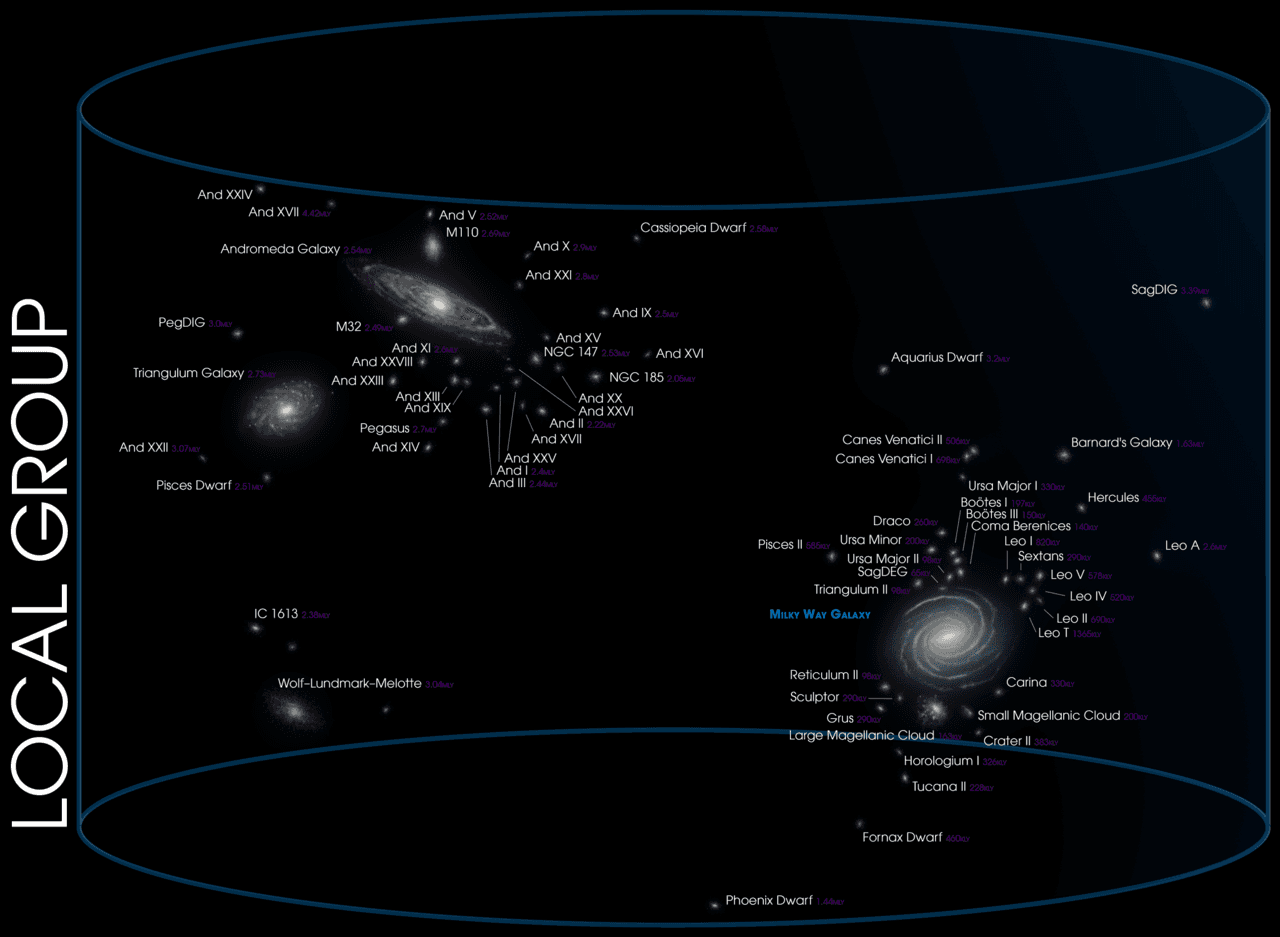
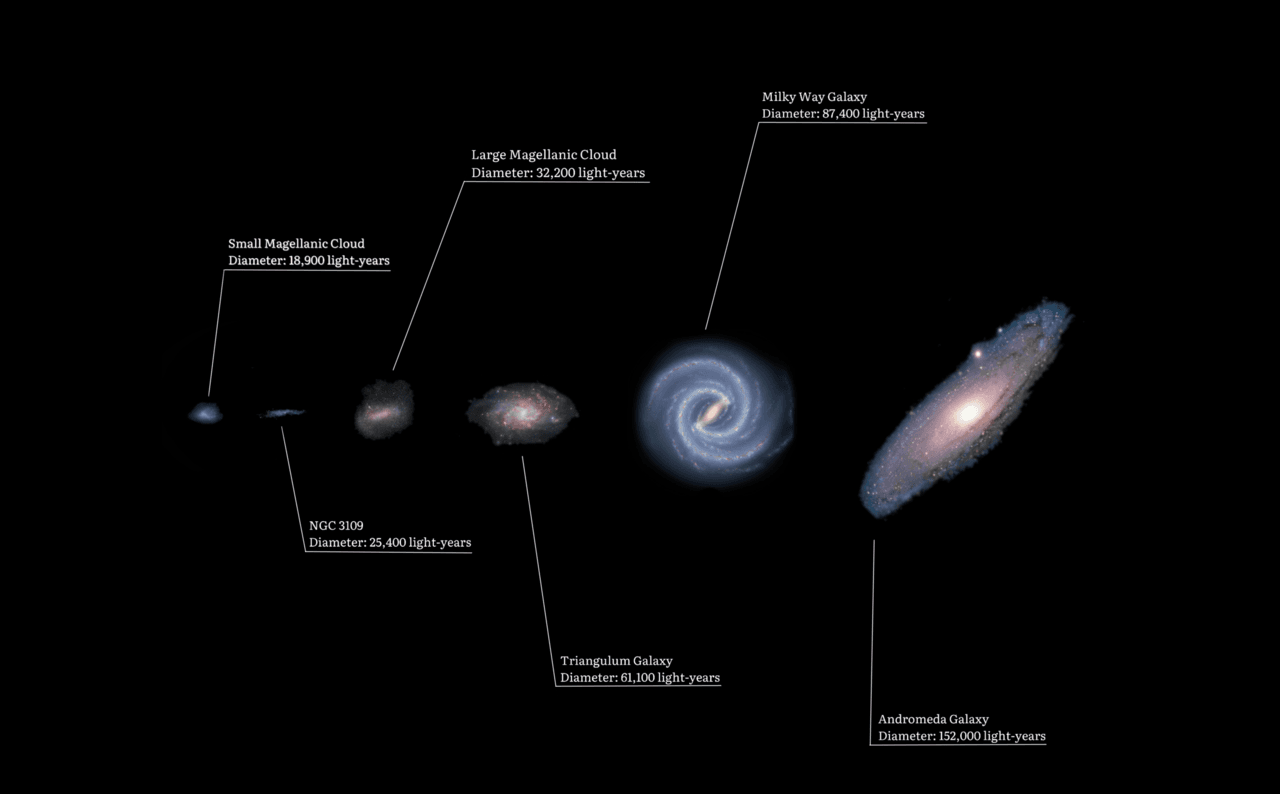
The Local Group is the galaxy group that includes the Milky Way, where Earth is located. It consists of two collections of galaxies in a "dumbbell" shape; the Milky Way and its satellites form one lobe, and the Andromeda Galaxy and its satellites constitute the other. The two collections are separated by about 800 kiloparsecs (3×10^6 ly; 2×10¹⁹ km) and are moving toward one another with a velocity of 123 km/s. The center of the group is located at about 450 kpc (1.5 million ly) away from the Milky Way, placing it slightly closer to the Andromeda Galaxy by roughly 300 kpc (1 million ly), in which the latter may be more massive than the former in terms of mass.
The Local Group has a total mass of the order of 2×10¹² solar masses (4×1042 kg), and also a total diameter of 5.11 megaparsecs (17 million light-years; 1.6×10²⁰ kilometres) based on density matching and the potential surface of its parent structure, Local Sheet. It is itself a part of the Local Volume and the larger Virgo Supercluster, which is a part of the even greater Laniakea Supercluster along with the Pisces–Cetus Supercluster Complex. The exact number of galaxies in the Local Group is unknown, as the Milky Way obscures some; however, a current total of 134 members is known within 1 megaparsec from the center, most of which are dwarf galaxies. The Local Group was thought to have been more spread in the early universe with 7 megaparsecs (23 million light-years; 2.2×10²⁰ kilometres) by 700 million years after the Big Bang.
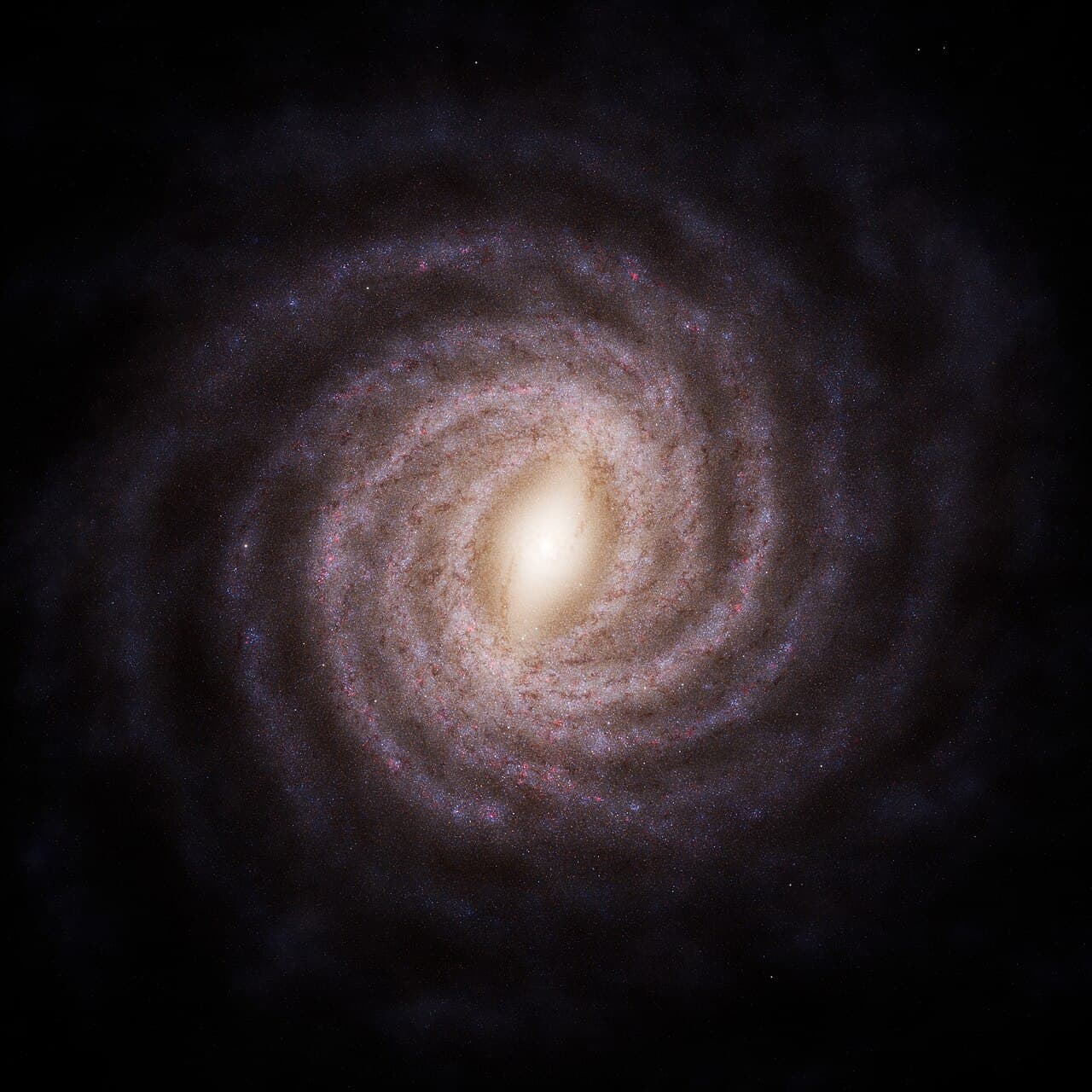
The two largest members, the Andromeda and the Milky Way galaxies, are both spiral galaxies with masses of about 1012 solar masses each. Each has its own system of satellite galaxies:
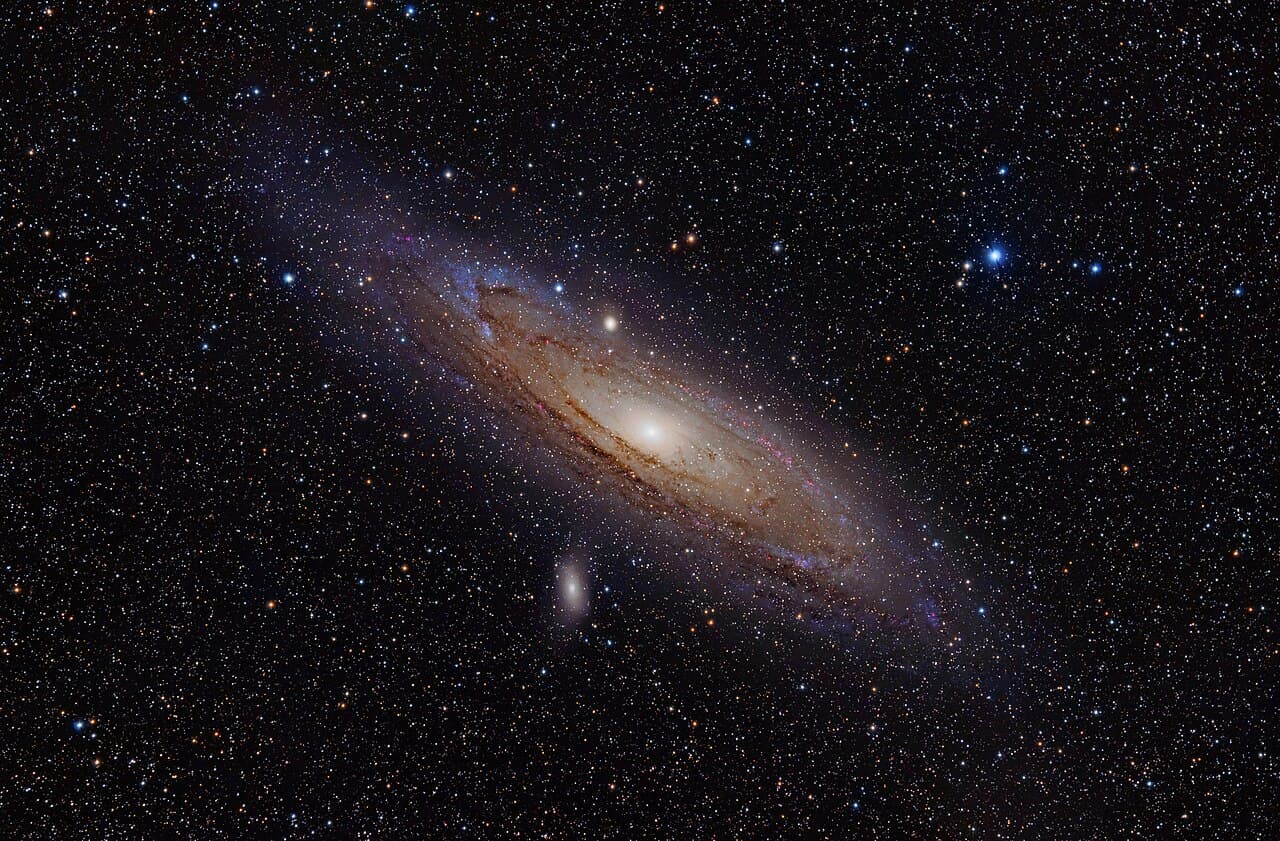
The Andromeda Galaxy's satellite system consists of Messier 32 (M32), Messier 110 (M110), NGC 147, NGC 185, Andromeda I (And I), And II, And III, And V, And VI (also known as the Pegasus Dwarf Spheroidal Galaxy, or Pegasus dSph), And VII (a.k.a. the Cassiopeia Dwarf Galaxy), And VIII, And IX, And X, And XI, And XIX, And XXI and And XXII, plus several additional ultra-faint dwarf spheroidal galaxies.