
John Tzetzes (Greek: Ἰωάννης Τζέτζης, romanized: Iōánnēs Tzétzēs; c. 1110, Constantinople – 1180, Constantinople) was a Byzantine poet and grammarian who lived at Constantinople in the 12th century. He is known for making significant contributions in preserving much valuable information from ancient Greek literature and scholarship. Of his numerous works, the most important one is the Book of Histories, also known as Chiliades ('Thousands'). The work is a long poem containing knowledge that is unavailable elsewhere and serves as commentary on Tzetzes's own letters. Two of his other important works are the Allegoriai on the Iliad and the Odyssey, which are long didactic poems containing interpretations of Homeric theology.
Biography
Tzetzes described himself as pure Greek on his father's side and part Iberian (Georgian) on his mother's side. In his works, Tzetzes states that his grandmother was a relative of the Georgian Bagratid princess Maria of Alania who came to Constantinople with her and later became the second wife of the sebastos Constantine Keroularios, megas droungarios and nephew of the patriarch Michael Keroularios.
He worked as a secretary to a provincial governor for a time and later began to earn a living by teaching and writing. He was described as vain, seems to have resented any attempt at rivalry, and violently attacked his fellow grammarians. Owing to a lack of written material, he was obliged to trust to his memory; therefore caution has to be exercised in reading his work. However, he was learned, and made a great contribution to the furtherance of the study of ancient Greek literature.
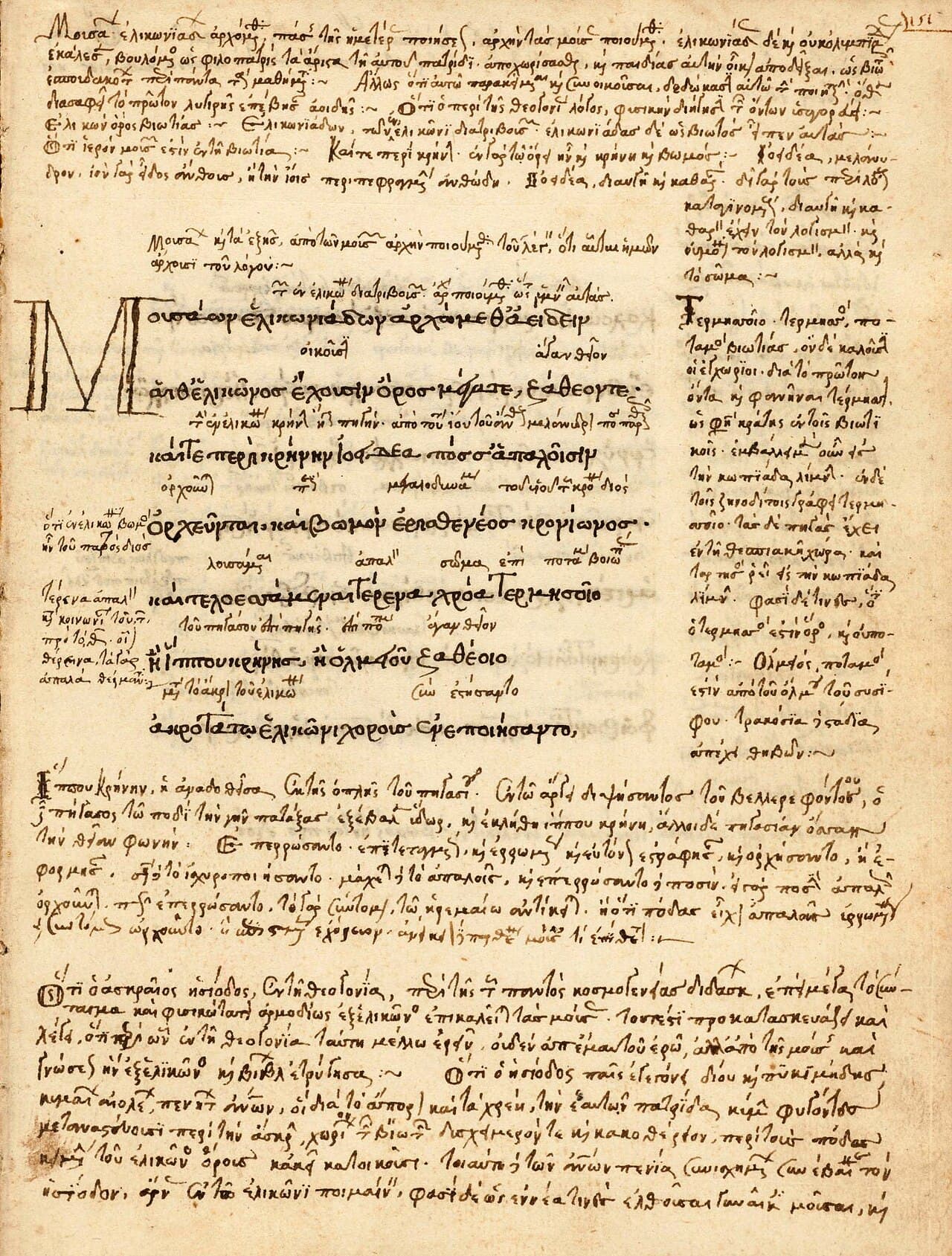
Works
Tzetzes published a collection of 107 of his Letters addressed partly to fictitious/unidentified personages, and partly to influential men and women of the writer's time. They contain a considerable amount of social and biographical information, and are full of learned allusions to , rhetoric, and mythology.