
John Milton Hay (October 8, 1838 – July 1, 1905) was an American statesman and official whose career in government stretched over almost half a century. Beginning as a private secretary for Abraham Lincoln, he became a diplomat. He served as United States Secretary of State under Presidents William McKinley and Theodore Roosevelt. Hay was also a biographer of Lincoln, and wrote poetry and other literature throughout his life.
Born in Salem, Indiana to an anti-slavery family that moved to Warsaw, Illinois, Hay showed great potential from an early age, and his family sent him to Brown University. After graduation in 1858, Hay read law in his uncle's office in Springfield, Illinois, adjacent to that of Lincoln. Hay worked for Lincoln's successful presidential campaign and became one of his private secretaries in the White House. Throughout the American Civil War, Hay was close to Lincoln and stood by his deathbed after the President was shot. In addition to his other literary works, Hay co-authored, with John George Nicolay, Lincoln's other private secretary, a ten-volume biography of Lincoln that helped shape the assassinated president's historical image.
After Lincoln's death, Hay spent several years at diplomatic posts in Europe, then worked for the New-York Tribune under Horace Greeley and Whitelaw Reid. Hay remained active in politics, and from 1879 to 1881 served as Assistant Secretary of State. Afterward, he returned to the private sector, remaining there until President McKinley, of whom he had been a major backer, made him the Ambassador to the United Kingdom in 1897. Hay became the Secretary of State the following year.

Hay served for nearly seven years as Secretary of State under President McKinley and, after McKinley's assassination, under Theodore Roosevelt. Hay was responsible for negotiating the Open Door Policy, which kept China open to trade with all countries on an equal basis, with international powers. By negotiating the Hay–Pauncefote Treaty with the United Kingdom, the (ultimately unratified) Hay–Herrán Treaty with Colombia, and finally the Hay–Bunau-Varilla Treaty with the newly independent Republic of Panama, Hay also cleared the way for the building of the Panama Canal.
Early life
Family and youth
John Milton Hay was born in Salem, Indiana, on October 8, 1838. He was the third son of Dr. Charles Hay and the former Helen Leonard. Charles Hay, born in Lexington, Kentucky, hated slavery and moved to the North in the early 1830s. A doctor, he practiced in Salem. Helen's father, David Leonard, had moved his family west from Assonet, Massachusetts, in 1818, but died en route to Vincennes, Indiana, and Helen relocated to Salem in 1830 to teach school. They married there in 1831. Charles was not successful in Salem, and moved, with his wife and children, to Warsaw, Illinois, in 1841.
John attended the local schools, and in 1849 his uncle Milton Hay invited John to live at his home in Pittsfield, Pike County, and attend a well-regarded local school, the John D. Thomson Academy. Milton was a friend of Springfield attorney Abraham Lincoln and had read law in the firm Stuart and Lincoln. In Pittsfield, John first met John Nicolay, who was at the time a 20-year-old newspaperman. Once John Hay completed his studies there, the 13-year-old was sent to live with his grandfather in Springfield and attend school there. His parents and uncle Milton (who financed the boy's education) sent him to Brown University in Providence, Rhode Island, alma mater of his late maternal grandfather.
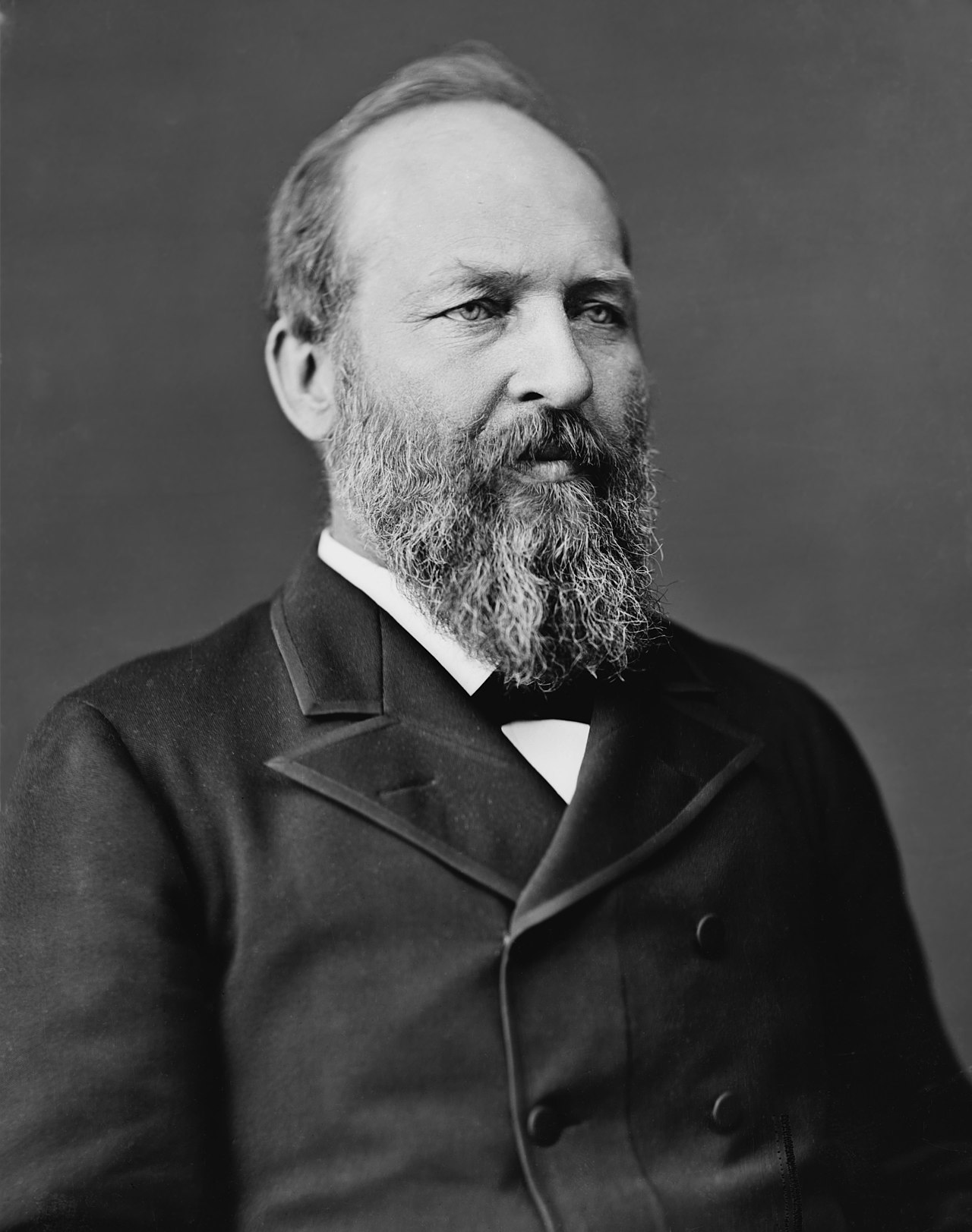
Student and Lincoln supporter
Hay enrolled at Brown in 1855. Although he enjoyed college life, he did not find it easy: his Western clothing and accent made him stand out; he was not well prepared academically and was often sick. Hay gained a reputation as a star student and became a part of Providence's literary circle that included Sarah Helen Whitman and Nora Perry. He wrote poetry and experimented with hashish. Hay received his Master of Arts degree in 1858, and was, like his grandfather before him, Class Poet. He returned to Illinois. Milton Hay had moved his practice to Springfield, and John became a clerk in his firm, where he could study law.
Milton Hay's firm was one of the most prestigious in Illinois. Lincoln maintained offices next door and was a rising star in the new Republican Party. Hay recalled an early encounter with Lincoln:
He came into the law office where I was reading ... with a copy of Harper's Magazine in hand, containing Senator Douglas's famous article on Popular Sovereignty. [whether residents of each territory could decide on slavery] Lincoln seemed greatly roused by what he had read. Entering the office without a salutation, he said: "This will never do. He puts the moral element out of this question. It won't stay out."
Hay was not a supporter of Lincoln for president until after his nomination in 1860. Hay then made speeches and wrote newspaper articles boosting Lincoln's candidacy. When Nicolay, who had been made Lincoln's private secretary for the campaign, found he needed help with the huge amounts of correspondence, Hay worked full-time for Lincoln for six months.
After Lincoln was elected, Nicolay, who continued as Lincoln's private secretary, recommended that Hay be hired to assist him at the White House. Lincoln is reported to have said, "We can't take all Illinois with us down to Washington" but then "Well, let Hay come". Kushner and Sherrill were dubious about "the story of Lincoln's offhand appointment of Hay" as fitting well into Hay's self-image of never having been an office-seeker, but "poorly into the realities of Springfield politics of the 1860s"—Hay must have expected some reward for handling Lincoln's correspondence for months. Hay biographer John Taliaferro suggests that Lincoln engaged Nicolay and Hay to assist him, rather than more seasoned men, both "out of loyalty and surely because of the competence and compatibility that his two young aides had demonstrated". Historian Joshua Zeitz argues that Lincoln was moved to hire Hay when Milton agreed to pay his nephew's salary for six months.
American Civil War
Secretary to Lincoln
Milton Hay desired that his nephew go to Washington as a qualified attorney, and John Hay was admitted to the bar in Illinois on February 4, 1861. On February 11, he embarked with President-elect Lincoln on a circuitous journey to Washington. By this time, several Southern states had seceded to form the Confederate States of America in reaction to the election of Lincoln, seen as an opponent of slavery. When Lincoln was sworn in on March 4, Hay and Nicolay moved into the White House, sharing a shabby bedroom. As there was only authority for payment of one presidential secretary (Nicolay), Hay was appointed to a post in the Interior Department at $1,600 per year, seconded to service at the White House. They were available to Lincoln 24 hours a day. As Lincoln took no vacations as president and worked seven days a week, often until 11 pm (or later, during crucial battles) the burden on his secretaries was heavy.

Hay and Nicolay divided their responsibilities, Nicolay tending to assist Lincoln in his office and in meetings, while Hay dealt with the correspondence, which was voluminous. Both men tried to shield Lincoln from office-seekers and others who wanted to meet with the President. Unlike the dour Nicolay, Hay, with his charm, escaped much of the hard feelings from those denied Lincoln's presence. Abolitionist Thomas Wentworth Higginson described Hay as "a nice young fellow, who unfortunately looks about seventeen and is oppressed with the necessity of behaving like seventy." Hay continued to write, anonymously, for newspapers, sending in columns calculated to make Lincoln appear a sorrowful man, religious and competent, giving of his life and health to preserve the Union. Similarly, Hay served as what Taliaferro deemed a "White House propagandist," in his columns explaining away losses such as that at First Bull Run in July 1861.
Despite the heavy workload—Hay wrote that he was busy 20 hours a day—he tried to make as normal a life as possible, eating his meals with Nicolay at Willard's Hotel, going to the theater with Abraham and Mary Todd Lincoln, and reading Les Misérables in French. Hay, still in his early 20s, spent time both in barrooms and at cultured get-togethers in the homes of Washington's elite. The two secretaries often clashed with Mary Lincoln, who resorted to various stratagems to get the dilapidated White House restored without depleting Lincoln's salary, which had to cover entertainment and other expenses. Despite the secretaries' objections, Mrs. Lincoln was generally the victor and managed to save almost 70 percent of her husband's salary in his four years in office.
After the death of Lincoln's 11-year-old son Willie in February 1862 (an event not mentioned in Hay's diary or correspondence), "it was Hay who became, if not a surrogate son, then a young man who stirred a higher form of parental nurturing that Lincoln, despite his best intentions, did not successfully bestow on either of his surviving children". According to Hay biographer Robert Gale, "Hay came to adore Lincoln for his goodness, patience, understanding, sense of humor, humility, magnanimity, sense of justice, healthy skepticism, resilience and power, love of the common man, and mystical patriotism". Speaker of the House Galusha Grow stated, "Lincoln was very much attached to him"; writer Charles G. Halpine, who knew Hay then, later recorded that "Lincoln loved him as a son".

Hay and Nicolay accompanied Lincoln to Gettysburg, Pennsylvania, for the dedication of the cemetery there, where were interred many of those who fell at the Battle of Gettysburg. Although they made much of Lincoln's brief Gettysburg Address in their 1890 multi-volume biography of Lincoln, Hay's diary states "the President, in a firm, free way, with more grace than is his wont, said his half-dozen lines of consecration."
Presidential emissary
Lincoln sent Hay away from the White House on various missions. In August 1861, Hay escorted Mary Lincoln and her children to Long Branch, New Jersey, a resort on the Jersey Shore, both as their caretaker and as a means of giving Hay a much-needed break. The following month, Lincoln sent him to Missouri to deliver a letter to Union General John C. Frémont, who had irritated the President with military blunders and by freeing local slaves without authorization, endangering Lincoln's attempts to keep the border states in the Union.
In April 1863, Lincoln sent Hay to the Union-occupied South Carolina coast to report back on the ironclad vessels being used in an attempt to recapture Charleston Harbor. Hay then went on to the Florida coast. He returned to Florida in January 1864, after Lincoln had announced his Ten Percent Plan, that if ten percent of the 1860 electorate in a state took oaths of loyalty and to support emancipation, they could form a government with federal protection. Lincoln considered Florida, with its small population, a good test case, and made Hay a major, sending him to see if he could get sufficient men to take the oath. Hay spent a month in the state during February and March 1864, but Union defeats there reduced the area under federal control. Believing his mission impractical, he sailed back to Washington.

In July 1864, New York publisher Horace Greeley sent word to Lincoln that there were Southern peace emissaries in Canada. Lincoln doubted that they actually spoke for Confederate President Jefferson Davis, but had Hay journey to New York to persuade the publisher to go to Niagara Falls, Ontario, to meet with them and bring them to Washington. Greeley reported to Lincoln that the emissaries lacked accreditation by Davis, but were confident they could bring both sides together. Lincoln sent Hay to Ontario with what became known as the Niagara Manifesto: that if the South laid down its arms, freed the slaves, and reentered the Union, it could expect liberal terms on other points. The Southerners refused to come to Washington to negotiate.
Assassination of Lincoln
By the end of 1864, with Lincoln re-elected and the victorious war winding down, both Hay and Nicolay let it be known that they desired different jobs. Soon after Lincoln's second inauguration in March 1865, the two secretaries were appointed to the U.S. delegation in Paris, Nicolay as consul and Hay as secretary of legation. Hay wrote to his brother Charles that the appointment was "entirely unsolicited and unexpected", a statement that Kushner and Sherrill found unconvincing given that Hay had spent hundreds of hours during the war with Secretary of State William H. Seward, who had often discussed personal and political matters with him, and the close relationship between the two men was so well known that office-seekers cultivated Hay as a means of getting to Seward. The two men were also motivated to find new jobs by their deteriorating relationship with Mary Lincoln, who sought their ouster, and by Nicolay's desire to wed his intended—he could not bring a bride to his shared room at the White House. They remained at the White House pending the arrival and training of replacements.
Hay did not accompany the Lincolns to Ford's Theatre on the night of April 14, 1865, but remained at the White House, drinking whiskey with Robert Lincoln. When the two were informed that the President had been shot, they hastened to the Petersen House, a boarding house where the stricken Lincoln had been taken. Hay remained by Lincoln's deathbed through the night and was present when he died. At the moment of Lincoln's death, Hay observed "a look of unspeakable peace came upon his worn features". He heard War Secretary Edwin Stanton's declaration, "Now he belongs to the ages."
According to Kushner and Sherrill, "Lincoln's death was for Hay a personal loss, like the loss of a father ... Lincoln's assassination erased any remaining doubts Hay had about Lincoln's greatness." In 1866, in a personal letter, Hay deemed Lincoln, "the greatest character since Christ". Taliaferro noted that "Hay would spend the rest of his life mourning Lincoln ... wherever Hay went and whatever he did, Lincoln would always be watching".
Early diplomatic career
Hay sailed for Paris at the end of June 1865. There, he served under U.S. Minister to France John Bigelow. The workload was not heavy, and Hay found time to enjoy the pleasures of Paris. When Bigelow resigned in mid-1866, Hay, as was customary, submitted his resignation, though he was asked to remain until Bigelow's successor was in place, and stayed until January 1867. He consulted with Secretary of State Seward, asking him for "anything worth having". Seward suggested the post of Minister to Sweden, but reckoned without the new president, Andrew Johnson, who had his own candidate. Seward offered Hay a job as his private secretary, but Hay declined, and returned home to Warsaw, Illinois.
Initially happy to be home, Hay quickly grew restive, and he was glad to hear, in early June 1867, that he had been appointed secretary of legation to act as chargé d'affaires at Vienna. He sailed for Europe the same month, and while in England visited the House of Commons, where he was greatly impressed by the Chancellor of the Exchequer, Benjamin Disraeli. The Vienna post was only temporary, until Johnson could appoint a chargé d'affaires and have him confirmed by the Senate, and the workload was light, allowing Hay, who was fluent in German, to spend much of his time traveling. It was not until July 1868 that Henry Watts became Hay's replacement. Hay resigned, spent the remainder of the summer in Europe, then went home to Warsaw.
Unemployed again, in December 1868 Hay journeyed to the capital, writing to Nicolay that he "came to Washington in the peaceful pursuit of a fat office. But there is nothing just now available". Seward promised to "wrestle with Andy for anything that turns up", but nothing did prior to the departure of both Seward and Johnson from office on March 4, 1869. In May, Hay went back to Washington from Warsaw to press his case with the new Grant administration. The next month, due to the influence of his friends, he obtained the post of secretary of legation in Spain.
Although the salary was low, Hay was interested in serving in Madrid both because of the political situation there—Queen Isabella II had recently been deposed—and because the U.S. Minister was the swashbuckling former congressman, General Daniel Sickles. Hay hoped to assist Sickles in gaining U.S. control over Cuba, then a Spanish colony. Sickles was unsuccessful and Hay resigned in May 1870, citing the low salary, but remaining in his post until September. Two legacies of Hay's time in Madrid were magazine articles he wrote that became the basis of his first book, Castilian Days, and his lifelong friendship with Sickles's personal secretary, Alvey A. Adee, who would be a close aide to Hay at the State Department.
Wilderness years (1870–1897)
Tribune and marriage
While still in Spain, Hay had been offered the position of assistant editor at the New-York Tribune—both the editor, Horace Greeley, and his managing editor, Whitelaw Reid, were anxious to hire Hay. He joined the staff in October 1870. The Tribune was the leading reform newspaper in New York, and through mail subscriptions, the largest-circulating newspaper in the nation. Hay wrote editorials for the Tribune, and Greeley soon proclaimed him the most brilliant writer of "breviers" (as such editorials were called) that he had ever had.
With his success as an editorial writer, Hay's duties expanded. In October 1871, he journeyed to Chicago after the great fire there, interviewing Mrs. O'Leary, whose cow was said to have started the blaze, describing her as "a woman with a lamp [who went] to the barn behind the house, to milk the cow with the crumpled temper, that kicked the lamp, that spilled the kerosene, that fired the straw that burned Chicago". His work at the Tribune came as his fame as a poet was reaching its peak, and one colleague described it as "a liberal education in the delights of intellectual life to sit in intimate companionship with John Hay and watch the play of that well-stored and brilliant mind". In addition to writing, Hay was signed by the prestigious Boston Lyceum Bureau, whose clients included Mark Twain and Susan B. Anthony, to give lectures on the prospects for democracy in Europe, and on his years in the Lincoln White House.
By the time President Grant ran for re-election in 1872, Grant's administration had been rocked by scandal, and some disaffected members of his party formed the Liberal Republicans, naming Greeley as their candidate for president, a nomination soon joined in by the Democrats. Hay was unenthusiastic about the editor-turned-candidate, and in his editorials mostly took aim at Grant, who, despite the scandals, remained untarred, and who won a landslide victory in the election. Greeley died only weeks later, a broken man. Hay's stance endangered his hitherto sterling credentials in the Republican Party.
By 1873, Hay was wooing Clara Stone, daughter of Cleveland multimillionaire railroad and banking mogul Amasa Stone. Their marriage in 1874 made the salary attached to office a small consideration for the rest of his life. Amasa Stone needed someone to watch over his investments, and wanted Hay to move to Cleveland to fill the post. Although the Hays initially lived in John's New York apartment and later in a townhouse there, they moved in June 1875 to Stone's ornate home on Cleveland's Euclid Avenue, "Millionaire's Row", and a mansion was quickly under construction for the Hays next-door. The Hays had four children, Helen Hay Whitney, Adelbert Stone Hay, Alice Evelyn Hay Wadsworth Boyd (who married James Wolcott Wadsworth Jr.), and Clarence Leonard Hay. Their father proved successful as a money manager, though he devoted much of his time to literary and political activities, writing to Adee that "I do nothing but read and yawn".
On December 29, 1876, a bridge over Ohio's Ashtabula River collapsed. The bridge had been built from metal cast at one of Stone's mills, and was carrying a train owned and operated by Stone's Lake Shore and Michigan Railway. Ninety-two people died; it was the worst rail disaster in American history up to that point. Blame fell heavily on Stone, who departed for Europe to recuperate and left Hay in charge of his businesses. The summer of 1877 was marked by labor disputes; a strike over wage cuts on the Baltimore and Ohio Railroad soon spread to the Lake Shore, much to Hay's outrage. He blamed foreign agitators for the dispute, and vented his anger over the strike in his only novel, The Bread-Winners (1883).
Return to politics
Hay remained disaffected from the Republican Party in the mid-1870s. Seeking a candidate of either party he could support as a reformer, he watched as his favored Democrat, Samuel Tilden, gained his party's nomination, but his favored Republican, James G. Blaine, did not, falling to Ohio Governor Rutherford B. Hayes, whom Hay did not support during the campaign. Hayes's victory in the election left Hay an outsider as he sought a return to politics, and he was initially offered no place in the new administration. Nevertheless, Hay attempted to ingratiate himself with the new president by sending him a gold ring with a strand of George Washington's hair, a gesture that Hayes deeply appreciated. Hay spent time working with Nicolay on their Lincoln biography, and traveling in Europe. When Reid, who had succeeded Greeley as editor of the Tribune, was offered the post of Minister to Germany in December 1878, he turned it down and recommended Hay. Secretary of State William M. Evarts indicated that Hay "had not been active enough in political efforts", to Hay's regret, who told Reid that he "would like a second-class mission uncommonly well".
From May to October 1879, Hay set out to reconfirm his credentials as a loyal Republican, giving speeches in support of candidates and attacking the Democrats. In October, President and Mrs. Hayes came to a reception at Hay's Cleveland home. When Assistant Secretary of State Frederick W. Seward resigned later that month, Hay was offered his place and accepted, after some hesitancy because he was considering running for Congress.
In Washington, Hay oversaw a staff of eighty employees, renewed his acquaintance with his friend Henry Adams, and substituted for Evarts at Cabinet meetings when the Secretary was out of town. In 1880, he campaigned for the Republican nominee for president, Ohio Congressman James A. Garfield. Hay felt that Garfield did not have enough backbone, and hoped that Reid and others would "inoculate him with the gall which I fear he lacks". Garfield consulted Hay before and after his election as president on appointments and other matters, but offered Hay only the post of private secretary (though he promised to increase its pay and power), and Hay declined. Hay resigned as assistant secretary effective March 31, 1881, and spent the next seven months as acting editor of the Tribune during Reid's extended absence in Europe. Garfield's death in September and Reid's return the following month left Hay again on the outside of political power, looking in. He would spend the next fifteen years in that position.
Wealthy traveler (1881–1897)
Author and dilettante
After 1881, Hay did not again hold public office until 1897. Amasa Stone committed suicide in 1883; his death left the Hays very wealthy. They spent several months in most years traveling in Europe. The Lincoln biography absorbed some of Hay's time, the hardest work being done with Nicolay in 1884 and 1885; beginning in 1886, portions began appearing serially, and the ten-volume biography was published in 1890.
In 1884, Hay and Adams commissioned architect Henry Hobson Richardson to construct houses for them on Washington's Lafayette Square; these were completed by 1886. Hay's house, facing the White House and fronting on Sixteenth Street, was described even before completion as "the finest house in Washington." The price for the combined tract, purchased from William Wilson Corcoran, was $73,800, of which Adams paid a third for his lot. Hay budgeted the construction cost at $50,000; his ornate, 12,000 square feet (1,100 m2) mansion eventually cost over twice that. Despite their possession of two lavish houses, the Hays spent less than half the year in Washington and only a few weeks a year in Cleveland. They also spent time at The Fells, their summer residence in Newbury, New Hampshire. According to Gale, "for a full decade before his appointment in 1897 as ambassador to England, Hay was lazy and uncertain."
Hay continued to devote much of his energy to Republican politics. In 1884, he supported Blaine for president, donating considerable sums to the senator's unsuccessful campaign against New York Governor Grover Cleveland. Many of Hay's friends were unenthusiastic about Blaine's candidacy, to Hay's anger, and he wrote to editor Richard Watson Gilder, "I have never been able to appreciate the logic that induces some excellent people every four years because they cannot nominate the candidate they prefer to vote for the party they don't prefer." In 1888, Hay had to follow his own advice as his favored candidate, Ohio Senator John Sherman, was unsuccessful at the Republican convention. After some reluctance, Hay supported the nominee, former Indiana senator Benjamin Harrison, who was elected. Though Harrison appointed men whom Hay supported, including Blaine, Reid, and Robert Lincoln, Hay was not asked to serve in the Harrison administration. In 1890, Hay spoke for Republican congressional candidates, addressing a rally of 10,000 people in New York City, but the party was defeated, losing control of Congress. Hay contributed funds to Harrison's unsuccessful re-election effort, in part because Reid had been made Harrison's 1892 running mate.
McKinley backer
Hay was an early supporter of Ohio's William McKinley and worked closely with McKinley's political manager, Cleveland industrialist Mark Hanna. In 1889, Hay supported McKinley in his unsuccessful effort to become Speaker of the House. Four years later, McKinley—by then Governor of Ohio—faced a crisis when a friend whose notes he had imprudently co-signed went bankrupt during the Panic of 1893. The debts were beyond the governor's means to pay, and the possibility of insolvency threatened McKinley's promising political career. Hay was among those Hanna called upon to contribute, buying up $3,000 of the debt of over $100,000. Although others paid more, "Hay's checks were two of the first, and his touch was more personal, a kindness McKinley never forgot". The governor wrote, "How can I ever repay you & other dear friends?"
The same panic that nearly ruined McKinley convinced Hay that men like himself must take office to save the country from disaster. By the end of 1894, he was deeply involved in efforts to lay the groundwork for the governor's 1896 presidential bid. It was Hay's job to persuade potential supporters that McKinley was worth backing. Nevertheless, Hay found time for a lengthy stay in New Hampshire—one visitor at The Fells in mid-1895 was Rudyard Kipling—and later in the year wrote, "The summer wanes and I have done nothing for McKinley." He atoned with a $500 check to Hanna, the first of many. During the winter of 1895–96, Hay passed along what he heard from other Republicans influential in Washington, such as Massachusetts Senator Henry Cabot Lodge.
Hay spent part of the spring and early summer of 1896 in the United Kingdom, and elsewhere in Europe. There was a border dispute between Venezuela and British Guiana, and Cleveland's Secretary of State, Richard Olney, supported the Venezuelan position, announcing the Olney interpretation of the Monroe Doctrine. Hay told British politicians that McKinley, if elected, would be unlikely to change course. McKinley was nominated in June 1896; still, many Britons were minded to support whoever became the Democratic candidate. This changed when the 1896 Democratic National Convention nominated former Nebraska congressman William Jennings Bryan on a "free silver" platform; he had electrified the delegates with his Cross of Gold speech. Hay reported to McKinley when he returned to Britain after a brief stay on the Continent during which Bryan was nominated in Chicago: "they were all scared out of their wits for fear Bryan would be elected, and very polite in their references to you."
Once Hay returned to the United States in early August, he went to The Fells and watched from afar as Bryan barnstormed the nation in his campaign while McKinley gave speeches from his front porch. Despite an invitation from the candidate, Hay was reluctant to visit McKinley at his home in Canton. "He has asked me to come, but I thought I would not struggle with the millions on his trampled lawn". In October, after basing himself at his Cleveland home and giving a speech for McKinley, Hay went to Canton at last, writing to Adams,
I had been dreading it for a month, thinking it would be like talking in a boiler factory. But he met me at the [railroad] station, gave me meat & took me upstairs and talked for two hours as calmly & serenely as if we were summer boarders in Bethlehem, at a loss for means to kill time. I was more struck than ever with his mask. It is a genuine Italian ecclesiastical face of the XVth Century.
Hay was disgusted by Bryan's speeches, writing in language that Taliaferro compares to The Bread-Winners that the Democrat "simply reiterates the unquestioned truths that every man with a clean shirt is a thief and ought to be hanged: that there is no goodness and wisdom except among the illiterate & criminal classes". Despite Bryan's strenuous efforts, McKinley won the election easily, with a campaign run by himself and Hanna, and well-financed by supporters like Hay. Henry Adams later wondered, "I would give sixpence to know how much Hay paid for McKinley. His politics must have cost."
Ambassador
Appointment
In the post-election speculation as to who would be given office under McKinley, Hay's name figured prominently, as did that of Whitelaw Reid; both men sought high office in the State Department, either as secretary or one of the major ambassadorial posts. Reid, in addition to his vice-presidential run, had been Minister to France under Harrison. An asthmatic, he handicapped himself by departing for Arizona Territory for the winter, leading to speculation about his health.