
Ismailism, known historically and among practitioners as Batiniyya (lit. 'esotericism'), is a branch of Shia Islam. Like all Shia, the Ismailis emphasize a distinction between the exoteric (zahir) and esoteric (batin) dimension of Islam. However, unlike other Shia, the Ismailis are characterized by a unique emphasis on the esoteric.
The Isma'ili () get their name from their acceptance of Imam Isma'il ibn Jafar as the appointed spiritual successor (imām) to Ja'far al-Sadiq, wherein they differ from the Twelver Shia, who accept Musa al-Kazim, the younger brother of Isma'il, as the true Imām. In summary, the Isma'ili accept Isma'il ibn Jafar as the sixth Imam. Isma'ili thought is heavily influenced by Neoplatonism.
After the death of Muhammad ibn Isma'il in the 8th century CE, the teachings of Ismailism further transformed into the belief system as it is known today, with an explicit concentration on the deeper, esoteric meaning (batin) of the Islamic religion. With the eventual development of Usulism and Akhbarism into the more literalistic (zahir) oriented, Shia Islam developed into two separate directions: the metaphorical Ismaili, Alevi, Bektashi, Alian, and Alawite groups focusing on the mystical path and nature of God, along with the "Imam of the Time" representing the manifestation of esoteric truth and intelligible divine reality, with the more literalistic Usuli and Akhbari groups focusing on divine law (sharia) and the deeds and sayings (sunnah) of Muhammad and the Twelve Imams who were guides and a light to God.

The larger sect of Ismaili are the Nizaris, who recognize Aga Khan V as the 50th hereditary Imam, while other groups are known as the Tayyibi branch. The community with the highest percentage of Ismailis is Gorno-Badakhshan, but Isma'ilis can be found in Central Asia, Afghanistan, Iran, Pakistan, Yemen, Lebanon, Malaysia, Syria, India, Saudi Arabia, Jordan, Iraq, Kuwait, East Africa, Angola, Bangladesh, and South Africa, and have in recent years emigrated to Europe, Russia, Canada, Australia, New Zealand, the United States, and Trinidad and Tobago.
History
Succession crisis
Ismailism shares its beginnings with other early Shia sects that emerged during the succession crisis that spread throughout the early Muslim community. From the beginning, the Shia asserted the right of Ali, cousin of Muhammad, to have both political and spiritual control over the community. This also included his two sons, who were the grandsons of Muhammad through his daughter Fatima. The conflict remained relatively peaceful between the partisans of Ali and those who asserted a semi-democratic system of electing caliphs, until the third Rashidun caliph (Uthman) was killed and Ali ascended to the caliphate with popular support.
Soon after his ascendancy, Aisha, the third of Muhammad's wives, claimed, along with Uthman's tribe, the Umayyads, that Ali should take qisas (blood for blood) from the people responsible for Uthman's death. Ali voted against it, as he believed that the situation at the time demanded a peaceful resolution of the matter. Though both parties could rightfully defend their claims, due to escalated misunderstandings, the Battle of the Camel was fought and Aisha was defeated, but was respectfully escorted to Medina by Ali.

Following this battle, Mu'awiya I, the Umayyad governor of Syria, also staged a revolt under the same pretences. Ali led his forces against Mu'awiya until the side of Mu'awiya held copies of the Quran against their spears and demanded that the issue be decided by Islam's holy book. Ali accepted this, and an arbitration was done, which ended in his favor. A group among Ali's army believed that subjecting his legitimate authority to arbitration was tantamount to apostasy, and abandoned his forces. This group, known as the Khawarij, was defeated by Ali before they reached the cities, where they would have been able to blend in with the rest of the population. While he was unable to do this, he nonetheless defeated their forces in subsequent battles.
Regardless of these defeats, the Kharijites survived and became a violently problematic group in Islamic history. After plotting assassinations against Ali, Mu'awiya, and the arbitrator of their conflict, a Kharijite successfully assassinated Ali in 661 CE. The Imāmate then passed to his son Hasan ibn Ali, and later to his son Husayn ibn Ali. According to the Nizari Isma'ili tradition, Hasan was "an Entrusted Imam" (Arabic: الإمام المستودع, romanized: al-imām al-mustawdaʿ), Husayn was the "Permanent Imam" (Arabic: الإمام المستقر, romanized: al-imām al-mustaqar). The Entrusted Imam is an Imam in the full sense except that the lineage of the Imamate must continue through the Permanent Imam. However, the political Caliphate was soon taken over by Mu'awiya, the only leader in the empire at that time with an army large enough to seize control.
Even some of Ali's early followers regarded him as "an absolute and divinely guided leader", whose demands of his followers were "the same kind of loyalty that would have been expected for the Prophet". For example, one of Ali's supporters who also was devoted to Muhammad said to him: "our opinion is your opinion and we are in the palm of your right hand." The early followers of Ali seem to have taken his guidance as "right guidance" deriving from Divine support. In other words, Ali's guidance was seen to be the expression of God's will and the Quranic message. This spiritual and absolute authority of Ali was known as walayah, and it was inherited by his successors, the Imams.

In the 1st century after Muhammad, the term 'sunnah' was not specifically defined as "Sunnah of the Prophet", but was used in connection to Abu Bakr, Umar, Uthman, and some Umayyad Caliphs. The idea of hadith, or traditions ascribed to Muhammad, was not mainstream, nor was hadith criticised. Even the earliest legal texts by Malik b. Anas and Abu Hanifa employ many methods, including analogical reasoning and opinion, and do not rely exclusively on hadith. Only in the 2nd century does the Sunni jurist al-Shafi'i first argue that only the sunnah of Muhammad should be a source of law, and that this sunnah is embodied in hadiths. It would take another one hundred years after al-Shafi'i for Sunni Muslim jurists to fully base their methodologies on prophetic hadiths. Meanwhile, Imami Shia Muslims followed the Imams' interpretations of Islam as normative without any need for hadiths and other sources of Sunni law such as analogy and opinion.
Karbala and afterward
The Battle of Karbala
After the death of Imam Hasan, Imam Husayn and his family were increasingly worried about the religious and political persecution that was becoming commonplace under the reign of Mu'awiya's son, Yazid. Amidst this turmoil in 680, Husayn, along with the women and children of his family, upon receiving invitational letters and gestures of support by Kufis, wished to go to Kufa and confront Yazid as an intercessor on behalf of the citizens of the empire. However, he was stopped by Yazid's army in Karbala during the month of Muharram. His family was starved and deprived of water and supplies, until eventually the army came in on the tenth day and martyred Husayn and his companions, and enslaved the rest of the women and family, taking them to Kufa.
This battle would become extremely important to the Shia psyche. The Twelvers as well as Musta'li Isma'ili still mourn this event during an occasion known as Ashura.

The Nizari Isma'ili, however, do not mourn this in the same way because of the belief that the light of the Imam never dies but rather passes on to the succeeding Imām, making mourning arbitrary. However, during commemoration, there are no celebrations in Jama'at Khana during Muharram, and there may be announcements or sessions regarding the tragic events of Karbala. Also, individuals may observe Muharram in a wide variety of ways. This respect for Muharram does not include self-flagellation and beating because they feel that harming one's body is harming a gift from God.
The beginnings of Ismāʿīlī Daʿwah
After being set free by Yazid, Zaynab bint Ali, the daughter of Fatimah and Ali and the sister of Hasan and Husayn, started to spread the word of Karbala to the Muslim world, making speeches regarding the event. This was the first organized daʿwah of the Shia, which would later develop into an extremely spiritual institution for the Ismāʿīlīs.
After the poisoning of Ali ibn Husayn Zayn al-Abidin by Hisham ibn Abd al-Malik in 713, the first succession crisis of the Shia arose with Zayd ibn ʻAlī's companions and the Zaydīs who claimed Zayd ibn ʻAlī as the Imām, whilst the rest of the Shia upheld Muhammad al-Baqir as the Imām. The Zaidis argued that any sayyid or "descendant of Muhammad through Hasan or Husayn" who rebelled against tyranny and the injustice of his age could be the Imām. The Zaidis created the Zaydism.
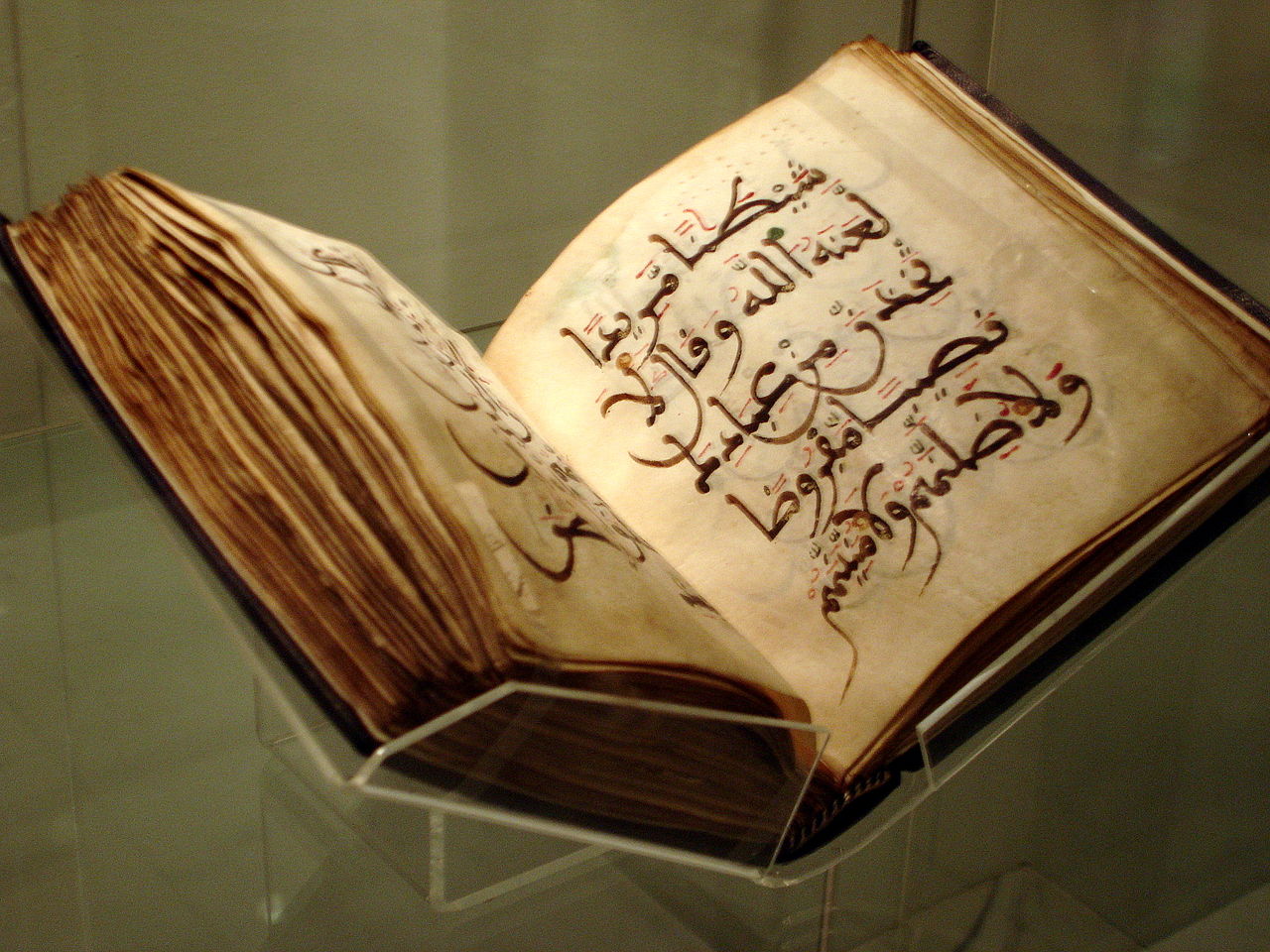
In contrast to his predecessors, Muhammad al-Baqir focused on academic Islamic scholarship in Medina, where he promulgated his teachings to many Muslims, both Shia and non-Shia, in an extremely organized form of Daʿwah. In fact, the earliest text of the Ismaili school of thought is said to be the Umm al-kitab (The Archetypal Book), a conversation between Muhammad al-Baqir and three of his disciples.
This tradition would pass on to his son, Ja'far al-Sadiq, who inherited the Imāmate on his father's death in 743. Ja'far al-Sadiq excelled in the scholarship of the day and had many pupils, including three of the four founders of the Sunni madhhabs.
However, following al-Sadiq's poisoning in 765, a fundamental split occurred in the community. Ismaʻil ibn Jafar, who at one point was appointed by his father as the next Imam, appeared to have predeceased his father in 755. While Twelvers argue that either he was never heir apparent or he truly predeceased his father and hence Musa al-Kadhim was the true heir to the Imamate, the Ismāʿīlīs argue that either the death of Ismaʻil was staged in order to protect him from Abbasid persecution or that the Imamate passed to Muhammad ibn Ismaʻil in lineal descent.

Ascension of the Dais
For some partisans of Isma'il, the Imamate ended with Isma'il ibn Ja'far. Most Ismailis recognized Muhammad ibn Ismaʻil as the next Imam, and some saw him as the expected Mahdi that Ja'far al-Sadiq had preached about. However, at this point, the Isma'ili Imams, according to the Nizari and Mustaali, found areas where they would be able to be safe from the recently founded Abbasid Caliphate, which had defeated and seized control from the Umayyads in 750 CE.
At this point, some of the Isma'ili community believed that Muhammad ibn Isma'il had gone into the Occultation and that he would one day return. A small group traced the Imamate among Muhammad ibn Isma'il's lineal descendants. With the status and location of the Imams not known to the community, the concealed Isma'ili Imams began to propagate the faith through Da'iyyun from its base in Syria. This was the start of the spiritual beginnings of the Daʿwah that would later play important parts in the all Ismaili branches, especially the Nizaris and the Musta'lis.
The Da'i was not a missionary in the typical sense, and he was responsible for both the conversion of his student and the mental and spiritual well-being. The Da'i was a guide and light to the Imam. The teacher-student relationship of the Da'i and his student was much like the one that would develop in Sufism. The student desired God, and the Da'i could bring him to God by making him recognize the Imam, who possesses the knowledge of the Oneness of God. The Da'i and Imam were respectively the spiritual mother and spiritual father of the Isma'ili believers.
Ja'far bin Mansur al-Yaman's The Book of the Sage and Disciple is a classic of early Fatimid literature, documenting important aspects of the development of the Isma'ili da'wa in tenth-century Yemen. The book is also of considerable historical value for modern scholars of Arabic prose literature as well as those interested in the relationship of esoteric Shia with early Islamic mysticism. Likewise, the book is an important source of information on the various movements within tenth-century Shīa, leading to the spread of the Fatimid-Isma'ili da'wa throughout the medieval Islamicate world, as well as on the religious and philosophical history of the post-Fatimid Musta'li branch of Isma'ilism in Yemen and India.
The Qarmatians
While many of the Isma'ili were content with the Da'i teachings, a group that mingled Persian nationalism and Zoroastrianism surfaced, known as the Qarmatians. With their headquarters in Bahrain, they accepted a young Persian former prisoner by the name of Abu'l-Fadl al-Isfahani, who claimed to be the descendant of the Persian kings as their Mahdi, and rampaged across the Middle East in the tenth century, climaxing their violent campaign by stealing the Black Stone from the Kaaba in Mecca in 930 under Abu Tahir al-Jannabi. Following the arrival of the Al-Isfahani, they changed their qibla from the Kaaba in Mecca to the Zoroastrian-influenced fire. After their return of the Black Stone in 951 and a defeat by the Abbasids in 976, the group slowly dwindled off and no longer has any adherents.
The Fatimid Caliphate
Rise of the Fatimid Caliphate
The political asceticism practiced by the Imāms during the period after Muhammad ibn Ismail was to be short-lived and finally concluded with the Imāmate of Abdullah al-Mahdi Billah, who was born in 873. After decades of Ismāʿīlīs believing that Muhammad ibn Ismail was in the Occultation and would return to bring an age of justice, al-Mahdi taught that the Imāms had not been literally secluded, but rather had remained hidden to protect themselves and had been organizing the Da'i, and even acted as Da'i themselves.
After raising an army and successfully defeating the Aghlabids in North Africa and a number of other victories, al-Mahdi Billah successfully established a Shia political state ruled by the Imāmate in 910. This was the only time in history where the Shia Imamate and Caliphate were united after the first Imam, Ali ibn Abi Talib.
In parallel with the dynasty's claim of descent from ʻAlī and Fāṭimah, the empire was named "Fatimid". However, this was not without controversy, and recognizing the extent that Ismāʿīlī doctrine had spread, the Abbasid Caliphate assigned Sunni and Twelver scholars the task to disprove the lineage of the new dynasty. This became known as the Baghdad Manifesto, which tries to trace the lineage of the Fatimids to an alleged Jewish blacksmith.
The Middle East under Fatimid rule
The Fatimid Caliphate expanded quickly under the subsequent Imams. Under the Fatimids, Egypt became the center of an empire that included at its peak North Africa, Sicily, Palestine, Syria, the Red Sea coast of Africa, Yemen, Hejaz and the Tihamah. Under the Fatimids, Egypt flourished and developed an extensive trade network in both the Mediterranean Sea and the Indian Ocean, which eventually determined the economic course of Egypt during the High Middle Ages.
The Fatimids promoted ideas that were radical for the time. One was a promotion by merit rather than genealogy. Also during this period, the three contemporary branches of Isma'ilism formed. The first branch (Druze) occurred with the al-Hakim bi-Amr Allah. Born in 985, he ascended as ruler at the age of eleven. A religious group that began forming in his lifetime broke off from mainstream Ismailism and refused to acknowledge his successor. Later to be known as the Druze, they believe Al-Hakim to be the manifestation of God and the prophesied Mahdi, who would one day return and bring justice to the world. The faith further split from Ismailism as it developed unique doctrines which often class it separately from both Ismailism and Islam.
Arwa al-Sulayhi was the Hujjah in Yemen from the time of Imam al-Mustansir. She appointed Da'i in Yemen to run religious affairs. Ismaili missionaries Ahmed and Abadullah (in about 1067 CE (460 AH)) were also sent to India in that time. They sent Syedi Nuruddin to Dongaon to look after the southern part and Syedi Fakhruddin to East Rajasthan, India.
The second split occurred following the death of al-Mustansir Billah in 1094 CE. His rule was the longest of any caliph in both the Fatimid and other Islamic empires. After he died, his sons Nizar, the older, and al-Musta'li, the younger, fought for political and spiritual control of the dynasty. Nizar was defeated and jailed, but according to Nizari sources, his son escaped to Alamut, where the Iranian Isma'ilis had accepted his claim.
The Musta'li line split again between the Taiyabi and the Hafizi, the former claiming that the 21st Imam and son of al-Amir bi-Ahkami'l-Lah went into occultation and appointed a Da'i al-Mutlaq to guide the community, in a similar manner as the Isma'ili had lived after the death of Muhammad ibn Isma'il. The latter claimed that the ruling Fatimid caliph was the Imām. However, in the Mustaali branch, Dai came to have a similar but more important task. The term Da'i al-Mutlaq (Arabic: الداعي المطلق, romanized: al-dāʿī al-muṭlaq) literally means "the absolute or unrestricted missionary". This da'i was the only source of the Imam's knowledge after the occultation of al-Qasim in Musta'li thought.
According to Taiyabi Ismaili tradition, after the death of Imam al-Amir, his infant son, at-Tayyib Abu'l-Qasim, about 2 years old, was protected by the most important woman in Musta'li history after Muhammad's daughter, Fatimah. She was Arwa al-Sulayhi, a queen in Yemen. She was promoted to the post of hujjah long before by Imām Mustansir at the death of her husband. She ran the da'wat from Yemen in the name of Imaam Tayyib. She was instructed and prepared by Imam Mustansir and ran the dawat from Yemen in the name of Imaam Tayyib, following Imams for the second period of Satr. It was going to be on her hands that Imam Tayyib would go into seclusion, and she would institute the office of the Da'i al-Mutlaq. Zoeb bin Moosa was first to be instituted to this office. The office of the da'i continued in Yemen up to the 24th da'i Yusuf, who shifted da'wat to India. Before the shift of da'wat in India, the da'i's representatives were known as Wali-ul-Hind. Syedi Hasan Feer was one of the prominent Isma'ili wali of the 14th century. The line of Tayyib Da'is that began in 1132 is continuing under the main sect known as Dawoodi Bohra (see list of Dai of Dawoodi Bohra).
The Musta'li split several times over disputes regarding who was the rightful Da'i al-Mutlaq, the leader of the community within the Occultation. After the 27th Da'i, Syedna Dawood bin Qutub Shah, there was another split; the ones following Syedna Dawood came to be called Dawoodi Bohra, and followers of Suleman were then called Sulaimani. Dawoodi Bohra's present Da'i al Mutlaq, the 53rd, is Syedna Mufaddal Saifuddin, and he and his devout followers tread the same path, following the same tradition of the Aimmat Fatimiyyeen. The Sulaymani are mostly concentrated in Yemen and Saudi Arabia, with some communities in South Asia. The Dawoodi Bohra and Alavi Bohra are mostly exclusive to South Asia, after the migration of the da'wah from Yemen to India. Other groups include Atba-i-Malak and Hebtiahs Bohra. Mustaali beliefs and practices, unlike those of the Nizari and Druze, are regarded as compatible with mainstream Islam, representing a continuation of Fatimid tradition and fiqh.
Decline of the Caliphate
In the 1040s, the Zirid dynasty (governors of the Maghreb under the Fatimids) declared their independence and their conversion to Sunni Islam, which led to the devastating Banu Hilal invasions. After about 1070, the Fatimid hold on the Levant coast, and parts of Syria, was challenged first by Turkish invasions, then by the First Crusade, so that Fatimid territory shrank until it consisted only of Egypt. Damascus fell to the Seljuk Empire in 1076, leaving the Fatimids only in charge of Egypt and the Levantine coast up to Tyre and Sidon. Because of the vehement opposition to the Fatimids from the Seljuks, the Ismaili movement was only able to operate as a terrorist underground movement, much like the Assassins.
After the decay of the Fatimid political system in the 1160s, the Zengid ruler Nur ad-Din, atabeg of Aleppo had his general, Saladin, seize Egypt in 1169, forming the Sunni Ayyubid dynasty. This signaled the end of the Hafizi Mustaali branch of Ismailism as well as the Fatimid Caliphate.
Alamut
Hassan-i Sabbah
Very early in the empire's life, the Fatimids sought to spread the Isma'ili faith, which in turn would spread loyalty to the Imamate in Egypt. One of their earliest attempts was taken by a missionary by the name of Hassan-i Sabbah. Hassan-i Sabbah was born into a Twelver family living in the scholarly Persian city of Qom in 1056 CE. His family later relocated to Tehran, an area with an extremely active Isma'ili Da'wah. He immersed himself in Ismāʿīlī thought; however, he did not choose to convert until he was overcome with an almost fatal illness and feared dying without knowing the Imām of his time. Afterward, Hassan-i Sabbah became one of the most influential Da'is in Isma'ili history; he became important to the survival of the Nizari branch of Ismailism, which today is its largest branch.
Legend holds that Hassan-i Sabbah met with Imam al-Mustansir Billah and asked him who his successor would be, to which he responded that it would be his eldest son Nizar (Fatimid Imam). Hassan-i Sabbah continued his missionary activities, which climaxed with his taking of the famous citadel of Alamut. Over the next two years, he converted most of the surrounding villages to Isma'ilism. Afterward, he converted most of the staff to Ismailism, took over the fortress, and presented Alamut's king with payment for his fortress, which he had no choice but to accept. The king reluctantly abdicated his throne, and Hassan-i Sabbah turned Alamut into an outpost of Fatimid rule within Abbasid territory.
The Hashasheen / Assassiyoon
Surrounded by the Abbasids and other hostile powers and low in numbers, Hassan-i Sabbah devised a way to attack the Isma'ili enemies with minimal losses. Using the method of assassination, he ordered the murders of Sunni scholars and politicians who he felt threatened the Isma'ilis. Knives and daggers were used to kill, and sometimes as a warning; a knife would be placed on the pillow of a Sunni, who understood the message to mean that he was marked for death. When an assassination was actually carried out, the Hashasheen would not be allowed to run away; instead, to strike further fear into the enemy, they would stand near the victim without showing any emotion and departed only when the body was discovered. This further increased the ruthless reputation of the Hashasheen throughout Sunni-controlled lands.
The English word assassins is said to have been derived from the Arabic word Hasaseen meaning annihilators, as mentioned in Quran 3:152 or Hashasheen meaning both "those who use hashish" and "throat slitters" in Egyptian Arabic dialect, and one of the Shia Ismaili sects in the Syria of the eleventh century.
Threshold of the Imāmate
After Nizar was imprisoned by his younger brother, Ahmad al-Musta'li, various sources indicate that Nizar's son, Ali al-Hadi ibn Nizari, survived and fled to Alamut. He was offered a safe place in Alamut, where Hassan-Al-Sabbah welcomed him. However, it is believed this was not announced to the public and the lineage was hidden until a few Imāms later to avoid further attacks and hostility.
It was announced with the advent of Imam Hassan II. In a show of his Imamate and to emphasize the interior meaning (the batin) over the exterior meaning (the zahir), only two years after his accession, the Imām Hasan 'Ala Zikrihi al-Salam conducted a ceremony known as qiyama (resurrection) at the grounds of the Alamut Castle, whereby the Imam would once again become visible to his community of followers in and outside of the Nizārī Ismā'īlī state. Given Juwayni's polemical aims and the fact that he burned the Isma'ili libraries, which may have offered much more reliable testimony about the history, scholars have been dubious of his narrative but are forced to rely on it given the absence of alternative sources.
Descriptions of the event are also preserved in Rashid al-Din's narrative and recounted in the Haft Bab Baba-yi Sayyidna, written 60 years after the event, and the later Haft Bab-i Abi Ishaq, an Ismaili book of the 15th century CE. However, Rashid al-Din's narrative is based on Juwayni, and the Nizari sources do not go into specific details. Since very few contemporary Nizari Ismaili accounts of the events have survived, it is likely that scholars will never know the exact details of this event. However, there was no total abrogation of all law; only certain exoteric rituals, such as Salah/Namaz, Fasting in Ramadan, Hajj to Makkah, and facing Makkah in prayer, were abrogated; the Nizaris continued to perform rituals of worship, though these were more esoteric and spiritually oriented. For example, the true prayer is to remember God at every moment; true fasting is to keep all of the body's organs away from whatever is unethical and forbidden. Ethical conduct is enjoined at all times.
Afterward, his descendants ruled as the Imams at Alamut until its destruction by the Mongols.
Destruction by the Mongols
Through the 12th century, the Isma'ili continued to successfully ward off Sunni attempts to take Alamut, including by Saladin. The stronghold