
Immanuel Kant (born Emanuel Kant; 22 April 1724 – 12 February 1804) was a German philosopher. Born in Königsberg in the Kingdom of Prussia, he is considered one of the central thinkers of the Enlightenment. His comprehensive and systematic works in epistemology, metaphysics, logic, ethics, aesthetics, political theory, and the philosophy of religion have made him one of the most influential and highly discussed figures in modern Western philosophy.
Kant's philosophy is centered on the human subject and motivated by the desire to secure the possibility of both knowledge and morality against the threats of skepticism and determinism. In the Critique of Pure Reason (1781/1787), Kant argues for transcendental idealism, the doctrine that space and time are mere "forms of intuition" (German: Anschauung) that structure all experience and that we have knowledge only of "appearances" and not of the nature of things in themselves. Kant drew a parallel to the Copernican Revolution in his proposal to think of the objects of experience as conforming to people's spatial and temporal forms of intuition and the categories of the understanding, instead of the traditional method of showing how the mind might conform to its objects.
Kant believed that reason is the source of morality and that the categorical imperative binds all rational agents. He believed that aesthetics arises from a faculty of disinterested judgment. Kant hoped that perpetual peace could be secured through an international federation of republican states and international cooperation. Kant believed that true religion is grounded on morality. The exact nature of his religious views is a matter of dispute.

Early life
Immanuel Kant was born on 22 April 1724 into a Prussian German family of Lutheran faith in Königsberg in East Prussia (now Kaliningrad Oblast, Russia). His mother, Anna Regina Reuter, was born in Königsberg to a father from Nuremberg. Her surname is sometimes erroneously given as Porter. Kant's father, Johann Georg Kant, was a German harness-maker from Memel, at the time Prussia's most northeastern city (now Klaipėda, Lithuania). Kant believed his family to be of Scottish descent, although this has not been verified by genealogical research.
Kant was baptized as Emanuel, changing the spelling of his name to Immanuel after learning Hebrew. He was the fourth of nine children (six of whom reached adulthood). The Kant household stressed the Pietist values of religious devotion, humility, and a literal interpretation of the Bible. Immanuel Kant's early education was strict, punitive, and highly disciplinary, with an emphasis on Latin and religious instruction rather than mathematics and science.
In his later years, Kant lived a strictly ordered life. It was said that neighbors would set their watches by his daily walks. Kant considered marriage twice, first to a widow and then to a Westphalian girl, but on both occasions waited too long. Though he never married, he seems to have had a rewarding social life; he was a popular teacher as well as a modestly successful author, even before starting on his major philosophical works.

Young scholar
Kant demonstrated an early aptitude for study. He first attended the Collegium Fridericianum (then directed by Franz Albert Schultz), from which he graduated at the end of the summer of 1740. In 1740, aged 16, he enrolled at the University of Königsberg, where he would later remain for the rest of his professional life. He studied the philosophy of Gottfried Leibniz and Christian Wolff under Martin Knutzen (Associate Professor of Logic and Metaphysics from 1734 until he died in 1751), a rationalist who was also familiar with developments in British philosophy and science and introduced Kant to the new mathematical physics of Isaac Newton. Knutzen dissuaded Kant from the theory of pre-established harmony, which he regarded as "the pillow for the lazy mind". He also dissuaded Kant from idealism, the idea that reality is purely mental, which most philosophers in the 18th century regarded negatively. The theory of transcendental idealism that Kant later included in the Critique of Pure Reason was developed partially in opposition to traditional idealism. Kant had contacts with students, colleagues, friends and diners who frequented the local Masonic lodge. His main publisher, Johann Friedrich Hartknoch, was also a Freemason.
His father's stroke and subsequent death in 1746 interrupted his studies. Kant left Königsberg shortly after August 1748; he would return there in August 1754. He became a private tutor in the towns surrounding Königsberg, but continued his scholarly research. In 1749, he published his first philosophical work, Thoughts on the True Estimation of Living Forces (written in 1745–1747).
Russian occupation of Königsberg during the Seven Years' War (1758–1762) improved Kant's financial circumstances, as he obtained a number of well-paid tutoring assignments from Russian military officers and civil administrators stationed in the city. In December 1758, after the death of Johann David Kypke, Kant petitioned Empress Elizabeth for appointment to the vacant chair of logic and metaphysics at the University of Königsberg, but the position was awarded to another candidate.
Early work
Kant is best known for his work in the philosophy of ethics and metaphysics, but he made significant contributions to other disciplines. In 1754, while contemplating a prize question by the Berlin Academy about the problem of Earth's rotation, he argued that the Moon's gravity would slow down the Earth's spin. He also put forth the argument that gravity would eventually cause the Moon's tidal locking to coincide with the Earth's rotation. The next year, he expanded this reasoning to the formation and evolution of the Solar System in his Universal Natural History and Theory of the Heavens. In 1755, Kant received a license to lecture at the University of Königsberg and began lecturing on a variety of topics including mathematics, physics, logic, and metaphysics. In his 1756 essay on the theory of winds ("New Remarks toward an Elucidation of the Theory of Winds"), Kant laid out a qualitative insight into what is now called Coriolis force.
In 1756, Kant also published three papers on the 1755 Lisbon earthquake. Kant's theory, which involved shifts in huge caverns filled with hot gases, though inaccurate, was one of the first systematic attempts to explain earthquakes in natural rather than supernatural terms. In 1757, Kant began lecturing on geography, making him one of the first lecturers to explicitly teach geography as its own subject. Geography was one of Kant's most popular lecturing topics and, in 1802, a compilation by Friedrich Theodor Rink of Kant's lecturing notes, Physical Geography, was released. After Kant became a professor in 1770, he expanded the topics of his lectures to include lectures on natural law, ethics, and anthropology, along with other topics.
In the Universal Natural History, Kant laid out the nebular hypothesis, in which he deduced that the Solar System had formed from a large cloud of gas, a nebula. Kant also correctly deduced that the Milky Way was a large disk of stars, which he theorized had formed from a much larger spinning gas cloud. He further suggested that other distant "nebulae" might be other galaxies. These postulations opened new horizons for astronomy, for the first time extending it beyond the solar system to galactic and intergalactic realms.

From then on, Kant turned increasingly to philosophical issues, although he continued to write on the sciences throughout his life. In the early 1760s, he produced a series of important works in philosophy. The False Subtlety of the Four Syllogistic Figures, a work in logic, was published in 1762. Two more works appeared the following year: Attempt to Introduce the Concept of Negative Magnitudes into Philosophy and The Only Possible Argument in Support of a Demonstration of the Existence of God. By 1764, Kant had become a notable popular author, and wrote Observations on the Feeling of the Beautiful and Sublime; he was second to Moses Mendelssohn in a Berlin Academy prize competition with his Inquiry Concerning the Distinctness of the Principles of Natural Theology and Morality (often referred to as "The Prize Essay"). In 1766 Kant wrote a critical piece on Emanuel Swedenborg's Dreams of a Spirit-Seer.
In 1770, Kant was appointed Full Professor of Logic and Metaphysics at the University of Königsberg. In defense of this appointment, Kant wrote his inaugural dissertation On the Form and Principles of the Sensible and the Intelligible World. This work saw the emergence of several central themes of his mature work, including the distinction between the faculties of intellectual thought and sensible receptivity. To miss this distinction would mean to commit the error of subreption, and, as he says in the last chapter of the dissertation, only in avoiding this error does metaphysics flourish.
While it is true that Kant wrote his greatest works relatively late in life, there is a tendency to underestimate the value of his earlier works. Recent Kant scholarship has devoted more attention to these "pre-critical" writings and has recognized a degree of continuity with his mature work.

Publication of the Critique of Pure Reason
At age 46, Kant was an established scholar and an increasingly influential philosopher, and much was expected of him. In correspondence with his ex-student and friend Markus Herz, Kant admitted that, in the inaugural dissertation, he had failed to account for the relation between our sensible and intellectual faculties. He needed to explain how we combine what is known as sensory knowledge with the other type of knowledge—that is, reasoned knowledge—these two being related but having very different processes. Kant also credited David Hume with awakening him from a "dogmatic slumber" in which he had unquestioningly accepted the tenets of both religion and natural philosophy. Hume, in his 1739 Treatise on Human Nature, had argued that people know the mind only through a subjective, essentially illusory series of perceptions. Ideas such as causality, morality, and objects are not evident in experience, so their reality may be questioned. Kant felt that reason could remove this skepticism, and he set himself to solving these problems. Although fond of company and conversation with others, Kant isolated himself, and resisted friends' attempts to bring him out of his isolation. When Kant emerged from his silence in 1781, the result was the Critique of Pure Reason, printed by Johann Friedrich Hartknoch. Kant countered Hume's empiricism by claiming that some knowledge exists inherently in the mind, independent of experience. He drew a parallel to the Copernican revolution in his proposal that worldly objects can be intuited a priori, and that intuition is consequently distinct from objective reality. Perhaps the most direct contested matter was Hume's argument against any necessary connection between causal events, which Hume characterized as the "cement of the universe". In the Critique of Pure Reason, Kant argues for what he takes to be the a priori justification of such necessary connection.
Although now recognized as one of the greatest works in the history of philosophy, the Critique disappointed Kant's readers upon its initial publication. The book was long, over 800 pages in the original German edition, and written in a convoluted style. Kant was quite upset with its reception. His former student Johann Gottfried Herder criticized it for placing reason as an entity worthy of criticism by itself instead of considering the process of reasoning within the context of language and one's entire personality. Similarly to Christian Garve and Johann Georg Heinrich Feder, he rejected Kant's position that space and time possess a form that can be analyzed. Garve and Feder also faulted the Critique for not explaining differences in perception of sensations. Its density made it, as Herder said in a letter to Johann Georg Hamann, a "tough nut to crack", obscured by "all this heavy gossamer". Its reception stood in stark contrast to the praise Kant had received for earlier works, such as his Prize Essay and shorter works that preceded the first Critique. Recognizing the need to clarify the original treatise, Kant wrote the Prolegomena to any Future Metaphysics in 1783 as a summary of its main views. Shortly thereafter, Kant's friend Johann Friedrich Schultz (1739–1805), a professor of mathematics, published Explanations of Professor Kant's Critique of Pure Reason (Königsberg, 1784), which was a brief but very accurate commentary on Kant's Critique of Pure Reason.
Kant's reputation gradually rose through the latter portion of the 1780s, sparked by a series of important works: the 1784 essay, "Answer to the Question: What is Enlightenment?"; 1785's Groundwork of the Metaphysics of Morals (his first work on moral philosophy); and Metaphysical Foundations of Natural Science from 1786. Kant's fame ultimately arrived from an unexpected source. In 1786, Karl Leonhard Reinhold published a series of public letters on Kantian philosophy. In these letters, Reinhold framed Kant's philosophy as a response to the central intellectual controversy of the era: the pantheism controversy. Friedrich Jacobi had accused the recently deceased Gotthold Ephraim Lessing (a distinguished dramatist and philosophical essayist) of Spinozism. Such a charge, tantamount to an accusation of atheism, was vigorously denied by Lessing's friend Moses Mendelssohn, leading to a bitter public dispute among partisans. The controversy gradually escalated into a debate about the values of the Enlightenment and the value of reason. Reinhold maintained in his letters that Kant's Critique of Pure Reason could settle this dispute by defending the authority and bounds of reason. Reinhold's letters were widely read and made Kant the most famous philosopher of his era.

Later work
Kant published a second edition of the Critique of Pure Reason in 1787, heavily revising the first parts of the book. Most of his subsequent work focused on other areas of philosophy. He continued to develop his moral philosophy, notably in 1788's Critique of Practical Reason (known as the second Critique), and 1797's Metaphysics of Morals. The 1790 Critique of the Power of Judgment (the third Critique) applied the Kantian system to aesthetics and teleology. In 1792, Kant's attempt to publish the Second of the four Pieces of Religion within the Bounds of Bare Reason, in the journal Berlinische Monatsschrift, met with opposition from the King's censorship commission, which had been established that same year in the context of the French Revolution. Kant then arranged to have all four pieces published as a book, routing it through the philosophy department at the University of Jena to avoid the need for theological censorship. This insubordination earned him a now-famous reprimand from the King. When he nevertheless published a second edition in 1794, the censor was so irate that he arranged for a royal order that required Kant never to publish or even speak publicly about religion. Kant then published his response to the King's reprimand and explained himself in the preface of The Conflict of the Faculties (1798).
He also wrote a number of semi-popular essays on history, religion, politics, and other topics. These works were well received by Kant's contemporaries and confirmed his preeminent status in eighteenth-century philosophy. There were several journals devoted solely to defending and criticizing Kantian philosophy. Despite his success, philosophical trends were moving in another direction. Many of Kant's most important disciples and followers (including Karl Leonhard Reinhold, Jakob Sigismund Beck, and Johann Gottlieb Fichte) transformed the Kantian position. The progressive stages of revision of Kant's teachings marked the emergence of German idealism. In what was one of his final acts expounding a stance on philosophical questions, Kant opposed these developments and publicly denounced Fichte in an open letter in 1799.
In 1800, a student of Kant named Gottlob Benjamin Jäsche (1762–1842) published a manual of logic for teachers called Logik, which he had prepared at Kant's request. Jäsche prepared the Logik using a copy of a textbook in logic by Georg Friedrich Meier entitled Excerpt from the Doctrine of Reason, in which Kant had written copious notes and annotations. The Logik has been considered of fundamental importance to Kant's philosophy, and the understanding of it. The great 19th-century logician Charles Sanders Peirce remarked, in an incomplete review of Thomas Kingsmill Abbott's English translation of the introduction to Logik, that "Kant's whole philosophy turns upon his logic." Also, Robert S. Hartman and Wolfgang Schwarz wrote in the translators' introduction to their English translation of the Logik, "Its importance lies not only in its significance for the Critique of Pure Reason, the second part of which is a restatement of fundamental tenets of the Logic, but in its position within the whole of Kant's work."
Death and burial
Kant's health, long poor, worsened. He died in Königsberg on 12 February 1804, uttering Es ist gut ("It is good") before his death. His unfinished final work was published as Opus Postumum. Kant always cut a curious figure in his lifetime for his modest, rigorously scheduled habits, which have been referred to as clocklike. Heinrich Heine observed the magnitude of "his destructive, world-crushing thoughts" and considered him a sort of philosophical "executioner", comparing him to Maximilien Robespierre with the observation that both men "represented in the highest the type of provincial bourgeois. Nature had destined them to weigh coffee and sugar, but Fate determined that they should weigh other things and placed on the scales of the one a king, on the scales of the other a god."
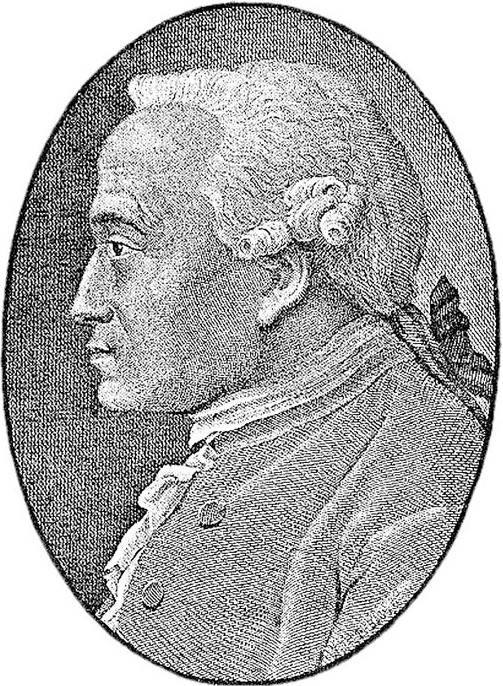
When his body was transferred to a new burial spot, his skull was measured during the exhumation and found to be larger than the average German male's with a "high and broad" forehead. His forehead has been an object of interest ever since it became well known through his portraits: "In Döbler's portrait and in Kiefer's faithful if expressionistic reproduction of it—as well as in many of the other late eighteenth- and early-nineteenth-century portraits of Kant—the forehead is remarkably large and decidedly retreating."
Kant's mausoleum adjoins the northeast corner of Königsberg Cathedral in Kaliningrad, Russia. The mausoleum was constructed by the architect Friedrich Lahrs and was finished in 1924, in time for the bicentenary of Kant's birth. Originally, Kant was buried inside the cathedral, but in 1880 his remains were moved to a neo-Gothic chapel adjoining the northeast corner of the cathedral. Over the years, the chapel became dilapidated and was demolished to make way for the mausoleum, which was built on the same location. The tomb and its mausoleum are among the few artifacts of German times preserved by the Soviets after they captured the city.
Into the 21st century, many newlyweds bring flowers to the mausoleum. Artifacts previously owned by Kant, known as Kantiana, were included in the Königsberg City Museum; however, the museum was destroyed during World War II. A replica of the statue of Kant that in German times stood in front of the main University of Königsberg building was donated by a German entity in the early 1990s and placed in the same grounds. After the expulsion of Königsberg's German population at the end of World War II, the University of Königsberg where Kant taught was replaced by the Russian-language Kaliningrad State University, which appropriated the campus and surviving buildings. In 2005, the university was renamed Immanuel Kant State University of Russia. The name change, which was considered a politically-charged issue due to the residents having mixed feelings about its German past, was announced at a ceremony attended by Russian president Vladimir Putin and German chancellor Gerhard Schröder, and the university formed a Kant Society, dedicated to the study of Kantianism. In 2010, the university was again renamed to Immanuel Kant Baltic Federal University.
Philosophy
Like many of his contemporaries, Kant was greatly impressed with the scientific advances made by Sir Isaac Newton and others. This new evidence of the power of human reason called into question for many the traditional authority of politics and religion. In particular, the modern mechanistic view of the world called into question the very possibility of morality; for, if there is no agency, there cannot be any responsibility.
The aim of Kant's critical project is to secure human autonomy, the basis of religion and morality, from this threat of mechanism—and to do so in a way that preserves the advances of modern science. In the Critique of Pure Reason, Kant summarizes his philosophical concerns in the following three questions:
What can I know?
What should I do?
What may I hope?
The Critique of Pure Reason focuses upon the first question and opens a conceptual space for an answer to the second question. It argues that even though we cannot strictly know that we are free, we can—and for practical purposes, must—think of ourselves as free. In Kant's own words, "I had to deny knowledge in order to make room for faith." Kant's moral philosophy is further developed in the Groundwork of the Metaphysics of Morals, the Metaphysics of Morals, and the Critique of Practical Reason.
The Critique of the Power of Judgment argues we may rationally hope for the harmonious unity of the theoretical and practical domains treated in the first two Critiques on the basis of our affective experience of natural beauty and, more generally, the teleological organization of the natural world. In Religion within the Bounds of Mere Reason, Kant endeavors to complete his answer to this third question by arguing for a rationalist form of religion grounded on our practical (i.e., moral) lives.
These works all place the active, rational human subject at the center of the cognitive and moral worlds. In brief, Kant argues that the mind itself necessarily makes a constitutive contribution to knowledge, that this contribution is transcendental rather than psychological, and that to act autonomously is to act according to rational moral principles.
Kant's critical project
Kant's 1781 (revised 1787) Critique of Pure Reason has often been cited as the most significant volume of metaphysics and epistemology in modern philosophy. In the first Critique, and in later works as well, Kant frames the "general" and "real problem of pure reason" in terms of the following question: "How are synthetic judgments a priori possible?" To understand this claim, it is necessary to define some terms. First, Kant makes a distinction between two sources of knowledge:
Cognitions a priori: "cognition independent of all experience and even of all the impressions of the senses".
Cognitions a posteriori: cognitions that have their sources in experience—that is, which are empirical.
Second, he makes a distinction between two kinds of judgements:
Analytic judgements: judgements in which the predicate concept is contained in the subject concept; e.g., "All bachelors are unmarried", or "All bodies are extended". These can also be called "judgments of clarification".
Synthetic judgements: judgements in which the predicate concept is not contained in the subject concept; e.g., "Some bachelors are alone", "All swans are white", or "All bodies have weight". These can also be called "judgments of amplification".
All analytic judgements are a priori since experience is not necessary for analyzing the content of a concept we already possess. By contrast, a synthetic judgement is one whose predicate concept contains something not in the subject concept. The most obvious examples of synthetic judgement are judgments grounded in empirical observations. The two kinds of knowledge and two kinds of judgment yield a fourfold table:
Kant believed that previous philosophers had neglected synthetic a priori judgments, and had paid attention only to analytic a priori and synthetic a posteriori judgments. David Hume, for example, believed that all knowledge is either of "relations of ideas" (which are analytic a priori) or "matters of fact" (which are synthetic a posteriori). Hume's taxonomy excludes the synthetic a priori. But by establishing the synthetic a priori as a third kind of judgment, Kant believes we can push back against Hume's skepticism about such matters as causation and metaphysical knowledge more generally. This is because, unlike merely a posteriori judgments, a priori judgments have "true or strict ... universality" and includes a claim of "necessity". And, unlike merely analytic claims, synthetic judgements extend our knowledge beyond the subject concept. This means that showing how synthetic a priori judgments are possible amounts to showing how substantive knowledge about necessary features of the world is possible.
Kant himself regards it as uncontroversial that we do have synthetic a priori knowledge—especially in mathematics. Consider the proposition '7 + 5 = 12'. Kant claims that the concept of '12' is not contained in the concepts of '5', '7', and the addition operation. Yet, although he considers the possibility of such knowledge to be obvious, Kant nevertheless assumes the burden of showing how such synthetic a priori knowledge in mathematics and the natural sciences is possible, and attacks, in the Transcendental Dialectic, the possibility of synthetic a priori knowledge of traditional metaphysics. It is the twofold aim of the Critique both to prove and to explain the possibility of this knowledge. Kant says "There are two stems of human cognition, which may perhaps arise from a common but to us unknown root, namely sensibility and understanding, through the first of which objects are given to us, but through the second of which they are thought."
Kant's term for the object of sensibility is 'intuition', and his term for the object of the understanding is 'concept'. In general terms, the former is a non-discursive representation of a particular object, and the latter is a discursive (or mediate) representation of a general type of object. The conditions of possible experience require both intuitions and concepts, that is, the affection of the receptive sensibility and the actively synthesizing power of the understanding. Thus the statement: "Thoughts without content are empty, intuitions without concepts are blind." Kant's basic strategy in the first part of Critique of Pure Reason will be to argue that some intuitions and concepts are pure—that is, are contributed entirely by the mind, independent of anything empirical. Knowledge generated on this basis, under certain conditions, can be synthetic a priori. This insight is known as Kant's "Copernican revolution", because, just as Copernicus advanced astronomy by way of a radical shift in perspective, so Kant here claims do the same for metaphysics. The second part of the Critique is the explicitly critical part. In the "Transcendental Dialectic", Kant argues that many of the claims of traditional rationalist metaphysics violate the criteria he claims to establish in the first, "constructive" part of his book and inevitably to contradictions. As Kant observes, however, "human reason, without being moved by the mere vanity of knowing it all, inexorably pushes on, driven by its own need to such questions that cannot be answered by any experiential use of reason". It is the project of the Critique to establish how far reason may legitimately so proceed.
Doctrine of transcendental idealism
In the section of the Critique entitled "The Transcendental Aesthetic", Kant argues for the doctrine of transcendental idealism. The doctrine is "transcendental" because it explains a necessary condition for the possibility of experience and is a form of "idealism" because those conditions are dependent on features of the mind. The details of the correct interpretation of transcendental idealism are controversial, but there is broad agreement on two basic theses. First, space and time are not things in themselves but are mere forms of intuition (space is the form of outer intuition, and time is the form of inner intuition). Second, we have knowledge only of appearances and not of things in themselves. The second thesis, Kant believes, follows from the first: because our a priori forms of intuition are necessary conditions of the possibility of experience, anything that fall outside what our sensible faculty can receive are unknowable. Nevertheless, although Kant says that space and time are "transcendentally ideal"—the pure forms of human sensibility, rather than part of nature or reality as it is in itself—he also claims that they are "empirically real", by which he means "that 'everything that can come before us externally as an object' is in both space and time, and that our internal intuitions of ourselves are in time". However Kant's doctrine is interpreted, he wished to distinguish his position from the subjective idealism of George Berkeley.
Paul Guyer, although critical of many of Kant's arguments in this section, writes of the Transcendental Aesthetic that it "not only lays the first stone in Kant's constructive theory of knowledge; it also lays the foundation for both his critique and his reconstruction of traditional metaphysics. It argues that all genuine knowledge requires a sensory component, and thus that metaphysical claims that transcend the possibility of sensory confirmation can never amount to knowledge."
Interpretive disagreements
One interpretation, known as the "two-aspect" (or "one-world") interpretation, takes transcendental idealism to be, most fundamentally, an epistemological thesis. On this reading of Kant, popularized especially by Henry E. Allison, the thing-in-itself and the phenomenal appearance are the same object, and transcendental idealism is a thesis about what is necessary for finite, discursive minds to consider objects as they are given to us by sensibility. Some commentators, while agreeing that there is just one set of objects, take transcendental idealism to be a thesis about the properties of those objects, some of which we have access to, and others of which are unknowable to us.
The other prominent line of interpretation is the "two-world" view (sometimes associated with "phenomenalist" interpretations). On this view, appearances are not the same things as things in themselves, and transcendental idealism is not merely a thesis about what is necessary for us to consider objects that are transcendentally independent of us. Some "two-world" advocates take Kant to be claiming that appearances are identical to our representations of them, while others take him to be merely claiming that appearances are partly grounded in things in themselves without being identical to them.
Kant's theory of judgment
Following the "Transcendental Analytic" is the "Transcendental Logic". Whereas the former was concerned with the contributions of the sensibility, the latter is concerned, first, with the contributions of the understanding ("Transcendental Analytic") and, second, with the faculty of reason as the source of both metaphysical errors and genuine regulatory principles ("Transcendental Dialectic"). The "Transcendental Analytic" is further divided into two sections. The first, "Analytic of Concepts", is concerned with establishing the universality and necessity of the pure concepts of the understanding (i.e., the categories). This section contains Kant's famous "transcendental deduction". The second, "Analytic of Principles", is concerned with the application of those pure concepts in empirical judgments. This second section is longer than the first and is further divided into many sub-sections.
Transcendental deduction of the categories of the understanding
The "Analytic of Concepts" argues for the universal and necessary validity of the pure concepts of the understanding, or the categories, for instance, the concepts of substance and causation. These twelve basic categories define what it is to be a thing in general—that is, they articulate the necessary conditions according to which something is a possible object of experience. These, in conjunction with the a priori forms of intuition, are the basis of all synthetic a priori cognition. According to Paul Guyer and Allen W. Wood, "Kant's idea is that just as there are certain essential features of all judgments, so there must be certain corresponding ways in which we form the concepts of objects so that judgments may be about objects."