The Iberian Peninsula (IPA: eye-BEER-ee-ən), also known as Iberia, is a peninsula in southwestern Europe.
Mostly separated from the rest of continental Europe by the Pyrenees, the Iberian Peninsula includes Peninsular Spain and Continental Portugal, which together make up almost all of the region, as well as Andorra, Gibraltar, and a small part of Metropolitan France. With an area of approximately 583,254 square kilometres (225,196 sq mi), and a population of roughly 53 million, it is the second-largest European peninsula by area, after the Scandinavian Peninsula.
Etymology
The Iberian Peninsula has always been associated with the River Ebro (Ibēros in ancient Greek and Ibērus or Hibērus in Latin). The association was so well known it was hardly necessary to state. For example, Ibēria was the country "this side of the Ibērus" in Strabo. Pliny goes so far as to assert that the Greeks had called "the whole of the peninsula" Hiberia because of the Hiberus River.
The river appears in the Ebro Treaty of 226 BCE between Rome and Carthage, setting the limit of Carthaginian interest at the Ebro. The fullest description of the treaty, stated in Appian, uses Ibērus. With reference to this border, Polybius states that the "native name" is Ibēr, apparently the original word, stripped of its Greek or Latin -os or -us termination.
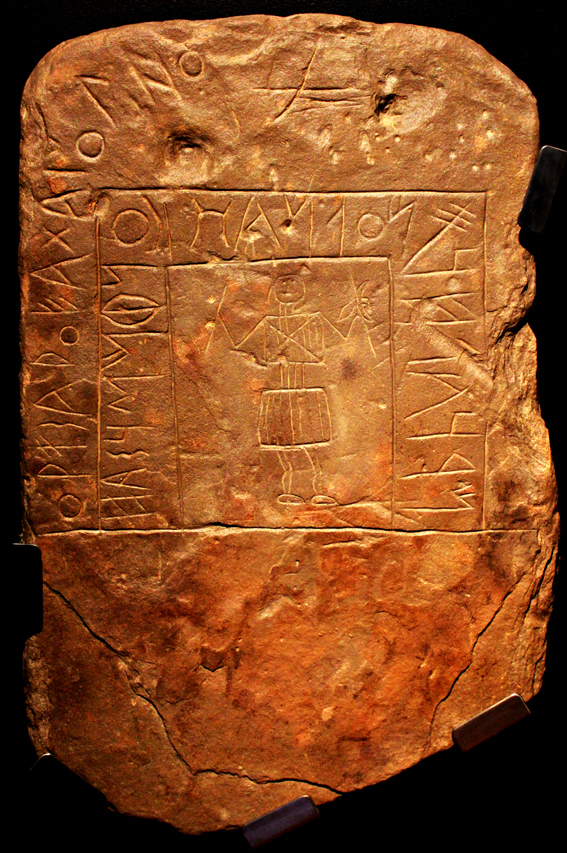
The early range of these natives, which geographers and historians place from the present southern Spain to the present southern France along the Mediterranean coast, is marked by instances of a readable script expressing a yet unknown language, dubbed "Iberian". Whether this was the native name or was given to them by the Greeks for their residence near the Ebro remains unknown. Credence in Polybius imposes certain limitations on etymologizing: if the language remains unknown, the meanings of the words, including Iber, must also remain unknown.
In modern Basque, the word ibar means "valley" or "watered meadow", while ibai means "river", but there is no proof connecting the names with Ebro or Iberia.
Reading level
Audio Summary
Played with your browser's voice. Studio-quality audio can be added with a text-to-speech service.
Ask about this article
📝 Quick Quiz1 / 4
What is "Iberian Peninsula" primarily known for?
Vocix Daily — In Your Inbox
Top stories, deep-dive articles, and "On This Day" history — one crisp digest delivered every morning.
Sources & references
Reference material for this entry is drawn from the open encyclopedic record, including Wikipedia , available under the CC BY-SA 4.0 license. Images are credited individually beside each photo.
The word Iberia comes from the Latin word Hiberia originating from the Ancient Greek word Ἰβηρία (Ibēríā), used by Greek geographers under the rule of the Roman Empire to refer to what is known today in English as the Iberian Peninsula. At that time, the name did not describe a single geographical entity or a distinct population; the same name was used for the Kingdom of Iberia, natively known as Kartli in the Caucasus, the core region of what would later become the Kingdom of Georgia.
It was Strabo who first reported the delineation of Iberia from Gaul (Keltikē) by the Pyrenees and included the entire land mass southwest (he says "west") from there. With the fall of the Western Roman Empire and the consolidation of Romance languages, the word "Iberia" continued the Roman word Hiberia and the Greek word Ἰβηρία.
The ancient Greeks reached the Iberian Peninsula, of which they had heard from the Phoenicians, by voyaging westward on the Mediterranean. Hecataeus of Miletus was the first known to use the term Iberia, which he wrote about c. 500 BCE. Herodotus of Halicarnassus says of the Phocaeans that "it was they who made the Greeks acquainted with [...] Iberia." According to Strabo, prior historians used Iberia to mean the country "this side of the Ἶβηρος (Ibēros, the Ebro) as far north as the Rhône, but in his day they set the Pyrenees as the limit. Polybius respects that limit, but identifies Iberia as the Mediterranean side as far south as Gibraltar, with the Atlantic side having no name. Elsewhere he says that Saguntum is "on the seaward foot of the range of hills connecting Iberia and Celtiberia."
According to Charles Ebel, the ancient sources in both Latin and Greek use Hispania and Hiberia (Greek: Iberia) as synonyms. The confusion of the words was because of an overlapping in political and geographic perspectives. The Latin word Hiberia, similar to the Greek Iberia, literally translates to "land of the Hiberians". This word was derived from the river Hiberus, now called Ebro or Ebre. Hiber (Iberian) was thus used as a term for peoples living near the river Ebro. The first mention in Roman literature was by the annalist poet Ennius in 200 BCE. Virgil wrote impacatos (H)iberos ("restless Iberi") in his Georgics.
Roman geographers and other prose writers from the time of the late Roman Republic called the entire peninsula Hispania. In Greek and Roman antiquity, the name Hesperia was used for both the Italian and Iberian Peninsula. For the Iberian Peninsula, Hesperia Ultima, referring to its position in the far west, appears as form of disambiguation from the former among Roman writers. Since Roman antiquity, Jews have used the name Sepharad for the peninsula.
As they became politically interested in the former Carthaginian territories, the Romans began to use the names Hispania Citerior and Hispania Ulterior for 'near' and 'far' Hispania. At the time Hispania was made up of three Roman provinces: Hispania Baetica, Hispania Tarraconensis, and Hispania Lusitania. Strabo says that the Romans use Hispania and Iberia synonymously, distinguishing between the near northern and the far southern provinces. The name Iberia was ambiguous, being also the name of the Kingdom of Iberia in the Caucasus.
Whatever languages may generally have been spoken on the peninsula soon gave way to Latin, except for that of the Vascones, which was preserved as a language isolate by the barrier of the Pyrenees.
Modern name
The modern phrase "Iberian Peninsula" was coined by the French geographer Jean-Baptiste Bory de Saint-Vincent on his 1823 work "Guide du Voyageur en Espagne". Prior to that date, geographers had used the terms 'Spanish Peninsula' or 'Pyrenaean Peninsula'.
Prehistory
Palaeolithic
The Iberian Peninsula has been inhabited by members of the Homo genus for at least 1.2 million years as remains found in the sites in the Atapuerca Mountains demonstrate. Among these sites is the cave of Gran Dolina, where six hominin skeletons, dated between 780,000 and one million years ago, were found in 1994. Experts have debated whether these skeletons belong to the species Homo erectus, Homo heidelbergensis, or a new species called Homo antecessor.
Around 200,000 BP, during the Lower Paleolithic period, Neanderthals first entered the Iberian Peninsula. Around 70,000 BP, during the Middle Paleolithic period, the last glacial event began and the Neanderthal Mousterian culture was established. Around 37,000 BP, during the Upper Paleolithic, the Neanderthal Châtelperronian cultural period began. Emanating from Southern France, this culture extended into the north of the peninsula. It continued to exist until around 30,000 BP, when Neanderthal man faced extinction.
About 40,000 years ago, anatomically modern humans entered the Iberian Peninsula from across the Pyrenees. On the Iberian Peninsula, modern humans developed a series of different cultures, such as the Aurignacian, Gravettian, Solutrean and Magdalenian cultures, some of them characterized by the complex forms of the art of the Upper Paleolithic.
Neolithic
During the Neolithic expansion, various megalithic cultures developed in the Iberian Peninsula. An open seas navigation culture from the east Mediterranean, called the Cardium culture, also extended its influence to the eastern coasts of the peninsula, possibly as early as the 5th millennium BCE. These people may have had some relation to the subsequent development of the Iberian civilization.
As is the case for most of the rest of Southern Europe, the principal ancestral origin of modern Iberians are Early European Farmers who arrived during the Neolithic. The large predominance of Y-Chromosome Haplogroup R1b, common throughout Western Europe, is testimony to a considerable input from various waves of (predominantly male) Western Steppe Herders from the Pontic–Caspian steppe during the Bronze Age. Iberia experienced a significant genetic turnover, with 100% of the paternal ancestry and 40% of the overall ancestry being replaced by peoples with steppe-related ancestry.
Chalcolithic
In the Chalcolithic (c. 3000 BCE), a series of complex cultures developed that would give rise to the peninsula's first civilizations and to extensive exchange networks reaching to the Baltic, Middle East and North Africa. Around 2800 – 2700 BCE, the Beaker culture, which produced the Maritime Bell Beaker, probably originated in the vibrant copper-using communities of the Tagus estuary and spread from there to many parts of western Europe.
Bronze Age
The Bronze Age began on the Iberian Peninsula in 2100 cal. BC according to radiocarbon datings of several key sites.
Bronze Age cultures developed beginning c. 1800 BCE, when the culture of Los Millares was followed by that of El Argar. During the Early Bronze Age, southeastern Iberia saw the emergence of important settlements, a development that has compelled some archeologists to propose that these settlements indicate the advent of state-level social structures. From this centre, bronze metalworking technology spread to other cultures like the Bronze of Levante, South-Western Iberian Bronze and Las Cogotas.
Preceded by the Chalcolithic sites of Los Millares, the Argaric culture flourished in southeastern Iberia in from 2200 BC to 1550 BC, when depopulation of the area ensued along with disappearing of copper–bronze–arsenic metallurgy. The most accepted model for El Argar has been that of an early state society, most particularly in terms of class division, exploitation, and coercion, with agricultural production, maybe also human labour, controlled by the larger hilltop settlements, and the elite using violence in practical and ideological terms to clamp down on the population. Ecological degradation, landscape opening, fires, pastoralism, and maybe tree cutting for mining have been suggested as reasons for the collapse.
The culture of the motillas developed an early system of groundwater supply plants (the so-called motillas) in the upper Guadiana basin (in the southern meseta) in a context of extreme aridification in the area in the wake of the 4.2-kiloyear climatic event, which roughly coincided with the transition from the Copper Age to the Bronze Age. Increased precipitation and recovery of the water table from about 1800 BC onward should have led to the forsaking of the motillas (which may have flooded) and the redefinition of the relation of the inhabitants of the territory with the environment.
Proto-history
By the Iron Age, starting in the 8th century BCE, the Iberian Peninsula consisted of complex agrarian and urban civilizations, either Pre-Celtic or Celtic (such as the Celtiberians, Gallaeci, Astures, Celtici, Lusitanians and others), the cultures of the Iberians in the eastern and southern zones and the cultures of the Aquitanian in the western portion of the Pyrenees.
As early as the 12th century BCE, the Phoenicians, a thalassocratic civilization originally from the Eastern Mediterranean, began to explore the coastline of the peninsula, interacting with the metal-rich communities in the southwest of the peninsula, contemporarily known as the semi-mythical Tartessos. Around 1100 BCE, Phoenician merchants founded the trading colony of Gadir or Gades (modern day Cádiz). Phoenicians established a permanent trading port in the Gadir colony c. 800 BCE in response to the increasing demand of silver from the Assyrian Empire.
The seafaring Phoenicians, Greeks and Carthaginians successively settled along the Mediterranean coast and founded trading colonies there over several centuries. In the 8th century BCE, the first Greek colonies, such as Emporion (modern Empúries), were founded along the Mediterranean coast on the east, leaving the south coast to the Phoenicians.
Together with the presence of Phoenician and Greek epigraphy, several paleohispanic scripts developed in the Iberian Peninsula along the 1st millennium BCE. The development of a primordial paleohispanic script antecessor to the rest of paleohispanic scripts (originally supposed to be a non-redundant semi-syllabary) derived from the Phoenician alphabet and originated in Southwestern Iberia by the 7th century BCE has been tentatively proposed.
In the sixth century BCE, the Carthaginians arrived in the peninsula while struggling with the Greeks for control of the Western Mediterranean. Their most important colony was Carthago Nova, modern-day Cartagena, Spain.
History
Roman rule
In 218 BCE, during the Second Punic War against the Carthaginians, the first Roman troops occupied the Iberian Peninsula, known to them as Hispania. After 197, the territories of the peninsula most accustomed to external contact and with the most urban tradition (the Mediterranean Coast and the Guadalquivir Valley) were divided by Romans into Hispania Ulterior and Hispania Citerior. Local rebellions were quelled, with a 195 Roman campaign under Cato the Elder ravaging hotspots of resistance in the northeastern Ebro Valley and beyond.
The threat to Roman interests posed by Celtiberians and Lusitanians in uncontrolled territories lingered on. Further wars of indigenous resistance, such as the Celtiberian Wars and the Lusitanian War, were fought in the 2nd century. Urban growth took place, and population progressively moved from hillforts to the plains.
An example of the interaction of slaving and ecocide, the aftermath of the conquest increased mining extractive processes in the southwest of the peninsula, which required a massive number of forced laborers, initially from Hispania and latter also from the Gallic borderlands and other locations of the Mediterranean. This caused far-reaching environmental outcomes, vis-à-vis long-term global pollution records, with levels of atmospheric pollution from mining across the Mediterranean during Classical Antiquity having no match until the Industrial Revolution.
In addition to mineral extraction, of which the region was the leading supplier in the early Roman world, with production of the likes of gold, silver, copper, lead, and cinnabar, Hispania also produced manufactured goods, such as sigillata pottery, colourless glass, linen garments. Rural products included fish and fish sauce (garum), and dry crops such as wheat and, more importantly, esparto, olive oil, and wine.
The process of Romanization spurred on throughout the first century BC. The peninsula was also the battleground of civil wars between rulers of the Roman republic; such as the Sertorian War, and the conflict between Caesar and Pompey later in the century.
During their 600-year occupation of the Iberian Peninsula, the Romans introduced the Latin language which developed into the languages of the Iberian peninsula today, with the exception of Basque.
Pre-modern Iberia
In the early fifth century, Germanic peoples occupied the peninsula, namely the Suebi, the Vandals (Silingi and Hasdingi) and their allies, the Alans. Only the kingdom of the Suebi (Quadi and Marcomanni) would endure after the arrival of another wave of Germanic invaders, the Visigoths, who occupied all of the Iberian Peninsula and expelled or partially integrated the Vandals and the Alans. The Visigoths eventually occupied the Suebi kingdom and its capital city, Bracara (modern day Braga), in 584–585. They would also occupy the province of the Byzantine Empire (552–624) of Spania in the south of the peninsula. However, Balearic Islands remained in Byzantine hands until Umayyad conquest, which began in 703 CE and was completed in 902 CE.
In 711, a Muslim army conquered the Visigothic Kingdom in Hispania. Under Tariq ibn Ziyad, the Islamic army landed at Gibraltar and, in an eight-year campaign, occupied all except the northern kingdoms of the Iberian Peninsula in the Umayyad conquest of Hispania. Al-Andalus (Arabic: الإندلس, tr. al-ʾAndalūs, possibly "Land of the Vandals"), is the Arabic name given to Muslim Iberia. The Muslim conquerors were Arabs and Berbers; following the conquest, conversion and arabization of the Hispano-Roman population took place, (muwalladum or Muladí). After a long process, spurred on in the 9th and 10th centuries, the majority of the population in Al-Andalus eventually converted to Islam. The Muslims were referred to by the generic name Moors. The Muslim population was divided per ethnicity (Arabs, Berbers, Muladí), and the supremacy of Arabs over the rest of group was a recurrent causal for strife, rivalry and hatred, particularly between Arabs and Berbers. Arab elites could be further divided in the Yemenites (first wave) and the Syrians (second wave). Christians and Jews were allowed to live as part of a stratified society under the dhimmah system, although Jews became very important in certain fields. Some Christians migrated to the Northern Christian kingdoms, while those who stayed in Al-Andalus progressively arabised and became known as musta'arab (mozarabs). The slave population comprised the Ṣaqāliba (literally meaning "slavs", although they were slaves of generic European origin) as well as Sudanese slaves.
The Umayyad rulers faced a major Berber Revolt in the early 740s; the uprising originally broke out in North Africa (Tangier) and later spread across the peninsula. Following the Abbasid takeover from the Umayyads and the shift of the economic centre of the Islamic Caliphate from Damascus to Baghdad, the western province of al-Andalus was marginalised and ultimately became politically autonomous as independent emirate in 756, ruled by one of the last surviving Umayyad royals, Abd al-Rahman I.
Al-Andalus became a center of culture and learning, especially during the Caliphate of Córdoba. The Caliphate reached the height of its power under the rule of Abd-ar-Rahman III and his successor al-Hakam II, becoming then, in the view of Jaime Vicens Vives, "the most powerful state in Europe". Abd-ar-Rahman III also managed to expand the clout of Al-Andalus across the Strait of Gibraltar, waging war, as well as his successor, against the Fatimid Empire.
Between the 8th and 12th centuries, Al-Andalus enjoyed a notable urban vitality, both in terms of the growth of the preexisting cities as well as in terms of founding of new ones: Córdoba reached a population of 100,000 by the 10th century, Toledo 30,000 by the 11th century and Seville 80,000 by the 12th century.
During the Middle Ages, the North of the peninsula housed many small Christian polities including the Kingdom of Castile, the Kingdom of Aragon, the Kingdom of Navarre, the Kingdom of León or the Kingdom of Portugal, as well as a number of counties that spawned from the Carolingian Marca Hispanica. Christian and Muslim polities fought and allied among themselves in variable alliances. The Christian kingdoms progressively expanded south taking over Muslim territory in what is historiographically known as the "Reconquista" (the latter concept has been however noted as product of the claim to a pre-existing Spanish Catholic nation and it would not necessarily convey adequately "the complexity of centuries of warring and other more peaceable interactions between Muslim and Christian kingdoms in medieval Iberia between 711 and 1492").
The Caliphate of Córdoba was subsumed in a period of upheaval and civil war (the Fitna of al-Andalus) and collapsed in the early 11th century, spawning a series of ephemeral statelets, the taifas. Until the mid 11th century, most of the territorial expansion southwards of the Kingdom of Asturias/León was carried out through a policy of agricultural colonization rather than through military operations; then, profiting from the feebleness of the taifa principalities, Ferdinand I of León seized Lamego and Viseu (1057–1058) and Coimbra (1064) away from the Taifa of Badajoz (at times at war with the Taifa of Seville); Meanwhile, in the same year Coimbra was conquered, in the Northeastern part of the Iberian Peninsula, the Kingdom of Aragon took Barbastro from the Hudid Taifa of Lérida as part of an international expedition sanctioned by Pope Alexander II. Most critically, Alfonso VI of León-Castile conquered Toledo and its wider taifa in 1085, in what it was seen as a critical event at the time, entailing also a huge territorial expansion, advancing from the Sistema Central to La Mancha. In 1086, following the siege of Zaragoza by Alfonso VI of León-Castile, the Almoravids, religious zealots originally from the deserts of the Maghreb, landed in the Iberian Peninsula, and, having inflicted a serious defeat to Alfonso VI at the battle of Zalaca, began to seize control of the remaining taifas.
The Almoravids in the Iberian peninsula progressively relaxed strict observance of their faith, and treated both Jews and Mozarabs harshly, facing uprisings across the peninsula, initially in the Western part. The Almohads, another North-African Muslim sect of Masmuda Berber origin who had previously undermined the Almoravid rule south of the Strait of Gibraltar, first entered the peninsula in 1146.
Somewhat straying from the trend taking place in other locations of the Latin West since the 10th century, the period comprising the 11th and 13th centuries was not one of weakening monarchical power in the Christian kingdoms. The relatively novel concept of "frontier" (Sp: frontera), already reported in Aragon by the second half of the 11th century become widespread in the Christian Iberian kingdoms by the beginning of the 13th century, in relation to the more or less conflictual border with Muslim lands.
By the beginning of the 13th century, a power reorientation took place in the Iberian Peninsula (parallel to the Christian expansion in Southern Iberia and the increasing commercial impetus of Christian powers across the Mediterranean) and to a large extent, trade-wise, the Iberian Peninsula reorientated towards the North away from the Muslim World.
During the Middle Ages, the monarchs of Castile and León, from Alfonso V and Alfonso VI (crowned Hispaniae Imperator) to Alfonso X and Alfonso XI tended to embrace an imperial ideal based on a dual Christian and Jewish ideology. Despite the hegemonic ambitions of its rulers and the consolidation of the union of Castile and León after 1230, it should be pointed that, except for a brief period in the 1330s and 1340s, Castile tended to be nonetheless "essentially unstable" from a political standpoint until the late 15th century.
Merchants from Genoa and Pisa were conducting an intense trading activity in Catalonia already by the 12th century, and later in Portugal. Since the 13th century, the Crown of Aragon expanded overseas; led by Catalans, it attained an overseas empire in the Western Mediterranean, with a presence in Mediterranean islands such as the Balearics, Sicily and Sardinia, and even conquering Naples in the mid-15th century. Genoese merchants invested heavily in the Iberian commercial enterprise with Lisbon becoming, according to Virgínia Rau, the "great centre of Genoese trade" in the early 14th century. The Portuguese would later detach their trade to some extent from Genoese influence. The Nasrid Kingdom of Granada, neighbouring the Strait of Gibraltar and founded upon a vassalage relationship with the Crown of Castile, also insinuated itself into the European mercantile network, with its ports fostering intense trading relations with the Genoese as well, but also with the Catalans, and to a lesser extent, with the Venetians, the Florentines, and the Portuguese.