
The House of Lords is the upper house of the Parliament of the United Kingdom. Like the lower house, the House of Commons, it meets in the Palace of Westminster in London, England. Its origins lie in the early 11th century and the emergence of bicameralism in the 14th century.
Unlike the House of Commons, membership of the Lords is not acquired by election. Most members are appointed for life as peers, on either a political or non-political basis. The House of Lords also includes up to 26 archbishops and bishops of the Church of England, known as Lords Spiritual. Since 2014, membership may be voluntarily relinquished or terminated upon expulsion.
For much of its history, hereditary peers also were members of the House of Lords, and indeed made up the majority of the body's membership for most of that period. Between 1999 and 2026, hereditary membership was limited to 92 excepted hereditary peers, then abolished altogether in 2026.
As the upper house of Parliament, the House of Lords has many similar functions to the House of Commons. It scrutinises legislation, holds the government to account, and considers and reports upon public policy. Members may also seek to introduce legislation or propose amendments to bills. Although it is unable to prevent bills passing into law except in certain limited circumstances, it may delay the enactment of bills for up to one year. In this capacity, as a body independent from the pressures of the political process, the House of Lords is said to act as a "revising chamber" focusing on legislative detail, while occasionally asking the House of Commons to reconsider its plans.
Peers may, rarely, serve as government ministers, but in such cases are typically appointed junior ministers only, except for the leader of the House of Lords. The House of Lords does not control the term of the prime minister or of the government; only the Commons may vote to require the prime minister to resign or call an election. Unlike the House of Commons, which has a defined number of seats, the number of members in the House of Lords is not fixed. As of 9 July 2026, it has 774 sitting members.
The King's Speech is delivered in the House of Lords chamber during the State Opening of Parliament. In addition to its role as the upper house, the House of Lords, through the law lords, acted as the final court of appeal in the United Kingdom judicial system until the establishment of the Supreme Court in 2009.
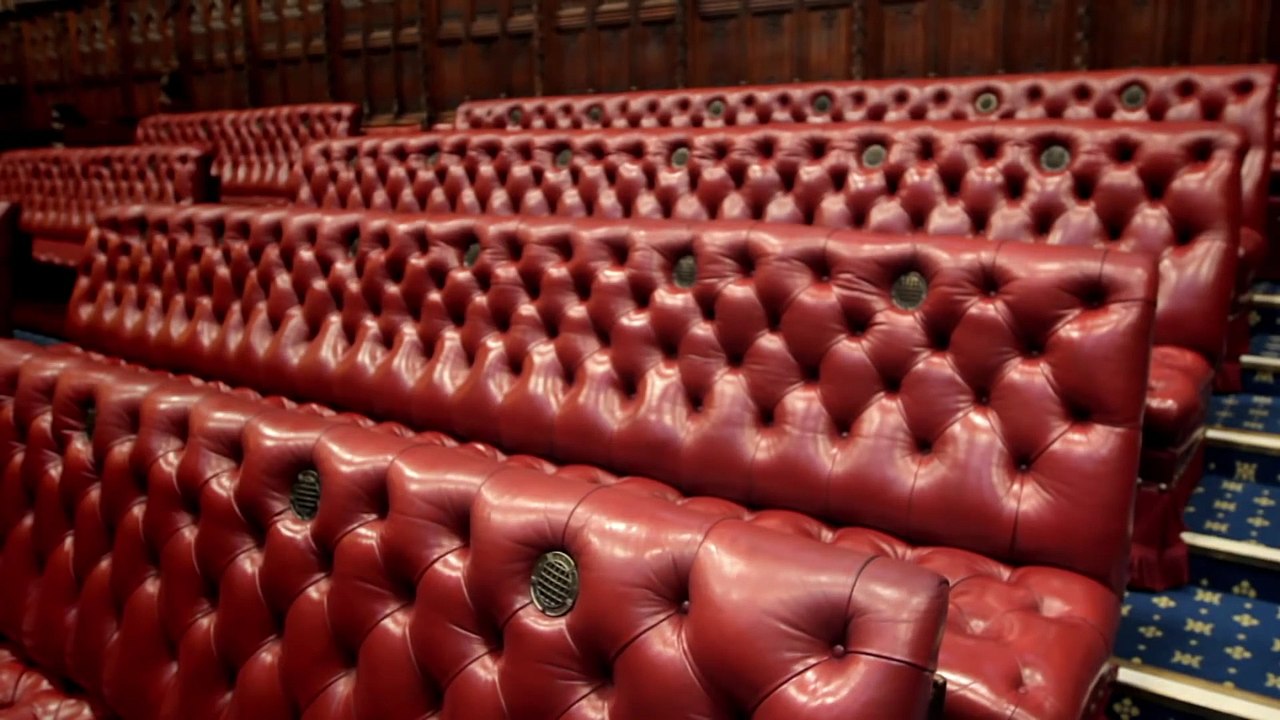
The House of Lords is the only upper house of any bicameral parliament in the world to be larger than its lower house. It is the second-largest legislative chamber in the world, behind the National People's Congress of China.
The House of Lords also has a Church of England role, in that Church measures must be tabled within the House by the Lords Spiritual. The United Kingdom is one of only three countries in the world to award religious figures a permanent seat in the legislature, the others being Iran and Vatican City.
History
Today's Parliament of the United Kingdom largely descends, in practice, from the Parliament of England, through the Treaty of Union of 1706 and the Acts of Union that implemented and executed the Treaty in 1707 and created a new Parliament of Great Britain to replace the Parliament of England and the Parliament of Scotland. This new parliament was, in effect, the continuation of the Parliament of England with the addition of 45 Members of Parliament (MPs) and 16 Peers to represent Scotland.

Early history
The House of Lords developed from the "Great Council" (Magnum Concilium) that advised the king during medieval times, dating back to the early 11th century. This royal council came to be composed of ecclesiastics, noblemen, and representatives of the counties of England and Wales (afterwards, representatives of the boroughs as well). The first English Parliament is often considered to be either Simon de Montfort's Parliament (held in 1265) or the "Model Parliament" (held in 1295), which included archbishops, bishops, abbots, earls, barons, and representatives of the shires and boroughs.
The power of Parliament grew slowly, fluctuating as the strength of the monarchy grew or declined. For example, during much of the reign of Edward II (1307–1327), the nobility was supreme, the Crown weak, and the shire and borough representatives entirely powerless.
During the reign of King Edward II's successor, Edward III (1327–1377), Parliament clearly separated into two distinct chambers: the House of Commons (consisting of the shire and borough representatives) and the House of Lords (consisting of the archbishops, bishops, abbots and nobility). The authority of Parliament continued to grow, and during the early 15th century both Houses exercised powers to an extent not seen before. The Lords were far more powerful than the Commons because of the great influence of the great landowners and the prelates of the realm.
The power of the nobility declined during the civil wars of the late 15th century, known as the Wars of the Roses. Much of the nobility was killed on the battlefield or executed for participation in the war, and many aristocratic estates were lost to the Crown. Moreover, feudalism was dying, and the feudal armies controlled by the barons became obsolete. Henry VII (1485–1509) clearly established the supremacy of the monarch, symbolised by the "Crown Imperial". The domination of the Sovereign continued to grow during the reigns of the Tudor monarchs in the 16th century. The Crown was at the height of its power during the reign of Henry VIII (1509–1547).
17th–18th century
The House of Lords remained more powerful than the House of Commons, but the lower house continued to grow in influence, reaching a zenith in relation to the House of Lords during the middle of the 17th century. Conflicts between the king and the Parliament (for the most part, the House of Commons) ultimately led to the English Civil War during the 1640s. In 1649, after the defeat and execution of King Charles I, the Commonwealth of England was declared, but the nation was effectively under the overall control of Oliver Cromwell, Lord Protector of England, Scotland and Ireland.
The House of Lords was reduced to a largely powerless body, with Cromwell and his supporters in the Commons dominating the government. On 19 March 1649, the House of Lords was abolished by the Act abolishing the House of Peers, which declared that "The Commons of England [find] by too long experience that the House of Lords is useless and dangerous to the people of England." It was briefly de facto eclipsed by Cromwell's Other House. The House of Lords did not assemble again until the Convention Parliament met in 1660 and the monarchy was restored. It returned to its former position as the more powerful chamber of Parliament—a position it would occupy until the 19th century.
After the Acts of Union 1707, the peerage of Scotland elected sixteen of their number, the Scottish representative peers, to sit in the House of Lords. General elections were held with each Parliament, and by-elections to fill vacancies in between. The elections ceased after the Peerage Act 1963 granted all peers of Scotland a hereditary seat in the House of Lords.
The first election of Scottish representative peers took place on 15 February 1707 at the Parliament House, Edinburgh, shortly before the Parliament of Scotland was adjourned for the last time on 25 March. The commissioners for the barons and the burghs chose their representatives to the British House of Commons at the same time.
19th century
The 19th century was marked by several changes to the House of Lords. The House, once a body of only about 50 members, had been greatly enlarged by the liberality of George III and his successors in creating peerages. The individual influence of a Lord of Parliament was thus diminished.

Moreover, the power of the House as a whole decreased, whilst that of the House of Commons grew. Particularly notable in the development of the Lower House's superiority was the Reform Act 1832. The electoral system of the House of Commons was far from democratic: property qualifications greatly restricted the size of the electorate, and the boundaries of many constituencies had not been changed for centuries. Entire cities such as Manchester had not even one representative in the House of Commons, while the 11 voters of Old Sarum retained their ancient right to elect two MPs despite living elsewhere. A small borough was susceptible to bribery, and was often under the control of a patron, whose nominee was guaranteed to win an election. Some aristocrats were patrons of numerous "pocket boroughs", and therefore controlled a considerable part of the membership of the House of Commons.
When the House of Commons passed a Reform Bill to correct some of these anomalies in 1831, the House of Lords rejected the proposal. The popular cause of reform, however, was not abandoned by the ministry, despite a second rejection of the bill in 1832. Prime Minister Charles Grey, 2nd Earl Grey advised the King to overwhelm opposition to the bill in the House of Lords by creating about 80 new pro-Reform peers. William IV originally balked at the proposal, which effectively threatened the opposition of the House of Lords, but at length relented.
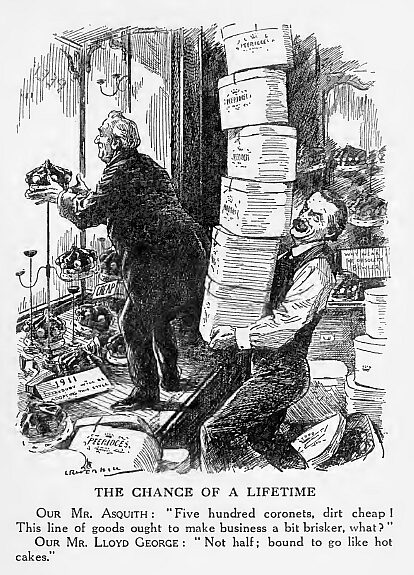
Before the new peers were created, however, the Lords who opposed the bill admitted defeat and abstained from the vote, allowing the passage of the bill. The crisis damaged the political influence of the House of Lords but did not altogether end it. A vital reform was effected by the Lords themselves in 1868, when they changed their standing orders to abolish proxy voting, preventing Lords from voting without taking the trouble to attend. Over the course of the century the powers of the upper house were further reduced stepwise, culminating in the 20th century with the Parliament Act 1911; the Commons gradually became the stronger House of Parliament.
20th century
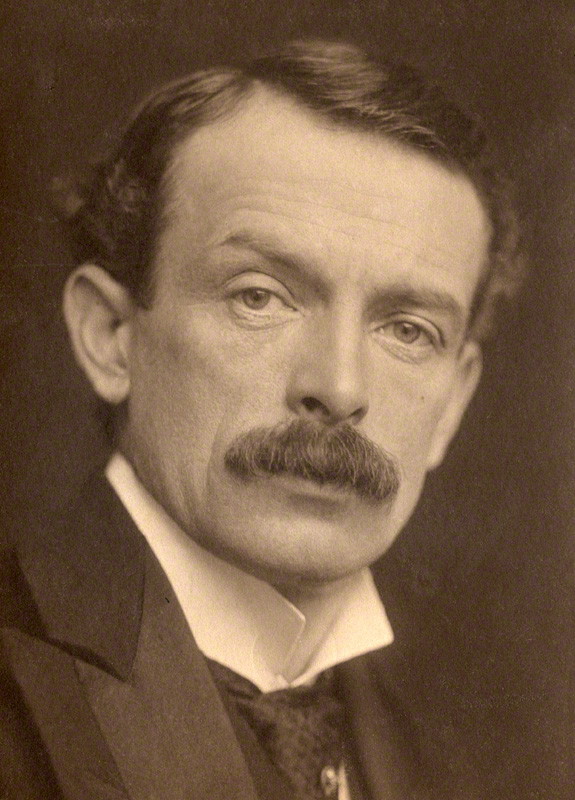
The status of the House of Lords returned to the forefront of debate after the election of a Liberal Government in 1906. In 1909 the Chancellor of the Exchequer, David Lloyd George, introduced into the House of Commons the "People's Budget", which proposed a land tax targeting wealthy landowners. The popular measure, however, was defeated in the heavily Conservative House of Lords.
Having made the powers of the House of Lords a primary campaign issue, the Liberals were narrowly re-elected in January 1910. The Liberals had lost most of their support in the Lords, which was routinely rejecting Liberals' bills. Prime Minister H. H. Asquith then proposed that the powers of the House of Lords be severely curtailed. After a further general election in December 1910, and with a reluctant promise by King George V to create sufficient new Liberal peers to overcome the Lords' opposition to the measure if necessary, the Asquith Government secured the passage of a bill to curtail the powers of the House of Lords. The Parliament Act 1911 effectively abolished the power of the House of Lords to reject legislation, or to amend it in a way unacceptable to the House of Commons; and most bills could be delayed for no more than three parliamentary sessions or two calendar years. It was not meant to be a permanent solution; more comprehensive reforms were planned. Neither party, however, pursued reforms with much enthusiasm, and the House of Lords remained primarily hereditary. The Parliament Act 1949 reduced the delaying power of the House of Lords further to two sessions or one year. In 1958, the predominantly hereditary nature of the House of Lords was changed by the Life Peerages Act 1958, which authorised the creation of life baronies, with no numerical limits. The number of life peers then gradually increased, though not at a constant rate.
The Labour Party had, for most of the 20th century, a commitment, based on the party's historic opposition to class privilege, to abolish the House of Lords, or at least expel the hereditary element. In 1968 the Labour Government of Harold Wilson attempted to reform the House of Lords by introducing a system under which hereditary peers would be allowed to remain in the House and take part in debate, but would be unable to vote. This plan, however, was defeated in the House of Commons by a coalition of traditionalist Conservatives (such as Enoch Powell), and Labour members who continued to advocate the outright abolition of the Upper House (such as Michael Foot).
When Foot became leader of the Labour Party in 1980, abolition of the House of Lords became a part of the party's agenda; under his successor, Neil Kinnock, however, a reformed Upper House was proposed instead. In the meantime, the creation of new hereditary peerages (except for members of the Royal Family) has been arrested, with the exception of three that were created during the administration of Conservative PM Margaret Thatcher in the 1980s.
Whilst some hereditary peers were at best apathetic, the Labour Party's clear commitments were not lost on Merlin Hanbury-Tracy, 7th Baron Sudeley, who for decades was considered an expert on the House of Lords. In December 1979 the Conservative Monday Club published his extensive paper entitled Lords Reform – Why tamper with the House of Lords? and in July 1980 The Monarchist carried another article by Sudeley entitled "Why Reform or Abolish the House of Lords?". In 1990 he wrote a further booklet for the Monday Club entitled "The Preservation of the House of Lords".
21st century
In 2019, a seven-month enquiry by Naomi Ellenbogen found that one in five staff of the House had experienced bullying or harassment which they did not report for fear of reprisals. This was preceded by several cases, including Liberal Democrat Anthony Lester, Lord Lester of Herne Hill, of Lords using their position to sexually harass or abuse women.
In 2020, the Johnson government considered moving the House of Lords from London to a city in Northern England, likely York, or Birmingham, in the Midlands, in an attempt to "reconnect" the area. It was unclear how the King's Speech would be conducted in the event of a move. The idea was received negatively by many peers.
Reforms
With the advent of democratic politics in the United Kingdom, beginning with the Reform Acts from 1832 to 1928, the aristocratic House of Lords was increasingly perceived as an anachronism. Many attempts to reform it have been made, and some have succeeded, most notably the removal of most hereditary peers in 1999, and the remainder in 2026.
First admission of women
There were no women sitting in the House of Lords until 1958, when a small number came into the chamber as a result of the Life Peerages Act 1958. One of these was Irene Curzon, 2nd Baroness Ravensdale, who had inherited her father's peerage in 1925 and was made a life peer to enable her to sit. After a campaign stretching back in some cases to the 1920s, another twelve women who held hereditary peerages in their own right were admitted with the passage of the Peerage Act 1963.
New Labour era
The Labour Party included in its 1997 general election manifesto a commitment to remove the hereditary peerage from the House of Lords. Their subsequent election victory in 1997 under Tony Blair led to the denouement of the traditional House of Lords. The Labour government introduced legislation to expel all hereditary peers from the Upper House as a first step in Lords reform. As a part of a compromise, however, it agreed to permit 92 hereditary peers to remain until the reforms were complete. Thus, all but 92 hereditary peers were expelled under the House of Lords Act 1999 (see below for its provisions), making the House of Lords predominantly an appointed house.
In 2000, the Wakeham Commission proposed introducing a 20% elected element to the Lords, but this plan was widely criticised. A parliamentary Joint Committee was established in 2001 to resolve the issue, but it reached no conclusion and instead gave Parliament seven options to choose from (fully appointed, 20% elected, 40% elected, 50% elected, 60% elected, 80% elected, and fully elected). In a confusing series of votes in February 2003, all of these options were defeated, although the 80% elected option fell by just three votes in the Commons. Socialist MPs favouring outright abolition voted against all the options.
In 2005, a cross-party group of senior MPs (Kenneth Clarke, Paul Tyler, Tony Wright, George Young, and Robin Cook) published a report proposing that 70% of members of the House of Lords should be elected – each member for a single long term – by the single transferable vote system. Most of the remainder were to be appointed by a Commission to ensure a mix of "skills, knowledge and experience". This proposal was also not implemented. A cross-party campaign initiative called "Elect the Lords" was set up to make the case for a predominantly elected Upper Chamber in the run up to the 2005 general election.
At the 2005 election, the Labour Party proposed further reform of the Lords, but without specific details. The Conservative Party, which had, prior to 1997, opposed any tampering with the House of Lords, favoured an 80% elected Lords, while the Liberal Democrats called for a fully elected Senate. During 2006, a cross-party committee discussed Lords reform, with the aim of reaching a consensus: its findings were published in early 2007.
On 7 March 2007, members of the House of Commons voted ten times on a variety of alternative compositions for the Upper Chamber. Outright abolition, a wholly appointed, a 20% elected, a 40% elected, a 50% elected, and a 60% elected House of Lords were all defeated in turn. Finally, the vote for an 80% elected Lords was won by 305 votes to 267, and the vote for a wholly elected Lords was won by an even greater margin, 337 to 224. Significantly, this last vote represented an overall majority of MPs.
Furthermore, examination of the names of MPs voting at each division shows that, of the 305 who voted for the 80% elected option, 211 went on to vote for the 100% elected option. Given that this vote took place after the vote on 80% – whose result was already known when the vote on 100% took place – this showed a clear preference for a fully elected Upper House among those who voted for the only other option that passed. But this was nevertheless only an indicative vote, and many political and legislative hurdles remained to be overcome for supporters of an elected House of Lords. Lords, soon after, rejected this proposal and voted for an entirely appointed House of Lords.
In July 2008, Jack Straw, the Secretary of State for Justice and Lord Chancellor, introduced a white paper to the House of Commons proposing to replace the House of Lords with an 80–100% elected chamber, with one third being elected at each general election, to serve a term of approximately 12–15 years. The white paper stated that, as the peerage would be totally separated from membership of the Upper House, the name "House of Lords" would no longer be appropriate. It went on to explain that there was cross-party consensus for the Chamber to be re-titled the "Senate of the United Kingdom"; however, to ensure the debate remained on the role of the Upper House rather than its title, the white paper was neutral on the title issue.
On 30 November 2009, a Code of Conduct for Members of the House of Lords was agreed by them. Certain amendments were agreed by them on 30 March 2010 and on 12 June 2014.
The scandal over expenses in the Commons was at its highest pitch only six months before, and the Labourite leadership under Janet Royall, Baroness Royall of Blaisdon determined that something sympathetic should be done.
Meg Russell stated in an article, "Is the House of Lords already reformed?", three essential features of a legitimate House of Lords: The first was that it must have adequate powers over legislation to make the government think twice before making a decision. The House of Lords, she argued, had enough power to make it relevant. (In his first year, Tony Blair was defeated 38 times in the Lords—but that was before the major reform with the House of Lords Act 1999.) Second, as to the composition of the Lords, Meg Russell suggested that the composition must be distinct from the Commons, otherwise it would render the Lords useless. Third was the perceived legitimacy of the Lords. She stated, "In general legitimacy comes with election."
Coalition reforms
The Conservative–Liberal Democrat coalition agreed, after the 2010 general election, to outline clearly a provision for a wholly or mainly elected second chamber, elected by proportional representation. These proposals sparked a debate on 29 June 2010. As an interim measure, appointment of new peers would reflect the shares of the vote secured by the political parties in the last general election.
Detailed proposals for Lords reform, including a draft House of Lords Reform Bill, were published on 17 May 2011. These included a 300-member hybrid house, of whom 80% would be elected. A further 20% would be appointed, and reserve space would be included for some Church of England archbishops and bishops. Under the proposals, members would also serve single non-renewable terms of 15 years. Former MPs would be allowed to stand for election to the Upper House, but members of the Upper House would not be immediately allowed to become MPs.
The details of the proposal were:
The upper chamber shall continue to be known as the House of Lords for legislative purposes.
The reformed House of Lords should have 300 members of whom 240 are "Elected Members" and 60 appointed "Independent Members". Up to 12 Church of England archbishops and bishops may sit in the house as ex officio "Lords Spiritual".
Elected Members will serve a single, non-renewable term of 15 years.
Elections to the reformed Lords should take place at the same time as elections to the House of Commons.
Elected Members should be elected using the Single Transferable Vote system of proportional representation.
Twenty Independent Members (a third) shall take their seats within the reformed house at the same time as elected members do so, and for the same 15-year term.
Independent Members will be appointed by the King after being proposed by the Prime Minister acting on advice of an Appointments Commission.