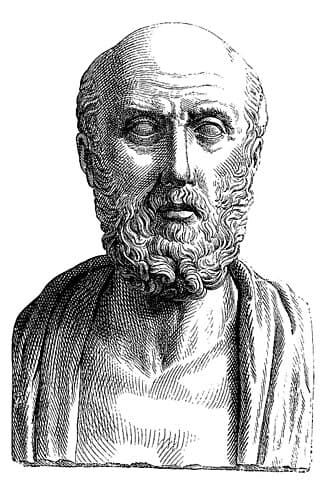
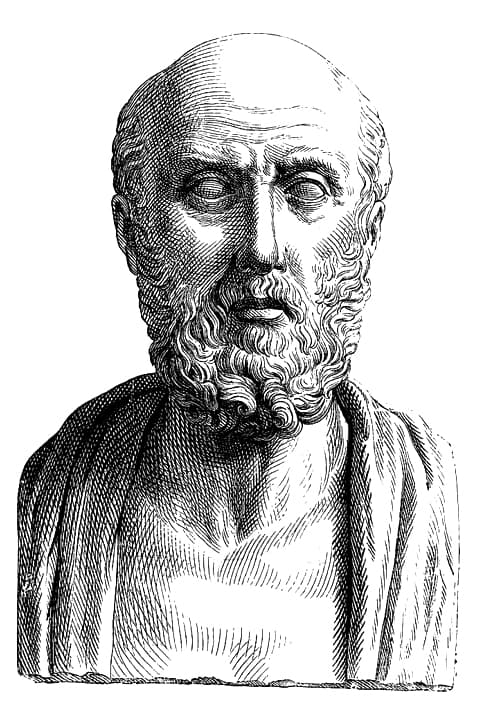
The Hippocratic Corpus (Latin: Corpus Hippocraticum), or Hippocratic Collection, is a collection of around 60 early Ancient Greek medical works closely associated with the physician Hippocrates and his teachings. The Hippocratic Corpus covers many diverse aspects of medicine, from Hippocrates' medical theories to what he devised to be ethical means of medical practice, to addressing various illnesses. Even though it is considered a singular corpus that represents Hippocratic medicine, they vary (sometimes significantly) in content, age, style, methods, and views practiced; therefore, authorship is largely unknown. The ancient commentaries on this corpus, from writers such as Attalion and Oribasius, are myriad. Hippocrates began Western society's development of medicine, through a delicate blending of the art of healing and scientific observations. What Hippocrates was sharing from within his collection of works was not only how to identify symptoms of disease and proper diagnostic practices, but more essentially, he was alluding to his personable form of art, "The art of true living and the art of fine medicine combined." The Hippocratic Corpus became the foundation upon which Western medical practice was built.
Hippocrates' contribution to medicine
Hippocrates was born c. 460 BCE on the Greek island of Kos. The verifiable details of his life are few, despite centuries of hagiographic accounts. According to tradition, Hippocrates was born into a hereditary order of priest-like physicians known as Asclepiads. At the time, the practice of medicine involved spiritual and supernatural elements, corresponding to the prevailing belief that health and illness were conferred by the gods. Hippocrates did not share this view. For example, according to works later ascribed to him, he was the first to describe epilepsy as an inheritable brain disease rather than an infliction from the divine. In addition to his rejection of purely divine causes of illness, Hippocrates rejected the idea that medicine could only be practiced by those born into the priestly Asclepiad class like himself. He went on to establish a medical school at Kos and opened it to those born outside of the Asclepiad class. Known as the father of medicine, Hippocrates was an admirable physician and teacher during his time. When considered among fellow ancient Greek philosophers and physicians, Hippocrates was considered the most influential in the evolution of medicine as a science. He focused on a natural approach to medicine, expressing that there had to be a comprehensive understanding of the patient's health, as well as harmony between nature and the individual.
Reading level
Audio Summary
Played with your browser's voice. Studio-quality audio can be added with a text-to-speech service.
Ask about this article
📝 Quick Quiz1 / 3
What is "Hippocratic Corpus" primarily known for?
Vocix Daily — In Your Inbox
Top stories, deep-dive articles, and "On This Day" history — one crisp digest delivered every morning.
Sources & references
Reference material for this entry is drawn from the open encyclopedic record, including Wikipedia , available under the CC BY-SA 4.0 license. Images are credited individually beside each photo.
Hippocrates' focal point for medicine stemmed from the practice of scientific discipline. To enforce scientific discipline, Hippocrates based his medical principles on natural sciences, diagnosing, treating, and preventing medical diseases. In addition to a focus on natural approaches, he also began to look into anatomical and physiological relationships in the body. He also heavily believed in the study of anatomy and the nervous system. By understanding the anatomy of the human body, Hippocrates was able to recognize symptoms holistically when diagnosing a patient. To align completely with his emphasis on the physical observation of the human body, Hippocrates eliminated any religious element from his account of medicine. In the Hippocratic text On Flesh, On Regimen, On Diseases I, On Winds, relevant works from the Hippocratic Corpus, he firmly established the limited focus he planned to employ with his medical concerns, that is, he had determined that he would only entertain natural phenomena that are relevant to the medical issue at hand.
Another contribution Hippocrates had to medicine was evidence-based knowledge. Hippocrates was the first to ever establish the belief that by simply observing a patient, a physician would recognize symptoms and determine the disease. Hippocrates insisted that he must keep careful notes and follow the patient from the start of the disease to the end no matter what that might have looked like so he could compile different symptoms and treatments. The ideal of evidence-based knowledge is still implemented in the medical field and has set the standards for physicians today. According to Hippocrates, medicine was dependent on detailed observation of symptoms and health, prognosis, treatment of the patient, and reason to establish diagnosis.
While the Hippocratic Corpus was not written by Hippocrates himself, the compiled work of medical professionals all follow the same guidelines imposed by Hippocratic medicine. Hippocrates laid the foundation for modern medicine, as his protocols and guidelines for the classification of diseases are being utilized by physicians today. His principles for the diagnosis, treatment and prevention of diseases have been preserved in the Hippocratic Corpus, and are the standard for medical ethics today.
Authorship, name, origin
Of the texts in the corpus, none is proven to be by Hippocrates himself, The works of the corpus range from Hippocrates' time and school to many centuries later and rival points of view. Franz Zacharias Ermerins identifies the hands of at least nineteen authors in the Hippocratic Corpus. However, the varied works of the corpus have gone under Hippocrates' name since antiquity. According to Howard Clark Kee, it is a haphazard collection of anonymous authors.
The corpus may be the remains of a library of Cos, or a collection compiled in the third century BC in Alexandria. However, the corpus includes works beyond those of the Coan school of ancient Greek medicine; works from the Cnidian school are included as well.
Only a fraction of the Hippocratic writings have survived. The lost medical literature is sometimes referred to in the surviving treatises, as at the beginning of Regimen. Some Hippocratic works are known only in translation from their original Greek to other languages; given that the quality and accuracy of a translation without a surviving original cannot be known, it is difficult to identify the author with certainty. "Hippocratic" texts survive in Arabic, Hebrew, Syriac, and Latin.
Dates and groupings
The majority of the works in the Hippocratic Corpus date from the Classical period, the last decades of the 5th century BC and the first half of the 4th century BC. Among the later works, The Law, On the Heart, On the Physician, and On Sevens are all Hellenistic, while Precepts and On Decorum are from the 1st and 2nd centuries AD.
Some of the earliest works of the corpus (mid-fifth century) are connected to the Cnidian school: On Diseases II–III and the early layer within On the Diseases of Women I–II and On Sterile Women. Prorrhetics I is also mid-fifth century. In the second half of the fifth century, a single author likely produced the treatises On Airs, Waters, Places; Prognostics; Prorrhetics II; and On the Sacred Disease. Other fifth-century works include On Fleshes, Epidemics I and III (c. 410 BC), On AncientMedicine, On Regimen in Acute Diseases, and Polybus' On the Nature of Man/Regimen in Health (410–400 BC).
At the end of the fifth or the beginning of the fourth century, one author likely wrote Epidemics II–IV–VI and On the Humors. The coherent group of surgical treatises (On Fractures, On Joints, On Injuries of the Head, Surgery, Mochlicon) is of similar date.
The gynecological treatises On the Nature of the Woman, On the Diseases of Women, Generation, On the Nature of the Child, and On Sterile Women constitute a closely related group. Hermann Grensemann identified five layers of material in this group, from the mid-fifth century to the mid-fourth century. The oldest stratum is found in On the Nature of the Woman and On the Diseases of Women II. Generation and On the Nature of the Child constitute a single work by a late-fifth-century author, who may also be identified as the author of On Diseases IV and of sections of On the Diseases of Women I. The latest layer is On Sterile Women, which was composed after the other gynecological treatises were in existence.
A single fourth-century author probably wrote On Fistulae and On Hemorrhoids.
Author Susan Wise Bauer writes that, because it explains disease "without blaming or invoking the gods", the Corpus is "the first surviving book of science".
Content
The Hippocratic Corpus contains textbooks, lectures, research, notes and philosophical essays on various subjects in medicine, in no particular order. These works were written for different audiences, both specialists and laymen, and were sometimes written from opposing view points; significant contradictions can be found between works in the Corpus.
One significant portion of the corpus is made up of case histories. Books I and III of Epidemics contain forty-two case histories, of which 60% (25) ended in the patient's death. Nearly all of the diseases described in the Corpus are endemic diseases: colds, consumption, pneumonia, etc.
Theoretical and methodological reflections
In several texts of the corpus, the ancient physicians develop theories of illness, sometimes grappling with the methodological difficulties that lie in the way of effective and consistent diagnosis and treatment. As scholar Jacques Jouanna writes, "One of the great merits of the physicians of the Hippocratic Corpus is that they are not content to practice medicine and to commit their experience to writing, but that they have reflected on their own activity".
Reason and experience
While the approaches range from empiricism to a rationalism reminiscent of the physical theories of the pre-Socratic philosophers, these two tendencies can exist side-by-side: "The close association between knowledge and experience is characteristic of the Hippocratics," despite "the Platonic attempt to drive a wedge between the two".
The author of On AncientMedicine launches immediately into a critique of opponents who posit a single "cause in all cases" of disease, "having laid down as a hypothesis for their account hot or cold or wet or dry or anything else they want". The method put forward in this treatise "could certainly be characterized as an empirical one", preferring the effects of diet as observed by the senses to cosmological speculations, and it was seized upon by Hellenistic Empiricist doctors for this reason. However, "unlike the Empiricists, the author does not claim that the doctor's knowledge is limited to what can be observed by the senses. On the contrary, he requires the doctor to have quite extensive knowledge of aspects of the human constitution that cannot be observed directly, such as the state of the patient's humors and internal organs".
Epistemology and the scientific status of medicine
The author of The Art is at pains to defend the status of medicine as an art (techne), against opponents who (perhaps following Protagoras' critique of expert knowledge) claim it produces no better results against disease than chance (an attack served by the fact that doctors refused to treat the serious and difficult cases they judged to be incurable by their art). The treatise may be considered "the first attempt at general epistemology bequeathed to us by antiquity", although this may only be because we have lost fifth-century rhetorical works that took a similar approach.
For this writer, as for the author of On the Places in Man, the art of medicine has been wholly discovered. While for the author of On the Places in Man "the principles discovered in it clearly have very little need of good luck", the author of The Art acknowledges the practical limitations that arise in the therapeutic application of these principles. Likewise for the author of On Regimen, the "knowledge and discernment of the nature of man in general—knowledge of its primary constituents and discernment of the components by which it is controlled" may be completely worked out, and yet in practice it is difficult to determine and apply the correct and proportionate diet and exercise to the individual patient.
Humours
The Hippocratic Corpus explains diseases using the Four Humours in which are described a Phlegm, Yellow Bile, Blood and Black Bile. These medical writings associated each of the humours with a specific organ which goes as follows; blood with the heart, yellow bile with the liver, black bile with the spleen and phlegm with the brain. With each humour, there were specific properties that applied to changes in the fluids such as blood is hot and moist, phlegm is cold and moist, yellow bile is hot and dry and black bile is cold and dry. The authors of the Hippocratic Corpus described that these four humors play a very important role in our health as when there is a little or too much of one of the humours, a disease might occur.
Mental Illness
The most controversial elements of health and disease during the BC time was the issue of mental illnesses as it was always related to a higher power punishment or demonic nature. The Hippocratic Corpus employed many new vocabulary words to describe mental ailments that coincided with intensity, duration or severity and used these terms to scale from mildest to the strongest form.
Natural vs. divine causality
Whatever their disagreements, the Hippocratic writers agree in rejecting divine and religious causes and remedies of disease in favor of natural mechanisms. Hippocratic medicine had been formulated to hold true to the belief that "medicine should be practiced as a scientific discipline based on the natural sciences, diagnosing and preventing disease as well as treating them." This not only influenced the relevance of heaven in medicine, and the church's influence on the practice of medicine, but also the relevance of astronomy and cosmology in medicine as a science. Greek tragedy encouraged the spread of false knowledge about the divine origin of human diseases. Greek gods were placed on a pedestal, and seen as healers as a result. To combat this view of diseases, Hippocratic physicians restricted their diagnoses to rational causes and rejected anthropomorphic intervention as the cause and solution of medical issues. In addition to Greek poetry and tragedy, magicians, charlatans, and purifiers can also be considered responsible for the widespread of 'sacred' explanations. Doing this allowed them to step in and provide inefficacious remedies that could convince the gods to intervene and fix these sacred issues experienced by individuals. Thus On the Sacred Disease considers that epilepsy (the so-called "sacred" disease) "has a natural cause, and its supposed divine origin is due to men's inexperience and to their wonder at its peculiar character." An exception to this rule is found in Dreams (Regime IV), in which prayers to the gods are prescribed alongside more typically Hippocratic interventions. Though materialistic determinism goes back in Greek thought at least to Leucippus, "One of the greatest virtues of the physicians of the Hippocratic Collection is to have stated, in its most universal form, what was later to be called the principle of determinism. All that occurs has a cause. It is in the treatise of The Art that the most theoretical statement of this principle is to be found: 'Indeed, under a close examination spontaneity disappears; for everything that occurs will be found to do so through something [dia ti].'" In a famous passage of On Ancient Medicine, the author insists on the importance of knowledge of causal explanations: "It is not sufficient to learn simply that cheese is a bad food, as it gives a pain to one who eats a surfeit of it; we must know what the pain is, the reasons for it [dia ti], and which constituent of man is harmfully affected."
Natural approach to health and wellness
The writers of the treatises in the Hippocratic Corpus emphasized a natural approach to health and wellness. During the Asclepius paradigm, Hippocrates used a natural way to treat disease. These natural approaches emphasized the importance of the harmony between the human body and the environment in which we live in. Writings in the Hippocratic Corpus also emphasized the importance of realizing how the environment might cause diseases. Treating diseases with a natural approach is also a topic that can be found in the Hippocratic Corpus. Hippocratic tradition also found that it is important to understand the causes of physiological factors and how these physiological factors hold a therapeutic significance. To add to the natural approach of health and wellness, Hippocratic tradition also emphasized that the mind, body, and spirit were all independent of one another.
Health Promotion and the Olympic Games
Health promotion was another topic found in the treatises of the Hippocratic Corpus. To promote the well-being of students and their physical and mental health in schools, physical activity was conducted as a necessary activity that allowed the student's physical health to be the best it could be. An example of health promotion being used can be found during the Olympic games. One example of health promotion being used during the Olympic games was olive oil being used to warm up athletes' body temperatures so that they could perform to the best of their abilities. Ancient greeks believed that it was essential to have a harmony between the body and the mind. This led to the idea of a "Healthy mind in a Healthy Body" which is a common phrase that people might hear.
Food was another topic of health promotion in the Hippocratic Corpus. These writings discussed that in order for food to be beneficial to the health of one, the source should be adapted to human nature and food is defined as more forceful or less forceful properties. It was explained in the Hippocratic Corpus that to avoid a diet that was too forceful we must implement cooking and mixing as this was already a type of medicine that can help ease the cause of suffering, illness and death. It has been discovered that during the Olympic games, figs and other fruits were given to the athletes so that the high concentration of glucose in the food would give them the energy they needed to compete to the best of their ability.
Medical ethics and manners
The duties of the physician are an object of the Hippocratic writers' attention. The series of texts composing the Corpus educates readers on the practices of identifying symptoms in patients, diagnosis, prognosis, treatments, ethics, and bedside manner. In Ancient Greece, being a man of high morals went hand in hand with being a morally just physician. A famous maxim (Epidemics I.11) advises: "As to diseases, make a habit of two things—to help, or at least to do no harm."
The most famous work in the Hippocratic Corpus is the Hippocratic Oath, a landmark declaration of medical ethics. The Hippocratic Oath is both philosophical and practical; it not only deals with abstract principles but practical matters such as removing stones and aiding one's teacher financially. It is a complex and probably not the work of one man. It remains in use, though rarely in its original form.
The preamble of On the Physician offers "a physical and moral portrait of the ideal physician", and the Precepts also concern the physician's conduct. Treatises such as On Joints and Epidemics VI are concerned with the provision of such "courtesies" as providing a patient with cushions during a procedure, and Decorum includes advice on good manners to be observed in the doctor's office or when visiting patients.
Urology
With many books incorporating different urology practices and observations and nearly 30 works in the Hippocratic book collection entitled Aphorism seemingly solely dedicated to urology in general, urology was one subject that was thoroughly investigated. Seemingly, the main and most problematic topic covered in urology was that of bladder disease in patients, especially when urinary tract stones (that is, stones within either the kidneys or the bladder) were present. Urinary tract stones, in general, have been seen within records all throughout history, even as far back as the ancient days of Egypt. Theorizing how these urinary tract stones formed, how to detect them and other bladder issues, and the controversy on how to treat them were all major investigating points to the authors of the Hippocratic Corpus.
Stone formation theories
Throughout the books of the Hippocratic Corpus, there are varying hypotheses as to reasons why and exactly how urinary tract stones actually formed. It is noted that these hypotheses were all based on the use of uroscopy and observation of patients by doctors of the time.
Within the work On the Nature of Man, suggest that the bladder stones first form within or attached to the aorta, much like any other tumor-like object would. In this place, the stone will essentially form pus. Afterward, this stone formation is transported by the blood vessels and forced into the bladder where urine will also be transported.
In another work, On Airs, Waters, Places, it is suggested that drinking water can attribute to urinary tract stones. If water consumed consists of a mixture of more than one water sources, the water is of impure quality. The different waters are in conflict with one another and therefore produce deposits of sediment. The accumulation of these deposits within the urinary tract due to drinking the waters can then result in urinary tract stones.
Additionally in On Airs, Waters, Places, another passage describes that formation of urinary tract stones will occur when urine cannot flow through the system easily and causes the sediment in the urine to collect in one area and meld, forming a stone. This can occur when inflammation occurs within the part of the bladder leading to the urethra. When the stone forms at this point, it can block flow and, therefore, cause pain. In this scenario, it was hypothesized that males are more likely to form stones than females due to the anatomy of the bladder.
Detecting bladder disease/stones
The main mechanism of detecting bladder disease's symptoms, including inflammation and urinary tract stone formations, is through the appearance of the urine itself and the changes that occur with the urine over time. In Aphorism, it was simply stated that as the appearance of urine diverges more and more from the appearance of "healthy" urine, the more likely it is to be diseased and the worse the disease becomes.
In Aphorism works, it was noted that urine lacking color could indicate diseases of the brain – some today think that this author who made this statement was meaning to refer to chronic renal failure or even diabetes. It was also suggested that the appearance of blood within urine could indicate vessels of the kidney to have burst, potentially due to necrosis of blood arteries or vessels. Furthermore, doctors noted that if bubbles formed on top of urine, the kidneys were diseased and showed the potential of long-lasting disease.
Treatment of bladder disease/stones
When it comes to the treatment of urinary tract stones, many solutions were suggested, including drinking a lot of a water/wine mixture, taking strong medication, or trying different positions when trying to flush them out.
Extracting the urinary tract stones was another option; however, this method was not utilized very often due to its serious risks and possible complications of cutting into the bladder. Other than leakage of urine into the body cavity, another common complication was that of the cells of the testes dying due to the spermatic cord inadvertently being cut during the procedure.
In fact, due to these and other complications and the lack of antiseptics and pain medicines, the Hippocratic Oath opted for the avoidance of surgery – unless absolutely necessary – especially when concerning surgeries that dealt with the urinary tract and more so when stone removal was the intent. Although, the urinary tract stone removal was not a necessary surgery and it appeared to be avoided in most cases, some argue that the Hippocratic Oath only wards of these procedures if the doctor holding the knife is inexperienced in that area. This idea puts forth the development of medical specialties – that is, doctors focusing on one particular area of medicine versus studying the wide array of material that is medicine. The doctors whom have become experts in the urinary tract – whom we would call urologists today – are those that could perform the heightened risk procedure of stone removal. With this reliance on specialized doctors of the urinary tract, some believe that urology itself was the first definable expertise of medical history.
Wine
References to wine can be found throughout Greek antiquity in both dramas and medical texts. The Hippocratic texts describe wine as a powerful substance, that when consumed in excess can cause physical disorders, today known as intoxication. Although the negative effects of wine on the human body are documented within the Hippocratic Corpus, the author or authors maintain an objective attitude towards wine. During this time, those studying medicine were interested in the physical effects of wine, therefore no medical text condemned the use of wine in excess. According to the Hippocratic text, the consumption of wine significantly affects two regions of the body: the head and the lower body cavity. Excessive drinking can cause heaviness of the head and pain in the head, in addition to disturbances in thought. In the lower body cavity, excess wine ingestion can have a purging effect; it can be the source of stomach pain, diarrhea, and vomiting. This stomach pain was more common among athletes because of their intense diets composed mainly of meat and wine. An overall effect of wine that all Greek doctors of the time observed and agreed on was its warming property. Therefore, wine's properties are described as "hot and dry." As documented in the Hippocratic texts, extreme use of wine can result in death.