
The governor-general of Australia is the federal representative of the monarch of Australia, currently Charles III. The governor-general has many constitutional and ceremonial roles in the Australian political system, in which they have independent agency. However, they are generally bound by convention to act on the advice of the prime minister and the Federal Executive Council. They also have a significant community role, through recognising meritorious individuals and groups, and representing the nation as a whole. The current governor-general is Sam Mostyn.
Significant functions of the governor-general include giving royal assent to bills passed by the houses of parliament, issuing writs for elections, exercising executive power on the advice of the Federal Executive Council, formally appointing government officials (including the prime minister, other ministers, judges and ambassadors), acting as commander-in-chief of the Australian Defence Force, and bestowing Australian honours. However, in almost all instances the governor-general only exercises de jure power in accordance with the principles of the Westminster system and responsible government. This requires them to remain politically neutral and to only act in accordance with Parliament (such as when selecting the prime minister and providing royal assent) or on the advice of ministers (when performing executive actions). However, in certain limited circumstances, the governor-general can exercise reserve powers (powers that may be exercised without or against formal advice), most notably during the 1975 Australian constitutional crisis. These situations are often controversial and the use of and continued existence of these powers remains highly debated.
In their ceremonial and community roles, the governor-general represents the nation as a whole. Domestically, this role entails attending services and commemorations, sponsoring community organisations and hosting events at one of the two official residences (Government House in Canberra and Admiralty House in Sydney). Internationally, the governor-general represents Australia by travelling to significant events and by performing and receiving state visits. The governor-general is supported by a staff (of 80 in 2018) headed by the official secretary.

The governor-general is selected by the prime minister, but formally appointed by the monarch of Australia on the prime minister's advice. Their term is not fixed, but they typically serve for five years. From Federation in 1901 until 1965, 11 out of the 15 governors-general were British aristocrats; however, all since then have been Australian citizens. The current governor-general, Samantha Mostyn, is the second woman to hold the post, after Dame Quentin Bryce (2008–2014).
Appointment
The governor-general is formally appointed by the monarch of Australia with a commission made under the authority of section 2 of the Constitution and regulated by letters patent issued by the monarch. When a new governor-general is to be appointed, the current prime minister recommends a name to the monarch, who by convention accepts that recommendation. Prior to the 1940s, the recommendation was made and decided by the Cabinet as a whole. The incoming governor-general is publicly announced usually several months before the end of the existing governor-general's term. After receiving their commission, the new governor-general takes an oath or affirmation of allegiance to the monarch and an oath or affirmation of office. These oaths are administered by the chief justice of Australia or another justice of the High Court. Traditionally, the ceremony takes place in the Senate chamber.
Tenure
The Constitution does not set a term of office, so a governor-general may continue to hold office for any agreed length of time. In recent decades the typical term of office has been five years. Some early governors-general were appointed to terms of just one year (Lord Tennyson) or two years (Lord Forster; later extended). At the end of this initial term, a commission may be extended for a short time, usually to avoid conflict with an election or during political difficulties.
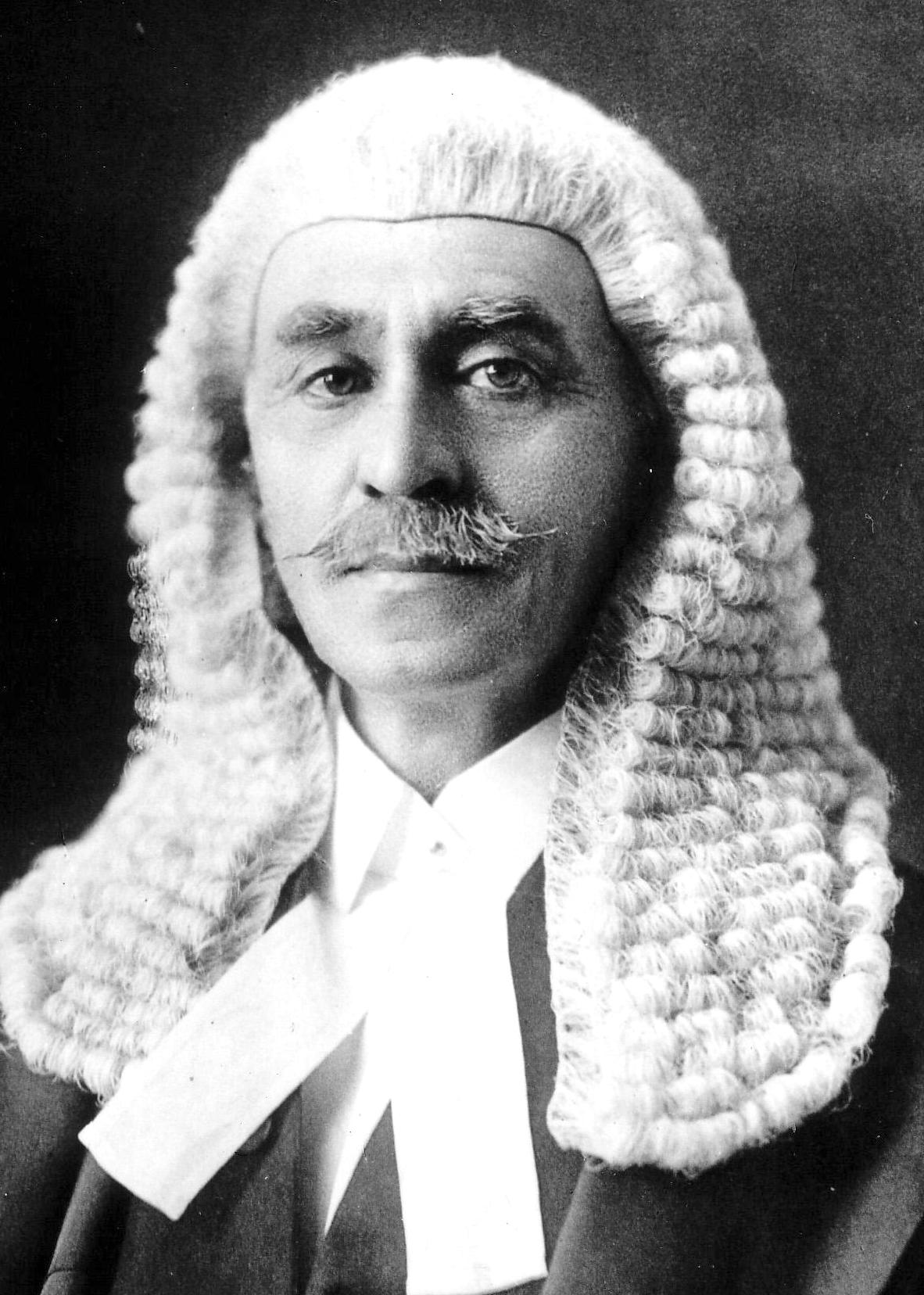
Three governors-general have resigned their commission. The first governor-general, Lord Hopetoun, asked to be recalled to Britain in 1903 over a dispute about funding for the post. Sir John Kerr resigned in 1977, with his official reason being his decision to accept the position of Australian ambassador to UNESCO in Paris, a post which ultimately he did not take up, but the resignation also being motivated by the 1975 constitutional controversy. In 2003, ex-archbishop Peter Hollingworth voluntarily stood aside while controversial allegations against him were managed, and the letters patent of the office were amended to take account of this circumstance. He later stepped down over the church's handling of allegations of sexual abuse of boys, for which he apologised before the Royal Commission into Institutional Responses to Child Sexual Abuse in 2016. In 1961, Lord Dunrossil became the first and, to date, only governor-general to die while holding office.
A vacancy occurs on the resignation, death, or incapacity of the governor-general. A temporary vacancy occurs when the governor-general is overseas on official business representing Australia. A temporary vacancy also occurred in 2003 when Peter Hollingworth stood aside.
Section 4 of the Constitution allows the monarch to appoint an administrator to carry out the role of governor-general when there is a vacancy. By convention, each of the state governors holds a dormant commission as administrator, allowing the longest-serving available governor to assume the office whenever a vacancy occurs. In 1975, Labor prime minister Gough Whitlam advised Queen Elizabeth II that Sir Colin Hannah, then governor of Queensland, should have his dormant commission revoked for having made public and partisan anti-Whitlam government political statements, in violation of the convention that vice-regal representatives remain neutral and above politics. In May 2023, previous governor-general Sir Peter Cosgrove was specially commissioned to act as administrator due to governor-general David Hurley and all of the state governors simultaneously being absent from Australia to attend the coronation of King Charles III and Queen Camilla.

Dismissal
A governor-general may be recalled or dismissed by the monarch before their term is complete. By convention, this may only be upon advice from the prime minister, who retains responsibility for selecting an immediate replacement or letting the vacancy provisions take effect. The constitutional crisis of 1975 raised the possibility of the prime minister and the governor-general attempting to dismiss each other at the same time. According to William McMahon, Harold Holt considered having Lord Casey dismissed from the governor-generalship, and went as far as to have the necessary documents drawn up. Casey had twice called McMahon into Yarralumla to give him a "dressing down" over his poor relationship with deputy prime minister John McEwen, which he believed was affecting the government. Holt believed that this was an improper use of his authority, but no further action was taken.
Constitutional role
The governor-general has a key role in performing constitutional duties in all branches of government.
Role in the Australian Parliament
The Constitution defines the Parliament of the Commonwealth as consisting of the monarch, the Senate and the House of Representatives. However, the monarch's role is no more than titular, with the governor-general responsible under the Constitution for most of the functions undertaken by the monarch in regard to the UK parliament. These include the power to summon, dissolve and prorogue the Parliament, to issue writs for lower house elections, to convene a joint sitting, as well as the power to give royal assent to bills in the monarch's name.

The governor-general also has a ceremonial role in swearing in and accepting the resignations of members of Parliament. All members must make an oath or affirmation of allegiance to the King in the presence of the governor-general or someone appointed by them before they take their seats. On the day parliament opens, the governor-general makes a speech in the Senate (similar to the King's Speech in the UK), entirely written by the government, explaining the government's proposed legislative program.
One of the most significant powers of the governor-general is the power to grant royal assent in the King's name. This assent gives bills that have been passed by the houses of parliament the force of law, with effect either 28 days after being signed, on a date to be fixed later by proclamation or otherwise as provided in the act. The government does not formally advise the governor-general to grant assent, but it is expected that they will act in accordance with the democratically elected houses of Parliament and assent has never been refused.
Apart from assenting to a bill, the governor-general can also reserve a bill for the King's pleasure, that is allow the monarch to give royal assent personally to a proposed bill. When the governor-general acted as a representative of the British government, this provision allowed for the governor-general to refer a bill back to the British government for review, which would then advise the monarch whether or not to grant assent. The British government could also advise the monarch to disallow a law passed within the last two years, which would annul the law on the governor-general's proclamation or message to the houses. However, since the assumption of full sovereignty and the emergence of an independent Crown of Australia, the British government no longer has these powers and the reservation power has only occasionally been used for bills that affect the monarch personally, such as the Royal Styles and Titles Act (1953 and 1973) and other bills of national significance such as the Flags Act 1953 and the Australia Act 1986.

Finally, the governor-general can refer a bill back to the houses with suggested changes. This has only happened when once passed, the government has realised a bill requires further amendment and requests the governor-general return the bill to the house.
Role in executive government
Under the Constitution, the executive power of the Commonwealth is vested in the monarch, but is exercisable by the governor-general. However, such power is only exercised on the advice of ministers in accordance with the principles of responsible government. This occurs formally through the Federal Executive Council, a body of all current (and technically former) ministers that advises the governor-general. Such advice is generally the result of decisions already made in Cabinet, the de facto highest executive body in Australia. While some provisions in the Constitution refer to the "Governor-General" and others to the "Governor-General in Council", this does not mean that there is in element of discretion in the former; this distinction merely indicates that the former powers were those that were historically classified as belonging to the prerogative of the monarch alone.
Many executive powers are also bestowed on the governor-general by statute. This allows the government of the day (acting through the governor-general) to perform certain acts that would otherwise require legislation. Such provisions are often made for situations where legislating may be too slow; for example for the declaration of and response to emergencies. An example this was the declaration on the advice of the health minister of a human biosecurity emergency under the Biosecurity Act 2015 in March 2020, due to the outbreak of the COVID-19 pandemic.

Formally, the governor-general may exercise the traditional rights of the monarch as identified by Bagehot: the right to be consulted, to encourage and to warn. However, the practical ability to exercise this right is limited. Unlike in Canada or the UK, there is no tradition of regular weekly meetings between the governor-general and the prime minister, with meetings instead sporadically held at the request of either party. There is at least a theoretically greater capacity to exercise influence at the regular meetings of the Federal Executive Council at Government House. However, this opportunity is practically constrained too: by the large volume of often complex and legalistic materials considered; by the lack of a requirement for those executive councillors (ministers) present to be properly briefed; by the fact that executive councillors may not have sufficient seniority in the government such that warnings or encouragements would be considered; and by the expectation of some governments that the governor-general should act as a rubber stamp.
Reserve powers
The reserve powers are those powers that the governor-general may exercise independently, that is in the absence of or against ministerial advice. While most of these powers are listed in the Constitution, the circumstances in which they can be used with discretion is not prescribed and is a matter of convention.
The reserve powers that are generally accepted are:
the discretion to select a prime minister if an election results in a parliament in which no party or coalition has a clear majority
the power to dismiss a prime minister that has lost the support of the House of Representatives
the power to refuse to dissolve the House of Representatives
The reserve powers that are the subject of greater debate are:
the power to refuse a double dissolution
the power to refuse a prorogation
the discretion to select a prime minister following the dismissal of a prime minister that has lost the support of the House of Representatives
the power to dismiss a prime minister who is unable to obtain supply and refuses to resign or advise a dissolution
the power to dismiss a prime minister that has broken the law
the power to refuse royal assent
The most prominent use of the reserve powers occurred in the course of the 1975 Australian constitutional crisis, in which governor-general Sir John Kerr dismissed the government of Gough Whitlam and appointed opposition leader Malcolm Fraser as prime minister while an election was held. Kerr acted following the blocking of supply by the opposition controlled Senate, arguing that this gave him both the right and duty to dismiss the government when they did not resign or advise an election. The event remains one of the most highly debated and controversial in Australian political history.
Deputies of the governor-general
Section 126 of the Constitution provides for the sovereign to authorise the governor-general to appoint a deputy or deputies to assist in the execution of their duties. Given the vast size of the country, and the primitive transport arrangements when the constitution was drafted in the late 19th century, it was convenient for the governor-general be able to delegate some of their duties to deputies. The current authorisation is contained in Part IV of the 2008 letters patent relating to the Office of governor-general, issued by Elizabeth II.
The vice-president of the Executive Council is, as a matter of course, appointed a deputy to the governor-general for the purposes of summoning meetings of the Executive Council, presiding at meetings of the Executive Council in the absence of the governor-general, and appointing a minister as deputy to the governor-general for the purpose of presiding at a meeting of the Executive Council in the absence of both the governor-general and the vice-president.
The chief justice of the High Court of Australia, or another justice of the High Court, is appointed as deputy of the governor-general to open sessions of the Australian Parliament and administer oaths or affirmations of allegiance to new members of Parliament after opening parliament. Where there are also new senators, a second High Court justice will be appointed deputy to the governor-general to administer oaths or affirmations of allegiance in the upper house.
Governors-general regularly appoint state governors (most often the governors of New South Wales and Victoria, due to their proximity to Canberra) as deputies of the governor-general so that they may carry out some of the administrative functions of the office when the governor-general is unavailable but in the country. This is in addition to the dormant commissions the governors hold to administer the Government of the Commonwealth when there is no governor-general, or the governor-general is incapacitated or absent from the Commonwealth.
Under Section 42 of the Constitution, the governor-general may authorise a person to administer the oath or affirmation of allegiance to newly-elected senators and members of Parliament. In practice, these people are the president of the Senate and speaker of the House.
Ceremonial role
In addition to the formal constitutional role, the governor-general has a representative and ceremonial role, though the extent and nature of that role has depended on the expectations of the time, the individual in office at the time, the wishes of the incumbent government, and the individual's reputation in the wider community. Governors-general generally become patrons of various charitable institutions, present honours and awards, host functions for various groups of people including ambassadors to and from other countries, and travel widely throughout Australia. Sir William Deane (governor-general 1996–2001) described one of his functions as being "Chief Mourner" at prominent funerals. In Commentaries on the Constitution of the Commonwealth of Australia, Robert Garran wrote that, since the Australian executive is national in nature (being dependent on the nationally elected House of Representatives, rather than the Senate), "the Governor-General, as the official head of the Executive, does not in the smallest degree represent any federal element; if he represents anything he is the image and embodiment of national unity and the outward and visible representation of the Imperial relationship of the Commonwealth".
That role can become controversial, however, if the governor-general becomes unpopular with sections of the community. The public role adopted by Sir John Kerr was curtailed considerably after the constitutional crisis of 1975; Sir William Deane's focus on social justice issues provoked both praise and criticism; and Peter Hollingworth resigned after an independent inquiry determined that when he was the Anglican archbishop of Brisbane, he had knowingly allowed a paedophile priest to continue working.
Diplomatic role
The governor-general makes state visits overseas on behalf of Australia, during which an administrator of the government is appointed. The right of governors-general to make state visits was confirmed at the 1926 Imperial Conference, as it was deemed not feasible for the sovereign to pay state visits on behalf of countries other than the United Kingdom. However, an Australian governor-general did not exercise that right until 1971, when Paul Hasluck visited New Zealand. Hasluck's successor John Kerr made state visits to eight countries, but Kerr's successor Zelman Cowen made only a single state visit – to Papua New Guinea – as he wished to concentrate on travelling within Australia. All subsequent governors-general have travelled widely while in office and made multiple state visits. Occasionally governors-general have made extended tours visiting multiple countries, notably in 2009 when Quentin Bryce visited nine African countries in 19 days.
The governor-general accredits (i.e. formally validates) Australia's ambassadors through sending a formal letter of credence (and a letter of recall at the end of a tenure) to foreign heads of state and government. Similarly, the governor-general formally receives letters from foreign countries during credentials ceremonies for heads of missions upon their arrival in Canberra. Before 1987, Australia's ambassador and high commissioner appointments were formally made by the monarch instead.
Military role
Under section 68 of the Constitution, the command-in-chief of Australia's military forces is "vested in the Governor‑General as the Queen's representative". Views on the effect of this section vary, from merely making the governor-general "in effect no more than a glorified Patron of the Defence Forces" to alternatively making the governor-general the ultimate head of military chain of command who may influence or deny the use of the military if it is to be used for domestic political ends. Ex-governor-general Sir Ninian Stephen stated that his view of the section was that it vests command of the military in the governor-general personally, but only to the extent that the power to give orders or call out the military does not require formal advice from the Federal Executive Council but instead the direct advice of the relevant minister. Other powers exist in the Defence Force Act 1903, such as the power to appoint the chief of the Defence Force, to call out the Defence Force, and declare a time of war, exercised as ordinary executive powers on advice. Additionally, all officers are appointed by the governor-general on behalf of the monarch with a personally signed commission.
Historically, the power to declare war and make peace rested with the monarch (as advised by the British government) in their role as head of the British Empire. This was the position of Robert Menzies in 1939, who assumed that the declaration of war by the United Kingdom in World War II automatically applied to Australia. However, in 1941 opinion had shifted and the Curtin government advised the governor-general to declare war on several Axis powers. However, it was still unclear whether the governor-general had the constitutional power to declare war, so in addition to requesting the assignment of powers by the monarch to the governor-general, the government also requested King George VI make similar proclamations of war on Australia's behalf. No formal declarations of war have been made since World War II, although other declarations on the start and end of time of "active service" have been made in other conflicts.
The powers of command-in-chief are vested in the governor-general rather than the "Governor-General in Council", but this does not denote an element of personal discretion in their exercise. However, in 1970 governor-general Paul Hasluck refused prime minister John Gorton's request to authorise a Pacific Islands Regiment peacekeeping mission in the Territory of Papua and New Guinea, on the ground that cabinet had not been consulted. Gorton agreed to put the matter to his ministers, and a cabinet meeting agreed that troops should be called out only if requested by the territory's administrator; this did not occur. Defence minister Malcolm Fraser, who opposed the call out, was responsible for informing Hasluck of the prime minister's lack of consultation. The incident contributed to Fraser's resignation from cabinet in 1971 and Gorton's subsequent loss of the prime ministership.
Community role
The governor-general is generally invited to become patron of various charitable and service organisations. Historically the governor-general has also served as Chief Scout of Australia. The chief scout is nominated by the Scouting Association's National Executive Committee and is invited by the president of the Scout Association to accept the appointment. Bill Hayden declined the office on the grounds of his atheism, which was incompatible with the Scout Promise. He did however serve as the association's patron during his term of office.
Relationship with the monarch
While the governor-general is the monarch's representative, as provided by section 2 of the Constitution, the powers they exercise are solely granted by the Constitution. This was not always seen to be the case however, with section 2 also providing that the governor-general may exercise other powers, subject to the Constitution, that the monarch may assign them. Additionally, the initial letters patent of Queen Victoria purported to create and empower the office of governor-general, despite their assignment already in the Constitution. This was raised as early as 1901, by John Quick and Garran in their authoritative commentary of the Constitution, noting that the governor-general of Australia was distinguished from other imperial governors-general by the fact that "[t]he principal and most important of his powers and functions, legislative as well as executive, are expressly conferred on him by the terms of the Constitution itself ... not by Royal authority, but by statutory authority". This view was also held by Andrew Inglis Clark, senior judge of the Supreme Court of Tasmania, who with W. Harrison Moore (a contributor to the first draft of the constitution put before the 1897 Adelaide Convention and professor of law at the University of Melbourne), postulating that the letters patent and the royal instructions issued by Queen Victoria were unnecessary "or even of doubtful legality".
Additionally, it was also previously believed that the monarch retained certain powers, such as the power to declare war, appoint diplomatic officers and to grant charters of incorporation and as such these powers were assigned separately to the governor-general under section 2. However, the current interpretation of the Constitution is that all royal prerogatives are exercisable by the governor-general under section 61 and in recognition of this, the vesting of additional powers ended in 1987. While separate letters-patent still exist for the governor-general, these merely provide for the appointment of administrator in the case of the governor-general's absence or incapacity and requires the governor-general to make an oath or affirmation of allegiance and one of office.