
A military staff or general staff (also referred to as army staff, navy staff, or air staff within the individual services) is a group of officers, enlisted, and civilian staff who serve the commander of a division or other large military unit in their command and control role through planning, analysis, and information gathering, as well as by relaying, coordinating, and supervising the execution of their plans and orders, especially in case of multiple simultaneous and rapidly changing complex operations. They are organised into functional groups such as administration, logistics, operations, intelligence, training, etc. They provide multi-directional flow of information between a commanding officer, subordinate military units and other stakeholders. A centralised general staff results in tighter top-down control but requires larger staff at headquarters (HQ) and reduces accuracy of orientation of field operations, whereas a decentralised general staff results in enhanced situational focus, personal initiative, speed of localised action, OODA loop, and improved accuracy of orientation.
A commander "commands" through their personal authority, decision-making and leadership, and uses general staff to exercise the "control" on their behalf in a large unit. Most NATO nations, including the United States and most European nations, use the Continental Staff System which has origin in Napoleon's military. The Commonwealth Staff System, used by most of the Commonwealth, has its origin in the British military.
Functions
Information management
A primary function of a military staff is to provide accurate and timely information to support command decision-making. This information may include assessments, operational updates, and the results of contingency planning, which examines possible future situations and prepares appropriate responses. Through analysis and recommendations, the staff assists commanders in developing informed courses of action that effectively manage and conserve unit resources.
In addition to generating and analyzing information, a military staff manages the flow of communication within the unit and between external organizations. Information intended for the commander is prioritized, organized, and delivered through established channels. Relevant information that may affect subordinate units is distributed through their respective staffs to support coordination and execution. Information that does not directly apply to the unit is redirected to the appropriate command level or organization where it can be effectively utilized.
Military staffs are often among the first elements within a unit to identify issues that may affect operations. Matters that could significantly influence the unit’s operational capability are elevated to the commanding officer for consideration and decision-making. However, not all issues require command-level involvement. Routine or limited-scope matters are assigned to appropriate sections or personnel within the organization for resolution, allowing commanders to focus on higher-priority decisions and responsibilities.
A military staff also plays a role in identifying, developing, and utilizing opportunities or situations that may contribute to mission success. By collecting, evaluating, and applying relevant information, the staff supports planning, coordination, and the effective employment of unit capabilities.

Structure
In a generic command staff, more seasoned and senior officers oversee staff sections of groups organized by the needs of the unit. Senior Enlisted Personnel task personnel in the maintenance of tactical equipment and vehicles. Senior Analysts are tasked with the finalizing of reports, and their enlisted personnel participate in the acquisition of information from subordinate staffs and units. This hierarchy places decision making and reporting under the auspices of the most experienced personnel and maximizes information flow of pertinent information sent out of the command overall, clarifying matters overall. This frees up the most senior members of the command at each level for decision making and issuing direction for further research or information gathering (perhaps requiring men to put their lives at risk to gather additional intelligence).
History
Prior to the late 18th century, there was generally no organizational support for staff functions such as military intelligence, logistics, planning or personnel. Unit commanders handled such functions for their units, with informal help from subordinates who were usually not trained for or assigned to a specific task.
Austria
Count Leopold Joseph von Daun, in a letter to Empress Maria Theresa in January 1758, pressed for a more important role for the Generalquartiermeister (Chief of Staff). The failures in the army, especially at the Battle of Leuthen made it clear that Austria had no "great brain" and the command needed to spread the workload to allow the Commander-in-chief the time to consider the strategic picture. The 1757 regulations had created the Grosse Feldgeneralstab and Kleine Generalstab (large and small general staff) and after changes in 1769, a permanent staff of 30 officers was established under the direction of Franz Moritz von Lacy, which would be expanded in wartime with junior officers. The Grosse staff was divided into three: First, the Intrinsecum, which handled internal administration and directing operations; secondly, external activities, including the Pioneers; thirdly, the Inspection Service, which handled the issuing of orders and prisoners of war. Alongside the General Staff was the General Adjutant, who led a group of Adjutant staff selected by the army commanders to handle the details of internal administration and collating intelligence, and answered to the Commander-in-chief. The Chief of Staff became the chief adviser to the Commander-in-chief and, in a fundamental move away from the previous administrative role, the Chief of Staff now undertook operational planning, while delegating the routine work to his senior staff officers. Staff officers were drawn from line units and would later return to them, the intention being that they would prove themselves as leaders during their time with the staff. In a battle or when the army had detached corps, a small number of staff would be allocated to the column commander as a smaller version of headquarters. The senior man, usually a Major, would be the chief of the column staff and his principal task would be to help the commander to understand what was intended.

When Karl Mack von Leiberich became chief of staff of the army under Prince Josias of Saxe-Coburg-Saalfeld in the Netherlands, he issued the Instruktionspunkte für gesammte Herren Generals, the last of 19 points setting out the roles of staff officers, dealing with offensive and defensive operations, while helping the Commander-in-chief. In 1796, Archduke Charles, Duke of Teschen augmented these with his own Observationspunkte, writing of the Chief of Staff: "he is duty bound to consider all possibilities related to operations and not view himself as merely carrying out those instructions".
On 20 March 1801, Feldmarschalleutnant Peter Duka von Kadar became the world's first peacetime Generalquartiermeister at the head of the staff and the wartime role of the Chief of Staff was now focused on planning and operations to assist the Commander. Archduke Charles, Duke of Teschen himself produced a new Dienstvorschrift on 1 September 1805, which divided the staff into three: 1) Political Correspondence; 2) the Operations Directorate, dealing with planning and intelligence; 3) the Service Directorate, dealing with administration, supply and military justice. The Archduke set out the position of a modern Chief of Staff: "The Chief of Staff stands at the side of the Commander-in-Chief and is completely at his disposal. His sphere of work connects him with no specific unit". "The Commander-in-Chief decides what should happen and how; his chief assistant works out these decisions, so that each subordinate understands his allotted task". With the creation of the Korps in 1809, each had a staff, whose chief was responsible for directing operations and executing the overall headquarters plan. The staff on the outbreak of war in 1809 numbered over 170. Finally in 1811, Joseph Radetzky von Radetz produced his Über die bessere Einrichtung des Generalstabs, which prioritised the Chief of Staff's managerial and supervisory role with the departments (Political Correspondence, Operations and Service) under their own directors, effectively merging the Adjutants and General Staff officers. In this system lay the beginnings of a formal staff corps, whose members could specialise in operations, intelligence and logistics.
France
Despite a short lived permanent staff under St-Cyr (1783–90), the French reverted to the old system in 1790, when the Revolutionary Government abolished the staff corps. When General Louis Alexandre Berthier was appointed Chief of Staff to the French Army of Italy in 1795, his was the old administrative role, accurately described by Jomini and Vachee as "the chief clerk" and "of limited competence". His manual is merely a reporting system as a kind of office manual. Staff officers were rotated out of the line on the Austrian model, but received no training and merely became efficient in the administrative tasks, especially the rapid issuance of orders. It suited Napoleon Bonaparte from the moment he took over the army the following year and he would use Berthier's system throughout his wars. Crucially, Napoleon remained his own intelligence chief and operational planner, a workload which, ultimately, not even he could cope with.

Germany
Prussia
Prussia adopted Austria's approach in the following years, especially when Gerhard von Scharnhorst, who as a Hanoverian staff officer had worked with the Austrian army in the Austrian Netherlands in the early 1790s, took charge. Initially, the Prussian Army assigned a limited number of technical expert officers to support field commanders. Before 1746, however, reforms had added management of intelligence and contingency planning to the staff's duties. Later, the practice was initiated of rotating officers from command to staff assignments and back to familiarize them with both aspects of military operations, a practice that, with the addition of enlisted personnel, continues to be used. After 1806, Prussia's military academies trained mid-level officers in specialist staff skills. In 1814, Prussia formally established by law a central military command—Prussian General Staff—and a separate staff for each division and corps. Despite some professional and political issues with the Prussian system, especially when viewed through the prism of the 20th century World Wars, their General Staff concept has been adopted by many large armies in existence today.
Nazi Luftwaffe
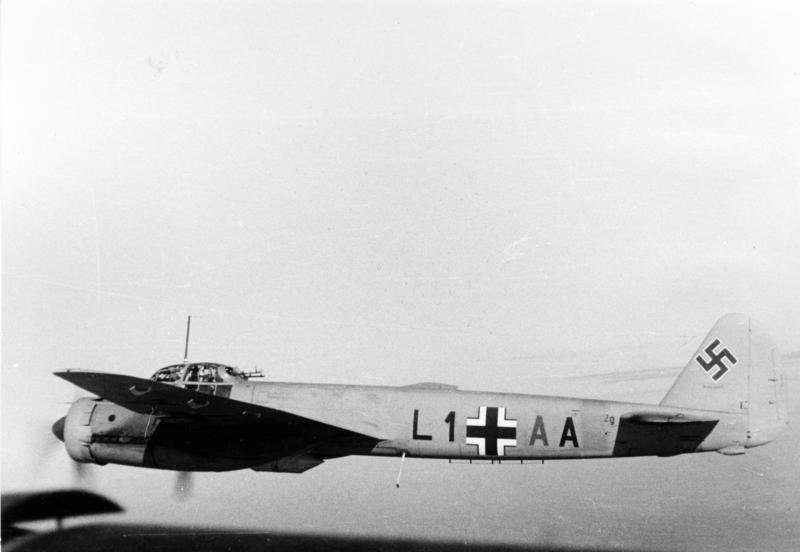
The German language term Stab (literal translation: "staff") was used during World War II to designate a headquarters unit of the German Luftwaffe (air force). There were Stab units at the level of a Gruppe or Geschwader – units that were equivalent to wings and groups in the air forces of the English-speaking world. Stab units directly controlled aircraft as well as controlling those belonging to subordinate units.
These command units used the mandated blue or green "staff aircraft" colour for the third character (the individual aircraft's letter) of their alphanumeric Geschwaderkennung wing code, to distinguish their aircraft from the rest of air units in the same unit. These units were divided in the following form, for the fourth and last character normally used to distinguish individual Staffeln (squadrons) from the letter "H" onwards in Luftwaffe wing codes:
Geschwader Stab = A (third letter blue)
Stab I Gruppe ("Staff Unit, I Group") = B (third letter green)
Stab II Gruppe = C (third letter green)
Stab III Gruppe = D (third letter green)
Stab IV Gruppe = F (third letter green)
Stab V Gruppe = G (third letter green)
On some occasions they also used letters Q, I, J, W and others, or numbers, but these were used less commonly. As day fighter Jagdgeschwader combat wings did not use the Geschwaderkennung four-character alphanumeric code system for aircraft identification, as one example, the all-jet Jagdgeschwader 7 Nowotny and piston-engined Jagdgeschwader 300 Wilde Sau fighter wings, these used the red-blue or blue-white-blue Reich Defense (German Reich metropolitan defense) rear fuselage bands of 90 cm total width respectively, for their Stabsschwarm units. Under the cockpit, the rank of the air commander might have been indicated via a rank sign, with or without additional letters as mentioned above.
For example:
An airplane codified "A", green in colour, with D/St.III/St.G.77, indicated it was a member of Stab III of Stukageschwader (Dive Bomber Wing) No. 77.
An airplane codified "G", green in colour, with a little white tank (Panzer) painting near the cockpit, and S.G. 1, indicated it was a member of Stab of Schlachtgeschwader (Ground Attack Wing) no. 1.
United Kingdom
Before the Crimean War staff work was looked at "with great disdain" in the British Army; the hardships of that war caused by disorganization led to a change in attitude. The General Staff in Britain was formed in 1905, and reorganized again in 1908. Unlike the Prussian staff system, the British Army was thought too small to support separate staff and command career streams. Officers would typically alternate between staff and command. Beevor, Inside the British Army, says instead that the terrible cleavages between staff and line units caused by the enormous losses during the trench warfare of the World War I meant that senior British officers consequently decided that all officers would rotate between staff and line responsibilities, preventing the development of a separate general staff corps.
United States
The National Security Act of 1947 instead created a Joint Staff populated by military service members who, rather than becoming career staff officers on the German general staff model, rotate into (and back out of) joint staff positions. Following the major revision of Title 10 of the United States Code by the Goldwater–Nichols Act in 1986, the Joint Staff of today works directly for the chairman of the Joint Chiefs of Staff rather than the corporate Joint Chiefs of Staff, as they did from 1947 to 1986. Under this scheme, operational command and control of military forces are not the province of the Joint Staff, but that of combatant commanders, who report through the chairman of the Joint Chiefs of Staff unless otherwise directed, to the secretary of defense.
Continental Staff System
The "Continental Staff System", also known as the "General Staff System" (GSS), is used by most NATO countries in structuring their militaries' staff functions. In this system, which is based on one originally employed by the French Army in the 19th century, each staff position in a headquarters or unit is assigned a letter-prefix corresponding to the formation's element and one or more numbers specifying a role.
The staff numbers are assigned according to custom, not hierarchy, traceable back to French practice; i.e., 1 is not "higher ranking" than 2. This list reflects the SHAPE structure:
1, for manpower or personnel
2, for intelligence and security
3, for operations
4, for logistics
5, for plans
6, for signals (i.e., communications or IT)
7, for military education and training (also the joint engineer)
8, for finance and contracts. Also known as resource management.
9, for Civil-Military Co-operation (CIMIC) or civil affairs.
Since the original continental staff system only covered branches 1 through 6, it is not uncommon to see 7 through 9 omitted or having various meanings. Common variation include merging of 3 and 5 to 3, Operations and Plans; omitting the training branch and utilizing 7 for engineering (as seen in US Military Sealift Command and Multinational Forces-Iraq (MNF-I)) and replacing 9 with a legal branch (making CIMIC a part of another branch, i.e. 2 or 4) as seen with the UK Permanent Joint Headquarters.
Derived from the Prussian Große Generalstab (Great General Staff), traditionally these staff functions were prefixed by the simple G, which is retained in place for modern army usage. However, the increasing complexity of modern armies and the spread of the staff concept to naval, air, and other elements, has demanded the addition of new prefixes. These element prefixes are:
A, for air force headquarters;
C, for combined headquarters (multiple nations) headquarters;
F, for certain forward or deployable headquarters;
G, for army or marine general staff sections within headquarters of organizations commanded by a general officer and having a chief of staff to coordinate the actions of the general staff, such as divisions or equivalent organizations (e.g., USMC Marine Aircraft Wing and Marine Logistics Group) and separate (i.e., non-divisional) brigade level (USMC MEB) and above;
J, for joint (multiple services) headquarters, including the Joint Chiefs of Staff);
M, for Marine Corps headquarters;
N, for navy headquarters;
S, for army or marines executive staff sections within headquarters of organizations commanded by a field grade officer (i.e., major through colonel) and having an executive officer to coordinate the actions of the executive staff (e.g., divisional brigades, regiments, groups, battalions, and squadrons; not used by all countries); S is also used in the Naval Mobile Construction Battalions (SeaBees) and in the Air Force Security Forces Squadron.