
General Electric Company (GE) was an American multinational conglomerate founded in 1892, incorporated in the state of New York and headquartered, during its final year of operation, in Boston.
Over the years, the company had multiple divisions, including aerospace, transportation, energy, healthcare, lighting, locomotives, appliances, and finance. In 2020, GE ranked among the Fortune 500 as the 33rd largest firm in the United States by gross revenue. In 2023, the company was ranked 64th in the Forbes Global 2000. In 2011, GE ranked among the Fortune 20 as the 14th most profitable company, but later very severely underperformed the market (by about 75%) as its profitability collapsed. Two employees of GE—Irving Langmuir (1932) and Ivar Giaever (1973)—have been awarded the Nobel Prize. From 1986 until 2013, GE was the owner of the NBC television network through its purchase of its former subsidiary RCA before its acquisition of NBC's parent company NBCUniversal by Comcast in 2011.
Following the Great Recession of the late 2000s, General Electric began selling off various divisions and assets, including its appliances and financial capital divisions, under Jeff Immelt's leadership as CEO. John Flannery, Immelt's replacement in 2017, further divested General Electric's assets in locomotives and lighting in order to focus the company more on aviation. Restrictions on air travel during the COVID-19 pandemic caused General Electric's revenue to fall significantly in 2020. Ultimately, GE's final CEO Larry Culp announced in November 2021 that General Electric was to be broken up into three separate, public companies by 2024. GE Aerospace, the aerospace company, is GE's legal successor. GE HealthCare, the health technology company, was spun off from GE in 2023. GE Vernova, the energy company, was founded when GE finalized the split. Following these transactions, GE Aerospace took the General Electric name and ticker symbols, while the old General Electric ceased to exist as a conglomerate.

History
Formation
During 1889, Thomas Edison (1847–1931) had business interests in many electricity-related companies, including Edison Lamp Company, a lamp manufacturer in East Newark, New Jersey; Edison Machine Works, a manufacturer of dynamos and large electric motors in Schenectady, New York; Bergmann & Company, a manufacturer of electric lighting fixtures, sockets, and other electric lighting devices; and Edison Electric Light Company, the patent-holding company and financial arm for Edison's lighting experiments, backed by J. P. Morgan (1837–1913) and the Vanderbilt family.
Henry Villard, a long-time Edison supporter and investor, proposed to consolidate all of these business interests. The proposal was supported by Samuel Insull – who served as his secretary and, later, financier – as well other investors. In 1889, Drexel, Morgan & Co. – a company founded by J. P. Morgan and Anthony J. Drexel – financed Edison's research and helped merge several of Edison's separate companies under one corporation, forming Edison General Electric Company, which was incorporated in New York on April 24, 1889. The new company acquired Sprague Electric Railway & Motor Company in the same year. The consolidation did not involve all of the companies established by Edison; notably, the Edison Illuminating Company, which would later become Consolidated Edison, was not part of the merger.
In 1880, Gerald Waldo Hart formed the American Electric Company of New Britain, Connecticut, which merged a few years later with Thomson-Houston Electric Company, led by Charles Coffin. In 1887, Hart left to become superintendent of the Edison Electric Company. General Electric was formed through the 1892 merger of Edison General Electric Company and Thomson-Houston Electric Company with the support of Drexel, Morgan & Co. The original plants of both companies continue to operate under the GE banner to this day.
The General Electric business was incorporated in New York, with the Schenectady plant used as headquarters for many years thereafter. Around the same time, General Electric's Canadian counterpart, Canadian General Electric, was formed.
In 1893, General Electric brought Charles Steinmetz on board through the acquisition of a smaller New York company. A genius in both mathematics and electronics, he earned over 200 patents and proved a major force in advancing GE.
Public company
In 1896, General Electric was one of the original 12 companies listed on the newly formed Dow Jones Industrial Average, where it remained a part of the index for 122 years, though not continuously.

In 1900, GE bought the U.S. business of Siemens-Halske.
In 1911, General Electric absorbed the National Electric Lamp Association (NELA) into its lighting business. GE established its lighting division headquarters at Nela Park in East Cleveland, Ohio. The lighting division has since remained in the same location.
During World War I, GE's contributions to the American military included submarine motors, airplane compasses, winch drives for balloons, telephone switchboards, and bomb-release mechanisms.

RCA and NBC
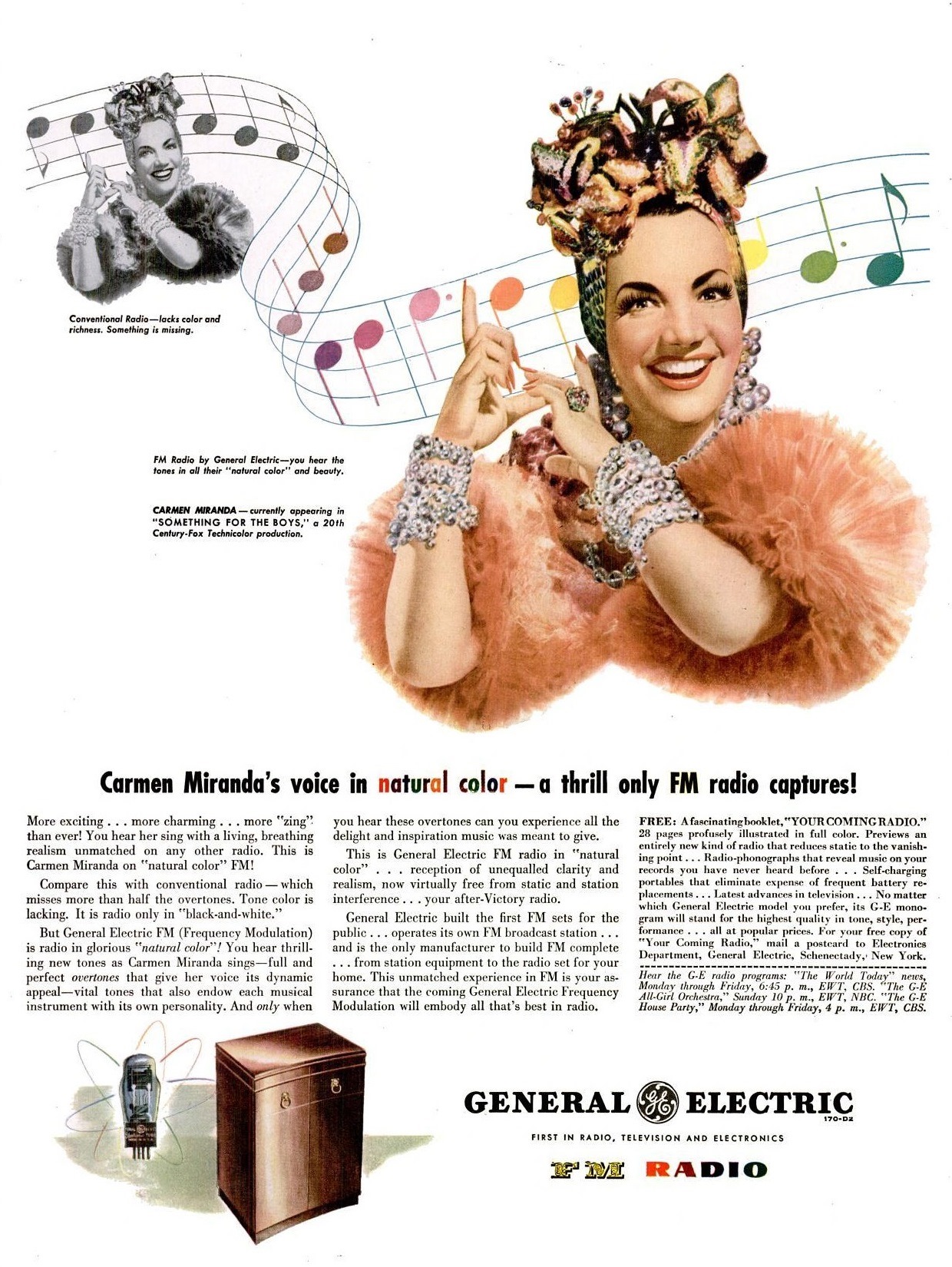
Owen D. Young, who was then GE's general counsel and vice president, through GE, founded the Radio Corporation of America (RCA) in 1919. This came after Young, while working with senior naval officers, purchased the Marconi Wireless Telegraph Company of America, which was a subsidiary of the British company Marconi Wireless and Signal Company. He aimed to expand international radio communications. GE used RCA as its retail arm for radio sales. In 1926, RCA co-founded the National Broadcasting Company (NBC), which built two radio broadcasting networks. In 1930, General Electric was charged with antitrust violations and was ordered to divest itself of RCA.
Television
In 1927, Ernst Alexanderson of GE made the first demonstration of television broadcast reception at his General Electric Realty Plot home at 1132 Adams Road in Schenectady, New York. On January 13, 1928, he made what was said to be the first broadcast to the public in the United States on GE's W2XAD: the pictures were picked up on 1.5 square inches (9.7 square centimeters) screens in the homes of four GE executives. The sound was broadcast on GE's WGY (AM).
Experimental television station W2XAD evolved into the station WRGB, which, along with WGY and WGFM (now WRVE), was owned and operated by General Electric until 1983. In 1965, the company expanded into cable with the launch of a franchise, which was awarded to a non-exclusive franchise in Schenectady through subsidiary General Electric Cablevision Corporation. On February 15, 1965, General Electric expanded its holdings in order to acquire more television stations to meet the maximum limit of the FCC, and more cable holdings through subsidiaries General Electric Broadcasting Company and General Electric Cablevision Corporation.

The company also owned television stations such as KOA-TV (now KCNC-TV) in Denver and WSIX-TV (later WNGE-TV, now WKRN) in Nashville, but like WRGB, General Electric sold off most of its broadcasting holdings, but held on to the Denver television station until in 1986, when General Electric bought out RCA and made it into an owned-and-operated station by NBC. It even stayed on until 1995 when it was transferred to a joint venture between CBS and Group W in a swap deal, alongside KUTV in Salt Lake City for longtime CBS O&O in Philadelphia, WCAU-TV.
Former General Electric-owned stations
Stations are arranged in alphabetical order by state and city of license.
(**) Indicates a station that was built and signed on by General Electric.

Radio stations
Power generation
Led by Sanford Alexander Moss, GE moved into the new field of aircraft turbosuperchargers. This technology also led to the development of industrial gas turbine engines used for power production. GE introduced the first set of superchargers during World War I and continued to develop them during the interwar period. Superchargers became indispensable in the years immediately before World War II. GE supplied 300,000 turbosuperchargers for use in fighter and bomber engines. This work led the U.S. Army Air Corps to select GE to develop the nation's first jet engine during the war. This experience, in turn, made GE a natural selection to develop the Whittle W.1 jet engine that was demonstrated in the United States in 1941. GE was ranked ninth among United States corporations in the value of wartime production contracts. However, their early work with Whittle's designs was later handed to Allison Engine Company. GE Aviation then emerged as one of the world's largest engine manufacturers, bypassing the British company Rolls-Royce plc.
Some consumers boycotted GE light bulbs, refrigerators, and other products during the 1980s and 1990s. The purpose of the boycott was to protest against GE's role in nuclear weapons production.
In 2002, GE acquired the wind power assets of Enron during its bankruptcy proceedings. Enron Wind was the only surviving U.S. manufacturer of large wind turbines at the time, and GE increased engineering and supplies for the Wind Division and doubled the annual sales to $1.2 billion in 2003. It acquired ScanWind in 2009.
In 2018, GE Power garnered press attention when a model 7HA gas turbine in Texas was shut down for two months due to the break of a turbine blade. This model uses similar blade technology to GE's newest and most efficient model, the 9HA. After the break, GE developed new protective coatings and heat treatment methods. Gas turbines represent a significant portion of GE Power's revenue, and also represent a significant portion of the power generation fleet of several utility companies in the United States. Chubu Electric of Japan and Électricité de France also had units that were impacted. Initially, GE did not realize the turbine blade issue of the 9FB unit would impact the new HA units.
Computing
GE was one of the eight major computer companies of the 1960s along with IBM, Burroughs, NCR, Control Data Corporation, Honeywell, RCA, and UNIVAC. GE had a line of general purpose and special purpose computers, including the GE 200, GE 400, and GE 600 series general-purpose computers, the GE/PAC 4000 series real-time process control computers, and the DATANET-30 and Datanet 355 message switching computers (DATANET-30 and 355 were also used as front end processors for GE mainframe computers). A Datanet 500 computer was designed but never sold.
In 1956 Homer Oldfield was promoted to General Manager of GE's Computer Department. He facilitated the invention and construction of the Bank of America ERMA system, the first computerized system designed to read magnetized numbers on checks. But he was fired from GE in 1958 by Ralph J. Cordiner for overstepping his bounds and successfully gaining the ERMA contract. Cordiner was strongly against GE entering the computer business because he did not see the potential in it.
In 1962, GE started developing its GECOS (later renamed GCOS) operating system, originally for batch processing, but later extended to time-sharing and transaction processing. Versions of GCOS are still in use today. From 1964 to 1969, GE and Bell Laboratories (which soon dropped out) joined with MIT to develop the Multics operating system on the GE 645 mainframe computer. The project took longer than expected and was not a major commercial success, but it demonstrated concepts such as single-level storage, dynamic linking, hierarchical file system, and ring-oriented security. Active development of Multics continued until 1985.
GE got into computer manufacturing because, in the 1950s, they were the largest user of computers outside the United States federal government, aside from being the first business in the world to own a computer. Its major appliance manufacturing plant "Appliance Park" was the first non-governmental site to host one. However, in 1970, GE sold its computer division to Honeywell, exiting the computer manufacturing industry, though it retained its timesharing operations for some years afterward. GE was a big provider of computer time-sharing services through General Electric Information Services (GEIS, now GXS), offering online computing services that included GEnie.
In 2000, when United Technologies Corp. planned to buy Honeywell, GE made a counter-offer that was approved by Honeywell. On July 3, 2001, the European Union issued a statement that "prohibit the proposed acquisition by General Electric Co. of Honeywell Inc.". The reasons given were it "would create or strengthen dominant positions on several markets and that the remedies proposed by GE were insufficient to resolve the competition concerns resulting from the proposed acquisition of Honeywell".
On June 27, 2014, GE partnered with collaborative design company Quirky to announce its connected LED bulb called Link. The Link bulb is designed to communicate with smartphones and tablets using a mobile app called Wink.
Acquisitions and divestments
In December 1985, GE reacquired the RCA Corporation, primarily to gain ownership of the NBC television network for $6.28 billion; this merger surpassed the Capital Cities/ABC merger from earlier that year as the largest non-oil company merger in world business history. The remainder of RCA's divisions and assets were sold to various companies, including Bertelsmann Music Group which acquired RCA Records. Thomson SA, which licensed the manufacture of RCA and GE branded electronics, traced its roots to Thomson-Houston, one of the original components of GE. Also in 1986, Kidder, Peabody & Co., a U.S.-based securities firm, was sold to GE and following heavy losses was sold to PaineWebber in 1994.
In 1993, GE sold its Aerospace business to Martin Marietta.
In 1997, Genpact was founded as a unit of General Electric in Gurgaon, India. The company was founded as GE Capital International Services (GECIS). In the beginning, GECIS created processes for outsourcing back-office activities for GE Capital such as processing car loans and credit card transactions. It was an experimental concept at the time and the beginning of the business process outsourcing (BPO) industry. GE sold 60% stake in Genpact to General Atlantic and Oak Hill Capital Partners in 2005 and hived off Genpact into an independent business. GE is still a major client to Genpact today for services in customer service, finance, information technology, and analytics.
In 2001, GE acquired Spanish-language broadcaster Telemundo and incorporated it into its National Broadcasting Company, Inc. subsidiary.
In 2002, Francisco Partners and Norwest Venture Partners acquired a division of GE called GE Information Systems (GEIS). The new company, named GXS, is based in Gaithersburg, Maryland. GXS is a provider of business-to-business e-commerce solutions. GE maintains a minority stake in GXS. Also in 2002, GE Wind Energy was formed when GE bought the wind turbine manufacturing assets of Enron Wind after the Enron scandals.
In 2004, GE bought 80% of Vivendi Universal Entertainment, the parent of Universal Pictures from Vivendi. Vivendi Universal was merged with NBC to form NBCUniversal. GE then owned 80% of NBCUniversal and Vivendi owned 20%. In 2004, GE completed the spin-off of most of its mortgage and life insurance assets into an independent company, Genworth Financial, based in Richmond, Virginia.
In May 2007, GE acquired Smiths Aerospace for $4.8 billion. Also in 2007, GE Oil & Gas acquired Vetco Gray for $1.9 billion, followed by the acquisition of Hydril Pressure & Control in 2008 for $1.1 billion.
GE Plastics was sold in 2008 to SABIC (Saudi Arabia Basic Industries Corporation). In May 2008, GE announced it was exploring options for divesting the bulk of its consumer and industrial business.
On December 3, 2009, it was announced that NBCUniversal would become a joint venture between GE and cable television operator Comcast. Comcast would hold a controlling interest in the company, while GE would retain a 49% stake and would buy out shares owned by Vivendi.
Vivendi would sell its 20% stake in NBCUniversal to GE for US$5.8 billion. Vivendi would sell 7.66% of NBCUniversal to GE for US$2 billion if the GE/Comcast deal was not completed by September 2010 and then sell the remaining 12.34% stake of NBCUniversal to GE for US$3.8 billion when the deal was completed or to the public via an IPO if the deal was not completed.
On March 1, 2010, GE announced plans to sell its 20.85% stake in Turkey-based Garanti Bank. In August 2010, GE Healthcare signed a strategic partnership to bring cardiovascular Computed Tomography (CT) technology from start-up Arineta Ltd. of Israel to the hospital market. In October 2010, GE acquired gas engines manufacturer Dresser Industries in a $3 billion deal and also bought a $1.6 billion portfolio of retail credit cards from Citigroup Inc. On October 14, 2010, GE announced the acquisition of data migration & SCADA simulation specialists Opal Software. In December 2010, for the second time that year (after the Dresser acquisition), GE bought the oil sector company Wellstream, an oil pipe maker, for 800 million pounds ($1.3 billion).
In March 2011, GE announced that it had completed the acquisition of privately held Lineage Power Holdings from The Gores Group. In April 2011, GE announced it had completed its purchase of John Wood plc's Well Support Division for $2.8 billion.
In 2011, GE Capital sold its $2 billion Mexican assets to Santander for $162 million and exited the business in Mexico. Santander additionally assumed the portfolio debts of GE Capital in the country. Following this, GE Capital focused on its core business and shed its non-core assets.
In June 2012, CEO and President of GE Jeff Immelt said that the company would invest ₹3 billion to accelerate its businesses in Karnataka. In October 2012, GE acquired $7 billion worth of bank deposits from MetLife Inc.
On March 19, 2013, Comcast bought GE's shares in NBCU for $16.7 billion, ending the company's longtime stake in television and film media.
In April 2013, GE acquired oilfield pump maker Lufkin Industries for $2.98 billion.
In April 2014, it was announced that GE was in talks to acquire the global power division of French engineering group Alstom for a figure of around $13 billion. A rival joint bid was submitted in June 2014 by Siemens and Mitsubishi Heavy Industries (MHI) with Siemens seeking to acquire Alstom's gas turbine business for €3.9 billion, and MHI proposing a joint venture in steam turbines, plus a €3.1 billion cash investment. In June 2014, a formal offer from GE worth $17 billion was agreed by the Alstom board. Part of the transaction involved the French government taking a 20% stake in Alstom to help secure France's energy and transport interests and French jobs. A rival offer from Siemens Mitsubishi Heavy Industries was rejected. The acquisition was expected to be completed in 2015. In October 2014, GE announced it was considering the sale of its Polish banking business Bank BPH.
Later in 2014, General Electric announced plans to open its global operations center in Cincinnati, Ohio. The Global Operations Center opened in October 2016 as home to GE's multifunctional shared services organization. It supports the company's finance/accounting, human resources, information technology, supply chain, legal and commercial operations, and is one of GE's four multifunctional shared services centers worldwide in Pudong, China; Budapest, Hungary; and Monterrey, Mexico.
In April 2015, GE announced its intention to sell off its property portfolio, worth $26.5 billion, to Wells Fargo and The Blackstone Group. It was announced in April 2015 that GE would sell most of its finance unit and return around $90 billion to shareholders as the firm looked to trim down on its holdings and rid itself of its image of a "hybrid" company, working in both banking and manufacturing. In August 2015, GE Capital agreed to sell its Healthcare Financial Services business to Capital One for US$9 billion. The transaction involved US$8.5 billion of loans made to a wide array of sectors, including senior housing, hospitals, medical offices, outpatient services, pharmaceuticals, and medical devices. Also in August 2015, GE Capital agreed to sell GE Capital Bank's on-line deposit platform to Goldman Sachs. Terms of the transaction were not disclosed, but the sale included US$8 billion of on-line deposits and another US$8 billion of brokered certificates of deposit. The sale was part of GE's strategic plan to exit the U.S. banking sector and to free itself from tightening banking regulations. GE also aimed to shed its status as a "systemically important financial institution".
In September 2015, GE Capital agreed to sell its transportation finance unit to Canada's Bank of Montreal. The unit sold had US$8.7 billion (CA$11.5 billion) of assets, 600 employees, and 15 offices in the U.S. and Canada. The exact terms of the sale were not disclosed, but the final price would be based on the value of the assets at closing, plus a premium according to the parties. In October 2015, activist investor Nelson Peltz's fund Trian bought a $2.5 billion stake in the company.
In January 2016, Haier acquired GE's appliance division for $5.4 billion. In October 2016, GE Renewable Energy agreed to pay €1.5 billion to Doughty Hanson & Co for LM Wind Power during 2017.
At the end of October 2016, it was announced that GE was under negotiations for a deal valued at about $30 billion to combine GE Oil & Gas with Baker Hughes. The transaction would create a publicly traded entity controlled by GE. It was announced that GE Oil & Gas would sell off its water treatment business, GE Water & Process Technologies, as part of its divestment agreement with Baker Hughes. The deal was cleared by the EU in May 2017, and by the United States Department of Justice in June 2017. The merger agreement was approved by shareholders at the end of June 2017. On July 3, 2017, the transaction was completed, and Baker Hughes became a GE company and was renamed Baker Hughes, a GE Company (BHGE). In November 2018, GE reduced its stake in Baker Hughes to 50.4%. On October 18, 2019, GE reduced its stake to 36.8% and the company was renamed back to Baker Hughes.