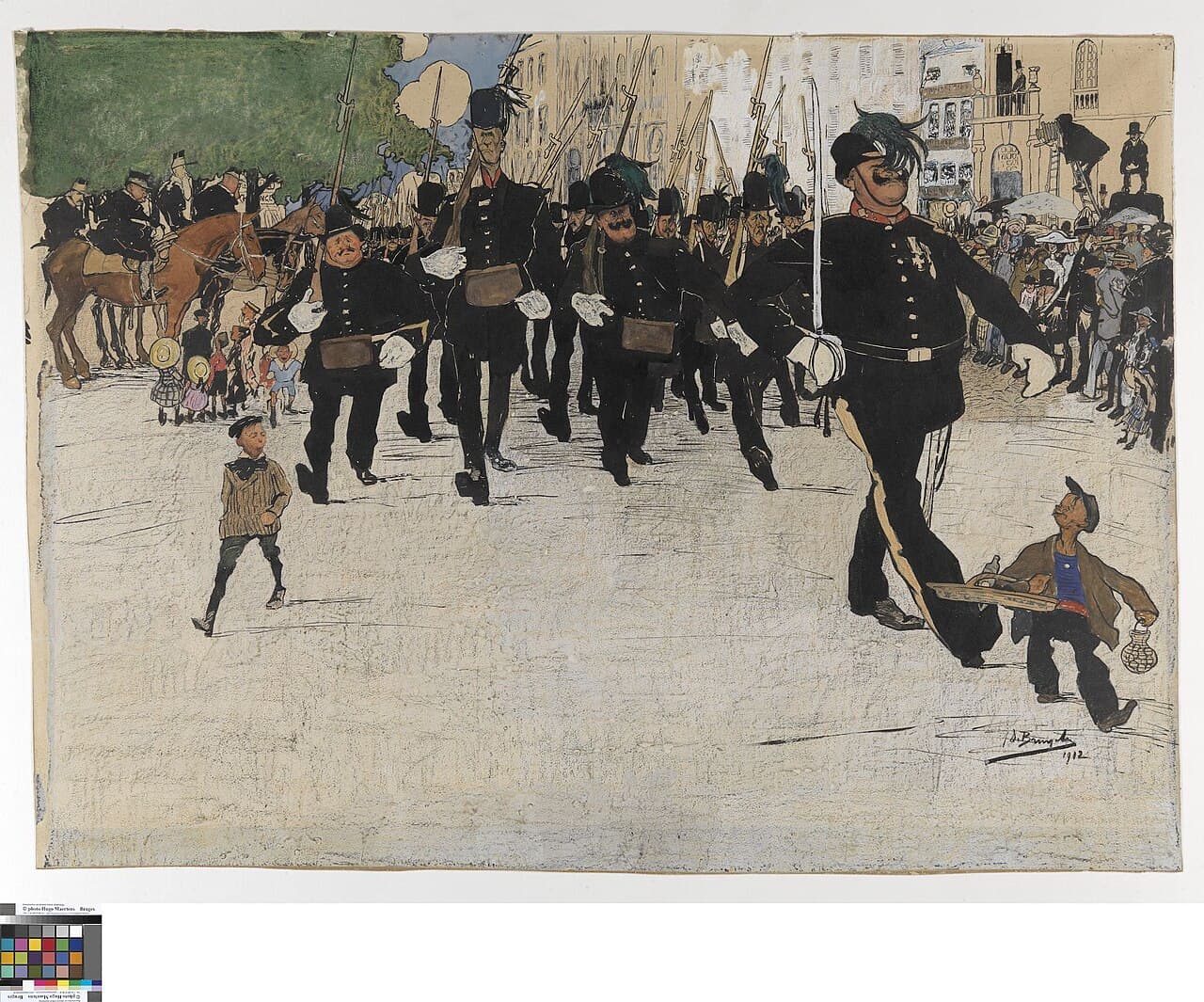
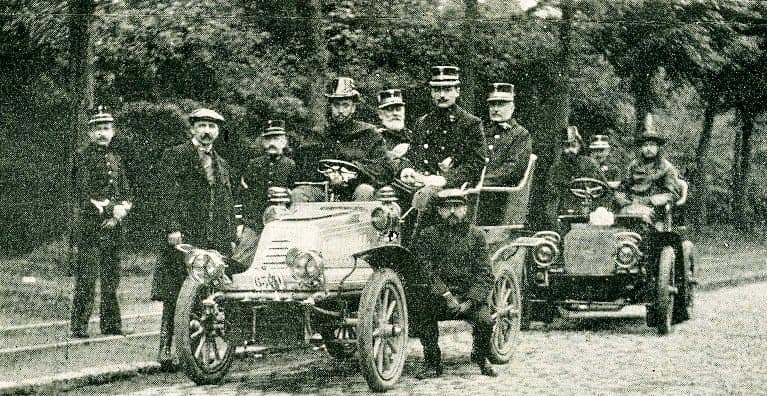
The Garde Civique or Burgerwacht (French and Dutch; "Civic Guard") was a Belgian paramilitary militia which existed between 1830 and 1920. Created in October 1830 shortly after the Belgian Revolution, the Guard amalgamated the various militia groups which had been created by the middle classes to protect property during the political uncertainty. Its role was as a quasi-military "gendarmerie", with the primary role of maintaining social order within Belgium. Increasingly anachronistic, it was demobilised in 1914 and officially disbanded in 1920, following a disappointing performance during the German invasion of Belgium in World War I.
Organisation
The Garde was organized at a local level, originally in all communes with more than 30,000 inhabitants. Subsequently this "constitutional force" was limited to those towns having a population of 10,000 or more. More thinly populated communities did not have this obligation unless subject to special legislation.
It was composed of citizens aged between 21 and 50 who did not already have military obligations as serving soldiers or reservists. Those aged between 21 and 32 were required to undertake training ten times annually, while the second class (aged 33–50) were obliged only to register their addresses at regular intervals. A third class was composed of older volunteers, who were not equipped, uniformed or armed and were expected only to provide support functions in their local regions. The Garde Civique was, in peacetime, the responsibility of the Ministry of the Interior rather than the Ministry of War. It was distinct from the Belgian Gendarmerie (Rijkswacht) which formed part of the military.
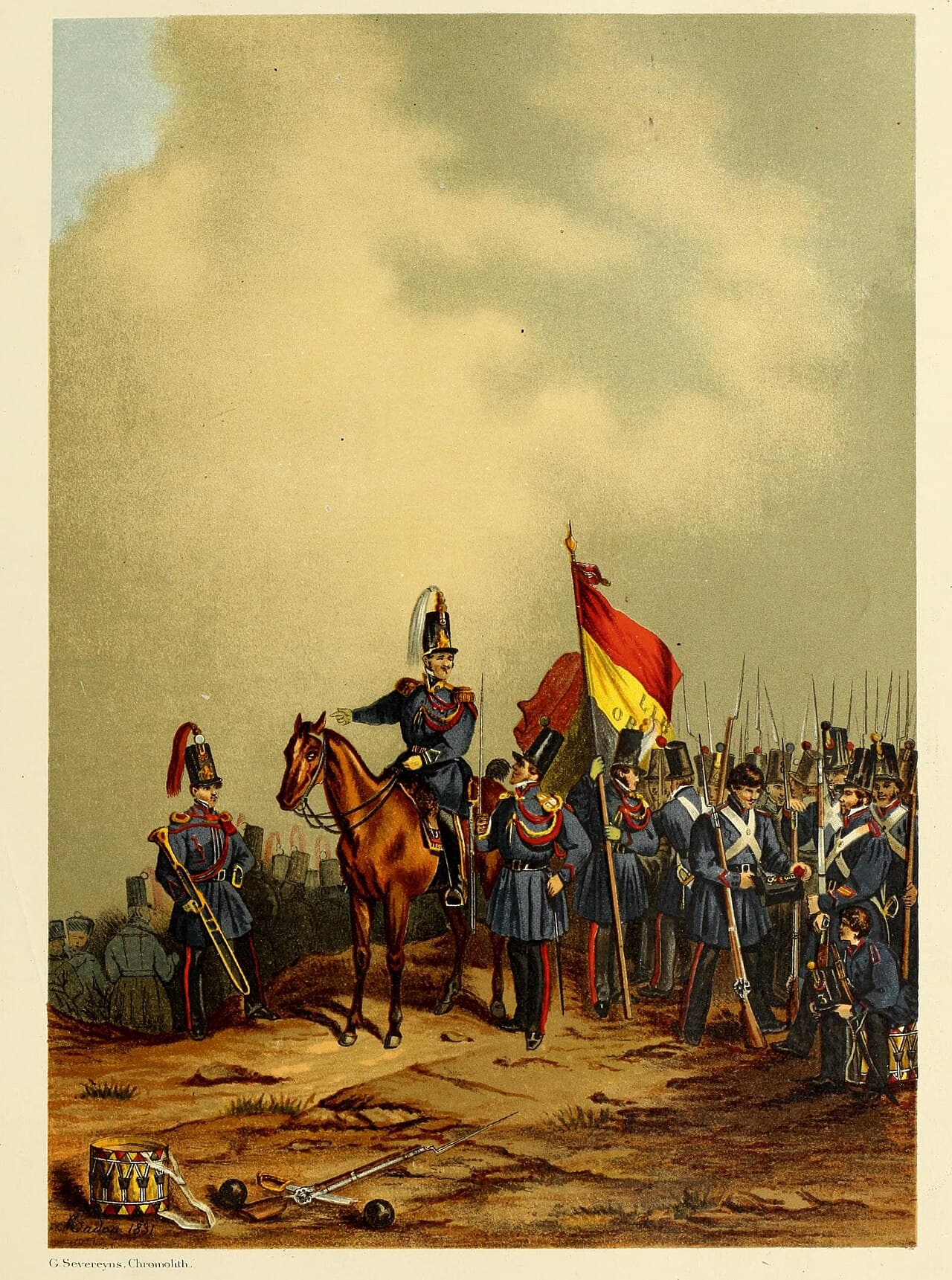
Most of the Garde units were infantry but there were some artillery and mounted detachments. On the eve of World War I the Garde Civique included 33 companies of chasseurs-à-pied (light infantry), 17 batteries of artillery, 4 squadrons of chasseurs-à-cheval (light horse) and 3 companies of sapeurs-pompiers (armed firemen). About half of these special corps were concentrated in the urban areas of Brussels, Antwerp, Ghent and Liège, reflecting the historic role of the Garde as a force to maintain civil order.