
The French Third Republic (French: Troisième République, sometimes written as La IIIe République) was the system of government adopted in France from 4 September 1870, when the Second French Empire collapsed during the Franco-Prussian War, until 10 July 1940, after the Fall of France during World War II led to the formation of the Vichy government. The French Third Republic was a parliamentary republic.
The early days of the French Third Republic were dominated by political disruption caused by the Franco-Prussian War of 1870–1871, which the Third Republic continued to wage after the fall of Emperor Napoleon III in 1870. Social upheaval and the Paris Commune preceded the final defeat. The German Empire, proclaimed by the invaders in the Palace of Versailles, annexed the French regions of Alsace (keeping the Territoire de Belfort) and Lorraine (the northeastern part, i.e. present-day department of Moselle). The early governments of the French Third Republic considered re-establishing the monarchy, but disagreement as to the nature of that monarchy and the rightful occupant of the throne could not be resolved. Consequently, the Third Republic, originally envisioned as a provisional government, instead became the permanent form of government of France.
The French constitutional laws of 1875 defined the composition of the Third Republic. It consisted of a Chamber of Deputies and a Senate to form the legislative branch of government and a president to serve as head of state. Calls for the re-establishment of the monarchy dominated the tenures of the first two presidents, Adolphe Thiers and Patrice de MacMahon. However, growing support for the republican form of government among the French populace and a series of republican presidents in the 1880s gradually quashed prospects of a restoration with the republic being seen as, in the words of Thiers, "the form of government that divides us the least".

The Third Republic established many French colonial possessions, including French Indochina, French Madagascar, French Polynesia, and large territories in West Africa during the Scramble for Africa, all of them acquired during the last two decades of the 19th century. The early years of the 20th century were dominated by the Democratic Republican Alliance, which was originally conceived as a centre-left political alliance, but over time became the main centre-right party. The period from the start of World War I to the late 1930s featured sharply polarized politics, between the Democratic Republican Alliance and the Radicals. The government fell less than a year after the outbreak of World War II, when Nazi forces occupied much of France, and was replaced by the rival governments of Charles de Gaulle's Free France (La France libre) and Philippe Pétain's French State (L'État français).
During the 19th and 20th centuries, the French colonial empire was the second largest colonial empire in the world only behind the British Empire; it extended over 13,500,000 km2 (5,200,000 sq mi) of land at its height in the 1920s and 1930s. Journalist Raymond Recouly wrote in 1931 that of all the Powers in Europe, only France could offer both a substantial metropolitan and colonial military career. In terms of population however, on the eve of World War II, France and its colonial possessions totaled only 150 million inhabitants, compared with 330 million for British India alone.
Adolphe Thiers called republicanism in the 1870s "the form of government that divides France least"; however, politics under the Third Republic were sharply polarized. On the left stood reformist France, heir to the French Revolution. On the right stood conservative France, rooted in the peasantry, the Catholic Church, and the army. In spite of France's sharply divided electorate and persistent attempts to overthrow it, the Third Republic endured for 70 years, which makes it the longest-lasting system of government in France since the collapse of the Ancien Régime in 1789.

Origins and formation
The Franco-Prussian War of 1870–1871 resulted in the defeat of France and the overthrow of Emperor Napoleon III and his Second French Empire. After Napoleon's capture by the Prussians at the Battle of Sedan (1 September 1870), Parisian deputies led by Léon Gambetta established the Government of National Defence as a provisional government on 4 September 1870. The deputies then selected General Louis-Jules Trochu to serve as its president. This first government of the Third Republic ruled during the Siege of Paris (19 September 1870 – 28 January 1871). As Paris was cut off from the rest of unoccupied France, the Minister of War Léon Gambetta succeeded in leaving Paris in a hot air balloon, and established the provisional republican government in the city of Tours on the Loire river.
After the French surrender in January 1871, the provisional Government of National Defence disbanded, and national elections were called to elect a new French government. French territories occupied by Prussia at the time did not participate. The resulting conservative National Assembly elected Adolphe Thiers head of a provisional government, ("head of the executive branch of the Republic pending a decision on the institutions of France").
The new government negotiated a peace settlement with the newly proclaimed German Empire: the Treaty of Frankfurt signed on 10 May 1871. To prompt the Prussians to leave France, the government passed a variety of financial laws, such as the controversial Law of Maturities, to pay reparations.

In Paris, resentment built against the government from late March through May 1871. Paris workers and National Guards revolted and took power as the Paris Commune, which maintained a radical left-wing regime for two months until the Third government bloodily suppressed it in May 1871. The ensuing repression of the communards had disastrous consequences for the labour movement.
Attempts to restore the monarchy
The French legislative election of 1871, held in the aftermath when the regime of Napoleon III collapsed, resulted in a monarchist majority in the French National Assembly that favoured a peace agreement with Prussia. Planning to restore the monarchy, the "Legitimists" in the National Assembly supported the candidacy of Henri, Comte de Chambord, alias "Henry V", grandson of King Charles X, the last king from the senior line of the Bourbon dynasty. The Orléanists supported Louis-Philippe, Comte de Paris, a grandson of King Louis Philippe I, who replaced his cousin Charles X in 1830. The Bonapartists lost legitimacy due to the defeat of Napoléon III and were unable to advance the candidacy of any member of the Bonaparte family.
Legitimists and Orléanists eventually agreed on the childless Comte de Chambord as king, with the Comte de Paris as his heir. This was the expected line of succession for the Comte de Chambord based on France's traditional rule of agnatic primogeniture if the renunciation of the Spanish Bourbons in the Peace of Utrecht was recognised. Consequently, in 1871 the throne was offered to the Comte de Chambord.

Monarchists' republic and constitutional crisis
Chambord believed the restored monarchy had to eliminate all traces of the Revolution (most famously including the tricolore), to restore unity between the monarchy and the nation. Compromise on this was impossible, Chambord believed, if the nation were to be made whole again. The general population, however, was unwilling to abandon the Tricolour flag. Monarchists therefore resigned themselves to delay the monarchy until the death of the ageing, childless Chambord, then to offer the throne to his more liberal heir, the Comte de Paris. A "temporary" republican government was therefore established. Chambord lived on until 1883, but by that time, enthusiasm for a monarchy had faded, and the Comte de Paris was never offered the French throne.
Following the French surrender to Prussia in January 1871, concluding the Franco-Prussian War, the transitional Government of National Defence established a new seat of government at Versailles due to the encirclement of Paris by Prussian forces. New representatives were elected in February of that year, constituting the government which would come to evolve into the Third Republic. These representatives – predominantly conservative republicans – enacted a series of legislation which prompted resistance and outcry from radical and leftist elements of the republican movement. In Paris, a series of public altercations broke out between the Versailles-aligned Parisian government and the city's radical socialists. The radicals ultimately rejected the authority of Versailles, responding with the foundation of the Paris Commune in March.
The principles underpinning the Commune were viewed as morally degenerate by French conservatives at large while the government at Versailles sought to maintain the tenuous post-war stability which it had established. In May, the regular French Armed Forces, under the command of Patrice de MacMahon and the Versailles government, marched on Paris and succeeded in dismantling the Commune during what would become known as The Bloody Week. The term ordre moral ("moral order") subsequently came to be applied to the budding Third Republic due to the perceived restoration of conservative policies and values following the suppression of the Commune.
De MacMahon, his popularity bolstered by his victory over the Commune, was later elected President of the Republic in May 1873 and would hold the office until January 1879. A staunch Catholic conservative with Legitimist sympathies and a noted mistrust of secularists, de MacMahon grew to be increasingly at odds with the French parliament as liberal and secular republicans gained a legislative majority during his presidency.
In February 1875, a series of parliamentary acts established the constitutional laws of the new republic. At its head was a President of the Republic. A two-chamber parliament consisting of a directly elected Chamber of Deputies and an indirectly elected Senate was created, along with a ministry under the President of the council (prime minister), who was nominally answerable to both the President of the Republic and the legislature. Throughout the 1870s, the issue of whether a monarchy should replace or oversee the republic dominated public debate.
The elections of 1876 demonstrated strong public support for the increasingly anti-monarchist republican movement. A decisive Republican majority was elected to the Chamber of Deputies while the monarchist majority in the Senate was maintained by only one seat. President de MacMahon responded in May 1877, attempting to quell the Republicans' rising popularity and limit their political influence through a series of actions known as le seize Mai.

On 16 May 1877, de MacMahon forced the resignation of Moderate Republican prime minister Jules Simon and appointed the Orléanist Albert de Broglie to the office. The Chamber of Deputies declared the appointment illegitimate, exceeding the president's powers, and refused to cooperate with either de MacMahon or de Broglie. De MacMahon then dissolved the Chamber and called for a new general election to be held the following October. He was subsequently accused by Republicans and their sympathizers of attempting a constitutional coup d'état, which he denied.
The October elections again brought a Republican majority to the Chamber of Deputies, reiterating public opinion. The Republicans would go on to gain a majority in the Senate by January 1879, establishing dominance in both houses and effectively ending the potential for a monarchist restoration. De MacMahon himself resigned on 30 January 1879 to be succeeded by the moderate Republican Jules Grévy. He promised that he would not use his presidential power of dissolution, and therefore lost his control over the legislature, effectively creating a parliamentary system that would be maintained until the end of the Third Republic.
Republicans take power
Following the 16 May crisis in 1877, Legitimists were pushed out of power, and the Republic was finally governed by Moderate Republicans (pejoratively labelled "Opportunist Republicans" by Radical Republicans) who supported moderate social and political changes to nurture the new regime, such as a purge of the civil service. The Jules Ferry laws making public education free, mandatory, and secular (laїque), were voted in 1881 and 1882, one of the first signs of the expanding civic powers of the Republic. From that time onward, the Catholic clergy lost control of public education.
To discourage the monarchists, the French Crown Jewels were broken up and sold in 1885. Only a few crowns were kept, their precious gems replaced by coloured glass.
Politics during the Belle Époque
Boulanger crisis
In 1889, the Republic was rocked by a sudden political crisis precipitated by General Georges Boulanger. An enormously popular general, he won a series of elections in which he would resign his seat in the Chamber of Deputies and run again in another district. At the apogee of his popularity in January 1889, he posed the threat of a coup d'état and the establishment of a dictatorship. With his base of support in the working districts of Paris and other cities, plus rural traditionalist Catholics and royalists, he promoted an aggressive nationalism aimed against Germany. The elections of September 1889 marked a decisive defeat for the Boulangists. They were defeated by the changes in the electoral laws that prevented Boulanger from running in multiple constituencies; by the government's aggressive opposition; and by the absence of the general himself, in self-imposed exile with his mistress. The fall of Boulanger severely undermined the conservative and royalist elements within France; they would not recover until 1940.
Revisionist scholars have argued that the Boulangist movement more often represented elements of the radical left rather than the extreme right. Their work is part of an emerging consensus that France's radical right was formed in part during the Dreyfus era by men who had been Boulangist partisans of the radical left a decade earlier.
Panama scandal
The Panama scandals of 1892, regarded as the largest financial fraud of the 19th century, involved a failed attempt to build the Panama Canal. Plagued by disease, death, inefficiency, and widespread corruption, and its troubles covered up by bribed French officials, the Panama Canal Company went bankrupt. Its stock became worthless, and ordinary investors lost close to a billion francs.
Welfare state and public health
France lagged behind Bismarckian Germany, as well as Great Britain and Ireland, in developing a welfare state with public health, unemployment insurance and national old age pension plans. There was an accident insurance law for workers in 1898, and in 1910, France created a national pension plan. Unlike Germany or Britain, the programs were much smaller – for example, pensions were a voluntary plan. Historian Timothy Smith finds French fears of national public assistance programs were grounded in a widespread disdain for the English Poor Law.
Tuberculosis was the most dreaded disease of the day, especially striking young people in their twenties. Germany set up vigorous measures of public hygiene and public sanatoria, but France let private physicians handle the problem. The French medical profession guarded its prerogatives, and public health activists were not as well organized or as influential as in Germany, Britain or the United States. For example, there was a long battle over a public health law which began in the 1880s as a campaign to reorganize the nation's health services, to require the registration of infectious diseases, to mandate quarantines, and to improve the deficient health and housing legislation of 1850. However, the reformers met opposition from bureaucrats, politicians, and physicians. Because it was so threatening to so many interests, the proposal was debated and postponed for 20 years before becoming law in 1902. Implementation finally came when the government realized that contagious diseases had a national security impact in weakening military recruits, and keeping the population growth rate well below Germany's. There is no evidence to suggest that French life expectancy was lower than that of Germany.
Radicals' republic
The most important party of the early 20th century in France was the Radical Party, founded in 1901 as the "Republican, Radical and Radical-Socialist Party" ("Parti républicain, radical et radical-socialiste"). It was classically liberal in political orientation and opposed the monarchists and clerical elements on the one hand, and the Socialists on the other. Many members had been recruited by the Freemasons. The Radicals were split between activists who called for state intervention to achieve economic and social equality and conservatives whose first priority was stability. The workers' demands for strikes threatened such stability and pushed many Radicals toward conservatism. It opposed women's suffrage for fear that women would vote for its opponents or for candidates endorsed by the Catholic Church. It favoured a progressive income tax, economic equality, expanded educational opportunities and cooperatives in domestic policy. In foreign policy, it favoured a strong League of Nations after the war, and the maintenance of peace through compulsory arbitration, controlled disarmament, economic sanctions, and perhaps an international military force.
Followers of Léon Gambetta, such as Raymond Poincaré, who would become President of the Council in the 1920s, created the Democratic Republican Alliance (ARD), which became the main center-right party after World War I.
Governing coalitions collapsed with regularity, rarely lasting more than a few months, as radicals, socialists, liberals, conservatives, republicans and monarchists all fought for control. Some historians argue that the collapses were not important because they reflected minor changes in coalitions of many parties that routinely lost and gained a few allies. Consequently, the change of governments could be seen as little more than a series of ministerial reshuffles, with many individuals carrying forward from one government to the next, often in the same posts.
Dreyfus affair
The Dreyfus affair was a major political scandal that convulsed France from 1894 until its resolution in 1906, and then had reverberations for decades more. The conduct of the affair has become a modern and universal symbol of injustice. It remains one of the most striking examples of a complex miscarriage of justice in which a central role was played by the press and public opinion. At issue was blatant antisemitism as practised by the French Army and defended by conservatives and Catholic traditionalists against secular centre-left, left and republican forces, including most Jews. In the end, the latter triumphed.
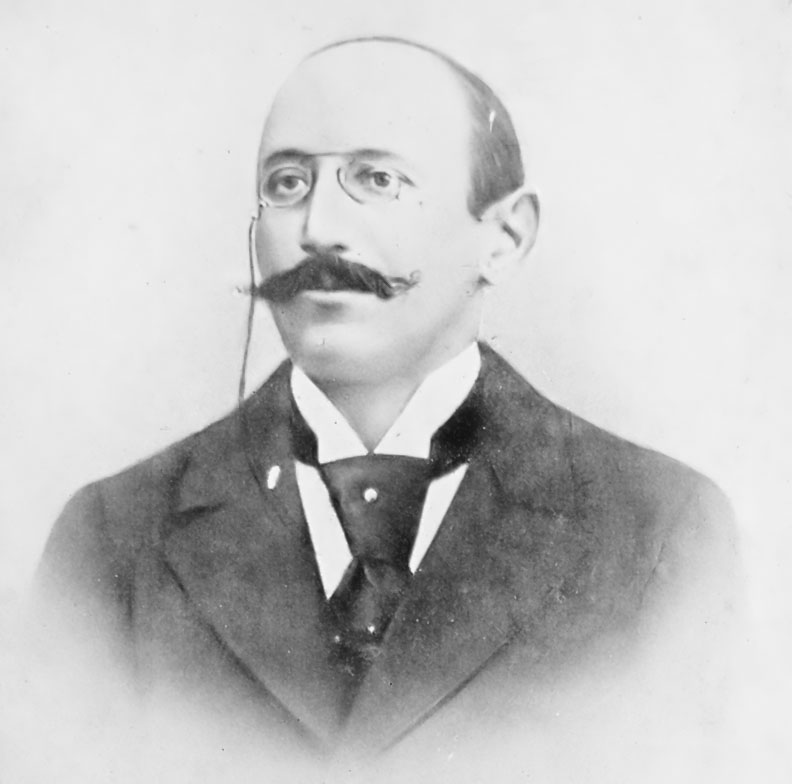
The affair began in November 1894 with the conviction for treason of Captain Alfred Dreyfus, a young French artillery officer of Alsatian Jewish descent. He was sentenced to life imprisonment for communicating French military secrets to the German Embassy in Paris and sent to the penal colony at Devil's Island in French Guiana (nicknamed la guillotine sèche, the dry guillotine), where he spent almost five years.
Two years later, evidence came to light that identified a French Army major named Ferdinand Walsin Esterhazy as the real spy. After high-ranking military officials suppressed the new evidence, a military court unanimously acquitted Esterhazy. In response, the Army brought up additional charges against Dreyfus based on false documents. Word of the military court's attempts to frame Dreyfus began to spread, chiefly owing to the polemic J'accuse, a vehement open letter published on the liberal newspaper L'Aurore in January 1898 by the notable writer Émile Zola. Activists put pressure on the government to re-open the case.
In 1899, Dreyfus was returned to France for another trial. The intense political and judicial scandal that ensued divided French society between those who supported Dreyfus (now called "Dreyfusards"), such as Anatole France, Henri Poincaré and Georges Clemenceau, and those who condemned him (the anti-Dreyfusards), such as Édouard Drumont, the director and publisher of the antisemitic newspaper La Libre Parole. The new trial resulted in another conviction and a 10-year sentence, but Dreyfus was given a pardon and set free. Eventually all the accusations against him were demonstrated to be baseless, and in 1906, Dreyfus was exonerated and re-instated as a major in the French Army.
From 1894 to 1906, the scandal divided France deeply and lastingly into two opposing camps: the pro-Army "anti-Dreyfusards" composed of conservatives, Catholic traditionalists and monarchists who generally lost the initiative to the anti-clerical, pro-republican "Dreyfusards", with strong support from intellectuals and teachers. It embittered French politics and facilitated the increasing influence of radical politicians on both sides of the political spectrum.
Social history
Newspapers
The democratic political structure was supported by the proliferation of politicized newspapers. The circulation of the daily press in Paris went from 1 million in 1870 to 5 million in 1910; it later reached 6 million in 1939. Advertising grew rapidly, providing a steady financial basis for publishing, but it did not cover all of the costs involved and had to be supplemented by secret subsidies from commercial interests that wanted favourable reporting. A new liberal press law of 1881 abandoned the restrictive practices that had been typical for a century. High-speed rotary Hoe presses, introduced in the 1860s, facilitated quick turnaround time and cheaper publication. New types of popular newspapers, especially Le Petit Journal, reached an audience more interested in diverse entertainment and gossip than hard news. It captured a quarter of the Parisian market and forced the rest to lower their prices. The main dailies employed their own journalists who competed for news flashes. All newspapers relied upon the Agence Havas (now Agence France-Presse), a telegraphic news service with a network of reporters and contracts with Reuters to provide world service. The staid old papers retained their loyal clientele because of their concentration on serious political issues. While papers usually gave false circulation figures, Le Petit Provençal in 1913 probably had a daily circulation of about 100,000 and Le Petit Méridional had about 70,000. Advertising only filled 20% or so of the pages.
The Roman Catholic Assumptionist order revolutionized pressure group media by its national newspaper La Croix. It vigorously advocated for traditional Catholicism while at the same time innovating with the most modern technology and distribution systems, with regional editions tailored to local taste. Secularists and Republicans recognized the newspaper as their greatest enemy, especially when it took the lead in attacking Dreyfus as a traitor and stirring up antisemitism. After Dreyfus was pardoned, the Radical government closed down the entire Assumptionist order and its newspaper in 1900.
Banks secretly paid certain newspapers to promote particular financial interests and hide or cover up misbehaviour. They also took payments for favourable notices in news articles of commercial products. Sometimes, a newspaper would blackmail a business by threatening to publish unfavorable information unless the business immediately started advertising in the paper. Foreign governments, especially Russia and Turkey, secretly paid the press hundreds of thousands of francs a year to guarantee favourable coverage of the bonds they were selling in Paris. When the real news was bad about Russia, as during its 1905 Revolution or during its war with Japan, it raised the ante to millions. During the World War, newspapers became more of a propaganda agency on behalf of the war effort and avoided critical commentary. They seldom reported the achievements of the Allies, crediting all the good news to the French army. In a sentence, the newspapers were not independent champions of the truth, but secretly paid advertisements for banking.
The World War ended a golden era for the press. Their younger staff members were drafted, and male replacements could not be found (female journalists were not considered suitable). Rail transportation was rationed and less paper and ink came in, and fewer copies could be shipped out. Inflation raised the price of newsprint, which was always in short supply. The cover price went up, circulation fell and many of the 242 dailies published outside Paris closed down. The government set up the Interministerial Press Commission to supervise the press closely. A separate agency imposed tight censorship that led to blank spaces where news reports or editorials were disallowed. The dailies sometimes were limited to only two pages instead of the usual four, leading one satirical paper to try to report the war news in the same spirit:
War News. A half-zeppelin threw half its bombs on half-time combatants, resulting in one-quarter damaged. The zeppelin, halfways-attacked by a portion of half-anti aircraft guns, was half destroyed.
Regional newspapers flourished after 1900. However the Parisian newspapers were largely stagnant after the war. The major postwar success story was Paris Soir, which lacked any political agenda and was dedicated to providing a mix of sensational reporting to aid circulation and serious articles to build prestige. By 1939, its circulation was over 1.7 million, double that of its nearest rival the tabloid Le Petit Parisien. In addition to its daily paper, Paris Soir sponsored a highly successful women's magazine Marie-Claire. Another magazine, Match, was modelled on the photojournalism of the American magazine Life.
Modernization of the peasants
France was a rural nation, and the peasant farmer was the typical French citizen. In his seminal book Peasants into Frenchmen (1976), historian Eugen Weber traced the modernization of French villages and argued that rural France went from backward and isolated to modern with a sense of national identity during the late 19th and early 20th centuries. He emphasized the roles of railroads, republican schools, and universal military conscription. He based his findings on school records, migration patterns, military service documents and economic trends. Weber argued that until 1900 or so a sense of French nationhood was weak in the provinces. Weber then looked at how the policies of the Third Republic created a sense of French nationality in rural areas. Weber's scholarship was widely praised, but was criticized by some who argued that a sense of Frenchness existed in the provinces before 1870.
City department store
Aristide Boucicaut founded Le Bon Marché in Paris in 1838, and by 1852 it offered a wide variety of goods in "departments inside one building." Goods were sold at fixed prices, with guarantees that allowed exchanges and refunds. By the end of the 19th century, Georges Dufayel, a French credit merchant, had served up to three million customers and was affiliated with La Samaritaine, a large French department store established in 1870 by a former Bon Marché executive.
The French gloried in the national prestige brought by the great Parisian stores. The great writer Émile Zola (1840–1902) set his novel Au Bonheur des Dames (1882–83) in the typical department store. Zola represented it as a symbol of the new technology that was both improving society and devouring it. The novel describes merchandising, management techniques, marketing, and consumerism.
The Grands Magasins Dufayel was a huge department store with inexpensive prices built in 1890 in the northern part of Paris, where it reached a very large new customer base in the working class. In a neighbourhood with few public spaces, it provided a consumer version of the public square. It educated workers to approach shopping as an exciting social activity, not just a routine exercise in obtaining necessities, just as the bourgeoisie did at the famous department stores in the central city. Like the bourgeois stores, it helped transform consumption from a business transaction into a direct relationship between consumer and sought-after goods. Its advertisements promised the opportunity to participate in the newest, most fashionable consumerism at reasonable cost. The latest technology was featured, such as cinemas and exhibits of inventions like X-ray machines (that could be used to fit shoes) and the gramophone.
Increasingly after 1870, the stores' work force became feminized, opening up prestigious job opportunities for young women. Despite the low pay and long hours, they enjoyed the exciting complex interactions with the newest and most fashionable merchandise and upscale customers.