
John Enoch Powell (16 June 1912 – 8 February 1998) was a British politician, scholar, soldier and writer. He was Member of Parliament (MP) for Wolverhampton South West for the Conservative Party from 1950 to February 1974 and the MP for South Down for the Ulster Unionist Party (UUP) from October 1974 to 1987. He was Minister of Health from 1960 to 1963 in the second Macmillan ministry and was Shadow Secretary of State for Defence from 1965 to 1968 in the Shadow Cabinet of Edward Heath.
Before entering politics, Powell was a classical scholar; in 1937 he was appointed Professor of Greek at the University of Sydney, aged 25. He served in the British Army during the Second World War, reaching the rank of brigadier. He wrote both poetry and books on classical and political subjects. He is remembered particularly for his views on immigration and demographic change. In 1968 Powell attracted attention nationwide for his "Rivers of Blood" speech, in which he criticised immigration to Britain, especially the rapid influx from the Commonwealth of Nations (former colonies of the British Empire) in the post-war era. He opposed the Race Relations Bill, a major anti-discrimination bill proposed by the Labour government of Harold Wilson, which ultimately became law. His speech was criticised by some of his own party members and The Times as racialist. Heath, who was then the leader of the Conservative Party and the leader of the Opposition, dismissed Powell from the Shadow Cabinet the day after the speech. In the aftermath several polls suggested that between 67 and 82 per cent of the British population agreed with Powell.
Powell turned his back on the Conservatives and endorsed a vote for the Labour Party, which returned as a minority government at the February 1974 general election. Powell was returned to the House of Commons in October 1974 as the Ulster Unionist Party MP for the constituency of South Down in Northern Ireland. He represented it until he was defeated at the 1987 general election. Powell died in 1998, aged 85, and remains a divisive and controversial figure in Britain.
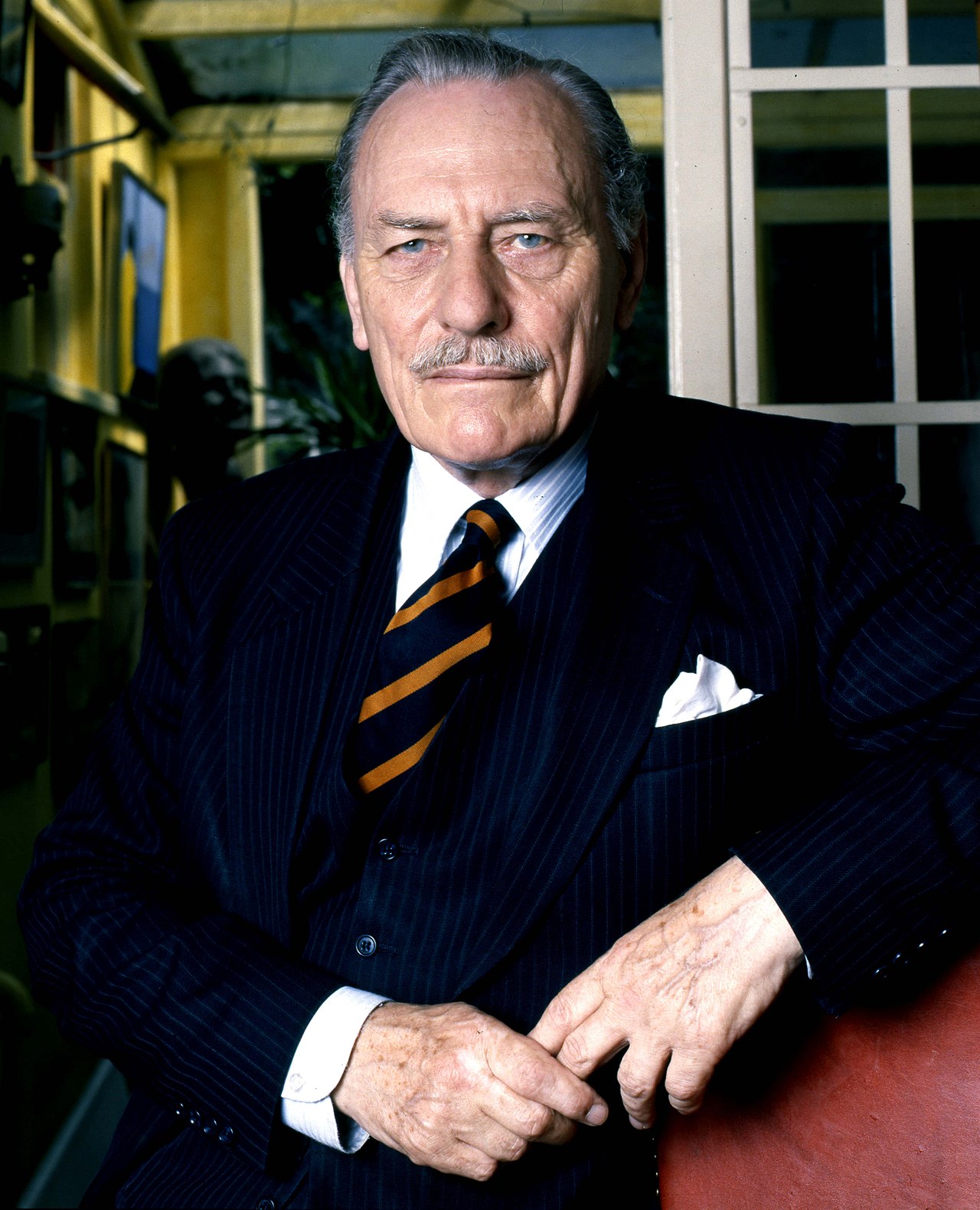
Early years
John Enoch Powell was born on 16 June 1912 in Stechford, within the city of Birmingham, and was baptised at St Nicholas's Church in Newport, Shropshire, where his parents had married in 1909. He was the only child of Albert Enoch Powell, a primary school headmaster, and his wife Ellen Mary Powell (who was the daughter of Henry Breese, a Liverpool policeman, and his wife Eliza, who had been a teacher). His mother did not like his name and as a child he was known as "Jack". At the age of three, Powell was nicknamed "the Professor" because he used to stand on a chair and describe the stuffed birds that his grandfather had shot, which were displayed in his parents' home. In 1918 the family moved to Kings Norton, where Powell remained until he went up to the University of Cambridge in 1930.
The Powells were of Welsh descent and from Radnorshire (a Welsh border county), having moved to the developing Black Country during the early 19th century. Enoch's great-grandfather was a coal-miner and his grandfather had been in the iron trade.
Powell read avidly from a young age; as early as three, he could "read reasonably well". Though not wealthy, the Powells were financially comfortable and their home included a library. By the age of six, Powell loved to read. Every Sunday he would give lectures to his parents on the books that he had read and also conducted evensong and preached a sermon. Once he was old enough to go out on his own, Powell would walk around rural Worcestershire with the aid of Ordnance Survey maps, which instilled in him a love for landscape and cartography.

Education
Powell attended a dame school until he was eleven. He was then a pupil for three years at King's Norton Grammar School for Boys before he won a scholarship to King Edward's School in Birmingham in 1925, aged 13. The legacy of the First World War loomed large for Powell; almost all his teachers had fought in the war. He formed the view that Britain and Germany would fight again.
Powell's mother began teaching him Greek in the two weeks of Christmas break in 1925. By the time he started the next term, he had attained a level in Greek that most pupils would reach after two years. Within two terms, Powell was top of the classics form.
Precociously, Powell won all three of the school's classics prizes and would win more later in his school career. In the fifth form he began to translate Herodotus's Histories. He entered the sixth form two years before his classmates and was remembered as a hard-working student. Powell also won a medal in gymnastics and gained a proficiency in the clarinet. He contemplated studying at the Royal Academy of Music, but his parents persuaded him to try for a scholarship at Cambridge.

It was during his time in the sixth form that Powell learned German. He was influenced by reading James George Frazer's The Golden Bough and Thomas Carlyle's Sartor Resartus, which led him towards the works of Johann Wolfgang von Goethe and Friedrich Nietzsche.
Aged 17, Powell sat the classics scholarship paper at Trinity College, Cambridge, and won the top award.
Powell studied at Trinity from 1930 to 1933. He became almost a recluse and devoted his time to studying. The British literary magazine Granta called him "The Hermit of Trinity". At the age of 18 his first paper to a classical journal was published (in German) in the Philologische Wochenschrift, on a line of Herodotus. While studying at Cambridge, Powell became aware that there was another classicist who signed his name as "John U. Powell". Powell decided to use his middle name and began referring to himself as "Enoch Powell". Powell won the Craven scholarship at the beginning of his second term in 1931. It was at Cambridge that Powell fell under the influence of the poet A. E. Housman, then Professor of Latin at the university.

At Cambridge, Powell won a number of prizes, including the Percy Pemberton Prize, the Porson Prize, the Yeats Prize and the Lees Knowles, the Members' prize for Latin prose, the Browne Medal, the First Chancellor's Classical Medal and the Cromer Greek essay prize of the British Academy.
Powell took a course in Urdu at the School of Oriental Studies (now SOAS, University of London), because he felt that his long-cherished ambition of becoming Viceroy of India would be unattainable without knowledge of an Indian language. Later, during his political career, he would speak to his Indian-born constituents in Urdu. Powell went on to learn other languages, such as Welsh, modern Greek and Portuguese.
Academic career
After graduating from Cambridge, Powell stayed on at Trinity College as a fellow, spending much of his time studying ancient manuscripts in Latin and producing academic works in Greek and Welsh. He won the Craven travelling scholarship, which he used to fund travels to Italy, where he researched Greek manuscripts. He also learned Italian. Powell was still convinced of the inevitability of war with Germany after Adolf Hitler came to power in Germany in 1933: he told his father in 1934, "I want to be in the army from the first day that Britain goes to war". He suffered a spiritual crisis when he heard of the Night of the Long Knives in July 1934, which shattered his vision of German culture.
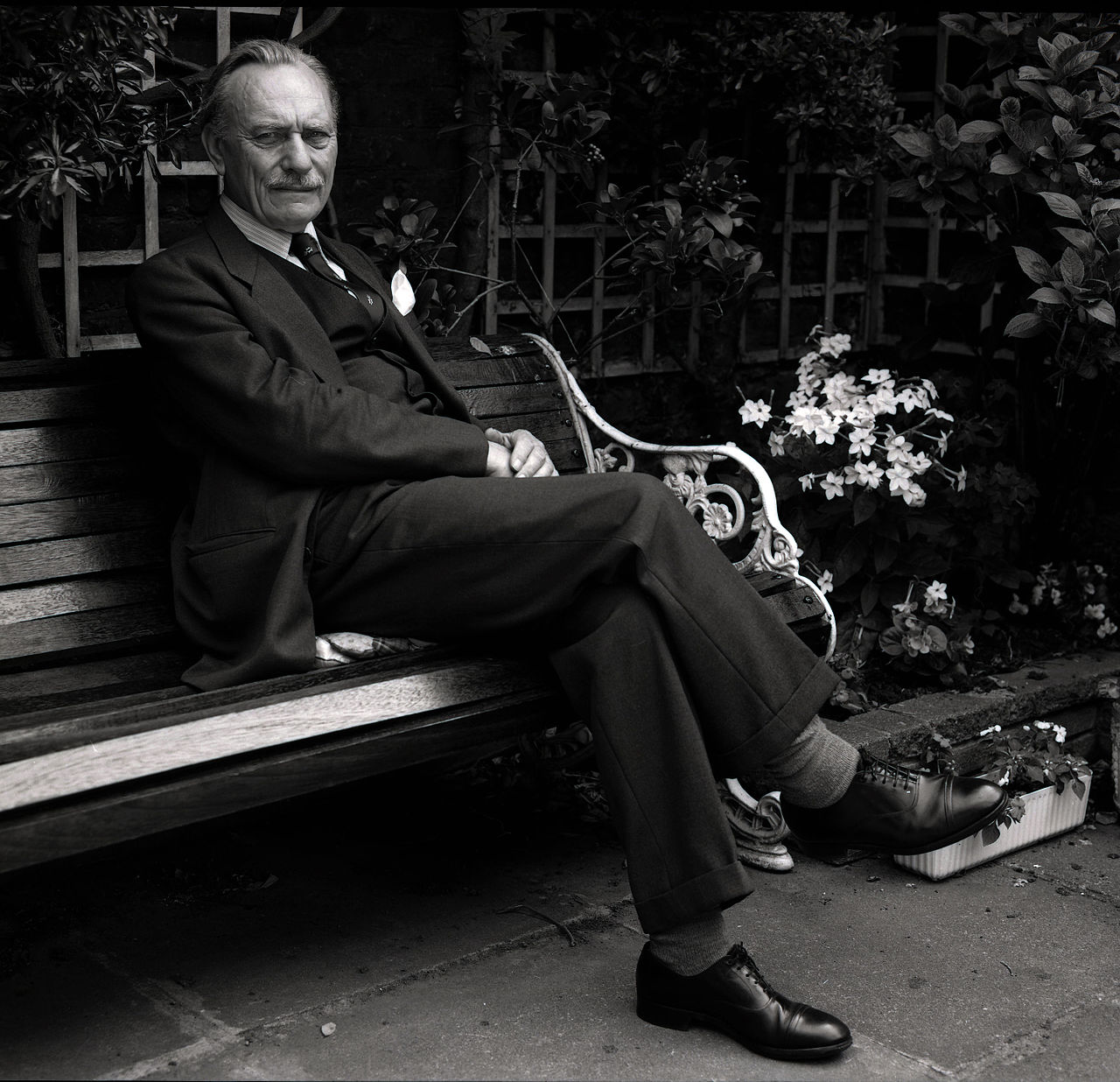
Powell spent his time at Trinity teaching and supervising undergraduates and worked on a lexicon of Herodotus. Since 1932, Powell had been working on the Egyptian manuscripts of J. Rendel Harris and his translation from Greek into English was published in 1937.
Powell published the collection First Poems in 1937, which was influenced by Housman. His second volume of poems, Casting Off, and Other Poems, was printed in 1939. A further collection of poems, Dancer's End and The Wedding Gift, were published in 1951. A full collection of poems was published in one volume in 1990.
In 1937, he was appointed Professor of Greek at the University of Sydney, aged 25, (failing in his aim of beating Nietzsche's record of becoming a professor at 24). He was the youngest professor in the British Empire. He revised Henry Stuart Jones's edition of Thucydides's Historiae for the Oxford University Press in 1938. His most lasting contribution to classical scholarship was his Lexicon to Herodotus, published by Cambridge University Press the same year, which was well received by critics.

Soon after his arrival in Australia, he was appointed Curator of the Nicholson Museum at the University of Sydney. He informed the vice-chancellor that war would soon begin in Europe and that when it did, he would be heading home to enlist in the army. In his inaugural lecture as professor of Greek in May 1938, he condemned Britain's policy of appeasement. At the outbreak of war, Powell immediately returned to England.
Military service
In October 1939, Powell enlisted as a private in the Royal Warwickshire Regiment. He had trouble enlisting, as during the "Phoney War" the War Office did not want men with no military training. Rather than waiting to be called up, he claimed to be Australian, as Australians (many of whom had travelled to Britain to join up) were allowed to enlist straight away. He was promoted from private to lance-corporal and completed officer training. He told colleagues that he expected to be at least a major-general by the end of the war.
On 18 May 1940, Powell was commissioned as a second lieutenant onto the General List. He was transferred to the Intelligence Corps and later promoted to captain, posted as GSO3 (Intelligence) to the 1st (later 9th) Armoured Division. During this time, he taught himself Russian; as insufficient Russian-speaking officers were available at the War Office, his knowledge of Russian and his textual analysis skills were used to translate a Russian parachute training manual; he was convinced that the Soviet Union must eventually enter the war on the Allied side.
In October 1941, Powell was posted to Cairo in the Kingdom of Egypt and then transferred back to the Royal Warwickshire Regiment. He was promoted to major in May 1942 and then to lieutenant colonel in August 1942. In that role he helped to plan the Second Battle of El Alamein, having previously helped to plan the attack on Erwin Rommel's supply lines. The following year, he was appointed a Member of the Order of the British Empire (MBE) for his military service. During his time in Algiers, Powell began to distrust the United States' position. Powell's suspicion of the anti-British Empire nature of the US federal government's foreign policy continued for the remainder of the war and into his subsequent post-war political career.
Following the Axis defeat at the Second Battle of El Alamein, Powell's attention increasingly moved to the Far East theatre, where the Allies were fighting the Imperial Japanese Army (IJA). He wished to be assigned to the Chindits units operating in Burma. He secured a posting to the British Indian Army in Delhi as a lieutenant-colonel in military intelligence in August 1943. Powell was appointed Secretary to the Joint Intelligence Committee for India and Lord Mountbatten's Southeast Asia Command, involved in planning an amphibious offensive against Akyab.
Powell had continued to learn Urdu. He had an ambition of eventually becoming Viceroy of India, and when Mountbatten transferred his staff to Kandy, Ceylon, Powell chose to remain in Delhi. He was promoted to full colonel at the end of March 1944, as assistant director of military intelligence in India, giving intelligence support to the Burma campaign of Field Marshal William Slim. Powell ended the war as a brigadier, for a while, the youngest in the British Army. He told a colleague that he expected to be head of all military intelligence in "the next war". Powell never experienced combat and felt guilty for having survived, writing that soldiers who did so carried "a sort of shame with them to the grave".
Entry into politics
Powell voted for the Labour Party in their 1945 landslide victory because he wanted to punish the Conservative Party for the Munich Agreement. After the war he joined the Conservatives and worked for the Conservative Research Department (CRD) under Rab Butler, where his colleagues included Iain Macleod and Reginald Maudling.
Powell's ambition to be Viceroy of India crumbled in February 1947 when the prime minister, Clement Attlee, announced that Indian independence was imminent. Powell was so shocked by the change of policy that he spent the whole night after it was announced walking the streets of London. He came to terms with it by becoming fiercely anti-imperialist, believing that once India had gone, the whole empire should follow it. This logical absolutism explained his later indifference to the Suez Crisis, his contempt for the Commonwealth and his urging that Britain should end any remaining pretence that it was a world power.
After unsuccessfully contesting the Labour Party's safe seat of Normanton at a by-election in 1947 (when the Labour majority was 62 per cent), he was elected the Conservative MP for Wolverhampton South West at the 1950 general election.
First years as a backbencher
On 16 March 1950, Powell made his maiden speech in the House of Commons. For the rest of his life he regarded this speech as the finest he ever delivered (rather than the much more well-known 1968 anti-immigration speech). On 3 March 1953 he spoke against the Royal Titles Bill in the Commons.
In mid-November 1953, Powell secured a place on the 1922 Committee's executive at the third attempt. Butler also invited him onto the committee that reviewed party policy for the general election, which he attended until 1955. Powell was a member of the Suez Group of MPs who were against the removal of British troops from the Suez Canal, because such a move would demonstrate, Powell argued, that Britain could no longer maintain a position there and that any claim to the Suez Canal would, therefore, be illogical. However, after the troops had left in June 1956 and the Egyptians nationalised the Canal a month later, Powell opposed the attempt to retake the canal in the Suez Crisis because he thought the British no longer had the resources to be a world power.
In and out of office
Junior Housing Minister
On 21 December 1955, Powell was appointed parliamentary secretary to Duncan Sandys at the Ministry of Housing. In early 1956 he spoke for the Housing Subsidies Bill in the Commons and argued for the rejection of an amendment that would have hindered slum clearances. He also spoke in support of the Slum Clearances Bill, which provided entitlement for full compensation for those who purchased a house after August 1939 and still occupied it in December 1955 if this property would be compulsorily purchased by the government if it was deemed unfit for human habitation. In early 1956 Powell attended a subcommittee on immigration control as a housing minister and advocated immigration controls.
Financial Secretary to the Treasury
When Macmillan succeeded Eden as prime minister, Powell was offered the office of Financial Secretary to the Treasury on 14 January 1957. This office was the Chancellor of the Exchequer's deputy and the most important job outside the Cabinet.
In January 1958, Powell resigned, along with the Chancellor of the Exchequer Peter Thorneycroft and his Treasury colleague Nigel Birch, in protest of government plans for increased expenditure; he was a staunch advocate of disinflation or, in modern terms, a monetarist and a believer in market forces. Powell was also a member of the Mont Pelerin Society. The by-product of this expenditure was the printing of extra money to pay for it all, which Powell believed to be the cause of inflation and, in effect, a form of taxation as the holders of money find their money is worth less. Retail price index inflation was between 3.7 and 3 per cent at the time of his resignation.
During the late 1950s, Powell promoted control of the money supply to prevent inflation and, during the 1960s, was an advocate of free market policies, which at the time were seen as extreme, unworkable and unpopular. Powell advocated the privatisation of the Post Office and the telephone network as early as 1964. He both scorned the idea of "consensus politics" and wanted the Conservative Party to become a modern business-like party, freed from its old aristocratic and "old boy network" associations. In his 1958 resignation over public spending and what he saw as an inflationary economic policy, he anticipated almost exactly the views that during the 1980s came to be described as "monetarism".
Hola Massacre speech
On 27 July 1959 Powell delivered a speech in the Commons about the Hola Camp in Kenya, where eleven Mau Mau were killed after refusing work in the camp. Powell noted that some MPs had described the eleven as "sub-human", but Powell responded by saying: "In general, I would say that it is a fearful doctrine, which must recoil upon the heads of those who pronounce it, to stand in judgement on a fellow human being and to say, 'Because he was such-and-such, therefore the consequences which would otherwise flow from his death shall not flow'." Powell also disagreed with the notion that because it was in Africa, different methods were acceptable:
Nor can we ourselves pick and choose where and in what parts of the world we shall use this or that kind of standard. We cannot say, "We will have African standards in Africa, Asian standards in Asia and perhaps British standards here at home". We have not that choice to make. We must be consistent with ourselves everywhere. All Government, all influence of man upon man, rests upon opinion. What we can do in Africa, where we still govern and where we no longer govern, depends upon the opinion which is entertained of the way in which this country acts and the way in which Englishmen act. We cannot, we dare not, in Africa of all places, fall below our own highest standards in the acceptance of responsibility.
Denis Healey, a member of Parliament from 1952 to 1992, later said this speech was "the greatest parliamentary speech I ever heard ... it had all the moral passion and rhetorical force of Demosthenes". The Daily Telegraph report of the speech said that "as Mr Powell sat down, he put his hand across his eyes. His emotion was justified, for he had made a great and sincere speech".
Minister of Health
Powell returned to the government in July 1960, when he was appointed Minister of Health, although he did not become a member of the Cabinet until the 1962 reshuffle. During a meeting with parents of babies that had been born with deformities caused by the drug thalidomide, he refused to meet any babies affected by the drug. Powell also refused to launch a public inquiry and resisted calls to issue a warning against any left-over thalidomide pills that might remain in people's medicine cabinets (as US President John F. Kennedy had done).
In December 1961, Powell, as Minister of Health, announced that the birth control pill Conovid could be prescribed to women through the National Health Service (NHS) at a subsidised price of 2 shillings per month.
As health minister he developed the 1962 Hospital Plan. He began a debate on the neglect of psychiatric institutions, calling for them to be replaced by wards in general hospitals. The speech catalysed debate. It was one of several strands that led to the Care in the Community initiative of the 1980s. In 1993, however, Powell stated that the criminally insane should have never been released and that the problem was one of funding. He said the new way of caring for the mentally ill cost more, not less, than the old way because community care was decentralised and intimate as well as being "more human"; and his successors had not, Powell stated, provided the money for local authorities to spend on mental health care. Institutional care had therefore been neglected and there was not investment in community care.
After his speech on immigration in 1968, Powell's political opponents sometimes alleged that he had, when Minister of Health, recruited immigrants from the Commonwealth into the NHS. However, the Minister of Health was not responsible for recruitment (this was left to health authorities). Lord Rippon of Hexham made the same accusation in April 1971 against Powell, as part of a campaign by the then Conservative Government to damage Powell who was the leading figure in opposition to joining the Common Market. Powell asked Rippon to supply evidence for his assertion. Rippon subsequently replied that he could not and gave Powell an apology.
Powell did welcome immigrant nurses and doctors, under the condition that they were to be temporary workers training in Britain and would then return to their native countries as qualified doctors or nurses. Shortly after becoming Minister of Health, Powell asked Rab Butler (the Home Secretary) whether he could be appointed to a ministerial committee that monitored immigration. Powell was worried about the strain caused by NHS immigrants, and papers show that he wanted a stronger restriction on Commonwealth immigration than that which was passed in 1961.
1960s
Leadership elections
In October 1963, along with Iain Macleod, Reginald Maudling and Quintin Hogg, Baron Hailsham of St Marylebone, Powell tried in vain to persuade Butler not to serve under the Earl of Home (soon to be known as Alec Douglas-Home), in the belief that the latter would be unable to form a government. Powell commented that they had given Butler a revolver, which he had refused to use in case it made a noise or hurt anyone. Macleod and Powell refused to serve in Lord Home's Cabinet. This refusal is not usually attributed to personal antipathy to Douglas-Home but rather to anger at what Macleod and Powell saw as Macmillan's underhand manipulation of colleagues during the process of choosing a new leader. However, at the meeting at his house on the evening of 17 October, Powell, who still enjoyed a liberal reputation on racial issues after his Hola Massacre Speech, reportedly said of Lord Home: "How can I serve under a man whose views on Africa are positively Portuguese?"
During the 1964 general election, Powell said in his election address, "it was essential, for the sake not only of our own people but of the immigrants themselves, to introduce control over the numbers allowed in. I am convinced that strict control must continue if we are to avoid the evils of a 'colour question' in this country, for ourselves and for our children". Norman Fowler, then a reporter for The Times, interviewed Powell during the election and asked him what the biggest issue was: "I expected to be told something about the cost of living but not a bit of it. 'Immigration,' replied Powell. I duly phoned in my piece but it was never used. After all, who in 1964 had ever heard of a former Conservative cabinet minister thinking that immigration was an important political issue?"
Following the Conservatives' defeat in the election, he agreed to return to the front bench as Transport Spokesman. In July 1965 he stood in the first-ever Conservative Party leadership election, but came a distant third to Edward Heath, obtaining only 15 votes, just below the result Hugh Fraser would gain in the 1975 contest. Heath appointed him Shadow Secretary of State for Defence. Powell said that he had "left his visiting card", i.e. demonstrated himself to be a potential future leader, but the immediate effect was to demonstrate his limited support in the Parliamentary Party, enabling Heath to feel more comfortable calling his bluff.
Shadow Defence Secretary
In his first speech to the Conservative Party Conference as Shadow Secretary of State for Defence on 14 October 1965, Powell outlined a fresh defence policy, jettisoning what he saw as outdated global military commitments left over from Britain's imperial past and stressing that Britain was a European power and therefore an alliance with Western European states from possible attack from the East was central to Britain's safety. He defended Britain's nuclear weapons and argued that it was "the merest casuistry to argue that if the weapon and the means of using it are purchased in part, or even altogether, from another nation, therefore the independent right to use it has no reality. With a weapon so catastrophic, it is possession and the right to use which count". Also, Powell called into question Western military commitments East of Suez:
However much we may do to safeguard and reassure the new independent countries in Asia and Africa, the eventual limits of Russian and Chinese advance in those directions will be fixed by a balance of forces which will itself be Asiatic and African. The two Communist empires are already in a state of mutual antagonism; but every advance or threat of advance by one or the other calls into existence countervailing forces, sometimes nationalist in character, sometimes expansionist, which will ultimately check it. We have to reckon with the harsh fact that the attainment of this eventual equilibrium of forces may at some point be delayed rather than hastened by Western military presence.