
David Keith Lynch (January 20, 1946 – January 16, 2025) was an American filmmaker, producer, actor, painter, and musician. He is widely regarded as one of the greatest and most influential filmmakers in the history of cinema, with his films often characterized by a distinctive surrealist sensibility that gave rise to the adjective "Lynchian". He is often credited with bringing surrealism and experimentalism to mainstream media in the late 20th century. In a career spanning more than five decades, he received numerous accolades, including an Academy Honorary Award, a Palme d'Or and Best Director Award at the Cannes Film Festival, the Golden Lion at the Venice Film Festival, an Independent Spirit Award, a Saturn Award, two César Awards, and a (posthumous) Laurel Award for Screenwriting Achievement, in addition to nominations for four Academy Awards, two British Academy Film Awards, four Golden Globe Awards, and nine Primetime Emmy Awards.
Initially aspiring to become a painter, Lynch began creating short films out of a desire to effect movement in his paintings. He made his feature film debut with the surrealist body horror film Eraserhead (1977), which took him five years to make due to financial issues and slowly found success as a midnight movie. He garnered critical acclaim for the biographical drama film The Elephant Man (1980) and the neo-noir mystery films Blue Velvet (1986) and Mulholland Drive (2001), all three of which earned him nominations for the Academy Award for Best Director. His romantic crime drama film Wild at Heart (1990) won the Palme d'Or at the Cannes Film Festival. He also directed the neo-noir horror film Lost Highway (1997), the comedy-drama film The Straight Story (1999), and the experimental psychological horror film Inland Empire (2006), his last feature film. He wrote and directed the space opera film Dune (1984) but disowned it after extensive studio interference.
Lynch co-created (with Mark Frost) and directed the ABC surrealist horror-mystery series Twin Peaks (1990–1991; 2017), for which he received nine Primetime Emmy Award nominations. The series is considered a landmark turning point in television and often listed among the greatest television series of all time. He also co-wrote (with Robert Engels) and directed its film prequel Twin Peaks: Fire Walk with Me (1992). He directed music videos for Donovan, Interpol, Chris Isaak, X Japan, Moby, and Nine Inch Nails, and commercials for Dior, Gucci, Yves Saint Laurent, Jil Sander, Calvin Klein, the PlayStation 2, and the New York City Department of Sanitation. His acting roles included Gordon Cole on Twin Peaks, the voice of Gus on the animated sitcom The Cleveland Show (2010–2013), Jack Dahl on the sitcom Louie (2012), Howard in the drama film Lucky (2017), and film director John Ford in Steven Spielberg's drama film The Fabelmans (2022).

Lynch also worked as an animator, author, cartoonist, furniture designer, musician, sound designer, editor, photographer, and sculptor. A longtime practitioner of Transcendental Meditation, he founded the David Lynch Foundation to fund meditation lessons for at-risk populations. Lynch was a lifelong chain smoker whose emphysema was exacerbated when he was evacuated from his home in Los Angeles due to the January 2025 Southern California wildfires. He died at his daughter Jennifer's home soon thereafter.
Early life and education
David Keith Lynch was born at St. Patrick's Hospital in Missoula, Montana, on January 20, 1946, the son of English-language tutor Edwina "Sunny" Lynch (née Sundholm) and USDA research scientist Donald Walton Lynch. Two of his mother's grandparents were Swedish-speaking Finns who settled in the U.S. in the 19th century. Lynch was also of German descent through his mother, as well as of English, Irish and Scottish descent through his father. He recalled of his father, "He would drive me through the woods in his green Forest Service truck, over dirt roads, through the most beautiful forests where the trees are very tall and shafts of sunlight come down and in the mountain streams the rainbow trout leap out and their little trout sides catch glimpses of light. Then my father would drop me in the woods and go off. It was a weird, comforting feeling being in the woods." He was raised Presbyterian.
The family often moved around according to where the USDA assigned Lynch's father. When Lynch was two months old, they moved to Sandpoint, Idaho, where his brother John was born two years later; they then moved to Spokane, Washington, where his sister Martha was born. The family subsequently lived in Durham, North Carolina; Boise, Idaho; and Alexandria, Virginia. Lynch adjusted to this transitory early life with relative ease, noting that he usually had no difficulty making friends when he attended a new school.

Lynch said of his early life, "I found the world completely and totally fantastic as a child. Of course, I had the usual fears, like going to school ... for me, back then, school was a crime against young people. It destroyed the seeds of liberty. The teachers didn't encourage knowledge or a positive attitude." He joined the Boy Scouts, and despite later saying that he joined only so he "could quit and put it behind me", he rose to the highest rank of Eagle Scout. He befriended Toby Keeler, whose father Bushnell was a painter. Bushnell gave Lynch a copy of Robert Henri's book The Art Spirit (1923), which inspired Lynch to dedicate himself to "the art life".
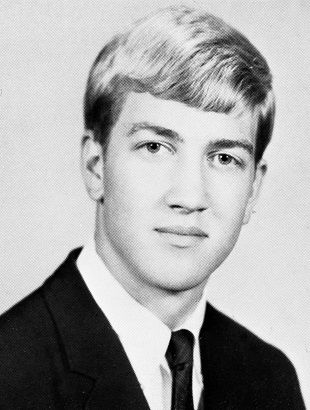
At Francis C. Hammond High School in Alexandria, Lynch did not excel academically and had little interest in schoolwork, but was popular with other students. After leaving, he decided that he wanted to study painting in college, which he began at the Corcoran School of the Arts and Design in Washington, D.C. In 1964, he transferred to the School of the Museum of Fine Arts in Boston, where his roommate was future musician Peter Wolf. He dropped out after a year, later saying he "was not inspired at all in that place". He then traveled around Europe with his friend Jack Fisk, who was similarly unhappy with his studies; the two hoped to train at the school of Austrian painter Oskar Kokoschka. But upon reaching Salzburg, they found that Kokoschka was not available; having planned to spend three years in Europe, they found themselves disillusioned and returned to the U.S. after just two weeks.
Career
1967–1977: Early career and feature debut
Back in the United States, Lynch returned to Virginia. Because his parents had moved to Walnut Creek, California, he stayed with his friend Toby Keeler for a while. He decided to move to Philadelphia and enroll at the Pennsylvania Academy of the Fine Arts, after advice from Fisk, who was already enrolled there. He preferred this college to his previous school in Boston, saying, "In Philadelphia there were great and serious painters, and everybody was inspiring one another and it was a beautiful time there." He recalled that Philadelphia had "a great mood—factories, smoke, railroads, diners, the strangest characters and the darkest night. I saw vivid images—plastic curtains held together with Band-Aids, rags stuffed in broken windows." He was influenced by the Irish painter Francis Bacon. In Philadelphia, Lynch began a relationship with a fellow student, Peggy Reavey, whom he married in 1967. The next year, their daughter Jennifer was born. Peggy later said Lynch "definitely was a reluctant father, but a very loving one. Hey, I was pregnant when we got married. We were both reluctant." As a family, they moved to Philadelphia's Fairmount neighborhood, where they bought a 12-room house for the relatively low price of $3,500 (equivalent to $33,800 in 2025) due to the area's high crime and poverty rates. Lynch later said:
We lived cheap, but the city was full of fear. A kid was shot to death down the street ... We were robbed twice, had windows shot out and a car stolen. The house was first broken into only three days after we moved in ... The feeling was so close to extreme danger, and the fear was so intense. There was violence and hate and filth. But the biggest influence in my whole life was that city.
Meanwhile, to help support his family, Lynch took a job printing engravings. At the Pennsylvania Academy, Lynch made his first short film, Six Men Getting Sick (Six Times) (1967). He had first come up with the idea when he developed a wish to see his paintings move, and he began discussing creating animation with an artist named Bruce Samuelson. When this project never came about, Lynch decided to work on a film alone and purchased the cheapest 16mm camera he could find. Taking one of the academy's abandoned upper rooms as a workspace, he spent $150, which at the time he felt was a lot of money, to produce Six Men Getting Sick. Calling the film "57 seconds of growth and fire, and three seconds of vomit", Lynch played it on a loop at the academy's annual end-of-year exhibit, where it shared joint-first prize with a painting by Noel Mahaffey. This led to a commission from one of his fellow students, the wealthy H. Barton Wasserman, who offered him $1,000 (equivalent to $9,300 in 2025) to create a film installation in his home. Spending $478 of that on the second-hand Bolex camera "of [his] dreams", Lynch produced a new animated short but, upon getting the film developed, realized that the result was a blurred, frameless print. He later said, "So I called up [Wasserman] and said, 'Bart, the film is a disaster. The camera was broken and what I've done hasn't turned out.' And he said, 'Don't worry, David, take the rest of the money and make something else for me. Just give me a print.' End of story."
With his leftover money, Lynch decided to experiment with a mix of animation and live action, producing the four-minute short The Alphabet (1968). The film starred Lynch's wife Peggy as a character known as The Girl, who chants the alphabet to a series of images of horses before dying at the end by hemorrhaging blood all over her bed sheets. Adding a sound effect, Lynch used a broken Uher tape recorder to record the sound of Jennifer crying, creating a distorted sound that Lynch found particularly effective. Later describing what had inspired him, Lynch said, "Peggy's niece was having a bad dream one night and was saying the alphabet in her sleep in a tormented way. So that's sort of what started 'The Alphabet' going. The rest of it was just subconscious."
Learning about the newly founded American Film Institute, which gave grants to filmmakers who could support their application with a prior work and a script for a new project, Lynch decided to submit a copy of The Alphabet along with a script he had written for a new short film, The Grandmother, that would be almost entirely live action. The institute agreed to help finance the work, initially offering him $5,000 out of his requested budget of $7,200, but later granting him the additional $2,200. Starring people he knew from both work and college and filmed in his own house, The Grandmother featured a neglected boy who "grows" a grandmother from a seed to care for him. The film critics Michelle Le Blanc and Colin Odell wrote, "this film is a true oddity but contains many of the themes and ideas that would filter into his later work, and shows a remarkable grasp of the medium".
Lynch left the Pennsylvania Academy of the Fine Arts after three semesters and in 1970 moved with his wife and daughter to Los Angeles, where he began studying filmmaking at the AFI Conservatory, a place he later called "completely chaotic and disorganized, which was great ... you quickly learned that if you were going to get something done, you would have to do it yourself. They wanted to let people do their thing." He began writing a script for a proposed work, Gardenback, that had "unfolded from this painting I'd done". In this venture he was supported by a number of figures at the Conservatory, who encouraged him to lengthen the script and add more dialogue, which he reluctantly agreed to do. All the interference on his Gardenback project made him fed up with the Conservatory and led him to quit after returning to start his second year and being put in first-year classes. AFI dean Frank Daniel asked Lynch to reconsider, believing that he was one of the school's best students. Lynch agreed on the condition that he could create a project that would not be interfered with. Feeling that Gardenback was "wrecked", he set out on a new film, Eraserhead.
Eraserhead was planned to be about 42 minutes long (it ended up being 89 minutes), its script was only 21 pages, and Lynch was able to create the film without interference. He recalled its origin: "My original image was of a man's head bouncing on the ground, being picked up by a boy and taken to a pencil factory. I don't know where it came from." Filming began on May 29, 1972, at night in some abandoned stables, allowing the production team (which was largely Lynch and some of his friends, including Sissy Spacek, Jack Fisk, cinematographer Frederick Elmes, and sound designer Alan Splet) to set up a camera room, green room, editing room, sets, as well as a food room and a bathroom. The AFI gave Lynch a $10,000 grant, but it was not enough to complete the film, and under pressure from studios after the success of the relatively cheap feature film Easy Rider, it was unable to give him more. Lynch was then supported by a loan from his father and money that he earned from a paper route that he took up, delivering The Wall Street Journal. Not long into Eraserhead's production, Lynch and Peggy amicably separated and divorced, and he began living full-time on set. In 1977, Lynch married Jack Fisk's sister Mary Fisk. In 1973, Lynch's sister suggested he try Transcendental Meditation. It proved a revelation, and Lynch said he had never "missed a session since: twenty minutes, twice a day."

Due to financial problems, the filming of Eraserhead was haphazard, regularly stopping and starting again. During one such break in 1974, Lynch made The Amputee, a one-shot film about two minutes long. He proposed that he make The Amputee to present to AFI to test two different types of film stock.
Eraserhead was finally finished in 1976. Lynch said that not a single reviewer of the film understood it as he intended. Filmed in black and white, Eraserhead tells the story of Henry (Jack Nance), a quiet young man, living in a dystopian industrial wasteland, whose girlfriend gives birth to a deformed baby whom she leaves in his care. It was heavily influenced by the fearful mood of Philadelphia, and Lynch has called it "my Philadelphia Story". Lynch tried to get it entered into the Cannes Film Festival, but while some reviewers liked it, others felt it was awful, and it was not selected for screening. Reviewers from the New York Film Festival also rejected it, but it screened at the Los Angeles Film Festival, where Ben Barenholtz, the distributor of the Elgin Theater, heard about it. Barenholtz was very supportive of the movie, helping to distribute it around the United States in 1977. Eraserhead subsequently became popular on the midnight movie underground circuit, and was later called one of the most important midnight movies of the 1970s, along with Night of the Living Dead, El Topo, Pink Flamingos, The Rocky Horror Picture Show, and The Harder They Come. Stanley Kubrick said it was one of his all-time favorite films.
1978–1986: Stardom and acclaim
After Eraserhead's success on the underground circuit, Stuart Cornfeld, an executive producer for Mel Brooks, saw it and recalled, "I was just 100 percent blown away [...] I thought it was the greatest thing I'd ever seen. It was such a cleansing experience." Brooks viewed Eraserhead, and after exiting the screening theater, embraced Lynch, declaring, "You're a madman! I love you! You're in."

Cornfeld agreed to help Lynch with his next film, Ronnie Rocket, for which Lynch had already written a script. But Lynch soon realized that Ronnie Rocket, a film that he said is about "electricity and a three-foot guy with red hair", was not going to be picked up by any financiers, and so he asked Cornfeld to find him a script by someone else that he could direct. Cornfeld found four. On hearing the title of the first, The Elephant Man, Lynch chose it. The Elephant Man's script, by Chris de Vore and Eric Bergren, is based on the true story of Joseph Merrick, a severely deformed man in Victorian London, who was held in a sideshow but later taken under the care of a London surgeon, Frederick Treves. Lynch wanted to make some alterations that would deviate from real events but in his view make a better plot, but he needed the permission of Brooks, whose company, Brooksfilms, was responsible for production. The film stars John Hurt as John Merrick (the name changed from Joseph) and Anthony Hopkins as Treves. Filming took place in London. Though surrealistic and in black and white, it has been called "one of the most conventional" of Lynch's films. It was a critical and commercial success, earning eight Academy Award nominations, including Best Director and Best Adapted Screenplay.
After The Elephant Man's success, George Lucas, a fan of Eraserhead, offered Lynch the opportunity to direct the third film in his original Star Wars trilogy, Return of the Jedi. Lynch declined, saying that he had "next door to zero interest" and arguing that Lucas should direct the film himself as the movie should reflect his own vision, not Lynch's. Soon, the opportunity to direct another big-budget science fiction epic arose when Dino de Laurentiis asked Lynch to create a film adaptation of Frank Herbert's novel Dune (1965). Lynch agreed, and in doing so was also contractually obliged to produce two other works for the De Laurentiis Entertainment Group. He began writing a script based on the novel, initially with both de Vore and Bergren, and then alone when De Laurentiis was unhappy with their ideas. Lynch also helped build some of the sets, attempting to create "a certain look", and particularly enjoyed building the set for the oil planet Giedi Prime, for which he used "steel, bolts, and porcelain".
Dune is set in the far future, when humans live in an interstellar empire under a feudal system. The main character, Paul Atreides (Kyle MacLachlan), is the son of a nobleman who takes control of the desert planet Arrakis, which grows the rare spice melange, the empire's most highly prized commodity. Lynch was unhappy with the work, later saying: "Dune was a kind of studio film. I didn't have final cut. And, little by little, I was subconsciously making compromises". Much of his footage was removed from the final theatrical cut, dramatically condensing the plot. Although De Laurentiis hoped it would be as successful as Star Wars, Dune (1984) was a critical and commercial dud; it had cost $45 million to make, and grossed $27.4 million domestically. Later, Universal Studios released an "extended cut" for syndicated television, containing almost an hour of cutting-room-floor footage and new narration. It did not represent Lynch's intentions, but the studio considered it more comprehensible than the original version. Lynch objected to the changes and had his name struck from the extended cut, which has Alan Smithee credited as the director and "Judas Booth" (a pseudonym Lynch invented, reflecting his feelings of betrayal) as the screenwriter.
Lynch was still contractually obligated to produce two other projects for De Laurentiis, the first a planned sequel to Dune, which due to the film's failure never went beyond the script stage. The other was a more personal work, based on a script Lynch had been working on for some time. Developing from ideas that Lynch had had since 1973, Blue Velvet was set in Lumberton, North Carolina, and revolves around a college student, Jeffrey Beaumont (MacLachlan), who finds a severed ear in a field. Investigating with the help of his friend Sandy (Laura Dern), Jeffrey discovers a criminal gang led by psychopath Frank Booth (Dennis Hopper), who has kidnapped the husband and child of singer Dorothy Vallens (Isabella Rossellini) and repeatedly rapes her. Lynch called the story "a dream of strange desires wrapped inside a mystery story". Lynch included 1960s pop songs, including Roy Orbison's "In Dreams" and Bobby Vinton's "Blue Velvet", the latter of which largely inspired the film. Lynch said, "It was the song that sparked the movie ... There was something mysterious about it. It made me think about things. And the first things I thought about were lawns—lawns and the neighborhood." Other music for the film is by Angelo Badalamenti, who scored most of Lynch's subsequent work.
De Laurentiis loved the film, and it received support at some of the early specialist screenings, but the preview screenings to mainstream audiences were very poorly received. The film was controversial; Roger Ebert wrote that Rossellini "is asked to do things in this film that require real nerve … She is degraded, slapped around, humiliated and undressed in front of the camera." Rossellini responded: "I was an adult. I was 31 or 32. I chose to play the character ... I think my character was the first time we did an abused woman, a portrait of an abused woman, but also she camouflaged herself behind what she was asked to be, which was sexy and beautiful and singing, and she obeys the order, and is also victimized it. That's the complexity of Blue Velvet but also the great talent of David Lynch. I thought he did a fantastic film. I love Blue Velvet."
Blue Velvet was a critical and commercial success, winning the National Society of Film Critics Award for Best Film and earning Lynch his second Academy Award nomination for Best Director. David Thomson recalls seeing it for the first time: "The occasion stood as the last moment of transcendence I had felt at the movies—until The Piano. What I mean by that is a kind of passionate involvement with both the story and the making of a film, so that I was simultaneously moved by the enactment on the screen and by discovering that a new director had made the medium alive and dangerous again." Pauline Kael praised Lynch as a "genius naïf" and predicted that he "might turn out to be the first populist surrealist—a Frank Capra of dream logic." She quoted a moviegoer as saying "Maybe I'm sick, but I want to see that again."
1987–1997: Established career
Lynch met television producer Mark Frost and they started working together on a biopic of Marilyn Monroe based on Anthony Summers's book The Goddess: The Secret Lives of Marilyn Monroe, but it never got off the ground. While talking in a coffee shop, Lynch and Frost had the idea of a corpse washing up on a lakeshore, and went to work on their third project, first called Northwest Passage and then Twin Peaks (1990–1991). A drama set in an eponymous small Washington town where popular high school student Laura Palmer (Sheryl Lee) has been murdered, Twin Peaks featured FBI agent Dale Cooper (MacLachlan) as the investigator trying to solve the crime and discovering many of the townsfolk's secrets along the way; Lynch said, "The project was to mix a police investigation with the ordinary lives of the characters [...] [Mark Frost and I] worked together, especially in the initial stages. Later on we started working more apart." They pitched the series to ABC, which agreed to finance the pilot and eventually commissioned a season comprising seven episodes. Richard Corliss wrote: "Long before the series' April premiere, ecstatic critics were priming TV viewers to expect the unexpected. Lynch's two-hour pilot didn't disappoint. It was frantic and lugubrious in turn, a soap opera with strychnine. In one night, the show had hip America hooked."
Lynch directed two of the first season's seven episodes and carefully chose the other episodes' directors. He also appeared in several episodes as FBI agent Gordon Cole. The series was a success, with high ratings in the U.S. and many other countries, and soon had a cult following. Lynch received nine Primetime Emmy Award nominations for the show. A second season of 22 episodes went into production, but ABC executives believed that public interest in the show was declining. The network insisted that Lynch and Frost reveal the identity of Laura's killer prematurely, which Lynch grudgingly agreed to do, in what he later called one of his biggest professional regrets. After identifying the murderer and moving from Thursday to Saturday night, Twin Peaks continued for several more episodes, but was canceled after a ratings drop. Lynch, who disliked the direction that writers and directors took in the later episodes, directed the final episode. He ended it with a cliffhanger, of which he later said, "That's not the ending. That's the ending that people were stuck with."
Meanwhile, Lynch created commercials for companies including Giorgio Armani, Calvin Klein, and Yves Saint Laurent. He directed a commercial for Japanese coffee company Namoi in which a Japanese man searches the town of Twin Peaks for his missing wife. Twin Peaks had unexpectedly become popular in Japan; mock funerals were held for Laura, Japanese tourists traveled to the U.S. solely to visit various filming locations around Snoqualmie, and MacLachlan reprised his role as Dale (noted in the show for his love of coffee) in a four-part series of commercials for Japanese coffee company Georgia.
While Lynch was working on the first few episodes of Twin Peaks, his friend Monty Montgomery "gave me a book that he wanted to direct as a movie. He asked if I would maybe be executive producer or something, and I said 'That's great, Monty, but what if I read it and fall in love with it and want to do it myself?' And he said, 'In that case, you can do it yourself'." The book was Barry Gifford's novel Wild at Heart: The Story of Sailor and Lula, about two lovers on a road trip. Lynch felt that it was "just exactly the right thing at the right time. The book and the violence in America merged in my mind and many different things happened." With Gifford's support, Lynch adapted the novel into Wild at Heart, a crime and road movie starring Nicolas Cage as Sailor and Laura Dern as Lula. Calling its plot a "strange blend" of "a road picture, a love story, a psychological drama and a violent comedy", Lynch departed substantially from the novel, changing the ending and incorporating numerous references to The Wizard of Oz. Corliss wrote: "Wild at Heart, which sends a pair of loser lovers (Nicolas Cage and Laura Dern) on a trip into the dark night of the Southern Gothic soul, is a tonic for the senses and an assault on the sensibilities. Heads splatter, skulls explode, biker punks torture folks for the sheer heck of it, and a pair of loopy innocents find excitement in a side trip to hell. Pretty much like Blue Velvet. Yes, it's different, but the same kind of different; Lynch could no longer shock by being shocking. Many critics figured they had solved the mystery of his visual style and thematic preoccupations. Next mystery, please. By August, when the film opened in the U.S., the Lynch mob was more like a lynch mob." Despite a muted response from American critics and viewers, Wild at Heart won the Palme d'Or at the 1990 Cannes Film Festival. When it won the prize, audience members booed Lynch and the film.
After Wild at Heart's success, Lynch returned to the world of the canceled Twin Peaks, this time without Frost, to make a film that was primarily a prequel but also in part a sequel. Lynch said, "I liked the idea of the story going back and forth in time." The result, Twin Peaks: Fire Walk with Me (1992), primarily revolved around the last few days of Laura Palmer's life, was much "darker" in tone than the TV series, with much of the humor removed, and dealt with such topics as incest and murder. Lynch has said the film is about "the loneliness, shame, guilt, confusion and devastation of the victim of incest". The company CIBY-2000 financed Twin Peaks: Fire Walk with Me, and most of the TV series's cast reprised their roles, though some refused and many were unenthusiastic about the project. The film was a commercial failure in the U.S. at the time of its release, but has since experienced a critical reappraisal. Many critics, such as Mark Kermode, have called it Lynch's "masterpiece".
Meanwhile, Lynch worked on some new television shows. He and Frost created the comedy series On the Air (1992), which was canceled after three episodes aired, and he and Montgomery created the three-episode HBO miniseries Hotel Room (1993) about events that happen in one hotel room on different dates.
In 1993, Lynch collaborated with Japanese musician Yoshiki on the video for X Japan's song "Longing ~Setsubou no Yoru~". The video was never officially released, but Lynch wrote in his 2018 memoir Room to Dream that "some of the frames are so fuckin' beautiful, you can't believe it."
After his unsuccessful TV ventures, Lynch returned to film. In 1997, he released the non-linear noiresque Lost Highway, which was co-written by Barry Gifford and stars Bill Pullman and Patricia Arquette. The film failed commercially and received a mixed response from critics.
Lynch then began work on a film from a script by Mary Sweeney and John E. Roach, The Straight Story, based on the true story of Alvin Straight (Richard Farnsworth), an elderly man from Laurens, Iowa, who goes on a 300-mile journey to visit his sick brother (Harry Dean Stanton) in Mount Zion, Wisconsin, by riding lawnmower. Asked why he chose this script, Lynch said, "that's what I fell in love with next", and expressed his admiration of Straight, describing him as "like James Dean, except he's old". Badalamenti scored the film, calling it "very different from the kind of score he's done for [Lynch] in the past".
1998–2009: Continued work
Among the many differences from Lynch's other films, The Straight Story contains no profanity, sex, or violence, and is rated G (general viewing) by the Motion Picture Association of America, which came as "shocking news" to many in the film industry, who were surprised that it "did not disturb, offend or mystify". Le Blanc and Odell write that the plot made it "seem as far removed from Lynch's earlier works as could be imagined, but in fact right from the very opening, this is entirely his film—a surreal road movie". It was also Lynch's only title released by Walt Disney Pictures in the U.S., after studio president Peter Schneider screened the film before its Cannes Film Festival premiere and quickly had Disney acquire the distribution rights. Schneider said it is "a beautiful movie about values, forgiveness and healing and celebrates America. As soon as I saw it, I knew it was a Walt Disney film." It was named one of the best films of the year by The New York Times; Janet Maslin wrote: "Somehow it took David Lynch to lead audiences past the ultimate frontier: into a G-rated parable of spirituality and decency, seen from the unfashionable vantage point of old age. Mr. Lynch accomplished the unthinkable by putting Richard Farnsworth, in a devastatingly real and rock-solid performance, on a lawnmower at five miles per hour and still building enough drama and emotion for a great chase. Burned out on the surreal and the grotesque, Mr. Lynch faced down inevitable realities about aging and conscience."
In 1999, Lynch approached ABC again with ideas for a television drama. The network gave Lynch the go-ahead to shoot a two-hour pilot for the series Mulholland Drive, but disputes over content and running time led to the project being shelved indefinitely. With $7 million from the French production company StudioCanal, Lynch completed the pilot as a film, Mulholland Drive. The film, a nonlinear surrealist tale of Hollywood's dark side, stars Naomi Watts, Laura Harring, and Justin Theroux. It performed relatively well at the box office worldwide and was a critical success, earning Lynch Best Director at the 2001 Cannes Film Festival (shared with Joel Coen for The Man Who Wasn't There) and Best Director from the New York Film Critics Association. He also received his third Academy Award nomination for Best Director. In 2016, the film was named the best film of the 21st century in a BBC poll of 177 film critics from 36 countries. Roger Ebert, who had dismissed much of Lynch's earlier work, wrote: "At last his experiment doesn't shatter the test tubes. The movie is a surrealist dreamscape in the form of a Hollywood film noir, and the less sense it makes, the more we can't stop watching it."
With the rising popularity of the Internet, Lynch decided to use it as a distribution channel, releasing several new series he had created exclusively on his website, davidlynch.com, which went online on December 10, 2001. In 2002, he created a series of online shorts, DumbLand. Intentionally crude in content and execution, the eight-episode series was later released on DVD. The same year, Lynch released a surreal sitcom, Rabbits, about a family of humanoid rabbits. Later, he made his experiments with Digital Video available in the form of the Japanese-style horror short Darkened Room. In 2006, Lynch's feature film Inland Empire was released. At three hours, it is his longest film. Like Mulholland Drive and Lost Highway, it lacks a traditional narrative structure. It stars Laura Dern, Harry Dean Stanton, and Justin Theroux, with cameos by Naomi Watts and Laura Harring as the voices of Suzie and Jane Rabbit, and a performance by Jeremy Irons. Lynch called Inland Empire "a mystery about a woman in trouble". In an effort to promote it, he made appearances with a cow and a placard bearing the slogan "Without cheese there would be no Inland Empire".
In 2009, Lynch produced a documentary Web series directed by his son Austin Lynch and friend Jason S., Interview Project. Interested in working with Werner Herzog, in 2009 Lynch collaborated on Herzog's film My Son, My Son, What Have Ye Done. With a nonstandard narrative, the film is based on a true story of an actor who committed matricide while acting in a production of the Oresteia, and stars Grace Zabriskie. In 2009, Lynch had plans to direct a documentary on Maharishi Mahesh Yogi consisting of interviews with people who knew him, but nothing came of it.
2010–2019: Later work and return to television
In 2010, Lynch began making guest appearances on the Family Guy spin-off The Cleveland Show as Gus the Bartender. He had been convinced to appear in the show by its lead actor, Mike Henry, a fan of Lynch who felt that his life had changed after he saw Wild at Heart. Lady Blue Shanghai is a 16-minute promotional film written, directed and edited by Lynch for Dior. It was released on the Internet in May 2010.
Lynch directed a concert by English new wave band Duran Duran on March 23, 2011. The concert was streamed live on YouTube from the Mayan Theater in Los Angeles as the kickoff to the second season of Unstaged: An Original Series from American Express. "The idea is to try and create on the fly, layers of images permeating Duran Duran on the stage," Lynch said. "A world of experimentation and hopefully some happy accidents". The animated short I Touch a Red Button Man, a collaboration between Lynch and the band Interpol, played in the background during Interpol's concert at the Coachella Valley Music and Arts Festival in April 2011. The short, which features Interpol's song "Lights", was later made available online.
It was believed that Lynch was going to retire from the film industry; according to Abel Ferrara, Lynch "doesn't even want to make films any more. I've talked to him about it, OK? I can tell when he talks about it." But in a June 2012 interview, Lynch said he lacked the inspiration to start a new movie project, but "If I got an idea that I fell in love with, I'd go to work tomorrow". In September 2012, he appeared in the three-part "Late Show" arc on FX's Louie as Jack Dahl. In November 2012, Lynch hinted at plans for a new film while attending Plus Camerimage in Bydgoszcz, Poland, saying, "something is coming up. It will happen but I don't know exactly when". At Plus Camerimage, Lynch received a lifetime achievement award and the Key to the City from Bydgoszcz's mayor, Rafał Bruski. In a January 2013 interview, Laura Dern confirmed that she and Lynch were planning a new project, and The New York Times later reported that Lynch was working on the script. Idem Paris, a short documentary film about the lithographic process, was released online in February 2013. On June 28, 2013, a video Lynch directed for the Nine Inch Nails song "Came Back Haunted" was released. He also did photography for the Dumb Numbers's self-titled album released in August 2013.
On October 6, 2014, Lynch confirmed via Twitter that he and Frost would start shooting a new, nine-episode season of Twin Peaks in 2015, with the episodes expected to air in 2016 on Showtime. Lynch and Frost wrote all the episodes. On April 5, 2015, Lynch announced via Twitter that the project was still alive, but he was no longer going to direct because the budget was too low for what he wanted to do. On May 15, 2015, he said via Twitter that he would return to the revival, having sorted out his issues with Showtime. Showtime CEO David Nevins confirmed this, announcing that Lynch would direct every episode of the revival and that the original nine episodes had been extended to 18. Filming was completed by April 2016. The two-episode premiere aired on May 21, 2017.
While doing press for Twin Peaks, Lynch was again asked if he had retired from film and seemed to confirm that he had made his last feature film, responding, "Things changed a lot ... So many films were not doing well at the box office, even though they might have been great films and the things that were doing well at the box office weren't the things that I would want to do". Lynch later said that this statement had been misconstrued: "I did not say I quit cinema, simply that nobody knows what the future holds."
2020–2025: Final years and return to weather reports
Lynch, who had uploaded daily videos of himself giving weather reports on his now-defunct website in the 2000s, returned to doing so in early 2020 due to being unable to leave his Los Angeles home during the COVID-19 pandemic. He also started two new online series: What is David Lynch Working on Today?, which detailed him making collages, and Today's Number Is..., in which he picked a random number between 1 and 10 each day from a jar containing 10 numbered ping-pong balls. In one of his weather reports, he detailed a vivid dream he had, in which he was a German soldier being shot by an American soldier on D-Day. Most of his weather reports featured him saying he was "thinking about" songs by artists such as the Beatles, the Everly Brothers, the Platters, and the Rolling Stones. He posted his final weather report on December 16, 2022, and confirmed in April 2023 that none of the three series would return: "Now I can sleep longer in the morning. I had to get up very early to consult the real weather bulletin. In two years I have not missed a single one."
In June 2020, Lynch re-released his web series Rabbits (2002) on YouTube. On July 17, his online merchandise shop began selling face masks with his artwork printed on them. He was cast in Steven Spielberg's semi-autobiographical film The Fabelmans (2022), playing a role Variety called "a closely guarded secret". Lynch was revealed to be playing director John Ford, whom the young Spielberg had once met in an encounter he considered formative. Lynch and the cast were nominated for the Screen Actors Guild Award for Outstanding Performance by a Cast in a Motion Picture. Film critic J. Hoberman wrote, "Mr. Lynch never made a conventional, crowd-pleasing Hollywood movie. But in 2022, he agreed to a cameo in one: Mr. Spielberg's autobiographical feature The Fabelmans, where the enigmatic if not eldritch Mr. Lynch was cast as John Ford, the maker of Westerns and the grand old curmudgeon of American cinema. It was a sentimental gesture that one can only call Lynchian."
Other work
Unrealized projects
Lynch worked on a number of projects that never progressed beyond the pre-production stage. Some of them fell into development hell and others were officially canceled.
The Angriest Dog in the World
In 1983, Lynch began writing and drawing a comic strip, The Angriest Dog in the World, that featured unchanging graphics of a tethered dog so angry it could not move, alongside cryptic philosophical references. It was published from 1983 to 1992 in The Village Voice, Creative Loafing, and other tabloid and alternative publications. Around this time Lynch also became interested in photography and traveled to northern England to photograph its deteriorating industrial landscape.
The Cowboy and the Frenchman
Lynch directed a short film, The Cowboy and the Frenchman (1988), as part of The French as Seen by..., a series sponsored by the French newspaper Le Figaro. The other directors commissioned for the series were Werner Herzog, Andrzej Wajda, Luigi Comencini, and Jean-Luc Godard.
Industrial Symphony No. 1
While Twin Peaks was in production, the Brooklyn Academy of Music asked Lynch and Badalamenti to create a theatrical piece to be performed twice in 1989 as a part of the New Music America Festival. The result was Industrial Symphony No. 1: The Dream of the Broken Hearted, which starred frequent Lynch collaborators Laura Dern, Nicolas Cage, and Michael J. Anderson and contained five songs sung by Julee Cruise. Lynch produced a 50-minute video of the performance in 1990.