
Coronation Street (colloquially referred to as Corrie) is a British television soap opera created by Granada Television and shown on ITV since 9 December 1960. The programme centres on a cobbled, terraced street in the fictional town of Weatherfield in Greater Manchester. The location was itself based on Salford, the hometown of the show's first screenwriter and creator, Tony Warren.
Originally broadcast twice weekly, Coronation Street increased its runtime in later years, airing in five 30 minute slots per week since January 2026. Warren developed the concept for the series, which was initially rejected by Granada's founder Sidney Bernstein. Producer Harry Elton convinced Bernstein to commission 13 pilot episodes. The show has since become a significant part of British culture and underpinned the success of its producing Granada franchise.
Currently produced by ITV Studios, the successor to Granada, the series is filmed at MediaCityUK and broadcast across all ITV regions and internationally. In 2010, Coronation Street was recognised by Guinness World Records as the world's longest-running television soap opera upon its 50th anniversary.

Coronation Street was originally influenced by kitchen-sink realism and is known for portraying a working-class community with a blend of humour and strong, relatable characters. As of 2025, it averages approximately four million viewers per episode. The series aired its 10,000th episode on 7 February 2020 and marked its 60th anniversary later that year.
History
1960s
The first episode of Coronation Street aired on 9 December 1960 at 7 pm. It initially received mixed reviews; Daily Mirror columnist Ken Irwin predicted the series would last only three weeks. The Daily Mirror also printed: "The programme is doomed from the outset... For there is little reality in this new serial, which apparently, we have to suffer twice a week." Granada Television had commissioned 13 episodes, with some inside the company doubting the show would last beyond its planned production run. However, viewers quickly connected with the programme's portrayal of relatable, everyday characters. The programme also made use of Northern English language and dialect; affectionate local terms such as "eh, chuck?", "nowt" (, from nought, meaning nothing), and "by 'eck!" became widely heard on British television for the first time.
Early storylines included student Ken Barlow (William Roache), whose university education set him apart from his working-class family, including his brother David (Alan Rothwell) and parents Frank (Frank Pemberton) and Ida (Noel Dyson). Barlow's character offered commentary on broader social changes, including globalisation, as exemplified by his 1961 line: "You can't go on just thinking about your own street these days. We're living with people on the other side of the world." Roache remains the only original cast member and holds the record as the longest-serving actor in Coronation Street and global soap opera history.

In March 1961, the show reached number one in the television ratings and remained there for the rest of the year. Earlier that year, a television audience measurement (TAM) showed that 75% of available viewers (approximately 15 million people) watched the programme. By 1964, Coronation Street attracted more than 20 million regular viewers, with ratings peaking on 2 December 1964, at 21.36 million viewers.
In 1964, Tim Aspinall became the series producer and implemented significant changes to the programme. Nine cast members were fired, the first being Lynne Carol, who had played Martha Longhurst since early in Coronation Street's run. Carol's firing caused controversy, prompting her co-star Violet Carson (Ena Sharples) to threaten to quit, although she ultimately remained. The sacking was widely covered in the media, and Carol was mobbed by fans while out in public. Some, including Coronation Street writer H.V. Kershaw, criticised the decision as a bid to boost ratings. Steve Tanner and Elsie Howard's 1967 wedding had more than 20 million viewers.
By 1968, critics contended that the programme offered a nostalgic and outdated depiction of the urban working class, failing to reflect the contemporary realities of British society amid the huge economic and social changes that occurred during the 1960s. Granada considered modernising the show with issue-driven plots, including Lucille Hewitt (Jennifer Moss) becoming addicted to drugs, Jerry Booth (Graham Haberfield) being in a storyline about homosexuality, Emily Nugent (Eileen Derbyshire) having an out-of-wedlock child, and introducing a black family. However, these ideas were abandoned owing to concerns about viewer reactions.
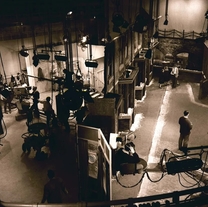
The first episode filmed in colour was broadcast on 3 November 1969. Since then, all episodes have been produced in colour, with the exception of those created during the Colour Strike.
1970s
Several main cast members departed Coronation Street in the early 1970s. In 1970, Arthur Leslie, who played Jack Walker, the landlord of the Rovers Return Inn, died suddenly, and his character was written out shortly thereafter. Anne Reid left the series in 1971, with her character, Valerie Barlow, dying owing to accidental electrocution from a faulty hairdryer. In 1973, Pat Phoenix, who played Elsie Tanner, departed, and Doris Speed (Annie Walker) took a two-month leave of absence. During this period, ITV's other flagship soap opera, Crossroads, experienced an increase in viewership, while Coronation Street saw a decline in ratings.
The departure of these cast members in the early 1970s prompted the writing team to expand the roles of supporting characters and introduce new ones. Deirdre Hunt (Anne Kirkbride) was introduced in 1972 and became a regular character in 1973. Bet Lynch (Julie Goodyear), who had become a regular character in 1970, became increasingly prominent as the decade progressed. Rita Littlewood (Barbara Knox), who had made a single appearance in 1964, returned and joined the regular cast in 1972. Mavis Riley (Thelma Barlow) became a regular character in 1973. Ivy Tyldesley (Lynne Perrie, later renamed "Tilsley") was introduced as a recurring character in 1971. Longtime characters Gail Potter (Helen Worth), Blanche Hunt (initially played by Patricia Cutts and later by Maggie Jones), and Vera Duckworth (Liz Dawn) were introduced in 1974.
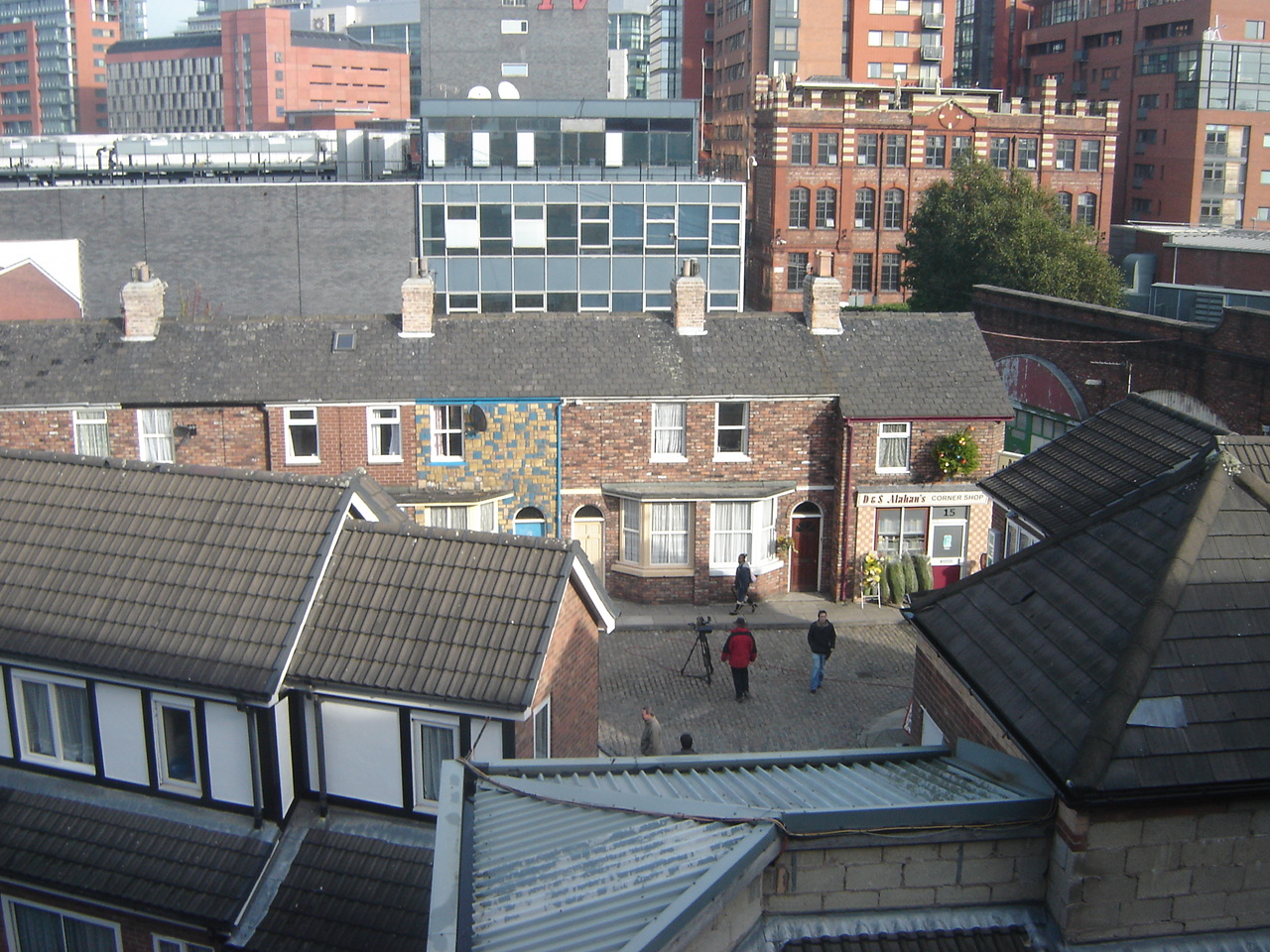
Comic storylines, a hallmark of the series in the 1960s, had become less frequent in the early 1970s. They were revived under new producer Bill Podmore, who joined the programme in 1976 after previously working on Granada's comedy productions.
In September 1977, the News of the World quoted actor Stephen Hancock (Ernest Bishop) as saying "The Street kills an actor. I'm just doing a job, not acting. The scriptwriters have turned me into Ernie Bishop. I've tried to resist it but it is very hard not to play the part all the time, even at home." Hancock also expressed frustration with the payment system, which guaranteed some long-serving actors — including Pat Phoenix, Doris Speed, and Peter Adamson — payment for every episode regardless of their appearances, while others were compensated only for episodes in which they appeared. Hancock's complaints led to a dispute with Podmore, dubbed "The Godfather" by the media, who refused to alter the system. Hancock ultimately resigned.
To write out Ernest Bishop while preserving the role of his wife, Emily (Eileen Derbyshire), the writers decided his character would be fatally shot during a payroll robbery at Mike Baldwin's (Johnny Briggs) factory. The episode, which aired on 11 January 1978, marked the first instance of such explicit violence on Coronation Street, leading to a significant viewer backlash. Granada's switchboard was overwhelmed with complaints, and the Lobby Against TV Violence criticised the decision to air the storyline. Granada defended the plot, emphasising its focus on the grief and loss experienced by Emily.

Despite its enduring popularity, critics argued that Coronation Street had grown complacent during this period, with the show relying on nostalgic depictions of working-class life rather than addressing contemporary social issues.
1980s
Between 1980 and 1984, Coronation Street faced the loss of many original cast members. Violet Carson (Ena Sharples) retired in 1980 and Doris Speed (Annie Walker) retired in 1983, Pat Phoenix (Elsie Tanner) left the programme permanently in 1984. Jack Howarth died in 1984 and his character, Albert Tatlock, was written out off-screen. By May 1984, William Roache (Ken Barlow) was the sole remaining actor from the programme's original cast.
Characters such as Phyllis Pearce (Jill Summers), Vera and Jack Duckworth (Liz Dawn and Bill Tarmey), and Percy Sugden (Bill Waddington) took on roles reminiscent of earlier characters.
Established characters were assigned new roles, and new characters were introduced to fill the gaps left by those who departed. Phyllis Pearce (Jill Summers) was hailed as the new Ena Sharples in 1982, the Duckworths moved into No.9 in 1983 and slipped into the role once held by the Ogdens, while Percy Sugden (Bill Waddington) appeared in 1983 and took over the grumpy war veteran role from Albert Tatlock. The question of who would take over the Rovers Return after Annie Walker's 1983 exit was answered in 1985 when Bet Lynch (who also mirrored the vulnerability and strength of Elsie Tanner) was installed as landlady. In 1983, Shirley Armitage (Lisa Lewis) became the first major Black character in the programme.
In 1983, Peter Adamson, who had played Len Fairclough since 1961, was dismissed for breaching his contract. Granada had previously warned Adamson for publishing unauthorised newspaper articles that criticised the show and its cast. Producer Bill Podmore terminated Adamson's contract after discovering he had sold his memoirs despite the prior warning. The sacking coincided with allegations of Adamson having indecently assaulted two eight-year-old girls in a swimming pool. Granada Television gave Adamson financial support through his trial, with a Crown Court jury finding him not guilty in July 1983. Adamson's dispute over his memoirs and newspaper articles was not known to the public and the media reported that Adamson had been dismissed because of the allegations. Len Fairclough was killed off-screen in a motorway crash while returning home from an affair in December 1983. Adamson celebrated the character's death by delivering an obituary on TV-am dressed as an undertaker.
New soap operas began airing on British television in the 1980s, with Channel 4 launching Brookside in 1982 and the BBC debuting EastEnders in 1985. Both soaps presented a grittier, more contemporary view of British life, contrasting with Coronation Street's nostalgic tone. EastEnders regularly obtained higher viewing figures than Coronation Street owing to its omnibus episodes shown at weekends. Despite this, Coronation Street maintained strong ratings.
Between 1988 and 1989, many aspects of the show were modernised by new producer David Liddiment. A new exterior set had been built in 1982, and in 1989 it was redeveloped to include new houses and shops. Production techniques were also changed, with a new studio being built, and the inclusion of more location filming, which had moved exterior scenes from being shot on film to videotape in 1988. Owing to new pressures, a third weekly episode would be broadcast each Friday at 7:30 pm, with the first Friday episode broadcast on 20 October 1989.
In 1988, Christopher Quinten, who had played Brian Tilsley since 1978, informed Granada of his intention to move to the United States to marry Leeza Gibbons and pursue an acting career in Los Angeles. Quinten sought assurances that his role would remain open for a potential return. However, producers decided that Tilsley would be killed off. Quinten was in Los Angeles when the decision was made and threatened to quit abruptly. Co-star Helen Worth convinced him to film his final scenes. Brian Tilsley's death, aired on 15 February 1989, depicted him being fatally stabbed while defending a young woman outside a nightclub. The storyline attracted viewer complaints, with Mary Whitehouse condemning the portrayal of violence.
One of Coronation Street's most prominent storylines in the 1980s was the engagement and marriage of Ken Barlow and Deirdre Langton (Anne Kirkbride). In July 1981, their wedding was watched by more than 15 million viewers. Deirdre Barlow's affair with Mike Baldwin (Johnny Briggs) in 1983, garnered significant media attention, and began an ongoing feud that followed between Ken Barlow and Mike Baldwin.
Other notable marriages included Alf Roberts (Bryan Mosley) to Audrey Potter (Sue Nicholls) in 1985, Mike Baldwin to Ken Barlow's daughter Susan (Wendy Jane Walker) in 1986, Kevin Webster (Michael Le Vell) to Sally Seddon (Sally Whittaker) in 1986, Bet Lynch to Alec Gilroy (Roy Barraclough) in 1987, and Ivy Tilsley to Don Brennan (Geoffrey Hinsliff) in 1988. The long-awaited marriage of Mavis Riley and Derek Wilton (Peter Baldwin) occurred in 1988 after more than a decade of on-and-off romance and a failed marriage attempt in 1984.
Jean Alexander, who played Hilda Ogden on the programme starting in 1964, left Coronation Street in 1987. Her final episode aired on Christmas Day 1987, with a combined audience (original and omnibus) of 26.7 million. Between 1986 and 1989, the storyline of Rita Fairclough's (Barbara Knox) domestic abuse at the hands of her partner Alan Bradley (Mark Eden), followed by his death after being struck by a Blackpool tram in December 1989, unfolded. This plotline brought the show its highest-ever combined viewing figure, with 26.93 million viewers watching a March 1989 episode where Bradley is on the run from the police after attempting to kill Rita. This record is sometimes mistakenly attributed to the tram death episode aired on 8 December 1989.
1990s
In 1992, William Rees-Mogg, Chairman of the Broadcasting Standards Council, criticised Coronation Street for its low representation of ethnic minorities and its nostalgic portrayal of a bygone era. This was seen as unreflective of Greater Manchester, where many neighbourhoods had significant Black and Asian populations. Headlines such as "Coronation Street shuts out blacks" (The Times) and "'Put colour in t'Street" (Daily Mirror) reflected the controversy. Patrick Stoddart of The Times defended the show, stating: "the millions who watch Coronation Street – and who will continue to do so despite Lord Rees-Mogg – know real life when they see it ... in the most confident and accomplished soap opera television has ever seen" While Black and Asian characters had appeared sporadically, the first regular non-white family, the Desai family, was introduced in 1999.
In 1990, new characters Des Barnes (Philip Middlemiss) and Steph Barnes (Amelia Bullmore) moved to Coronation Street and were labelled yuppies by the media. Raquel Wolstenhulme (Sarah Lancashire) debuted in 1991 and became one of the era's most popular characters, departing in 1996 with a brief return in 2000. The McDonald family – Liz (Beverley Callard), Jim (Charles Lawson), Steve (Simon Gregson), and Andy (Nicholas Cochrane) – were introduced in 1989 and became major characters in the 1990s. Other notable arrivals included Maud Grimes (Elizabeth Bradley), a wheelchair user and pensioner, in 1993; Roy Cropper (David Neilson), a café owner, in 1995; young married couple Gary and Judy Mallett (Ian Mercer and Gaynor Faye) in 1995; and butcher Fred Elliott (John Savident) in 1994 and his son Ashley Peacock (Steven Arnold) in 1995. The 1990s also saw an increase in slapstick and physical humour, exemplified by comedic characters including supermarket manager Reg Holdsworth (Ken Morley).
In 1997, Brian Park became producer with a vision to modernise the show and focus on younger characters. On his first day, he axed several long-standing characters, including Derek Wilton (Peter Baldwin), Don Brennan (Geoffrey Hinsliff), Percy Sugden (Bill Waddington), Bill Webster (Peter Armitage), Billy Williams (Frank Mills) and Maureen Holdsworth (Sherrie Hewson). The decision prompted Thelma Barlow, who played Mavis Wilton, to resign in protest at Baldwin's dismissal. Several longtime writers, including Barry Hill, Adele Rose, and Julian Roach, resigned during this period.
Park introduced younger characters between 1997 and 1998, such as a recast Nick Tilsley (Adam Rickitt), single mother Zoe Tattersall (Joanne Froggatt), and the problematic Battersby family. The show also began addressing more contemporary issues, including drug dealing, eco-activism, and religious cults. Hayley Patterson (Julie Hesmondhalgh), introduced during this era, became the first transgender character in a British soap opera and soon married Roy Cropper. Park, who resigned in 1998, cited this storyline as one of his most significant achievements.
The changes divided audiences, with some alienated by the modernised approach. Critics accused Coronation Street of losing its traditional charm while trying to emulate edgier rivals such as Brookside and EastEnders. Victor Lewis-Smith wrote in the Daily Mirror: "Apparently it doesn't matter that this is a first-class soap opera, superbly scripted and flawlessly performed by a seasoned repertory company."
One of the decade's most famous storylines occurred in 1998, when Deirdre Rachid (Anne Kirkbride) was wrongfully imprisoned after being deceived by conman Jon Lindsay (Owen Aaronovitch). The episode depicting her sentencing attracted 19 million viewers and inspired the "Free the Weatherfield One" campaign, which generated significant media attention. Prime Minister Tony Blair commented on the fictional case in Parliament. Deirdre was released after three weeks, with Granada confirming that her release had always been planned despite the media frenzy.
2000s
On 8 December 2000, Coronation Street celebrated its 40th anniversary with a live, hour-long episode. Prince Charles appeared as himself. Earlier that year, 13-year-old Sarah-Louise Platt (Tina O'Brien) became pregnant, giving birth to a daughter, Bethany, on 4 June. The February episode where Gail was told of her daughter's pregnancy was watched by 15 million viewers. The programme continued to tackle issue-led storylines, including the rape of Toyah Battersby (Georgia Taylor), Roy and Hayley Cropper (David Neilson and Julie Hesmondhalgh) abducting their foster child, Sarah Platt's internet chat room abduction, and Alma Halliwell's (Amanda Barrie) 2001 death from cervical cancer. These storylines proved unpopular with viewers and led to a decline in ratings. As a result, in October 2001, producer Jane Macnaught was reassigned, and Carolyn Reynolds took over. In 2002, Kieran Roberts became producer, aiming to reintroduce "gentle storylines and humour," steering the show away from competing with other soaps.
In July 2002, Gail Platt married Richard Hillman (Brian Capron), a financial advisor who had left Duggie Ferguson (John Bowe) to die after a fall during an argument, murdered his ex-wife Patricia (Annabelle Apsion), and later killed their neighbour Maxine Peacock (Tracy Shaw). He also attempted to kill his mother-in-law, Audrey Roberts (Sue Nicholls), and longtime family friend, Emily Bishop (Eileen Derbyshire), all for financial gain as his debts mounted. Hillman confessed his crimes to Gail in a two-hander episode in February 2003 before returning weeks later with the intention of killing Gail, her children Sarah and David (Jack P. Shepherd), and granddaughter Bethany by driving them into a canal. While the Platt family survived, Hillman drowned. This storyline received widespread media attention, with viewing figures peaking at 19.4 million.
Todd Grimshaw (Bruno Langley) became Corrie's first regular homosexual character. In 2003, another gay male character was introduced, Sean Tully (Antony Cotton). The bigamy of Peter Barlow (Chris Gascoyne) and his addiction to alcohol, later in the decade, Maya Sharma's (Sasha Behar) revenge on former lover Dev Alahan (Jimmi Harkishin), Charlie Stubbs's (Bill Ward) psychological abuse of Shelley Unwin (Sally Lindsay), and the deaths of Mike Baldwin (Johnny Briggs), Vera Duckworth (Liz Dawn) and Fred Elliott (John Savident). In 2007, Tracy Barlow (Kate Ford) murdered Charlie Stubbs and claimed it was self-defence; the audience during this storyline peaked at 13.3 million. At the 2007 British Soap Awards, it won Best Storyline, and Ford was voted Best Actress for her portrayal.
In July 2007, after 34 years in the role of Vera Duckworth, Liz Dawn left the show owing to ill health. After conversation between Dawn and producers Kieran Roberts and Steve Frost, the decision was made to kill Vera off.
Tina O'Brien revealed in the British press on 4 April 2007 that she would be leaving Coronation Street later in the year. Sarah-Louise, who was involved in some of the decade's most controversial stories, left in December 2007 with her daughter, Bethany. In 2008, Michelle learning that Ryan (Ben Thompson) was not her biological son, having been accidentally swapped at birth with Alex Neeson (Dario Coates). Carla Connor (Alison King) turned to Liam for comfort and developed feelings for him. In spite of knowing about her feelings, Liam married Maria Sutherland (Samia Longchambon). Maria and Liam's baby son was stillborn in April, and during an estrangement from Maria upon the death of their baby, Liam had a one-night stand with Carla, a story that helped pave the way for his departure.
In August 2008, Jed Stone (Kenneth Cope) returned after 42 years. Liam Connor and his ex-sister-in-law Carla gave into their feelings for each other and began an affair. Carla's fiancé Tony Gordon (Gray O'Brien) discovered the affair and had Liam killed in a hit-and-run in October. Carla struggled to come to terms with Liam's death, but decided she still loved Tony and married him on 3 December, in an episode attracting 10.3 million viewers. In April 2009 it was revealed that Eileen Grimshaw's (Sue Cleaver) father, Colin (Edward de Souza) – the son of Elsie Tanner's (Pat Phoenix) cousin Arnley – had slept with Eileen's old classmate, Paula Carp (Sharon Duce) while she was still at school, and that Paula's daughter Julie (Katy Cavanagh) was in fact also Colin's daughter. Other stories in 2009 included Maria giving birth to Liam's son and her subsequent relationship with Liam's killer Tony, Steve McDonald's (Simon Gregson) marriage to Becky Granger (Katherine Kelly) and Kevin Webster's (Michael Le Vell) affair with Molly Dobbs (Vicky Binns). On Christmas Day 2009, Sally Webster (Sally Dynevor) told husband Kevin that she had breast cancer, just as he was about to leave her for lover Molly.
2010s
The show began broadcasting in high-definition in May 2010, and on 17 September that year, Coronation Street entered Guinness World Records as the world's longest-running television soap opera after the American soap opera As the World Turns concluded. William Roache was listed as the world's longest-running soap actor. Coronation Street's 50th anniversary week was celebrated with seven episodes, plus a special one-hour live episode, broadcast from 6–10 December. The episodes averaged 14 million viewers, a 52.1% share of the audience. The anniversary was also publicised with ITV specials and news broadcasts. In the storyline, Nick Tilsley and Leanne Battersby's bar — The Joinery — exploded during Peter Barlow's stag party. As a result, the viaduct was destroyed, sending a Metrolink tram careering onto the street, destroying D&S Alahan's Corner Shop and The Kabin. Two characters, Ashley Peacock (Steven Arnold) and Molly Dobbs (Vicky Binns), along with an unknown taxi driver, were killed as a result of the disaster. Rita Sullivan (Barbara Knox) survived, despite being trapped under the rubble of her destroyed shop. Fiz Stape (Jennie McAlpine) prematurely gave birth to a baby girl, Hope. The episode of EastEnders broadcast on the same day as Coronation Street's 50th anniversary episode included a tribute, with the character Dot Branning (June Brown, who briefly appeared in the show during the 1970s) saying that she never misses an episode of Coronation Street.
2020s
On 7 February 2020, with its 60th anniversary later in the year, Coronation Street aired its landmark 10,000th episode, the runtime of which was extended to 60 minutes. Producers stated that the episode would contain "a nostalgic trip down memory lane" and "a nod to its own past". A month later, ITV announced that production on the soap would be suspended, as the United Kingdom was put into a national lockdown owing to the COVID-19 pandemic (see impact of the COVID-19 pandemic on television).
After an 11-week intermission for all cast and crew members, filming resumed in June 2020. The episodes featured social distancing to adhere to the guidelines set by the British government, and it was confirmed that all actors over 70, as well as those with underlying health conditions, would not be allowed to be on set until it was safe to do so. This included Coronation Street veterans William Roache (Ken Barlow) at 88, Barbara Knox (Rita Tanner) at 87, Malcolm Hebden (Norris Cole) at 80 and Sue Nicholls (Audrey Roberts) at 76. It was deemed safe for 74-year-old Maureen Lipman (Evelyn Plummer) and 71-year-old David Neilson (Roy Cropper) to continue. By December, all cast members had returned to set, and on Wednesday 9 December 2020, the soap celebrated its 60th anniversary, with original plans for the episode forced to change owing to COVID-19 guidelines. The anniversary week saw the conclusion of a long-running coercive control storyline that began in May 2019, with Geoff Metcalfe (Ian Bartholomew) abusing Yasmeen Nazir (Shelley King). The showdown, which resulted in the death of Geoff allowed social distancing rules to be relaxed on the condition that the crew members involved formed a social bubble prior to the filming. In late 2021, series producer Iain MacLeod announced that the original plans for the 60th anniversary would now take place in a special week of episodes in October 2021.
On 12 October 2021, it was announced that Coronation Street would partake in a special crossover event involving seven British soaps to promote the topic of climate change ahead of the 2021 United Nations Climate Change Conference. During the week, beginning from 1 November, social media clips featuring Liam Cavanagh (Jonny McPherson) and Amelia Spencer (Daisy Campbell) from Emmerdale, as well as Daniel Granger (Matthew Chambers) from Doctors were featured on the programme, while events from Holby City were also referenced. A similar clip featuring Maria Connor (Samia Longchambon) was also featured on EastEnders.
In June 2024, ITV announced that Coronation Street's third longest-serving cast member, Helen Worth, had decided to leave the soap after fifty years of portraying Gail Platt. The character made her departure in December 2024. Sue Cleaver, Charlotte Jordan, Sue Devaney and Colson Smith had their respective characters (Eileen Grimshaw, Daisy Midgeley, Debbie Webster and Craig Tinker) subsequently set to be written out over, with some cast members deciding to quit. In what the Metro described as a "cast exodus".
Characters
Since 1960, Coronation Street has featured many characters whose popularity with viewers and critics has differed greatly. The original cast was created by Tony Warren, with the characters of Ena Sharples (Violet Carson), Elsie Tanner (Pat Phoenix) and Annie Walker (Doris Speed) as central figures. These three women remained with the show for at least 20 years, and became archetypes of British soap opera, often being emulated by other serials. Ena was the street's busybody, battle-axe and self-proclaimed moral voice. Elsie was the tart with a heart, who was constantly hurt by men in the search for true love. Annie Walker, landlady of the Rovers Return Inn, had delusions of grandeur and saw herself as better than the other residents.
Coronation Street became known for the portrayal of strong female characters, including original cast characters such as Ena, Annie and Elsie, and later Hilda Ogden (Jean Alexander), who first appeared in 1964; all four became household names during the 1960s. Warren's programme was largely matriarchal, which some commentators put down to the female-dominant environment in which he grew up. Consequently, the show has a long tradition of downtrodden husbands, most famously Stan Ogden (Bernard Youens) and Jack Duckworth (Bill Tarmey), husbands of Hilda and Vera Duckworth (Liz Dawn), respectively.
Coronation Street's longest-serving character, Ken Barlow (William Roache) entered the storyline as a young radical, reflecting the youth of 1960s Britain, where figures such as the Beatles, the Rolling Stones and the model Twiggy were to reshape the concept of youthful rebellion. Though the rest of the original Barlow family were killed off before the end of the 1970s, Ken, who for 27 years was the only character from the first episode remaining, has remained the constant link throughout the entire series. In 2011, Dennis Tanner (Philip Lowrie), another character from the first episode, returned to Coronation Street after a 43-year absence. Since 1984, Ken Barlow has been the show's only remaining original character. Emily Bishop (Eileen Derbyshire) had appeared in the series since January 1961, when the show was just weeks old, and was the show's longest-serving female character before she departed in January 2016 after 55 years. Rita Tanner (Barbara Knox) appeared on the show for one episode in December 1964, before returning as a full-time cast member in January 1972. She is currently the second longest-serving original cast member on the show. Roache and Knox are also the two oldest-working cast members on the soap.
Stan and Hilda Ogden were introduced in 1964, with Hilda becoming one of the most famous British soap opera characters of all time. In a 1982 poll, she was voted fourth-most recognisable woman in Britain, after Queen Elizabeth the Queen Mother, Queen Elizabeth II and Diana, Princess of Wales. Hilda's best-known attributes were her pinny, hair curlers, and the "muriel" in her living room with three "flying" duck ornaments. Hilda Ogden's departure on Christmas Day 1987 remains the highest-rated episode of Coronation Street ever, with nearly 27 million viewers. Stan Ogden had been killed off in 1984 following the death of actor Bernard Youens after a long illness that had restricted his appearances towards the end of his life.
Bet Lynch (Julie Goodyear) first appeared in 1966, before becoming a regular in 1970, and went on to become one of the most famous Corrie characters. Bet stood as the central character of the show from 1985 until departing in 1995, often being dubbed as "Queen of the Street" by the media, and indeed herself. The character briefly returned in June 2002 and November 2003.
Coronation Street and its characters often rely heavily on archetypes, with the characterisation of some of its current and recent cast based loosely on former characters. Phyllis Pearce (Jill Summers), Blanche Hunt (Maggie Jones) and Sylvia Goodwin (Stephanie Cole) embodied the role of the acid-tongued busybody originally held by Ena, Sally Webster (Sally Dynevor) has grown snobbish, such as Annie, and a number of the programme's female characters, such as Carla Connor (Alison King), mirror the vulnerability of Elsie and Bet. Other recurring archetypes include the war veteran such as Albert Tatlock (Jack Howarth), Percy Sugden (Bill Waddington) and Gary Windass (Mikey North), the bumbling retail manager such as Leonard Swindley (Arthur Lowe), Reg Holdsworth (Ken Morley) and Norris Cole (Malcolm Hebden), quick-tempered, tough tradesmen such as Len Fairclough (Peter Adamson), Jim McDonald (Charles Lawson), Tommy Harris (Thomas Craig) and Owen Armstrong (Ian Puleston-Davies), and the perennial losers such as Stan and Hilda, Jack and Vera, Les Battersby (Bruce Jones), Beth Tinker (Lisa George) and Kirk Sutherland (Andrew Whyment).
Villains are also common character types, such as Tracy Barlow (Kate Ford), Alan Bradley (Mark Eden), Jenny Bradley (Sally Ann Matthews), Rob Donovan (Marc Baylis), Frank Foster (Andrew Lancel), Tony Gordon (Gray O'Brien), Caz Hammond (Rhea Bailey), Richard Hillman (Brian Capron), Greg Kelly (Stephen Billington), Will Chatterton (Leon Ockenden), Nathan Curtis (Christopher Harper), Callum Logan (Sean Ward), Karl Munro (John Michie), Pat Phelan (Connor McIntyre), David Platt (Jack P. Shepherd), Maya Sharma (Sasha Behar), Kirsty Soames (Natalie Gumede), John Stape (Graeme Hawley), Geoff Metcalfe (Ian Bartholomew) and Gary Windass (Mikey North). The show's former archivist and scriptwriter Daran Little disagreed with the characterisation of the show as a collection of stereotypes. "Rather, remember that Elsie, Ena and others were the first of their kind ever seen on British television. If later characters are stereotypes, it's because they are from the same original mould. It is the hundreds of programmes that have followed which have copied Coronation Street."
In 2024, it was reported that the number of actors appearing in each storyline had been cut in order to reduce costs owing to declining viewing figures.