
The Congress of Vienna of 1814–1815 was a series of international diplomatic meetings to discuss and agree upon a possible new layout of the European political and constitutional order after the downfall of the French emperor Napoleon Bonaparte. Participants were representatives of all European powers (other than the Ottoman Empire) and other stakeholders. The Congress was chaired by Austrian statesman Klemens von Metternich (Duke Metternich) and was held in Vienna from September 1814 to June 1815.
The objective of the Congress was to provide a long-term peace plan for Europe by settling critical issues arising from the French Revolutionary Wars and the Napoleonic Wars through negotiation. The goal was not simply to restore old boundaries, but to resize the main powers so they could balance each other and remain at peace, being at the same time shepherds for the smaller powers. More generally, conservative leaders like Metternich also sought to restrain or eliminate Bonapartist, republican, liberal, and revolutionary movements which, from their point of view, had upended the constitutional order of the European ancien régime.
At the negotiation table, the position of France was weak in relation to that of Britain, Prussia, Austria, and Russia, partly due to the military strategy of its leader, Napoleon Bonaparte, over the previous two decades, and his recent defeat. In the settlement the parties did reach, France had to give up all of Napoleon's conquests (while keeping certain territories conquered before his seizure of power), while the other three main powers made major territorial gains around the world. Prussia added territory from smaller states: Swedish Pomerania, most of the Kingdom of Saxony, and the western part of the former Duchy of Warsaw. Austria gained much of northern Italy. Russia added the central and eastern parts of the Duchy of Warsaw. All agreed upon ratifying the creation of the new Kingdom of the Netherlands, which had been created just months before from the former Dutch Seven Provinces together with formerly Austrian territory, and was meant to serve as a buffer between the German Confederation and France.

The immediate background was Napoleonic France's defeat and surrender in May 1814, which brought an end to 23 years of nearly continuous war. Remarkably, negotiations continued unaffected despite the outbreak of fighting triggered by Napoleon's return from exile and resumption of power in France during the Hundred Days of March to July 1815. The Congress's agreement was signed nine days before Napoleon's final defeat at Waterloo on 18 June 1815.
Some historians have criticised the outcomes of the Congress for causing the subsequent suppression of national, democratic, and liberal movements, and it has been seen as a reactionary settlement for the benefit of traditional monarchs. Others have praised the Congress for protecting Europe from large and widespread wars for almost a century.
The Congress format
The name "Congress of Vienna" was not meant to suggest a formal plenary session, but rather the creation of a diplomatic organizational framework bringing together stakeholders of all flocks to enable the expression of opinions, interests and sentiments and facilitate discussion of general issues among them. The Congress format had been developed by Austrian Foreign Minister Klemens von Metternich, assisted by Friedrich von Gentz, and was the first occasion in history where, on a continental scale, national representatives and other stakeholders came together in one city at the same time to discuss and formulate the conditions and provisions of treaties. Before the Congress of Vienna the common method of diplomacy involved the exchange of notes sent back and forth among the several capitals and separate talks in different places, a cumbersome process that required much in the way of time and transportation. The format set at the Congress of Vienna would serve as inspiration for the 1856 peace conference brokered by France (the Congress of Paris) that settled the Crimean War. The Congress of Vienna settlement gave birth to the Concert of Europe, an international political doctrine that emphasized the maintaining of political boundaries, the balance of powers, and respecting spheres of influence and which guided foreign policy among the nations of Europe until the outbreak of the First World War in 1914.
To reach amiable consensus among the many different nations holding great interest in the settlement proceedings, informal, face-to-face deliberative sessions were held where opinions and proposed solutions could be inventoried. The policy work on which the Concert of Europe was built on came about through closed-doors dealing among the five Great Powers – Austria, Britain, Russia, Prussia and France. The first four of the five dominant peacemakers held sway simply because they brought to the table "negotiating power" that came of hard-won victory in the Napoleonic Wars; France enjoyed her advantageous position largely through the brilliant diplomatic maneuvering by senior statesman Talleyrand. Lesser powers, like Spain, Sweden, and Portugal, were given few opportunities to advocate their interests and only occasionally partook in the meetings held between the great powers. However, because all representatives were gathered in one city it was relatively easy to communicate, to hear and spread news and gossip, and to present points of view for both powerful and less powerful nations. Also of great importance to the parties convened in Vienna were the opportunities presented at wine and dinner functions to establish formal relationships with one another and build up diplomatic networks.
Preliminaries
The Treaty of Chaumont in 1814 had reaffirmed decisions that had been made already and that would be ratified by the more important Congress of Vienna. They included the establishment of a confederated Germany, the division of Italy into independent states, the restoration of the Bourbon kings of Spain, and the enlargement of the Netherlands to include what in 1830 became modern Belgium. The Treaty of Chaumont became the cornerstone of the European Alliance that formed the balance of power for decades.
Other partial settlements had already occurred at the Treaty of Paris between France and the Sixth Coalition, and the Treaty of Kiel that covered issues raised regarding Scandinavia. The Treaty of Paris had determined that a "general congress" should be held in Vienna and that invitations would be issued to "all the Powers engaged on either side in the present war". The opening was scheduled for July 1814.

Participants
The Congress functioned through formal meetings such as working groups and official diplomatic functions; however, a large portion of the Congress was conducted informally at salons, banquets, and balls.
The four great powers and Bourbon France
Four great powers had previously formed the core of the Sixth Coalition, a covenant of nations allied in the war against France. On the verge of Napoleon's defeat they had outlined their common position in the Treaty of Chaumont (March 1814), and negotiated the Treaty of Paris (1814) with the Bourbons during their restoration:
Austria was represented by Prince von Metternich, the Foreign Minister, and by his deputy, Baron Johann von Wessenberg. The Austrians sought to maintain the balance of power, while protecting the interests of the Conservative nations and rebuilding Austria's position diplomatically in Germany and Italy. As the Congress's sessions were in Vienna, Emperor Francis was kept closely informed.

The United Kingdom was represented first by its Foreign Secretary, Viscount Castlereagh; then by the Duke of Wellington, after Castlereagh's return to England in February 1815. The United Kingdom wanted to prevent the return of France as a superpower (and stop Russia from attaining that status). It also sought to promote the balance of power by protecting the rights of smaller nations. In the last weeks it was headed by the Earl of Clancarty, after Wellington left to face Napoleon during the Hundred Days.
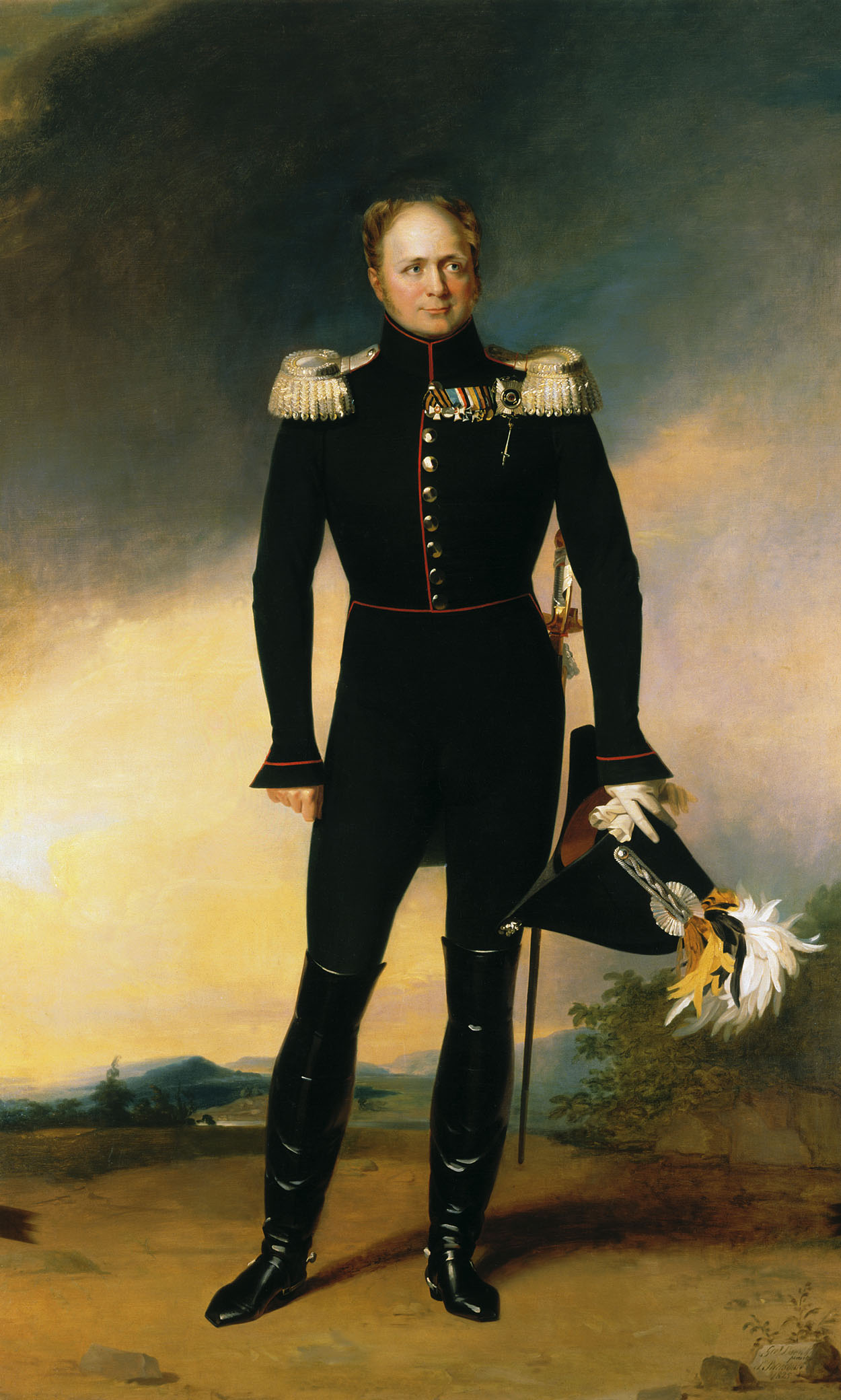
Tsar Alexander I controlled the Russian delegation which was formally led by the foreign minister, Count Karl Robert Nesselrode. The tsar had two main goals, to gain control of Poland and to promote the peaceful coexistence of European nations, with Russia as the pre-eminent land power. He succeeded in forming the Holy Alliance (1815), based on monarchism and anti-secularism, and formed to combat any threat of revolution or republicanism.
Prussia was represented by Prince Karl August von Hardenberg, the Chancellor, and the diplomat and scholar Wilhelm von Humboldt. The Prussians wanted to strengthen their position in Germany, particularly by annexing all of Saxony and parts of the Ruhr. King Frederick William III of Prussia was also in Vienna, playing his role behind the scenes.

France, the "fifth" power, was represented by its foreign minister, Charles-Maurice de Talleyrand-Périgord, 1st Duke of Benevento, as well as the Minister Plenipotentiary, Emmerich Joseph de Dalberg, 1st Duke of Dalberg. Talleyrand had already negotiated the Treaty of Paris (1814) for Louis XVIII. He sought to ensure that France rejoined the group of Great Powers, and avoided being dismembered by the occupying powers. Louis XVIII, however, distrusted him and was also secretly negotiating with Metternich, by mail.
The lesser powers, parties to the Treaty of Paris, 1814
These parties had not been part of the Chaumont agreement, but had joined the Treaty of Paris (1814):
Spain – Don Pedro Gómez de Labrador, 1st Marquess of Labrador

Portugal – Plenipotentiaries: Pedro de Sousa Holstein, Count of Palmela; António de Saldanha da Gama, Count of Porto Santo; Joaquim Lobo da Silveira.
Sweden – Count Carl Löwenhielm
Other nations
Denmark – Count Niels Rosenkrantz, foreign minister. King Frederick VI was also present in Vienna.
Netherlands – Earl of Clancarty, the British Ambassador at the Dutch court, and Baron Hans von Gagern
Switzerland – Every canton had its own delegation. Charles Pictet de Rochemont from Geneva played a prominent role.
Kingdom of Sardinia – Marquis Filippo Antonio Asinari di San Marzano.
The Papal States – Ercole Cardinal Consalvi, Secretary of State of His Holiness
The Order of St. John of Malta – Fra' Antonio Miari, Fra' Daniello Berlinghieri and Fra' Augusto Viè de Cesarini
Republic of Genoa – Marquise Agostino Pareto, Senator of the Republic.
Grand Duchy of Tuscany – Neri Corsini.
Kingdom of Sicily – Alvaro Ruffo della Scaletta, Luigi de' Medici di Ottajano, Antonio Maresca di Serracapriola and Fabrizio Ruffo di Castelcicala
On German issues:
Bavaria – Maximilian Graf von Montgelas
Württemberg – Georg Ernst Levin von Wintzingerode
Hanover, then in a personal union with the British crown – Graf Ernst zu Münster. (King George III had refused to recognize the dissolution of the Holy Roman Empire in 1806 and maintained a separate diplomatic staff as Elector of Hanover to conduct the affairs of the family estate, the Duchy of Brunswick-Lüneburg, until the results of the Congress were concluded establishing the Kingdom of Hanover.)
Mecklenburg-Schwerin – Leopold von Plessen
Other stakeholders
Virtually every state in Europe had a delegation in Vienna – more than 200 states and princely houses were represented at the Congress. In addition, there were representatives of cities, corporations, religious organizations (for instance, abbeys) and special interest groups – e.g., a delegation representing German publishers, demanding a copyright law and freedom of the press. With them came a host of courtiers, secretaries, civil servants and ladies to enjoy the magnificent social life of the Austrian court. The Congress was noted for its lavish entertainment: according to a famous joke of an attendee, it danced a lot but did not move forward. On the other hand, the possibilities for informal gatherings created by this "side program" may have helped ensure the Congress's success.
Diplomatic tactics
Talleyrand (France)
Initially, the representatives of the four victorious powers hoped to exclude the French from serious participation in the negotiations, but Talleyrand skillfully managed to insert himself into "her inner councils" in the first weeks of negotiations. He allied himself to a Committee of Eight lesser powers (including Spain, Sweden, and Portugal) to control the negotiations. Once Talleyrand was able to use this committee to make himself a part of the inner negotiations, he then left it, once again abandoning his allies.
The major Allies' indecision on how to conduct their affairs without provoking a united protest from the lesser powers led to the calling of a preliminary conference on the protocol, to which Talleyrand and the Marquess of Labrador, Spain's representative, were invited on 30 September 1814.
Congress Secretary Friedrich von Gentz reported, "The intervention of Talleyrand and Labrador has hopelessly upset all our plans. Talleyrand protested against the procedure we have adopted and soundly [be]rated us for two hours. It was a scene I shall never forget." The embarrassed representatives of the Allies replied that the document concerning the protocol they had arranged actually meant nothing. "If it means so little, why did you sign it?" snapped Labrador.
Talleyrand's policy, directed as much by national as personal ambitions, demanded the close but by no means amicable relationship he had with Labrador, whom Talleyrand regarded with disdain. Labrador later remarked of Talleyrand: "that cripple, unfortunately, is going to Vienna." Talleyrand skirted additional articles suggested by Labrador: he had no intention of handing over the 12,000 afrancesados – Spanish fugitives, sympathetic to France, who had sworn fealty to Joseph Bonaparte, nor the bulk of the documents, paintings, pieces of fine art, and books that had been looted from the archives, palaces, churches and cathedrals of Spain.
Polish-Saxon questions
The most complex topic at the Congress was the Polish-Saxon Crisis. Russia wanted most of Poland, and Prussia wanted all of Saxony, whose king had allied with Napoleon. The tsar had wanted to become king of Poland. Austria concluded that this would make Russia too powerful – a view which was supported by Britain. The result was a deadlock, for which Talleyrand proposed a solution: admit France to the inner circle, and France would support Austria and Britain. The three nations signed a treaty on 3 January 1815, among only the three of them, agreeing to go to war against Russia and Prussia, if necessary, to prevent the Russo-Prussian plan from coming to fruition.
When the Tsar heard of the treaty he agreed to a compromise that satisfied all parties on 24 October 1815. Russia received most of the Napoleonic Duchy of Warsaw as a "Kingdom of Poland" – called Congress Poland, with the tsar as a king ruling it independently of Russia. However, the majority of Greater Poland and Kuyavia, as well as the Chełmno Land, were given to Prussia and mostly included within the newly formed Grand Duchy of Posen (Poznań), while Kraków became a free city as a shared protectorate of Austria, Prussia and Russia. Furthermore, the tsar was forbidden from uniting his new realm with the parts of Poland that had been incorporated into Russia in the 1790s. Prussia received 60 percent of Saxony, much of which became part of the new Province of Saxony from 1816 (the now-Prussian parts of Lower Lusatia and some other areas instead became part of the Province of Brandenburg, with Prussian Upper Lusatia becoming part of the Province of Silesia by 1825); the remainder of Saxony returned to King Frederick Augustus I as his Kingdom of Saxony.
Bribery
It can be learned from the diaries of the master of affairs Von Gentz that diplomatic tactics possibly included bribing. He notes that at the Congress he received £22,000 through Talleyrand from Louis XVIII, while Castlereagh gave him £600, accompanied by "les plus folles promesses" ("the wildest promises"); his diary is full of such entries.
Final agreement
The Final Act, embodying all the separate treaties, was signed on 9 June 1815 (nine days before the Battle of Waterloo). Its provisions included:
Most of the Duchy of Warsaw, except for the provinces that were part of Austria and Prussia, became part of an independent Kingdom of Poland. The King of Poland was Czar Alexander. This was supposed to be a largely ceremonial role as he was supposed to be tightly constrained by a constitution. Practically, though, Poland got swallowed up by Russian influence (Czar Nicholas I, who ruled Russia after Alexander said he did not feel bound by the constitution).
In addition to their role in Poland, Russia retained Finland (which it had annexed from Sweden in 1809 and would hold until 1917, as the Grand Duchy of Finland).
Prussia received three-fifths of Saxony, western parts of the Duchy of Warsaw (most of which became part of the newly formed Grand Duchy of Posen), Gdańsk (Danzig), the Grand Duchy of the Lower Rhine (merger of the former French departments of Rhin-et-Moselle, Sarre, and Roer), and the Province of Jülich-Cleves-Berg (itself a merger of the former Prussian Guelders, the Principality of Moers, and the Grand Duchy of Berg).
A German Confederation of 39 states, under the presidency of the Austrian Emperor, formed from the previous 300 states of the Holy Roman Empire. Only portions of the territories of Austria and Prussia were included in the Confederation (roughly the same portions that had been within the Holy Roman Empire).
The Netherlands and the Southern Netherlands (approximately modern-day Belgium) became a united monarchy, the United Kingdom of the Netherlands, with the House of Orange-Nassau providing the king (the Eight Articles of London).