
The Cherokee ( CHAIR-ə-kee, CHAIR-ə-KEE; Cherokee: ᎠᏂᏴᏫᏯᎢ, romanized: Aniyvwiyaʔi / Anigiduwagi, or ᏣᎳᎩ, Tsalagi) people are one of the Indigenous peoples of the Southeastern Woodlands of the United States. Prior to the 18th century, they were concentrated in their ancestral homelands, living in towns along river valleys in what is now southwestern North Carolina, southeastern Tennessee, southwestern Virginia, parts of western South Carolina, northern Georgia, and northeastern Alabama, with hunting grounds extending into Kentucky. Together, these lands encompassed approximately 40,000 square miles.
The Cherokee language belongs to the Iroquoian language family. In the 19th century, the ethnographer James Mooney recorded an oral tradition describing the Cherokee as having migrated southward in ancient times from the Great Lakes region, an area historically associated with other Iroquoian peoples. More recent linguistic and archaeological scholarship has proposed an earlier origin. Anthropologist Thomas R. Whyte, writing in 2007, suggested that the proto-Iroquoian language likely originated in the Appalachian region and that the divergence between Northern and Southern Iroquoian languages began approximately 4,000 years ago.
By the 19th century, European American settlers classified the Cherokee as one of the "Five Civilized Tribes" of the Southeast. The Cherokee were primarily agrarian, lived in permanent towns, and adopted certain cultural and technological practices introduced by European Americans. During this period, they also developed their own writing system.
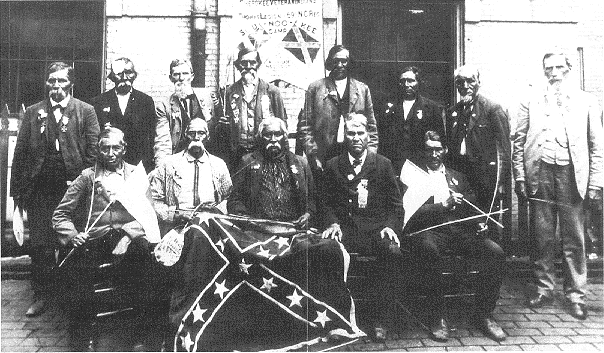
Today, three Cherokee tribes are federally recognized: the United Keetoowah Band of Cherokee Indians (UKB) in Oklahoma, the Cherokee Nation (CN) in Oklahoma, and the Eastern Band of Cherokee Indians (EBCI) in North Carolina.
The Cherokee Nation has more than 300,000 enrolled citizens, making it the largest of the 574 federally recognized tribes in the United States. In addition, numerous groups claim Cherokee lineage, some of which are state-recognized. More than 819,000 people identified as having Cherokee ancestry on the U.S. census, although most are not enrolled citizens of any federally recognized tribe.
Of the three federally recognized Cherokee tribes, the Cherokee Nation and the United Keetoowah Band maintain their headquarters in Tahlequah, Oklahoma, where the majority of their citizens reside. Members of the UKB are primarily descendants of the so-called “Old Settlers,” also known as Western Cherokee, who migrated from the Southeast to Arkansas and present-day Oklahoma beginning around 1817, prior to Indian removal. They are closely related to the Cherokee who were later forcibly relocated during the 1830s under the Indian Removal Act. The Eastern Band of Cherokee Indians is based on the Qualla Boundary in western North Carolina and is largely descended from Cherokee ancestors who resisted or avoided removal and remained in the region. Although they relinquished tribal citizenship during this period and became state and U.S. citizens, they reorganized in the late 19th century and achieved federal recognition as a tribe.

Etymology
A Cherokee-language name for the Cherokee people is Aniyvwiya (ᎠᏂᏴᏫᏯ, translating as 'Principal People'). Another Cherokee endonym is Anigiduwagi (ᎠᏂᎩᏚᏩᎩ, translating as 'People from Kituwah'), a reference to Kituwah, the ancient mother town of the Cherokee people. Tsalagi Gawonihisdi (ᏣᎳᎩ ᎦᏬᏂᎯᏍᏗ) is the Cherokee name for the Cherokee language.
Numerous theories—none of which are definitive—have been proposed regarding the origin of the name Cherokee. Some scholars suggest it may have originated as a name applied by neighboring tribes in the region.
One of the earliest Spanish transliterations of the name, recorded in 1755, appears as Tchalaque, although the term itself dates to accounts associated with the Hernando de Soto expedition of the mid-16th century. Another theory suggests that Cherokee derives from the Lower Creek word Cvlakke ("chuh-log-gee"), reflecting Creek usage for the Cherokee people who inhabited the southern Appalachian region.

The Iroquois Five Nations, historically based in New York and Pennsylvania, referred to the Cherokee as Oyata'ge'ronoñ ('inhabitants of the cave country'). It has also been suggested that the word Cherokee originated from a Muscogee Creek term meaning 'people of different speech', referencing the linguistic distinction between the two groups. However, Cherokee scholar Jack Kilpatrick disputed this interpretation, arguing instead that the name derives from the Cherokee word tsàdlagí, meaning 'he has turned aside'.
Origins
Anthropologists and historians have two main theories of Cherokee origins. One is that the Cherokee, an Iroquoian-speaking people, migrated to Southern Appalachia from northern areas around the Great Lakes in late prehistoric times. The area became territory of the Iroquois (also known as the "Haudenosaunee") nations and other Iroquoian-speaking peoples of the Southeast such as the Tuscarora people of the Carolinas, and the Meherrin and Nottaway of Virginia. The other theory is that the Cherokee had been in the Southeast for thousands of years and that proto-Iroquoian developed there instead of in the north.
Supporting the first theory are recorded conversations of Cherokee elders made by ethnographer James Mooney in the late 19th century, who recounted an oral tradition of their people migrating south from the Great Lakes region in ancient times. They occupied territories where earthwork platform mounds were built by peoples during the earlier Woodland period.

The people of the Middle Woodland period are believed to be ancestors of the historic Cherokee and occupied what is now Western North Carolina, circa 200 to 600 CE. They are believed to have built what is called the Biltmore Mound, found in 1984 south of the Swannanoa River on the Biltmore Estate, which has numerous Native American sites.
Other ancestors of the Cherokee are considered to be part of the later Pisgah phase of South Appalachian Mississippian culture, a regional variation of the Mississippian culture that arose circa 1000 and lasted to 1500 CE. There is a consensus among most specialists in Southeast archeology and anthropology about these dates. But Finger says that ancestors of the Cherokee people lived in western North Carolina and eastern Tennessee for a far longer period of time. Additional mounds were built by peoples during this cultural phase. Typically in this region, towns had a single platform mound and served as a political center for smaller villages.
Homelands
The Cherokee occupied numerous towns throughout the river valleys and mountain ridges of their homelands. What were called the Lower towns were found in what is present-day western Oconee County, South Carolina, along the Keowee River (called the Savannah River in its lower portion). The principal town of the Lower Towns was Keowee. Other Cherokee towns on the Keowee River included Estatoe, Sugartown (Kulsetsiyi), a name repeated in other areas.
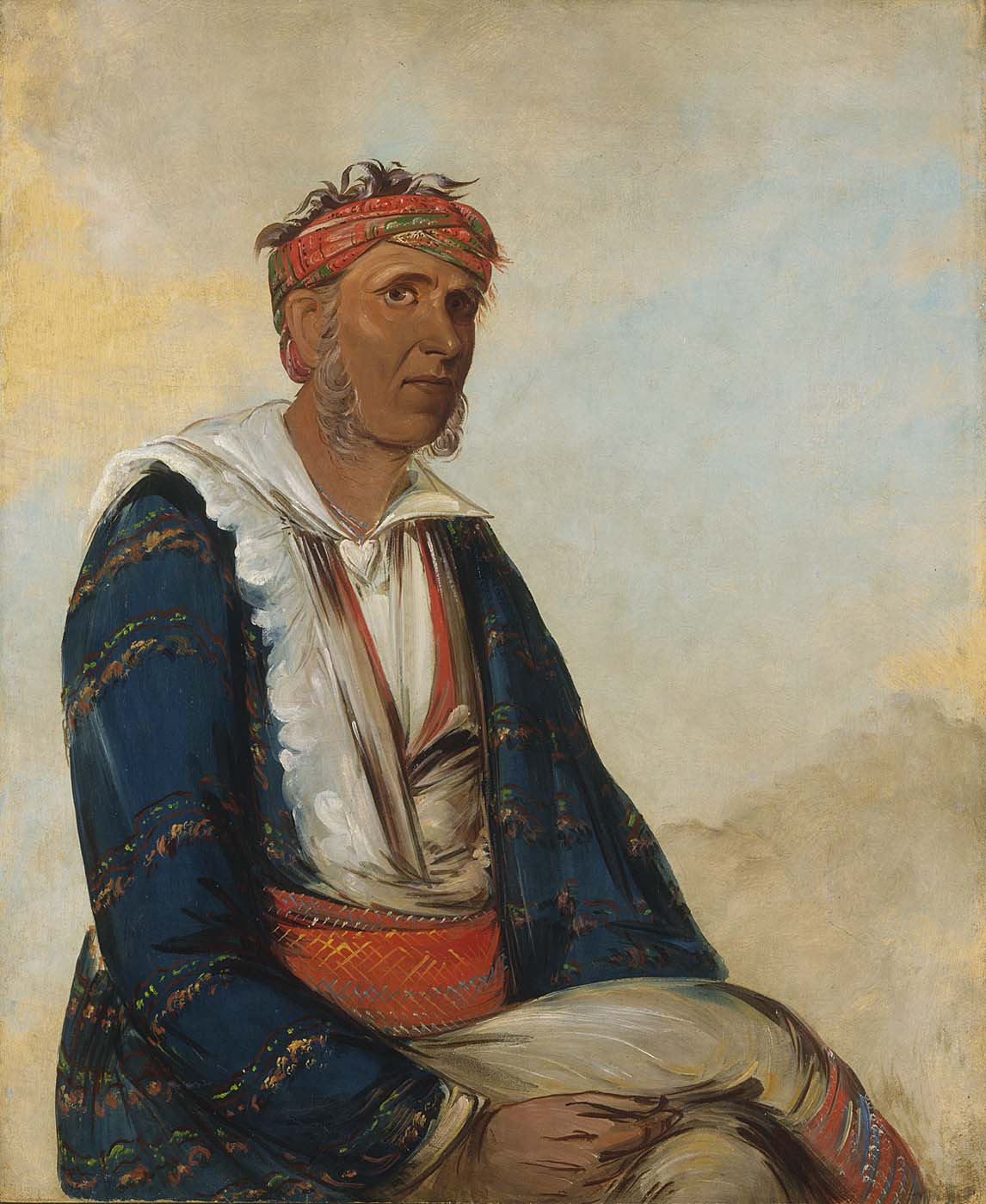
In western North Carolina, what were known as the Valley, Middle, and Outer Towns were located along the major rivers of the Tuckasegee, the upper Little Tennessee, Hiwasee, French Broad and other systems. The Overhill Cherokee occupied towns along the lower Little Tennessee River and upper Tennessee River on the western side of the Appalachian Mountains, in present-day southeastern Tennessee.
Agriculture
During the late Archaic and Woodland Period, Native Americans in the region began to cultivate plants such as marsh elder, lambsquarters, pigweed, sunflowers, and some native squash. People created new art forms such as shell gorgets, adopted new technologies, and developed an elaborate cycle of religious ceremonies.
During the Mississippian culture-period (1000 to 1500 CE in the regional variation known as the South Appalachian Mississippian culture), local women developed a new variety of maize (corn) called eastern flint corn. It closely resembled modern corn and produced larger crops. The successful cultivation of corn surpluses allowed the rise of larger, more complex chiefdoms consisting of several villages and concentrated populations during this period. Corn became celebrated among numerous peoples in religious ceremonies, especially the Green Corn Ceremony.
Early culture
Much of what is known about pre-18th century Native American cultures has come from records of Spanish expeditions. The earliest ones of the mid-16th century encountered peoples of the Mississippian culture era, who were ancestral to tribes that emerged in the Southeast, such as the Cherokee, Muscogee, Cheraw, and Catawba. Specifically in 1540–41, a Spanish expedition led by Hernando de Soto passed through present-day South Carolina, proceeding into western North Carolina and what is considered Cherokee country. The Spanish recorded a Chalaque people as living around the Keowee River, where western North Carolina, South Carolina, and northeastern Georgia meet. The Cherokee consider this area to be part of their homelands, which also extended into southeastern Tennessee.
Further west, De Soto's expedition visited villages in present-day northwestern Georgia, recording them as ruled at the time by the Coosa chiefdom. This is believed to be a chiefdom ancestral to the Muscogee Creek people, who developed as a Muskogean-speaking people with a distinct culture.
In 1566, the Juan Pardo expedition traveled from the present-day South Carolina coast into its interior, and into western North Carolina and southeastern Tennessee. He recorded meeting Cherokee-speaking people who visited him while he stayed at the Joara chiefdom (north of present-day Morganton, North Carolina). The historic Catawba later lived in this area of the upper Catawba River. Pardo and his forces wintered over at Joara, building Fort San Juan there in 1567.
His expedition proceeded into the interior, noting villages near modern Asheville and other places that are part of the Cherokee homelands. According to anthropologist Charles M. Hudson, the Pardo expedition also recorded encounters with Muskogean-speaking peoples at Chiaha in southeastern modern Tennessee.
Linguistic studies
Linguistic studies have been another way for researchers to study the development of people and their cultures. Unlike most other Native American tribes in the American Southeast at the start of the historic era, the Cherokee and Tuscarora people spoke Iroquoian languages. Since the Great Lakes region was the territory of most Iroquoian-language speakers, scholars have theorized that both the Cherokee and Tuscarora migrated south from that region. The Cherokee oral history tradition supports their migration from the Great Lakes.
Linguistic analysis shows a relatively large difference between Cherokee and the northern Iroquoian languages, suggesting they had migrated long ago. Scholars posit a split between the groups in the distant past, perhaps 3,500–3,800 years ago. Glottochronology studies suggest the split occurred between about 1500 and 1800 BCE. The Cherokee say that the ancient settlement of Kituwa on the Tuckasegee River is their original settlement in the Southeast. It was formerly adjacent to and is now part of Qualla Boundary (the base of the federally recognized Eastern Band of Cherokee Indians) in North Carolina.
According to Thomas Whyte, who posits that proto-Iroquoian developed in Appalachia, the Cherokee and Tuscarora broke off in the Southeast from the major group of Iroquoian speakers who migrated north to the Great Lakes area. There a succession of Iroquoian-speaking tribes were encountered by Europeans in historic times.
Other sources of early Cherokee history
In the 1830s, the American writer John Howard Payne visited Cherokee then based in Georgia. He recounted what they shared about pre-19th-century Cherokee culture and society. For instance, the Payne papers describe the account by Cherokee elders of a traditional two-part societal structure. A "white" organization of elders represented the seven clans. As Payne recounted, this group, which was hereditary and priestly, was responsible for religious activities, such as healing, purification, and prayer. A second group of younger men, the "red" organization, was responsible for warfare. The Cherokee considered warfare a polluting activity.
Researchers have debated the reasons for the change. Some historians believe the decline in priestly power originated with a revolt by the Cherokee against the abuses of the priestly class known as the Ani-kutani. Ethnographer James Mooney, who studied and talked with the Cherokee in the late 1880s, was the first to trace the decline of the former hierarchy to this revolt. By the time that Mooney was studying the people in the late 1880s, the structure of Cherokee religious practitioners was more informal, based more on individual knowledge and ability than upon heredity.
Another major source of early cultural history comes from materials written in the 19th century by the didanvwisgi (ᏗᏓᏅᏫᏍᎩ), Cherokee medicine men, after Sequoyah's creation of the Cherokee syllabary in the 1820s. Initially only the didanvwisgi learned to write and read such materials, which were considered extremely powerful in a spiritual sense. Later, the syllabary and writings were widely adopted by the Cherokee people.
History
17th century: English contact
In 1657, there was a disturbance in Virginia Colony as the Rechahecrians or Rickahockans, as well as the Siouan Manahoac and Nahyssan, broke through the frontier and settled near the Falls of the James River, near present-day Richmond, Virginia. The following year, a combined force of English colonists and Pamunkey drove the newcomers away. The identity of the Rechahecrians has been much debated. Historians noted the name closely resembled that recorded for the Eriechronon or Erielhonan, commonly known as the Erie tribe, another Iroquoian-speaking people based south of the Great Lakes in present-day northern Pennsylvania. This Iroquoian people had been driven away from the southern shore of Lake Erie in 1654 by the powerful Iroquois Five Nations, also known as Haudenosaunee, who were seeking more hunting grounds to support their dominance in the beaver fur trade. The anthropologist Martin Smith theorized some remnants of the tribe migrated to Virginia after the wars (1986:131–32), later becoming known as the Westo to English colonists in the Province of Carolina. A few historians suggest this tribe was Cherokee.
Virginian traders developed a small-scale trading system with the Cherokee in the Piedmont before the end of the 17th century. The earliest recorded Virginia trader to live among the Cherokee was Cornelius Dougherty or Dority, in 1690.
18th century
The Cherokee gave sanctuary to a band of Shawnee in the 1660s. But from 1710 to 1715, the Cherokee and Chickasaw allied with the British, and fought the Shawnee, who were allied with French colonists, forcing the Shawnee to move northward.
The Cherokee fought with the Yamasee, Catawba, and British in late 1712 and early 1713 against the Tuscarora in the Second Tuscarora War. The Tuscarora War marked the beginning of a British-Cherokee relationship that, despite breaking down on occasion, remained strong for much of the 18th century. With the growth of the deerskin trade, the Cherokee were considered valuable trading partners, since deer skins from the cooler country of their mountain hunting-grounds were of better quality than those supplied by the lowland coastal tribes, who were neighbors of the English colonists.
In January 1716, Cherokee murdered a delegation of Muscogee Creek leaders at the town of Tugaloo, marking their entry into the Yamasee War. It ended in 1717 with peace treaties between the colony of South Carolina and the Creek. Hostility and sporadic raids between the Cherokee and Creek continued for decades. These raids came to a head at the Battle of Taliwa in 1755, at present-day Ball Ground, Georgia, with the defeat of the Muscogee.
In 1721, the Cherokee ceded lands in South Carolina. In 1730, at Nikwasi, a Cherokee town and Mississippian culture site, a Scots adventurer, Sir Alexander Cuming, crowned Moytoy of Tellico as "Emperor" of the Cherokee. Moytoy agreed to recognize King George II of Great Britain as the Cherokee protector. Cuming arranged to take seven prominent Cherokee, including Attakullakulla, to London, England. There the Cherokee delegation signed the Treaty of Whitehall with the British. Moytoy's son, Amo-sgasite (Dreadful Water), attempted to succeed him as "Emperor" in 1741, but the Cherokee elected their own leader, Conocotocko (Old Hop) of Chota.
Political power among the Cherokee remained decentralized, and towns acted autonomously. In 1735, the Cherokee were said to have 64 towns and villages, with an estimated fighting force of 6,000 men. In 1738 and 1739, smallpox epidemics broke out among the Cherokee, who had no natural immunity to the new infectious disease. Nearly half their population died within a year. Hundreds of other Cherokee committed suicide due to their losses and disfigurement from the disease.
British colonial officer Henry Timberlake, born in Virginia, described the Cherokee people as he saw them in 1761:
The Cherokees are of a middle stature, of an olive colour, tho' generally painted, and their skins stained with gun-powder, pricked into it in very pretty figures. The hair of their head is shaved, tho' many of the old people have it plucked out by the roots, except a patch on the hinder part of the head, about twice the bigness of a crown-piece, which is ornamented with beads, feathers, wampum, stained deer hair, and such like baubles. The ears are slit and stretched to an enormous size, putting the person who undergoes the operation to incredible pain, being unable to lie on either side for nearly forty days. To remedy this, they generally slit but one at a time; so soon as the patient can bear it, they wound round with wire to expand them, and are adorned with silver pendants and rings, which they likewise wear at the nose. This custom does not belong originally to the Cherokees, but taken by them from the Shawnese, or other northern nations.
They that can afford it wear a collar of wampum, which are beads cut out of clam-shells, a silver breast-plate, and bracelets on their arms and wrists of the same metal, a bit of cloth over their private parts, a shirt of the English make, a sort of cloth-boots, and mockasons (sic), which are shoes of a make peculiar to the Americans, ornamented with porcupine-quills; a large mantle or match-coat thrown over all complete their dress at home ...
From 1753 to 1755, battles broke out between the Cherokee and Muscogee over disputed hunting grounds in North Georgia. The Cherokee were victorious in the Battle of Taliwa. British soldiers built forts in Cherokee country to defend against the French in the Seven Years' War, which was fought across Europe and was called the French and Indian War on the North American front. These included Fort Loudoun near Chota on the Tennessee River in eastern Tennessee. Serious misunderstandings arose quickly between the two allies, resulting in the 1760 Anglo-Cherokee War.
King George III's Royal Proclamation of 1763 forbade British settlements west of the Appalachian crest, as his government tried to afford some protection from colonial encroachment to the Cherokee and other tribes they depended on as allies. The Crown found the ruling difficult to enforce with colonists.
From 1771 to 1772, North Carolinian settlers squatted on Cherokee lands in Tennessee, forming the Watauga Association. Daniel Boone and his party tried to settle in Kentucky, but the Shawnee, Delaware, Mingo, and some Cherokee attacked a scouting and forage party that included Boone's son, James Boone, and William Russell's son, Henry, who were killed in the skirmish.
In 1776, allied with the Shawnee led by Cornstalk, Cherokee attacked settlers in South Carolina, Georgia, Virginia, and North Carolina in the Second Cherokee War. Overhill Cherokee Nancy Ward, Dragging Canoe's cousin, warned settlers of impending attacks. Provincial militias retaliated, destroying more than 50 Cherokee towns. North Carolina militia in 1776 and 1780 invaded and destroyed the Overhill towns in what is now Tennessee. In 1777, surviving Cherokee town leaders signed treaties with the new states.
Dragging Canoe and his band settled along Chickamauga Creek near present-day Chattanooga, Tennessee, where they established 11 new towns. Chickamauga Town was his headquarters and the colonists tended to call his entire band the Chickamauga to distinguish them from other Cherokee. From here he fought a guerrilla war against settlers, which lasted from 1776 to 1794. These are known informally as the Cherokee–American wars, but this is not a historian's term.
The first Treaty of Tellico Blockhouse, signed November 7, 1794, finally brought peace between the Cherokee and Americans, who had achieved independence from the British Crown. In 1805, the Cherokee ceded their lands between the Cumberland and Duck rivers (i.e. the Cumberland Plateau) to Tennessee.
Scots (and other Europeans) among the Cherokee in the 18th century
The traders and British government agents dealing with the southern tribes in general, and the Cherokee in particular, were nearly all of Scottish ancestry, with many documented as being from the Highlands. A few were Scotch-Irish, English, French, and German (see Scottish Indian trade). Many of these men married women from their host peoples and remained after the fighting had ended. Some of their mixed-race children, who were raised in Native American cultures, later became significant leaders among the Five Civilized Tribes of the Southeast.
Notable traders, agents, and refugee Tories among the Cherokee included John Stuart, Henry Stuart, Alexander Cameron, John McDonald, John Joseph Vann (father of James Vann), Daniel Ross (father of John Ross), John Walker Sr., Mark Winthrop Battle, John McLemore (father of Bob), William Buchanan, John Watts (father of John Watts Jr.), John D. Chisholm, John Benge (father of Bob Benge), Thomas Brown, John Rogers (Welsh), John Gunter (German, founder of Gunter's Landing), James Adair (Irish), William Thorpe (English), and Peter Hildebrand (German), among many others. Some attained the honorary status of minor chiefs and/or members of significant delegations.
By contrast, a large portion of the settlers encroaching on the Native American territories were Scotch-Irish, Irish from Ulster who were of Scottish descent and had been part of the plantation of Ulster. They also tended to support the Revolution. But in the back country, there were also Scotch-Irish who were Loyalists, such as Simon Girty.
19th century
Acculturation
The Cherokee lands between the Tennessee and Chattahoochee rivers were remote enough from white settlers to remain independent after the Cherokee–American wars. The deerskin trade was no longer feasible on their greatly reduced lands, and over the next several decades, the people of the fledgling Cherokee Nation began to build a new society modeled on the white Southern United States.