
Canadian English (CanE, CE, en-CA) encompasses the varieties of English spoken in Canada, the most widespread variety of Canadian English being Standard Canadian English. English is the most widely spoken language in Canada. It is spoken in all the western and central provinces of Canada (varying from Central Canada to British Columbia) and also in many other provinces among urban middle- or upper-class speakers from natively English-speaking families. Standard Canadian English is distinct from Atlantic Canadian English (its most notable subset being Newfoundland English), and from Quebec English.
While Canadian English tends to be close to American English in most regards, classifiable together as North American English, Canadian English also possesses elements from British English as well as some uniquely Canadian characteristics. The precise influence of American English, British English, and other sources on Canadian English varieties has been the ongoing focus of systematic studies since the 1950s. Standard Canadian and General American English share identical or near-identical phonemic inventories, though their exact phonetic realizations may sometimes differ. Accent differences can also be heard between those who live in urban centres versus those living in rural settings.
Canadians and Americans themselves often have trouble differentiating their own two accents, particularly since Standard Canadian and Western United States English have both been undergoing the Low-Back-Merger Shift since the 1980s.
History
Canadian English as an academic field of inquiry solidified around the time of the Second World War. While early linguistic approaches date back to the second half of the 19th century, the first textbook to consider Canadian English in one form or another was not published until 1940. Walter S. Avis was its most forceful spokesperson after the Second World War until the 1970s. His team of lexicographers managed to date the term "Canadian English" to a speech by a Scottish Presbyterian minister, the Reverend Archibald Constable Geikie, in an address to the Canadian Institute in 1857. Geikie, a Scottish-born Canadian, reflected the Anglocentric attitude that would be prevalent in Canada for the next hundred years when he referred to the language as "a corrupt dialect", in comparison with what he considered the proper English spoken by immigrants from Britain.
One of the earliest influences on Canadian English was the French language, which was brought to Canada by the French colonists in the 17th century. French words and expressions were adopted into Canadian English, especially in the areas of cuisine, politics, and social life. For example, words like poutine and toque are uniquely Canadian French terms that have become part of the Canadian English lexicon.
An important influence on Canadian English was British English, which was brought to Canada by British settlers in the 18th and 19th centuries. Canadian English borrowed many words and expressions from British English, including words like lorry, flat, and lift. However, Canadian English also developed its own unique vocabulary, including words like toque, chesterfield, and double-double. In the early 20th century, western Canada was largely populated by farmers from Central and Eastern Europe who were not anglophones. At the time, most anglophones there were re-settlers from Ontario or Quebec who had British, Irish, or Loyalist ancestry, or some mixture of these. Throughout the 20th century, the prairies underwent anglicization and linguistic homogenization through education and exposure to Canadian and American media.
American English also had a significant impact on the origins of Canadian English as well as again in the 20th century and since then as a result of increased cultural and economic ties between the two countries. American English terms like gasoline, truck, and apartment are commonly used in Canadian English.
The growth of Canadian media, including television, film, and literature, has also played a role in shaping Canadian English. Chambers (1998) notes that Canadian media has helped to create new words and expressions that reflect Canadian culture and values. Canadian institutions, such as the CBC and the Canadian Oxford Dictionary, have also played a role in promoting and defining Canadian English.
In addition to these influences, Canadian English has also been minorly shaped by Indigenous languages. Indigenous words such as moose, toboggan, kayak, skookum, and moccasin have become part of the Canadian English lexicon.

Canadian English is the product of five waves of immigration and settlement over a period of more than two centuries. The first large wave of permanent English-speaking settlement in Canada, and linguistically the most important, was the influx of Loyalists fleeing the American Revolution, chiefly from the Mid-Atlantic States—as such, Canadian English is believed by some scholars to have derived from northern American English. Canadian English has been developing features of its own since the early 19th century. The second wave from Britain and Ireland was encouraged to settle in Canada after the War of 1812 by the governors of Canada, who were worried about American dominance and influence among its citizens. Further waves of immigration from around the globe peaking in 1910, 1960, and at the present time had a lesser influence, but they did make Canada a multicultural country, ready to accept linguistic change from around the world during the current period of globalization.
The languages of Aboriginal peoples in Canada started to influence European languages used in Canada even before widespread settlement took place, and the French of Lower Canada provided vocabulary, with words such as tuque and portage, to the English of Upper Canada.
Overall, the history of Canadian English is a reflection of the country's diverse linguistic and cultural heritage. While Canadian English has borrowed many words and expressions from other languages, it has also developed its own unique vocabulary and pronunciation that reflects the country's distinct identity.
Historical linguistics
Studies on earlier forms of English in Canada are rare. An overview of diachronic work on Canadian English, or diachronically relevant work, is Dollinger. Until the 2000s, basically all commentators on the history of CanE have argued from the "language-external" history, i.e. social and political history. An exception has been in the area of lexis, where Avis et al.'s 1967 Dictionary of Canadianisms on Historical Principles offered real-time historical data through its quotations. Starting in the 2000s, historical linguists have started to study earlier Canadian English with historical linguistic data. DCHP-1 is now available in open access. Most notably, Dollinger (2008) pioneered the historical corpus linguistic approach for English in Canada with CONTE (Corpus of Early Ontario English, 1776–1849) and offers a developmental scenario for 18th- and 19th-century Ontario.
Canadian dainty
Historically, Canadian English included a class-based sociolect known as Canadian dainty. Treated as a marker of upper-class prestige in the 19th and early 20th centuries, Canadian dainty was marked by the use of some features of British English pronunciation, resulting in an accent similar, but not identical, to the Mid-Atlantic accent known in the United States. This accent faded in prominence following World War II, when it became stigmatized as pretentious, and is now rare. The Governor General Vincent Massey, the writer and broadcaster Peter Stursberg, the actor Lorne Greene, and the actor Christopher Plummer are examples of men who were raised in Canada but spoke with a British-influenced accent.
Spelling
Canadian spelling of the English language combines British and American conventions, the two dominant varieties, and adds some domestic idiosyncrasies. For many words, American and British spelling are both acceptable. Spelling in Canadian English co-varies with regional and social variables, somewhat more so, perhaps, than in the two dominant varieties of English, yet general trends have emerged since the 1970s.
Words such as realise and organisation are usually consistent with the other Commonwealth countries, but the American spellings with a z are also acceptable due to Canada's proximity to the United States of America. Both spellings are listed as acceptable in The Canadian Oxford Dictionary.
Words such as anesthesia and gynecology are usually or more commonly spelled as in American English rather than anaesthesia and gynaecology as in British English. However, words such as gynaecology and paediatric are used by Canadian journals and organizations such as JOGC (The Journal of Obstetrics and Gynaecology Canada) and Canadian Paediatric Society.
French-derived words that in American English end with -or, such as color or honor, retain British spellings (colour and honour).
French-derived words that in American English end with -er, such as fiber or center, retain British spellings (fibre and centre). This rule is much more relaxed than the -our rule, with kilometer (kilometre) being quite acceptable while meager (meagre) and somber (sombre) may not even be noticed.
While the United States uses the Anglo-French spelling defense and offense (noun), most Canadians use the British spellings defence and offence.
Some nouns, as in British English, take -ce while corresponding verbs take -se – for example, practice and licence are nouns while practise and license are the respective corresponding verbs.
Canadian spelling sometimes retains the British practice of doubling the consonant -l- when adding suffixes to words even when the final syllable (before the suffix) is not stressed. Compare Canadian (and British) cancelled, counsellor, and travelling (more often than not in Canadian while always doubled in British) to American canceled, counselor, and traveling (fueled, fuelled, dueling and duelling are all common). In American English, this consonant is only doubled when stressed; thus, for instance, controllable and enthralling are universal. (But both Canadian and British English use balloted and profiting.)
In other cases, Canadian and American usage differs from British spelling, such as in the case of nouns like curb and tire (of a wheel), which in British English are spelled kerb and tyre. (But tire in the sense of "make or become weary" is universal.) Some other differences like Canadian and American aluminum versus aluminium elsewhere correspond to different pronunciations. (See below for an explanation of the Canadian spelling of tire.)
Canadian spelling conventions can be partly explained by Canada's trade history. For instance, Canada's automobile industry has been dominated by American firms from its inception, explaining why Canadians use the American spelling of tire (hence, "Canadian Tire") and American terminology for automobiles and their parts (for example, truck instead of lorry, gasoline instead of petrol, trunk instead of boot).
Canada's political history has also had an influence on Canadian spelling. Canada's first prime minister, John A. Macdonald, once advised the Governor General of Canada to issue an order-in-council directing that government papers be written in the British style.
A contemporary reference for formal Canadian spelling is the spelling used for Hansard transcripts of the Parliament of Canada (see The Canadian Style in Further reading below). Many Canadian editors, though, use the Canadian Oxford Dictionary, often along with the chapter on spelling in Editing Canadian English, and, where necessary (depending on context), one or more other references. (See Further reading below.)
Throughout part of the 20th century, some Canadian newspapers adopted American spellings, for example, color as opposed to the British-based colour. Some of the most substantial historical spelling data can be found in Dollinger (2010) and Grue (2013). The use of such spellings was the long-standing practice of the Canadian Press perhaps since that news agency's inception, but visibly the norm prior to World War II. The practice of dropping the letter u in such words was also considered a labour-saving technique during the early days of printing in which movable type was set manually. Canadian newspapers also received much of their international content from American press agencies, so it was much easier for editorial staff to leave the spellings from the wire services as provided.
In the 1990s, Canadian newspapers began to adopt the British spelling variants such as -our endings, notably with The Globe and Mail changing its spelling policy in October 1990. Other Canadian newspapers adopted similar changes later that decade, such as the Southam newspaper chain's conversion in September 1998. The Toronto Star adopted this new spelling policy in September 1997 after that publication's ombudsman discounted the issue earlier in 1997. The Star had always avoided using recognized Canadian spelling, citing the Gage Canadian Dictionary in their defence. Controversy around this issue was frequent. When the Gage Dictionary finally adopted standard Canadian spelling, the Star followed suit. Some publishers, e.g. Maclean's, continue to prefer American spellings.
Standardization, codification and dictionaries
The first series of dictionaries of Canadian English was published by Gage Ltd. under the chief-editorships of Charles J. Lovell and Walter S. Avis as of 1960 and the "Big Six" editors plus Faith Avis. The Beginner's Dictionary (1962), the Intermediate Dictionary (1964) and, finally, the Senior Dictionary (1967) were milestones in Canadian English lexicography. In November 1967 A Dictionary of Canadianisms on Historical Principles (DCHP) was published and completed the first edition of Gage's Dictionary of Canadian English Series. The DCHP documents the historical development of Canadian English words that can be classified as "Canadianisms". It therefore includes words such as mukluk, Canuck, and bluff, but does not list common core words such as desk, table or car. Many secondary schools in Canada use the graded dictionaries. The dictionaries have regularly been updated since: the Senior Dictionary, edited by Robert John Gregg, was renamed Gage Canadian Dictionary. Its fifth edition was printed beginning in 1997. Gage was acquired by Thomson Nelson around 2003. The latest editions were published in 2009 by HarperCollins. On 17 March 2017 a second edition of DCHP, the online Dictionary of Canadianisms on Historical Principles 2 (DCHP-2), was published. DCHP-2 incorporates the c. 10 000 lexemes from DCHP-1 and adds c. 1 300 novel meanings or 1 002 lexemes to the documented lexicon of Canadian English.
In 1998, Oxford University Press produced a Canadian English dictionary, after five years of lexicographical research, entitled The Oxford Canadian Dictionary. A second edition, retitled The Canadian Oxford Dictionary, was published in 2004. Just as the older dictionaries it includes uniquely Canadian words and words borrowed from other languages, and surveyed spellings, such as whether colour or color was the more popular choice in common use. Paperback and concise versions (2005, 2006), with minor updates, are available.
Since 2022, the Editors' Association of Canada has been leading the writing of a new Canadian English Dictionary within a national dictionary Consortium. The Consortium comprises the Editors' Association of Canada, the UBC Canadian English Lab, and Queen's University's Strategy Language Unit.
Phonology and phonetics
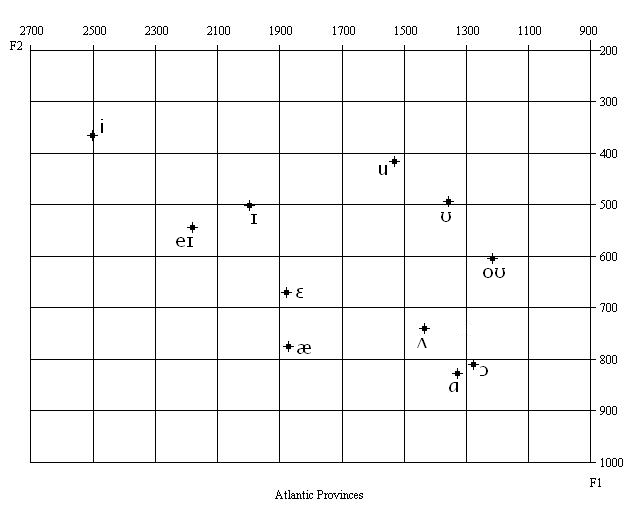
It is quite common for Canadian English speakers to have the cot-caught merger, the father-bother merger, the Low-Back-Merger Shift (with the vowel in words such as "trap" moving backwards), Canadian raising (words such as "like" and "about" pronounced with a higher first vowel in the diphthong) and no trap-bath split. Canadian raising is when the onsets of diphthongs /aɪ/ and /aʊ/ get raised to [ə] or [ʌ] before voiceless segments. There are areas in the eastern U.S. where some words are pronounced with Canadian raising.
Some young Canadians may show Goose-fronting. U.S. southern dialects have long had goose-fronting, but this goose-fronting among young Canadians and Californians is more recent. Some young Californians also show signs of the Low-Back-Merger Shift. The cot-caught merger is perhaps not general in the U.S., but younger speakers seem more likely to have it.
In terms of the major sound systems (phonologies) of English around the world, Canadian English aligns most closely to American English. Some dialectologists group Canadian and American English together under a common North American English sound system. The mainstream Canadian accent ("Standard Canadian") is often compared to the General American accent, a middle ground lacking in noticeable regional features.
Western Canada (British Columbia, Alberta, Saskatchewan, Manitoba) shows the largest dialect diversity. Northern Canada is, according to William Labov, a dialect region in formation where a homogeneous English dialect has not yet formed. Labov's research focused on urban areas, and did not survey the country, but they found similarities among the English spoken in Ottawa, Toronto, Calgary, Edmonton and Vancouver. Labov identifies an "Inland Canada" region that concentrates all of the defining features of the dialect centred on the Prairies (a region in Western Canada that mainly includes Alberta, Saskatchewan, and Manitoba and is known for its grasslands and plains), with more variable patterns including the metropolitan areas of Vancouver and Toronto. This dialect forms a dialect continuum with Western US English, sharply differentiated from Inland Northern US English of the central and eastern Great Lakes region where the Northern Cities Shift is sending front vowels in the opposite direction to the Low-Back-Merger Shift heard in Canada and California.
Standard
Standard Canadian English is socially defined. It is spoken by those who live in urban Canada, in a middle-class job (or one of their parents holds such employment), who are second generation or later (born and raised in Canada) and speak English as (one of their) dominant language(s) (Dollinger 2019a, adapted from Chambers 1998). It is the variety spoken, in Chambers' (1998: 252) definition, by Anglophone or multilingual residents, who are second generation or later (i.e. born in Canada) and who live in urban settings. Applying this definition, c. 36% of the Canadian population speak Standard Canadian English in the 2006 population, with 38% in the 2011 census.
Regional variation
The literature has for a long time conflated the notions of Standard Canadian English (StCE) and regional variation. While some regional dialects are close to Standard Canadian English, they are not identical to it. To the untrained ear, for instance, a BC middle-class speaker from a rural setting may seemingly be speaking Standard Canadian English, but, given Chambers' definition, such a person, because of the rural provenance, would not be included in the accepted definition (see the previous section). The Atlas of North American English, while being the best source for US regional variation, is not a good source for Canadian regional variation, as its analysis is based on only 33 Canadian speakers. Boberg's studies offer the best data for the delimitation of dialect zones. The results for vocabulary and phonetics overlap to a great extent, which has allowed the proposal of dialect zones. Dollinger and Clarke distinguish between:
West (B.C., Alberta, Saskatchewan, Manitoba; with B.C. a sub-zone on the lexical level)
Ontario (with Northwestern Ontario a transition zone with the West)
Quebec (concerning the c. 500 ,000 Anglophone speakers in the province, not the Francophone speakers of English)
Maritimes (PEI, NS, NB, with PEI a subgroup on the lexical level)
Newfoundland
Indigenous
The words Aboriginal and Indigenous are capitalized when used in a Canadian context.
First Nations and Inuit from Northern Canada speak a version of Canadian English influenced by the phonology of their first languages. Non-indigenous Canadians in these regions are relatively recent arrivals, and have not produced a dialect that is distinct from southern Canadian English.
Overall, First Nations Canada English dialects rest between language loss and language revitalization. British Columbia has the greatest linguistic diversity, as it is home to about half of the Indigenous languages spoken in Canada. Most of the languages spoken in the province are endangered due to the small number of speakers. To some extent, the dialects reflect the historical contexts where English has been a major colonizing language. The dialects are also a result of the late stages of depidginization and decreolization, which resulted in linguistic markers of Indigenous identity and solidarity. These dialects are observed to have developed a lingua franca due to the contact between English and Indigenous populations, and eventually, the various dialects began to converge with standard English.
Certain First Nations English have also shown to have phonological standard Canadian English, thus resulting in a more distinct dialect formation. Plains Cree, for instance, is a language that has less phonological contrasts compared to standard Canadian English. Plains Cree has no voicing contrast. The stops /p/, /t/, and /k/ are mostly voiceless and unaspirated, though they may vary in other phonetic environments from voiceless to voiced. Plains Cree also does not have the liquids or fricatives found in the standard form. Dene Suline, on the other hand, has more phonological contrasts, resulting in the use of features not seen in the standard form. The language has 39 phonemic consonants and a higher proportion of glottalized consonants.
Maritimes
Many in the Maritime provinces – Nova Scotia, New Brunswick and Prince Edward Island – have an accent that sounds more like Scottish English and, in some places, Irish English than General American. Outside of major communities, dialects can vary markedly from community to community, as well as from province to province, reflecting ethnic origin as well as a past in which there were few roads and many communities, with some isolated villages. Into the 1980s, residents of villages in northern Nova Scotia could identify themselves by dialects and accents distinctive to their village. The dialects of Prince Edward Island are often considered the most distinct grouping.
The phonology of Maritimer English has some unique features:
Cot–caught merger in effect, but toward a central vowel [ɑ̈].
No Canadian Shift of the short front vowels