
Bushidō (武士道; Japanese pronunciation: [bɯ.ɕiꜜ.doː]) is a samurai moral code concerning samurai attitudes, behavior, and lifestyle. Its origins date back to the Kamakura period, but the code was formalized in the Edo period (1603–1868). There are multiple types of bushido, which evolved significantly through history. Contemporary forms of bushido are still used in the social and economic organization of Japan. Bushido is also used as an overarching term for all the codes, practices, philosophies, and principles of samurai culture. It is loosely analogous to the European concept of chivalry, but with some major differences.
Origin
The concept of a samurai code or codes was developed and refined centuries before the Edo period in the Kamakura period. Such ideas formalized earlier moral values and ethics, most commonly stressing a combination of sincerity, frugality, loyalty, martial arts mastery, honour until death, "bravery", and "loyalty to the samurai's lord." Bushido proper developed between the 16th and 20th centuries, but this was debated by pundits who believed they were building on a legacy dating back to the 10th century.
The term bushido itself is "rarely attested in pre-modern literature", but a code of honor did exist among the writing elite and historians who were generally disgusted enough at the dishonorable activity of some fighters such as shinobi as to rarely mention them. Ideas of honor that led to bushido developed in response to the longstanding dishonorable behavior of samurai, emerging stealth and espionage techniques, and Zen Buddhist soldier tenets.

The relative peace in Japan during the Kamakura period favored ideas of honor in battle, expressed in customs such as announcing one's family name and/or lineages before fighting, attempting to limit fights among warrior nobles to horseback archery or sword duels with no subterfuge or trickery, and conducting oneself like a legendary character or renowned hero (tales of daring were popular in the Kamakura period). Pre-bushido honor codes during this time were also contributed to by commoners, who sometimes took on similar roles to samurai and often used their family names as introductions to fighting despite not being noble. However, even during the relatively small family and land quarrels of this time, as well as duels thought to be honorable, warriors often disregarded these norms of combat and the announcement of family names or lineages was mostly a way to brag and assert a right to fight and/or gain whatever a faction was looking for after a fight. Outright bragging was also known to happen. These already tenuous codes of honor were weakened when the Japanese, expecting the invading Mongols to be laid-back with their combat, humiliatingly sent an envoy that fired a noisemaker arrow to officially commence the start of what the Japanese assumed would be a series of small duels and skirmishes. Additionally, Mongols usually cut swathes through soldiers that attempted to announce their lineages before facing them. Despite ultimately winning against the Mongols, these honor norms, along with the shogunate, were weakened enough to cause endemic division that led to the end of the Kamakura period and the court wars of the Nanboku-chō period.
Born from Neo-Confucianism during times of peace in the Edo period and following Confucian texts, while also being influenced by Shinto and Zen Buddhism, it balanced violence with the therapeutic ideals of wisdom and peace accepted at the time. It was developed further during the Muromachi period (1336–1573) and formally defined and applied in law by the Tokugawa shogunate in the Edo period. There is no strict definition, and interpretations of the code have varied over time. Bushido has undergone many changes throughout Japanese history, and various Japanese clans interpreted it in their own way until the 19th century, enough for it to be most often a series of unwritten oral expectations that could be described as different codes, with further variations likely existing in the same warrior noble house, rather than a single code.
One of the earliest known usages of bushido is in the extremely influential late 16th century text The Military Mirror of Kai, where it was used to describe unwritten rules in a complex metaphorical way that commoners could purportedly not live up to. Another early use of the written term is in the Kōyō Gunkan in 1616 by Kōsaka Masanobu. In 1685, the ukiyo-e book Kokon Bushidō ezukushi (古今武士道絵つくし, "Images of Bushidō Through the Ages") by artist Hishikawa Moronobu included the term and artwork of samurai with simple descriptions meant for children. In 1642, the Kashoki (可笑記, "Amusing Notes") was written by samurai Saito Chikamori and included moral precepts which explained the theoretical aspects of bushido. It was written with accessible kana and intended for commoners, not warriors. It was very popular, demonstrating that the idea of bushido had spread among the population. The Kashoki shows that moral values were present in bushido by 1642.
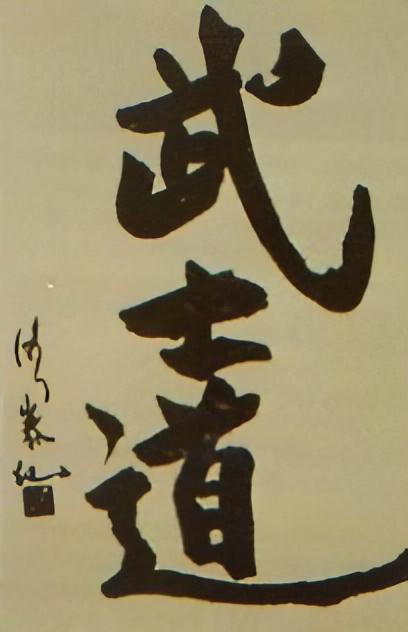
The term, bushido, came into common international usage with the 1899 publication of Nitobe Inazō's Bushido: The Soul of Japan, which was read by many influential Western people. In Bushido (1899), Nitobe wrote:
Bushidō, then, is the code of moral principles which the samurai were required or instructed to observe...More frequently it is a code unuttered and unwritten...It was an organic growth of decades and centuries of military career. In order to become a samurai, this code has to be mastered.
In Feudal and Modern Japan (1896), historian Arthur May Knapp wrote:

The samurai of thirty years ago had behind him a thousand years of training in the law of honor, obedience, duty, and self-sacrifice ... It was not needed to create or establish them. As a child, he had but to be instructed, as indeed he was from his earliest years, in the etiquette of self-immolation.
Etymology
Bushidō (武士道) is a Japanese word that literally means 'warrior way'. It is first attested in the 1616 work Kōyō Gunkan (甲陽軍鑑), a military chronicle recording the exploits of the Takeda clan. The term is a compound of bushi (武士; 'warrior', literally 'military + man'), a Chinese-derived word first attested in Japanese in 712 with the on'yomi (Sino-Japanese reading), and dō (道; 'road, way'). In modern usage, bushi is often used as a synonym for samurai; however, historical sources make it clear that bushi and samurai were distinct concepts, with the former referring to soldiers or warriors and the latter referring instead to a kind of hereditary nobility.
In the early 17th century, the term bushidō (武士道) with its on'yomi reading was used alongside the synonymous alternative form (武士の道), read using native Japanese vocabulary (kun'yomi) as mono no fu no michi. Another important term is bushi katagi (武士気質; literally 'warrior temperament').

Usage
For centuries, the samurai adhered to multiple types of the code, of which the interpretations varied per samurai clan and per member of the military nobility. This encompassed morality, their role in society, and how to live a life with honor and virtue. The samurai had some common values, but they did not have a single definition or path that all samurai were required to abide by. The samurai were as practical on the battlefield as any other warriors. These concepts, codes, and ideals were ingrained in the samurai since they rose to power in the Kamakura period (1185–1333). At certain eras, there were prevalent rules and unwritten customs such as the "Way of the Bow and the Horse" (弓馬の道, kyūba no michi) since the 12th century and, in the Edo period, the code of the samurai was formalized with specific virtues and laws by the ruling Tokugawa Shogunate. Notable samurai, such as Miyamoto Musashi (1584–1645) and Yamamoto Tsunetomo (1659–1719)., wrote extensively about their interpretations of bushido. In the 1870s, the Meiji restoration abolished the samurai class, and they were transferred to professional, military, and business classes. However, the former samurai and their descendants continued to be influential in Japanese society because they occupied important positions. Bushido has continued to exist in various forms. Additional concepts and ideas were added to bushido so that it could evolve with the times. It was used in the Armed Forces of the Empire of Japan and symbolically by the successor Japan Self-Defense Forces. In the Taisho period, bushido was advocated as the way of the merchant. It can be dormant for years and revived during geopolitical instability. Centuries of rule by the samurai class have left a deep impact on Japanese society. Thus, various forms are still used today in e.g., Japanese culture, business, martial arts, and communication.
Myth and reality
Bushido is often described as a specific moral code that all members of the samurai class were obligated to follow. However, historically, the samurai adhered to multiple warrior codes, and the interpretations varied per samurai clan, individuals, and eras. These codes and philosophies changed dramatically during the different eras. The earliest proto-bushido type existed since the Kamakura period (1185). The degrees of devotion and interpretations varied between individuals. Since at least the Sengoku period, samurai didn't have compunction to use certain weapons. Retreating from battles did occur if it was unwinnable while others chose to fight till the end. Samurai did not actively seek an honorable death. However, it was honorable to die in the service of a daimyo only while furthering the daimyo's cause.
Samurai had dark customs, the most notable: Kiri-sute gomen was the right to strike the lower class who dishonored them. Seppuku was ritual suicide, to die honorably or restore one's honor. Tsujigiri (crossroads killing) to attack a human opponent to test a weapon or skill became rampant in the early Edo period until a ban was issued. The exact frequency of tsujigiri is unknown, and it was never officially condoned by any samurai clan. However, it and other types of samurai-committed murder did happen enough to become a point of complaint among Europeans.

Samurai did head collection with a ritual to beautify severed heads of worthy rivals and put them on display. The samurai applied various cruel punishments on criminals. The most common capital punishments up until the Meiji Restoration were (in order of severity): decapitation, decapitation with disgraceful exposure of head post-death, crucifixion (e.g. parricide), and death by burning with incendiaries. Members of the samurai class had the privilege to perform hara-kiri (suicide disemboweling). If it was not lethal, then a friend or relation performed decapitation (kaishaku). In 1597, Toyotomi Hideyoshi ordered the prosecution of 26 Martyrs of Japan. They were tortured, mutilated, paraded through villages, and executed by crucifixion, tied to crosses on a hill, and impaled by lances (spears). In the 17th century, the Tokugawa Shogunate executed over 400 Christians (Martyrs of Japan) for being more loyal to their faith than the Shogunate. The capital punishments were beheading, crucifixion, death by burning and Ana-tsurushi (穴吊るし; lit. "hole hanging").
Bushido has been described as Japanese chivalry, and samurai in general have been described as being like Western knights.. Notable similarities and differences depend on which bushido type is compared with chivalry. Christianity had a modifying influence on the virtues of chivalry, whereas bushido was influenced by Zen Buddhism, Shinto, and Confucianism. Bushido is commonly associated with the moral norms of Nitobe Inazō's Bushido: The Soul of Japan (1900), because his book popularized the term bushido internationally. However, it is a romanticized interpretation of bushido that differs from other historical literature by the samurai. Thus, the morals defined by Nitobe do not represent all of bushido. Some researchers claim that chivalric bushido, as defined by Nitobe (a.k.a. Meiji Bushido), was invented in the 19th century. However, there is a plethora of historical literature about Japanese warrior codes, practices, philosophies since the Kamakura period. These types can be categorized by era into Sengoku, Edo, Meiji and Contemporary Bushido. Therefore the term bushido can be used as an overarching term for all the codes, practices, philosophies and principles of samurai culture.
Chinese politician Dai Jitao acknowledged the historical legitimacy of bushido and said it originated as a theory of a social order, but it had evolved considerably. In the Tokugawa period, bushido was used to describe an ethical theory, and it became a religious concept based on Shinto. In the Meiji period, bushido absorbed European ideals and formed the foundation of Japan's political ethics. Chinese writer Zhou Zuoren supported the historical legitimacy, although it was thought to be altered and corrupted in the modern period.

Historical development
The values that became bushido evolved significantly over the centuries to the present. These first appeared as unwritten customs in the 12th century with shogun Minamoto Yoritomo. The written term bushido first appears in the Koyo Gunkan of roughly circa 1616, an account of the military exploits of the Takeda clan. Bushido evolved from being totally devoted to valor in battle into refined types that were more related to moral integrity. The samurai had different types of bushido in each era in history, reflecting changing requirements on the battlefield and in society. The era name should be used to describe the type of bushido.
Heian period
The first predecessor to bushido was the class morality system of the Heian period.
Kamakura period
The first proper Japanese central government was established around the year 700. Japan was ruled by the Emperor (Tennō) with bureaucratic support of the aristocracy. They gradually lost control of their armed servants, the samurai. By the mid-12th century, the samurai class had seized control. The samurai (bushi) ruled Japan with the shogun (将軍) as the overlord until the mid-19th century. The shogun was originally the Emperor's military deputy. After the Genpei War (1180–1185), Minamoto no Yoritomo usurped power from the civil aristocracy by establishing a military government called the bakufu situated in Kamakura since 1192. The Emperor and his court became figureheads.
The appearance of bushido is linked to that of feudal Japan and the first shogun at the time of Minamoto no Yoritomo (1147–1199) in the 12th century. The own moral dimension of bushido gradually appears in the warrior culture and is landmarked in stories and military treaties only from the 14th and 15th centuries. Thus is noted a permanence of the modern representation of its antiquity in Japanese culture and its diffusion is noted.
In the 10th and 11th centuries, there was the Way of the Man-At-Arms (Tsuwamon no michi), and the Way of the Bow and Arrows (Kyûsen / kyûya no Michi). At the time of the Genpei War (1180–1185), it was called "Way of the Bow and the Horse" (弓馬の道, kyūba no michi) because of the major importance of this style of combat for the warriors of the time, and because it was considered a traditional method, that of the oldest samurai heroes, such as Prince Shōtoku, Minamoto no Yorimitsu and Minamoto no Yoshiie (Hachimantarō). According to Louis Frédéric, the kyūba no michi appeared around the 10th century as a set of rules and unwritten customs that samurai were expected to comply with. There was also "Yumiya toru mi no narai" (customs for those who draw the bow). This shows there was an emerging sense of ideal warrior behavior that evolved from daily training and warfare experience.
Towards the 10th and 11th centuries, we began to use expressions such as the way of the man-at-arms (Tsuwamon no michi), the way of the bow and arrows (Kyûsen / kyûya no Michi), the way of the bow and the horse (Kyûba no Michi). These expressions refer to practices which are the ancestors of the way of the warrior (bushidô), but they did not then imply any relation whatsoever to a morality. These were only practices focused on training for real combat, and which therefore had to do with the samurai way of life in the broad sense.
The world of warriors which developed [...] in the medieval period (12th–16th century) was [...] placed under the domination of the Buddhist religion [...]. Buddhism makes the prohibition of killing living beings one of its main principles. [...] Faced with death, some samurai thought they had inherited bad karma [...] others knew they were doing evil. The Buddhist notion of impermanence (Mujo) tended to express a certain meaning to the fragility of existence, [...]. Beliefs in the pure land of Buddha Amida [...] allowed some warriors to hope for an Amidist paradise [...]. Zen Buddhism, with its doctrine of the oneness between life and death, was also appreciated by many samurai [...]. The world of medieval warriors remained a universe still largely dominated by the supernatural, and the belief, in particular, in the tormented souls of warriors fallen in combat, who returned almost obsessively in the dreams of the living. This idea also ensured the success of the Noh theater.
The Tale of the Heike depicts an idealized story of the Genpei War (1180–1185) with a struggle between two powerful samurai clans, the Minamoto and the Taira. Clearly depicted throughout the epic is the ideal of the cultivated warrior. During the early modern era, these ideals were vigorously pursued in the upper echelons of warrior society and recommended as the proper form of the Japanese man of arms. The influence of Shinto, Buddhism, Taoism, and Confucianism on bushido's early development instilled among those who live by the code a religious respect for it.
Many early literary works of Japan talk of warriors, but the term bushidō does not appear in text until the Edo period. The code which would become bushido was conceptualized during the late-Kamakura period (1185–1333) in Japan. Since the days of the Kamakura shogunate, the "way of the warrior" has been an integral part of Japanese culture. Scholars generally regard pre-modern Japan as a "warrior nation" since the medieval period. The samurai were role models for society since medieval times. In accordance with Confucianism, one of their duties was to serve as a role model for society. They balanced their martial arts skills with peaceful accomplishments such as literature, poetry, and the tea ceremony. Such as the medieval Japanese proverb Hana wa sakuragi, hito wa bushi (Japanese: 花は桜木人は武士, literally "the [best] blossom is the cherry blossom; the [best] man is the warrior"). In 1843 Nakamura said:
Our nation is a nation of arms. The land to the west [China] is a nation of letters. Nations of letters value the pen. Nations of arms value the sword. That's the way it has been from the beginning... Our country and theirs are separated from one another by hundreds of miles, our customs are completely different, the temperaments of our people are dissimilar – so how could we possibly share the same Way?
Muromachi-Azuchi (1336–1603)
During the Muromachi period (1336–1573), the way of the warrior began to refine by inserting in their daily activities, alongside martial training, Zen meditation, painting (monochrome style), ikebana, the tea ceremony, poetry such as the death poem (written by samurai before suicidal missions or battles) and literature.
Carl Steenstrup noted that 13th- and 14th-century writings (gunki monogatari) "portrayed the bushi in their natural element, war, eulogizing such virtues as reckless bravery, fierce family pride, and selfless, at times senseless devotion of master and man".
Every farmer was basically also a warrior until Hideyoshi confiscated weapons through a nation-wide "sword-hunt" in 1588. Every ashigaru had his first lessons on the mentality of war from the biwa hōshi. On the other hand, the Heike recitations also propagated civic virtues: loyalty, steadfastness in adversity, and pride of family honor.
The sayings of Sengoku-period retainers and warlords such as Katō Kiyomasa (1562–1611) and Nabeshima Naoshige were generally recorded or passed down to posterity around the turn of the 16th century, when Japan had entered a period of relative peace. In a handbook addressed to "all samurai, regardless of rank", Katō states:
If a man does not investigate into the matter of bushidō daily, it will be difficult for him to die a brave and manly death. Thus, it is essential to engrave this business of the warrior into one's mind well.
Katō was a ferocious warrior who banned even the recitation of poetry, stating:
One should put forth great effort in matters of learning. One should read books concerning military matters, and direct his attention exclusively to the virtues of loyalty and filial piety....Having been born into the house of a warrior, one's intentions should be to grasp the long and the short swords and to die."Nabeshima Naoshige (1538–1618) says similarly, that it is shameful for any man to die without having risked his life in battle, regardless of rank, and that "bushidō is in being crazy to die. Fifty or more could not kill one such a man. However, Naoshige also suggests that "everyone should personally know exertion as it is known in the lower classes".
By the mid-16th century, several of Japan's most powerful warlords began to vie for supremacy over territories amidst the Kyoto government's waning power. With Kyoto's capture by the warlord Oda Nobunaga in 1573, the Muromachi period concluded. In 1551 CE, one of the first Western people to visit Japan was the Roman Catholic missionary Francis Xavier. The description of Francis shows that honor, weaponry, and warfare were valued as of utmost importance in Japanese culture. The Japanese are very ambitious of honors and distinctions, and think themselves superior to all nations in military glory and valor. They prize and honor all that has to do with war, and all such things, and there is nothing of which they are so proud as of weapons adorned with gold and silver. They always wear swords and daggers both in and out of the house, and when they go to sleep, they hang them at the head of the bed. In short, they value arms more than any people I have ever seen. They are excellent archers and usually fight on foot, though there is no lack of horses in the country. They are very polite to each other, but not to foreigners, whom they utterly despise. They spend their means on arms, bodily adornment, and on several attendants, and do not in the least care to save money. They are, in short, a very warlike people, and engaged in continual wars among themselves; the most powerful in arms bearing the most extensive sway. They have all one sovereign, although for one hundred and fifty years past the princes have ceased to obey him, and this is the cause of their perpetual feuds.
The practice of decapitating and collecting enemy heads is an example of honor in samurai culture. The severed heads were shown to a general as evidence that they killed wanted opponents and to collect rewards. More heads meant higher prestige, honor, and rewards. A beautification ritual of the severed heads called Ohaguro was performed. Prestigious heads were arranged on a table and presented in front of the warriors. All heads were identified and marked to prevent mistakes. The guards were left and right of the general and cited spells to transfix demonic spirits of the enemy. Then a samurai said his own name, lifted a box to show and describe the severed head. The general inspected the trophy heads while holding a fan so that the dead could not recognize his face. If the claimed head was correct, then the samurai received a payment; otherwise, he was dismissed.
Despite the war-torn culmination of this era and the birth of the Edo period, Samurai codes of conduct continued to extend beyond the realms of warfare. Forms of bushido-related Zen Buddhism and Confucianism also emerged during this period. A Samurai adhering to bushido-like codes was expected to live a just and ethical social life, honoring the practices of the gentry in the absence of military campaigns.
Edo (1603–1868)
Japan enjoyed two and a half centuries of relative peace during the Edo period (1600 to the mid-19th century). Japan didn't have domestic or international conflict. These peaceful times in Tokugawa society enabled bushido to be refined from a focus on valor in battle to more moral integrity.
The Tokugawa shogunate (1603–1867) codified aspects of the Samurai warrior values and formalized them into parts of the Japanese feudal law. In addition to the "house codes" issued in the context of the fiefdoms (han) and texts that described the right behavior of a warrior (such as the Hagakure), the first Buke shohatto (Laws for the Military Houses, 武家諸法度) was issued by the government in 1615, which prescribed to the lords of the fiefdoms (daimyo) and the samurai warrior aristocracy responsibilities and activities, the rules of conduct, simple and decent clothing, the correct supply in case of official visits, etc. The edicts were reissued in 1629, and in 1635, by the third shogun Tokugawa Iemitsu. The new edicts made clear the shogunate's authority and its desire to assert control. The swordsmanship skills of the samurai developed into character-building martial arts.
During this period, the samurai class played a central role in the policing and administration of the country. The bushidō literature of this time contains much thought relevant to a warrior class seeking more general application of martial principles and experience in peacetime, as well as reflection on the land's long history of war. The literature of this time includes:
Shoke no Hyōjō by Ogasawara Sakuun (1621)
Budo Shōshinshu (武道初心集) by Taira Shigesuke, Daidōji Yūzan (1639–1730)
Hagakure as related by Yamamoto Tsunetomo to Tsuramoto Tashiro.
Bugei Juhappan (武芸十八般)
A Book of Five Rings by Miyamoto Musashi
The first mention of the term bushido is in the scriptures Koyo Gunkan (甲陽軍鑑) from Takeda-ryū (martial arts school), written around 1616 by samurai Kōsaka Masanobu (1527–1578). It consists of 20 scrolls that mention bushido over 30 times. It contains the history of the Takeda family and their military tactics. The Koyo Gunkan describes valor and exploits in battle. For example, it is a waste of talent when a bushido practitioner takes on administrative roles in government or financial affairs (e.g., dealings in rice, money, timber, or forest land). It emphasizes that bushido lies only in "becoming as a spear" on the battlefield. The scrolls were widely disseminated as a martial arts instruction manual by the samurai class and helped to popularize the term.
In Koyo Gunkan (1616), bushido is a survival technique for individual fighters, and it aims to make the development of the self and the clan troupe advantageous by raising the samurai name. He also affirms that he seeks a lord who praises himself for wandering, as reflected in Tōdō Takatora (1556–1630)'s deceased memoir that "A samurai cannot be called a samurai until he has changed his lords seven times." Also, as symbolized by Asakura Norikage (1477–1555), "The warrior may be called a beast or a dog; the main thing is winning." As symbolized by Asakura Norikage, it is essential to win the battle even with the slander of cowardice. The feature is that it also contains the cold-hearted philosophy. These are mainly related to the way of life as a samurai, and they are the teachings of each family, and they are also equivalent to the treatment of vassals.
Dr. Hiroko Willcock (senior lecturer at Griffith University, Australia) explained Koyo Gunkan is the earliest comprehensive extant work that provides a notion of bushido as a samurai ethos and the value system of the samurai tradition. However, it does not have a set of principles regarded as "true" or "false", but rather varying perceptions widely regarded as formidable throughout different centuries. Emphasized by Thomas Cleary, Confucianism, Buddhism, and Shinto were each represented by a variety of schools, and elements of all three were commonly combined in Japanese culture and customs. As the embodiment of Samurai culture, bushido is correspondingly diverse, drawing selectively on elements of all these traditions to articulate the ethos and discipline of the warrior.
During the Genna era (1615–1624) of the Edo period and later, the concept of "the way of the gentleman" (Shidō) was newly established by the philosopher and strategist Yamaga Sokō (1622–1685) and others who tried to explain this value in the morality of the Confucian Cheng–Zhu school. For the first time, Confucian ethics (such as Honor and Humanity", "filial piety") became the norm required by samurai. Yamaga Sokō was widely viewed as the "Sage of Bushidō" in early twentieth-century Japan.
Martial arts scholar Ogasawara Sakuun compiled 20 scrolls called Shoke no Hyōjō about the military arts in 1621. Therein, bushido is described as iji (willpower). The scrolls describe the essence of bushido as the strength to not yield to rewards or power, but adhere to personal convictions that dominate one's inner principles.