
Brunei, officially Brunei Darussalam, is a country in Southeast Asia, situated on the northern coast of the island of Borneo. Apart from its coastline on the South China Sea, it is completely surrounded by the Malaysian state of Sarawak, with its territory bifurcated by the Sarawak district of Limbang. Brunei is the only sovereign state entirely on Borneo; the remainder of the island is divided between its multi-landmass neighbours of Malaysia and Indonesia. As of 2025, the country had a population of 466,330, of whom approximately 64,409 resided in the capital and largest city of Bandar Seri Begawan. Its official language is Malay, and Sunni Islam is the state religion of the country, although other religions are nominally tolerated. The government of Brunei is an absolute monarchy ruled by the Sultan, and it implements a fusion of English common law and jurisprudence inspired by Islam, including sharia.
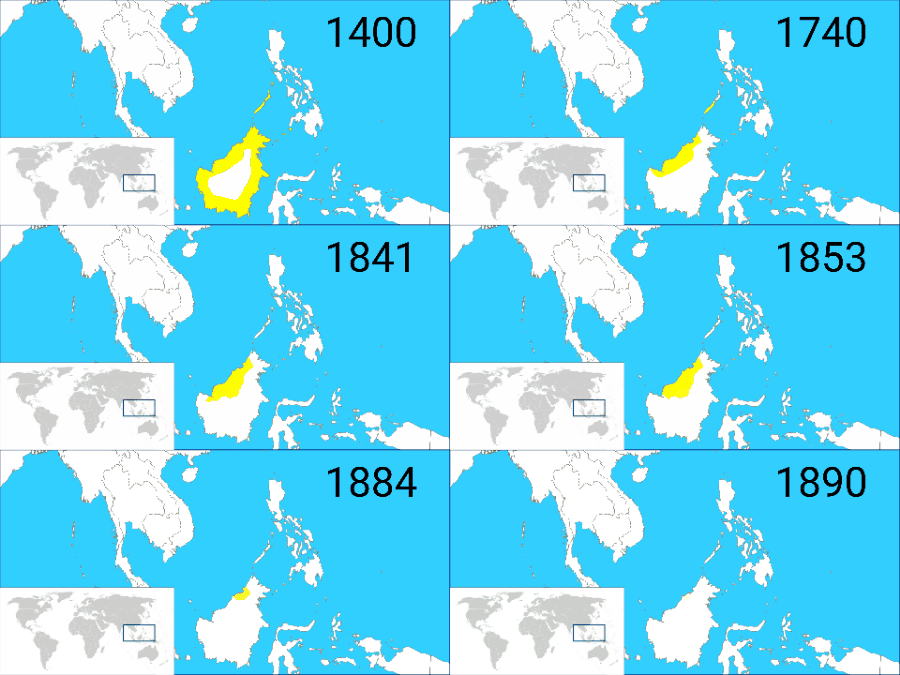
At the Sultanate of Brunei's peak during the reign of Sultan Bolkiah (1485–1528), the state is claimed to have had control over most of Borneo, including modern-day Sarawak and Sabah, as well as the Sulu archipelago and the islands off the northwestern tip of Borneo. There are also claims to its historical control over Seludong, which scholars believe is either Mount Selurong, in Indonesia, or Serudong River in eastern Sabah. The maritime state of Brunei was visited by the surviving crew of the Magellan Expedition in 1521, and in 1578 it fought against Spain in the Castilian War.
During the 19th century, the Bruneian Empire began to decline. The Sultanate ceded Kuching to James Brooke and installed him as the White Rajah, and it ceded Sabah to the British North Borneo Chartered Company. In 1888, Brunei became a British protectorate and in 1906 was assigned a British resident as colonial manager . After the Japanese occupation during World War II, a new constitution was written in 1959. In 1962, a small armed rebellion against the monarchy, which was indirectly related to the Indonesia–Malaysia confrontation, was ended with British assistance and led to the ban of the pro-independence Brunei People's Party. The revolt also influenced the Sultan's decision not to join the Malaysian Federation while it was being formed. Britain's protectorate over Brunei ended on 1 January 1984, when Brunei became a fully sovereign state.

Brunei has been led by Sultan Hassanal Bolkiah since 1967. The country's unicameral legislature, the Legislative Council, is simply consultative and all its members are appointed by the Sultan. The country's wealth derives from its extensive petroleum and natural gas fields. Economic growth during the 1990s and 2000s has transformed Brunei into an industrialised country, with its gross domestic product (GDP) increasing 56% between 1999 and 2008. Political stability is maintained by the House of Bolkiah by providing a welfare state for its citizens, with free or significant subsidies in regards to housing, healthcare and education. It ranks "very high" on the Human Development Index (HDI)—the second-highest among Southeast Asian states after Singapore, with which it maintains close relations including a Currency Interchangeability Agreement. According to the International Monetary Fund (IMF), Brunei is ranked seventh in the world by gross domestic product per capita at purchasing power parity. Brunei is a member of the United Nations, the World Trade Organization, the East Asia Summit, the Organisation of Islamic Cooperation, the Non-Aligned Movement, the Commonwealth of Nations, and the Association of Southeast Asian Nations (ASEAN).
Etymology
According to local historiography, Brunei was founded by Awang Alak Betatar, later to be Sultan Muhammad Shah, reigning around AD 1400. He moved from Garang in the Temburong District to the Brunei River estuary, discovering Brunei. According to legend, upon landing he exclaimed, "Baru nah!" (loosely translated as "that's it!" or "there!"), from which the name "Brunei" was derived. He was the first Muslim ruler of Brunei. Before the rise of the Bruneian Empire under the Muslim Bolkiah dynasty, Brunei is believed to have been under Buddhist rulers. It was renamed Barunai in the 14th century, possibly influenced by the Sanskrit varuṇ (वरुण), meaning "seafarers". The word "Borneo" is of the same origin.
In the country's full name of Negara Brunei Darussalam, the word darussalam (Arabic: دار السلام) means "Abode of Peace", while negara means "country" in Malay. A shortened version of the official Malay name, "Brunei Darussalam", has also entered common usage, particularly in official contexts, and is present in the United Nations Group of Experts on Geographical Names geographical database, as well as official ASEAN and Commonwealth listings.

The earliest Western mention of Brunei is from the Bolognese traveller Ludovico di Varthema in 1550:
We arrived at the island of Bornei (Brunei or Borneo), which is distant from the Maluch about two hundred miles [three hundred kilometres], and we found that it was somewhat larger than the aforesaid and much lower. The people are pagans and are men of goodwill. Their colour is whiter than that of the other sort ... in this island justice is well administered ...
History
Early history
Areas comprising what is now Brunei participated in the Maritime Jade Road, as ascertained by archaeological research. The trading network existed for 3,000 years, between 2000 BC to 1000 AD. The settlement known as Vijayapura was a vassal-state to the Buddhist Srivijaya empire and was thought to be located in Borneo's Northwest which flourished in the 7th Century. Vijayapura itself upon earlier in its history, was a rump state of the fallen multi-ethnic: Austronesian, Austroasiatic and Indian, Funan Civilization; previously located in what is now Cambodia. This alternative Srivijaya known as Vijayapura referring to Brunei, was known to Arabic sources as “Sribuza”.
One of the earliest Chinese records of an independent kingdom in Borneo is the 977 AD letter to the Chinese emperor from the ruler of Boni, which some scholars believe to refer to Borneo. The Bruneians regained their independence from Srivijaya due to the onset of a Javanese-Sumatran war. In 1225, the Chinese official Zhao Rukuo reported that Boni had 100 warships to protect its trade, and that there was great wealth in the kingdom. Marco Polo suggested in his memoirs that the Great Khan or the ruler of the Mongol Empire, attempted and failed many times in invading “Great Java”, which was the European name for Bruneian controlled Borneo.
According to Wang Zhenping, in the 1300s, the Yuan Dade nanhai zhi or "Yuan dynasty Dade period southern sea records" reported that Brunei conquered or administered Sarawak and Sabah as well as the Philippine kingdoms of Butuan, Sulu, Ma-i (Mindoro), Malilu 麻裏蘆 (Manila), Shahuchong 沙胡重 (Siocon or Zamboanga), Yachen 啞陳 Oton, and 文杜陵 Wenduling (Mindanao), which would regain their independence at a later date.
In the 14th century, the Javanese manuscript Nagarakretagama, written by Prapanca in 1365, mentioned Barune as the constituent state of Hindu Majapahit, which had to make an annual tribute of 40 katis of camphor. In 1369, Sulu which was also formerly part of Majapahit, had successfully rebelled and then attacked Boni, and had invaded the Northeast Coast of Borneo and afterwards had looted the capital of its treasure and gold including sacking two sacred pearls. A fleet from Majapahit succeeded in driving away the Sulus, but Boni was left weaker after the attack. A Chinese report from 1371 described Boni as poor and totally controlled by Majapahit. When the Chinese admiral Zheng He visited the Brunei in the early 15th century, he founded a major trading port which included Chinese people who were actively trading with China.

During the 15th century, Boni had seceded from Majapahit and then converted to Islam. Thus transforming into the independent Sultanate of Brunei. Brunei became a Hashemite state when she allowed the Arab Emir of Mecca, Sharif Ali, to become her third sultan.
As customary for close affiliation and alliances in Southeast Asia, the royal family of Luzon intermarried with the ruling houses of the Sultanate of Brunei. Intermarriage was a common strategy for Southeast Asian states to extend their influence. However, Islamic Brunei's power was not uncontested in Borneo since it had a Hindu rival in a state founded by Indians called Kutai in the south which they overpowered but never destroyed.
Nevertheless, by the 16th century, Islam was firmly rooted in Brunei, and the country had built one of its biggest mosques. In 1578, Alonso Beltrán, a Spanish traveller, described it as being five stories tall and built on the water.
War with Spain and decline
Brunei briefly rose to prominence in Southeast Asia when the Portuguese occupied Malacca and thereby forced the wealthy and powerful but displaced Muslim refugees there to relocate to nearby Sultanates such as Brunei. The Bruneian Sultan then intervened in a territorial conflict between Hindu Tondo and Muslim Manila in the Philippines by appointing the Bruneian descended Rajah Ache of Manila as admiral of the Bruneian navy in a rivalry against Tondo and as the enforcer of Bruneian interests in the Philippines. He subsequently encountered the Magellan expedition wherein Antonio Pigafetta noted that under orders from his grandfather the Sultan of Brunei, Ache had previously sacked the Buddhist city of Loue in Southwest Borneo for being faithful to the old religion and rebelling against the authority of Sultanate. However, European influence gradually brought an end to Brunei's regional power, as Brunei entered a period of decline compounded by internal strife over royal succession. In the face of these invasions by European Christian powers, the Ottoman Caliphate aided the beleaguered Southeast Asian Sultanates by making Aceh a protectorate and sending expeditions to reinforce, train and equip the local mujahideen. Turks were routinely migrating to Brunei as evidenced by the complaints of Manila Oidor Melchor Davalos who in his 1585 report, say that Turks were coming to Sumatra, Borneo and Ternate every year, including defeated veterans from the Battle of Lepanto.
Spain declared war in 1578, planning to attack and capture Kota Batu, Brunei's capital at the time. This was based in part on the assistance of two Bruneian noblemen, Pengiran Seri Lela and Pengiran Seri Ratna. The former had travelled to Manila, then the centre of the Spanish colony. Manila itself was captured from Brunei, Christianised and made a territory of the Viceroyalty of New Spain which was centered in Mexico City. Pengiran Seri Lela came to offer Brunei as a tributary to Spain for help to recover the throne usurped by his brother, Saiful Rijal. The Spanish agreed that if they succeeded in conquering Brunei, Pengiran Seri Lela would be appointed as the sultan, while Pengiran Seri Ratna would be the new Bendahara.
In March 1578, a fresh Spanish fleet had arrived from Mexico and settled at the Philippines. They were led by De Sande, acting as Capitán-General. He organised an expedition from Manila for Brunei, consisting of 400 Spaniards and Mexicans, 1,500 Filipino natives, and 300 Borneans. The campaign was one of many, which also included action in Mindanao and Sulu. The racial make-up of the Christian side was diverse since it were usually made up of Mestizos, Mulattoes and Amerindians (Aztecs, Mayans and Incans) who were gathered and sent from Mexico and were led by Spanish officers who had worked together with native Filipinos in military campaigns across the Southeast Asia. The Muslim side was also equally racially diverse. In addition to the native Malay warriors, the Ottomans had repeatedly sent military expeditions to nearby Aceh. The expeditions were composed mainly of Turks, Egyptians, Swahilis, Somalis, Sindhis, Gujaratis and Malabars. These expeditionary forces had also spread to other nearby Sultanates such as Brunei and had taught new fighting tactics and techniques on how to forge cannons.

Eventually, the Spanish captured the capital on 16 April 1578, with the help of Pengiran Seri Lela and Pengiran Seri Ratna. The Sultan Saiful Rijal and Paduka Seri Begawan Sultan Abdul Kahar were forced to flee to Meragang then to Jerudong. In Jerudong, they made plans to chase the conquering army away from Brunei. Suffering high fatalities due to a cholera or dysentery outbreak, the Spanish decided to abandon Brunei and returned to Manila on 26 June 1578, after 72 days.
Pengiran Seri Lela died in August or September 1578, probably from the same illness suffered by his Spanish allies. There was suspicion that the legitimist sultan could have been poisoned by the ruling sultan. Seri Lela's daughter, a Bruneian princess, "Putri", had left with the Spanish, she abandoned her claim to the crown and then she married a Christian Tagalog, named Agustín de Legazpi de Tondo. Agustin de Legaspi along with his family and associates were soon implicated in the Conspiracy of the Maharlikas, an attempt by Filipinos to link up with the Brunei Sultanate and Japanese Shogunate to expel the Spaniards from the Philippines. However, upon the Spanish suppression of the conspiracy, the Bruneian descended aristocracy of precolonial Manila were exiled to Guerrero, Mexico which consequently later became a center of the Mexican war of independence against Spain.
The local Brunei accounts of the Castilian War differ greatly from the generally accepted view of events. What was called the Castilian War was seen as a heroic episode, with the Spaniards being driven out by Bendahara Sakam, purportedly a brother of the ruling sultan, and a thousand native warriors. Most historians consider this to be a folk-hero account, which probably developed decades or centuries after.
Brunei eventually descended into anarchy. The country suffered a civil war from 1660 to 1673.
British intervention
The British have intervened in the affairs of Brunei on several occasions. Britain attacked Brunei in July 1846 due to internal conflicts over who was the rightful Sultan.
In the 1880s, the decline of the Bruneian Empire continued. The sultan granted land (now Sarawak) to James Brooke, who had helped him quell a rebellion, and allowed him to establish the Raj of Sarawak. Over time, Brooke and his nephews (who succeeded him) leased or annexed more land. Brunei lost much of its territory to him and his dynasty, known as the White Rajahs.
Sultan Hashim Jalilul Alam Aqamaddin appealed to the British to stop further encroachment by the Brookes. The Protectorate Agreement was negotiated by Sir Hugh Low and signed into effect on 17 September 1888. The treaty said that the sultan "could not cede or lease any territory to foreign powers without British consent"; it provided Britain effective control over Brunei's external affairs, making it a British protected state (which continued until 1984). But, when the Raj of Sarawak annexed Brunei's Pandaruan District in 1890, the British did not take any action to stop it. They did not regard either Brunei or the Raj of Sarawak as 'foreign' (per the Treaty of Protection). This final annexation by Sarawak left Brunei with its current small land mass and separation into two parts.
The British Foreign Office sent Consul Malcolm Stewart Hannibal McArthur to assess Brunei and make recommendations on future British foreign policy in the region. McArthur produced his Report On Brunei in 1904 where he recommended the implementation of the Malayan British Residency system and the continued protection of Brunei. British residents were introduced in Brunei under the Supplementary Protectorate Agreement in 1906. The residents were to advise the sultan on all matters of administration. Over time, the resident assumed more executive control than the sultan. The residential system ended in 1959.
Discovery of oil
Petroleum was discovered in 1929 after several fruitless attempts. Two men, F. F. Marriot and T. G. Cochrane, smelled oil near the Seria river in late 1926. They informed a geophysicist, who conducted a survey there. In 1927, gas seepages were reported in the area. Seria Well Number One (S-1) was drilled on 12 July 1928. Oil was struck at 297 metres (974 ft) on 5 April 1929. Seria Well Number 2 was drilled on 19 August 1929, and, as of 2009, continues to produce oil. Oil production was increased considerably in the 1930s with the development of more oil fields. In 1940, oil production was at more than six million barrels. The British Malayan Petroleum Company (now Brunei Shell Petroleum Company) was formed on 22 July 1922. The first offshore well was drilled in 1957. Oil and natural gas have been the basis of Brunei's development and wealth since the late 20th century.
Japanese occupation
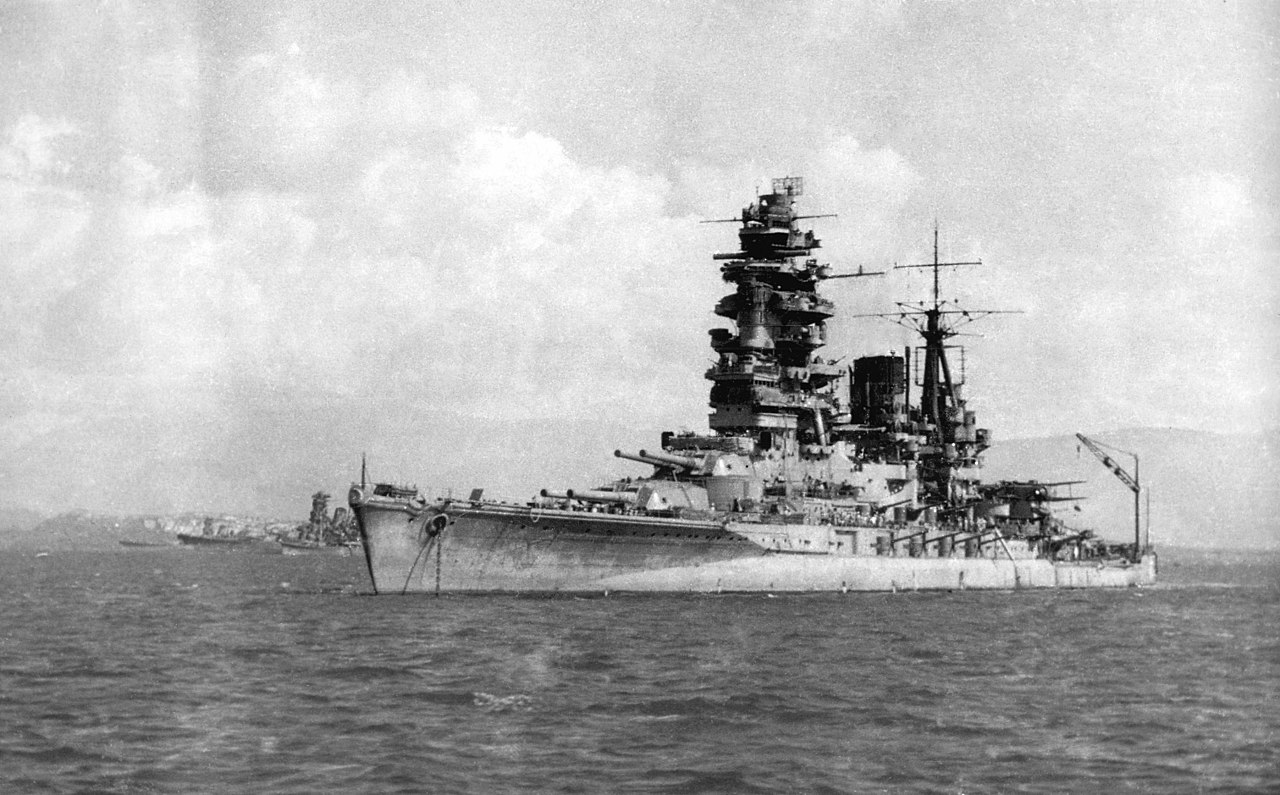
The Japanese invaded Brunei on 16 December 1941, eight days after their attack on Pearl Harbor on the United States Navy. They landed 10,000 troops of the Kawaguchi Detachment from Cam Ranh Bay at Kuala Belait. After six days' fighting, they occupied the entire country. The only Allied troops in the area were the 2nd Battalion of the 15th Punjab Regiment based at Kuching, Sarawak.
Once the Japanese occupied Brunei, they made an agreement with Sultan Ahmad Tajuddin over governing the country. Inche Ibrahim (known later as Pehin Datu Perdana Menteri Dato Laila Utama Awang Haji Ibrahim), a former Secretary to the British Resident, Ernest Edgar Pengilly, was appointed chief administrative officer under the Japanese Governor. The Japanese had proposed that Pengilly retain his position under their administration, but he declined. Both he and other British nationals still in Brunei were interned by the Japanese at Batu Lintang camp in Sarawak. While the British officials were under Japanese guard, Ibrahim made a point of personally shaking each one by the hand and wishing him well.
The Sultan retained his throne and was given a pension and honours by the Japanese. During the later part of the occupation, he resided at Tantuya, Limbang and had little to do with the Japanese. Most of the Malay government officers were retained by the Japanese. Brunei's administration was reorganised into five prefectures, which included British North Borneo. The Prefectures included Baram, Labuan, Lawas, and Limbang. Ibrahim hid numerous significant government documents from the Japanese during the occupation. Pengiran Yusuf (later YAM Pengiran Setia Negara Pengiran Haji Mohd Yusuf), along with other Bruneians, was sent to Japan for training. Although in the area the day of the atomic bombing of Hiroshima, Yusuf survived.
The British had anticipated a Japanese attack, but lacked the resources to defend the area because of their engagement in the war in Europe. The troops from the Punjab Regiment filled in the Seria oilfield oilwells with concrete in September 1941 to deny the Japanese their use. The remaining equipment and installations were destroyed when the Japanese invaded Malaya. By the end of the war, 16 wells at Miri and Seria had been restarted, with production reaching about half the pre-war level. Coal production at Muara was also recommenced, but with little success.
During the occupation, the Japanese had their language taught in schools, and Government officers were required to learn Japanese. The local currency was replaced by what was to become known as duit pisang (banana money). From 1943 hyper-inflation destroyed the currency's value and, at the end of the war, this currency was worthless. Allied attacks on shipping eventually caused trade to cease. Food and medicine fell into short supply, and the population suffered from famine and disease.
The airport runway was constructed by the Japanese during the occupation, and in 1943 Japanese naval units were based in Brunei Bay and Labuan. The naval base was destroyed by Allied bombing, but the airport runway survived. The facility was developed as a public airport. In 1944 the Allies began a bombing campaign against the occupying Japanese, which destroyed much of the town and Kuala Belait, but missed Kampong Ayer.
On 10 June 1945, the Australian 9th Division landed at Muara under Operation Oboe Six to recapture Borneo from the Japanese. They were supported by American air and naval units. Brunei town was bombed extensively and recaptured after three days of heavy fighting. Many buildings were destroyed, including the Mosque. The Japanese forces in Brunei, Borneo, and Sarawak, under Lieutenant-General Masao Baba, formally surrendered at Labuan on 10 September 1945. The British Military Administration took over from the Japanese and remained until July 1946.
Post-World War II
After World War II, a new government was formed in Brunei under the British Military Administration (BMA). It consisted mainly of Australian officers and servicemen. The administration of Brunei was passed to the Civil Administration on 6 July 1945. The Brunei State Council was also revived that year. The BMA was tasked to revive the Bruneian economy, which was extensively damaged by the Japanese during their occupation. They also had to put out the fires on the wells of Seria, which had been set by the Japanese prior to their defeat.
Before 1941, the Governor of the Straits Settlements, based in Singapore, was responsible for the duties of British High Commissioner for Brunei, Sarawak, and North Borneo (now Sabah). The first British High Commissioner for Brunei was the Governor of Sarawak, Sir Charles Ardon Clarke. The Barisan Pemuda ("Youth Front"; abbreviated as BARIP) was the first political party to be formed in Brunei, on 12 April 1946. The party intended to "preserve the sovereignty of the Sultan and the country, and to defend the rights of the Malays". BARIP also contributed to the composition of the country's national anthem. The party was dissolved in 1948 due to inactivity.
In 1959, a new constitution was written declaring Brunei a self-governing state, while its foreign affairs, security, and defence remained the responsibility of the United Kingdom. A small rebellion erupted against the monarchy in 1962, which was suppressed with help of the UK. Known as the Brunei Revolt, the rebellion contributed to the Sultan's decision to opt out of joining the emerging state now called Malaysia under the umbrella of North Borneo Federation.
Brunei gained its independence from the United Kingdom on 1 January 1984. The official National Day, which celebrates the country's independence, is held by tradition on 23 February.
Writing of the Constitution
In July 1953, Sultan Omar Ali Saifuddien III formed a seven-member committee named Tujuh Serangkai, to determine the citizens' views regarding a written constitution for Brunei. In May 1954, the Sultan, Resident and High Commissioner met to discuss the findings of the committee. They agreed to authorise the drafting of a constitution. In March 1959, Sultan Omar Ali Saifuddien III led a delegation to London to discuss the proposed Constitution. The British delegation was led by Sir Alan Lennox-Boyd, Secretary of State for the Colonies. The British Government later accepted the draft constitution.
On 29 September 1959, the Constitution Agreement was signed in Brunei Town. The agreement was signed by Sultan Omar Ali Saifuddien III and Sir Robert Scott, the Commissioner-General for Southeast Asia.
It included the following provisions:
The Sultan was made the Supreme Head of State.
Brunei was responsible for its internal administration.
The British Government was responsible for foreign and defence affairs only.
The post of Resident was abolished and replaced by a British High Commissioner.
Five councils were established:
The Executive Council
The Legislative Council of Brunei
The Privy Council
The Council of Succession
The State Religious Council