
Ancient Carthage ( KAR-thij; Punic: 𐤒𐤓𐤕𐤟𐤇𐤃𐤔𐤕, lit. 'New City') (Tifinagh: ⵜⴰⵇⴻⵔⵟⴰⵊ) was an ancient civilization based in North Africa. It grew from a small settlement in present-day Tunisia into the Carthaginian Empire, a major power that dominated the western half of the Mediterranean Sea.
Carthage was settled around 814 BC by merchants from Tyre, a leading Phoenician city-state located in present-day Lebanon. In the 7th century BC, following Phoenicia's conquest by the Neo-Assyrian Empire, Carthage became independent of its eastern neighbors. Leveraging its naval power, Carthage then began to grow a vast patchwork of colonies, vassals, and satellite states until it was the economic and political hegemon of the western Mediterranean. By 300 BC, Carthage controlled the coast of northwestern Africa, southern and eastern Iberia, and the islands of Sicily, Sardinia, Corsica, Malta, and the Balearic Islands. Tripoli remained de facto autonomous under the authority of local Libyco-Phoenicians, a mixed culture of local Libyans and Phoenicians, who paid nominal tribute.
Among the ancient world's largest and richest cities, Carthage's strategic location provided access to abundant fertile land and major maritime trade routes that reached West Asia and Northern Europe. This commercial empire was secured by one of the largest and most powerful navies in classical antiquity, and an army composed heavily of foreign mercenaries and auxiliaries, which included Iberians, Balearics, Gauls, Britons, Sicilians, Italians, Greeks, Numidians, and Libyans. Carthage's unique system of government combined at different times elements of primitive democracy, oligarchy, and republicanism, including early examples of separation of powers.

As the dominant power in the western Mediterranean, Carthage inevitably came into conflict with many neighbours and rivals, from the Berbers of North Africa to the nascent Roman Republic. Following centuries of conflict with the Sicilian Greeks, its growing competition with Rome culminated in the Punic Wars (264–146 BC), which saw some of the largest and most sophisticated battles in antiquity. Carthage narrowly avoided destruction after the Second Punic War, but was destroyed by the Romans in 146 BC after the Third Punic War. The Romans later founded a new city in its place. All remnants of Carthaginian civilization came under Roman rule by the 1st century AD, and Rome subsequently became the dominant Mediterranean power, paving the way for the Roman Empire.
Despite having been one of the most influential civilizations of antiquity, Carthage is mostly remembered for its long and bitter conflict with Rome. Due to the destruction of virtually all Carthaginian texts after the Third Punic War, much of what is known about its civilization comes from Roman and Greek sources, many of which were written during or after the Punic Wars, and to varying degrees were influenced by the hostilities. Popular and scholarly attitudes towards Carthage historically reflected the prevailing Greco-Roman view, though archaeological research since the late 19th century has helped shed more light and nuance on Carthaginian civilization.
Etymology
The name Carthage is the Early Modern anglicisation of Middle French Carthage /kar.taʒ/, from Latin Carthāgō and Karthāgō (cf. Greek Karkhēdōn (Καρχηδών) and Etruscan *Carθaza) from the Punic qrt-ḥdšt, vocalised by Brett Mulligan as Qart-Ḥadašt (Punic: 𐤒𐤓𐤕𐤟𐤇𐤃𐤔𐤕, lit. 'New City').
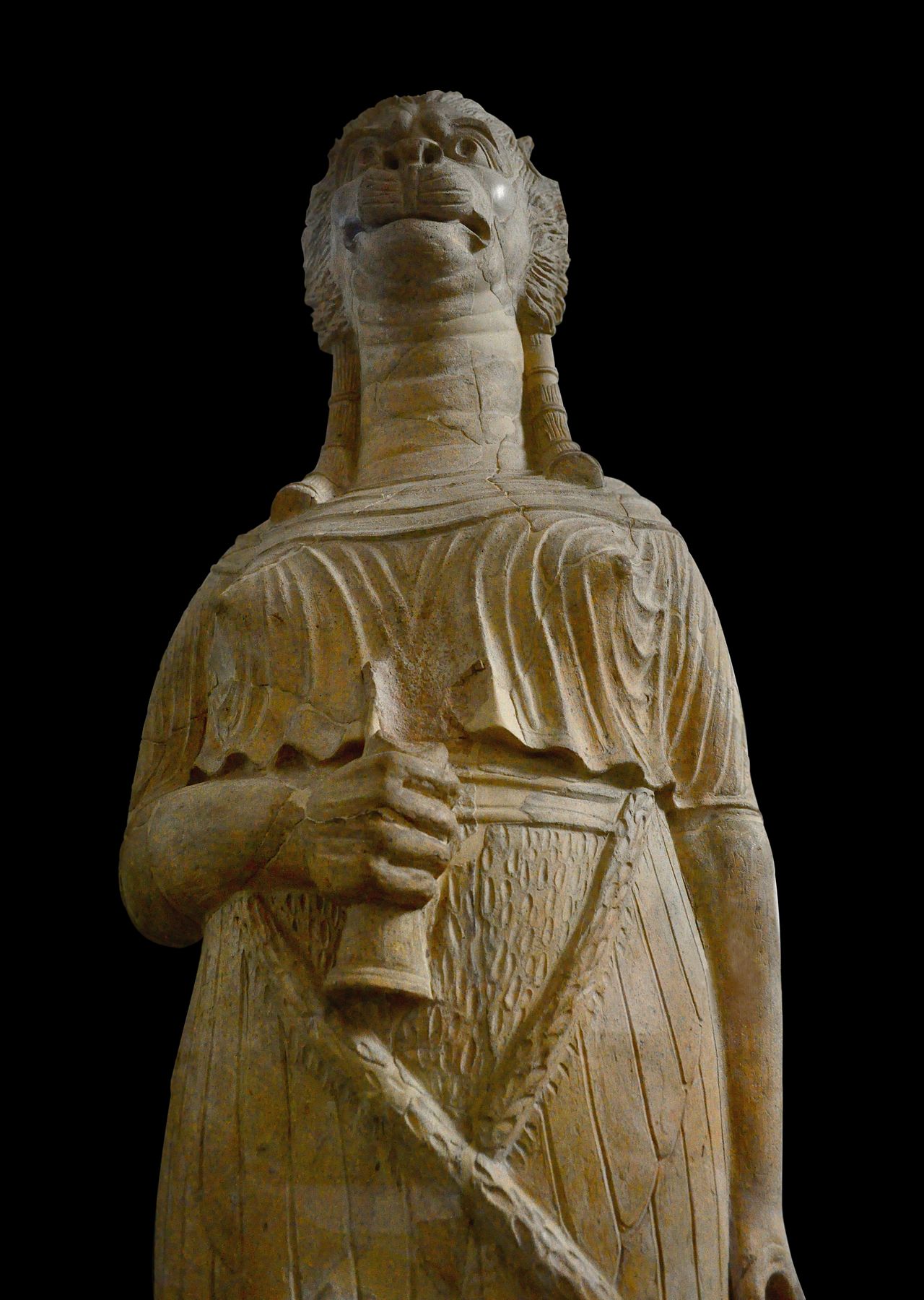
Punic, which is sometimes used synonymously with Carthaginian, derives from the Latin poenus and punicus, based on the Ancient Greek word Φοῖνιξ (Phoinix), pl. Φοίνικες (Phoinikes), an exonym used to describe the Canaanite port towns with which the Greeks traded. Latin later borrowed the Greek term a second time as phoenix, pl. phoenices. Both Punic and Phoenician were used by the Romans and Greeks to refer to all Phoenicians (both western and eastern varieties) across the Mediterranean; modern scholars use the term Punic exclusively for Phoenicians in the western Mediterranean, such as the Carthaginians. Specific Punic groups are often referred to with hyphenated terms, like "Siculo-Punic" for Phoenicians in Sicily or "Sardo-Punic" for those in Sardinia. Ancient Greek authors sometimes referred to the mixed Punic inhabitants of North Africa ('Libya') as 'Liby-Phoenicians'.
It is unclear what term, if any, the Carthaginians used to refer to themselves. Ancient Egyptian accounts suggest the people from the region identified as Kenaani or Kinaani, equivalent to Canaanite. A passage from Augustine claims that if asked, the people of Africa (modern day Tunisia) would reply that they are Chanani (Canaanites) in Phoenician. Despite that being almost universally accepted by scholars, some still dismiss Augustine's claims. For example, Josephine Quinn doubts the claim's truthfulness. Numismatic evidence from Sicily shows that some western Phoenicians made use of the term Phoinix.
History
Foundation narratives
The specific date, circumstances, and motivations concerning Carthage's founding are unknown. Most surviving accounts of the city's origins come from Latin and Greek literature, which are generally legendary in nature and reflect Greco-Roman culture values.

The official Carthaginian foundation account as reported by the Phoenician prophet Cleodemus Malchus and transmitted by the Judean Flavius Joseph is that Carthaginians and other Tyrian migrants in North Africa were the descendants of Epher, a son of Midian and also a grandson of Abraham.
There are various conflicting Greco-Roman accounts of Carthage's founding. The oldest one is first recorded by Philistus of Syracuse, and corroborated by Euxodos of Cnidos. Philistus claims Carthage was founded by the Tyrian brothers, Azoros (Phoenician: 𐤏𐤆𐤓 ʿAzar) and Karkhedon.
A more widely-known account tells the story of King Pygmalion (Phoenician: 𐤐𐤌𐤉𐤉𐤕𐤍 Pumayyatan), Sycharbas (Phoenician: 𐤆𐤊𐤓𐤁𐤏𐤋 Zakarbaʿl), and Elissa (Phoenician: 𐤏𐤋𐤔𐤕 ʿAlišat), more commonly known as Dido. In it, Elissa's brother, King Pygmalion, murders her husband, Sycharbas. Elissa and her allies flee and establish Carthage, which, under Elissa's rule, becomes a flourishing city. Elissa's grandfather, the mythic Balazeros (𐤁𐤏𐤋𐤏𐤑𐤅𐤓 Baʿl-ʿazar), is thought by some scholars to be the real-life King Baʿli-maanzer of Tyre. Likewise, Frank Moore Cross has theorized that the king referenced by the Nora Stone is in fact Pygmalion.

In the second century AD, the Roman historian Justin draws on the earlier work of Trogus to provide a modified account of the Pygmalion and Elissa founding story. In his version, Elissa is the daughter of the King Belus II of Tyre, who bequeaths the throne to both Elissa and her brother Pygmalion. However, upon Belus's death, Pygmalion not only cheats his sister out of her share of political power, but also greedily murders her wealthy husband Acerbas (Phoenician: Zakarbaal), also known as Sychaeus. Before her tyrannical brother can take her late husband's wealth, Dido immediately flees with her followers to establish a new city abroad.
Upon landing in North Africa, she is greeted by the local Berber chieftain, Iarbas (also called Hiarbas) who promises to cede as much land as could be covered by a single ox hide. With her characteristic cleverness, Elissa cuts the hide into very thin strips and lays them end to end until they encircle the entire hill of Byrsa. While digging to set the foundation of their new settlement, the Tyrians discover the head of an ox, an omen that the city would be wealthy "but laborious and always enslaved". In response they move the site of the city elsewhere, where the head of a horse is found, which in Phoenician culture is a symbol of courage and conquest. The horse foretells where Dido's new city will rise, becoming the emblem of Carthage, derived from the Phoenician Qart-Hadasht, meaning "New City". The city's wealth and prosperity attracts both Phoenicians from nearby Utica and the indigenous Libyans, whose king Iarbas now seeks Elissa's hand in marriage. Threatened with war should she refuse, and also loyal to the memory of her deceased husband, the queen orders a funeral pyre to be built, where she commits suicide by stabbing herself with a sword. She is thereafter worshiped as a goddess by the people of Carthage, who are described as brave in battle but prone to the "cruel religious ceremony" of human sacrifice, even of children, whenever they seek divine relief from troubles of any kind.
Carthage and Elissa again make an appearance in Virgil's epic poem the Aeneid. Written over a century after the Third Punic War, the poem retools Carthage's founding myth to link it inextrably to Rome's, and to provide a mythic reason for the Punic Wars. The poem's introduction begins by mentioning "an ancient city" that many readers likely assumed was Rome or Troy, but is revealed to be Carthage, with Virgil describing the city as "held by colonists from Tyre, opposite Italy... a city of great wealth and ruthless in the pursuit of war." Virgil then establishes the city as being both beloved by Juno, and destined to fall by a descendant of Troy. Thus, Juno becomes the poem's main antagonist in her attempts to prevent Aeneas, a Trojan man, from establishing the empire that will eventually destroy Carthage.

Virgil describes Queen Elissa—for whom he uses the ancient Greek name, Dido, meaning "beloved"—as an esteemed, clever, but ultimately tragic character. Similar to earlier legends, Dido's brother Pygmalion murders her husband, Sychaeus. After Pygmalion's treachery is revealed to Dido in a dream, Dido tricks Pygmalion into funding her voyage under the guise of wanting to bring him riches. Instead, Dido and her followers flee with the provided gold and search for a new home
Echoing Justin's account, Dido lands in North Africa and is greeted by Iarbas. When Iarbus offers as much land as could be covered by a single ox hide, she cuts the hide into very thin strips and encircles all of Byrsa.
Virgil adds in that while digging to set the foundation of their new settlement, the Tyrians discover the head of a horse, a Phoenician symbol of courage and conquest. The horse foretells where Dido's new city will rise. Thus, the Tyrians make the horse the emblem of the "New City" Carthage.

Seven years later, the Carthaginians had built a successful kingdom under the rule of their beloved Dido. When Aeneas and his men wash up on Dido's shore, Dido falls in love with Aeneas and offers him and his compatriots asylum. During a hunting expedition, Dido comes to believe that Aeneas and her will marry. Aeneas disagrees, though he loves Dido. However, Jupiter sends Mercury to remind Aeneas that his destiny is to sail to Italy to found Rome, regardless of his love for Dido. Aeneas and his men depart, and a heartbroken Dido commits suicide by stabbing herself upon a funeral pyre with Aeneas' sword. As she lies dying, she prophesizes eternal strife between Aeneas' people and her own, proclaiming "rise up from my bones, avenging spirit" in an invocation of Hannibal. Aeneas sees the smoke from the pyre as he sails away, and though he does not know the fate of Dido, he identifies it as a bad omen. Ultimately, his descendants go on to found the Roman Kingdom, the predecessor of the Roman Empire.
Like Justin, Virgil's story essentially conveys Rome's attitude towards Carthage, as exemplified by Cato the Elder's famous utterance, "Carthago delenda est"—"Carthage must be destroyed". In essence, Rome and Carthage were fated for conflict: Aeneas chose Rome over Dido, eliciting her dying curse upon his Roman descendants, and thus providing a mythical, fatalistic backdrop for a century of bitter conflict between Rome and Carthage.
Settlement as Tyrian colony (c. 814 BC)
Carthage was one of numerous colonies and trading posts established by the Phoenicians along the coasts of the Mediterranean. Most of these colonies were small, with less than 1,000 inhabitants, and were founded for commercial reasons. Between Phoenician's small numbers and their organization into fiercely independent city-states, there seemed to be little desire or ability to seriously expand overseas. Thus very few of their colonies would grow large.
Phoenician colonization was often commercial in nature. They sought safe harbors for their merchant fleets, monopolies over natural resources, access to popular trade goods, and areas where they could trade freely and without outside influence. Over time, escape from tributary obligations to the foreign powers subjugating the Phoenician homeland also became a motivation for colonization. Colonization efforts by the Greeks, a nascent maritime power and competitor, also served to inspire Phoenician colonization.
The Phoenicians' colonization efforts first began in the eastern and central Mediterranean. They had holdings in Cyprus, Crete, Corsica, the Balearic Islands, Sardinia, and Sicily, as well as on the European mainland, in what are today Genoa and Marseilles. Their settlements in Crete and Sicily continually clashed with the Greeks, foreshadowing the later Sicilian Wars. In the end, Phoenician control over all of Sicily was brief. In the western Mediterranean, colonies first arose following the two paths of to Iberia's mineral wealth: either along the northwest African coast or on Sicily, Sardinia, and the Balearic Islands. Colonies following the former route were usually trading stations at intervals of about 30 to 50 kilometres along the African coast.
Tyre, as the largest and the wealthiest of the Phoenician city-states, and often led the way in colonizing coastal areas. Strabo claims that the Tyrians alone founded three hundred colonies on the west African coast; though clearly an exaggeration, many colonies did arise in Tunisia, Morocco, Algeria, Iberia, and in Libya. One of these colonies was Carthage.
The site of Carthage was likely chosen by the Tyrians for several reasons. Firstly, it's geographic position was strategic. The Gulf of Tunis afforded Carthage both access to the Mediterranean and protection from the region's infamously violent storms. It was close to the Strait of Sicily, a key bottleneck for maritime trade between the east and west. Secondly, its terrain was invaluable. Built on a hilly, triangular peninsula connected to the mainland by a single, narrow strip of land, the city would prove easily defensible. Adding to its defenses was a citadel built on Byrsa, a low hill overlooking the sea. Behind the city lay the Lake of Tunis, which provided an abundant supply of fish and a place for safe harbor. Finally, Carthage would be conduit of two major trade routes: one between the Tyrian colony of Cadiz in southern Spain, which supplied raw materials for manufacturing in Tyre, and the other between North Africa and the northern Mediterranean, namely Sicily, Italy, and Greece.
Independence, expansion and hegemony
In contrast to most Phoenician colonies, Carthage grew larger and more quickly thanks to its combination of favorable climate, arable land, and lucrative trade routes. Within just one century of its founding, its population rose to 30,000. Meanwhile, its mother city, Tyre, which for centuries was the preeminent economic and political center of Phoenician civilization, saw its status begin to wane in the seventh century BC, following a succession of sieges by the Babylonians. By this time, its Carthaginian colony had become immensely wealthy from its strategic location and extensive trade network. Unlike many other Phoenician city-states and dependencies, Carthage grew prosperous not only from maritime commerce but from its proximity to fertile agricultural land and rich mineral deposits. As the main hub for trade between Africa and the rest of the ancient world, it also provided a myriad of rare and luxurious goods, including terracotta figurines and masks, jewelry, delicately carved ivories, ostrich eggs, and a variety of foods and wine.
Carthage's growing economic prominence coincided with a nascent national identity. Although Carthaginians remained staunchly Phoenician in their customs and faith, by at least the seventh century BC, they had developed a distinct Punic culture infused with local influences. Certain deities became more prominent in the Carthaginian pantheon than in Phoenicia; into the fifth century BC, the Carthaginians were worshiping Greek deities such as Demeter. These trends most likely precipitated the colony's emergence as an independent polity. Though the specific date and circumstances are unknown, Carthage became independent in the middle of the 6th century BC. It had grown into a fully independent thalassocracy, embarking its own colonization efforts across the western Mediterranean. It nonetheless maintained amicable cultural, political, and commercial ties with its founding city and the Phoenician homeland; it continued to receive migrants from Tyre, and for a time continued the practice of sending annual tribute to Tyre's temple of Melqart, albeit at irregular intervals.
By the sixth century BC, Tyre's power declined further still after its voluntary submission to the Persian king Cambyses (r. 530–522 BC), which resulted in the incorporation of the Phoenician homeland into the Persian empire. Lacking sufficient naval strength, Cambyses sought Tyrian assistance for his planned conquest of Carthage, which may indicate that the former Tyrian colony had become wealthy enough to warrant a long and difficult expedition. Herodotus claims that the Tyrians refused to cooperate due to their affinity for Carthage, causing the Persian king to abort his campaign. Though it escaped reprisal, Tyre's status as Phoenicia's leading city was significantly circumscribed; its rival, Sidon, subsequently garnered more support from the Persians. However, it too remained subjugated, leading the way for Carthage to fill the vacuum as the leading Phoenician political power.
Formation and characteristics of the empire
Although the Carthaginians retained the traditional Phoenician affinity for maritime trade and commerce, they were distinguished by their imperial and military ambitions: whereas the Phoenician city-states rarely engaged in territorial conquest, Carthage became an expansionist power, driven by its desire to access new sources of wealth and trade. It is unknown what factors influenced the citizens of Carthage to create an economic and political hegemony; the nearby Phoenician city of Utica was far older and enjoyed the same geographical and political advantages, but never embarked on hegemonic conquest, instead coming under Carthaginian influence. One theory is that Babylonian and Persian domination of the Phoenician homeland produced refugees that swelled Carthage's population and transferred the culture, wealth, and traditions of Tyre to Carthage. The threat to the Phoenician trade monopoly—by Etruscan and Greek competition in the west, and through foreign subjugation of its homeland in the east—also created the conditions for Carthage to consolidate its power and further its commercial interests.
Another contributing factor may have been domestic politics: while little is known of Carthage's government and leadership prior to the third century BC, the reign of Mago I (c. 550–530), and the political dominance of the Magonid family in subsequent decades, precipitated Carthage's rise as a dominant power. Justin states that Mago, who was also general of the army, was the first Carthaginian leader to "[set] in order the military system", which may have entailed the introduction of new military strategies and technologies. He is also credited with initiating, or at least expanding, the practice of recruiting subject peoples and mercenaries, as Carthage's population was too small to secure and defend its scattered colonies. Libyans, Iberians, Sardinians and Corsicans were soon enlisted for the Magonid expansionist campaigns across the region.
By the beginning of the fourth century BC, the Carthaginians had become the "superior power" of the western Mediterranean, and would remain so for roughly the next three centuries. Carthage took control of all nearby Phoenician colonies, including Hadrumetum, Utica, Hippo Diarrhytus and Kerkouane; subjugated many neighboring Libyan tribes, and occupied coastal North Africa from Morocco to western Libya. It held Sardinia, Malta, the Balearic Islands, and the western half of Sicily, where coastal fortresses such as Motya and Lilybaeum secured their possessions. The Iberian Peninsula, which was rich in precious metals, saw some of the largest and most important Carthaginian settlements outside North Africa, though the degree of political influence before the conquest by Hamilcar Barca (237–228 BC) is disputed. Carthage's growing wealth and power, along with the foreign subjugation of the Phoenician homeland, led to its supplanting of Sidon as the supreme Phoenician city state.
Carthage's empire was largely informal and multifaceted, consisting of varying levels of control exercised in equally variable ways. It established new colonies, repopulated and reinforced older ones, formed defensive pacts with other Phoenician city states, and acquired territories directly by conquest. While some Phoenician colonies willingly submitted to Carthage, paying tribute and giving up their foreign policy, others in Iberia and Sardinia resisted Carthaginian efforts. Whereas other Phoenician cities never exercised actual control of the colonies, the Carthaginians appointed magistrates to directly control their own (a policy that would lead to a number of Iberian towns siding with the Romans during the Punic Wars). In many other instances, Carthage's hegemony was established through treaties, alliances, tributary obligations, and other such arrangements. It had elements of the Delian League led by Athens (allies shared funding and manpower for defense), the Spartan Kingdom (subject peoples serving as serfs for the Punic elite and state) and, to a lesser extent, the Roman Republic (allies contributing manpower and tribute for Rome's war machine).
In 509 BC, Carthage and Rome signed the first of several treaties demarcating their respective influence and commercial activities. This is the first textual source demonstrating Carthaginian control over Sicily and Sardinia. The treaty also conveys the extent to which Carthage was, at the very least, on equal terms with Rome, whose influence was limited to parts of central and southern Italy. Carthaginian dominance of the sea reflected not only its Phoenician heritage, but an approach to empire-building that differed greatly from Rome. Carthage emphasized maritime trade over territorial expansion, and accordingly focused its settlements and influence on coastal areas while investing more on its navy. For similar reasons, its ambitions were more commercial than imperial, which is why its empire took the form of a hegemony based on treaties and political arrangements more than conquest. By contrast, the Romans focused on expanding and consolidating their control over the rest of mainland Italy, and would aim to extend its control well beyond its homeland. These differences would prove key in the conduct and trajectory of the later Punic Wars.
By the third century BC, Carthage was the center of a sprawling network of colonies and client states. It controlled more territory than the Roman Republic, and became one of the largest and most prosperous cities in the Mediterranean, with a quarter of a million inhabitants.
Carthage did not focus on growing and conquering land, instead, it was found that Carthage was focused on growing trade and protecting trade routes. The trades through Libya were territories and Carthage paid Libyans for access to this land in Cape Bon for agricultural purposes until about 550 BC. In around 508 BC Carthage and Rome signed a treaty to keep their commercial planes separate from each other. Carthage focused on growing their population by taking in Phoenicians colonies and soon began controlling Libyan, African, and Roman colonies. Many Phoenician cities also had to pay or support the Carthaginian troops. Punic troops would defend cities and these cities had few rights.
Conflict with the Greeks (480–265 BC)
Unlike the existential conflict of the later Punic Wars with Rome, the conflict between Carthage and the Greeks centered on economic concerns, as each side sought to advance their own commercial interests and influence by controlling key trade routes. For centuries, the Phoenician and Greek city-states had embarked on maritime trade and colonization across the Mediterranean. While the Phoenicians were initially dominant, Greek competition increasingly undermined their monopoly. Both sides had begun establishing colonies, trading posts, and commercial relations in the western Mediterranean roughly contemporaneously, between the ninth and eighth centuries. Phoenician and Greek settlements, the increased presence of both peoples led to mounting tensions and ultimately open conflict, especially in Sicily.
First Sicilian War (480 BC)
Carthage's economic successes, buoyed by its vast maritime trade network, led to the development of a powerful navy to protect and secure vital shipping lanes. Its hegemony brought it into increasing conflict with the Greeks of Syracuse, who also sought control of the central Mediterranean. Founded in the mid seventh century BC, Syracuse had risen to become one of the wealthiest and most powerful Greek city states, and the preeminent Greek polity in the region.
The island of Sicily, lying at Carthage's doorstep, became the main arena on which this conflict played out. From their earliest days, both the Greeks and Phoenicians had been attracted to the large, centrally located island, each establishing a large number of colonies and trading posts along its coasts; battles raged between these settlements for centuries, with neither side ever having total, long-term control over the island.
In 480 BC, Gelo, the tyrant of Syracuse, attempted to unite the island under his rule with the backing of other Greek city-states. Threatened by the potential power of a united Sicily, Carthage intervened militarily, led by King Hamilcar of the Magonid dynasty. Traditional accounts, including those by Herodotus and Diodorus, number Hamilcar's army at around 300,000; though this number is almost certainly exaggerated, the Carthaginian force was nevertheless of formidable strength and dauntingly large.
While sailing to Sicily, Hamilcar suffered losses due to poor weather. Landing at Panormus (modern-day Palermo), he spent three days reorganizing his forces and repairing his battered fleet. The Carthaginians marched along the coast to Himera, making camp before engaging in battle against the forces of Syracuse and its ally Agrigentum. The Greeks won a decisive victory, inflicting heavy losses on the Carthaginians, including their leader Hamilcar, who was either killed during the battle or committed suicide in shame. As a result, the Carthaginian nobility sued for peace.
The conflict proved to be a major turning point for Carthage. Though it would retain some presence in Sicily, most of the island would remain in Greek (and later Roman) hands. The Carthaginians would never again expand their territory or sphere of influence on the island to any meaningful degree, instead turning their attention to securing or increasing their hold in North Africa and Iberia. The death of King Hamilcar and the disastrous conduct of the war also prompted political reforms that established an oligarchic republic. Carthage would henceforth constrain its rulers through assemblies of both nobles and the common people.
Second Sicilian War (410–404 BC)
By 410 BC, Carthage had recovered from its serious defeats in Sicily. It had conquered much of modern-day Tunisia and founded new colonies across northern Africa. It also extended its reach well beyond the Mediterranean; Hanno the Navigator journeyed down the West African coast, and Himilco the Navigator had explored the European Atlantic coast. Expeditions were also led into Morocco and Senegal, as well as the Atlantic. The same year, the Iberian colonies seceded, cutting off Carthage from a major source of silver and copper. The loss of such strategically important mineral wealth, combined with the desire to exercise firmer control over shipping routes, led Hannibal Mago, grandson of Hamilcar, to make preparations to reclaim Sicily.
In 409 BC, Hannibal Mago set out for Sicily with his force. He captured the smaller cities of Selinus (modern Selinunte) and Himera—where the Carthaginians had been dealt a humiliating defeat seventy years prior—before returning triumphantly to Carthage with the spoils of war. But the primary enemy, Syracuse, remained untouched and in 405 BC, Hannibal Mago led a second Carthaginian expedition to claim the rest of the island.
This time, however, he met with fiercer resistance as well as misfortune. During the siege of Agrigentum, Carthaginian forces were ravaged by plague, which claimed Hannibal Mago himself. His successor, Himilco, managed to extend the campaign, capturing the city of Gela and repeatedly defeating the army of Dionysius of Syracuse. But he, too, was struck with plague and forced to sue for peace before returning to Carthage.
By 398 BC, Dionysius had regained his strength and broke the peace treaty, striking at the Carthaginian stronghold of Motya in western Sicily. Himilco responded decisively, leading an expedition that not only reclaimed Motya, but also captured Messene (present-day Messina). Within a year, the Carthaginians were besieging Syracuse itself, and came close to victory until the plague once again ravaged and reduced their forces.
The fighting in Sicily swung in favor of Carthage less than a decade later in 387 BC. After winning a naval battle off the coast of Catania, Himilco laid siege to Syracuse with 50,000 Carthaginians, but yet another epidemic struck down thousands of them. With the enemy assault stalled and weakened, Dionysius then launched a surprise counterattack by land and sea, destroying all the Carthaginian ships while its crews were ashore. At the same time, his ground forces stormed the besiegers' lines and routed them. Himilco and his chief officers abandoned their army and fled Sicily. Once again, the Carthaginians were forced to press for peace. Returning to Carthage in disgrace, Himilco was met with contempt and committed suicide by starving himself.
Notwithstanding consistently poor luck and costly reversals, Sicily remained an obsession for Carthage. Over the next fifty years, an uneasy peace reigned, as Carthaginian and Greek forces engaged in constant skirmishes. By 340 BC, Carthage had been pushed entirely into the southwest corner of the island.
Third Sicilian War
In 315 BC, Carthage found itself on the defensive in Sicily, as Agathocles of Syracuse broke the terms of the peace treaty and sought to dominate the entire island. Within four years, he seized Messene, laid siege to Agrigentum, and invaded the last Carthaginian holdings on the island.
Hamilcar, grandson of Hanno the Great, led the Carthaginian response with great success. Because of Carthage's power over the trade routes, Carthage had a rich and strong navy that was able to lead. Within a year of their arrival, the Carthaginians controlled almost all of Sicily and were besieging Syracuse. In desperation, Agathocles secretly led an expedition of 14,000 men to attack Carthage, forcing Hamilcar and most of his army to return home. Although Agathocles' forces were eventually defeated in 307 BC, he managed to escape back to Sicily and negotiate peace, thus maintaining the status quo and Syracuse as a stronghold of Greek power in Sicily.
Pyrrhic War (280–275 BC)
Carthage was once again drawn into a war in Sicily, this time by Pyrrhus of Epirus, who challenged both Roman and Carthaginian supremacy over the Mediterranean. The Greek city of Tarentum, in southern Italy, had come into conflict with an expansionist Rome, and sought the aid of Pyrrhus. Seeing an opportunity to forge a new empire, Pyrrhus sent an advance guard of 3,000 infantry to Tarentum, under the command of his adviser Cineas. Meanwhile, he marched the main army across the Greek peninsula and won several victories over the Thessalians and Athenians. After securing the Greek mainland, Pyrrhus rejoined his advance guard in Tarentum to conquer southern Italy, winning a decisive but costly victory at Asculum.