
The Age of Enlightenment, also known as the Age of Reason or simply the Enlightenment, was a period of intellectual and cultural flourishing in Europe and Western civilization, emerging in the late 17th century in Western Europe. It reached its peak in the 18th century as its ideas spread more widely across Europe and into the European colonies in the Americas and Oceania. Characterized by an emphasis on reason, empirical evidence, and the scientific method, the Enlightenment promoted ideals of individual liberty, religious tolerance, progress, and natural rights. Its thinkers advocated for constitutional government, the separation of church and state, and the application of rational principles to social and political reform.
The Enlightenment emerged from and built upon the Scientific Revolution of the 16th and 17th centuries, which had established new methods of empirical inquiry through the work of figures such as Galileo Galilei, Johannes Kepler, Francis Bacon, Pierre Gassendi, Christiaan Huygens, and Isaac Newton. Philosophical foundations were laid by thinkers including René Descartes, Thomas Hobbes, Baruch Spinoza, and John Locke, whose ideas about reason, natural rights, and empirical knowledge became central to Enlightenment thought. The dating of the period of the beginning of the Enlightenment can be attributed to the publication of Descartes' Discourse on the Method in 1637, with his method of systematically disbelieving everything unless there was a well-founded reason for accepting it, and featuring his dictum, Cogito, ergo sum ('I think, therefore I am'). Others cite the publication of Newton's Principia Mathematica (1687) as the culmination of the Scientific Revolution and the beginning of the Enlightenment. European historians traditionally dated its beginning with the death of Louis XIV of France in 1715 and its end with the outbreak of the French Revolution in 1789. Many historians now date the end of the Enlightenment as the start of the 19th century, with the latest proposed year being the death of Immanuel Kant in 1804.
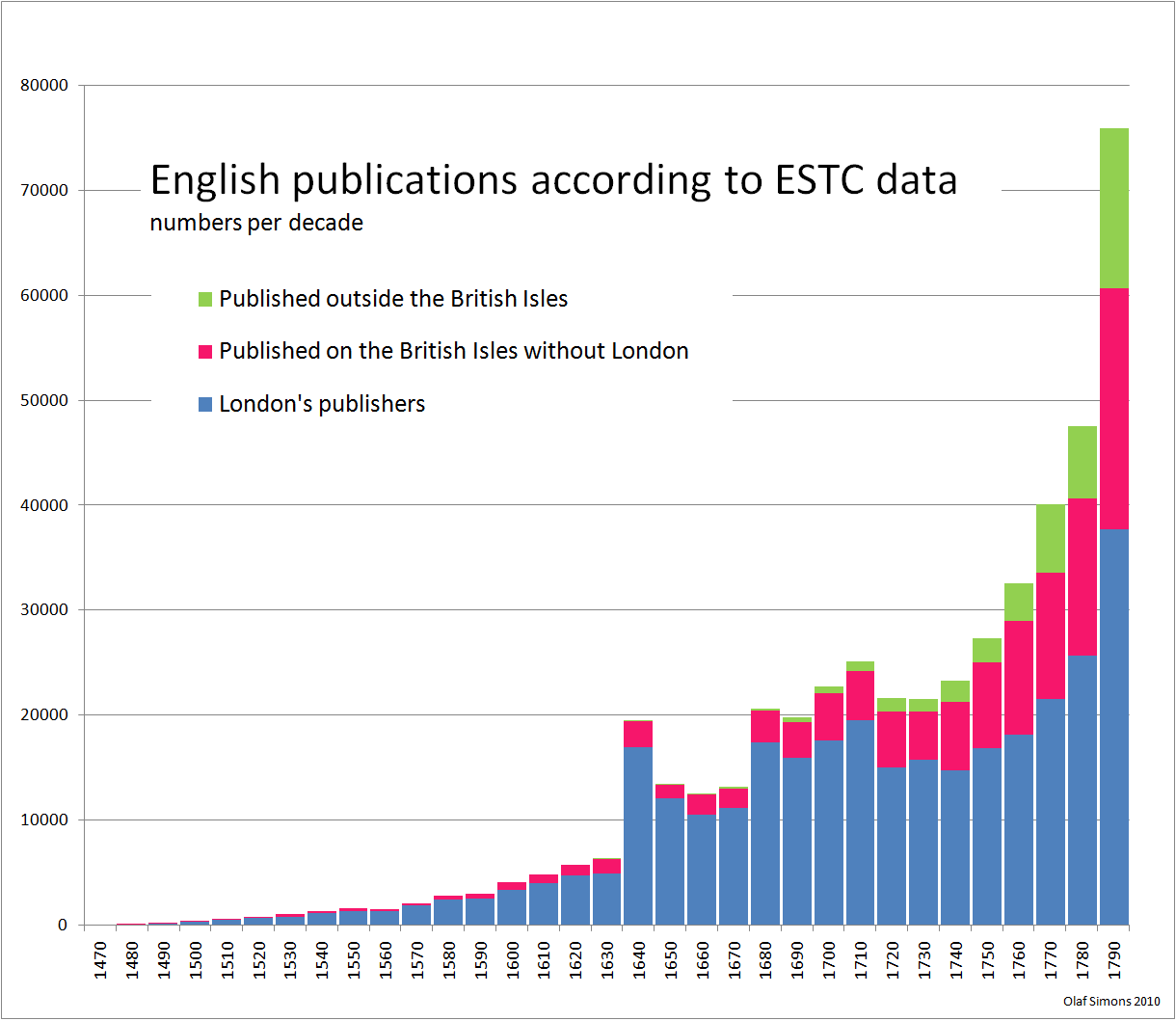
The movement was characterized by the widespread circulation of ideas through new institutions: scientific academies, literary salons, coffeehouses, Masonic lodges, and an expanding print culture of books, journals, and pamphlets. The ideas of the Enlightenment undermined the authority of the monarchy and religious officials and paved the way for the political revolutions of the 18th and 19th centuries. A variety of 19th-century movements, including liberalism, socialism, and neoclassicism, trace their intellectual heritage to the Enlightenment. The Enlightenment was marked by an increasing awareness of the relationship between the mind and the everyday media of the world, and by an emphasis on the scientific method and reductionism, along with increased questioning of religious dogma—an attitude captured by Kant's essay Answering the Question: What Is Enlightenment?, where the phrase sapere aude ('dare to know') can be found.

The central doctrines of the Enlightenment were individual liberty, representative government, the rule of law, and religious freedom, in contrast to an absolute monarchy or single party state and the religious persecution of faiths other than those formally established and often controlled outright by the State. By contrast, other intellectual currents included arguments in favour of anti-Christianity, Deism and Atheism, accompanied by demands for secular states, bans on religious education, suppression of monasteries, the suppression of the Jesuits, and the expulsion of religious orders. The Enlightenment also faced contemporary criticism, later termed the "Counter-Enlightenment" by Sir Isaiah Berlin, which defended traditional religious and political authorities against rationalist critique.
Influential intellectuals
The Enlightenment was preceded by and closely associated with the Scientific Revolution. Earlier philosophers whose work influenced the Enlightenment included Francis Bacon, Pierre Gassendi, René Descartes, Thomas Hobbes, Baruch Spinoza, John Locke, Pierre Bayle, and Gottfried Wilhelm Leibniz. Some of the figures of the Enlightenment included Cesare Beccaria, George Berkeley, Denis Diderot, David Hume, Immanuel Kant, Lord Monboddo, Montesquieu, Jean-Jacques Rousseau, Adam Smith, Roger Williams, Hugo Grotius, and Voltaire.
One of the most influential Enlightenment publications was the Encyclopédie (Encyclopedia). Published between 1751 and 1772 in 35 volumes, it was compiled by Diderot, Jean le Rond d'Alembert, and a team of 150 others. The Encyclopédie helped spread the ideas of the Enlightenment across Europe and beyond.

Other publications of the Enlightenment included Locke's A Letter Concerning Toleration (1689) and Two Treatises of Government (1689); Berkeley's A Treatise Concerning the Principles of Human Knowledge (1710), Voltaire's Letters on the English (1733) and Philosophical Dictionary (1764); Hume's A Treatise of Human Nature (1740); Montesquieu's The Spirit of the Laws (1748); Rousseau's Discourse on Inequality (1754) and The Social Contract (1762); Cesare Beccaria's On Crimes and Punishments (1764); Adam Smith's The Theory of Moral Sentiments (1759) and The Wealth of Nations (1776), Kant's Critique of Pure Reason (1781), and at the close of the age, the pioneering proto-feminist text, Wollstoncraft's A Vindication Of The Rights Of Woman (1792).
Topics
Philosophy
Bacon's empiricism and Descartes' rationalist philosophy laid the foundation for enlightenment thinking. Descartes' attempt to construct the sciences on a secure metaphysical foundation was not as successful as his method of doubt applied to philosophy, which led to a dualistic doctrine of mind and matter. His skepticism was refined by Locke's Essay Concerning Human Understanding (1690) and Hume's writings in the 1740s. Descartes' dualism was challenged by Spinoza's uncompromising assertion of the unity of matter in his Tractatus (1670) and Ethics (1677).
According to Jonathan Israel, these laid down two distinct lines of Enlightenment thought: first, the moderate variety, following Descartes, Locke, and Christian Wolff, which sought accommodation between reform and the traditional systems of power and faith, and, second, the Radical Enlightenment, inspired by the philosophy of Spinoza, advocating democracy, individual liberty, freedom of expression, and eradication of religious authority. The moderate variety tended to be deistic whereas the radical tendency separated the basis of morality entirely from theology. Both lines of thought were eventually opposed by a conservative Counter-Enlightenment which sought a return to faith.

In the mid-18th century, Paris became the center of philosophic and scientific activity challenging traditional doctrines and dogmas. After the Edict of Fontainebleau in 1685, the relationship between church and the absolutist government was very strong. The early enlightenment emerged in protest to these circumstances, gaining ground under the support of Madame de Pompadour, the mistress of Louis XV. Called the Siècle des Lumières, the philosophical movement of the Enlightenment had already started by the early 18th century, when Pierre Bayle launched the popular and scholarly Enlightenment critique of religion. As a skeptic Bayle only partially accepted the philosophy and principles of rationality. He did draw a strict boundary between morality and religion. The rigor of his Dictionnaire Historique et Critique influenced many of the Enlightenment Encyclopédistes. By the mid-18th century the French Enlightenment had found a focus in the project of the Encyclopédie. The philosophical movement was led by Voltaire and Rousseau, who argued for a society based upon reason rather than faith and Catholic doctrine, for a new civil order based on natural law, and for science based on experiments and observation. The political philosopher Montesquieu introduced the idea of a separation of powers in a government, a concept which was enthusiastically adopted by the authors of the United States Constitution. While the philosophes of the French Enlightenment were not revolutionaries and many were members of the nobility, their ideas played an important part in undermining the legitimacy of the Old Regime and shaping the French Revolution.
Francis Hutcheson, a moral philosopher and founding figure of the Scottish Enlightenment, described the utilitarian and consequentialist principle that virtue is that which provides, in his words, "the greatest happiness for the greatest numbers." Much of what is incorporated in the scientific method (the nature of knowledge, evidence, experience, and causation) and some modern attitudes towards the relationship between science and religion were developed by Hutcheson's protégés in Edinburgh: David Hume and Adam Smith. Hume became a major figure in the skeptical philosophical and empiricist traditions of philosophy.
Kant tried to reconcile rationalism and religious belief, individual freedom and political authority, as well as map out a view of the public sphere through private and public reason. Kant's work continued to influence German intellectual life and European philosophy more broadly well into the 20th century.

Mary Wollstonecraft was one of England's earliest feminist philosophers. She argued for a society based on reason and that women as well as men should be treated as rational beings. She is best known for her 1792 work, A Vindication of the Rights of Woman.
Science
Science played an important role in Enlightenment discourse and thought. Many Enlightenment writers and thinkers had backgrounds in the sciences and associated scientific advancement with the overthrow of religion and traditional authority in favour of the development of free speech and thought. There were immediate practical results. The experiments of Antoine Lavoisier were used to create the first modern chemical plants in Paris, and the experiments of the Montgolfier brothers enabled them to launch the first manned flight in a hot air balloon in 1783.
Broadly speaking, Enlightenment science greatly valued empiricism and rational thought and was embedded with the Enlightenment ideal of advancement and progress. The study of science, under the heading of natural philosophy, was divided into physics and a conglomerate grouping of chemistry and natural history, which included anatomy, biology, geology, mineralogy, and zoology. As with most Enlightenment views, the benefits of science were not seen universally: Rousseau criticized the sciences for distancing man from nature and not operating to make people happier.
Science during the Enlightenment was dominated by scientific societies and academies, which had largely replaced universities as centres of scientific research and development. Societies and academies were also the backbone of the maturation of the scientific profession. Scientific academies and societies grew out of the Scientific Revolution as the creators of scientific knowledge, in contrast to the scholasticism of the university. Some societies created or retained links to universities, but contemporary sources distinguished universities from scientific societies by claiming that the university's utility was in the transmission of knowledge while societies functioned to create knowledge. As the role of universities in institutionalized science began to diminish, learned societies became the cornerstone of organized science. Official scientific societies were chartered by the state to provide technical expertise.
Most societies were granted permission to oversee their own publications, control the election of new members and the administration of the society. In the 18th century, a very large number of official academies and societies were founded in Europe; by 1789 there were over 70 official scientific societies. In reference to this growth, Bernard de Fontenelle coined the term "the Age of Academies" to describe the 18th century.
Another important development was the popularization of science among an increasingly literate population. Philosophes introduced the public to many scientific theories, most notably through the Encyclopédie and the popularization of Newtonianism by Voltaire and Émilie du Châtelet. Some historians have marked the 18th century as a drab period in the history of science. The century saw significant advancements in the practice of medicine, mathematics, and physics; the development of biological taxonomy; a new understanding of magnetism and electricity; and the maturation of chemistry as a discipline, which established the foundations of modern chemistry.
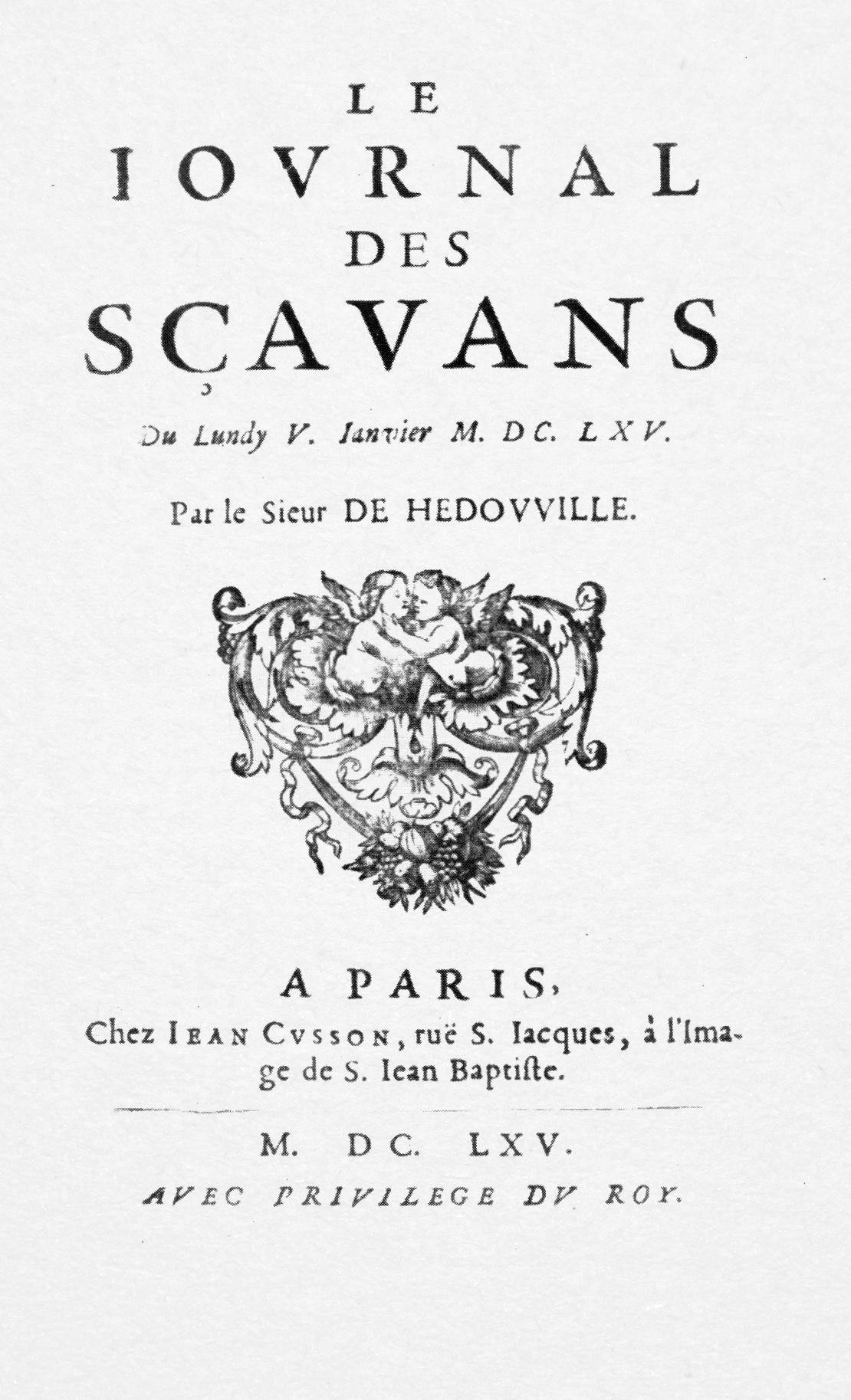
The influence of science began appearing more commonly in poetry and literature. While some societies were established with ties to universities or maintained existing ones contemporary sources often distinguished between the two, asserting that universities primarily served to transmit knowledge, whereas scientific societies were oriented toward the creation of new knowledge. James Thomson penned his "A Poem to the Memory of Sir Isaac Newton," which mourned the loss of Newton and praised his science and legacy.
Sociology, economics, and law
Hume and other Scottish Enlightenment thinkers developed a "science of man," which was expressed historically in works by authors including James Burnett, Adam Ferguson, John Millar, and William Robertson, all of whom merged a scientific study of how humans behaved in ancient and primitive cultures with a strong awareness of the determining forces of modernity. Modern sociology largely originated from this movement, and Hume's philosophical concepts that directly influenced James Madison (and thus the U.S. Constitution), and as popularised by Dugald Stewart was the basis of classical liberalism.
In 1776, Adam Smith published The Wealth of Nations, often considered the first work on modern economics as it had an immediate impact on British economic policy that continues into the 21st century. It was immediately preceded and influenced by Anne Robert Jacques Turgot's drafts of Reflections on the Formation and Distribution of Wealth (1766). Smith acknowledged indebtedness and possibly was the original English translator.
Beccaria, a jurist, criminologist, philosopher, and politician and one of the great Enlightenment writers, became famous for his masterpiece Dei delitti e delle pene (Of Crimes and Punishments, 1764). His treatise, translated into 22 languages, condemned torture and the death penalty and was a founding work in the field of penology and the classical school of criminology by promoting criminal justice. Francesco Mario Pagano wrote studies such as Saggi politici (Political Essays, 1783); and Considerazioni sul processo criminale (Considerations on the Criminal Trial, 1787), which established him as an international authority on criminal law.
Politics
The Enlightenment has long been seen as the foundation of modern Western political and intellectual culture. The Enlightenment brought political modernization to the West, in terms of introducing democratic values and institutions and the creation of modern, liberal democracies. This thesis has been widely accepted by scholars and has been reinforced by the large-scale studies by Robert Darnton, Roy Porter, and, most recently, by Jonathan Israel. Enlightenment thought was deeply influential in the political realm. European rulers such as Catherine II of Russia, Joseph II of Austria, and Frederick II of Prussia tried to apply Enlightenment thought on religious and political tolerance, which became known as enlightened absolutism. Many of the major political and intellectual figures behind the American Revolution associated themselves closely with the Enlightenment: Benjamin Franklin visited Europe repeatedly and contributed actively to the scientific and political debates there and brought the newest ideas back to Philadelphia; Thomas Jefferson closely followed European ideas and later incorporated some of the ideals of the Enlightenment into the Declaration of Independence; and Madison incorporated these ideals into the U.S. Constitution during its framing in 1787.
Theories of government
Locke, one of the most influential Enlightenment thinkers, based his governance philosophy on social contract theory, a subject that permeated Enlightenment political thought. English philosopher Thomas Hobbes ushered in this new debate with his work Leviathan in 1651. Hobbes also developed some of the fundamentals of European liberal thought: the right of the individual, the natural equality of all men, the artificial character of the political order (which led to the later distinction between civil society and the state), the view that all legitimate political power must be "representative" and based on the consent of the people, and a liberal interpretation of law which leaves people free to do whatever the law does not explicitly forbid.
Both Locke and Rousseau developed social contract theories in Two Treatises of Government and Discourse on Inequality, respectively. While quite different works, Locke, Hobbes, and Rousseau agreed that a social contract, in which the government's authority lies in the consent of the governed, is necessary for man to live in civil society. Locke defines the state of nature as a condition in which humans are rational and follow natural law, in which all men are born equal and with the right to life, liberty, and property. However, when one citizen breaks the law of nature both the transgressor and the victim enter into a state of war, from which it is virtually impossible to break free. Therefore, Locke said that individuals enter into civil society to protect their natural rights via an "unbiased judge" or common authority, such as courts. In contrast, Rousseau's conception relies on the supposition that "civil man" is corrupted, while "natural man" has no want he cannot fulfill himself. Natural man is only taken out of the state of nature when the inequality associated with private property is established. Rousseau said that people join into civil society via the social contract to achieve unity while preserving individual freedom. This is embodied in the sovereignty of the general will, the moral and collective legislative body constituted by citizens.
Locke is known for his statement that individuals have a right to "Life, Liberty, and Property," and his belief that the natural right to property is derived from labor. Tutored by Locke, Anthony Ashley-Cooper, 3rd Earl of Shaftesbury, wrote in 1706: "There is a mighty Light which spreads its self over the world especially in those two free Nations of England and Holland; on whom the Affairs of Europe now turn." Locke's theory of natural rights has influenced many political documents, including the U.S. Declaration of Independence and the French National Constituent Assembly's Declaration of the Rights of Man and of the Citizen.
Some philosophes argued that the establishment of a contractual basis of rights would lead to the market mechanism and capitalism, the scientific method, religious tolerance, and the organization of states into self-governing republics through democratic means. In this view, the tendency of the philosophes in particular to apply rationality to every problem is considered the essential change.
Although much of Enlightenment political thought was dominated by social contract theorists, Hume and Ferguson criticized this camp. Hume's essay Of the Original Contract argues that governments derived from consent are rarely seen and civil government is grounded in a ruler's habitual authority and force. It is precisely because of the ruler's authority over-and-against the subject that the subject tacitly consents, and Hume says that the subjects would "never imagine that their consent made him sovereign," rather the authority did so. Similarly, Ferguson did not believe citizens built the state, rather polities grew out of social development. In his 1767 An Essay on the History of Civil Society, Ferguson uses the four stages of progress, a theory that was popular in Scotland at the time, to explain how humans advance from a hunting and gathering society to a commercial and civil society without agreeing to a social contract.
Both Rousseau's and Locke's social contract theories rest on the presupposition of natural rights, which are not a result of law or custom but are things that all men have in pre-political societies and are therefore universal and inalienable. The most famous natural right formulation comes from Locke's Second Treatise, when he introduces the state of nature. For Locke, the law of nature is grounded on mutual security or the idea that one cannot infringe on another's natural rights, as every man is equal and has the same inalienable rights. These natural rights include perfect equality and freedom, as well as the right to preserve life and property.
Locke argues against indentured servitude on the basis that enslaving oneself goes against the law of nature because a person cannot surrender their own rights: freedom is absolute, and no one can take it away. Locke argues that one person cannot enslave another because it is morally reprehensible, although he introduces a caveat by saying that enslavement of a lawful captive in time of war would not go against one's natural rights.
Enlightened absolutism
The leaders of the Enlightenment were not especially democratic, as they more often look to absolute monarchs as the key to imposing reforms designed by the intellectuals. Voltaire despised democracy and said the absolute monarch must be enlightened and must act as dictated by reason and justice—in other words, be a "philosopher-king."
In several nations, rulers welcomed leaders of the Enlightenment at court and asked them to help design laws and programs to reform the system, typically to build stronger states. These rulers are called "enlightened despots" by historians. They included Frederick the Great of Prussia, Catherine the Great of Russia, Leopold II of Tuscany and Joseph II of Austria. Joseph was over-enthusiastic, announcing many reforms that had little support so that revolts broke out and his regime became a comedy of errors, and nearly all his programs were reversed. Senior ministers Pombal in Portugal and Johann Friedrich Struensee in Denmark also governed according to Enlightenment ideals. In Poland, the model constitution of 1791 expressed Enlightenment ideals, but was in effect for only one year before the nation was partitioned among its neighbors. More enduring were the cultural achievements, which created a nationalist spirit in Poland.
Frederick the Great, the king of Prussia from 1740 to 1786, saw himself as a leader of the Enlightenment and patronized philosophers and scientists at his court in Berlin. Voltaire, who had been imprisoned and maltreated by the French government, was eager to accept Frederick's invitation to live at his palace. Frederick explained: "My principal occupation is to combat ignorance and prejudice... to enlighten minds, cultivate morality, and to make people as happy as it suits human nature, and as the means at my disposal permit."
American Revolution and French Revolution
The Enlightenment has been frequently linked to the American Revolution of 1776 and the French Revolution of 1789—both had some intellectual influence from Thomas Jefferson. A key aspect of this era was a profound shift from the absolute monarchies of Europe, which asserted the "divine right" to rule. John Locke rejected this view in his writings on the Two Treatises of Government (1689). He asserted that citizens were seen to possess natural rights, including life, liberty, and property. Therefore governments exist to protect these rights through the "consent of the governed." The clash between these competing ethos often resulted in violent upheaval in differing ways. In France, Ancien régime, with its rigid social hierarchy and absolute monarchical power, was systematically dismantled during the French Revolution. While the American Revolution focused more on breaking free from a government - represented by King George III and Parliament - that colonists felt did not adequately represent their interests.
Alexis de Tocqueville proposed the French Revolution as the inevitable result of the radical opposition created in the 18th century between the monarchy and the men of letters of the Enlightenment. These men of letters constituted a sort of "substitute aristocracy that was both all-powerful and without real power." This illusory power came from the rise of "public opinion," born when absolutist centralization removed the nobility and the bourgeoisie from the political sphere. The "literary politics" that resulted promoted a discourse of equality and was hence in fundamental opposition to the monarchical regime. De Tocqueville "clearly designates... the cultural effects of transformation in the forms of the exercise of power."
Religion
Enlightenment era religious commentary was a response to the preceding century of religious conflict in Europe, especially the Thirty Years' War. Theologians of the Enlightenment wanted to reform their faith to its generally non-confrontational roots and to limit the capacity for religious controversy to spill over into politics and warfare while still maintaining a true faith in God. For moderate Christians, this meant a return to simple Scripture. Locke abandoned the corpus of theological commentary in favor of an "unprejudiced examination" of the Word of God alone. He determined the essence of Christianity to be a belief in Christ the redeemer and recommended avoiding more detailed debate. Anthony Collins, one of the English freethinkers, published his "Essay concerning the Use of Reason in Propositions the Evidence whereof depends on Human Testimony" (1707), in which he rejects the distinction between "above reason" and "contrary to reason," and demands that revelation should conform to man's natural ideas of God. In the Jefferson Bible, Thomas Jefferson went further and dropped any passages dealing with miracles, visitations of angels, and the resurrection of Jesus after his death, as he tried to extract the practical Christian moral code of the New Testament.
Enlightenment scholars sought to curtail the political power of organized religion and thereby prevent another age of intolerant religious war. Spinoza determined to remove politics from contemporary and historical theology (e.g., disregarding Judaic law). Moses Mendelssohn advised affording no political weight to any organized religion but instead recommended that each person follow what they found most convincing. They believed a good religion based in instinctive morals and a belief in God should not theoretically need force to maintain order in its believers, and both Mendelssohn and Spinoza judged religion on its moral fruits, not the logic of its theology.
Several novel ideas about religion developed with the Enlightenment, including deism and talk of atheism. According to Thomas Paine, deism is the simple belief in God the Creator with no reference to the Bible or any other miraculous source. Instead, the deist relies solely on personal reason to guide his creed, which was eminently agreeable to many thinkers of the time. Atheism was much discussed, but there were few proponents. Wilson and Reill note: "In fact, very few enlightened intellectuals, even when they were vocal critics of Christianity, were true atheists. Rather, they were critics of orthodox belief, wedded rather to skepticism, deism, vitalism, or perhaps pantheism." Some followed Pierre Bayle and argued that atheists could indeed be moral men. Many others like Voltaire held that without belief in a God who punishes evil, the moral order of society was undermined; that is, since atheists gave themselves to no supreme authority and no law and had no fear of eternal consequences, they were far more likely to disrupt society. Bayle observed that, in his day, "prudent persons will always maintain an appearance of [religion]," and he believed that even atheists could hold concepts of honor and go beyond their own self-interest to create and interact in society. Locke said that if there were no God and no divine law, the result would be moral anarchy: every individual "could have no law but his own will, no end but himself. He would be a god to himself, and the satisfaction of his own will the sole measure and end of all his actions."
Separation of church and state
The "Radical Enlightenment" promoted the concept of separating church and state, an idea that is often credited to Locke. According to his principle of the social contract, Locke said that the government lacked authority in the realm of individual conscience, as this was something rational people could not cede to the government for it or others to control. For Locke, this created a natural right in the liberty of conscience, which he said must therefore remain protected from any government authority.
These views on religious tolerance and the importance of individual conscience, along with the social contract, became particularly influential in the American colonies and the drafting of the United States Constitution. In a letter to the Danbury Baptist Association in Connecticut, Thomas Jefferson calls for a "wall of separation between church and state" at the federal level. He previously had supported successful efforts to disestablish the Church of England in Virginia and authored the Virginia Statute for Religious Freedom. Jefferson's political ideals were greatly influenced by the writings of Locke, Bacon, and Newton, whom he considered the three greatest men that ever lived.
National variations
The Enlightenment took hold in most European countries and influenced nations globally, often with a specific local emphasis. For example, in France it became associated with anti-government and anti-Church radicalism, while in Germany it reached deep into the middle classes, where it expressed a spiritualistic and nationalistic tone without threatening governments or established churches. Government responses varied widely. In France, the government was hostile, and the philosophes fought against its censorship, sometimes being imprisoned or hounded into exile. The British government, for the most part, ignored the Enlightenment's leaders in England and Scotland, although it did give Newton a knighthood and a very lucrative government office.
A common theme among most countries which derived Enlightenment ideas from Europe was the intentional non-inclusion of Enlightenment philosophies pertaining to slavery. Originally during the French Revolution, a revolution deeply inspired by Enlightenment philosophy, "France's revolutionary government had denounced slavery, but the property-holding 'revolutionaries' then remembered their bank accounts." Slavery frequently showed the limitations of the Enlightenment ideology as it pertained to European colonialism, since many colonies of Europe operated on a plantation economy fueled by slave labor. In 1791, the Haitian Revolution, a slave rebellion by emancipated slaves against French colonial rule in the colony of Saint-Domingue, broke out. European nations and the United States, despite the strong support for Enlightenment ideals, refused to "[give support] to Saint-Domingue's anti-colonial struggle."
Great Britain
England
The very existence of an English Enlightenment has been hotly debated by scholars. The majority of textbooks on British history make little or no mention of an English Enlightenment. Some surveys of the entire Enlightenment include England and others ignore it, although they do include coverage of such major intellectuals as Joseph Addison, Edward Gibbon, John Locke, Isaac Newton, Alexander Pope, Joshua Reynolds, and Jonathan Swift. Freethinking, a term describing those who stood in opposition to the institution of the Church, and the literal belief in the Bible, can be said to have begun in England no later than 1713, when Anthony Collins wrote his "Discourse of Free-thinking," which gained substantial popularity. This essay attacked the clergy of all churches and was a plea for deism.
Roy Porter argues that the reasons for this neglect were the assumptions that the movement was primarily French-inspired, that it was largely a-religious or anti-clerical, and that it stood in outspoken defiance to the established order. Porter admits that after the 1720s England could claim thinkers to equal Diderot, Voltaire, or Rousseau. However, its leading intellectuals such as Gibbon, Edmund Burke and Samuel Johnson were all quite conservative and supportive of the standing order. Porter says the reason was that Enlightenment had come early to England and had succeeded such that the culture had accepted political liberalism, philosophical empiricism, and religious toleration, positions which intellectuals on the continent had to fight against powerful odds. Furthermore, England rejected the collectivism of the continent and emphasized the improvement of individuals as the main goal of enlightenment.
According to Derek Hirst, the 1640s and 1650s saw a revived economy characterised by growth in manufacturing, the elaboration of financial and credit instruments, and the commercialisation of communication. The gentry found time for leisure activities, such as horse racing and bowling. In the high culture important innovations included the development of a mass market for music, increased scientific research, and an expansion of publishing. All the trends were discussed in depth at the newly established coffee houses.
Scotland
In the Scottish Enlightenment, the principles of sociability, equality, and utility were disseminated in schools and universities, many of which used sophisticated teaching methods which blended philosophy with daily life. Scotland's major cities created an intellectual infrastructure of mutually supporting institutions such as schools, universities, reading societies, libraries, periodicals, museums, and Masonic lodges. The Scottish network was "predominantly liberal Calvinist, Newtonian, and 'design' oriented in character which played a major role in the further development of the transatlantic Enlightenment." In France, Voltaire said "we look to Scotland for all our ideas of civilization." The focus of the Scottish Enlightenment ranged from intellectual and economic matters to the specifically scientific as in the work of William Cullen, physician and chemist; James Anderson, agronomist; Joseph Black, physicist and chemist; and James Hutton, the first modern geologist.